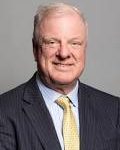
Tag: Edward Leigh

  • Edward Leigh – 2016 Parliamentary Question to the Department for Education

    Edward Leigh – 2016 Parliamentary Question to the Department for Education

    The below Parliamentary question was asked by Edward Leigh on 2016-09-15.

    To ask the Secretary of State for Education, what steps her Department is taking to reduce differences in urban and rural school funding.

    Justine Greening

    The government is committed to a national funding formula that will deliver fairness to all parts of the country – rural and urban, north and south.

    In the first stage of our consultation, we proposed including a sparsity factor which would help rural schools, as well as a lump sum factor which would help small schools everywhere.

    We will both respond to the first consultation and launch the second stage consultation later in the autumn.

  • Edward Leigh – 2022 Parliamentary Question on Trains from London to Cleethorpes

    Edward Leigh – 2022 Parliamentary Question on Trains from London to Cleethorpes

    The parliamentary question asked by Sir Edward Leigh, the Conservative MP for Gainsborough, in the House of Commons on 1 December 2022.

    Sir Edward Leigh (Gainsborough) (Con)

    London North Eastern Railway seems to have been less affected than other services. Does that not underline that importance of the campaign by my hon. Friend the Member for Cleethorpes (Martin Vickers) and me to get the through service from London via Market Rasen to Cleethorpes, so that we can take the pressure off TransPennine Express? Can we get on with the through train, which has been promised again and again? Action this day!

    Huw Merriman

    My right hon. Friend makes a great bid that is linked into this matter. I am happy to meet him and my hon. Friend the Member for Cleethorpes (Martin Vickers) to discuss that further. He is absolutely right that we see a knock-on effect. Take Northern, for example. It has been less impacted by the matters I have referenced than TPE and Avanti, but the knock-on from those operators—particularly TPE—has caused it to fall in parts as well. He is absolutely right to point out that contagion can pass from one part of the network to another. I will happily meet him.

  • Edward Leigh – 2015 Parliamentary Question to the HM Treasury

    Edward Leigh – 2015 Parliamentary Question to the HM Treasury

    The below Parliamentary question was asked by Edward Leigh on 2015-10-20.

    To ask Mr Chancellor of the Exchequer, what assessment his Department has made of the effect on the continuing viability of services offered by charities providing accommodation and life skills services to homeless adults, such as Caritas Anchor House in the London Borough of Newham, of unexpected demands for VAT payments arising out of the development of their premises; and if he will make a statement.

    Harriett Baldwin

    No assessment has been made.

  • Edward Leigh – 2022 Parliamentary Question on Migrants Crossing the English Channel

    Edward Leigh – 2022 Parliamentary Question on Migrants Crossing the English Channel

    The parliamentary question asked by Edward Leigh, the Conservative MP for Gainsborough, in the House of Commons on 16 November 2022.

    Edward Leigh

    Even if an illegal migrant is stopped on a French beach, he will simply come back the next day as no one is ever arrested. Will the Deputy Prime Minister ensure that we remove all pull factors for illegal migration by using his new Bill of Rights so that we have the legal power to arrest, detain and deport illegal migrants, and, for instance, have a review about a national identity card so that people do not just vanish and never get deported?

    The Deputy Prime Minister

    I totally agree that we need to strain every sinew to stop this appalling trade in misery. There is no silver bullet, although I think the agreement the Home Secretary made with her French opposite number will help, and we are embedding UK officials with their French counterparts for the first time. My right hon. Friend the Member for Gainsborough (Sir Edward Leigh) is right to say that the Bill of Rights can also help, not least in preventing interim orders from the Strasbourg Court from being recognised in UK courts. On ID cards, we already have e-visas for people coming to visit and live in the UK, and they act as digital evidence of a person’s immigration status. What is clear, however, is that we will have to do all these things in the teeth of opposition from Labour Front Benchers.

  • Edward Leigh – 2022 Question on Asylum Seekers Being Housed in Grantham

    Edward Leigh – 2022 Question on Asylum Seekers Being Housed in Grantham

    The question asked by Sir Edward Leigh, the Conservative MP for Gainsborough in the House of Commons on 7 November 2022.

    This whole situation is a farce. There were recent reports that illegal migrants were being put up in a luxury rural hotel—a former stately home near Grantham—that normally charges £400 a night. Surely the easier and quicker that we make this whole process, the more people will come, especially since it is a complete pushover, with a large number of young Albanian men claiming modern slavery, which is ridiculous. Will the Minister confirm that the solution is to repeal the Human Rights Act, get out of the European refugee convention and repeal the Modern Slavery Act 2015, so that people can be detained when they arrive for being involved in an illegal activity and then deported?

    Robert Jenrick

    I, too, was disturbed to see images of the Stoke Rochford Hall Hotel, which is a luxurious setting and not the kind of hotel in which we want to see individuals being accommodated. We want to see decent but commonsensical treatment that does not create a further pull factor to the UK. The Home Secretary and I will review whether further changes are required. We start from the basic principle that treaties that the UK Government have entered into must work in the best interests of the British people.

  • Edward Leigh – 2022 Speech on Religious Education in Modern Britain

    Edward Leigh – 2022 Speech on Religious Education in Modern Britain

    The speech made by Sir Edward Leigh, the Conservative MP for Gainsborough, in Westminster Hall on 1 November 2022.

    Happy All Saints’ day, Dame Maria. I congratulate my hon. Friend the Member for Cleethorpes (Martin Vickers), who indeed is a very good friend, on securing this debate.

    It is not all doom and gloom. There is an extraordinary, vibrant faith school sector in this country that provides tolerance and superb religious education. Indeed, I was a bit torn over whether to come to this important debate or to the mass at my granddaughter’s primary school this morning; however, I could not miss this debate because the subject is so important. My hon. Friend the Member for Cleethorpes made a powerful case in his introduction to the debate. It is extraordinary and, in a way, shocking that one in five schools offers zero hours of religious education. That is around 500 secondary schools. My hon. Friend is therefore right to say that children are subject to a postcode lottery. The entire thrust of our education reform since 2010 has been to drive up standards in all subjects.

    It is a fundamental principle that parents are the primary educators of their children; that is in the universal declaration on human rights and the European convention on human rights. The state’s role, then, is to act as the agent of parents and facilitate their role. That we have a diverse ecosystem of schooling in this country reflects that our society is a rich tapestry, rather than a boring grey cloth. Each child is an individual, and finding a school or other educational route that matches and suits the needs and nature of that individual child is the task of their parents.

    I agree with my hon. Friend the Member for Cleethorpes that we need a national standard in religious education. I am rather bemused at the decline of religious education and the ability of so many schools to ignore what is in the Butler Education Act and more recent guidance. As I understand it—the Minister can comment on this—it is the duty of schools to provide some religious education.

    My hon. Friend, again, is right to say that parents need the tools to challenge poor or non-existent provision. We need to give them the levers that they can pull to raise standards in our schools and hold staff and school leadership to account. The statistics he has cited regarding the number of RE specialists are disconcerting. We know—it is clear from this debate—that the current provision of RE in schools is not enough, but it seems that we also do not have the number of properly trained specialists to meet the existing level of provision. I hope this debate may make a difference.

    I am sympathetic to our Education Ministers. I think we have achieved great things since 2010, and the Minister of State, Department for Education, my right hon. Friend the Member for Bognor Regis and Littlehampton (Nick Gibb), has achieved so much himself; I think of him a lot as I try to converse with my granddaughter, who is learning through phonetics, rather than the alphabet that I was brought up on. The Minister has achieved great things, and he and other Ministers have been responsible for the free schools programme that has fundamentally shifted the balance away from a decrepit, left-leaning echo chamber in education provision. Parents have been put in the driver’s seat, and we have greatly lowered the barriers to entry into the education sector for those who wish to start new schools. However, there are still problems that need working out.

    In that context, I mention the faith schools admissions cap, which I have campaigned against for many years; the Minister is well aware of my views. I am disappointed that we have not got rid of the totally counterproductive admissions cap for faith-based free schools. It was introduced as a sop to our Liberal coalition partners in the wake of the Trojan horse scandal, when Islamist extremists were infiltrating schools. That policy has been a total failure—it has not achieved what it was supposed to. First, all the schools involved in the Trojan horse scandal were secular, not faith based.

    Secondly—this is the key point—the admissions cap only hits schools that are over-subscribed from outside their faith grouping. Whatever their merits or virtues, Islamic-run state schools tend to educate members of their communities and receive very little interest from non-Muslims. Catholic schools, on the other hand, are incredibly popular with non-Catholics, but although Catholic schools educate many non-Catholics, their primary purpose is obviously to provide a Catholic education to Catholic children. For that reason, our Catholic schools have not been able to take part in the free schools programme. In fact, the only practical effect of the cap is to prevent new Catholic schools from being founded. The policy is not even in legislation—all it would take is the Education Secretary’s signature for it to go away. In our 2017 manifesto, we made a promise to parents that we would scrap the counterproductive admissions cap and allow the Catholic schools sector to expand. We have still not fulfilled that promise, and I very much hope that when the Minister sums up the debate, he will deal with that issue.

    Returning to general matters, I know—we all know—that Ministers are balancing a wide range of priorities, but our job in this debate is to remind them that RE is important, and needs to be backed up with funding and support. We last had a debate on this subject in 2011, as my hon. Friend the Member for Congleton (Fiona Bruce) mentioned. She was far too modest; it was her debate. Since that time, she has been made the Prime Minister’s special envoy for freedom of religion or belief. She made a point that I will repeat, because it is obvious: the fact that we live in a world where persecution of people for their religious beliefs or world view is increasing only reinforces the importance of religious education as a school subject, and religious literacy more broadly. The hon. Member for Plymouth, Sutton and Devonport (Luke Pollard) spoke powerfully in that respect—I think we all agree with everything he said, and he said it in a very moving way.

    My hon. Friend the Member for Congleton is right that as Britain becomes more diverse, we face more challenges. There is a danger that Britons know less and less about their own background, and how central Christianity has been to the development of our society—to our family of nations, our monarchy, our democracy and our constitution. Indeed, Christian iconography is all over this building. Meanwhile, Britons from newer communities often have very vibrant and active religious faiths: Christian, Muslim, Hindu and otherwise.

    Without sufficient religious education in schools, there is a danger that newcomers will find there is no culture to assimilate or acclimatise to, because the natives have forgotten it themselves. We need a holistic and inclusive approach that teaches pupils about not only their own faith, which is vital, but others; in this country, Judaism, Islam and Hinduism are important. Catholic schools in England and Wales devote at least 10% of their curriculum to RE, which allows them to do preciously that. Pupils in Catholic schools spend more time learning about other faiths and world views than students in most secular schools. Despite over a third of pupils in Catholic schools being non-Catholic, the withdrawal rates are almost non-existent at 0.02%, according to the Catholic Bishops’ Conference survey data. I wonder if the lessons from the model that Catholic schools provide could be deployed in other state schools. This is an excellent and important debate, and I hope it makes a difference.

  • Edward Leigh – 2015 Parliamentary Question to the Ministry of Defence

    Edward Leigh – 2015 Parliamentary Question to the Ministry of Defence

    The below Parliamentary question was asked by Edward Leigh on 2015-02-12.

    To ask the Secretary of State for Defence, what recent progress he has made on recruitment to the Army Reserve.

    Mr Julian Brazier

    In the quarter to December 2014 the Army Reserve has seen 1,490 join its strength, an increase of 147% compared to the same quarter in 2013.

    We have unblocked the enlistment pipeline and are engaged in national and local marketing. Employers are signing up for awards for supporting their reservist employees.

    The upturn is gathering speed.

  • Edward Leigh – 2014 Parliamentary Question to the Attorney General

    Edward Leigh – 2014 Parliamentary Question to the Attorney General

    The below Parliamentary question was asked by Edward Leigh on 2014-04-28.

    To ask the Attorney General, whether he has given advice to the Government on whether the removal of President Yanukovich was in accord with the provisions of Article III of the Constitution of Ukraine.

    Oliver Heald

    By long-standing convention, observed by successive administrations and embodied in the Ministerial Code, the fact that the Law Officers may or may not have advised or have been requested to advise on a particular issue, and the content of any advice, is not disclosed outside Government.

  • Edward Leigh – 2014 Parliamentary Question to the Foreign and Commonwealth Office

    Edward Leigh – 2014 Parliamentary Question to the Foreign and Commonwealth Office

    The below Parliamentary question was asked by Edward Leigh on 2014-04-28.

    To ask the Secretary of State for Foreign and Commonwealth Affairs, whether he has received advice on the legality of the removal from power of President Yanukovich, pursuant to Article 111 of the Constitution of Ukraine.

    Mr David Lidington

    The Government is not in a position to comment on the legal system in Ukraine. On 21 February, agreement was reached between the then opposition leaders and the then President, Viktor Yanukovych to resolve the political crisis afflicting Ukraine by: signing a new law within 48 hours to reinstate the 2004 Constitution; holding pre-term presidential elections in 2014; and conducting a comprehensive constitutional reform. However, later that day Yanukovych fled Kyiv, abandoning his office as Head of State and was therefore not in a position to fulfill the obligation he undertook to sign the law reinstating the 2004 constitution.

    As the Ukrainian Government had already been dissolved by Yanukovych, Parliament was the only legitimate state body remaining. In view of Yanukovych’s action to effectively remove himself from office, Parliament approved a bill to remove Yanukovych from power, appoint an acting president and, in line with the constitution, to hold presidential elections within 90 days. The bill was approved by an overwhelming majority, including by representatives of Yanukovych’s Party of the Regions which remains the largest faction in the Rada.

  • Edward Leigh – 2022 Comments on Boris Johnson Returning as Prime Minister

    Edward Leigh – 2022 Comments on Boris Johnson Returning as Prime Minister

    The comments made by Edward Leigh, the Conservative MP for Gainsborough, on Twitter on 21 October 2022.

    I have nominated Boris Johnson — the man with a mandate from the British people. He never should have been removed in the first place.