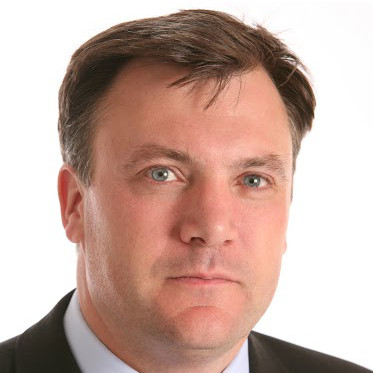
Tag: Ed Balls

  • Ed Balls – 2009 Speech to Labour Party Conference

    balls

    Below is the text of the speech made by Ed Balls, the then Secretary of State of Children, Schools and Families, to the 2009 Labour Party conference.


    Conference, there are over 79,000 social workers in our country today.

    Doing a job which can be tough and sometimes dangerous – but which saves lives and makes a huge difference to thousands of families.

    And unlike teachers or nurses, fire fighters and police officers where we can celebrate a life saved, a crime solved or a schools  exam results, we rarely get the chance to celebrate the quiet successes of our social workers.

    It is the toughest job.

    And it has been a really difficult year.

    The tragic death of Baby Peter in Haringey shocked the nation.

    People were appalled by what happened – by the cruelty he suffered, but also by the collective failure of services in Haringey to keep him safe.

    And I had to take tough action – to restore public confidence and to strengthen frontline practice.

    Faced with the same circumstances, I would take the same decisions again.

    But I know too that there is no more important job in our country than the job our social workers do day in day out:

    Keeping children safe.

    Looking after children in care.

    Supporting the most vulnerable in our society.

    That’s why I am determined to do whatever it takes to get social workers the training, the IT, the support they need to do their job.

    And it is also why I am asking you today:

    – to stand up for social workers;

    – to back our Help Give Them a Voice campaign;

    – and to join me in saying – for their dedication and their professionalism – thank you to the social workers of our country.

    And Conference, what is it that brings people into social work?

    What inspires Kevin and Colin, Sharon, Pauline and Colleen – the brilliant public servants we have applauded this afternoon?

    We know the answer.

    We have just seen it on this stage.

    It is the moral cause of public service.

    And Conference, this is our moral cause too.

    It is this commitment to social justice which brought many of us here today into politics:

    – that every child should have the right to be safe and happy and the opportunity to make the most of their talents;

    – and that there should be no barrier too great to overcome – not where they live, their parents’ income, their special need or disability,

    No barrier too great to overcome if through our collective endeavour we can break down those barriers and give every child the opportunities they deserve.

    That is the vision of our Children’s Plan.

    That is what we mean by social justice.

    And we can be proud of our work together to turn our moral purpose into direct action.

    Think of it – in 1997 – no Children’s Centres at all – or free nursery care.

    But as Yvette and I know – as many of you know all too well – it is hard to balance work and family life and we all want our children to have the best start in life:

    – that is why Mums and Dads can now get the financial support they need to stay at home with their children after they are born;

    – a free nursery place for all 3 and 4 year olds, now being extended to 250,000 2 year olds;

    – thousands of families with a disabled child now getting the short breaks they desperately need – and parents whose relationships are under pressure, getting help too;

    and by March next year, 3,500 Sure Start Children’s Centres – one in every community.

    A new and universal pillar of our welfare state delivered by this Labour government.

    And in 1997 our country had one of the lowest rates of staying on at 16.

    But because we are determined to give all young people the chance to succeed we now have 225,000 young people starting apprenticeships this year.

    We’re guaranteeing a place in sixth form, college or training for every school leaver this September.

    And we have also legislated so that for the first time in our country’s history, education will be a right for every young person until the age of 18.

    For our Labour, trade union and co-operative movement a dream for 100 years and more – now delivered in this century by this Labour government.

    And Conference, remember what we campaigned to change twelve years ago:

    – leaking roofs and freezing classrooms;

    – photocopied textbooks;

    – a teaching profession demoralised;

    – over half of schools not making the grade.

    That was Tory education policy.

    And where are we now?

    4,000 new or refurbished schools – the biggest school building programme since the Victorian era;

    funding per pupil more than doubled;

    42,000 more teachers – the best paid in our history – and 183,000 teaching assistants too;

    and not half of schools but less than 1 in 10 secondary schools now below our National Challenge standard.

    That is the difference made by a Labour government – our moral purpose in action.

    Of course, not everyone agrees.

    Michael Gove says our state schools are failing.

    He wrongly claims that grades are rising because exams are getting easier.

    Michael: stop running down the real achievements of our young people and the hard work of teachers in schools round the country.

    And conference, unlike the Tories, we will not break our promises on pay and conditions to teachers and head teachers.

    We will put teaching on the same professional footing as doctors and lawyers, introduce an entitlement to continuous professional development and reduce workload so teachers can get on and teach.

    And we can only do this by protecting the vital role our teaching assistants play every day – and our caretakers, cooks and cleaners too.

    That is why I am backing our support staff negotiating body today with new funding so that we can raise the training and recognition of support staff across our country.

    And I want to pay particular tribute to the hard work of our school catering staff – it because of their efforts and the campaigning of the National Policy Forum, the GMB, Unison and Party members that this month we started our pilots in Newham and County Durham – free school meals for all their primary school children.

    And Conference, we know too that our teachers play a hugely important and trusted role in our communities and with our children.

    I say there is no place in a civilised society for bullying of any kind whether because of race, or disability or sexual orientation.

    And I say too there is no place for racism of any kind in our schools.

    That is why I am today asking the former Chief Inspector of Schools, Maurice Smith, to examine the evidence and make recommendations.

    I want us to be confident that we have all the powers we need to keep racism and BNP activity out of all our schools.

    Conference.

    I want to say thank you to Cath Speight and the Policy Commission for their debates and advice.

    And to our brilliant ministerial team, Dawn and Vernon, Kevin, Diana, Delyth and Iain.

    We all know we still have much more to do to break down every barrier so that every child can succeed.

    That is why we are uncompromising about raising standards in every school – with schools working together in National Challenge Trusts, Co-op trusts, and our Academies programme to break the historic link between poverty and attainment.

    And when children fall behind they need extra help to get back on track – so we will guarantee one to one tuition in primary and secondary schools with extra help and support for children with special educational needs

    And because parents do want to know how their children and local schools are doing – we will keep tests at the end of Year 6, but we will introduce a new Report Card so that schools are, for the first time, fairly judged on all they do and parents get all the information they need.

    But parents also want their children to go to an orderly school with a strong head teacher who won’t tolerate bullying or disruptive behaviour in the classroom – like Blatchington Mill School in Hove which I visited this morning with the Prime Minister.

    So the Schools Minister Vernon Coaker and I are today announcing our new Behaviour Challenge so that every school has good discipline.

    And we will back head teachers, and expect all parents to back teachers too, so they have the confidence to use their powers to the full so teachers can teach and all children can learn.

    But Conference we will have to meet our goals in tougher times.

    It’s been a turbulent twelve months – the worst global financial crisis for a very long time.

    Who can now doubt that the swift and decisive leadership of Gordon Brown and Alistair Darling saved Britain – and the world – from sliding into depression?

    And we will not shirk the tough decisions to deliver the recovery we need and to get the deficit down.

    On tax, those with the broadest shoulders are carrying a heavier burden.

    And on spending too, we will make efficiency savings and ensure value for money.

    That is the only fair way to protect our frontline priorities.

    So let us say loud and clear today:

    We are not going to cut back Sure Start or tax credits or threaten child benefit.

    That’s David Cameron’s plan.

    And we will not deny school leavers the college and apprenticeship places they need or cut our school building programme to pay for an unfair and unfunded free market education experiment.

    That’s Michael Gove’s plan.

    But you know what shocked me most this summer?

    It wasn’t Michael Gove agreeing with George Osborne to cut schools and Sure Start budgets.

    It wasn’t Michael Gove running down the achievements of our young people.

    It wasn’t his refusal to back our free school meals pilots.

    None of that surprised me.

    After all, he is a Tory.

    But when he said we should exclude all vocational qualifications and Diplomas from league table comparisons of school performance, you start to get the real measure of his plans.

    Time after time I’ve visited schools where heads have proudly shown me design or construction, sport or dance lessons and told me those subjects have inspired young people to get good grades,  including in maths and English too.

    But Michael Gove says that these are soft subjects which should not count.

    What schools does he visit?

    How can he say all the pupils in our state schools learning these vocational subjects are second class?

    Instead of ending the damaging old divide between first class academic qualifications for some and vocational learning for the rest, he wants turn to back the clock and entrench that divide.

    Conference – this is the choice.

    Between a Conservative Party determined to preserve excellence for those who have it and a Labour government committed to open up excellence and opportunity for all.

    So I tell you:

    – we are not going to cut investment in schools and Sure Start;

    – we are not going to mandate cuts to frontline services that mean fewer teachers and teaching assistants;

    – we are not going to pay for an inheritance tax cut for the wealthy few by cutting investment in our children’s future;

    That is the Tory way – and we will fight it from now until election day.

    Conference, we know the truth.

    When public services are scaled back, we know which communities lose out.

    When unemployment becomes entrenched, we know which constituencies suffer most.

    When only some children succeed, we know which children will be left behind.

    And the reason why our Party campaigned so hard to be elected in 1945 and 1964 and 1997 was because we had seen the reality of Tory government.

    Our predecessors saw their communities ravaged by the mass unemployment of the ‘30s.

    They saw millions of young people excluded from the chance of a university place in the ‘50s.

    And then many of us lived through the 18 years of Thatcher and Major governments and saw:

    – child poverty doubling;

    – youth unemployment soaring;

    – public services slashed to the bone.

    I say to anyone who doubts whether this is a fight worth fighting,

    Let us not learn that lesson the hard way again.

    We don’t need to go back to Opposition to remind us why we need a Labour government.

    There is only one party that can get us through this downturn and that’s our Party – the Labour party

    There is only one party that will prioritise investment in education for all and that’s our party – the Labour party.

    There is only movement whose commitment to social justice is so deep in its core that – even in difficult times – we will still invest in our NHS and to support our pensioners and to tackle child poverty.

    It is going to be a hard fight. Yes…we are the underdogs.

    But in the coming months as we make the phone calls, deliver the leaflets and knock on doors, remember what’s at stake:

    – 3,500 Children’s Centres – that’s what’s at stake.

    – over 2 million children still living in poverty – that’s what’s at stake.

    – our plan to rebuild or refurbish every secondary school – that’s what at stake.

    – education to 18 a right for every young person – the future of our country – that’s what’s at stake.

    This is the most important election for a generation.

    We must rise to the challenge.

    It will be the fight of our lives – let us go and win it.

  • Ed Balls – 2008 Speech on National Curriculum Tests

    balls

    Made on the 14th October by the Secretary of State for the Department of Children, Schools and Families in the House of Commons.


    Mr Speaker, with your permission, I would like to make a statement on National Curriculum tests – and the next steps we will now take to strengthen school accountability.

    The far-reaching reforms I am announcing today will:

    – strengthen the role of Key Stage 2 national tests for 11 year olds;

    – radically reform the current Key Stage 3 testing regime in secondary schools;

    – and introduce a new, simpler and more comprehensive way of reporting to parents on primary and secondary school performance.

    Mr Speaker, when I made my statement to the House on 22 July, the Qualifications and Curriculum Authority (QCA) was engaged in commercially sensitive contractual negotiations with ETS Europe.

    On 15 August, the QCA terminated its five year contract with ETS Europe and recovered payments amounting to £24.1 million – two thirds of the monies due to ETS Europe for the first year of the contract repaid to the taxpayer.

    I also announced that the QCA would tender for a single year contract for the delivery of the 2009 tests.

    This new procurement is underway and has been informed by advice from Lord Sutherland – whose independent inquiry into the procurement and management of the contract for the delivery of this year’s tests will set out important lessons for all future contracts of this kind.

    Lord Sutherland expects to complete his final report before the end of the year.

    In my statement in July, I also made it clear that the current testing and assessment regime is not set in stone.

    I know that some honourable members were disappointed that – at that time – I was not able to go further. But it was important that we evaluated the case for change before making decisions.

    Over the summer, we have been able to study the Select Committee’s report on testing and assessment, which was debated in this House last week.

    We have studied more detailed evidence from our Making Good Progress pilots.

    And I have heard from a range of experts and partners – including Ofsted, head teachers, teachers and parents.

    Mr Speaker, I fully agree with the Select Committee that the principle of national testing is sound.

    But I do take seriously concerns raised by the Select Committee, teachers and parents.

    Testing, assessment and accountability must encourage and reward the best teaching – so that that it properly supports pupils in their learning and development, and schools are judged fairly on how they support the progress and well-being of every child.

    I believe that there are three key principles that must guide our approach.

    Our system of testing and assessment should:

    – First, give parents the information they need to compare different schools, choose the right school for their child and then track their child’s progress;

    – Second, enable head teachers and teachers to secure the progress of every child and their school as a whole, without unnecessary burdens or bureaucracy;

    – Third, allow the public to hold national and local government and governing bodies to account for the performance of schools.

    Over the summer, and guided by these principles, the Schools Minister and I have looked carefully at our system of national testing and accountability across Key Stages 1, 2 and 3.

    Mr Speaker, over more than a decade, testing and assessment has played a vital role in driving up standards in primary schools.

    This year, 107,000 more pupils left primary school secure in English and maths than in 1997.

    These are the basics that every parent knows their child needs if they are to succeed at secondary school.

    And the National Curriculum tests at the end of Key Stage 2 are the only objective measure of attainment in primary schools for parents, head teachers and the public.

    The current format of Key Stage tests at age 7 and 11 is not set in stone.

    At Key Stage 1, we have rightly replaced externally marked tests with teacher assessment, and introduced new catch-up teaching for children at risk of falling behind.

    We will now examine whether the current system of requiring teachers to use nationally set tasks as part of moderated teacher assessment is working effectively.

    We are also currently piloting ‘stage not age’ single level tests at Key Stage 2.

    While the emerging evidence from these continuing pilots is encouraging, it is too early to decide to proceed nationally.

    But I am convinced that externally marked Key Stage 2 National Curriculum Tests are essential to giving parents, teachers and the public the information they need about the progress of each primary age child and of every primary school.

    To abolish these tests, as some argue, would be the wrong thing to do.

    Mr Speaker, the testing and assessment system has also supported rising standards in our secondary schools – 68,000 thousand more pupils gained five or more good GCSEs including English and maths in 2007 than in 1997.

    But having looked hard at the current testing regime, we do not believe that the three principles I have set out justify the Key Stage 3 testing arrangements in their current form.

    Parents want to be able to choose the right secondary school for their child and see how their school is performing – but it is usual for them to look at a school’s GCSE results to do so.

    Parents also want to be able to track the progress of their children – but the measures we have already announced to improve real-time reporting of progress will mean that parents get much more regular information than just the results of a single national test.

    And head teachers have repeatedly told me that a more flexible system of assessment throughout Key Stage 3 would allow schools to focus their efforts more effectively on personalised teaching and learning using the flexibility of the new secondary curriculum.

    I have considered a shift to ‘stage not age’ tests in secondary schools, which we have also been piloting at Key Stage 3 over the past year.

    But the emerging evidence shows that single level tests at Key Stage 3 are not working effectively – so on the advice of the National Assessment Agency, we will now bring the Key Stage 3 piloting of single level tests to an end.

    Mr Speaker, I am today announcing that – as part of a wider overhaul of Key Stage 3 assessment – children will no longer be required to sit national tests at age 14.

    Instead:

    – We will ensure every parent receives regular reports on their child’s progress in years 7, 8 and 9 – and that teachers have the training and support to help every child make good progress;

    – We will continue to provide Key Stage 3 test papers to any schools that want to use them internally;

    – We will ensure that schools properly focus in years 7 and 8 on the progress of those children who did not reach the expected standard at Key Stage 2, with effective one-to-one tuition and catch-up learning;

    – And we will introduce an externally marked test, with a sample of pupils to measure national performance, so that the public can hold government to account.

    Mr Speaker, some parents find it difficult to judge how well their local schools are doing from national tests or Ofsted reports alone.

    So I also want to go further on school accountability.

    With the support of Ofsted, and following discussions with social partners, it is our intention to introduce a new School Report Card for all primary and secondary schools.

    The School Report Card will help parents to better understand how well schools are:

    – raising standards and improving, compared to other schools in their area;

    – supporting the progress of every pupil;

    – and playing their role in supporting the wider development and wellbeing of children.

    It will draw upon the successful model being used in New York City and elsewhere – but be designed to suit our schools.

    We will set out detailed proposals for consultation before the end of the year – with a White Paper to follow in the Spring.

    Mr Speaker, these are far-reaching reforms and it is vital that we get the details right.

    We will draw upon the analysis and findings of the Select Committee report and we will work closely with our social partners to take them forward without un-necessarily adding to teacher workload.

    And to advise us on the development of this new system, I am also today appointing a new Expert Group – and placing copies of its detailed terms of reference in the libraries of both Houses.

    Mr Speaker, today’s reforms require changes to the procurement of national tests for 2009.

    Consistent with our plans for future years:

    – we will continue to require pupils to take the national curriculum tests at Key Stage 2;

    – but we will not require pupils to take Key Stage 3 tests in 2009.

    The QCA is now extending its procurement deadline accordingly.

    Mr Speaker, the package of reforms I am announcing today will:

    – give parents better, more regular and more comprehensive information about their child’s progress and their school;

    – support head teachers and teachers to ensure that every child can succeed;

    – and strengthen our ability to hold all schools to account, as well as the public’s ability to hold government to account.

    And I commend this statement to the House.

  • Ed Balls – 2007 Speech on Ending Child Poverty

    balls

    Below is the text of the speech made by Ed Balls, the then Secretary of State for Children, Schools and Families, on ending child poverty made on 10th December 2007.


    I’m delighted to be speaking here today. And it is timely for me to be here because – as many of you know – tomorrow we are publishing our Children’s Plan.

    Over the past six months, we have been listening to parents, teachers, professionals, and children and young people themselves.

    We have heard that while there are more opportunities for young people today than ever before, parents want more support in managing the new pressures they face such as balancing work and family life, dealing with the internet and modern commercialism, and letting their children play and learn whilst staying safe.

    We heard that while children are doing better than ever in school, we need to do more to ensure that every child gets a world class education.

    And we heard that while fewer children now live in poverty, too many children’s education is still being held back by poverty and disadvantage.

    If we are going to make this the best place in the world for children and young people to grow up.

    If we are going to help all children and young people to fulfil their potential, we need to eradicate child poverty.

    This morning, Beverley Hughes and I visited Cardwell Primary School in Woolwich. Cardwell Primary School is located in an area of high deprivation, with over half of the children eligible for free school. But those children’s education is not held back by poverty and disadvantage.

    They are not held back because of the commitment of the head teacher – Carol Smith – and her team to look at the needs of the ‘whole child’ – tackling all the barriers to learning faced by their pupils.

    And they are able to do so effectively because their school is co-located with a children’s centre that offers a wide range of different services for the local community.

    Eradicating child poverty is something I care passionately about. It was something I was deeply committed to when I worked at the Treasury and I have worked with many of you over the past few years.

    It shouldn’t surprise any of you that I have carried this commitment with me to my new role as the first ever Secretary of State for Children, Schools and Families.

    Back in 1999, this Government set one of the most ambitious economic and social policy objectives set by any government in the developed world – to eradicate child poverty within a generation.

    At that time, we had inherited an intolerable situation. Between 1979 and the mid 1990s, the number of children living in poor households had more than doubled.

    By the time this Government came to power in 1997, the UK had the worst rate for child poverty in Europe – indeed, it was one of the worst of any industrialised nation.

    Since then, we have managed to stem the long-term trend of rising child poverty by galvanising our efforts around our goal.

    Partly through our investment in support for children and families since 1997:

    – The reforms to the tax and benefit system that mean that the poorest families will be an average of £4,000 better off in real terms by April 2009;

    – The 1,500 Sure Start Children’s Centres that are offering services to over a million young children and their parents;

    – And the national minimum wage underpinning all of our support for low-income families.

    As a result, there are 600,000 fewer children living in relative poverty now than there were in 1998/99 – the biggest fall of any EU country over this period.

    But work has also been central to our ambitions – over 2.7 million more people now in work, including 335,000 more lone parents – bringing the total of lone parents now in work to more than a million.

    A child of a lone parent that works is three times less likely to be living in poverty than a child of a lone parent that doesn’t. We know work – for those who can – provides the best, most sustainable, route out of poverty. Better off now, but even better off in the future.

    As Michael said, and as you all know and we have discussed in recent months, we still have a long way to go. The Joseph Rowntree Foundation and many of you are questioning whether we can sustain our level of progress.

    And I share your disappointment that last year’s figures – for the first time since 1999 – showed an increase in the number of children living in poverty.

    In every typical class of 30 children in our schools, 6 or 7 of those children are still living in relative low income poverty. In areas such as London, this figure rises to nearly half.

    So meeting the 2010 goal to half child poverty and our 2020 goal to eradicate it altogether is not going to be easy. But I want to be clear that we’re not going to abandon these goals just because the going has got tough. This is when we need to redouble our efforts and when we need to try even harder.

    The measures we recently announced in the Budget and in the PBR will take an estimated further 300,000 more children out of poverty. I know some of you are disappointed we have not done more. But our commitment is genuine and real.

    Rightly, you will always be campaigning for more immediate help to lift children out of poverty. And when I joined the Chancellor of the Exchequer at No 11 Downing Street last month to meet the End Child Poverty rally, we all agreed that we wanted to see more resources to support families living in poverty.

    But I know you will also agree with me that, if we want to eradicate child poverty altogether over the next decade, we will need to have a much broader, all-encompassing approach. It is vital that we prevent children who are in primary school today from becoming tomorrow’s impoverished parents if we are to meet our 2020 goal of eradicating child poverty.

    Because this is not a problem we can simply buy our way out of – it’s as much about what we do in children’s centres, in our schools and in the health services we provide for families. It’s as much about how we are preparing our children and young people for work as how much we are investing.

    This is why we have taken a series of broader decisions over the last few months. And I believe there are reasons for us to be optimistic about our potential to meet that goal because we now have:

    – A new department

    – A new joint child poverty unit

    – New, simpler but tougher PSAs to drive more action on child poverty locally

    – A Children’s Plan being published tomorrow.

    I would like to say something about each of these in turn.

    NEW DEPARTMENT

    Let me start with the new department. For the first time, we have a government department – the Department for Children, Schools and Families – that exists to champion the needs of children and young people.

    For the first time, all policy for schools, children’s services, youth services and the Respect agenda have been brought together in one department.

    And my department shares responsibility for youth justice with the Ministry of Justice – and I am actively working with Jack Straw on how we tackle the causes of youth crime because our approach must be based on prevention.

    For child health with the Department of Health.

    For children’s sport and play with the Department for Culture, Media and Sport.

    For alcohol and drugs with the Home Office.

    And of course, with the Department for Work and Pensions and the Treasury for child poverty.

    Understandably, many of you will be wondering what this will mean in practice – is it simply a superficial rebranding exercise or is it a more meaningful change that signals that we are going to do things differently?

    I am committed to making sure it is the latter by focussing on all the barriers to learning faced by all today’s children and young people. As the Department for Children, Schools and Families, we can make sure that – at a national level – we are focusing every policy that relates to children and families on tackling child poverty. And we will be able to drive local leaders – from lead members and directors of children’s services to children’s centre managers – to see the work as part of our shared challenge to tackle poverty.

    But collaboration at the centre of government needs to be matched – or even exceeded – at a local level.

    That’s why we are supporting the LGA’s Narrowing the Gap project, led by Christine Davies.

    And that’s why we will champion all the good examples of integrated working between Children’s Information Services, Children’s Centres, Extended Schools and Job Centre Plus.

    We need this to become the norm, not the exception, if we are to provide the best support to all parents and families.

    Central to this is the provision of affordable, accessible and reliable child care, so that parents can go to work – and fulfil their own ambitions – safe in the knowledge that their children are being well looked after.

    CHILD POVERTY UNIT

    Second, our new joint Child Poverty Unit. This is the working expression of how we will do things differently. Sitting in my department, it brings together expertise from DWP and my Department under one banner – and will enable us to co-ordinate our efforts to tackle child poverty more effectively, engaging both local leaders as well as strengthening action across central government, working with the devolved administrations. I am looking at what we need to do to meet our 2020 goal with Alistair Darling and Peter Hain.

    One of the most important things about the new unit is that it will be outward facing – it will actively seek and incorporate your views and expertise.

    I am very grateful to Martin and to Barnardo’s for allowing Neera Sharma to be seconded to the new Unit.

    And I am delighted to announce that we have now appointed a new Head for the Child Poverty Unit – Caroline Kelham, who joins us from the Prime Minister’s Strategy Unit, where she has recently been leading work on the Government’s Good Childhood Enquiry.

    Under Caroline’s leadership and with your support, the Unit will address all policy relating to child poverty – employment, education, health, housing, family and child wellbeing. Its first major task will be to map across government all that we’re doing to tackle child poverty and moving in the right direction.

    NEW PUBLIC SERVICE AGREEMENTS

    Third, the new PSA announced in October reaffirmed our commitment to half child poverty by 2010.

    But in addition, we have a whole set of simpler and also tougher targets that will, in the long term, lay the foundations for us to eradicate child poverty.

    It’s important that, for the first time ever, we have a target not only on raising the achievement of all children, but on narrowing the achievement gap and making sure all young people are on the path to success. We see that as vital if we are to break intergenerational cycles of poverty, not just lift children in the current cycle out of poverty.

    We will share responsibility for the Child Poverty PSA with the Treasury and with DWP. A board of senior policy experts will oversee delivery of the target. They will report jointly to Alistair Darling, Peter Hain and me, so the emphasis is firmly on joint working. But again, I want to be clear about this. It doesn’t just mean that, once a year, we’ll listen to a progress update on whether we’re going to meet our target or not. Alistair, Peter and I all see this as something we need to drive forward on a day-to-day basis if necessary – if that’s what it takes to meet the 2020 goal.

    CHILDREN’S PLAN

    Finally, tomorrow we are publishing the first ever Children’s Plan, to put the needs of families, children and young people at the centre of everything we do.

    Building on a decade of reform and results, and responding directly to what we heard from parents, teachers, professionals, and children and young people themselves, it will reinforce our commitment to eradicating child poverty and ensuring that all children and young people are happy, healthy and grow up to be successful.

    It will consider what more we can do across all of the services we provide to help poorer families in areas such as childcare and children’s play.

    It will also set out what more we can do to help narrow the attainment gap between disadvantaged children and their peers.

    There are early signs that the attainment gap is narrowing – the latest figures show that the gap in GCSE average point scores between pupils receiving free school meals and those not narrowed by 6.2 points from 2004 – 2006.

    But we know we need to do more. That is why we have allocated more money for children’s centres, money to support disadvantaged children to access enriching activities through extended schools and one-to-one tuition for those who are falling behind.

    And the Children’s Plan we will set out what we can do to get excellent individual services – Sure Start centres and mid-wives, schools and GPs, youth centres and youth offending teams – working together with parents and services co-located in schools to spot problems early, tackle barriers to learning and then act effectively. That is our vision for schools in the 21st century and 21st century children’s services to make England the best place to be a child.

    You will no doubt already have heard that we are committing an additional £18 million to provide home safety equipment for families living in the most deprived circumstances. Because we know that children under five from the most disadvantaged backgrounds are much more likely to die or be injured as a result of household accidents.

    We also know that disabled children are much more likely to be living in poverty than non-disabled children.

    Today, and on top of the £280m to fund short breaks that we allocated in Aiming High for Disabled Children, I can announce that I am allocating £90million over the next three years to invest in facilities to help disabled young people go on short breaks with their peers.

    As you will know, since 1973, we have been investing in the Family Fund to support severely disabled children and their families on low incomes. We will now also provide £8.4 million over the next three years to allow us to raise the age threshold of Family Fund support to include young people aged from 16 to 18. That means 16,000 more grants over the next three years for the families that need it most.

    RAISING AWARENESS

    There’s one particular point I’d like to raise with you again today and I know that you have been discussing this morning – what we can do to gain more public support for our efforts to reduce child poverty.

    We agree we need an ambitious campaign which creates the space and provides the impetus for real progress:

    – forging new alliances and empowering new groups to join the campaign

    – winning the backing of the voluntary sector and faith groups

    – building a broad-based, cross-party consensus in our country around tackling and ending child poverty is the only way to meet our goal.

    Over the past few years, you have made real progress.

    You’ve almost trebled in size, bringing in members from new areas and sectors to build much broader support around the shared goal of ending child poverty.

    And you’ve always maintained a constructive dialogue with Government, focussing on the long-term prize.

    Yet we know that we still sometimes have a hard enough job convincing local leaders and practitioners that they have to take child poverty seriously and do what needs to be done.

    And emerging findings from research undertaken by my colleagues at the Department for Work and Pensions mirror your own concerns – that there are significant public misconceptions about child poverty, and that many people don’t think child poverty exists in Britain – or fail to see the connection between children living in poverty and poor health or poor achievement in schools.

    We need to work with you to ensure more and broader support. And we will do so.

    CONCLUSION

    I’d like to end by thanking you for your ceaseless energy – keeping the focus inside and outside government where it needs to be. Your work is invaluable in helping us turn this ambitious – but vital – goal into a reality.

    And as we begin to look in detail at how best to achieve our target of eradicating child poverty by 2020, it is important to recognise that many of the parents and young adults of 2020 are children and young people today.

    It should no longer be acceptable for poverty to be something that’s inherited by successive generations.

    It shouldn’t be an automatic marker for poor health or underachievement.

    Breaking that cycle is an important part of what our Children’s Plan sets out to do.

    In 2005, when the global economy was in a downturn – when the going got tough – we redoubled our efforts and we rose to the challenge of tackling child poverty.

    I and my colleagues in Government are determined to do so again. But we need your support and we need you to continue to work with us to help us to achieve our goal.

    Thank you.