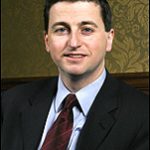
Tag: Douglas Alexander

  • Douglas Alexander – 2025 Statement on Trade Negotiations

    Douglas Alexander – 2025 Statement on Trade Negotiations

    The statement made by Douglas Alexander, the Minister for Trade Policy and Economic Security, in the House of Commons on 6 May 2025.

    I wish to make a statement on the progress that this Government have made towards a UK-India trade deal. I am delighted to inform the House that we have now concluded negotiations on a comprehensive, modern agreement with the fastest-growing economy in the G20.

    Hon. Members will no doubt be aware that India is expected to be the third-largest economy in the world by 2028. By the end of this decade, it will be home to an estimated 60 million middle-class consumers, and with trade between the United Kingdom and India already standing at north of £43 billion, we know that this powerhouse economy is and will remain a hugely important market for British businesses. While past Governments have failed to negotiate a deal with India, this Government have today succeeded. We have brokered the most generous trade deal ever agreed by India in its history.

    From day one of this deal coming into force, it will make trade between our countries cheaper, easier and quicker. UK exporters will benefit from much lower tariffs across a whole host of sectors, including those that we are prioritising in our industrial strategy. It means simplified customs processes for businesses in advanced manufacturing and aerospace, in the food and beverage sector, and in the creative sector, which will benefit from improved copyright protection.

    For our world-leading financial and professional services companies, this deal locks in access to India’s fast-growing market. It will ensure that UK banks and finance companies are placed on an equal footing with Indian suppliers, and it encourages the recognition of professional qualifications, so that UK and Indian firms can access the right talent at the right time, whether they are in Mumbai or Manchester. This deal will unlock new opportunities for businesses in every part of the United Kingdom, including our advanced manufacturing companies in the north-east, our iconic Scottish whisky brands and our car plants in the west midlands. In all, we will have secured over £400 million in tariff reductions in the first year alone, doubling to around £900 million after just 10 years.

    Crucially, the deal we have negotiated will provide bespoke support for small and medium-sized enterprises to enter the Indian market, alongside a firm commitment from India to address the trade barriers that those businesses face. Since taking office, we have committed to hardwiring the views and interests of small businesses into everything we do, and the deal we have negotiated is evidence of that. For the very first time, British businesses will have guaranteed access to India’s vast procurement market, covering goods, services and construction. They will be able to bid for approximately 40,000 tenders worth at least £38 billion a year.

    The deal that we have just got over the line is further proof that this Government are using the power of international trade and investment to raise living standards here at home. Indeed, experts predict that it will boost our bilateral trade by some £25.5 billion. It is also projected to increase UK wages by £2.2 billion each year, while adding nearly £5 billion to our GDP over the long run.

    We have done all that while defending stoutly the UK’s national interest. We have brokered a deal that protects our NHS and upholds our high food standards. It ensures that our points-based immigration system remains unaffected. The deal demonstrates our commitment to both workers and businesses, staying true to our Labour values while contributing to our primary mission of economic growth.

    I recognise that this House will need time to scrutinise the deal before the ratification process. My Department will follow the process set out in the Constitutional Reform and Governance Act 2010 in sharing the finalised treaty text with hon. Members. The House will, of course, have the opportunity to scrutinise any legislation associated with its implementation.

    This deal sends a powerful message about the UK and India’s shared commitment to free, fair and open trade. The UK-India relationship has deep, enduring roots, exemplified by the living bridge of 1.9 million people of Indian heritage living in the United Kingdom. While I do not personally lament that the right hon. Member for Richmond and Northallerton (Rishi Sunak) is no longer the UK’s Prime Minister, it would be wholly wrong of me not to acknowledge his significant achievement as the first British-Indian Prime Minister, which is a testament not just to his own ability but to the close bonds that unite our two nations.

    The Government are proud to back open markets and free trade. We recognise that Britain has always been an open, outward-looking trading nation, and we believe that open markets and free trade are fundamental building blocks with which the UK can secure its opportunities and prosperity at home and abroad. Through our upcoming trade strategy, we will set out our ambitions to engage with more industrial giants, like India, to ramp up trade and investment over the coming months and years.

    Today, though, as close trading partners and as friends, I am proud that we have secured this deal with India. It is a deal that affords UK businesses certainty and stability during a time of global uncertainty and instability, and a deal that will give British businesses access to one of our biggest markets abroad, while raising wages and driving growth here at home. That is what this deal delivers, and I commend this statement to the House.

  • Douglas Alexander – 2023 Comments on Standing for East Lothian Constituency

    Douglas Alexander – 2023 Comments on Standing for East Lothian Constituency

    The comments made by Douglas Alexander on Twitter on 12 February 2023.

    He’s running! Humbled and grateful to be overwhelmingly selected today by local party members as Scottish Labour’s candidate for East Lothian. Change is coming to our country and I’m determined to play my part by winning East Lothian back for Scottish Labour.

  • Douglas Alexander – 2014 Parliamentary Question to the Foreign and Commonwealth Office

    Douglas Alexander – 2014 Parliamentary Question to the Foreign and Commonwealth Office

    The below Parliamentary question was asked by Douglas Alexander on 2014-04-03.

    To ask the Secretary of State for Foreign and Commonwealth Affairs, what the Government’s most recent assessment is of the likelihood of President Assad complying with the agreed Organisation for the Prohibition of Chemical Weapons timetable for the removal and destruction of Syria’s stockpile of chemical weapons.

    Mr William Hague

    Good early progress was made toward putting both Syria’s chemical weapons manufacturing facilities and the weapons themselves beyond use. However, the programme has fallen behind schedule and the regime has missed a number of interim deadlines, including the 31 December target for the removal of priority I chemicals, and the 5 February deadline for the removal of priority II material. It is the regime’s responsibility to comply with the timetable set out by the UN-Organisation for the Prohibition of Chemical Weapons (OPCW).

    The UN Secretary General, the OPCW Director General and the coordinator of the OPCW-UN joint mission have assessed that Syria has all the equipment it needs to ensure the expeditious removal of the chemicals concerned. To date, approximately 54 percent of the declared chemical stockpile has been removed from Syria. The regime must significantly accelerate the movement of the chemicals to port to enable their removal if the 30 June deadline for the elimination of the chemicals is to be achieved.

  • Douglas Alexander – 2014 Parliamentary Question to the Deputy Prime Minister

    Douglas Alexander – 2014 Parliamentary Question to the Deputy Prime Minister

    The below Parliamentary question was asked by Douglas Alexander on 2014-04-29.

    To ask the Deputy Prime Minister, pursuant to the Answer of 30 January 2014, Official Report, column 692W, on Colombia, which representatives of non-governmental organisations accompanied him on his visit to Colombia in February 2014.

    Mr Nick Clegg

    I was accompanied on my visit by Lord Livingston of Parkhead and a delegation representing British businesses. Whilst this delegation did not include representatives of non-governmental organisations, I met a number of NGOs before the visit and during my time in Colombia.

  • Douglas Alexander – 2014 Parliamentary Question to the Foreign and Commonwealth Office

    Douglas Alexander – 2014 Parliamentary Question to the Foreign and Commonwealth Office

    The below Parliamentary question was asked by Douglas Alexander on 2014-06-09.

    To ask the Secretary of State for Foreign and Commonwealth Affairs, what recent discussions he has had with his EU counterparts on progress on the EU-Ukraine Association Agreement.

    Mr William Hague

    The March European Council held an in depth discussion on the situation in Ukraine, and the political chapters of the EU-Ukraine Association Agreement were signed on 21 March. At the March European Council the EU and Member States also restated their commitment to signing the remainder of the Association Agreement with Ukraine.

    The 14 April and 15 May Foreign Affairs Committees agreed Conclusions which reiterated the EU’s commitment to sign the remaining provisions of the Association Agreement, including the Deep and Comprehensive Free Trade Area, as soon as possible after the presidential elections which took place on 25 May.

  • Douglas Alexander – 2014 Parliamentary Question to the Foreign and Commonwealth Office

    Douglas Alexander – 2014 Parliamentary Question to the Foreign and Commonwealth Office

    The below Parliamentary question was asked by Douglas Alexander on 2014-04-03.

    To ask the Secretary of State for Foreign and Commonwealth Affairs, what the Government’s latest assessment is of the security situation in Egypt following the recent suicide bombing outside Cairo University grounds.

    Mr William Hague

    Our assessment, as published in the Foreign and Commonwealth Office travel advice, is that there is a high threat from terrorism in Egypt, including Cairo. We believe that terrorists continue to plan attacks, which could be indiscriminate and occur without prior warning. Attacks have mainly been aimed at the security forces, their facilities and other government buildings. However, attacks targeting foreigners cannot be ruled out. We continue to keep our travel advice under constant review.

    During my meeting with Egyptian Foreign Minister Nabil Fahmy on 2 April, I condemned the recent attacks in Cairo and sent condolences to the family of the victim and those who have been injured.

  • Douglas Alexander – 2014 Parliamentary Question to the Deputy Prime Minister

    Douglas Alexander – 2014 Parliamentary Question to the Deputy Prime Minister

    The below Parliamentary question was asked by Douglas Alexander on 2014-04-29.

    To ask the Deputy Prime Minister, pursuant to the Answer of 30 January 2014, Official Report, column 692W, on Colombia, which individuals accompanied him in an official capacity during his visit to Colombia in February 2014.

    Mr Nick Clegg

    Information about Ministers’ visits overseas is published on a quarterly basis at: https://www.gov.uk/government/collections/ministers-transparency-publications#gifts-hospitality-overseas-travel-and-meetings-with-external-organisations

  • Douglas Alexander – 2014 Parliamentary Question to the Foreign and Commonwealth Office

    Douglas Alexander – 2014 Parliamentary Question to the Foreign and Commonwealth Office

    The below Parliamentary question was asked by Douglas Alexander on 2014-06-09.

    To ask the Secretary of State for Foreign and Commonwealth Affairs, what steps he is taking to ensure that the remaining states who have not yet ratified the Arms Trade Treaty do so.

    Mr William Hague

    We will work to encourage states to sign and to ratify, in order to reach the 50 ratifications that are required to bring the Treaty into force. Like the negotiations on the Treaty itself, this will take time and require the considerable efforts and persistence of a broad coalition of supporters.

    The UK has allocated £350,000 to support projects that will help countries to sign, ratify and implement the Arms Trade Treaty (ATT). We are working through the UN and EU with countries that require technical assistance and advice on how to implement certain aspects of the Treaty e.g. enforcement training and framing legislation correctly. Other activities include raising awareness with key partners in regions such as West Africa, where communities are seriously affected by the illicit trade in Small Arms.

    This year, through the Foreign and Commonwealth Office’s counter-proliferation programme, we will be funding a series of ATT-related projects specifically focused on ATT signature, ratification, implementation and early entry into force.

  • Douglas Alexander – 2014 Parliamentary Question to the HM Treasury

    Douglas Alexander – 2014 Parliamentary Question to the HM Treasury

    The below Parliamentary question was asked by Douglas Alexander on 2014-04-03.

    To ask Mr Chancellor of the Exchequer, what the Government’s latest assessment is of the likely timeframe within which International Monetary Fund funds will be released for the Ukraine.

    Andrea Leadsom

    The IMF Board is expected to consider Ukraine’s application for a financial assistance programme in April. The agreement of a programme and subsequent disbursement of funds is also dependent on the Ukrainian authorities adopting a set of reforms as set out by the IMF.

    The latest IMF statement, following staff level agreement with the Ukrainian authorities on a potential programme, can be found at:

    http://www.imf.org/external/np/sec/pr/2014/pr14131.htm

  • Douglas Alexander – 2014 Parliamentary Question to the Foreign and Commonwealth Office

    Douglas Alexander – 2014 Parliamentary Question to the Foreign and Commonwealth Office

    The below Parliamentary question was asked by Douglas Alexander on 2014-06-09.

    To ask the Secretary of State for Foreign and Commonwealth Affairs, what assessment he has made of the likelihood of reaching a comprehensive agreement between the P5+1 and Iran on its nuclear programme in advance of the 20 July 2014 deadline.

    Mr William Hague

    The current negotiations with Iran, which have built on the Geneva interim deal, have been constructive, but challenging. Any deal will require Iran to take significant steps to address comprehensively our proliferation concerns. But there remains commitment on all sides of the table to reach a deal.