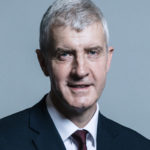
Tag: Derek Twigg

  • Derek Twigg – 2024 Speech on the Loyal Address

    Derek Twigg – 2024 Speech on the Loyal Address

    The speech made by Derek Twigg, the Labour MP for Widnes and Halewood, in the House of Commons on 17 July 2024.

    It is a real pleasure to speak in the King’s Speech debate, setting out Labour’s new programme for government after 14 years of disastrous Tory Government. It is also an honour to take part as the MP for the new constituency of Widnes and Halewood, in which I was born and bred.

    The Prime Minister has made it clear that the Labour Government will be one of service, with a clear mandate to deliver the change that the country desperately needs. The King’s Speech shows that Labour plans to govern with serious solutions. Labour will make the difficult decisions needed to fix the basic problems facing the country. I am really pleased that we have made growth a central plank of the Government’s policy, including of course the development of an incredible industrial strategy. We must also address the serious and long-term productivity problem that the country has faced. I hope that the new Government will get on to that quickly, because it is really holding us back.

    The new Labour Government of ours have a daunting job in tackling the many challenges facing the country after 14 years of mismanagement of our economy, epitomised by the disastrous Liz Truss Budget as well as the running down and underfunding of our public services. The NHS and social care are in crisis, with people dying because of delays in treatment. Waiting in hospital corridors is now the norm. Local authorities are also struggling to remain financially viable.

    Rather than stick our heads in the sand or pull the wool over people’s eyes as the Tories did, Labour will be straight with people about the problems that we have inherited. The truth is, there is not a switch that we can flick to fix the country’s problems overnight.

    This is a packed King’s Speech, but, as there is limited time to speak, I will focus on just a few areas. I really welcome the decision to bring rail services back into public ownership—to improve passenger journeys and deliver better value for taxpayers—and to establish Great British Railways. Anyone who has travelled on Avanti West Coast will know of the many and continuing problems it has had over a long period of time, whether it is the fact that trains are late or cancelled, the wi-fi does not work, they do not have any hot water or whatever. We know that it has been a failure, so I welcome a decision on that.

    The announcement of a Hillsborough law is really important. It would place a legal duty of candour on public services and authorities. This Government are determined to rebuild trust, foster respect, improve transparency and accountability, and address the culture of defensiveness in the public sector. I pay particular tribute to my right hon. Friend the Member for Liverpool Garston (Maria Eagle), who has worked tirelessly to get to this stage, and I am pleased that the Government have adopted it. Many colleagues worked with her and others on this particular policy. She and I go back many years and have worked closely with the Hillsborough families. I was at the Hillsborough disaster. We know how terrible the experience has been for those families, and the fight they have had over the years. The way that they were treated by the establishment is a scandal. I hope that they will be somewhat relieved and pleased to see this progress.

    Tackling the mental health crisis and modernising the Mental Health Act to make it fit for the 21st century will help deliver the Government’s mission to see people live healthy lives for longer, and will put patients at the centre of decisions about their health. I also want to raise the massive challenge of children and adolescents’ mental health waiting lists and the service itself. I would like the Government to focus on that particular part. I am sure that every Member of Parliament here will have many constituents coming to them about this issue. We must also have a proper plan to try to do all we can to reduce suicides, particularly among young men. I welcome any changes and involvement from the Government.

    A lot has been said about planning, but high streets have not really been mentioned. Many of us in our constituencies face real issues with high streets, which have been under massive pressure, with many shops closing down. There is a need for renewal and regeneration. I hope that the planning Bill will look at that. I welcome the reform of bus services. Particularly over the past 10 to 15 years, many communities have become more isolated because bus services have been cancelled or reduced. I hope that with this change in policy we can make some improvements to the many communities who feel isolated across this country, not least in my constituency.

    In the King’s Speech, the Government made a clear commitment to NATO. They said that it remains unshakeable and that they will retain a strong armed forces, including a nuclear deterrent. I welcome that from the Prime Minister and the Government. The strategic defence review, which has been commissioned by the Prime Minister and will be overseen by the Defence Secretary, is very welcome as a root and branch review. Those of us who have been around here for some time and have had to put up with a Conservative Government who have let down the armed forces, putting this country’s defence and security at risk, will welcome this review. We must look at the situation: we have the smallest Army since Napoleonic times. Even a previous Conservative Secretary of State said that the armed forces have been hollowed out. We have a shortage of munitions. There are major problems with procurement and wasted money, which need to be addressed. I am sure that they will be a priority of this new Government.

    The focus has always been and will continue to be on Ukraine, and I was pleased to see the commitment to Ukraine in the King’s Speech. We face a real problem with Russia, China and North Korea and the threat they pose to world order and to democracies in particular. These are some big challenges that we must get to grips with. We must look again at our armed forces and how we can improve them, get better funding and, importantly, ensure that the funding they get is spent correctly and efficiently, and not wasted. That is important for the future.

    Jim Shannon (Strangford) (DUP)

    I commend the hon. Gentleman for what he says about the armed forces. In Northern Ireland we have always had a large recruitment, both to the regular forces and to the territorials. Does he agree that when it comes to recruitment for Northern Ireland, extra money should be made available to ensure that those who want to join can do so?

    Derek Twigg

    I understand the hon. Member’s pitch for extra resources for Northern Ireland, but I think he will recognise that there is now a major recruitment crisis in the armed forces that has been ongoing for many years. It is not just an issue of recruitment; it is also about retaining good, experienced people. That is what we have to really focus on. I am sure the defence review will look at that. It is also about looking after our service personnel, ensuring that they have better housing and better facilities, and that their pay is right, and ensuring that we have proper services and support for our veterans. I agree with him that recruitment is a challenge. We have to sort that out, because it is weakening our armed forces.

    I know that time is getting on, so I just want to say a couple of things in conclusion. We still have a cost of living crisis. Living standards were lower at the end of the last Parliament than they were at the beginning of the last Parliament, and the tax burden is at its highest rate for years. Our first King’s Speech will be a downpayment: just the start of the legislative plans that Labour will set out over the next five years. To transform our country, we will need to be patient and have focused work over a long period of time. As the Prime Minister has made clear, this will be a Government of service that will do things differently and properly. Rather than gimmicks and Bills that do not work, Labour will be focused on real change for working people.

  • Derek Twigg – 2016 Parliamentary Question to the Department of Health

    Derek Twigg – 2016 Parliamentary Question to the Department of Health

    The below Parliamentary question was asked by Derek Twigg on 2016-03-23.

    To ask the Secretary of State for Health, what recent assessment his Department has made of the effect of the use of steroids on the physical and mental health of people using such drugs.

    Jane Ellison

    Information on the physical and mental health effects of anabolic steroids, as well as other illicit and licit substances, is contained in ‘A summary of the health harms of drugs: A guide to the risks and harms associated with substance misuse’ published by the Department in August 2011 and is available online:

    http://www.nta.nhs.uk/uploads/healthharmsfinal-v1.pdf

    When used in clinical practice, doctors prescribing a course of anabolic steroids are expected to discuss potential side effects and to draw patients’ attention to the additional information contained in the Patient Information Leaflet.

  • Derek Twigg – 2016 Parliamentary Question to the Department of Health

    Derek Twigg – 2016 Parliamentary Question to the Department of Health

    The below Parliamentary question was asked by Derek Twigg on 2016-04-19.

    To ask the Secretary of State for Health, what plans he has to merge clinical commissioning groups during the course of the current Parliament.

    George Freeman

    There are no plans to merge clinical commissioning groups.

  • Derek Twigg – 2016 Parliamentary Question to the Department of Health

    Derek Twigg – 2016 Parliamentary Question to the Department of Health

    The below Parliamentary question was asked by Derek Twigg on 2016-03-23.

    To ask the Secretary of State for Health, what plans his Department has to increase the retention rate of doctors working in general practice.

    Alistair Burt

    The number of full time equivalent doctors working in general practice has increased by 1,677 since September 2010.

    The Department has committed to further increasing the primary and community care workforce by 10,000 by 2020, including an additional 5,000 doctors working in general practice. In January 2015, NHS England, Health Education England, the Royal College of General Practitioners and the British Medical Association’s General Practitioners Committee published Building the Workforce, a ten point plan to address general practitioner (GP) workforce issues.

    The ten point plan includes actions to improve retention, as well as to increase recruitment and support GPs to return to practice. As part of this work, NHS England has commissioned a detailed review to identify the most effective measures to encourage experienced GPs to remain in practice.

  • Derek Twigg – 2016 Parliamentary Question to the Department of Health

    Derek Twigg – 2016 Parliamentary Question to the Department of Health

    The below Parliamentary question was asked by Derek Twigg on 2016-04-19.

    To ask the Secretary of State for Health, what recent assessment he has made of the effect of the provision of urgent care centres on levels of attendance at A&E departments.

    Jane Ellison

    The location and structure of urgent and emergency care services is a matter for local commissioners, taking account of guidance issued by NHS England. This guidance includes Safer, faster better: good practice in delivering urgent and emergency care, which was published in August 2015, to support frontline providers and commissioners in re-designing urgent and emergency care services.

    The guidance states that urgent care centres co-located with emergency departments provide an opportunity to stream patients with less serious illnesses and injuries to a service that is resourced to meet their needs, while reducing crowding in emergency departments.

  • Derek Twigg – 2016 Parliamentary Question to the Department of Health

    Derek Twigg – 2016 Parliamentary Question to the Department of Health

    The below Parliamentary question was asked by Derek Twigg on 2016-03-23.

    To ask the Secretary of State for Health, how many GPs retired in Halton constituency in the last 12 months; and how many GPs in that constituency have given notice of their intention to retire in 2016.

    Alistair Burt

    This information is not collected centrally. However, this information is available from the Halton Clinical Commissioning Group.

  • Derek Twigg – 2016 Parliamentary Question to the Department of Health

    Derek Twigg – 2016 Parliamentary Question to the Department of Health

    The below Parliamentary question was asked by Derek Twigg on 2016-04-19.

    To ask the Secretary of State for Health, how many people undertake quality assurance in the NHS outside of clinical commissioning groups.

    Ben Gummer

    We do not hold information centrally on the number of people working in the National Health Service who have a quality assurance role.

    However, the fundamental standards set out the standards against which care should not fall and all providers are expected to have systems and processes in place to assure themselves that they are assessing, monitoring and improving the quality and safety of their services.

    The Care Quality Commission (CQC) is responsible for the inspection and regulation of quality of all healthcare providers and its findings are published together with a performance rating. Where a provider’s performance falls below the fundamental standards the CQC has specific powers to take appropriate action.

  • Derek Twigg – 2016 Parliamentary Question to the Department for Transport

    Derek Twigg – 2016 Parliamentary Question to the Department for Transport

    The below Parliamentary question was asked by Derek Twigg on 2016-03-23.

    To ask the Secretary of State for Transport, with reference to his visit to the Mersey Gateway on 23 April 2015, what progress has been made on ensuring support will be provided to small businesses in Runcorn and Widnes when that bridge opens in 2017 related to the cost of tolls crossing the Mersey Gateway.

    Mr Robert Goodwill

    Residents of Halton will already be able to use the bridges for free following previous Government decisions to fund an extension to the original, limited, resident’s discount scheme proposed by Halton Borough Council. Heavy goods vehicles and coaches will pay the same wherever they are geographically based which will ensure a level playing field for businesses across the North West.

  • Derek Twigg – 2016 Parliamentary Question to the Department of Health

    Derek Twigg – 2016 Parliamentary Question to the Department of Health

    The below Parliamentary question was asked by Derek Twigg on 2016-04-19.

    To ask the Secretary of State for Health, how much was spent from the public purse on the maintenance of NHS buildings in each year since 2010.

    George Freeman

    The information is not available in the format requested. Such information as is available is in the following table.

    Data is collected annually in the Estates Return Information Collection from the National Health Service for maintenance service costs (prior to 2013-14 the data collected was “total building and engineering maintenance costs”). The data for 2010 onwards is provided for the NHS below:

    £ million

    2010-11

    768.46

    2011-12

    751.40

    2012-13

    753.64

    2013-14

    756.06

    2014-15

    749.82

    The data is provided as received from the NHS and has not been amended centrally.

  • Derek Twigg – 2015 Parliamentary Question to the Ministry of Defence

    Derek Twigg – 2015 Parliamentary Question to the Ministry of Defence

    The below Parliamentary question was asked by Derek Twigg on 2015-11-03.

    To ask the Secretary of State for Defence, how many soldiers left the army voluntarily in each year since 2010.

    Mark Lancaster

    Defence Statistics publish information on a regular basis showing voluntary outflow figures for the Armed Forces, broken down to single Services.

    Figures for 2010-11 are available at:

    https://www.gov.uk/government/uploads/system/uploads/attachment_data/file/280435/1_january_2013.pdf

    Figures from 2011-12 to 2014-15 are available at:

    https://www.gov.uk/government/uploads/system/uploads/attachment_data/file/426880/QPR_Apr2015.pdf

    The most recent information is contained in ‘UK Armed Forces Monthly Service Personnel Statistics September 2015’ and associated tables which is available at the following link:

    https://www.gov.uk/government/statistics/uk-armed-forces-monthly-service-personnel-statistics-2015