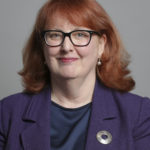
Tag: Deidre Brock

  • Deidre  Brock – 2016 Parliamentary Question to the Ministry of Justice

    Deidre Brock – 2016 Parliamentary Question to the Ministry of Justice

    The below Parliamentary question was asked by Deidre Brock on 2016-09-02.

    To ask the Secretary of State for Justice, how her Department plans to continue to work with European partners in the areas of her portfolio that were covered by the Schengen Agreement after the UK leaves the EU.

    Sir Oliver Heald

    As the Prime Minister has said, it would not be right for the Government to give a running commentary on negotiations with the EU.

  • Deidre  Brock – 2015 Parliamentary Question to the HM Treasury

    Deidre Brock – 2015 Parliamentary Question to the HM Treasury

    The below Parliamentary question was asked by Deidre Brock on 2015-11-04.

    To ask Mr Chancellor of the Exchequer, whether it is proposed for welfare payments made by the Scottish Government, provided for under any Act arising from the Scotland Bill, to count as income for the purposes of calculating tax credits.

    Damian Hinds

    The Smith Commission agreement, agreed by all the main parties in Scotland, set out those benefits where power should be devolved to the Scottish Parliament. Tax credits were not amongst those benefits.

    However, under the current Scotland Bill clauses, the Scottish Government will have the power to top-up tax credits, as long as it does so through using its own resources. The Smith Commission agreement said that any new benefits or discretionary payments introduced by the Scottish Parliament must provide additional income for a recipient and not result in an automatic offsetting reduction in their entitlement to other benefits. Once the Scottish Government have been clear about how they want to use their new powers, we will work with them to understand the interactions between the reserved and devolved benefit systems.

  • Deidre  Brock – 2016 Parliamentary Question to the Department for Transport

    Deidre Brock – 2016 Parliamentary Question to the Department for Transport

    The below Parliamentary question was asked by Deidre Brock on 2016-06-08.

    To ask the Secretary of State for Transport, what the coastguard search and rescue capability for the Firth of Forth is.

    Mr Robert Goodwill

    HM Coastguard search and rescue capability consists of the tasking and coordination of rescue resources, the volunteer Coastguard Rescue Service (CRS) and the provision of Search and Rescue Helicopters.

    Tasking and Coordination of Rescue Assets

    HM Coastguards ‘National Network’ enables the National Maritime Operations Centre (NMOC) and 9 Coastguard Operations Centres (CGOC) to coordinate any incident anywhere around the UK coast. Workload is therefore managed on a national basis enabling national capability and resource to be available to any incident, for example in the Firth of Forth, on the basis of the nature of the incident.

    Volunteer Coastguard Rescue Service

    There are 4 volunteer Coastguard Rescue Teams (CRT) covering the Firth of Forth with the following operational capabilities.

    CRT

    Water Safety and Rescue

    Land Search

    Mud Rescue

    Rope Rescue

    First Aid

    Leven

    Kinghorn

    South Queensferry

    Fisherrow

    North Berwick

    Additionally there are 5 full time Maritime Coastguard Agency employees who are responsible for the management, training and oversight of these teams.

    Search and Rescue Helicopters

    The Search and Rescue Helicopters based at Inverness and Prestwick provide capability for the Firth of Forth. However, it should be noted that the speed and range of the aircraft located at the four HM Coastguard bases in Scotland means that HM Coastguard has the ability to surge up to five SAR helicopters to a single incident in Scotland, should it be necessary to do so.

  • Deidre  Brock – 2016 Parliamentary Question to the Foreign and Commonwealth Office

    Deidre Brock – 2016 Parliamentary Question to the Foreign and Commonwealth Office

    The below Parliamentary question was asked by Deidre Brock on 2016-07-20.

    To ask the Secretary of State for Foreign and Commonwealth Affairs, what representation he is making to the Turkish government about the suspension of judges, civil servants and education workers and a travel ban on academies following the attempted coup.

    Sir Alan Duncan

    The UK Government has strongly condemned the attempted coup on 15 July. As the Prime Minister said in the House of Commons on 18 July, Britain stands firmly in support of Turkey’s democratically elected government and institutions.

    I visited Turkey on 20-21 July to reiterate our support for democracy in Turkey. In meetings with Prime Minister Binali Yıldırım and Foreign Minister Mevlüt Çavuşoğlu, amongst others, I stressed the need for Turkey to respect human rights and the rule of law. The Turkish Government have assured us that they recognise the importance of this. We will continue to engage with the Turkish Government at all levels on these issues, and to monitor the situation closely.

  • Deidre  Brock – 2016 Parliamentary Question to the Department for Exiting the European Union

    Deidre Brock – 2016 Parliamentary Question to the Department for Exiting the European Union

    The below Parliamentary question was asked by Deidre Brock on 2016-07-20.

    To ask the Secretary of State for Exiting the European Union, what steps he plans to take during negotiations on leaving the EU to seek continued UK participation in the European Research Council after the UK leaves the EU.

    Mr David Jones

    The Department is leading the UK’s negotiations to leave the European Union and establish the future relationship between the EU and the UK. We need a UK approach and clear objectives for negotiations. The process for leaving the EU and determining our future relationship will clearly not be brief or straightforward, so we need to take time to think through our objectives and approach.

    The Government will ensure that the UK remains a world leader in international research collaboration, and will expect close collaboration between the UK and the EU in science to continue. UK businesses and universities should continue to bid for competitive EU funds while we remain a member of the EU. The Government will work with the European Commission to ensure payment when funds are awarded, and will underwrite the payment of such awards even when specific projects continue beyond the UK’s departure from the EU.

  • Deidre  Brock – 2016 Parliamentary Question to the Department for International Trade

    Deidre Brock – 2016 Parliamentary Question to the Department for International Trade

    The below Parliamentary question was asked by Deidre Brock on 2016-09-02.

    To ask the Secretary of State for International Trade, what support the Government offers to UK-based companies involved in investor-state disputes with other nations.

    Mark Garnier

    The Government does not provide legal advice to UK investors involved in investor-state disputes. Ministers or officials may raise them with the relevant authorities, but the decision on whether or not do so is made on a case by case basis.

    Her Majesty’s Government posts overseas offer investment and political information to UK businesses; provide assistance where necessary to resolve problems such as customs or port clearance or those arising from any local practices that are potentially discriminatory against British business; and information to ensure compliance with local laws and regulations.

  • Deidre Brock – 2022 Speech on Code of Conduct and Guide to the Rules

    Deidre Brock – 2022 Speech on Code of Conduct and Guide to the Rules

    The speech made by Deidre Brock, the SNP MP for Edinburgh North and Leith, in the House of Commons on 12 December 2022.

    I will make a brief contribution. It has been very interesting to listen to everything that has been said so far and I look forward to hearing the take of the hon. Member for Rhondda (Chris Bryant) on all of this.

    The Scottish National party welcomes any proposals that ensure that standards in this Parliament are strengthened and that MPs fully represent their constituents, uninhibited by external vested interests. Lobbying is an important part of the democratic process, but only when it is carried out ethically and transparently. As we live in a representative democracy, the responsibility of an MP, first and foremost, is to represent their constituents who voted to elect them to Parliament. Being a Member of Parliament is a full-time role—many of us realise that it is more than a full-time role—and must fundamentally be treated as such. Elected officials should not abuse their power as an MP to earn significant incomes in a second job. The increased transparency of MPs and their interests, financial records, and activities carried out behind closed doors merits and deserves public attention.

    We therefore very much welcome the ban on providing paid parliamentary advice, consultancy or strategy services. Second jobs must be limited and regulated, although of course a formal contract enabling MPs to work in public service as doctors or nurses, or in the legal profession is a reasonable proposal.

    We are also completely committed to the reform of practices that enable MPs to abuse in any way their positions of power for private gain at the expense of their constituents. It is wrong that influence can be bought in our politics, and we have to make every effort as responsible MPs to stamp that out.

    There has been a rise in the reporting of abuses of the system in recent years. That has highlighted its various loopholes and shaken our constituents’ faith in their MPs. It is good to see at least some of those being closed down through the Government’s acceptance of most of the Standards Committee’s recommendations. I pay tribute to the work of the Committee and its hard-working Chair, the hon. Member for Rhondda, and I commend its excellent inquiries and reports.

    We welcome the addition to the code of conduct of a new rule prohibiting a Member from subjecting anyone to unreasonable and excessive personal attack. However, I, too, am disappointed that although the Committee recommended a set of descriptors based on the Nolan principles of conduct in public life—which other public bodies have adopted and which form the basis of the Scottish ministerial code—the Government replaced them with a much more generic version, and I think “generic” is being a little kind.

    I therefore support the cross-party amendment (a) from the hon. Member, which backs the Committee’s position on that. I again express real disappointment that the Government will not accept those descriptors for Members of Parliament. They are principles that none should object to if they want to stand for public service. As the hon. Member for Harwich and North Essex (Sir Bernard Jenkin) said, they are designed to help Members, so why would we not welcome them?

    Improving the transparency and searchability of the House of Commons Register of Members’ Financial Interests is essential. The public deserve to know what is in it. We therefore also support amendment (b), which would end the ministerial exemption that has been in place since 2015.

    Many people listening to this debate may not realise that MPs are required to declare any financial interests, including travel, gifts and hospitality worth more than £300 within 28 days. I just cannot see why Ministers should not have to register benefits received in their ministerial capacity in the same way. I listened carefully to the Leader of the House, but I just do not understand the justification. Such benefits are supposed to be published in the Government’s transparency returns, but those returns do not include details and appear only sporadically.

    The alternative proposals that the Leader of the House has outlined are certainly a welcome shift from the Government; I look forward to hearing the hon. Member for Rhondda give his views on them. He said that he thinks that some Government Members agree with his Committee’s recommendations as they stand and may support the amendment. I hope they do. It is obviously for Members to decide on these matters, as the Leader of the House says, but personally I think the time for delay is over. I certainly hope that Members across the House will support these amendments.

  • Deidre Brock – 2022 Speech on Seasonal Worker Visas

    Deidre Brock – 2022 Speech on Seasonal Worker Visas

    The speech made by Deidre Brock, the SNP MP for Edinburgh North and Leith, in the House of Commons on 8 December 2022.

    Deidre Brock (Edinburgh North and Leith) (SNP)

    The Minister might want to look at the failed Pick for Britain scheme in reference to those comments. The National Farmers Union’s findings suggest a shocking £60 million-worth of food had been wasted in the first half of the year because of labour shortages. Of course, if the UK Government had listened to the SNP, free movement would be presenting a solution to many of these issues.

    Will the Minister now listen to calls from Scotland’s External Affairs Secretary and consider a 24-month temporary visa rather than the short-term sticking plaster approach that we have seen so far? Will he also consider the proposal made by the SNP Government in 2020 through which migrants wanting to work in Scotland could choose to apply for a Scottish visa as well as the Scottish Government’s call for a rural visa pilot to meet the distinct needs of Scotland’s remote rural and island areas? Canada, Australia, New Zealand and Switzerland all operate successful visa systems that offer a tailored response to the immigration needs of those countries. Why do UK Ministers insist on such a rigid one-size-fits-all approach?

    Robert Jenrick

    There is no significant evidence to suggest that the UK labour market varies so greatly between the nations that we need to take different approaches in England, Scotland, Wales or Northern Ireland. It is better that we remain within the United Kingdom and that we have one single immigration policy covering the whole Union.

    On the hon. Lady’s central suggestion that leaving the European Union has led to a diminution of workers available within the economy, that simply is not true. We have just seen figures published showing that net migration was over 500,000 last year and that 1 million people entered the UK last year. They are very substantial numbers. The Home Office issued 350,000 work visas last year. We are ultimately a small country with finite resources, limited housing and pressure on public services. It is right that the Government take their responsibilities seriously, take decisions in the round and try, over time, to bring down net migration.

    The seasonal agricultural worker scheme exists to fill in some gaps. The choice of 40,000 does appear to have been broadly borne out by the evidence that we are close to the end of the year and there are still 1,400 places outstanding, so the decision made by my predecessors has been broadly correct. We are in the process of analysing whether we need to continue or expand it next year, and I will make a statement on that very soon.

  • Deidre Brock – 2022 Comments on John Nicolson

    Deidre Brock – 2022 Comments on John Nicolson

    The comments made by Deidre Brock, the SNP parliamentary spokesperson at Westminster, in the House of Commons on 29 November 2022.

    It is extremely unfortunate that matters have come to this, but I understand the conventions of the House that brought us here. The Scottish National party respects the need for a transparent and open process.

    The Leader of the House has previously spoken of the importance of parliamentary modernisation, and of how the House operates unlike any normal administrative centre in the public or private sector, and I agree with her. The procedures of the Houses of Parliament need updating, and this situation perhaps provides us with an example of where some reform could take place.

    I am confident, having spoken to my hon. Friend the Member for Ochil and South Perthshire (John Nicolson), that he was completely unaware of the conventions of the House at the heart of this issue. He sought clarity on proper procedure and was caught out. He has already spoken at length, with his customary eloquence, outlining his position and how there was no malicious intent.

    In closing, I repeat that the SNP respects the need for transparency and openness.

  • Deidre Brock – 2022 Speech on Scottish Independence and the Scottish Economy

    Deidre Brock – 2022 Speech on Scottish Independence and the Scottish Economy

    The speech made by Deidre Brock, the SNP MP for Edinburgh North and Leith, in the House of Commons on 2 November 2022.

    We spend a lot of time in this place talking about the many faults of Westminster Governments and the constitutional arrangements that we and so many of our constituents object to. Indeed, I will be touching on some of those later, but I want to start by talking about the possibilities, the opportunities, that we can explore in an independent Scotland. It is the possibilities suggested by a fully independent Scotland that I find so exciting. It is not something to be viewed with dread but something to be welcomed as a new start, away from the crumbling ultra-conservative ways of this place. Imagine our small nation not being strapped to the disintegrating dreams of an imperial past, but as a country making its own way in the world, deciding what best suits the needs of its people and being able to act on that, looking outwards to the international community and playing its part in world affairs.

    Today, for example, the Scottish Government published their findings from interviews on establishing a feminist approach to foreign policy. This approach to international affairs not only seeks to improve women’s material positions around the world but embraces a reorientation of foreign policy based on cosmopolitan ideals of justice, peace and pragmatic security. With reserved matters returned to us and the powers of a normal, independent country at our disposal, we would be able to fully pursue innovative ideas and build on our reputation as a trusted and valued global citizen. We would no longer be held back by the dead hand of this place clamping down on change, or held back by successive Governments we have not voted for. We would be free from being at the mercy of Westminster Government decisions so often made against our best interests by a Government full of Ministers who just do not get Scotland, its needs or its people. We would be freed from investments made without our say-so on obscenities such as Trident, successive disastrous Ministry of Defence decisions on weapons that waste billions of pounds, and nuclear power with its toxic legacy. We could shift to life-affirming investments in our people, our renewables potential, our health and education systems, our social security, our infrastructure, our research and development, and so much more.

    The country I grew up in has flourished since it threw off, for the most part, the influences of mother Britain, although there is still unfinished business, and it has not looked back. If we asked Australians whether they want to creep back to the comfort of the UK’s arms, they would laugh at us, because nothing beats being free to make their own decisions for themselves, to suit their own needs. That is as true for countries as it is for individuals, and it goes for the many countries that have extracted themselves from Westminster’s grip. I do not recall any of them being incapable of deciding what currency to use, to the point that it stopped them wanting independence.

    Hannah Bardell

    My hon. Friend might have answered this question, but is she aware of any nation that has become independent from the UK and then gone back?

    Deidre Brock

    No, and many of the arguments around this are completely fatuous.

    The Tories seem to have forgotten the promises made during the last independence referendum to greatly strengthen devolution and Scotland’s powers, but many of us in Scotland have not forgotten. Those promises were as hollow as the promises made to the fishing communities before the EU referendum. We, like them, have been badly let down.

    I understand some of the fears we have heard expressed today by hon. Members from other parties about Scotland leaving the Union and regaining its independence. Surely they would welcome the example of a good neighbour to raise all our standards. We could set an example to the world in how we do such things. Should we not all be aiming to move away from the bad example of failed states and their disempowered Parliaments? There must be no more centralising of power in the hands of a very few Government Ministers without parliamentary say-so, and without the say-so of the people of Scotland.

    I have spoken before of the bizarre hankering for uniformity across these islands, which is seemingly at odds with traditional Tory thinking. I thought that lot were all for rugged individualism, but I guess this centralising instinct is the kind of thinking we might expect from a team who crushed dissent, removed or sidelined what was left of their talent and somehow still gaslighted the public into thinking the ship of Government sails on serenely.

    The United Kingdom Internal Market Act 2020, for example, was pushed through this place with indecent haste and has sunk its claws into devolved responsibilities, despite objections from the devolved Parliaments. The Act made it clear that this Government seek to bring down Scotland’s standards rather than improving England’s standards. That poverty of ambition should haunt England for decades, but it must not be allowed to hold back the rest of us.

    Under the myth of removing barriers to trade, the UKIM Act ignored those objections and sought to force Scotland and, of course, Wales into a lockstep Union of diminishing standards and lessening protections, with a Government determined to rip away what they call red tape and the rest of us call sensible precautions. That is not respectful co-decision making. [Interruption.] It is interesting to hear the Minister getting a bit irate about these points.

    Despite all the many ministerial assurances otherwise, the UKIM Act was not introduced with the intention of aiming for higher standards. I have been told time and again in this place that legislation that appears completely disadvantageous to Scotland’s interests is not, in fact, disadvantageous and that we should simply trust in Ministers’ good intentions, and I was right not to believe it.

    After Brexit removed us from the protections offered by the EU, this Government began chipping away at even the limited powers of devolution. The UKIM Act, among many others, changed our constitutional arrangements without asking the people for their approval in a referendum, although they withheld their approval in the most recent Scottish parliamentary elections when, once again, the Tories lost.

    Surely higher standards, not lower standards, should be the goal. An independent Scotland could take back control of that, in consultation with our sister countries upon our return to the EU. We could go back to respecting higher standards, and protecting consumers, the environment, brand reputations, our farming and fishing communities, the business and investment sectors, our exporters and jobs.

    Following on from my question in Prime Minister’s questions today, another area that we would be able to look at once independent is the influence of organisations with opaque funding sources that have wormed their way into our politics. We have seen the recent spectacular crash of libertarian, ultra-right-wing ideas espoused by some of those organisations to gullible politicians just a few weeks ago. For a long time, UK politics has been dominated by a variety of so-called think-tanks, which are set up as a front, opaquely funded and which refuse to declare their financial sources. It is suspected that much of their funding could come from individuals and organisations based overseas, but it is very difficult to prove. Some may have been involved in the Cambridge Analytica scandal which may have contributed to the success of the Vote Leave campaign in the EU referendum. These are the kind of shadowy organisations we would have the powers to take action against in an independent Scotland—not to stop their voices, as the principle of free speech is something I would like to think we can all agree on in this place, but to make clear to the public the funding sources and possible vested interests at play, so that the Scottish public are fully informed and not played for fools.

    To ensure that, of course, we would need a genuinely independent body to regulate elections. In February, the Electoral Commission took the highly unusual step of writing a public letter to the Tory Government to say that the provisions in the Elections Bill were

    “inconsistent with the role that an independent electoral commission plays in a healthy democracy.”

    The Elections Bill, we might recall, sailed through this place regardless. That is extremely worrying and it is contrary to international norms, and I think we would do much better.

    We could take a much larger role in addressing the climate crisis and in fully exploiting our renewables potential. Clearly the existential threat of the climate emergency lies low on the new Prime Minister’s list of priorities. Even now, in the year the UK hands over the COP presidency, he demotes both the Climate Minister and the COP26 President from the Cabinet. In the meantime, new oil and gas licences are being issued, even as the Government must now come up with a new net zero strategy by March, after the High Court ruled that their previous plan was unlawful. The equivalent of almost 100% of Scotland’s gross electricity consumption is now generated from renewable sources, yet we remain locked in an energy market in which the price of electricity is tied to the price of gas.

    Our contribution to the international fight against climate change gives a further glimpse of what might be possible with independence. That is true in terms of not just our action to cut emissions at home, but our proactive role in convening efforts on the world stage. Many of the worst consequences of the climate crisis are being felt in some of the poorest regions of the world, by people least responsible for its causes. So it is very pleasing that young people and women from countries in the global south are being given the opportunity to attend COP27 in Egypt as part of Scottish Government-funded programmes. Scotland was among the first nations to put fairness and justice at the heart of our international climate action. The Scottish Government have trebled the climate justice fund, to £36 million, which includes a financial commitment of £2 million to address loss and damage—we are the first country in the world to do so. That will help to meet the costs that would otherwise be borne by island nations and low-lying developing states. The SNP Scottish Government have also led an international coalition resulting in the Edinburgh declaration, urging increased action to tackle biodiversity loss. It now has 244 signatories from Governments, cities and local authorities representing every continent.

    That ambition, innovation and pursuit of justice, which have characterised Scotland’s climate policy and international engagement, show us the potential and hope offered by independence. Hope—that is what this place finds so hard to crush in all of us who have that dream of a better Scotland. All we lack now is the final crucial faith in ourselves and our abilities to get there. I so look forward to shaking the dust of this place off our shoes and embarking on that fresh new path, with that wealth of talented people, resources, rich history and culture behind us, granting us fair winds and grasping the opportunities that await us very soon.