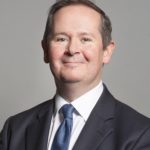
Tag: David Simmonds

  • David Simmonds – 2022 Speech on the Expansion of the Ultra Low Emission Zone

    David Simmonds – 2022 Speech on the Expansion of the Ultra Low Emission Zone

    The speech made by David Simmonds, the Conservative MP for Ruislip, Northwood and Pinner, in the House of Commons on 20 December 2022.

    It is a pleasure to serve under your chairmanship today, Mr Hosie. I join colleagues in commending my hon. Friend the Member for Dartford (Gareth Johnson) on securing this debate.

    Like most Conservative Members of Parliament in Westminster Hall today, my surgery has been inundated with constituents who tell a very consistent story: that they are dependent on their vehicles, mainly due to ill health or the need to support disabled family members in accessing medical care. They have older vehicles, which have often been extremely well maintained, and which they have had for many years, but the prohibitive cost of change now means that face a really serious negative impact on their quality of life and that of their dependants. As my constituency has the highest per capita vehicle ownership in London, we might expect to see many people like that coming forward.

    Around 70% of Londoners do not own a car so, understandably, the Mayor of London has seen the ULEZ expansion as something that will not negatively impact on a great many constituents of his in central London. However, for those of us in the suburbs—my constituency essentially consists of eight villages, one of which has no access to a tube or train station and only very limited access to buses—dependency on cars and other private vehicles is much higher.

    When we look at a map of London, and particularly at the north-west, we see routes such as Hill End Road in Harefield, which is barely the width of a car, but which is one of the routes that takes people out of our capital and into the surrounding counties, as well as Park Lane, Dene Road and Eastbury Road in Northwood, and the A4008 in Hatch End. All of these roads change from being in Greater London to being outside Greater London partway along, so people who depend on a car— particularly if they are disabled or in ill health—to come and shop in their local high street, access their GP practice or get to their local public transport network will have to pay £12.50 every time they do any of those things, simply to go about their daily lives. What is iniquitous about this is that they do not have a choice.

    My wife lived in Westminster when I first knew her, so I completely understand that, in many parts of central London, there is a very high density of access to the bus network and other kinds of public transport, such as trains and tubes, but out in the suburbs that is simply not the case.

    Dr Cameron

    I thank the hon. Member for speaking about the most vulnerable people. Does he agree that it is particularly difficult for people with disabilities because not all rates of disability living allowance, child disability payment or personal independence payment are exempt from the scheme? Many people will still be adversely impacted, even from 2023. They are contacting me, as chair of the all-party parliamentary group for disability, and asking that more be done to support their particular needs.

    David Simmonds

    That is an incredibly important point, which my constituents have made to me. There are those who may have a blue badge because they have a serious health condition that requires them to attend regular medical treatment, but who are not registered disabled or covered by the exemptions that the scheme envisages.

    Dean Russell (Watford) (Con)

    I will mention this in my speech, so I hope you will forgive the duplication, Mr Hosie, but I was contacted by a charity that transports emergency blood, breast milk for premature babies, and urgent medical samples. It contacted the Mayor of London about whether it would be able to get an exemption, or even a discount, and it was told no. Does my hon. Friend agree that that seems morally wrong?

    David Simmonds

    That is characteristic of the Mayor’s response to the representations he has received: he simply does not want to take them into account.

    Some constituents may be temporarily resident in my constituency—for example, because they are awaiting heart and lung transplants at Harefield Hospital. They are required to attend the hospital at short notice when a donor’s heart and lungs, or one or the other of those things, becomes available. That also has a significant impact. Again, the Mayor of London seems to have very little interest in that.

    Those of us who have been interested in air quality for a long time recognise that, particularly in outer west London, the big source of pollution is Heathrow airport. This measure does nothing whatever to address the single biggest source of air pollution. It is very much a case of a Mayor pursuing the thing that makes money for the mayoral budget, rather than the thing that would actually improve air quality. There are no measures to improve local authority powers to tackle engine idling. There is nothing that addresses the impact of pollution coming from the M25 or from Heathrow airport, which are the things causing the significant air pollution that affects my constituents.

    As this policy makes progress, we need to recognise that local authority powers under the Environment Act 1995, through which the Mayor is seeking to introduce this measure, should require there to be consent from local authorities. In that way, we can ensure that the people who are legally responsible—the local authorities—have a say on whether such measures will tackle the actual sources of air pollution in their area, as opposed to simply talking about them and raising money for an inner London zone 1 Mayor who clearly does not pay attention to the needs of his suburban constituents.

  • David Simmonds – 2022 Speech on Early Years Childcare and Staff-Child Ratios

    David Simmonds – 2022 Speech on Early Years Childcare and Staff-Child Ratios

    The speech made by David Simmonds, the Conservative MP for Ruislip, Northwood and Pinner, in Westminster Hall, the House of Commons, on 14 November 2022.

    It is a pleasure to serve with you in the Chair, Ms Harris. I offer my condolences to Mr and Mrs Steeper. I hope that one of the messages from today’s debate will be a recognition that there are many Members of Parliament, including myself, who are parents of very young children and recognise that story as the ultimate nightmare for any parent, and who are therefore committed to helping the Government find a way to address the issue constructively.

    I will set out a bit of the context that I learned about during my time in local government as the lead member for children’s services. I hope to offer the Minister some constructive suggestions about how the Government might take forward some of the issues raised in the consultation, in the petition and in today’s debate.

    The guidance on staff-to-child ratios stems from the Children Act. The primary purpose of that legislation and that guidance is managing risk. We need to be cautious about the idea that a ratio of 1:4 equals safe, but 1:5 equals dangerous. Research from the Thomas Coram Research Institute at the Institute of Education highlights that the way in which the ratio is calculated varies quite a lot. Some nurseries do it by dividing the total number of full-time equivalent staff by the number of children on roll; others by the number of staff on shift at a given time, divided by the number of children in attendance at that time; and others based on inspection of how many staff members are visible in a particular space compared with the number of children at a given moment. They are all valid ways of calculating the ratio, but give significantly different variations in the numbers of adults and children who are physically present.

    There is a world of difference between some of the staff I met at my children’s nursery—which was provided by the London Borough of Hillingdon—who had 30 or 40 years’ experience in childcare and had been on every conceivable training course from paediatric resuscitation and emergency treatment to handling various complex medical conditions, and those who may be doing their first day on the job as a child carer; and many Members have highlighted that point today. Ministers from all parties have been under pressure for many years to make the money go further, but it is right that they consider that context as they look at the issue. This is not as exact a science as some would like to think. Our key approach must be to manage the risks that occur in these kinds of settings, so that children are as safe as possible.

    The hon. Member for Newcastle upon Tyne North (Catherine McKinnell) clearly made the point—it is borne out well by the research—that the money that we spend on the early years has the most impact on a child’s outcomes of the money that we spend at any stage of education. When we look at how the funding formula is distributed nationally, it is the opposite way around. We spend most money on the GCSE years, when it has comparatively less impact and benefit for a child; and, relatively speaking, less is spent on support for early years. The data held by the Children’s Commissioner—produced by data expert Leon Feinstein—highlights that we can predict a child’s A-level results based on their attainment in the early years foundation stage. We have good evidence that this is not merely a matter of supposition, but that there is a direct correlation between the impact of early education and a child’s outcomes when they start adulthood.

    As we consider possible solutions, the Government must be commended for the fact that, for the first time, we have a comprehensive early years national funding formula, which was introduced in 2017. It seeks to bridge the gap between the day-to-day realities of nursery life in a complex sector—we have private, voluntary and independent providers, as well as the statutory sector in the form of school nurseries—and the desire to ensure that parents generally, but especially women, are able to return to the workforce because affordable childcare is available.

    Three elements make up the national funding formula. There is the universal base rate, which is a figure that is determined nationally; that will be challenging, because it is the biggest part of the formula for the Government to look at. There is also an additional needs factor, which reflects the requirements of children with special educational needs and disabilities, and the area cost adjustment, which is designed to take into account the differential cost of providing nursery care in different parts of the country.

    As a Member of Parliament representing an outer London constituency, I hear daily from businesses generally, and from nursery providers in particular, that the remarkably high costs of employment make it difficult to recruit and retain the qualified staff they require. Although I recognise the financial challenges facing the Government, if they have an opportunity to look at doing something with the area cost adjustment, I suspect it would make the lives of all Members of Parliament easier when it comes to ensuring that their local nursery and childminder sectors are properly supported. That would be enormously helpful.

    It is clear that the way in which the funding is distributed—in particular, the role of early years representatives at schools forums where decisions are made about dividing up that funding—could be strengthened. The fragmentation of a sector with large numbers of quite small providers means that compared to big secondary schools, for example, it is hard to get people at the table who are real experts in the way that the funding can be distributed. If we can do that much more effectively, the flexibility that exists in the remit of those schools forums would enable a greater degree of support and local nuance to reflect the particular challenges that a community faces in the distribution of funding, especially when it comes to the creation of new provision in response to emerging needs.

    The Government have done a great deal with policies such as tax-free childcare and the early years pupil premium to put additional resource into the sector to reflect the complexity of children’s needs, although there are more opportunities that are about not just additional resources—strong though the case for them is—but the way in which the money is distributed. Rather than having to consider easing childcare ratios as a way of making the budget go further, we can ensure that the money that is already contained in the early years national funding formula finds its way more effectively and flexibly through the system to support the sector to do the outstanding job we all want to see it do for all our children.

  • David Simmonds – 2022 Speech on Ukraine

    David Simmonds – 2022 Speech on Ukraine

    The speech made by David Simmonds, the Conservative MP for Ruislip, Northwood and Pinner, in the House of Commons on 22 September 2022.

    I place on record my thanks to my two local authorities for the work they have done in supporting and resettling Ukrainians who have had to flee the war and find a new home in the United Kingdom. The work the Government have done to support them is fantastic, and I have heard good reports that the financial support, in particular, that has been made available has been enormously helpful. While there is clearly a little bit more work to do for those who are going to be settling in the UK in the long term, to ensure that access to education, healthcare and other services continues to be available in the time they are here, it is a success story despite some of the concerns that were raised at the time.

    I will focus on two points that emerge from what is happening in Ukraine at the moment, and from some of the points made by a number of Members about how we prepare for the future. Before being elected to this House, I was a member of one of the constituent bodies of the Council of Europe. Its meetings were always challenging, given that at that time, we had Ukraine—which had been invaded by Russia to the extent of Crimea—and Russia in the same room, debating their supposed mutual respect for human rights and the rule of law. But it is clear that with proposals such as the new European political community there is an opportunity for the UK and other countries that do respect the rule of law to bolster the position of politicians, civil society organisations and leaders in Russia who do not condone the actions of Vladimir Putin. He is by no means the only politician in Russia. Many of us who have been engaged in any sense in those international operations will know that there is internal opposition to him in that country. We hope that if the work being done by Ukrainians succeeds, and if the pressure brought to bear by the international community succeeds, we will have an opportunity to foster a relationship with a much more positive Russian Government than the one we have at the moment. It will bolster the efforts we are putting in to support Ukraine if we can strengthen the hand of critics of Putin at home, and that will lay the groundwork for a more constructive relationship in the future, which will be particularly important for the reconstruction of Ukraine.

    Finally, I wish to touch on the point about cyber. I had the opportunity to be a witness at the Home Affairs Committee before being elected here, and prior to my session a witness from GCHQ was asked at the height of the Brexit debates, “Do the Russians want the UK to leave the EU?” The answer was very informative: what the Russians were seeking was not a particular outcome, but division in the west. They wanted us in this House and us in the west to be arguing among ourselves about what was happening. That goes to the heart of the points made by so many Members, and I echo this one: the unity and consistency of purpose across the allies is so vital to the long-term outcomes for Ukraine.

  • David Simmonds – 2022 Speech on the Northern Ireland Protocol Bill

    David Simmonds – 2022 Speech on the Northern Ireland Protocol Bill

    The speech made by David Simmonds, the Conservative MP for Ruislip, Northwood and Pinner, in the House of Commons on 27 June 2022.

    I was struck by the comments of the hon. Member for Bristol South (Karin Smyth) about how, when we in this place debate issues relating to Ireland, we often do not pay sufficient respect and attention to the complex politics of Northern Ireland. It is good that there has been a thorough airing of different perspectives in the debate; it has certainly illuminated my thinking.

    When we consider that Ireland remains the fourth largest destination for UK exports and the 10th largest source of imports into the United Kingdom; and that, for Northern Ireland, 40% of goods exports go to Ireland and 36% of imports come across from Ireland, it is clear that this is an important economic relationship. It is an important relationship in the context of addressing the cost of living and other things that we know are important from debates in the House.

    I am persuaded, as my hon. Friend the Member for Newcastle-under-Lyme (Aaron Bell) outlined, that although we have many concerns about elements of the Bill, it is right to give the Government the benefit of the doubt and to create the space for a negotiation that, as we have heard, is happening in good faith, with a view to seeking an agreement to address these issues, while recognising that, if that goes wrong, we need the ability to protect our position in due course.

    Ruislip, Northwood and Pinner is a long way from Northern Ireland, but Northern Ireland is of enormous interest to my constituents, because my constituency has a very large number of small and medium-sized exporters and importers. I have heard from many of those businesses directly, including at constituency surgeries, that the issues that arise in this debate on Northern Ireland, and issues of international trade more generally, are incredibly important to them.

    Let me highlight an exciting judgment of the European Court of Justice, C-213/19, in respect of legal action taken against the United Kingdom for long-term, persistent failure to undertake proper border controls while we were a member of the European Union. By “long-term”, I mean that the failure goes back to at least 2005, so Governments of all parties have a degree of responsibility for this matter. Clearly, when we in this House talk about green and red lanes, or any other part of the United Kingdom’s international trading arrangements, it is important that we demonstrate that we have effective customs, and border controls in which people can have confidence. My small and medium-sized importers and exporters do not wish to be undercut by fake imported goods that are brought into the United Kingdom, which was for some time notorious among EU member states for failing to undertake this work properly, as the judgment highlights. We need to take that seriously.

    On our attitude to international law, I agree with my hon. Friend the Member for Aberconwy (Robin Millar) that it is not fair to draw a comparison with what is being said about the likes of Vladimir Putin. However, I recently visited the European Court of Justice in Strasbourg, where I heard about those who are charged with enforcing its judgments, many of which are about commercial disputes, property assets, and the ability of families to enforce their right to family life. I certainly heard that when it comes to enforcing judgments in countries where Governments are disinclined to follow the law, there is always a degree of pushback from the diplomats representing those countries, who say, “If a founding father state of the European convention on human rights says that it disagrees with those laws, why should we follow them?” That has an impact on my constituents, and on all our constituents. We need to demonstrate that we remain absolutely committed to upholding the highest standards of the rule of law.

    As we debate these issues, it is important to remain focused on the benefits that we expect future arrangements to bring to the people of Northern Ireland, which is part of our United Kingdom. Many Members have referred to the latest release from the Office for National Statistics, which suggests that London, where my constituency is, has had 2.3% GDP growth—a strong rebound from covid. The part of the United Kingdom with the second highest growth was Northern Ireland, with 1.4% GDP growth. It has been helpful to hear from Members on the Opposition Benches about some of the nuances of that—about what it means for services versus goods, and how that affects the communities of Northern Ireland, because we need to get this right.

    The complexity of the issue is demonstrated by a point made at the Dispatch Box at the very start of the debate: we must make sure that the benefits of our decisions extend to all parts of the United Kingdom. Let me give the example of the removal of VAT from environmentally friendly green energy products. On 7 December 2021, the Economic and Financial Affairs Council decided to enable the removal of VAT from all those products. About four months later, the same decision, which I very much support, was taken here and presented to this House. The benefit of it has been felt across England, Wales and Scotland, but we are told that it is not possible for Northern Ireland to have that benefit.

    When Ministers sum up, I ask them to explain why that is, given that the measure is also allowed under EU rules, and was allowed there before it was introduced here. Why have we not been able to ensure that people in Northern Ireland can benefit from the investment that the measure would prompt? It would ensure that homes and businesses enjoyed the highest standards of environmental friendliness.

    I will finish as I started. I will give the Government the benefit of the doubt this evening; as the Bill goes through the House, there will be an opportunity to explore many of the issues that I and others have raised. It is important to demonstrate that we are taking these issues extremely seriously, and demonstrate to our biggest trading partner the European Union and our people in our United Kingdom that we are determined to negotiate in good faith and reach agreement together.