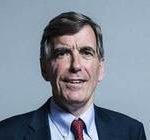
Tag: David Rutley

  • David Rutley – 2022 Tribute to HM Queen Elizabeth II

    David Rutley – 2022 Tribute to HM Queen Elizabeth II

    The tribute made by David Rutley, the Conservative MP for Macclesfield, in the House of Commons on 10 September 2022.

    Many great tributes have already been made—it is great to follow my hon. Friend the Member for Clacton (Giles Watling), and I hope his mother was able to overcome that experience—and an honour to be able to add to them with the great tributes of the people of Macclesfield constituency, who are in mourning with a deep sense of loss, like so many others across the nation.

    Her Majesty’s life was a beacon, the embodiment of the principle of public service and unfailing duty. We are all grateful for her example. It will be cherished for the rest of our lives and throughout history.

    My wife, Rachel, and I were fortunate to meet Her Majesty at Buckingham Palace with a number of other colleagues, including several from Scotland, from the Opposition Benches. The Queen loved Scotland. She loved the Union and she loved the Commonwealth. What impressed both of us the most was the sincere interest that Her Majesty showed to those whom she met. She showed genuine love and concern to all those she worked to serve, and we are most grateful for that.

    On that occasion, Prince Philip talked of his fond memories of carriage driving in Henbury and enjoying services at St Alban’s Church in Macclesfield. The Queen visited Macclesfield as a young 23-year-old princess to celebrate the town’s unique silk heritage at Hurdsfield mills, and then again in 2002 as part of the golden jubilee tour, visiting King’s School. Sadly, she was not able to visit the iconic Jodrell Bank telescope site to celebrate it receiving UNESCO world heritage status in 2020 because of the pandemic. She would have been so very proud of its new First Light Pavilion that had just opened.

    We all think we know our constituencies well, but the Queen really understood the communities and geography that she served throughout the entire nation. Historians will write about Queen Elizabeth as a statesman, a diplomat, a defender of all faiths and a much-loved and respected monarch through 70 years of dedicated service, but it was also about what she wrote in our hearts. Millions of people across the country and in the Commonwealth family of nations will be her real lasting legacy. With her sad passing, we all now have the responsibility to live up to that legacy, to renew and recommit ourselves in our service to others and, in so doing, we will show our true gratitude to this wonderful servant who, although only a little over 5ft tall, was a towering figure in our nation’s history. May she rest in peace.

    Our thoughts and prayers remain with the royal family and with our new King Charles III as he takes forward his new duties. We pray that he will be granted strength, wisdom and the enduring influence of his much-loved mother. God save the King.

  • David Rutley – 2022 Speech on the Cost of Living Crisis

    David Rutley – 2022 Speech on the Cost of Living Crisis

    The speech made by David Rutley, the Parliamentary Under-Secretary of State for Work and Pensions, in the House of Commons on 5 July 2022.

    I am learning to share the joy that the hon. Member for Aberdeen North (Kirsty Blackman) takes in estimates day debates. I can feel the love and appreciation, predominantly from Opposition Members. It was good to see many hon. Members at the national prayer breakfast this morning, which I think we can all agree was a truly uplifting experience. I thank the right hon. Member for East Ham (Sir Stephen Timms) for opening this debate on behalf of the Work and Pensions Committee, which holds us regularly to account, as it should, and provides challenge. I thank members of the Committee and other right hon. and hon. Members for their contributions today.

    The Government have provided and continue to provide help for households. Throughout the pandemic, the Government acted decisively to protect lives and livelihoods, continually supporting individuals and businesses. Our social security system had a key component—universal credit—which provided a vital safety net for about 6 million people during the pandemic, and stood up to those testing times. We were able to prove, in a real-life environment, how resilient the system was, and I am incredibly proud of the work that the Government did to keep the country going. Our support package was worth a total of £407 billion between 2020 and 2022, and constituted the biggest single fiscal intervention since world war two.

    We are providing further support to help people with the cost of living. The current cost of living pressures have emerged from a series of economic shocks. We could understand and appreciate some of those shocks as demand increased while the effects of the pandemic receded, but what we clearly could not have anticipated were the sharp increases in energy costs that were driven by Russia’s absolutely unacceptable invasion of Ukraine. These global pressures are making it very difficult for households and businesses to absorb the rising cost of essentials in their budgets, which is why the Government are taking direct action to help the lowest-income households with the cost of living. However, fiscal responsibility is important to the country’s long-term prosperity, and Government intervention must therefore be timely, temporary and targeted to minimise the risk of further inflationary pressures.

    Debbie Abrahams

    I take on board some of the Minister’s points, but I must challenge him in one regard. He seems to have ignored what has been said about the inadequacy of the system before the pandemic and before the cost of living crisis. Would he care to comment on last week’s observation by the Institute for Fiscal Studies that if the Government had provided more targeted support for those in the greatest need, the national inflationary pressures would not have occurred?

    David Rutley

    We are having to deal with some challenging headwinds, as a result of the pandemic and now these inflationary pressures, but we have sought to take targeted measures. During the pandemic, especially the early stages, we focused particularly on those who were feeling the impact of changes in the employment market, which were immediate. Now we are focusing our efforts on targeted support for the people and households who will be most affected by inflationary pressures. The means of dealing with those are complex, and we are having to develop systems and processes to get the payments out quickly. Because of their nature they will never be 100% perfect, but we have taken other steps to support those who may not previously have been eligible for support. I shall say more about that shortly.

    Our labour market policies are part of our plan to manage inflation, and that is a further reason for us to redouble our efforts to encourage more people to get into work and take advantage of the current buoyant labour market, with a record 1.3 million vacancies. Our multimillion-pound plan for jobs is helping many people into work with the kickstart scheme and the restart programme. Opposition Members do not always talk about the importance of work and the achievements that have been made in the labour market, so let me point out that last week our Way to Work campaign met its ambition of moving more than half a million people into work in under six months. That is an important achievement, not necessarily for the Government —although we welcome it—but in terms of the difference it will make to households throughout the country.

    Moving into work and making work pay are core tenets of our strategy to build long-term growth and prosperity up and down the country, which is why we have introduced a number of work incentives. In particular, we have cut the universal credit taper rate from 63% to 55%, and have increased work allowances by £500 a year. Tomorrow, 6 July, we are cutting the national insurance threshold, a move that will be worth up to £330 a year for nearly 30 million working people.

    Some Members have mentioned uprating, including the Select Committee Chair, the right hon. Member for East Ham. As part of the Department’s long-term approach, the Secretary of State completed her annual review of benefit and pension rates last year in the usual way, using well-worn, well-proven methods and processes. The state pension and the pension credit standard minimum guarantee were increased by 3.1%, the rate of inflation for the year to September 2021 as measured by the consumer prices index. As I think the right hon. Gentleman will know, we remain committed to implementing the state pension triple lock for the remainder of this Parliament, and on 26 May the Chancellor confirmed that it would be reinstated next year. All other benefits have also been increased this year in line with the consumer prices index of 3.1%. That approach has formed part of a long-standing convention. Since April 1987, all benefit uprating has been based on the increase in the relevant price inflation index in the 12 months to the previous September, helping claimants through the inflationary cycles.

    Sir Stephen Timms

    I am grateful to the Minister for setting out the commitment to uprating in line with inflation, but does he accept my earlier point about the need, in this very inflationary environment, to uprate the level of the benefit cap? Is he able to tell us whether it will be reviewed between now and next April?

    David Rutley

    I was going to come to that later, but as it is an important point, I will address it now.

    As has been acknowledged today, none of the new one-off payments will be taken into account in the benefit cap, but there is a statutory duty to review the levels of the cap at least once every five years, and that will happen at the appropriate time. The current unusual economic period, with potentially counterintuitive and shifting trends, will need to be considered in the context of any decision about a review. The benefit cap provides a strong incentive and fairness for hard-working taxpayers and households, and encourages people to move into work. Last week, the Secretary of State told the Select Committee that she was taking advice on the exact timing and the approach. The statutory obligation to review the cap levels at least once a year in each Parliament changed on 24 March 2022, when the Fixed-term Parliaments Act 2011 was repealed, and the new obligation requiring the Secretary of State to review the levels at least once every five years means that the DWP now has until 2027 to complete a review. As I have said, however, she is seeking advice on that.

    The annual review of benefits and pensions for the next tax year will begin in the autumn. To measure inflation, the Secretary of State will use the consumer prices index in the year to September. To measure earnings related to the pensions side of the equation, she will use average weekly earnings for the period from May to July. The uprated benefits and pensions will come into effect in April 2023.

    Wendy Chamberlain

    May I ask a very brief question? I am really thinking out loud. In that review, when looking at uprating, will the Government examine the implications of the energy price gap, which is clearly having a critical impact on people’s incomes?

    David Rutley

    As I have said, the Secretary of State will be looking at the wider economic environment when making these decisions.

    Let me now pick up some other points that have been made today. The hon. Member for Glasgow South West (Chris Stephens), who is terrier-like in his tenacity, mentioned bereavement orders. The Secretary of State has met officials to discuss the proposed draft order, and they are now working on that as a priority. Others have referred to the five-week wait for universal credit payments. It is not possible to award payments as soon as a claim is made, because the assessment period must run its course before an award can be calculated, and it is not possible to determine accurately what the entitlement will be in the month ahead. Our measures will ensure that the correct entitlement is paid, and will prevent significant overpayments from being made.

    Chris Stephens

    Will the Minister give way, on that point?

    David Rutley

    I will give way, but this is the last time I shall do so, because I need to make some progress.

    Chris Stephens

    I thank the Minister for his generosity in giving way, and also for his generous comments. The Select Committee did not argue that a payment could be made straight away; we argued that within two weeks of a claim, a starter payment could be made. Has the Department considered that as a way of addressing the five-week wait?

    David Rutley

    I have set out our approach, which is to ensure that advances are made available to help people in those difficult circumstances to get the money that they need.

    Another point that has been raised is about deductions. We have systematically reduced the amount that can be deducted from benefits from 40% to 30% and now to 25%. If claimants have issues, they can go to the debt management service for further advice and support. Others have mentioned the carers allowance. I want to highlight, as I did in the recent Second Reading debate on the Social Security (Additional Payments) Bill, that the carers allowance is not a means-tested benefit. Nearly 60% of working-age people who are carers will get the cost of living payments, as they are means-tested benefits, or disability benefits. Carers allowance is paid on an individual basis to people in households across the income scale, so they may live in a household that is able to receive the £650 payment or the disability payment as well, which will help them to pay the bills in their own households. We also talked about how larger families will be getting the same payment as individuals. This is because we needed to get the payment out fast to as many people as possible. We will be making the means-tested benefit-related cost of living payment from 14 July, and that is absolutely critical. We were not able to develop a system that would account for every single eventuality.

    I conclude by saying that this Government have worked incredibly hard over recent years to ensure that we help people to get into work, that we make work pay and that we support people with the cost of essentials. The latest cost of living payments that have been made and the additions to the household support fund demonstrate that we are absolutely committed to providing this help for households. I would like once again to thank hon. and right hon. Members for their contributions to this important debate.

  • David Rutley – 2022 Statement on Fraud and Error in the Benefits System

    David Rutley – 2022 Statement on Fraud and Error in the Benefits System

    The statement made by David Rutley, the Parliamentary Under-Secretary of State for Work and Pensions, in the House of Commons on 26 May 2022.

    The statistics for fraud and error in the benefit system, for the financial year ending 2022, were published on Thursday 26 May 2022 at 9.30 am. The figures published today confirm the overall rate of fraud and error in 2021-22 was 4.0%, or £8.6 billion. This includes a rate of fraudulent overpayments at 3.0%—£6.5 billion—and a rate of claimant error at 0.7%—£1.5 billion—both of which represent a small but not statistically significant increase. We successfully reduced official error, which has dropped to 0.3%—£0.7 billion. This outcome largely reflects the ongoing situation of covid where some unscrupulous people, including sophisticated organised crime groups, exploited easements we had made to prioritise payments to those who needed help.

    We have always been clear that it would take time to root out this fraud. As we said last summer, our expectation for these fraud and error results was that they would be broadly similar to last year as the caseload still contained many cases from the early days of the pandemic. This is still the case. Overall though, we have successfully contained fraud in UC at a time when fraud in society has been increasing, but there is more to do.

    That is why we are taking action. Last week, we published our ambitious plan, “Fighting Fraud in the Welfare System” to prevent, deter and detect fraudsters and protect taxpayers’ money.

    The plan sets out how we will deploy 1,400 more staff in our counter-fraud teams, establish a new 2,000-strong team dedicated to reviewing existing universal credit claims and develop an enhanced data analytics package to prevent and detect fraud. These initiatives are possible thanks to a three-year additional investment of £613 million, which we estimate will stop £2.1 billion of loss in fraud and error over the next three years. The plan also sets out our intention to bring forward new powers, when parliamentary time allows, to investigate potential fraud and punish fraudsters.

    Today’s release also includes data on the state pension. The overpayment rate for state pension was 0.1%, the total underpayment rate was 0.5%. This includes very small value uprating errors, the vast majority being 1p or 2p a week. These small errors are the result of an historical issue first identified several decades ago and which has now been recorded in these statistics for the first time. Additionally, a small number of state pension errors have also been identified relating to incorrect national insurance records which are administered by HMRC. DWP is supporting HMRC’s investigations into whether these are isolated cases. We will provide a further update when we have more information.

  • David Rutley – 2022 Statement on Fighting Fraud in the Welfare State

    David Rutley – 2022 Statement on Fighting Fraud in the Welfare State

    The statement made by David Rutley, the Parliamentary Under-Secretary of State for Work and Pensions, in the House of Commons on 19 May 2022.

    Fraud is an ever-present challenge in both the private and public sector.

    Fraud committed against the welfare system—whether by individuals or criminal gangs—is not a victimless crime. It is felt throughout society, upon the services people rely on and by honest, hard-working taxpayers who expect to see public money spent on the purpose for which it was intended, rather than going into the hands of fraudsters.

    Our fundamental approach has always been to prevent fraud from entering the system in the first place, to detect and root out fraud when it does, and to deter would-be fraudsters through a robust penalty system, including recovering the debt owed. These principles were bringing fraud down before the pandemic.

    During the early months of the pandemic, we took a decision to implement temporary easements to ensure we could prioritise payments to those who needed help during a difficult time. It is regrettable that some unscrupulous people sought to exploit these extraordinary circumstances for their own illegitimate gain.

    Later today, I will publish a paper on fighting fraud in the welfare system which sets out our plan to address the challenge of fraud, to stay ahead of evolving threats, and to reduce the levels of fraud and error in the welfare system.

    This plan sets out how we are investing £613 million over the next three years in our frontline counter-fraud professionals and in enhanced data analytics. This funds 1,400 more staff in our counter-fraud teams, a new 2,000-strong team dedicated to reviewing existing universal credit claims and an enhanced data analytics package to develop new ways to prevent and detect fraud. We estimate this will stop £2.1 billion of loss in fraud and error over the next three years.

    When parliamentary time allows, we will bring forward new powers to investigate potential fraud and punish fraudsters. We will:

    Bring the Department in line with counter-fraud functions elsewhere in Government, by creating powers to enable our officers to undertake arrests, and to search and seize evidence.

    Bolster our penalty system—creating a new type of civil penalty to ensure that those who commit fraud face punishment.

    Create new powers that will require organisations, such as banks, to securely share data on a larger scale to find and prevent fraud.

    Establish new powers to improve the Department’s access to information from a wider range of organisations and to assist counter-fraud and compliance activity into all payments made by the Department, modernising our ability to drive fraud out of the system.

    Technological advances give fraudsters new opportunities to find ways to attack. To make sure we stay ahead of the fraudsters, we need to bring together the full force of Government and the expertise of the private sector. We are creating a new Fraud Prevention Advisory Group to bring together Government and external experts to identify and develop innovative ways to crack down on fraudsters, including through more flexible and proactive use of data. We will work hand in hand with the new Public Sector Fraud Authority to ensure all of Government step up their efforts to reduce fraud and error and bring fraudsters to justice.

    This plan will help us to defend the welfare system against those who seek to take advantage of it. It will allow us to dig deeper in rooting fraud out wherever it occurs in the welfare system, to catch and punish fraudsters and to protect taxpayers’ money.

  • David Rutley – 2022 Statement on the Benefit Cap

    David Rutley – 2022 Statement on the Benefit Cap

    The statement made by David Rutley, the Parliamentary Under-Secretary of State for Work and Pensions, in the House of Commons on 1 March 2022.

    I congratulate the hon. Member for Glasgow East (David Linden) on securing the debate. I know that he has strong views on this issue—that is very clear from the debate. This was second time lucky for him in terms of having this debate, which is thanks to the Chair and the Speaker. I am really pleased that he was able to get through his coronavirus unscathed, hopefully, and is now able to participate. I am also grateful to him for mentioning how important these democratic processes are, however much we might disagree—as he and I do on a lot. None the less, this is the way to express our differences—through debate and through the democratic processes. This stands in marked contrast to the unacceptable and abhorrent actions of President Putin, which both he and I roundly condemn, along with the whole House. Our thoughts and prayers are with the people of Ukraine and for peace.

    The Government remain committed to providing a financial safety net for those who need it, with support available for those on low incomes or who are unable to work at all. We will, this year, spend more than £250 billion through the welfare system, including £41 billion on universal credit and more than £110 billion on working age benefits. The Government have focused on making sure that more money gets to those vulnerable people who need it most, with over £58 billion of welfare support going to people with disabilities and health conditions this year alone.

    The pandemic has been a very challenging time for many, and universal credit has stood up to the challenge of covid-19, providing a vital safety net for 6 million people. I know that the hon. Gentleman has concerns about universal credit, but the system stood up well; it was resilient and it was able to pay people on time.

    David Linden

    I am grateful to the Minister for giving way. Yes, like everybody on these Benches, I welcome the fact that the universal credit payment was uplifted by £20 a week, but does he not accept that that was a clear concession and recognition that social security in its current form was inadequate before the pandemic, and if it was inadequate then, what has changed since?

    David Rutley

    As the Chancellor spelled out clearly during the pandemic, this was a response to the worst parts of the pandemic and the shock it would provide to people. The hard-working staff in the Department for Work and Pensions, including thousands of work coaches, worked tirelessly to ensure that the benefits system did its job.

    Since the start of the pandemic, we have spent more than £400 billion protecting people’s lives and livelihoods, and supporting businesses and public services. As well as providing support where it is needed, the Government have a responsibility to taxpayers. We must ensure that we use our resources in the most effective and efficient way possible, and the benefit cap is a vital part of that.

    The hon. Gentleman and I probably disagree on this, but let me set it out and we will see how it takes the debate further forward.

    Alan Brown

    It is a few years since the National Audit Office said that there was no system in place to measure the outcomes associated with universal credit. For years the Government have continued to say that UC helps people into work. So what changes in the assessment process for measuring outcomes have the Government made since that NAO report?

    David Rutley

    The internal assessments we have produced—and we have produced several—showed that UC does help more people get into work. At the moment, in an economic environment where there are record vacancies, which I will touch on later, we are helping more people get into work.

    The benefit cap was introduced as part of a strategy to reform the system of benefits for people of working age. The cap limits the combined sum of prescribed welfare benefits that households may be entitled to. The aims of the benefit cap policy are: to incentivise behaviours; to encourage people to work and to reduce long-term dependency on benefits; and to introduce greater fairness in the welfare system between those receiving out-of-work benefits and those in work, by putting in place a reasonable limit on the amount a household can receive in welfare benefits. For context, let me say that about four in 10 households earn less than the annual benefit cap’s limits of £23,000 in London and about £20,000 in the rest of Great Britain. The final aim is to make the system more affordable, better balancing the burden on taxpayers. Let us not forget that households can still receive benefits up to the equivalent salary of £24,000—or £28,000 in London.

    We continue to protect vulnerable claimants for whom work may not currently be a viable option. In recognition of the additional costs related to a disability, households are exempt from the cap if someone is receiving disability living allowance or a personal independence payment. UC claimants who receive the limited capability for work-related activity element—that phrase is a bit of a mouthful—or employment and support allowance claimants in receipt of the support component are also exempt from the cap.

    The Government recognise and appreciate the vital contribution made by carers, which is why there are exemptions for those entitled to carer’s allowance, the carer’s element in UC and guardian’s allowance. Households in receipt of UC are exempt from the cap if their earnings reach just £617 a month, to help encourage people into work. Those who still receive housing benefit are also exempt if they are entitled to working tax credits. Eligible childcare costs that are repaid through UC payments are exempt from the cap. That also supports people getting into work and progressing in employment.

    I also want to support those with a strong recent work history who find themselves without work or whose earnings reduce. As a result, the benefit cap is not applied for nine months for those receiving UC where the claimant, their partner or ex-partner has received at least the benefit cap earnings threshold of £617 in each of the previous 12 consecutive months.

    I should also remind the House that the proportion of capped households remains low in comparison with the overall working-age benefit case load, at 2.7% across Great Britain. In Scotland, the proportion is even lower, at 1.1%. In the last quarter, to August 2021, on average 710 households every week moved off the cap through increasing their earnings or starting work. There is a statutory duty to review the benefit cap levels once in each Parliament; the country has been through very challenging times, which has delayed that statutory review, but it will happen at the appropriate time in this Parliament, to be determined by the Secretary of State. When the Secretary of State decides to undertake that review, which must currently happen by December 2024, she will consider the national economic situation and any other matters she deems vital at that time.

    Chris Stephens rose—

    David Rutley

    I will give way to the esteemed member of the Work and Pensions Committee.

    Chris Stephens

    The Minister is being very generous. Can he tell us then, with the assessments the Department is doing of the benefit cap, whether it will do further assessments alongside its much-awaited review on the drivers of food bank use and food aid provision, which the House has waited 18 months for the Department to place in the Commons Library?

    David Rutley

    That report will come forward—I think there have been exchanges between the Committee and the Secretary of State’s office—but we are talking here about a statutory requirement, which certainly will happen during the course of this Parliament. As the hon. Gentleman, a well-respected member of the Committee, will be aware, we have gone through very uncertain times; we must ensure that review is done when we have the proper body of evidence and at the right time. I am sure he will seek to hold the Secretary of State to account during that process, as he rightly should as a member of the Select Committee.

    There is clear evidence that work, particularly full-time work, substantially reduces the likelihood of being in poverty. Children living in workless households were around six times more likely to be in absolute poverty before housing costs in 2019-20 than those where all adults worked. At a time of record vacancies, we are not only focusing on getting people into jobs, but taking action to boost the take-home pay of lower-income working households by giving nearly 2 million families an extra £1,000 a year through our cut—

    David Linden

    Cut to universal credit.

    David Rutley

    Through our cut to the universal credit taper rate, if I may finish, and the increase in work allowances. The hon. Gentleman is being incredibly cheeky, but we will let him get away with it once. In addition, the national living wage will increase to £9.50 from April, meaning an extra £1,000 a year for full-time workers.

    Getting claimants back into work remains the primary focus of the Secretary of State and the whole ministerial team, myself included. We know that having a job has many benefits, including a routine, a sense of purpose and increased confidence. We would also like as many people as possible to feel those positive effects—not forgetting, of course, that people on UC securing employment will significantly decrease the likelihood of their household’s being affected by the cap.

    There are nearly 1.3 million vacancies across the United Kingdom, 43,000 more than last month and 513,000 more than at the start of the pandemic. Those vacancies provide opportunities for people to move into and progress in work, as well as to increase their earnings. To help people to take advantage of that record number of vacancies, our plan for jobs is supporting people at any age and any stage of their career. People currently affected by the benefit cap can access support provided by the “Plan for Jobs”, and since the start of the pandemic we have recruited 13,500 new work coaches to ensure that, no matter where they live across the country, claimants can access support and opportunities to get a job, to progress and to realise their potential.

    David Linden

    The point I want to pick the Minister up on is that, if the Government have put in place all those work coaches—I pay tribute to the work they do—and they all have contracts that go on longer because there is anticipation that the unemployment figures will be higher, why did they cut universal credit when they understood that people were going to be relying on the social security system?

    David Rutley

    I know the hon. Gentleman likes to put the word “cut” into a sentence, but we withdrew a temporary increase in universal credit that was put in place for a specific reason during the pandemic. We have now got into a stage in the economic cycle where there are more vacancies and we want to get people into work so they can stand on their own two feet and be less dependent on benefits. I know we have different views, but I am sure even he would want to get more people standing on their own two feet and given the opportunity to have their own work.

    Another way we are doing that is by working with a specific group of 500,000 benefit claimants, helping them into work by the end of June through the way to work initiative, which will increase communication between employers and claimants to help get people into work faster, so that they can experience the positive benefits associated with it. There is a range of other support available to help those people who may be affected by the cap through the flexible support fund, ensuring they have access to higher support for childcare—up to 85% of the cost of which is available on universal credit—and through the discretionary housing payments and, of course, the household support fund.

    It is not just helping people into work; we have also provided support. The Chancellor set out just recently the additional support that would be available to tackle to cost of energy through the three-part plan, involving a £200 rebate for households that is delivered through their energy bill. We have covered at lot in this debate; we are very keen to help people into work and we are providing support for those who face challenges. I thank Mr Speaker for the opportunity to address this debate.

  • David Rutley – 2021 Statement on Funding to Counter Benefits Fraud

    David Rutley – 2021 Statement on Funding to Counter Benefits Fraud

    The statement made by David Rutley, the Parliamentary Under-Secretary of State for Work and Pensions, in the House of Commons on 13 December 2021.

    Fraud is stealing from honest taxpayers. It is right we bring the collective weight of Government to bear on this growing challenge and I am determined to take further decisive action.

    Across Government, 16,000 people, including counter-fraud experts, are currently working to tackle fraud. The world’s first Government Counter-fraud Function works to identify new and emerging fraud risks and to support Departments to improve capability to access and use data and analytics to tackle these risks.

    My Department has worked hard to drive out fraud. Officials prevented more than £1.9 billion of fraud during the first year of the pandemic through strengthening our checks and disrupting the operations of serious and organised crime groups.

    However, it is clear that we need to go further, both in terms of eradicating fraud from our current cases and designing fraud out of the system.

    At spending review (SR) 2021, DWP secured £103 million for fraud and error activity to continue funding key fraud and error detection and prevention work originally agreed in spring Budget 2021. This first phase of funding enables DWP to secure the completion of our current transformation programme which will enhance our ability to prevent and detect fraud and error.

    Today, I can announce additional funding of £510 million over the next three years. This second phase of funding, which will deliver significant savings over the SR period, will enable us to drive down the level of fraud in universal credit (UC) and collect more debt, through:

    A targeted review of UC claims to allow us to systematically review stock UC cases to uncover fraud and error and remove it from the system;

    a debt enforcement function to allow us to target hard to collect debt.

    This funding also includes provision for a fraud prevention fund, which will allow us to explore and test innovative approaches to designing out fraud and error. This investment represents a further important step towards our long-term vision, dramatically reducing the level of fraud and error in the UC stock and more effective collection of debt while continuing to provide effective counter fraud operations on a larger scale.

  • David Rutley – 2019 Speech on the Animal Welfare (Sentencing) Bill

    Below is the text of the speech made by David Rutley, the Parliamentary Under-Secretary of State for Environment, Food and Rural Affairs, in the House of Commons on 10 July 2019.

    I beg to move, That the Bill be now read a Second time.

    The Bill delivers another important commitment from the Government on animal welfare, cementing our place as a world leader in the care and protection of animals. Under the current legislation, the Animal Welfare Act 2006, the maximum penalty for animal cruelty offences is six months’ imprisonment and/or an unlimited fine. The Bill extends the current maximum penalty to five years’ imprisonment and/or an unlimited fine for the worst animal cruelty offences relating to animal welfare in England and Wales. It is a simple yet vital measure to ensure that those who perpetrate cruelty on animals are subjected to the full force of the law.

    We all agree that there is no place for animal cruelty in this country. Those who mistreat and abuse animals through unacceptable activities such as dog fighting, the abuse of pet animals, and cruelty to farm animals will be faced with tougher responses from the courts. An increase in the maximum custodial sentence from six months to five years will help to deter people from committing detestable acts against animals, and will demonstrate that such behaviour is not tolerated in this country.

    Sir Greg Knight (East Yorkshire) (Con)

    Is the Minister aware of the growing concern about the welfare of tethered horses? Many horses are attached to a short rope all day long, next to a highway, with no water and surrounded by ragwort, which is harmful to them. However, the authorities seem reluctant to take action. Might the reason be that the law is not quite clear enough in this respect, and if so, could that be addressed by the Bill?

    David Rutley

    I thank my right hon. Friend for his intervention, and for his concern about horse tethering. I share that concern, which is why we recently had a roundtable meeting with the relevant welfare groups and authorities to discuss how we could achieve best practice in this regard. I think that there have been some case studies—particularly in the Swansea area, if I remember correctly—and that real action has been taken. We need to spread that best practice far and wide.

    It is a pleasure to introduce this important Bill. We committed ourselves in September 2017 to increasing maximum sentences for animal cruelty offences, and in December 2017 we published our draft Bill for pre-legislative scrutiny. That followed the introduction of the Animal ​Fighting (Sentencing) Bill in July 2016 by my hon. Friend the Member for Torbay (Kevin Foster), and the introduction of the Animal Cruelty (Sentencing) Bill, also in July 2016, by the hon. Member for Redcar (Anna Turley). I pay tribute to both of them and the supporters of their Bills; I thank them for their hard work.

    I am delighted to have secured the parliamentary time to introduce this small but incredibly valuable Government Bill, which is of great importance to the House, the animal welfare community and the public more widely. I pay tribute to all who campaigned for the Animal Welfare (Service Animals) Act 2019, popularly known as Finn’s law, which is closely linked to the Bill. Finn is a police dog fondly known as Fabulous Finn to his friends, and a distinguished example of the incredible bravery and hard work of service animals. This Bill will ensure that those who cause injury to a service animal will receive a proportionate penalty for their horrific actions; I will speak on this in more detail a little later.

    Many animal welfare charities and other organisations have been calling for increased sentencing for a number of years. I thank them for their campaigning on the matter and for ensuring that this issue has remained at the top of the agenda: Battersea Dogs and Cats Home, Blue Cross, the Royal Society for the Prevention of Cruelty to Animals and the League Against Cruel Sports, to name but a few, have been incredibly effective in their support for an increase in the maximum penalties, and I praise their tireless efforts. Claire Horton, chief executive of Battersea Dogs and Cats Home, stated that the introduction of this Bill is a “landmark achievement”.

    This Bill is indeed a landmark step forward for animal welfare in this country. It demonstrates our commitment to protecting this nation’s animals. I pay tribute to Northern Ireland and my hon. Friends in the Democratic Unionist party for setting such a great example in support of animal welfare; Northern Ireland has already introduced a higher maximum penalty of five years for animal cruelty offences, which we are pleased to be able to match in England and Wales.

    I also pay tribute to those hon. Members who have consistently advocated introducing this Bill, notably my hon. Friend—most of the time my friend—the Member for Tiverton and Honiton (Neil Parish), Chair of the Environment, Food and Rural Affairs Committee. He can be grumpy on occasions—[Interruption.] Oh, he is there! I had not realised he was behind me! Indeed, I thank all members of the Committee, who tirelessly press the Government on this issue.

    Our Bill and the proposals therein on animal welfare sentencing have received strong support from across the House, and I am grateful to the Opposition Front- Bench team, not least the hon. Member for Workington (Sue Hayman) for her full and wholesome support; it is much appreciated.

    Bill Wiggin (North Herefordshire) (Con)

    Thirteen years ago in 2006 when the Animal Welfare Act was going through its stages, I proposed an amendment that would do exactly what this Bill does, so may I thank the Minister for bringing it in but express regret that it has taken 13 years to do so?

    David Rutley

    I am pleased the Bill is before us today; sometimes these things take time—too often in animal welfare—but I am really pleased that through working ​together across this House we have seen a number of pieces of legislation come forward in recent weeks and months. That is because we are working so closely together. I am extraordinarily grateful for that and for the support we have had from the hon. Member for East Kilbride, Strathaven and Lesmahagow (Dr Cameron), who has long called for higher sentencing.

    It is also important to recognise the hard work of our Whips. They are not able to speak on this matter, but I know that my hon. Friends the Members for Chippenham (Michelle Donelan) and for Milton Keynes South (Iain Stewart) are very keen for this legislation to come through. It would be remiss of me not also to mention the irrepressible hon. Member for Bristol West (Thangam Debbonaire), who is a complete enthusiast for this Bill and I am sure would love to be associated with it.

    The Bill amends the Animal Welfare Act 2006, which currently sets out a maximum penalty of six months’ imprisonment and/or an unlimited fine for the more serious prevention of harm offences. That is much lower than the current European average for animal welfare offences, which is two years; indeed many countries have much higher maximum penalties. I am pleased to say that the Bill introduces one of the toughest punishments in the world and will bring us in line with the maximum penalties in Australia, Canada, New Zealand, Ireland, India and Latvia, which are all five years’ imprisonment.

    The Government published the draft Bill for consultation and pre-legislative scrutiny in December 2017 as part of the Animal Welfare (Sentencing and Recognition of Sentience) Bill. The consultation closed in January 2018 and the Department for Environment, Food and Rural Affairs received over 9,000 direct responses to it; 70% of respondents agreed with the new maximum penalties. In the summary of responses document, the Government committed to bringing forward the sentencing clauses in a separate Bill as recommended by the Environment, Food and Rural Affairs Committee scrutiny report in January 2018.

    There have been a number of recent cases related to serious animal welfare offences in which judges have expressed a desire to impose a higher penalty or custodial sentence than that currently provided for under the Animal Welfare Act 2006. For example, in 2016 an 18-year-old man kicked his girlfriend’s pet spaniel to death in an horrific attack. The dog was kicked repeatedly so hard that her brain stem detached. The man was sentenced to six months in prison and ordered to pay costs and victim surcharges of more than £1,000. The judge at the magistrates court said that he would have imposed a stronger, longer sentence if the law had allowed it. It was a sickening act of deliberate cruelty and in such cases a higher sentence would have been favourable for the court.

    If I may, I would like to give another horrific example of where the judge explicitly told the court that he would have imposed a longer sentence if the guidelines had allowed. In November 2016 a man gave a dog painkillers and then beat her to death with a shovel. The man was sentenced to four months in prison and was disqualified from keeping all animals for life. That sentence was clearly not appropriate for such a dreadful act, and we need to change that, and we will now.

    This Bill relates closely to the warmly received Animal Welfare (Service Animals) Act 2019, commonly known as Finn’s law, which prevents those who attack or injure ​service animals from claiming self-defence. It received Royal Assent on 8 April 2019, and I pay tribute to my right hon. and learned Friend the Member for North East Hertfordshire (Sir Oliver Heald), who is also in his place, for steering the Bill so skilfully through this House.

    When this Animal Welfare (Sentencing) Bill is enacted, those who cause harm to a service animal in the course of the animal’s duty could be subject to a maximum sentence of five years. The intention of Finn’s law was to increase the maximum penalty for animal cruelty as well as improving the protection of service animals. We are now completing the increased protection of service animals with this Bill, and as a result achieving what the Committee and campaigners have worked so hard for.

    The Bill is due to commence two months after Royal Assent and has a limited impact on costs to the criminal justice system. The increase in maximum penalties will not result in an increase in the number of offenders being sent to prison; it will result only in the potential length of time that might be served by the most serious offenders. We have been in discussion with the Ministry of Justice on this matter, and the Government consider that this may lead to some marginal extra costs to the criminal justice system which are unlikely to be more than £500,000 per annum. DEFRA has agreed with the Ministry of Justice to take on the costs, as set out in the explanatory notes.

    While some offences committed under the Animal Welfare Act 2006 may be more minor incidents, there are unfortunately cases of serious or systematic cruelty. For example, some forms of animal cruelty, such as dog fighting, can be linked to organised crime and are carried out for financial gain through betting and prize money.

    Neil Parish (Tiverton and Honiton) (Con)

    The Minister talked about the extra cost involved. If a case has to go to the Crown court, very often animals will have to be kept in custody or in care in kennels, so that will cost more. We also need to make sure we have proper kennelling so that the whole court system can cope. We very much welcome the extra sentencing, but that knock-on effect needs to be dealt with as well.

    David Rutley

    Once again, my hon. Friend speaks with authority on the subject, and he can be assured that we are working through all those details. I just want to underline that costs will be covered through the arrangements put in place.

    As I was saying, dog fighting inflicts a high level of suffering on the animals involved. We believe that in such cases, where the level of cruelty and culpability is so high, a higher sentence is clearly justified, and I am sure that the House agrees.

    The Bill is a simple measure, amounting to just two clauses, but with a very positive outcome. Clause 1 is the Bill’s main clause; it outlines the mode of trial and maximum penalty for certain animal welfare offences. As I previously outlined, under the Animal Welfare Act 2006 the maximum penalty in practice is currently six months and/or an unlimited fine. The clause changes the maximum custodial sentence available for five key offences: causing unnecessary suffering to a protected ​animal; carrying out a non-exempted mutilation; docking the tail of a dog, except where permitted; administering a poison to an animal; and involvement in an animal fight.

    Mr Adrian Bailey (West Bromwich West) (Lab/Co-op)

    The Bill is hugely welcome. However, I am concerned about the narrowness of its scope, and my investigations have not been able to satisfy me that there are no potential areas of obscurity in it. Given that the Bill applies to domestic animals and not to wild animals, what is the situation in regard to, say, feral cats? Would somebody who did harm to their neighbour’s cat be subject to a different maximum sentence from somebody who did harm to a cat that was effectively feral and unattached?

    David Rutley

    We can talk about that in more detail in Committee, but it is clear that this is about animals that are under the control of man. So in a situation where a feral cat was under the control of a man or woman and was experiencing unnecessary harm, the Bill would apply.

    Mr Jim Cunningham (Coventry South) (Lab)

    I apologise for coming in a bit late. The Minister might have covered this earlier, but will the courts have discretion in relation to the maximum sentence? Am I right in thinking that there will be a scale?

    David Rutley

    I thank the hon. Gentleman for his question. Just to clarify, we are discussing the maximum penalty; there will be other gradations that the courts will see fit to use. It is important to highlight, as I have done with a couple of case studies, that the courts felt they did not have the right sentencing available, given the horrific nature of some of the crimes they had been looking at. The Bill is about providing a maximum. The hon. Gentleman must be psychic, because I was about to come to that point. Under clause 1, the existing maximum penalty of six months will be retained if the offender is summarily convicted. However, offenders may now receive a higher penalty of up to five years’ imprisonment and/or an unlimited fine if they are convicted on trial by indictment.

    Clause 2 outlines that the Bill will come into force two months after Royal Assent. The application of revised maximum penalties is not retrospective and does not apply to offences committed before the Bill comes into force. The clause also specifies the short title of the Bill, and provides for the Bill to extend to England and Wales. Animal welfare is a fully devolved matter, as many Members know. However, in this case the Welsh Government have confirmed that the maximum penalty should also apply in Wales, and the Bill is drafted on that basis. The Welsh Government are preparing a legislative consent motion so that the Bill can be extended and applied in Wales.

    It is the Government’s view that the subject matter of this Bill is considered to be within the legislative competence of the Scottish Parliament and the Northern Ireland Assembly. I have commended Northern Ireland for having already set the maximum penalty for animal cruelty offences at five years’ imprisonment in August 2016, and I am pleased that the Scottish Government have announced their intention to do so as well. This country has some of the highest animal welfare standards in the ​world, but our maximum penalties are currently among the lowest. An increase to five years’ imprisonment should be introduced to enable the courts to have more appropriate sentences at their disposal for the most serious crimes of animal cruelty, and to reinforce our position as a world leader on animal welfare.

    The Government are pleased to be taking forward this positive step on animal welfare. Just a month ago, we introduced a ban on third-party sales of puppies and kittens, and we have introduced mandatory CCTV in slaughterhouses. The Bill follows the previously mentioned passing of Finn’s law and we are also demonstrating the importance of the value of wild animals with the Wild Animals in Circuses Bill progressing well through the other place. The Animal Welfare (Sentencing) Bill is a fundamental step in ensuring that we have an appropriate response to those who inflict deliberate suffering on innocent animals and, for the reasons I have set out, I commend the Bill to the House.