Tag: David Duguid

  • David Duguid – 2022 Parliamentary Question on War Crimes Investigation in Ukraine

    David Duguid – 2022 Parliamentary Question on War Crimes Investigation in Ukraine

    The parliamentary question asked by David Duguid, the Conservative MP for Banff and Buchan, in the House of Commons on 7 December 2022.

    David Duguid (Banff and Buchan) (Con)

    What steps she has taken to support the investigation of potential war crimes in Ukraine.

    The Attorney General (Victoria Prentis)

    The Government stand with Ukraine as it defends itself against Russia’s invasion. I am personally extremely committed to this and, frankly, my home life would not be worth living if I were not. We are working closely with the Ukrainian prosecutor general, Andriy Kostin, as he prosecutes Russia’s crimes in the Ukrainian courts. The UK, US and EU Atrocity Crimes Advisory Group is helping him, as is Sir Howard Morrison. We have provided a package of financial support for the International Criminal Court, and we stand ready to do whatever else is required.

    David Duguid

    I join others in welcoming my right hon. Friend to her post. What is her assessment of the international community’s response to the alleged war crimes being committed in Ukraine?

    The Attorney General

    The international community is determined to support Ukraine’s search for justice. Last week I attended a meeting of G7 Justice Ministers in Berlin, which focused on this. These are difficult issues to address, and it will take time and careful international working to overcome the perspectives and preferences of individual states.

    Jamie Stone (Caithness, Sutherland and Easter Ross) (LD)

    It is clearly hugely important that those who commit war crimes are brought to justice. Does the Attorney General agree it is hugely important that maximum publicity is given, perhaps via social media, to shame those who have committed these crimes?

    The Attorney General

    The hon. Gentleman makes an important point, and this is a very unusual situation. The Ukrainians are prosecuting war crimes in real time, and we hope the news of those prosecutions, and of the 13 Russian soldiers who have already been convicted and imprisoned as a result, will permeate through the Russian ranks and stop them committing war crimes in this terrible war.

  • David Duguid – 2022 Speech on Scottish Independence and the Scottish Economy

    David Duguid – 2022 Speech on Scottish Independence and the Scottish Economy

    The speech made by David Duguid, the Conservative MP for Banff and Buchan, in the House of Commons on 2 November 2022.

    I rise reluctantly to speak in this debate because, as will come as little surprise to Members of this House and to people watching, I do not believe Scotland should be separated from the rest of the United Kingdom, nor do I think there should be a referendum on the matter. I do not even believe we should be having this debate today.

    Of course there are those who disagree with my position, not least SNP Members and the party they represent, and I respect their right to hold that view. However, I do not believe their view is shared by anywhere near a majority of people in Scotland, particularly in these challenging times. And they are challenging times, as we have heard today.

    I do not deny that many of our constituents in Scotland and across the rest of the United Kingdom are facing real pressures. Contrary to the implication of the SNP’s motion, these pressures are not only faced in the United Kingdom. The whole world faced inflationary pressures as a result of the covid-19 pandemic and the strain on global supply chains as lockdowns were lifted at different rates in different places, and then there was the impact of Vladimir Putin’s aggression and the ongoing conflict in Ukraine, which has had an impact on energy prices.

    Tommy Sheppard (Edinburgh East) (SNP)

    The hon. Gentleman says our views are not felt or shared by the majority of people in Scotland. Will he therefore explain why the same people elected SNP Members to come to this Chamber and did not elect Scottish Conservatives?

    David Duguid

    I have previously debated this issue with SNP Members. Every Member is elected to this House by a plurality of their constituents, but the majority of voters across the whole of Scotland did not vote for the SNP. [Interruption.] SNP Members are indignant in their incredulity. They may have more Members in this House, but that is not how referendums work. The referendum they dearly want would be based on a majority of voters across the whole of Scotland. I will not debate that point, as it is not the subject of this debate.

    In response to the challenges faced by the whole country, this UK Government have taken action to support domestic and business customers, particularly the most vulnerable and the hardest hit. The energy price guarantee is expected to save a typical household in Great Britain at least £700 a year. The energy bill relief scheme will protect businesses and other non-domestic energy users, including charities and public sector organisations, by providing a discount on wholesale gas and electricity prices of roughly a third of what they would have paid without the intervention. That is on top of the energy bill support scheme announced earlier this year, which provides at least £400 to every household with a domestic electricity supply. There is also a further £9 billion of targeted support to the most vulnerable households, including pensioners.

    There is a £650 cost of living payment to every household on means-tested benefits, paid out to more than 8 million households in two instalments—one in July and one in the autumn—which works out at roughly a third of all households in Great Britain. There is a £300 cost of living payment to the approximately 8 million pensioner households in receipt of the winter fuel payment, and a £150 cost of living payment to the nearly 6 million people in receipt of disability payments.

    Angus Brendan MacNeil rose—

    David Duguid

    Before I give way, I remind the hon. Gentleman that these measures were taken by the UK Government.

    Angus Brendan MacNeil

    The hon. Gentleman talks of the pressures and challenges. He will be aware that mortgages are, on average, two percentage points cheaper in Ireland, that Irish pensions are higher and that the poorest 5% of people in Ireland are 63% better off than the poorest 5% in the UK. Does he think Ireland would want to rejoin the UK, or does he think Ireland is happy with its independence?

    David Duguid

    I am not here to speak on behalf of the people of the Republic of Ireland or, indeed, the people of Scotland, unlike the hon. Gentleman. I am here to speak on behalf of my constituents in Banff and Buchan, who I continue to argue have benefited greatly from being part of the United Kingdom.

    Angus Brendan MacNeil

    Will the hon. Gentleman give way?

    David Duguid

    If the hon. Gentleman will forgive me, I will continue listing the many benefits of being in this United Kingdom for the people of Scotland and everyone else.

    The household support fund, which was launched at the 2021 autumn Budget, provided £500 million from October 2021 to March 2022. It was extended by the 2022 spring statement for the period from April to October this year, and the latest extension will cover the period from October 2022 to March 2023, bringing the total amount provided to £1.5 billion since October 2021. This is a devolved area of policy, but it has generated Barnett consequentials for the Scottish Government of £41 million in the last financial year and a further £82 million in the current financial year. As hon. Members have described, it is for the Scottish Government to decide how to fund mechanisms in Scotland as they see fit.

    That £1.5 billion package is in addition to the more than £22 billion of UK Government support announced previously, including the £9.1 billion energy support package announced in February 2022, which had £296 million in Barnett consequentials for the Scottish Government as a result of the council tax rebate payment and the discretionary funding for local authorities in England.

    The reduction in the universal credit taper rate and the increase in the work allowance announced in the 2021 autumn Budget meant an extra £1,000 to those on the lowest incomes. An increase in the national insurance primary threshold to £12,570, making it the same as the threshold for income tax from July 2022, and a lowering of the earnings limit were also announced in the 2022 spring statement. A fuel duty freeze was announced in the 2021 autumn Budget, and a 5p cut to fuel duty was announced at this year’s spring statement.

    Alan Brown

    Do the national insurance changes not show how the Westminster Government make decisions for Scotland without consulting Scotland? After it was announced, we argued that a rise in national insurance was a regressive measure, and then the Westminster Government decided that they would reverse the rise. Scotland had no say on that. All the other measures that the hon. Gentleman mentions are not free money coming from Westminster. We pay our share in taxes, and we are paying billions in additional oil and gas revenues. Borrowing funds most UK Government spending, and Scotland is allocated a share of that debt, so it is not free money or a dividend. His lot decide what we get, and then they say, “By the way, here is what you are going to have to pay for it.”

    David Duguid

    I was going to talk about the reversal of the health and social care levy, which will save 2.3 million people in Scotland an average of £285 in 2023-24. I will return to the question of tax coming in, payments going out and the terms of the Union dividend.

    I will continue with the list, which is not exhaustive. I am listing just some of the highlights of what this UK Government have provided to everyone in this United Kingdom. The national living wage has been increased by the largest-ever cash amount, meaning that 2 million full-time workers will be £1,000 a year better off. Another benefit of Scotland being in the UK is that the rest of the UK accounts for £52 billion-worth of Scotland’s exports, which is three times larger than the amount going to the EU. Half a million Scottish jobs are supported by trade with the rest of the UK.

    The Union dividend, for those who are not aware, is the combined value of higher public spending and lower tax revenues in Scotland. In 2021-22, the Union dividend reached a record high of £12 billion, which works out, as the Secretary of State said, at £2,184 per person, up from £1,925 per person the previous year. This includes Scotland’s geographical share of North sea revenues, and it is comprised of £1,963 of higher expenditure per person plus £221 in lower revenues generated per person in Scotland.

    Angus Brendan MacNeil

    The hon. Gentleman is talking about identifiable spending, which is a bit like the two of us going for a pizza, throwing away a third of it and then saying, “You got slightly more of the two thirds.” There is loads of non-identifiable spending in London—there is Crossrail, there are MPs’ expenses here in the evening, and whatever else—and we are not seeing Barnett consequentials for that. When we talk about this expenditure, he is telling only part of the story, and it is a misleading part of the story. If he wants to tell the real story, he must talk about the whole lot, and those figures are hidden.

    David Duguid

    I think I heard an invitation to join the hon. Gentleman for a pizza one night.

    Angus Brendan MacNeil

    You did.

    David Duguid

    I would be happy to take the hon. Gentleman up on that, where we can discuss this further. [Hon. Members: “You’ll be left with the bill!”] Quite possibly. I accept the hon. Gentleman’s point that it is a complex issue but, as has been highlighted by the shadow Secretary of State, the Scottish Government’s own figures point out the Union dividend. They recently published a paper on the economy for an independent Scotland. I am not going to get into the detail but, as has been mentioned, it contains vague claims about how a new Scottish pound would be created, despite the central bank being in a different country. More recently, we have had confirmation from the EU that not only would rejoining the EU not be as straightforward as the SNP would have us believe, but it certainly would not be able to rejoin without committing to join the euro.

    Finally, on the subject of that paper, let me read out the following quote from the Institute for Fiscal Studies:

    “it skirts around what achieving sustainability would likely require in the first decade of an independent Scotland: bigger tax rises or spending cuts than the UK government will have to pursue…Scotland’s public finances are therefore expected to weaken relative to the rest of the UK… Experience from recent weeks suggests the markets may not look favourably on fiscal plans built on the uncertain hope of a substantial future boost to growth.”

    These are challenging times, but the breaking up of our 300-year-old Union of nations is not the answer to those challenges. The Scottish people want both of their Governments—both of our Governments—to work together on delivering economic stability and quality public services, rather than pursuing a cynical, divisive second independence referendum. But rather than working collaboratively with the UK Government, the SNP continues to waste taxpayers’ money—the £250 million on ferries is just one well-known issue, and I could go on, but I am not going to take up any more of Members’ time—undermining the quality of vital public services and holding Scotland back, while constantly using the calls for an independence referendum as a distraction.

    I know that happened during my time as a Minister, and I am sure that the new Under-Secretary of State for Scotland, my hon. Friend the Member for Berwickshire, Roxburgh and Selkirk (John Lamont), who will be responding to the debate, will continue, along with the Secretary of State, to seek to work productively and collaboratively with the Scottish Government as we work to deliver economic stability and improve vital public services for the Scottish people. That collaboration in the national interest is what the people of Scotland desperately want, not a damaging, divisive and distracting independence referendum.
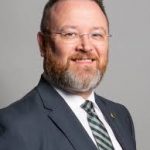
  • David Duguid – 2022 Tribute to HM Queen Elizabeth II

    David Duguid – 2022 Tribute to HM Queen Elizabeth II

    The tribute made by David Duguid, the Conservative MP for Banff and Buchan, in the House of Commons on 10 September 2022.

    I rise with humility and sadness on behalf of myself and the people of Banff and Buchan to pay tribute to Her late Majesty the Queen. I also offer my condolences to King Charles III and the royal family, as we remember that they have lost a mother, a grandmother and a great-grandmother.

    For most of us, Her Majesty has always been a continuing and reassuring presence. From the ashes of the second world war to the covid-19 pandemic in more recent years, she has been there providing reassurance and inspiration to people right across our United Kingdom. She has also been a much-admired and loved figure across the Commonwealth, but also right around the world.

    Sadly, unlike many others in this place, I never had the opportunity to meet the Queen. However, given that I have grown up and lived in, and now represent in this place, one of three constituencies in Aberdeenshire, it will perhaps come as no surprise that I know a fair few people who have had the privilege not only of meeting the Queen, but of actually knowing her. Listening to the tributes from right hon. and hon. Members over the last two days, I recognise the warmth and affection in the stories of those who knew her.

    We have all heard how well Her Majesty could make people feel at ease, whether in a formal or a social setting. That was not just a matter of decorum or of being a nice and kind person, which of course she very much was. She somehow knew—she somehow had this sixth sense or superpower that told her—precisely what action she needed to take to make that one individual feel at ease.

    As a Member of Parliament, the closest I ever got to the Queen was in the peers lobby, watching the state opening of Parliament on a screen. Before I was elected, however, Her Majesty was at the Turriff agricultural show in my hometown in 2014, on the occasion of the show’s 150th anniversary. On that occasion, I was able to get as close to the Queen as I find myself now to my hon. Friend the Member for Witney (Robert Courts). I found myself in the adoring crowd through which Her Majesty was moving so gracefully, as she always did. She was engaging with everyone, as she did, with that famous smile and twinkling eye we have heard so much about in the last two days—a smile with which we have all become very familiar and which we will always remember.

    The organisers of the Turriff show whom the Queen met that day were moved by her humility, warmth and humour, not to mention her expert knowledge of the livestock and animals on display—horses, of course, being a particularly passion for Her Majesty, as they are for her daughter, the Princess Royal, who returned to visit the show earlier this year. The people of Turriff will remember fondly the visit of Her late Majesty, as will the people of Fraserburgh, which she visited in 1992 to celebrate the town’s 400th anniversary, and of Macduff and Banff, which she visited on a launch from the Royal Yacht Britannia in 1961.

    In Scotland, we saw the Queen at her most relaxed and happy, particularly on her regular visits to her much-loved Balmoral in west Aberdeenshire. We have heard stories from her stays there, including from former Prime Ministers who had the joy of being driven around the Balmoral estate by the Queen herself in a Land Rover. I know that it will have been a comfort to her and her family that she spent her last days in the place that she loved so much.

    The United Kingdom, the Commonwealth and the world will come together in the coming days to mourn the passing of a great—perhaps the greatest—world leader. As we reflect on her long life and reign of loyal service, we also remember fondly her compassion, humour and warmth. She continues to be in all our hearts. May Her late Majesty Queen Elizabeth II rest in peace. God save the King.

  • David Duguid – 2021 Comments on Scottish Seafood Exports

    David Duguid – 2021 Comments on Scottish Seafood Exports

    The comments made by David Duguid, the UK Government Minister for Scotland, on 14 May 2021.

    This taskforce has been unusual as it has brought together industry experts from the catching, processing, exporting and aquaculture sectors as well as three ministers from the UK Government and the Scottish Government.

    Rapid progress has been made in a variety of areas through this taskforce. In particular, we have considerably cut the amount of time staff spend filling in details on Export Health Certificates, helping speed time-critical exports of our world-class seafood.

    Although the taskforce has a fixed lifespan, we are looking at how we can continue this important dialogue.

    We want to maintain close contacts, though we appreciate people in the industry are busy. I am confident we can reach accord on ongoing discussions as we seek to maximise the opportunities for our key seafood sector.

  • David Duguid – 2021 Comments on Support for Fishing Industry

    David Duguid – 2021 Comments on Support for Fishing Industry

    The comments made by David Duguid, the Minister for Scotland, on 21 February 2021.

    Over the last few months, we have been listening to the seafood industry and have continued to monitor the impacts that the pandemic and export disruption has played on prices, exports and the market.

    I am confident in the quality of Scottish fish and seafood but for many fishing businesses the lack of demand in the hospitality trade in the UK and further afield has had a real impact on market prices.

    While we continue to take steps to beat this virus and work with the sector to resolve export issues – this expanded support scheme will help the many small and medium sized fishing businesses that support so many of our coastal communities.

  • David Duguid – 2021 Comments on the Scottish Fishing Industry

    David Duguid – 2021 Comments on the Scottish Fishing Industry

    The comments made by David Duguid, the UK Government Minister for Scotland, on 22 January 2021.

    It is essential that we know precisely what difficulties are arising so we can tailor solutions. The excellent feedback from DFDS is massively helpful. We are working to streamline systems, while supporting exporters and partners such as DFDS, and the commitment to making the system work is clear across the board.

    The UK Government has acknowledged there have been difficulties and we want to work together to provide solutions and restore confidence within this crucial sector so that world-class Scottish seafood can be harvested at sea and sped from port to plate for customers here and abroad.

    A £23m additional support scheme for the seafood sector has been announced and the UK Government knows the urgency of rapid delivery. Meetings such as today’s allow us to take on board the industry’s concerns about the eligibility for that support fund, about making it swift and readily accessible.

    There are still issues with the supply chain and we are doing all we can to ease them. I have today written to Scottish Government’s Cabinet Secretary for the Rural Economy, Fergus Ewing, encouraging take-up of our offer of additional support for Food Standards Scotland at Larkhall and providing further detail of our direct support for businesses with the embedding of experts to help firms with paperwork required by the EU.

    We want a workable, sure-footed system so the industry can maximise the benefits of Britain’s new status as an independent coastal state, outside the Common Fisheries Policy.

  • David Duguid – 2020 Comments on Global Trade

    David Duguid – 2020 Comments on Global Trade

    The comments made by David Duguid, the Minister for Scotland, on 7 October 2020.

    The UK Government is committed to supporting Scottish businesses to trade globally.

    We encourage businesses to work with our world-leading credit agency, UKEF, and take advantage of export finance support to bolster their exports worldwide and strengthen their position on the global stage.

    Through the Trade Hub in Edinburgh, businesses will be able to utilise UKEF, as well as the UK Government’s global networks, expertise and influence.

    Scottish produce is world famous and will benefit from new global trade opportunities once the EU transition period ends. UKEF has the potential to provide a real boost to exporters in Scotland, and every corner of the UK.

  • David Duguid – 2019 Speech on 20 Years of Devolution

    Below is the text of the speech made by David Duguid, the Conservative MP for Banff and Buchan, in the House of Commons on 11 July 2019.

    It is an honour to follow the hon. Member for Clwyd South (Susan Elan Jones) and, in particular, to hear the translation of some Welsh poetry at least. I am pleased that the Scottish Affairs Committee, of which I am a member, and the Welsh Affairs Committee have secured this debate to mark 20 years of devolution. It is an important landmark in the history of the United Kingdom and an appropriate time to reflect on the progress we have made towards more representative and more effective government in Scotland and Wales—and Northern Ireland, when we get its Assembly back.

    Over the past 20 years, Scotland has seen multiple rounds of devolution. It was a Conservative-led Government who oversaw the Scotland Act 2012 and the Scotland Act 2016, which devolved additional powers to the Scottish Parliament, making it one of the most powerful devolved legislatures in the world today. The Scottish Affairs Committee’s recent report on inter- governmental relations highlighted the many other upheavals that have influenced the devolution settlement during that time, including the change of Government in 2007 and the independence referendum in 2014. It is clear that the devolution settlement that Scotland enjoys today is very different from the one created back in 1999. With 111 additional powers due to be devolved from Brussels to Holyrood as we leave the European Union—87 immediately and another 24 to follow—it will soon be changing further.

    As the Member of Parliament for Banff and Buchan, the heartland of Scottish fishing, I know that my constituents will be glad to see overall fisheries policy being determined closer to home, rather than by distant bureaucrats on the continent. I also know that many of my constituents have been frustrated by the SNP’s apparent desire to keep all those powers in Brussels, by keeping us in the EU and, by association, in the common fisheries policy.​

    Brexit or no Brexit, however, it is right that the UK and Scottish Governments should be investigating how intergovernmental relations can be improved, but this is not the time for talk of radically rewriting the devolution settlement. While we are celebrating the 20th anniversary of devolution as a whole, it is worth recognising that the last Scotland Act came into force just three years ago. In fact, we are still implementing that last rewrite of the devolution settlement, and earlier this year it emerged that the SNP-run Scottish Government will not be ready for the full devolution of welfare powers until 2024. This from the same party that told voters in 2014 that it could set up a whole new country in just 18 months.

    Instead of plotting a rematch against the voters on independence or devising increasingly left-field proposals to overhaul the devolution settlement yet again, the focus of this review should be on ensuring that the devolution settlement we have got is implemented smoothly and effectively.

    Jamie Stone (Caithness, Sutherland and Easter Ross) (LD)

    The hon. Gentleman is making an interesting point about the devolution settlement. We in the highlands and islands have identified something of a democratic deficit: we feel our voice is not being heard by those in power in Edinburgh and that power is being dragged out of the highlands to Edinburgh. That does not suit highland people, and what we get is elected Members turning around and blaming the Highland Council, but it gets its money from the Scottish Government. I believe there should be a Minister for the highlands and islands, in whatever Government, of whatever colour, who would speak up for the highlands and islands and would actually exercise some power to the good of the highlands and islands. We do not have one at the moment and we should.

    David Duguid

    I thank the hon. Gentleman for his point. I am going to raise a similar one about the north-east of Scotland, where I come from—that will come as no surprise.

    The work involved in this review is vital if the Scottish people are to enjoy the good governance they deserve, from both the Westminster and Holyrood Governments. I was pleased, therefore, with the UK Government’s response to the Committee’s report on intergovernmental affairs, which showed their commitment to such a review. It remains to be seen whether the Scottish Government will put the interests of the Scottish people first and work constructively with the UK Government. We may see more of the same from the SNP: this is the party that is delaying the implementation of the Scotland Act 2016—particularly on welfare, as I have mentioned—and is desperately trying to keep agricultural and fisheries policy under Brussels’ control. This is the party whose own Brexit Minister has said he does not like the devolved settlement. This is the party that ran roughshod over the procedures of the Scottish Parliament and the advice of its Presiding Officer to ram through its continuity Bill, only for swathes of it to be struck down by the Supreme Court.

    The choice is the SNP’s, and I hope for the sake of the Scottish people that the SNP chooses a more constructive path. If it fails to do so, I suspect that come 2021, when we have the next Holyrood elections, the Scottish people will bring that nationalist era to an end and elect a new Government who will take that constructive approach—​

    Pete Wishart

    You guys?

    David Duguid

    With Ruth Davidson as First Minister, yes. Like the majority of people in Scotland, the Scottish Conservative and Unionist party supports the Union. We are invested in the devolution settlement and we want it to succeed. That is because localism is a core Conservative principle.

    It is a source of endless disappointment to me and to my constituents in the north-east that the spirit of devolution, of decisions being taken closer to home, has not taken root entirely within the Scottish Government. Successive Labour and SNP Scottish Governments have hoarded power in Holyrood and, it has been suggested, governed primarily for the central belt. While English city regions are getting more control of their own affairs, to accompany growth deals, Nicola Sturgeon is ensuring that Scotland remains rigidly centralised.

    Scotland’s diversity, from region to region, across the whole of Scotland, is one of the many things that makes Scotland a nation that I and my immigrant wife are proud to call home. It is tragic that the political structures that the SNP has imposed on our nation do not reflect that. When the revenue grant for local authorities in the north-east is falling by £40 million this year, even when the SNP have made Scotland the highest taxed part of the UK, with the north-east taxed more than most areas in Scotland, it is clear to see that the north-east is missing out.

    My message for the Scottish Government on this anniversary is simple: it is time to work constructively with the UK Government to make the most of the existing devolution settlement, and ensure that the new powers coming to Holyrood from both Westminster and Brussels are transferred.

    Deidre Brock (Edinburgh North and Leith) (SNP)

    My colleague on the Scottish Affairs Committee talks a lot about constructive working of the two Governments together. The SNP tabled more than 100 amendments in the debates on the Bill that became the 2016 Act and they were completely ignored by the Government. Would the hon. Gentleman describe that as constructive working?

    David Duguid

    I thank my fellow Committee member for her intervention but I would not necessarily recognise voting against those amendments as ignoring them. We just voted against them because we did not agree with them, and that is how democracy works.

    In summary, it is time for a fair deal for the north-east, and more powers for local and regional communities across Scotland. It is time to respect the fact that although the Scottish people voted for devolution 20 years ago, at no point—either in 2014 or in any election since—have the people of Scotland expressed a desire to break up the United Kingdom.