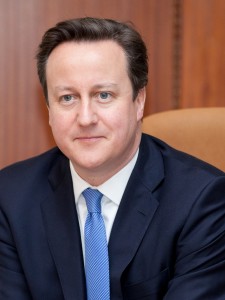
Tag: David Cameron

  • David Cameron – 2005 Speech to Conservative National Education Society

    davidcameron

    Below is the text of the speech made by David Cameron to the Conservative National Education Society on 16th June 2005.

    Five years ago this Government decided to spend thousands of pounds of public money on an advertising campaign.

    I loved it.

    The ads had a simple message – and a true one.

    They reminded us that “No-one forgets a good teacher”. Of all the influences on our lives, few are as profound as the inspiration of a good teacher.

    Teaching is more than a profession, it is a vocation. It’s a calling to make the world a better place by working with the young to enrich their minds.

    And there are few more important jobs than teaching.

    Why?

    Because there is no more important subject than education.

    Importance of education

    And it’s with the importance of education for the most disadvantaged in our society that I’d like to start.

    A decent education is the best start in life that any child can have. It is the ladder up which all can climb. The chance for everyone – whatever their background – to better themselves.

    If we want to create a genuine opportunity society, if we are determined to unlock human potential, if we believe – as I do, passionately – that every life is precious and no-one should have their chance to contribute written off, then we have to reform our education system.

    For many children in state schools, especially those born with the fewest advantages in life, there has been a persistent failure to believe in their right to the best. They have been held back by what George Bush senior called the “soft bigotry of low expectations”.

    We still have not built an education system which genuinely meets the needs of the disadvantaged.

    In some ways, we’ve actually made it worse.

    The goal of an opportunity society is receding from our grasp. 30 years ago, the percentage of children from state schools attending Oxford and Cambridge was two thirds. Today it is just one half.

    The importance of education goes much further than ensuring social mobility.

    Our failure to build a state education system which leaves no child behind has contributed to a society in which young lives are unnecessarily blighted.

    Take the vital issue of teenage pregnancy. Young mothers, and their children, risk being consigned to a life of dependency and poverty.

    Of course we can’t expect schools to have all the answers.

    Parents, families, teachers, politicians – we’re all in this together. We have a shared responsibility to our children and to society.

    But education has a crucial part to play. Would so many teenage girls get pregnant if they had been inspired at school, taught to be ambitious for themselves and equipped with the right skills to go out and get a job?

    Would so many young men turn away from a life of responsibility, and towards anti-social behaviour if they were taught to read properly so that they could see the point of education rather than view it as something between a waste of time and a source of embarrassment?

    After all, the connection between illiteracy and crime is evident: almost 70 per cent of our now record prison population cannot read or write properly.

    There’s a link between a poverty of expectation, poverty in society and the reality of thousands of scarred lives.

    We all know it.

    Tackling the roots of these social problems depends on getting what happens in our schools right.

    And if all our young people are to be given hope, rather than being allowed to drift to society’s margins, then we need to reform education to equip future generations for an ever more competitive world.

    In the age of globalization the future is bleaker than ever for those without skills, but opportunities are richer than ever for those with them. In the twenty-first century there is no more important national resource than our human capital.

    So: getting education right is vital if we are to have a socially mobile Britain, a socially cohesive Britain and an internationally competitive Britain which equips its citizens for the future.

    But it also matters crucially for a fourth reason. It’s one that, strangely, politicians don’t talk about often enough.

    Happiness.

    I believe that education is one of the keys to happiness.

    Education that stimulates, that inspires and that instills a love of books, of knowledge and of learning is one route to a happy and fulfilling life. You don’t have to take Mill’s side against Bentham in arguing that there are “higher forms of pleasure” to believe that loving learning is one way of loving life.

    The economist Richard Layard has recently made a powerful case that public policy should not be oriented towards maximizing wealth, but rather towards increasing happiness. The relevance to education is clear.

    Of course, we want to equip our children to compete effectively in the modern world. But education should be about so much more than that.

    Good teaching should open our minds to the best that has been thought and written.

    We should want our children to be inspired by history, learning of our country’s role in the expansion of freedom, enjoying the story of mankind’s progress through time.

    We should demand that our children be allowed access to the arts, exploring the worlds of imagination that literature can open up, appreciating the beauty of what great talents have produced.

    And we should recognize that in drama, music and sport – including competitive sport – the opportunity for self-expression, growth and achievement can be nurtured.

    So, there is no more important issue for the country than education – and no greater challenge for us to get right.

    Where there is political consensus, we should celebrate it. There is no point in parties bickering about matters on which we fundamentally agree.

    The Government wants a diversity of schools. I agree. The Government is talking about devolving greater power to heads and governors. I have always shared this goal. Where these things actually happen, we will applaud and support them.

    But where things are still going wrong, where the Government is failing to give the right lead, or where it fails to deliver on promises – and there are plenty of such areas – I will take a stand and try to build a new consensus.

    In opposition – every bit as much as in government – politicians need to set out what they believe in, what their goals are, and what their compass will be. If you don’t – and if you don’t stick to them – you will get buffeted from one issue to another.

    The principles I want to follow are clear.

    That a good education is a birth right for all: a pledge that everyone mouths, but one that means nothing unless we are determined to confront under-achievement amongst the poorest in society.

    That discipline is the first requirement for every school

    That the basics of reading, writing and numeracy are the vital building blocks for every child.

    That a good education should provide both the skills for life and a love of learning for its own sake.

    That every child is different – and that not every school should be the same.

    That a good education should mean challenging the sharpest minds and helping those who fall behind.

    That all schools – state, church, voluntary, private – should celebrate their independence and autonomy.

    That parents have rights to choice and to involvement – but that they also have clear responsibilities to the schools to which they send their children.

    That these responsibilities include making sure their children turn up on time, are properly fed and appropriately turned out, and – above all – that they behave properly.

    That the poor behaviour of a minority of children should never be allowed to wreck the proper education of the majority.

    That teaching and learning vocational skills is every bit as worthwhile as teaching and learning knowledge.

    That universities should be centres of excellence, independent from Government, with access based on merit.

    The new Conservative agenda

    In recent times party political debate has often been in danger of missing the big point in education.

    The Labour Party has talked primarily about “resources”, talking about spending per pupil, per school and as a share of our national wealth.

    The Conservative Party has talked more about “structures”, giving parents greater choices between different sorts of schools.

    Both are important – but there is a danger of missing the absolutely vital bit in the middle: what actually happens in our state schools.

    Will our children learn to read, write and add up properly? Will they be safe in class? Will they be stretched to the best of their abilities? Will they be taught the skills they need to have a successful career when they leave? Will our local school do the best for our child?

    These are the questions parents ask themselves – the issues we stress about when considering our children’s education.

    That’s why my focus is going to be simple and straightforward – on the basics.

    Discipline. Standards. Promoting teaching methods that work. Scrapping those that don’t. Building on tests, league tables and exam standards that genuinely measure success, failure and progress. Exposing and demolishing those that dumb down, promote an “all must have prizes mentality” or simply waste time.

    It is only once we have established what constitutes a good education that we should go on to ask: what stands in its way? How can we clear the obstacles in its path?

    The big issues in education

    There are five vital areas of weakness where we will question the Government, call them to account, seek and publish the clearest possible information – and take a stand on what needs to be done.

    Literacy in primary schools.

    Discipline in secondary schools.

    Special Educational Needs.

    The fact that bright children are being left out and non academic children are left behind.

    And a system for testing and examining that – put simply – is currently not fit for purpose.

    Literacy in primary schools

    Firstly: in spite of progress made and the national literacy strategy, around one in five children leaves primary school unable to read properly, and one in three leaves without being able to write properly.

    If you can’t read, you can’t learn. These children are lost to education. The waste – for them, for our country – is nothing short of a scandal.

    The evidence that traditional teaching methods – particular synthetic phonics – are the best way of teaching children the basic building blocks of reading and writing is now absolutely clear.

    We welcome the Government review of the National Literacy Strategy, but we are clear about the stand that should be taken and the battles that will have to be fought.

    Phonics works. Tip toeing gently around this subject gets us nowhere. Another review – and another cohort of children will pass into secondary school unable to read and unprepared to learn.

    The Government has got to say what works clearly, make the change and actually follow it through to the end.

    Discipline in secondary schools

    Second, discipline. If children don’t learnt to respect authority at school how can we expect them to respect others when they grow up?

    We all know that lack of discipline is an issue that affects most schools, and cripples the learning process in many. The figures bear this out.

    A teacher is assaulted every seven minutes of the school day. 17,000 pupils were expelled in a single term recently for violent behaviour. The scale of the problem was shown by an undercover documentary which showed a supply teacher’s battle with scenes of chaos in a variety of schools.

    The Government has decided to hold another review. This is fine, as long as something comes of it. But everyone knows that often with this Government, calling for a review is seen as the end of the process.

    We want to see the following clear and decisive action.

    The unambiguous right for heads to expel unruly pupils – so it is clear where authority lies.

    The abolition of appeals panels – so that heads cannot be undermined by having their decisions publicly reversed and disruptive children returned to the classroom.

    The right to make home/school contracts binding, by letting heads refuse to accept children if parents don’t sign them.

    On discipline, schools – all schools – should have autonomy. They are – and should be seen clearly as – places where children go to be taught and to learn, not reception centres for all children irrespective of how they behave.

    As well as this change in approach to the autonomy of schools – and as well as the changes to the law I have set out – we need something else.

    A change in culture. As I’ve said, with so many of these problems we’re all in it together. Government. Opposition. Parents. Teachers. Governors. Heads. Children.

    Listen to children threatened with punishment who say “I know my rights” and listen to teachers to frightened to deal robustly with poor behaviour. And it is clear what is happening.

    We are starting to treat teachers like children, and children like adults. That is wrong – and we should say so.

    SEN

    The system for dealing with special educational needs in this country is based on good intentions. The desire to see all children treated with equal love and care and attention is one we all share.

    But the system is now badly in need of reform.

    In some ways we are in danger of getting the worst of all worlds.

    At one end, children who are finding it difficult to keep up are being dragged into the SEN bracket, when what they really need is rigorous teaching methods.

    At the other end, children with profound needs are being starved of resources and inappropriately placed in mainstream schools.

    The move towards inclusion was right for many children. No one – least of all me – wants to turn the clock back to saying that some children are “ineducable”.

    But the pendulum has simply swung too far. The ideological obsession with holding all children in the same building for school hours, as if mere proximity connotes something profound or productive, has destroyed the education of many of society’s most vulnerable citizens.

    It is foolish to pretend that some of the most challenged and challenging children in Britain can study alongside their mainstream peers with a few hours of extra assistance here and there, or the part time aid of a teaching assistant now and then.

    They need constant attention from experts in facilities dedicated to their needs. It is expensive and it is painstaking but it is right.

    Similarly, it is wrong to close schools for those with moderate disabilities, whose needs fall in the ground between that of the mainstream and those with severe conditions.

    Forced into mainstream schools in which they are inevitably left behind, or alternatively into Severe Learning Disabilities schools in which they are never truly pushed to achieve, the plight of children with moderate learning disabilities is extremely troubling.

    Children with learning difficulties or disabilities deserve better than to have their real needs waved away because of their totemic status as representatives of social inclusion. These are our children, not guinea pigs in some giant social experiment.

    In the name of this inclusion agenda, centres of excellence are being torn down. When the expertise is dispersed, it is so difficult to bring it back together.

    I have set out some very clear steps for the Government to take. They’re having an “audit” of special schools. This audit must:

    Take account of parents’ views, as they are so often ignored

    Look at the law, which restricts choice and is biased against special schools

    Cover all special schools, in every part of the country

    And as I have said, that there should be a moratorium on closing special schools at least until the audit is completed.

    Instead, the government has announced that the audit will only look at schools for those with the profoundest needs and disabilities. Yet it is the schools for those with moderate needs that are being closed.

    We must make a stand on this issue. We must make a difference on this issue. There are parents up and down this country willing us on. They know what is happening is wrong. They know it can and must be changed. And through the force of our argument we will help make that change.

    Challenging bright children, helping those that have fallen behind

    One of the things that made people sit up and listen to Labour in 1997 was their promise in the introduction to their Manifesto to set children by ability.

    Tony Blair knew that putting that pledge up front would send parents a message – that New Labour was different. That they wouldn’t let egalitarian dogma get in the way of raising school standards.

    Tony Blair was right. The trouble is that he’s done nothing about it. Recent research by the academic David Jesson has shown what we already knew – that able students do better when they study together.

    The brightest need to be set with their peers, so they can soar.

    The struggling need smaller classes with the best teachers so that the difficulty they’re having can be properly addressed.

    The government never stops talking about ‘stretch’ – but nothing actually happens.

    As well as stretching the brightest and helping those that fall behind, we need to keep children switched on to learning.

    One the reasons some young people switch off is that they are bored. At 14 and 15 they would like to learn more skills, but that’s not what is on offer.

    This is not just a personal waste – it’s a national waste.

    Just 28 per cent of young people in the UK are qualified to apprentice, skilled craft and technician level, compared with 51 per cent in France and 65 per cent in Germany.

    If France and Germany are getting vocational education right, why can’t we?

    The answer which the Government and much of the educational establishment has come up with is the diploma scheme.

    But it seems to me that there is a fundamental flaw at its heart – it entails the death, in any meaningful sense, of the A level.

    You should never try to improve something that is weak – vocational education – by scrapping something that is fundamentally strong – like the A level.

    If we want to improve vocational education …

    ….if we want to end the snobbery that has surrounded it …

    … if we want to keep these young people switched on to learning …

    … and I want to do all of these things …

    … then we must take some bold steps.

    Surely these must include the following:

    Funding vocational courses from 14.

    Funding vocational centres that match the best available anywhere in the world.

    And establishing a simple set of vocational qualifications that businesses don’t just buy into, but actually design.

    The examination system

    The fifth and final area is the examination system.

    Each August GCSE and A level results come out – and the same thing happens.

    The debate between the ‘best results ever’ and “the easiest exams ever” begins.

    To avoid this demoralizing slanging match, we need to restore faith in our examinations system. There are real problems.

    Students that failed maths A level in 1991 would now get a B. For one exam board last year, you could get an A in Maths GCSE with 45% – get more than half the questions wrong and you still get an A.

    There is a simple principle that must be applied. Exams and their results should differentiate clearly between those pupils who excel, those who do well, those who pass and those who fail.

    There are various ways to achieve this revaluation. For example, A grades could be reserved for a fixed proportion of students, or marks could be published as well as grades, or both. But I am clear – a revaluation so that parents, employers and students themselves can have confidence in the system must take place.

    An overarching principle

    So those are the five challenges I believe need urgent attention. But beyond the specifics, there lies a more general problem at the heart of British education.

    I don’t yet have a word for it. The best I can do to describe it is to say that it’s a lack of purpose.

    Students being told the questions to their exams four weeks before they sit them.

    A history curriculum that asks students to wonder how a soldier felt, rather than teaches them about the battles he fought.

    An A level paper today found to be almost identical to a CSE paper thirty years ago.

    You don’t have to believe every example you read about to know that all too often where there should be clarity, there is fog, where we need rigour, there is fudge.

    It is difficult to find a better example than the Professor of continuing education who said the following:

    “The great challenge facing education in the 21st Century is the pursuit of a holistic problematised pedagogy.”

    Would anyone like me to read that out again?

    We should be frank about this.

    There has been a deep division in the educational establishment for fifty years – between those that think education is about imparting knowledge, and those that think it is about encouraging children to learn for themselves.

    Of course, schools should inspire as well as instill. But when it comes to the basics, we should be blunt: teaching is right, and ‘discussion facilitation’ is wrong.

    It is common sense that, especially when very young, children shouldn’t be left to blunder around in the dark.

    Rather, they need to be told some basic, essential things.

    Discipline, respect for others, responsibility – children aren’t born with restraint: they need to be taught it.

    Times tables don’t leap unbidden into a child’s mind: they must be learned, and once learned, as everyone knows, they’re learned for life.

    Acquiring knowledge and exploring creatively are linked. But creativity, exploration and self-expression can only come after a child has acquired confidence in using the basic tools of communication, language and number.

    It is a special type of cruelty that denies children access to the keys to learning for fear of stifling their creativity. It is only through a thorough grounding in literacy, being taught to read, that children are given the chance to communicate on terms of equality with others.

    The ‘learn for yourself’ attitude has been indulged far too much, and that has been to the detriment of the education and lives of children for half a century.

    It’s wrong to pretend that children are adults – that they always know what’s best for them. Children won’t necessarily all want to learn to read or to spell – just as when they’re given a choice between chips and pizza or healthy, nutritious food they’re more likely to choose what they like, not what’s good for them.

    At its heart, education must be about giving children what is good for them.

    Conclusion

    I hope that much of what I’ve said tonight is proven to be unnecessary. I hope that in the course of this Parliament, the Government addresses the challenges I’ve identified.

    And if they do, we’ll support them every step of the way. The important thing is that it’s done, not who does it.

    Because the quality of Britain’s education system today will determine our success as a society tomorrow.

    The irony is that many of the problems we face in our education system today have arisen because those responsible for it dislike confrontation.

    Fear of confrontation has turned modern education upside down.

    We treat children like adults, and teachers like children.

    We leave young children to ‘discover things for themselves’ when they need to be taught the basics.

    And we spoon feed teenagers, softening the requirements of their exams, when what they need is to be challenged and inspired.

    Our education system doesn’t like to say no, and doesn’t like to tell someone that they’ve failed. In the false economy of British education at the start of the twenty first century, the system seems to underestimate the cost of getting things wrong early on.

    Well I do understand the importance of teaching all children the basics, of stretching pupils to the best of their abilities, of encouraging ambition and rewarding hard work.

    And I want our educational system to deliver all of these things.

    It’s common sense.

    And like millions of parents across our country, the Conservative Party must stand for it – because we want every child to have the best start in life. We want youngsters to make a success of their careers. And we want to help build a stronger, better Britain.

  • David Cameron – 2005 Speech to Launch Leadership Bid

    davidcameron

    Below is the text of the speech made by David Cameron on 29th September 2005 to launch his leadership bid.

    I’m standing here today because I want to lead the Conservative Party and I want to lead it to victory at the next General Election. Now there are some who say I’m a bit too young. Some who say I’ve just been in Parliament for five years, maybe I don’t have the experience to do the job. And in some ways they’re right. I am only 38 years old, I have only been in Parliament for five years. But I believe that if you’ve got the right ideas in your head and the right passion in your heart, and if you know what this Party needs to do change, then you should go for it.

    And that’s why I’m doing it.

    There are people who say that the Labour Party under Gordon Brown will move to the left, that the economy’s going to hit the rocks, that all we’ve got to do is wait and just give it one more heave. I think that is rubbish. And I think it would be a pathetic way for a great Party like this to behave.

    There are some people who say that we’ve just got to attack the Government with a bit more vigour, we’ve just got to pull them apart a little bit more.

    I say that’s wrong. We’ve already called Tony Blair a liar.

    The problem at the last election was not that people trusted the Labour Party – they didn’t. They got the lowest level of support for a Government in our political lifetime. The problem was that people don’t yet trust the Conservative Party, and it’s we who have got to change.

    There are some people who say it’s just about coming up with more radical policies and putting them forward with more passion and with more vigour. Of course we’ve got to have the right policies, but that alone won’t do it.

    At the last election we had lots of good policies. Yesterday, the Government introduced our food policy for schools. Three days ago, they introduced our policy to scrap the revaluation of the council tax. The very day after the election, the Prime Minister stood on the steps of Downing Street, and spoke about respect and virtually introduced our school discipline policy.

    It’s not policies alone that are going to do it.

    It’s not even, dare I say it, having a young, energetic and vigorous party leader, although come to think of it that wouldn’t be such a bad idea.

    It’s not just organisation, it’s not just presentation, it is something much more fundamental.

    We have to explain to people what it means to be a Conservative in 2005. We’ve had, frankly, a leadership election that I think has sent half the country to sleep – including some of the people who’ve been taking part in it. We’ve made interesting speeches, we’ve come up with interesting policy ideas, we’ve trotted out that mantra of things that we believe in.

    But we’ve got to say what those principles mean in 2005 and how they’ll make a difference to this country in the future.

    We talk about personal responsibility. We talk about support for the family. For lower taxes. For limited government. For national sovereignty. But what we have to do is make the change in the culture and identity of the Conservative Party and say what those things mean today, and that’s what I want to do.

    Personal responsibility. I believe passionately that people should be free to run their own lives and to choose. But personal responsibility must not mean selfish individualism. There is a we in politics as well as a me.

    And when we look at an increasingly atomised society, in which people don’t talk to each other, in our inner cities we have different races living separate lives, we need a shared responsibility – a sense that we’re all in this together. That not just individuals and families have responsibilities, but also government and business.

    And that’s why one of the things I’ve put forward is the idea of a School Leaver Programme. To say to people, to say to voluntary bodies and to business and to the Armed Forces – think of a great four month programme that you can put young people through, so that they can do something together, whatever their class, their background, their colour or whatever part of the country they come from.

    Lower Taxes. I believe passionately that we should leave people with more of their own money to spend as they choose. But lower taxes cannot mean coming up to an election time with a small bunch of personal tax cuts that just undermine our credibility and make people think that we’re out there to bribe them to vote for us.

    Our belief in lower taxes has got to be about making this economy competitive and dynamic and the best place in the world to have jobs and invest and have businesses. We’ve got to have a sense in the Conservative Party, that we want to share – an important word – share the proceeds of growth between better public services on the one hand and lower taxes on the other hand.

    Limited Government. I desperately want the State to be our servant and not our master. But rolling back the state must never mean that the weak and defenceless are left behind. That’s why I’ve spoken about a whole new compact with the voluntary sector and social enterprises, to deal with the most difficult problems in our inner cities – with drug dependency, family breakdown, persistent unemployment, poor public space.

    In the 1980’s we said to businesses – go to that part of the country where the economy is broken, pay no tax, pay no rates and bring wealth to those areas.

    Today we ought to be saying the same to social entrepreneurs – go to that part of the country where society is broken and solve those deep-seated problems that government has consistently failed to solve.

    National Sovereignty. I do believe that this country does best when we govern ourselves and we’re proud of our institutions. But national sovereignty must never mean isolation or xenophobia. This is an incredible country with its best days ahead of it.

    We should be proud of the fact that we are a leading member of the European Union, of NATO, that we’re on the UN Security Council, that we’re a leading member of the Commonwealth.

    And what we must do is show how we can engage ethically and enthusiastically with the rest of the world.

    And when the Conservative Party talks about international affairs, it can’t just be Gibraltar and Zimbabwe – we’ve got to show as much passion about Darfur and the millions of people living on less that a dollar a day in sub-Saharan Africa who are getting poorer while we are getting richer.

    If we have the courage to explain what each and every one of the Conservative principles that make us Conservatives mean today, then, we can win.

    But it is a change of culture and identity. There is no Clause 4, there is no magic wand, there is no one thing that we can do to show that this party thinks Britain’s best days ahead.

    It is a change right across the board.

    This party has got to look and feel and talk and sound like a completely different organisation.

    It’s got to be positive. I want no more by-election campaigns or General Election campaigns when our message is overwhelmingly negative and when we just attack our components.

    I want us to be optimistic, talking to peoples’ hopes and not their fears.

    And I want us to be a consistent Conservative Party. There are times in this quite new politics we have when Tony Blair sits in the middle of the British political spectrum, when he says or even does Conservative things.

    Tuition fees. Foundation hospitals. City academies.

    When he does these things, I want a Conservative Party that says yes, that is a good idea, let me show you how to make it even better. Not one that seeks a way of opposing him and just looks opportunistic and insincere.

    And we’ve got to change every part of our party, including how we select candidates. Having more women standing for Parliament is not political correctness, it is political effectiveness. If the conversation we have within our own party doesn’t reflect the conversation we’re having with the general public, we won’t win, and we won’t deserve to win.

    These are the changes we have to make, and I’m passionate about making them. Because I am fed up of sitting on well-leathered green benches in the House of Commons, and I don’t want to wait another four years of opposition while we make the same mistakes again. I say why put off what has to be done.

    I’m fed up with people coming to my surgeries – young mums, who say, I can’t handle this complicated tax credits and benefits system and I can’t get the help I need, what I want is to be floated free, to keep more of my own money as I choose to.

    I’m fed up of listening to businessmen, who find the combination of tax and regulation mean it’s not worth investing and growing and giving people jobs.

    I don’t want to have to go on hearing from pensioners who can’t pay the council tax and when they see there’s so much waste in government, they know what their hard-earned money is going towards.

    This is a practical party – Conservatives are not ideologues but we are idealists.

    We do have a dream. A dream of a country where the brightest kid from the poorest household can go to the best university. A dream where it’s the easiest country to set up a business, to employ people, to make money, to invest and to put it back. A dream where we have a stable society in which families who do the right thing, who actually try and work hard and do the right thing for their children are rewarded rather than punished.

    But all the dreams in the world won’t come true unless we have the courage to change.

    That’s what this leadership election is about. Everyone is now saying we need a modern, compassionate Conservatism. I absolutely believe that is the case, and the choice for the Party has got to be, who do you think really believes it, who will really stick to it? When the going gets tough and the press attacks you after a couple of years and say this isn’t distinctive enough, it isn’t attacking enough, who will dig into their core and say, well that’s what I believe.

    I’m not changing just to win, I’m changing because I think it’s right for the country, it’s right for our times, it’s right for a whole generation of people who feel so switched off politics.

    So that is the choice we’ve got to make. We can win, we can make this country better, but we can only win if we change. That’s the question I’m asking the Conservative Party. Don’t put it off for four years, go for someone who believes it to the core of their being.

    Change to win – and we will win.

  • David Cameron – 2004 Speech at Independent Fringe Meeting

    davidcameron

    Below is the text of the speech made by David Cameron at the Independent Fringe Meeting on 4th October 2004.

    You’ve given me 5 minutes.

    Let me try it in a sentence.

    By emphasising the Conservative values that the vast majority of the British public share, by turning them into Conservative polices – and by showing how we would put them in to action.

    In other words: values, policies and action.

    Before expanding on that let me say how we don’t win.

    We don’t win by a fruitless search for differences between us and our opponents where none really exist. It’s opportunist Punch and Judy politics. It’s unattractive and it doesn’t work.

    We have to forget about what Blair is going to say tomorrow or the next day. I don’t know what he’s going to say. He doesn’t know what he is going to say.

    We should just get on and do what we think is right.

    Second, we won’t win by picking one subject – whether it is Europe or anything else – and talking about it incessantly. People want their political parties to tackle the broad range of issues that they care about. In the main that means schools, hospitals, crime, immigration and the economy.

    If you don’t sound balanced, you won’t seem balanced.

    Third, we won’t win by being exclusively negative. People now know they have been let down by Labour. We reminded them of that- quite rightly- during the local election campaign. They don’t need anymore reminders from us. And every reminder we send probably says as much about us as it does about them.

    It’s time to accentuate the positive…

    So, back to the simple formulation – values, policies and action.

    Above all we have to recognise that the biggest problem in British politics today is cynicism, apathy and disillusion. They are the enemy, not Labour or the Liberals.

    How many times have we all heard on the doorstep – “you’re all the same”, “you won’t make any difference”, ending with the question: “what’s the point?”

    Judging from the turn out at general local and by-elections, most people’s answer to that last question – “what’s the point?” – is that there isn’t any.

    Labour and the Conservatives are marooned on broadly the same poll rating, somewhere in the low 30s.

    They’re there because they’ve let people down. We’re there because people don’t yet think that we will make any difference. The Liberals are doing well, more than anything else, because they are not either of us.

    But I’m upbeat.

    There are three questions that matter in terms of political success.

    Do people share your values?

    Do they agree with you about what’s wrong?

    And do they think you have the right plans for doing something about it?

    The answer to the first question about values is good for the Conservatives. Why else do you think the focus group obsessed Labour party has been so timid?

    Should crime be punished or tolerated? Does Britain do best when it is control of its own destiny?

    Are families the key building block of a stable society? Does equality of opportunity matter more than equality of outcome? Are our institutions a source of strength not a cause of weakness?

    Should we encourage people to do more for themselves when they can?

    All value questions – and all get a Conservative answer almost anywhere in the country you care to ask them.

    Answers to questions about what is wrong in Blair’s Britain are just as encouraging.

    Here I admit, we’ve checked with polls and focus groups.

    Do people think that crime is rising and the hands of the Police are tied by bureaucracy and paperwork? Yes.

    Do people think that hospital managers and head teachers are too busy looking up to Whitehall to manage effectively? Yes.

    Do people feel over taxed and in awe of third term tax rises and a £2,000 council tax. Yes. They don’t just think these taxes are coming if Labour win again – they know they are coming.

    So that brings us to the big one – “do people agree with our plans?”

    First, they don’t know enough – if anything at all – about them.

    Second, even if they do, because of the wall of cynicism and disillusion, they don’t believe we will achieve them.

    That’s why the Timetable of Action being published this week is so important. It will tell you what we will do in the first day, the first week, the first month.

    It gives you details of the first queen’s speech and the first budget. It is about being accountable.

    It is about people feeling that they are in charge again, and not the politicians. To make sure we are the servants, not the masters.

    Two last points.

    Does the Conservative party need to modernise itself?

    Yes, of course. If you don’t understand the complexities and changing nature of modern society you are irrelevant.

    If you don’t address the modern concerns of a modern country, you are dead.

    Second, by saying that most people in this country share broadly Conservative values, have I said enough?

    No. We have to make sure that we include all of those values.

    That we have a vision of society. That we believe we have obligations unto each other. That there is a net beneath which no one should fall. That there is a “we” as well as a “me”.

    As I look at a Labour Government that is closing special schools for disabled children, that is throwing wardens out of sheltered accommodation schemes, that endlessly threatens community hospitals, that offers drug addicts the sort of treatment place that is worse than useless and that crushes the voluntary and charitable sectors with its belief that “Society is the State” – nothing more, nothing less – there has never been a greater need for Conservatives to explain our view of society, our obligations to each other and our compassion for those in need.

    And with everything I’ve said – I hope we can inject some passion – as well as compassion – into what we say at the same time.

    So how do we win?

    Values, policies and action.

    Who knows? If we follow this with passion as well as discipline, people might just listen.

  • David Cameron – 2001 Maiden Speech

    davidcameron

    Below is the text of the maiden speech made by David Cameron in the House of Commons on 28th June 2001.

    I am pleased to follow the maiden speeches of the hon. Member for Glasgow, Maryhill (Ann Mckechin) and the hon. Member for Dundee, East (Mr. Luke). Both spoke movingly and amusingly about their constituencies. I am glad that the hon. Member for Dundee, East is a true blue in the sense that he supports Dundee. It is our role to turn him blue in other ways; I look forward to trying to do that.

    I am delighted to make my maiden speech in a debate on our procedures. I have worked in two Departments—the Treasury and the Home Office—as a special adviser, and I was therefore one of the bad guys, always in a rush to get legislation through the House in order to prove that the Executive were delivering their programme. However, experience shows that too many Bills are passed too quickly, often with too little scrutiny and to little concrete effect. I have therefore enjoyed listening to the debate on the Government’s suggestion for improving matters. I remain sceptical about their solution.

    I listened carefully to my hon. Friend the Member for Aldridge-Brownhills (Mr. Shepherd). Both his speeches today were incredibly inspiring. As a new boy, I shall try to remember those lessons about our role and that of the House of Commons. The balance has tipped too far in favour of the Executive, and I am highly suspicious about programming Bills in advance and separating debates from votes.

    I listened carefully to the comments of my right hon. and learned Friend the Member for Sleaford and North Hykeham (Mr. Hogg) about being independent Members and listening to the arguments. I remember working with my right hon. and learned Friend the Member for Folkestone and Hythe (Mr. Howard) when he was Home Secretary. We lost many votes in the other place, and my right hon. and learned Friend asked our Minister there why we kept losing them. He replied, “Home Secretary, I am afraid that, although I get all our peers to come and vote, they listen to the arguments and they do not always go the right way.”

    It is a privilege and an honour to represent the constituency of Witney and the people of west Oxfordshire. Witney is a seat rich in history and blessed with some of England’s most stunning towns, villages, buildings and countryside. It stretches from the market town of Chipping Norton in the north to the banks of the Thames in the south, and includes the thriving market towns of Witney, Carterton, Woodstock, Burford and Eynsham.

    The western boundary is Oxfordshire’s county boundary and includes Cotswold villages of great beauty such as Taynton and Idbury. To the east, the seat stretches towards Oxford’s city limits, taking in Begbroke and Yarnton. There are 115 villages and settlements in valleys and plains watered by the Dorn, the Glyme, the Evenlode and the Windrush.

    Burford was home to one of our great Speakers, William Lenthall, who stood up so clearly for the independence of the House and his office. West Oxfordshire can also boast of great statesmen. It contains the birth and burial places of Winston Churchill—Blenheim and Bladon.

    We have great generals, such as John Churchill, Duke of Marlborough, who was rewarded with Blenheim palace for his victories in the war of the Spanish succession. As we, on the Conservative Benches, settle our own issue of succession—Spanish or otherwise—I hope that our battles are shorter and slightly less bloody.

    West Oxfordshire’s political history extends to all traditions. The Levellers, who are now regarded as heroic early socialists, rebelled during the civil war because they believed that their leader, Cromwell, had betrayed the principles for which they fought. I am sure that Labour Members who might sometimes feel the same way do not need reminding that the leaders of that rebellion were rounded up and shot in Burford’s churchyard. William Morris, the socialist visionary, lived and is buried at Kelmscott manor in my constituency, and I have no hesitation in urging all hon. Members to visit that beautiful village on the banks of the Thames which time seems to have passed by.

    Since 1945, west Oxfordshire has been represented by Sir Douglas Dodds-Parker, who parachuted into France in the 1940s; by Neil Marten, who served with the special forces during the war before embarking on a long and distinguished ministerial career; and by Douglas Hurd, now Lord Hurd, who was an outstanding Foreign Secretary. This brings me neatly to the hon. Member for St. Helens, South (Mr. Woodward).

    I know that it is traditional to pay tribute to one’s immediate predecessor, and I have no hesitation in saying that I agreed with almost everything that he said in the first half of the previous Parliament, when he was a trenchant critic of the Government. It was only when he moved to the Labour Benches and supported that Government that our views started to diverge. I know that he worked hard for people in west Oxfordshire and must have felt strongly to leave such a magnificent constituency with such friendly and welcoming people. However, he remains a constituent, and a not insignificant local employer—not least in the area of domestic service. We are, in fact, quite close neighbours. On a clear day, from the hill behind my cottage, I can almost see some of the glittering spires of his great house.

    West Oxfordshire’s economy includes a wide diversity of agriculture and small and medium-sized businesses. Witney was for years dominated by blankets, beer and its railway. There remains just one blanket factory, the beer is predominantly brewed elsewhere and the railway has been closed. I will always support moves to examine reopening our railway to Oxford and extending the line to Carterton. Witney and west Oxfordshire are now beacons of enterprise and success. A range of service, technology and light industrial businesses have thrived in our area, and with the Arrows and Benetton Formula 1 teams, we are becoming the grand prix capital of the world. Our unemployment rate is close to the lowest in the country. However, our farming and tourism businesses have suffered badly from the foot and mouth outbreak and need time and an understanding, enabling Government to recover.

    RAF Brize Norton, adjoining the relatively modern town of Carterton, is now one of our largest employers. It is one of Britain’s longest-established air bases, and has played an important role in the defence of this country and in servicing our armed forces. Its facilities and expertise in air-to-air refuelling make it the perfect location for the future strategic tanker aircraft and I will always support its role. The now ageing VC10s that thunder down the runway loaded with fuel for our fighter aircraft are fondly known locally as “Prescotts”, because they are able to refuel two Jaguars simultaneously—one under each wing. There was some suggestion during the election campaign that the right hon. Gentleman’s name should be appended to some other type of aircraft, perhaps a fighter that packed a bit more of a punch.

    Carterton is a rapidly growing town and in need of new services, such as a sixth form for its excellent community college, the campaign for which I strongly support. West Oxfordshire has an excellent Conservative-led district council, which has invested in those kinds of facilities, including some in Carterton. and I look forward to working with it in the years ahead.

    Chipping Norton, long famous for William Bliss’s tweed mill, which remains a striking landmark, is a classic Cotswold market town. It is also home to the kennels of the Heythrop hunt. There is a long tradition of hunting in west Oxfordshire, originally based in the royal forest of Wychwood, where Ethelred II established the first royal hunting lodge more than nine centuries ago. I will always stand up for the freedom of people in the countryside to take part in country sports, and, in the light of today’s debate, would always be concerned about any limits set on a debate on a hunting Bill that could curtail that freedom.

    Under its beautiful and serene exterior, west Oxfordshire faces important issues and problems. Rural poverty has been exacerbated by foot and mouth. The decline of local services, emphasised by the tragic closure of Burford hospital during the last Parliament, has angered local people. We still have cottage hospitals in Witney and Chipping Norton, which I strongly support.

    Rumours of budget cuts for our hospitals and the dreaded “r” word—rationalisation—for our ambulance service are rife. Those emergency services and hospitals play a vital role in rural communities and they should be expanded, not discarded. In the context of today’s debate, the health reform bill promises decentralisation, but we shall need a lot of time to scrutinise it and ensure that it really will deliver a local NHS. I hope that that can happen under the proposed system.

    In Witney, there is huge pressure on housing and great concern that the Government’s top-down housing targets will mean building on greenfield sites and wrecking the countryside that we love. That is another issue of great local importance.

    The theme of how we make and scrutinise decisions runs through today’s debate. I wanted to be elected to the House because I believe in what it stands for and what it can do to hold Governments to account, air grievances and raise issues that people in west Oxfordshire care about. I also wanted to be elected because, through action here, one can get things done.

    I shall support all the efforts being made to restore the House as the cockpit of debate, and the place where policies are announced, debated and decided and where the Government are scrutinised and challenged, whether on the Floor of the Chamber or through strengthened, independent Select Committees. I cannot see how deciding in advance how much time should be given to a Bill and systematic guillotining can help in that regard, but I am a new boy and I am listening to the arguments.

    The beauties of west Oxfordshire of which I have spoken—the glorious view from the top of Burford high street and Pope’s tower in Stanton Harcourt—sum up for many people what they feel about their British identity. I know that we shall always be able to treasure that identity, whether it rests on those feelings or on something else, but what matters just as much as our identity is our self-determination, and our ability to make decisions as a nation and to question and challenge them properly in this place. The ability to continue doing so rests in our own hands. It is a privilege that I shall try to preserve while serving the kind and generous people of west Oxfordshire.