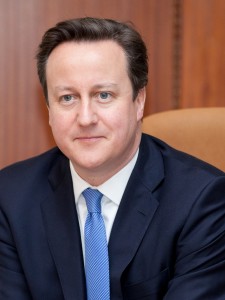
Tag: David Cameron

  • David Cameron – 2012 Speech on Crime and Justice

    davidcameron

    Below is the text of a speech made by the Prime Minister, David Cameron, on crime and justice on Monday 22nd October 2012.

    Two weeks ago, I spoke about this Government’s mission: to build an aspiration nation, where those who work hard can get on – and no one gets left behind. A stronger private sector. Welfare that works. Schools that teach.

    Today I want to talk about another, critical, part of helping people to rise up and that is confronting the crime and bad behaviour that holds so many people down.

    Go to some neighbourhoods in our country and you can feel that aspiration is dead. Children learning from a young age that life is about surviving, not thriving. Gang leaders as role models, drug dealers as career advisors. This doesn’t just matter to the elderly lady with five bolts on her door or the woman terrified to walk home in the dark. It matters to all of us.We will not rise as a country if we leave millions behind and write off whole communities.

    So today I want to tell you about our approach to crime and justice – and the bold, unprecedented action we’re taking.

    For many people, when it comes to crime I’m the person associated with those three words, two of which begin with ‘H’, and one of which is ‘hoodie’; even though I never actually said it. For others, I’m the politician who has argued frequently for tough punishment. So do I take a tough line on crime – or a touchy-feely one?

    In no other public debate do the issues get as polarised as this. On climate change you don’t have to be in denial on the one hand or campaigning to get every car off the road on the other. Life isn’t that simple – so government policy isn’t that simple. And yet with the crime debate, people seem to want it black or white.

    Lock ‘em up or let ‘em out. Blame the criminal or blame society. ‘Be tough’ or ‘act soft’.

    We’re so busy going backwards and forwards we never move the debate on.

    What I have been trying to do – in opposition and now in government – is break out of this sterile debate and show a new way forward: tough, but intelligent. We need to be tough because the foundation of effective criminal justice is personal responsibility.

    Committing a crime is always a choice. That’s why the primary, proper response to crime is not explanations or excuses, it is punishment – proportionate, meaningful punishment.

    And when a crime is serious enough, the only thinkable punishment is a long prison sentence. This is what victims – and society – deserve.

    Victims need to know the criminal will be held to account and dealt with. And the ‘society’ bit really matters: retribution is not a dirty word, it is important to society that revulsion we all feel against crime is properly recognised. But punishment is what offenders both deserve and need, too. It says to them: “You are adults. Your actions have consequences.”

    To treat criminals as victims – to say they had no choice – is to treat them like children. I firmly believe in their right to be treated as adults, with the responsibility to carry the consequences of their actions. But that’s not the whole story.

    Just being tough isn’t a successful strategy in itself. Come with me to any prison in this country. There you’ll meet muggers, robbers, and burglars. But you’ll also meet young people who can’t read, teenagers addicted to drugs, people who’ve never worked a day in their whole lives.

    These people need help so they can become part of the solution and not remain part of the problem. Recognising this isn’t soft, or liberal. It’s common sense.

    We’ll never create a safer society unless we give people, especially young people, opportunities and chances away from crime. Prevention is the cheapest and most effective way to deal with crime – everything else is simply picking up the pieces of failure that has gone before. That’s part of what I mean by being intelligent as well as tough.

    Not just saying what people want to hear, not playing to the gallery, but thinking hard about dealing with the causes of crime as well as the fall-out. And today, being intelligent has got to mean something else too. Achieving our ambitions when there is much less money than there used to be. The politics of the blank cheque are well and truly over.

    The only way to achieve our ambitions is reform – radical, intelligent reform. So much of what went wrong in public services previously wasn’t because the money was missing, it was because the methods were wrong.

    Top-down, bureaucratic, centralising. Judging every service by the money you put in rather than by the service you got out.

    Our whole reform agenda is about turning this on its head.

    Going from big government to big society; more choice, more competition, more openness. You see it in welfare providers paid by results and hospitals publishing their results online.

    Some say, this is fine in welfare, fine with hospitals or fine with schools, but it won’t work in criminal justice. They think when it comes to keeping people safe, we’ve got to stick with the old, state-heavy approach. I believe that’s wrong.

    It was the old approach that gave us police stuck behind desks filling in forms. It left us with the criminal justice system chasing ridiculous, unhelpful targets. And it left us with sky-high re-offending rates.

    So we are bringing the logic of our public service reform agenda – transparency, payment by results, accountability – to transform criminal justice too. Because every part of that system needs change. Every part needs tough, but intelligent reform.And today, I want to explain how that’s working, right through the criminal justice system.

    Let’s start with the police. I am profoundly grateful for the job our police officers do.

    Years ago I used to run near Wormwood Scrubs every morning, and on my route there was a small stone monument. It said: ‘Here fell PS Christopher Head; PC Geoffrey Fox; PC David Wombwell, 12th August 1966’; and it was a daily reminder of this single truth: Police officers put on their uniform in the morning, kiss their children goodbye, and leave home having no idea about the dangers they might face.

    Just a few weeks ago, Police Constables Nicola Hughes and Fiona Bone answered a 999 call without knowing where it would lead. And though PC Ian Dibell was off-duty, he too could not have imagined what he would come up against. These people were professional, brave, instinctively selfless. The same can be said of thousands of police officers who work on our streets, protecting our families day-in, day-out.

    All of us owe them our thanks. All of us owe them our respect. And for all those who wear the uniform, it’s essential we get policing right. For years police officers were held back from doing the job they signed up for. We had targets like the ‘Offences Brought to Justice Target’ which encouraged police to chase easy wins.

    I remember being out on the beat with a police officer in South Wales and he felt he had to book a boy for taking some money from his mum’s purse – rather than just a stiff talking to down at the nick. That’s what the culture and targets demanded. He knew it was ridiculous. Everyone knew it was ridiculous. But the targets forced his hand. And then there was the out-of-control bureaucracy.

    Police officers spending almost half their shift on paperwork. So Theresa May is doing what so many Home Secretaries before her shied away from; fundamentally reforming the police and allowing them to get on with the tough, no-nonsense policing that they want and we want.

    We’ve scrapped all the targets and given them a single, core objective – to cut crime.We’ve ended micro-management from Whitehall and returned professional discretion to local forces.

    The notion that you had to fill out a form every time you stopped someone on the street – it’s gone.The endless looking up for instruction from some official in the Home Office – it’s over. And we’re going further; reforming police pay so it rewards crime-fighting, not just time served; and changing the leadership of the police too.

    Our reforms are comprehensive, they are sophisticated – and they are working.

    HMIC – the independent regulator – found that even at a time of tight budgets, the frontline is being protected. The number of neighbourhood police officers is up. Public satisfaction is up and crime is down. And if you like official figures, here they are.

    Even though in real terms, central police spending cuts are around 20 per cent over four years, the latest figures – out at the end of last week – show that crime is down 6 per cent in the last year.

    We can have tough policing when money is tight. And we’re bringing intelligent reform too. More accountability and transparency to put people in charge of policing. That’s what Police and Crime Commissioners are all about.

    These are big, important elections coming up. It’s the first time they are being held. People are going to be voting in their own law and order champion: One person who sets the budgets; sets the priorities; hires and fires and Chief Constable; bangs heads together to get things done.

    Some people are saying that no one’s bothered, that people aren’t interested in how we fight crime in their area. I don’t agree. I say look at crime maps and you come to a conclusion.

    They said no one would care about transparency – but this website has had 500 million hits and counting.

    The more high profile Police and Crime Commissioners get, the more engaged people will be – and the more pressure they’ll put on them to deliver tough local policing.

    So my message for these elections is clear: If you want more tough policing, you can get it.If you want coppers who are on the beat, on your street, cracking down on anti-social behaviour, focussing on the things you care about, then don’t just talk about it, get out on November 15th and vote for it.Intelligent reform is happening at the national level too, with the National Crime Agency.

    This is, if you like, Britain’s version of the FBI; recognising that there are some highly serious and organised crimes – human trafficking, money laundering, drug rings – that need the very best in terms of national co-ordination.

    The next part of the criminal justice chain is prosecution and here again we need tough, but intelligent reform.

    Too often the story’s the same. Someone gets arrested in the middle of the night. They’re bailed. It takes months before they appear in court. Then the day dawns and they’ve disappeared.

    It’s why you get whole walls of police stations papered with pictures of people missing on bail. But we saw with the riots last summer it doesn’t have to be like that. Justice was swift and it was tough – and we want that all the time.

    So we’re opening our courts earlier in the morning, in the evenings and weekends; because crime doesn’t keep normal working hours and neither should our criminal justice system. Already this is happening in 48 courts across the country.

    Another innovation is video links between police stations and courts. If someone is arrested, the police can flick the switch on a monitor and get them in front of a magistrate in hours rather than months. So no bail to jump and no cracks to slip through.

    And we need to toughen up the process in court too.

    Today, once the verdict is passed, the defendant can stand in the witness box and make their case for a more lenient sentence; but too often the victim doesn’t get a say. The one person whose life has been torn apart is kept silent.

    We want to give more victims the chance to be heard – to say how their life has been affected by the crime. And to back that up we will be appointing a new Victims’ Commissioner to make sure that victims’ voices are heard not just in court but right at the heart of government.

    We need intelligent reform, too, to open up our whole justice system. Today it’s all too closed, opaque, unaccountable.

    We hear second hand what sentence a criminal is getting. Wouldn’t it be better if we could hear and watch the result and the reasoning – directly?

    So we are legislating to start televising the sentences that Judges deliver, so that people can hear why a decision has been reached directly from the Judge.

    This will start in the Court of Appeal next year, and in the long-term we want to see this happening in the Crown Court too.

    When those criminals are convicted, we need to make sure the punishment fits the crime. At every single level of sentence this Government is getting tougher.

    Where fines used to be limited, with us magistrates will be able to impose unlimited fines. While the maximum compensation that criminals used to be liable for was £5000, we are uncapping it. If you cost someone £10,000 or £20,000, you should potentially have to pay that back.

    And we are toughening up community sentences too.

    Having a monthly meeting with your probation officer is hardly a punishment – so tomorrow in Parliament, something important is happening. We are laying amendments to the Crime and Courts Bill, making sure that every community sentence contains an element of punishment.

    And this tough change is aligned with an intelligent reform.

    We’re introducing new GPS satellite tagging that can pin-point exactly where offenders are. Making it literally impossible to duck under the radar.

    If you’re on a community sentence, you will be supervised. You will be properly punished. And you will be forced to complete that sentence.Of course, for many crimes, only one form of punishment will do – and that is prison.

    I want to be clear. I want to see people who ruin the lives of others – rapists, murderers, muggers – behind bars, and kept there for a long time.

    I’ve always supported the principle of the life sentence.

    You do something heinous – and for the rest of your life you are either in prison or on licence and subject to recall if you step out of line. I don’t believe that’s old-fashioned, it is vital, so we are increasing life sentences.

    A new two strikes and you’re out rule means that if you commit two serious sexual or violent offences, you get life. Not at the Judge’s discretion – but mandatory life.

    We are creating a new maximum sentence of life for those who import guns and death onto our streets. And we are looking too at toughening up knife sentences, because to me a caution for carrying a knife just does not seem enough.And for anyone sentenced to a spell in prison, there will be space in prison. There will be no arbitrary targets for our prison population.

    The number of people behind bars will not be about bunks available, it will be about how many people have committed serious crimes.

    Once they are inside prison, we’re toughening up the regime.

    Too many prisoners see out their time by just lying on their beds for hours and hours, watching TV, doing nothing, learning nothing. So we are turning those prisons from places of idleness into places of work.

    Like HMP Manchester, where prisoners work in the laundry or printing workshop for up to 40 hours a week. I saw myself today a number of programmes where it is possible for prisoners to work and earn.

    This is about fit and able people getting out of their cells, having a structured day, earning respect and earning privileges. And when they earn money, we’ll be making them pay a chunk of it back to their victims too.

    So on the punishment of criminals – I don’t want there to be any doubt that we will be tougher. But it’s not good enough just being tough, locking people up and thinking: that’s it.

    We need to be intelligent too, about what happens to these people during and after their punishment. And here’s why.At the moment, six out of ten of those leaving jail are reconvicted within two years. If you think that figure’s depressing, try this.

    While those in the care system account for just one per cent of children, a quarter of those in prison were in care as children.

    Half the prison population say they have no qualifications. We have got to give these people a chance. Not just for their sake, but for ours. To stop that revolving door that sucks millions of pounds of public money in and spits thousands of unreformed offenders out.

    We’ve tried just banging people up and it’s failed.

    We’ve tried letting people out with £46 in their pocket and no help on the outside and guess what? They’ve gone back to their old ways.

    So I’m not going to try and out-bid any other politician on toughness, saying “let’s just bang them up for longer, let’s have more isolation, and once they’re out they’re on their own.”

    I say: let’s use that time we’ve got these people inside to have a proper positive impact on them, for all our sakes.

    It’s not a case of ‘prison works’ or ‘prison doesn’t work’ – we need to make prison work. And once people are on the outside, we’ve got to stick with them, and give them proper support, because it’s not outer space we’re releasing these people into – it’s our streets, our towns, among our families and our children.

    That’s why this Government is engaged in what can only be described as a rehabilitation revolution – led by the new Justice Secretary Chris Grayling.

    His main, driving mission is this: to see more people properly punished, but fewer offenders returning to the system.

    To achieve that, we’re saying to charities, companies and voluntary organisations – come and help us rehabilitate our prisoners. Give offenders new skills. Educate them.

    If they’ve been in a gang, send a reformed gang member to meet them at the prison gates and take them under their wing. If they’re on drugs, try the latest techniques to get them clean.

    Do whatever it takes to get these people back living decent, productive lives. We will pay you for that; but – and it is a major but – once again the payments will depend on results.

    We’re going to pay people by the lives they turn around. Just think of what this means for the taxpayer.

    When this Government came to power we were spending £40,000 a year (per person) just on banging people up. With payment by results, your money goes into what works: prisoners going straight, crime coming down, our country getting safer.

    It’s such a good idea I want to put rocket boosters under it; indeed today I have an announcement to make.

    By the end of 2015, I want to see payment by results spread right across rehabilitation. Of course, there will be some high-risk offenders for whom this is not appropriate but this approach should be the norm rather than the exception. And I want to see rehabilitation reach more of those who would benefit from it.

    Today, rehab just goes to those who have been inside for a year or more. But that misses all those who go in for shorter sentences yet re-offend time and time again. So I want to look at making them part of the rehabilitation revolution too.

    I’ve touched on all the parts of the criminal justice chain, from policing to prison but where we need the most intelligent reform is prevention: stopping all this happening in the first place.

    The riots last summer were a stark warning that parts of our society are broken. They told us we need to intervene much earlier in the story, before the jail cell, before the robbery, before the petty theft.

    As the CSJ has argued so passionately, having a strong family is absolutely vital to people’s life chances and we believe that too. Strengthening families, strengthening partnerships, strengthening marriages, encouraging commitment are all part of our agenda.It’s why we’re shaking up fostering and adoption, ending the scandal that left children languishing in the care system for years.

    It’s why we’ve re-focussed Sure Start centres – with more parenting classes, reaching out to the parents who really need support. And it’s why we’re bringing new help for the most 120,000 troubled families, the ones that live in a constant cycle of poverty, addiction and hopelessness.

    For these families we’re bringing in professional, targeted help to get them into work, get the kids in school, help bring some order to their chaotic lives. And prevention means something else.

    Some of those rioters last summer showed a complete indifference to the rules. We need to make clear to young people that respect is not something you can just expect, it’s something you earn.

    So we’re bringing real discipline to schools – with teachers having more power to use reasonable force and take control of their classroom. And crucially, we’re focusing on those children who have been excluded from school.

    Some Pupil Referral Units have been little more than a nursery class before the juvenile detention centre. So we’re turning failing PRUs into Academies, just as we are with failing schools, so that powerful, effective sponsors can bring the same radical improvements to them, as to some of the most challenged schools in the country.

    On the other side of the coin we’re doing more to encourage good behaviour. National Citizen Service is about showing young people that they have responsibilities as well as rights, that they have a stake in our society.

    Tens of thousands took part this year, and it is a personal passion of mine that in the coming years this should become a permanent part of the landscape in our country, a rite of passage that every teenager in every school goes through.

    And all this fits into the bigger, broader picture of what this Government’s doing.

    Whether it’s changing welfare so there’s no more something for nothing or putting the law on the side of victims and not criminals, we are re-scoring that line between right and wrong; between good behaviour and bad.

    So I don’t want there to be any doubt how serious this Government is about law and order. Yes, we are tough – but we’re being intelligent too.

    Not just giving police more power but giving people more power.

    Not just speeding up our courts but opening them up.

    Not just punishing but rehabilitating too.

    By taking this approach we can cut crime even while cutting budgets. We can show law-abiding people that finally, the system is on your side.

    And we can go to all those communities where life felt like a dead-end. Where crime felt inevitable; and we can restore hope and opportunity there too.

    This is our goal. An aspiration nation. Where no one is left behind. And we are absolutely determined to achieve it.

  • David Cameron – Speech on the European Council

    davidcameron

    Below is the text of a Parliamentary statement made by the Prime Minister, David Cameron, to the House of Commons on Monday 22nd October 2012.

    With permission, Mr Speaker, I would like to make a statement on last week’s European Council.

    The European Union faces difficult choices in the coming months to meet tough economic challenges and to deal with the problems in the Eurozone.

    There were no landmark decisions at this Council but there was some limited progress on both issues.

    Mr Speaker, we are in a global economic race.

    All European economies need to become more competitive, expanding the private sector, reforming welfare and improving education.

    In terms of action at the EU level, that means: lifting the burdens on businesses, completing the single market and taking forward trade deals with the biggest economies and the fastest growing countries in the world.

    I have consistently promoted these solutions and will continue to do so.

    And at the Council we made some good progress.

    On deregulation, I joined with others to secure a new agreement that specifically refers to withdrawing legislative proposals from Brussels that stifle our businesses.

    Of course, we now need to see specific actions, but it is worth noting that the conclusions refer to the “intention to withdraw a number of pending proposals and to identify possible areas where the regulatory burden could be lightened”

    On completion of the single market, as I reported in June there is a proper plan with dates and actions for completing the market in energy, services and digital.

    These are reflected in both the Conclusions’ text and in the document issued with the Growth Compact.

    Again it is vital that this plan is followed through to secure jobs and growth.

    On trade, the Council agreed an ambitious agenda to create 2 million jobs across Europe.

    This includes completing free trade deals with Canada and Singapore in the coming months and starting negotiations with the US next year on a comprehensive transatlantic trade and investment agreement.

    And we made some new progress on launching negotiations with Japan “in the coming months.”

    This deal could increase EU GDP by 42 billion euros.

    Let me turn to the Eurozone.

    Britain is not in the Eurozone – and we’re not going to be joining the Eurozone.

    But it is in our national interest that the uncertainty surrounding the Eurozone comes to an end.

    I have argued for some time that a working Eurozone needs a working banking union.

    It is one of the features a successful single currency needs.

    You don’t need a banking union because you have a single market you need it because you have a single currency.

    So Britain should not – and will not – be part of it.

    Britain’s banks will be supervised by the Bank of England, not the ECB.

    And British taxpayers will not be guaranteeing or rescuing any Eurozone banks.

    But we do need Eurozone members to get on and form a banking union.

    And at this Council I joined those arguing for progress to be made on the plan announced in June.

    Put simply, it is not enough having a banking union stripped of the very elements like mutualised deposit guarantees, a common fiscal backstop and a framework for rescuing banks that are needed to break the dangerous link in the Eurozone between sovereign debt problems and the stability of Eurozone banks.

    But because not all countries outside the Eurozone will want to join such a banking union it’s also essential that the unity and integrity of the single market is fully respected.

    The organisation that currently ensures a level playing field for banking within the single market is the European Banking Authority.

    We need to make sure that it will continue to function properly, ensuring fair and effective decision making.

    And this is specifically recognised in the Conclusions.

    More broadly, as Eurozone countries take steps to deepen their economic and monetary union, I also secured an explicit commitment in the Conclusions that the final report and roadmap in December will include concrete proposals to ensure that the integrity of the single market is respected.

    Finally, the next Council in November will discuss the financial framework for Europe between 2014 and 2020.

    Mr Speaker, I have not put in place tough settlements in Britain in order to go to Brussels and sign up to big increases in European spending.

    I don’t believe that German voters want that any more than British voters and that’s why our governments have led the argument in Europe for fiscal restraint.

    So I put down a marker that we need a rigorous settlement.

    As the letter signed in December 2010 by a number of European leaders said given the tough spending settlements that all Member States have had to pursue in their own countries -and I quote – “payment appropriations should increase, at most, by no more than inflation over the next financial perspectives.”

    On foreign affairs, this Council, led by Britain, once again discussed further restrictive measures on the Syrian regime and made clear to Iran that we will increase the pressure if there isn’t progress on the nuclear dossier.

    So Mr Speaker, making our economies competitive, dealing with uncertainty in the Eurozone, keeping the EU budget under proper control and making sure the EU speaks with a strong and united voice on the key international challenges – this is our agenda.

    And I commend this statement to the House.

  • David Cameron – Speech at Britannia Naval College

    davidcameron

    Below is the text of a speech made by the Prime Minister, David Cameron, at Britannia Naval College on Wednesday 17th October 2012.

    It is a huge privilege to be here with you today. I have spoken at passing out parades at Sandhurst, and at Cranwell so I suppose you could say I’ve left the senior service and the best till last.

    As Prime Minister, I get to spend quite a lot of time with our Armed  Forces. From visiting bases at home and abroad to meeting our top officers for briefings as part of our National Security Council. And I can just tell you this, there is nothing that makes me more proud of our country, of what we stand for in the world or what we’re capable of doing, than our Armed Forces.

    You are the pride of Britain and to share this moment of celebration with you today is very  special.  The 68 of you passing out today come from nine countries; not just from Britain, but from Saudi Arabia, Iraq, Yemen and the United Arab Emirates, from Barbados, the Bahamas, Kuwait and Jordan.  And we are very proud that you’ve all chosen to come here for your training.

    There will of course be huge challenges ahead, but as you leave here today I hope that you will take three things with you. First, pride in what you’ve achieved. Second, pride in the navy you are going to join. And third, pride in those things you are going to do in the future.

    Let me take each in turn. You’ve been through 30 weeks of the toughest and best training that anyone could have.  You’ve done fitness training, weapons training, navigation, seamanship, leadership, boat handling. You’ve proved yourselves in challenging environments, from braving the elements of Dartmoor to deployment at sea in HMS Illustrious and HMS York.

    Outwardly, you are fitter, leaner and stronger. Inwardly, more confident, more sure of your abilities and your own limits.  You have succeeded where other could not.  A third of those who sit the Admiralty interview board don’t get accepted in the first place.  Nearly a tenth of those who pass in, don’t pass out.  So your success is a great testament to your strength and to your endurance.  And you should take great pride in that.

    The second thing I want you to take away is pride in the navy you’re going to join. For the Brits amongst you, you are quite simply becoming part of the navy with the greatest history in the world.  The Royal Navy is absolutely fundamental to our security as an island nation, and it is a vital part of our heritage. As Viscount Cunningham famously said at the Battle of Crete in 1941, ‘It takes three years to build a ship; it takes three centuries to build a tradition.’

    You will stand on the shoulders of those that have come before you, those who saved Britain from invasion, who swept the evil of slavery off the high seas, who’ve won great victories in every corner of the globe, and those who defeated Hitler and preserved our freedom. Our ships, submarines and naval air squadrons carry battle honours that literally span every part of the planet.  In my generation alone we have sent the Navy to the Falklands, to the Gulf twice, and recently to Libya, and not forgetting the constant patrolling of the nuclear deterrent, the South Atlantic patrols, the countering of Somali piracy, and capacity building across the world.

    A shell casing from HMS Liverpool sits in my office in Number 10 Downing Street. It was the last fired in anger in the Libya campaign, and it is a permanent reminder to me of the Royal Navy and its work to defend freedom.  Put simply, the words carved into the front of this imposing building remain as meaningful today as they were 350 years ago.  It is on the Navy, under the providence of God, that our wealth, prosperity and peace depend.

    Now that leads me to the third thing I want you to take away,  pride in what you’re going to do.  The challenges you face over the coming years may place demands on you experienced by few others of your age in the world today. Because, despite the technology of today, being in the armed forces is an intensely human business.  It is based on personal relationships and the ability of people like you to lead your fellow men and women, even in the face of danger. And there is no greater honour that a nation can bestow than the trust to lead your fellow men and women.  That is the task that you will have. Your training here has given you the best possible start.  You will need to continue to develop all these skills and more.  But I want you to be proud of the difference that you can make.  Quite simply, you will be helping to defend our way of life, and there is no greater calling than that.

    In return for all you will give to your country, I want your country to have pride in you. As a Government, we will do everything we can to support you, to look after your families, and to rebuild the  Military Covenant that is so important to this country and, I believe, everyone who lives in it.  People expect us to do the right thing by you, and we must.

    But today is about you and what you will do, about your service and your leadership. So let me finish with the words of His Majesty King George VI, engraved on a plaque in the college next to his statue: ‘Nobody can lead unless he has the gift of vision and the desire in his soul to leave things in the world a little better than he found them. He will strive for something which may appear unattainable but which he believes in his heart can one day be reached, if not by him, by his successors if he can help to pave the way.’

    What you will do is not just important for our country today but for generations to come. I wish you all the very best for the future and, once again, congratulations on this very, very special day.  Thank you.

  • David Cameron – 2012 Address to the United Nations General Assembly

    davidcameron

    Below is the text made by the Prime Minister, David Cameron, to the United Nations General Assembly on Wednesday 26th September 2012.

    Mr President, Deputy Secretary General, Excellencies, Distinguished Delegates, Ladies and Gentlemen.

    I am proud that this year Britain welcomed the world to the Olympic and Paralympic games and put on a great display showing that while we may only have the 22nd largest population, we can roll out one of the warmest welcomes in the world.

    I am honoured too that in this coming year I have been asked to co-chair the High Level Panel to build one of our greatest achievements with the Millennium Development Goals.

    Britain takes this very seriously.

    I am convinced that we need to focus more than ever on the building blocks that take countries from poverty to prosperity. The absence of conflict and corruption. The presence of property rights and the rule of law. We should never forget that for many in the world the closest relative of poverty is injustice. Development has never been just about aid or money, but I am proud that Britain is a country that keeps its promises to the poorest in the world.

    Mr President, a year ago I stood here and argued that the Arab Spring represented an unprecedented opportunity to advance peace, prosperity and security.

    One year on, some believe that the Arab Spring is in danger of becoming an Arab Winter.

    They point to the riots on the streets, Syria’s descent into a bloody civil war, the frustration at the lack of economic progress and the emergence of newly elected Islamist-led governments across the region.

    But they are in danger of drawing the wrong conclusion.

    Today is not the time to turn back – but to keep the faith and redouble our support for open societies, and for people’s demands for a job and a voice.

    Yes, the path is challenging. But democracy is not – and never has been – just about simply holding an election. It is not one person, one vote, once. It’s about establishing the building blocks of democracy, the independence of the judiciary and the rule of law, with the majority prepared to defend the rights of the minority, the freedom of the media, a proper place for the army in society and the development of effective state institutions, political parties and wider civil society.

    I am not naive in believing that democracy alone has some magical healing power. I am a Liberal Conservative, not a Neo-Conservative. I respect the different histories and traditions that each country has. I welcome the steps taken in countries where reform is happening with the consent of the people.  I know that every country takes its own path. And that progress will sometimes be slow.

    Some countries have achieved stability and success based on tradition and consent. Others have endured decades in which the institutions of civil society were deliberately destroyed.

    Political parties banned. The free media abolished. The rule of law twisted for the benefit of the few. We cannot expect the damage of decades to be put right in a matter of months.  But the drive for opportunity, justice and the rule of law and the hunger for a job and a voice are not responsible for the problems in the region. Quite the opposite.

    The building blocks of democracy, fair economies and open societies are part of the solution, not part of the problem. And we in the United Nations must step up our efforts to support the people of these countries as they build their own democratic future. Let me take the key arguments in turn.

    First of all, there are those who say there has been too little progress, that the Arab Spring has produced few tangible improvements in people’s lives. This isn’t right. Look at Libya since the fall of Gaddafi. We have seen elections to create a new Congress.

    And now plans to integrate armed groups into the national police and army. None of this is to ignore the huge and sobering challenges that remain.  The murder of Ambassador Chris Stevens was a despicable act of terrorism. But the right response is to finish the work Chris Stevens gave his life to. And that’s what the vast majority of Libyans want too.

    As we saw so inspiringly in Benghazi last weekend, they are taking to the streets in their thousands, refusing to allow extremists to hijack their chance for democracy. The Arab Spring has also brought progress in Egypt where the democratically elected President has asserted civilian control over the military, in Yemen and Tunisia where elections have also brought new governments to power and in Morocco where there’s a new constitution – and a Prime Minister appointed on the basis of a popular vote for the first time. And even further afield, Somalia has also taken a vital step forward by electing a new President.

    So there has been progress. And none of it would have come about without people standing up last year and demanding change and this United Nations having the courage to respond.

    Second, there is the argument that the removal of dictators has started to unleash a new wave of violence, extremism and instability. Some argue that in a volatile region only an authoritarian strong man can maintain stability and security. Or even that recent events prove that democracy in the Middle East brings terrorism not security and sectarian conflict not peace. Again I believe we should reject this argument.

    I have no illusions about the danger that political transition can be exploited by violent extremists. I understand the importance of protecting people and defending national security.

    And Britain is determined to work with our allies to do this. But democracy and open societies are not the problem.

    The fact is that for decades, too many were prepared to tolerate dictators like Gaddafi and Assad on the basis that they would both keep their people safe at home .and promote stability in the region and the wider world. In fact, neither was true. Not only were these dictators repressing their people, ruling by control not by consent, plundering the national wealth and denying people their basic rights and freedoms, they were funding terrorism overseas as well.

    Brutal dictatorship made the region more dangerous not less. More dangerous because these regimes dealt with frustration at home by whipping up anger against their neighbours, the West and Israel. And more dangerous too, because people denied a job and a voice were given no alternative but a dead end choice between dictatorship or extremism.

    What was heartening about the events of Tahrir Square was that the Egyptian people found their voice and rejected this false choice. They withheld their consent from a government that had lost all legitimacy. And they chose instead the road to a more open and fair society. The road is not easy – but it is the right one and it can make countries safer in the end.  Next, there are those who say that, whatever may have been achieved elsewhere, in Syria, the Arab Spring has unleashed a vortex of sectarian violence and hatred with the potential to destroy the region.

    Syria does present profound challenges. But those who look at Syria today and blame the Arab Spring have got it the wrong way round. You can not blame the people for the behaviour of a brutal dictator. The responsibility lies with the brutal dictator himself. Assad is today inflaming Syria’s sectarian tensions, just as his father did as far back as the slaughter in Hama 30 years ago.

    And not only in Syria.  Assad has colluded with those in Iran who are set on dragging the region in to wider conflict. The only way out of Syria’s nightmare is to move forward towards political transition and not to give up the cause of freedom.The future for Syria is a future without Assad. It has to be based on mutual consent as was clearly agreed in Geneva in June.

    But if anyone was in any doubt about the horrors that Assad has inflicted on his people, just look at the evidence published by Save the Children this week; schools used as torture centres, children as target practice.  A 16 year old Syrian called Wael who was detained in a police station in Dera’a said: “I have seen children slaughtered. No, I do not think I will ever be ok again…If there was even 1% of humanity in the world, this would not happen”.

    The blood of these young children is a terrible stain on the reputation of this United Nations. And in particular, a stain on those who have failed to stand up to these atrocities and in some cases aided and abetted Assad’s regime of terror. If the United Nations Charter is to have any value in the 21st Century we must now join together to support a rapid political transition. And at the same time no-one of conscience can turn a deaf ear to the voices of suffering.  Security Council Members have a particular responsibility to support for the UN appeal for Syria.

    Britain, already the third biggest donor, is today announcing a further $12 million in humanitarian support, including new support for UNICEF’s work helping Syrian children. And we look to our international partners to do more, as well.

    Of course the Arab Spring hasn’t removed overnight the profound economic challenges these countries face. Too many countries face falling investment, rising food prices and bigger trade deficits. But it’s completely wrong to suggest the Arab Spring has created these economic problems.  It’s a challenging time for the world economy as a whole.  And there was never going to be an economic transformation overnight, not least because far from being successful, open, market-based economies, many of these countries were beset by vested interests and corruption, with unaccountable institutions.  And this created a double problem.

    Not just fragile economies, but worse, people were told they had experienced free enterprise and open markets – when they had experienced nothing of the sort.
    We must help them unwind this legacy of endemic corruption, military expenditure they can’t afford, natural resources unfairly exploited – in short, mass kleptocracy that they suffered under for so long.

    And while I’m on the subject of stolen assets, we also have a responsibility to help these countries get back the stolen assets that are rightfully theirs, just as we have returned billions of dollars of assets to Libya.  It is simply not good enough that the Egyptian people continue to be denied these assets long after Mubarak has gone.

    Today I am announcing a new British Task Force to work with the Egyptian government to gather evidence, trace assets, work to change EU law and pursue the legal cases that will return this stolen money to its rightful owners the Egyptian people.

    Finally, and perhaps most challenging of all for Western countries like mine, is the argument that elections have simply opened the door to Islamist parties whose values are incompatible with truly open societies. My response to this is clear.  We should respect the outcome of elections. But we should not compromise on our definition of what makes an open society. We should judge these Islamists by what they do. The test is this.

    Will you entrust the rights of citizenship to your countrymen and women who do not share your specific political or religious views? Do you accept that – unlike the dictators you replaced – you should never pervert the democratic process to hold onto power if you lose the consent of the people you serve? Will you live up to your commitments to protect the rule of law for all citizens, to defend the rights of Christians and minorities and to allow women a full role in society, in the economy and in politics? Because the truth is this: you can not build strong economies, open societies and inclusive political systems if you lock out women. The eyes of the world may be on the Brothers, but the future is as much in the hands of their mothers, sisters and daughters.

    Holding Islamists to account must also mean that if they attempt to undermine the stability of other countries or if they encourage terrorism instead of peace and conflict instead of partnership, then we will oppose them. That is why, Iran will continue to face the full force of sanctions and scrutiny from this United Nations until it gives up its ambitions to spread a nuclear shadow over the world.  And it is also why we will not waver from our insistence that Hamas gives up violence.  Hamas must not be allowed to dictate the way forward.

    Palestinians should have the chance to fulfil the same aspirations for a job and a voice as others in region and we support their right to have a State and a home.  And Israelis should be able to fulfil their own aspirations to live in peace and security with their neighbours.

    So, of course there are challenges working with governments that have different views and cultural traditions. But there’s a fundamental difference between Islam and extremism.

    Islam is a great religion observed peacefully and devoutly by over a billion people. Islamist extremism is a warped political ideology supported by a minority that seeks to hijack a great religion to gain respectability for its violent objectives. It’s vital that we make this distinction. In Turkey, we see a government with roots in Islamic values, but one with democratic politics, an open economy and a responsible attitude to supporting change in Libya, Syria and elsewhere in the region. I profoundly believe the same path is open to Egypt, Tunisia and their neighbours.  And we must help them take it. Democracy and Islam can flourish alongside each other. So let us judge governments not by their religion – but by how they act and what they do. And let us engage with the new democratic governments in Egypt, Tunisia and Libya so that their success can strengthen democracy not undermine it.

    Mr President, there is no doubt that we are in the midst of profound change and that many uncertainties lie ahead. But the building blocks of democracy, fair economies and open societies are part of the solution not part of the problem. Indeed, nothing in the last year has changed my fundamental conviction.

    The Arab Spring represents a precious opportunity for people to realise their aspirations for a job, a voice and a stake in their own future.

    And we, in this United Nations, must do everything we can to support them.

  • David Cameron – 2012 Speech on Railway Investment

    davidcameron

    Below is the transcript of the speech made by the Prime Minister, David Cameron, in Birmingham on 16th July 2012.

    PRIME MINISTER

    Good morning everyone, and welcome. We got you here to help the headline writers with sharing platforms, minding gaps, trains on track and I am sure you will think of some others; no, the real reason for being here is that this is the next stage in the biggest investment in our rail network since Victorian times.

    Already as a government, we have put in place £18 billion of investment by March 2015. Today we are announcing accelerated investment by network rail beyond that, with over £9 billion of investment between 2014 and 2019. We are creating a fast, modern, reliable railway with more capacity and cleaner electric trains. It is about getting people, and of course freight, off the roads and onto the railways.

    While just ten miles of track were electrified in the last 13 years, we can commit to over 850 more miles of electric railway by 2019. By the time this is complete, around three quarters of all rail journeys in England and Wales will be made on electric trains. Here in Birmingham, we are already transforming New Street station with High Speed 2 to come as well. Today we are announcing more capacity and electric lines for the region.

    There is good news for Wales, where we are committing to electrify the line all the way to Swansea and into the Welsh valleys. In the Midlands I can announce that we are electrifying the midland main line, from Sheffield to London. This has been talked about for years, actually decades, but it is this government that has got the finance and is really getting things moving.

    In the North, we are committed to delivering the Northern Hub transformation, which will see a massive improvement in services between Liverpool, Manchester, Leeds and Sheffield.

    In the South East, as well as Crossrail – which is of course the biggest construction project anywhere in Europe – London and the South East will receive an extra £700 million to support the capital’s economy and allow an extra 120,000 commuter journeys every day.

    Heathrow airport will get a much needed direct connection to the West – again something that has been talked about a lot, which is now being delivered – so that trains from the West Country and Wales can reach the airport directly.

    There is more to come this week, with the Chancellor and Chief Secretary setting out plans to use the strength of the government’s balance sheet to support further investment in the country’s infrastructure. We can do this only because we have a credible deficit reduction plan that is trusted and allows us to invest for the long-term.

    I would argue that this is just one aspect of the long-term mission of this coalition government. Of course the coalition has come into question, some asking whether it has real momentum for the rest of this Parliament; others even asking whether it should end. I just want to say I am even more committed to making this coalition government work today than I was in May 2010 when Nick Clegg and I formed this government. I believe it has real purpose, a real mission.

    I do not just believe this because the world has become even more dangerous and difficult than 2010, although it undoubtedly has; switch on your television sets and you can see weak governments being buffeted by events and economic difficulties. It is vital that this government has the majority, has the decisiveness, and has the strength to keep our economy safe, to cut our deficit – which we have done by a quarter in two years – and to have all the drive that we need for economic growth in the years ahead.

    I would argue that as well as that clear justification, because of economic difficulties and uncertainties, there is also, I think, a huge momentum in this government behind the agendas that the Liberal Democrats and the Conservatives share.

    We are both absolutely committed to rebalancing our economy; it became too dependent on finance, on the South East, on the public sector and we need jobs and growth from the private sector that I think is absolutely vital. 800,000 new jobs in the private sector since May 2010; last year the best ever year for establishing new businesses in Britain, but frankly there is much more we need to do to rebalance. Both parties are committed to that.

    Both parties are also absolutely committed to driving aspiration and giving people life chances in our country by reforming education. We announced last Friday an extra 100 free schools; something governments of one party have never done, breaking open the state monopoly of education, providing great new schools, great new education for children, real rigour in terms of discipline, exam standards, helping people to achieve their potential.

    Another absolutely shared mission is what the Deputy Prime Minister calls ‘alarm clock Britain’, what I call being on the side of people who work hard and want to get on, is reforming welfare so that it actually pays to work rather than not to work. We have capped welfare; we are introducing universal credit so you are always better off in working and always better off if you work more.

    I also believe there is a shared agenda on making sure that Britain stands tall in the world. We will complete the united [indistinct] over the mission that we carried out with allies in Libya, which has resulted in the first free elections in that country for over four decades. We stand together for freedom and democracy in Syria. We back Britain’s expanded aid budget, to make sure that Britain has a moral purpose in the world but also to safeguard our interests.

    Those are just some of the areas I would mention where there is a great common interest, a driving mission, for this government. I would argue that we have achieved some things in two years that have eluded single party governments that have been in office for over a decade.

    We were always told, ‘You can’t reform public sector pensions’; we have, and we have cut that cost by almost a half. We are always told, ‘You can’t reform welfare’; we are well down that track. We have also grappled with difficult subjects like higher education reform, to make sure we can go on having well-funded universities that will serve our economy and young people in the future.

    There is much more to come on all of these agendas; we will be publishing a midterm review at the end of the summer, as we go into autumn, looking at the things we have achieved so far and also setting out the next goals and objectives of things this coalition government wants to achieve in the remainder of this Parliamentary term.

    I say this Parliamentary term, because that is what this government is for. I think it is important we have that fixed term, we have that fixed government; people know, the markets know, businesses know there is strong decisive government throughout this term.

    What has driven this government is a view that we need to get things done, a view that we need to safeguard the British economy in difficult times but above all that what we do is about the national interest. That is what drives the Deputy Prime Minister and me; that is what this government is all about; that is its foundation.

    I think today, with this big rail announcement, is yet another example of a long-term decision that will strengthen the British economy and also strengthen our society too.

  • David Cameron – Speech with Romanian President Băsescu

    davidcameron

    Below is the text of a statement given by Prime Minister David Cameron and Romanian President Traian Băsescu on Monday 6 June 2011.

    PRIME MINISTER:

    Good afternoon and I warmly welcome the Romanian President here to Number 10 Downing Street. We have just had an important and productive meeting. Britain and Romania are natural partners, with shared interests on many of the most important issues that we face. We agreed today that it is time we realise the full potential of this partnership.

    First, we agree on getting our economies growing, by freeing businesses to create jobs – less regulation, more innovation. This is an urgent task for Europe, but if we together take the bold actions needed, both in the EU and at home, we can build the more dynamic economy that Europe needs. We agreed to discuss these issues at the European Council. So, in the EU, Britain and Romania will work together, with our partners, to complete the single market in services, energy and the digital economy. We will push hard to reduce the burden of red tape that stifles those doing business, and especially the smaller businesses that should be driving innovation and growth. We will be looking for some immediate steps at the European Council in two weeks’ time.

    Second, we both believe that the offer of an EU future is vital for stability and reform in Europe’s neighbourhood. We want to see the countries of the Western Balkans, Turkey and Moldova move towards EU membership, in a way that makes those countries stronger, and the European Union stronger. I welcome the important role Romania can play, sharing their experience of transition, and I have been pleased to see the efforts that the President has made to reform the judiciary and tackle corruption in Romania.

    Third, Britain and Romania are standing side by side in Afghanistan and Libya. In Afghanistan we are proud of the record of our troops fighting together, and we will get the job done together – building up the Afghan security forces to take full security control from 2014. In Libya, Romania took on an important early role, providing some naval power to stop arms getting to Gaddafi’s forces. We agreed today that there has been real progress in recent weeks, helping to protect the people in Benghazi, in Misrata and elsewhere, but we cannot rest while civilians remain daily under fire. We will see this job through, building up the pressure on this murderous regime until the killing stops. The unity and resolution of the coalition in meeting this challenge has been a tremendous achievement and I am grateful to the President for his friendship and solidarity in recent months and I am very glad to have him alongside me in London here today.

    PRESIDENT TRAIAN BASESCU

    Thank you. With your permission I will use the Romanian language with translation. I would like to thank Prime Minister Cameron for inviting me here to London. Our discussion occasioned an excellent and fruitful exchange of points of view, particularly on our common evolution within the EU. In our discussion we established that for our countries our priority should be the fact that the EU should be stronger and united, more competitive and should consider research and development as a priority.

    I have also discussed with the Prime Minister the recent positive developments related to the mechanism for cooperation and verification that Romania is now undergoing in its relation with its European partners and the Commission. I informed the Prime Minister that Romania will fulfil all its obligations in terms of military commitments, whether we speak of the Western Balkans, Afghanistan or Libya.

    I have also informed the Prime Minister that for Romania the Europe 2020 strategy is of crucial importance, and the government of Romania is committed to fulfilling the objectives within this strategy. And last, but not least, another issue we discussed was the cooperation between Romania and the UK and the future continuation of the modernisation project that we began regarding the two frigates that Romania bought from Britain.

    Thank you.

    PRIME MINISTER:

    Thank you.

  • David Cameron – 2011 Speech at the Local Government Association

    davidcameron

    Below is the text of the speech made by the Prime Minister, David Cameron, at the LGA Conference on 28th June 2011.

    It’s great to be back at the LGA conference.

    And I want to congratulate Sir Merrick Cockell on his appointment as Chair of the Local Government Association.

    Today, I want to talk about the big issue of the week – the reform of public service pensions.

    But before I do that, let me say something about local government.

    I want it put on record: I think you are doing a brilliant job in challenging circumstances.

    I know it was a tough financial settlement.

    And I know you are all grappling with some really difficult decisions.

    When your budget is being cut, freezing council tax isn’t easy.

    But because of the action that’s been taken, by everyone in this room, a typical family in a Band D home will save up to £72 over the next year.

    You did that – and it’s something you should be proud of.

    But there will be many more tough decisions in the weeks and months ahead.

    And my job is to make your job less difficult, not more.

    And I believe, as a government, we’re going some way to doing that.

    So much of that bureaucracy that drove you mad and cost you so much time and money in administration – it’s going.

    The Comprehensive Area Assessments, the Place Surveys and Local Area Agreements – we’ve got rid of them.

    Quangos like the Audit Commission and Standards Board – we’re scrapping them.

    And regional Spatial Strategies, Regional Fire Control Rooms, Government Offices for the Regions – they’re going too.

    We don’t need regional government. The public want – you want, I want – local government.

    What’s more, we’re also phasing out that ring-fencing that made you spend money with one hand behind your back.

    In every way we can, we’re rooting out the red tape and regulation and freeing your hands from the grip of central government control.

    At the same time as this, we’re actively giving you new powers and freedoms – trusting you to get on with the job.

    I believe that our agenda of localism is one the most exciting things we are doing in government.

    For years, the default position of government has been to see a problem and suck more power to the centre.

    We want to be different. Very different.

    When we see a problem, we don’t ask what central government can do – we ask what can local people do, what can councils do?

    It’s by asking those questions that you arrive at so many of our reforms.

    Our new general power of competence means councils can develop property, run new services and own assets.

    Our new Health and Wellbeing Boards mean you can take a leading role in developing a public health strategy for your local residents.

    And our new Local Enterprise Partnerships has seen many of you take control of your local area’s economic destiny.

    These are already gathering real momentum.

    Like in Tees Valley, where local councils have pooled their budgets and got together with business to draw up a plan to make that place a hub for green industry.

    This is what you do when you get more power – you get things done.

    Another way you’re doing this is through community budgets.

    We’re saying to local authorities and local public services: here is the freedom to put all your different strands of cash in one pot – go and tackle some of most stubborn social problems the way you think is best.

    It’s already having an impact.

    In Islington, the council, NHS, Job Centre Plus, Probation, Police, housing and voluntary sector have pooled staff and over £6 million worth of resources to give the most hard-to-reach families the most intensive and personalized support possible.

    Again, we’re giving you the power – and you’re getting things done.

    So for me, it’s not a question of: should we give councils more power?

    It’s: how far and how fast can we go?

    And we are not stopping this power shift at the Town Hall.

    We are going even further, taking people power to the next level – from councils to neighbourhoods, communities and individuals.

    Whether it’s letting people set up new schools: take over the running of playgrounds, parks and post offices, hold beat meetings so they can ask police officers what they’re doing or plan the look, size, shape and feel of local developments – we believe in changing the way our country is run.

    But let me say this.

    Yes, we’re giving you this power. And yes, we’re doing that because we trust you.

    But no, that doesn’t mean there shouldn’t be a frank exchange of views between us.

    Of course, the only people you have to answer to are your voters.

    The same is true for us in Central government.

    But I’m happy for you to turn round and say so when you think we in central government have the wrong priorities.

    And if I see things you’re doing that I don’t like, I think you should be comfortable if I make my opinions known too.

    That doesn’t mean I want us locking horns on an ongoing basis.

    In fact quite the opposite.

    I hope our relationship can be as constructive and co-operative as possible

    But we live in a new world of council power and it’s time for a new relationship between central and local government, based on our new responsibilities.

    Public Service Pensions

    So I’ve said something about the great job you’re doing.

    I now want to turn to a job we’ve got to do together – and that is reforming public service pensions.

    Over the past few months, I believe we have been acting in good faith on this issue.

    We asked Lord Hutton, a Labour peer – and a former Work and Pensions Secretary with a brilliant understanding of the detail – to conduct the Review.

    We wanted him to build proposals that would be well thought through and maximise the chance cross-party consensus.

    And we have met with union leaders regularly to discuss the issues in a good, open, frank and respectful fashion – and will continue to do so.

    Of course, because it is a funded scheme, the Local Government Pension Scheme is different from other public sector pension schemes.

    That’s why we will have a more in-depth discussion with local government unions and the TUC about how we take this into account.

    But the broad thrust of the wider reforms we are proposing will affect people in this room and your workforces.

    So it’s right that I speak about this issue here – and it’s right that I speak about it now.

    In two days time, a minority of unions will go on strike in opposition to our proposals.

    Of course, in a democracy, people can go out and protest.

    But the people marching should know what they’re objecting to, and I believe there are some misconceptions flying around.

    So today, I want to tell you the three things people need to know.

    One – reform is essential.

    Two – our proposals are fair on the taxpayer.

    Three – our proposals are fair on public sector workers.

    Let me take each in turn.

    Essential

    First, reform is essential because we just can’t go on as we are.

    That’s not because, as some people say, public service pensions are ridiculously generous.

    In fact, around half of public service pensioners receive less than £6,000 a year.

    No. The reason we can’t go on as we are is because as the baby boomers retire – and thankfully live longer – the pension system is in danger of going broke.

    Here’s a key fact.

    In the 1970s, when a civil servant say retired at sixty, they could expect to claim a pension for around twenty years.

    Today, when they retire at sixty, they can expect to claim a pension for nearly thirty years – about a fifty percent increase on before.

    Now, obviously, more people living for longer is a great development for society.

    But more people claiming their pension for longer has a real life impact on our ability to pay for pensions.

    Indeed, we are already seeing the impact.

    In 2009, total payments to public service pensioners and their dependents were almost £32 billion – an increase of a third, even after allowing for inflation, compared to 1999.

    So what are we going to do?

    In the words of Lord Hutton, “the responsible thing to do is to accept that because we are living longer we should work for longer”.

    That’s why we are proposing to increase the age when public sector employees can take their pension.

    Now, I know some people say this change should only affect new entrants to the pension scheme.

    But I’m sorry, I just don’t think that’s right.

    It’s not just the people who are joining the workforce now who are living longer.

    We’re all living longer – so we must all play our part in dealing with this problem.

    Fair for taxpayer

    The second thing people need to know is that our proposals are fair on other taxpayers.

    Under the current system, the balance between what public sector employees pay in to their pensions and what the taxpayer contributes is getting massively out of kilter.

    Take, for example, the Civil Service Pensions Scheme.

    Today, employees contribute around 1.5 and 3.5 percent towards their own pension.

    The taxpayer, however, contributes nineteen percent.

    Indeed, in total, the taxpayer currently contributes over two-thirds of the costs of maintaining public sector pensions.

    That’s the equivalent of £1,000 a household.

    That figure is only expected to rise.

    Is that a fair?

    I don’t believe it is, especially when people in the private sector are seeing the value of their own pensions falling, their own pension age rise – and when, according to the Office for National Statistics, the average gross pay in the public sector is now higher than in the private sector.

    So we need to rebalance the system.

    That’s why from April next year, we are proposing to increase the contributions public sector workers have to make to their pension.

    And because we really want to protect the lower paid, we propose not to increase contributions at all for those earning £15,000 or less a year.

    Fair on public sector workers

    Third, our proposals are also fair on public sector workers.

    Now I know a lot of people are hearing scare stories about our proposals – about how we are closing defined benefit schemes and replacing them with defined contribution schemes.

    Well, here is the plain, irreducible truth: public service pension schemes will remain defined benefit.

    This means every public sector worker will receive a guaranteed amount in retirement – not an uncertain amount based on the value of an investment fund like most people in the private sector.

    Any suggestion otherwise is completely untrue.

    And any suggestion that we are stripping workers of the benefits they have already accumulated is untrue too.

    With our proposals, what you have already earned, you will keep.

    We will protect, in full, the pension you have already built up, and we will maintain the final salary link for these benefits.

    What would this mean in practice?

    It means the ‘final salary’ which is used to calculate your pension will not be the salary you’re on now, will not be the salary you have when the new scheme comes in – it will be the one you have when you eventually decide to retire or leave the scheme altogether.

    And for what you have already built up, the age at which you can claim those benefits is not changing.

    That part of your pension, those past entitlements – what they allow you to have, are yours and they will not change.

    So those people who are claiming otherwise are not just getting their facts wrong, they are giving really bad advice to teachers, nurses and the police officers who are wondering whether to continue with their pension.

    Let me tell you how it is.

    Anyone with a public service career ahead of them who carries on contributing to their pension will be better off for doing so. Fact

    Defined benefit is staying. Fact.

    Your pre-reform entitlements are being fully protected. What you have earned you will keep. Fact.

    That’s why I can look you in the eye and say public service pensions will remain among the very best, much better, indeed, than for many private sector workers.

    And it’s because we are determined to do what’s fair by people who work in the public sector that we are suggesting other changes.

    The public service pensions system today is inherently biased against some of the lowest paid workers.

    That’s because, under a final salary scheme, it’s the people who reach very high salaries at the end of their careers who benefit the most.

    Yes, these are talented people. And yes, they are hugely important to the running of our public services.

    But the way the system works, it’s not the community nurse who retires on a final salary of £28,000 who gets the benefit…

    …but the hospital consultant who leaves on a final salary of £110,000.

    Indeed, in some instances, for every £100 they put in their pension, higher earners can get twice as much out.

    Is this fair?

    No. It’s not.

    So again, in accordance with the recommendations of Lord Hutton, we are proposing to replace the final salary scheme with a Career Average scheme.

    This would mean that the lowest-paid do not subsidise those individuals who jump to higher salaries in the last few years of their career.

    And it would mean that everyone will get broadly the same amount for every pound they put in.

    This is not about saving money. It’s about doing what’s right and fair by you.

    As Danny Alexander recently set out, our proposals mean that low and middle income workers will receive a pension that is at least as good as what they have now.

    Conclusion

    Let me end by saying this.

    I know why people care so much about this issue.

    The provision of good, high quality public service pensions goes to the heart of the kind of society we are.

    It’s a vital part of the contract between all those who work in our schools and hospitals, fire stations and police stations, councils and prisons, and the rest of the country.

    It’s about saying: you’ve spent your career serving others; so we will look after you in old age.

    And I am determined to not just meet that contract, but to strengthen it.

    But here’s the truth.

    That won’t happen if we delay action, or even worse refuse to act.

    All that will mean is a worse pension system in five, ten, fifteen years time as the obligations become unaffordable.

    The fact is we will only meet and strengthen that contract through change.

    And the changes we propose are a good deal.

    They are fair for the lower paid and fair on the taxpayer.

    They secure affordable pensions not just now, but for decades to come.

    And they mean public service pensions will remain among the very best available.

    So to those considering strike action, at a time when discussions are ongoing, I would say to you: these strikes are wrong – for you, for the people you serve, for the good of the country.

    It’s the changes we propose that are right.

    Right for the long-term.

    Right by the taxpayer.

    And most crucially of all, right by you.

  • David Cameron – 2011 Speech on the National Health Service

    davidcameron

    Below is the text of a speech made by the Prime Minister, David Cameron, on the future of the NHS, made on the 7th June 2011.

    Three weeks ago, I made the case for change in our NHS.

    I said we would be kidding ourselves if we thought we could simply stick with the status quo.

    We need to change the NHS to make it work better today.

    Yes, in many ways the NHS is providing some of the best service it ever has.

    But we have to be honest.

    We’re wasting too much money on empty bureaucracy when it could be spent on the frontline.

    In the past two decades, NHS spending has more than doubled in real terms from £38bn to £103bn.

    That injection of money has been right – but can we really say that the improvement in service has reflected that increase?

    Can we really say we’re getting value for every pound that we spend?

    We’re also getting too much difference in the quality of services people receive – a great gap between the best and the rest.

    We’re seeing a deep divide between health and social care that is causing serious problems for vulnerable, often elderly, people and their families.

    We’re hearing too many stories about patients being moved from pillar to post…

    • getting lost in a labyrinth of letters and appointments and referrals…
    • when what they really want is to be in the driving seat.

    We’re still behind some of our European neighbours on treating the big killers like cancer and respiratory disease.

    And we’re also – and let’s not deny it – seeing damning reports which found the standard of care in some of hospitals was appalling, with elderly patients left unfed and unwashed.

    That’s why we need change today.

    But just as importantly, we have to change the NHS to avoid a crisis tomorrow too.

    This is what will happen if we don’t.

    More over-stretch, more over-crowding, the NHS buckling under the pressure of an ageing population and the rising cost of treatments.

    • and the principle we all hold dear, and we all want to keep
    • of free healthcare for all who need it, when they need it
    • that precious principle coming under threat.

    We cannot let that happen, and we will not let that happen.

    So that’s why we need change.

    Today, I want to focus my remarks on what that change should be.

    I want us to make sure we pursue the right change, and deliver it in the right way.

    That means taking people with us – the public who use the NHS, and the professionals who make it what it is.

    We recognise that many people have had concerns about what we were doing.

    That’s why for the past two months, Andrew Lansley, Nick Clegg and I have been taking time to pause, listen, reflect on and improve our plans for NHS modernisation.

    This has been a genuine chance for people to get involved and make a difference.

    • to have their voice heard and opinions known
    • and to work together to strengthen the institution we all love and hold dear – our National Health Service.

    As a result, I think we’ve seen an important debate around our country.

    • whether it’s the searching analysis that some newspapers have carried out
    • or all the different television or radio programmes that have been devoted to the future of our NHS.

    And a whole range of people are changing their view.

    Before the pause, many were claiming the NHS is fine, and telling us not to touch it.

    Now – whatever their views about how to do it, most agree that change is needed.

    What’s more, a significant number are now more clearly on board with the thrust of what we are proposing.

    In recent weeks, GPs representing 1,100 practices across England, the Association of Surgeons from Great Britain and Ireland and the Royal College of Surgeons have all written letters to national newspapers expressing support for the basis of our plans.

    Patients groups like Saga and Age UK have also backed key parts of our plans.

    And when I speak to patients and tell them about what drives our plans, there is a huge amount of support.

    People want patients to be at the heart of the NHS, they want more choice and better value for money, they want us to focus on outcomes, and they want us to devolve responsibility to frontline clinicians…

    …and I’m determined that we should not let them down.

    The details of the reforms we’re bringing may be on the table…

    …but our vision of an NHS that is more productive, more patient-friendly, more professionally-driven and more diverse is clear.

    But at the same time we’ve learnt a lot about how to make our plans better.

    Now, of course some people ask why didn’t we get everything right at the beginning?

    I don’t see any point in being too defensive on this.

    I know other governments would announce reforms, and just plough on regardless of the concerns people had…

    …for fear of appearing indecisive or worrying about admitting something could be improved.

    And I know that the media with their deadlines want everything fixed in 24 hours.

    But this is too important to get wrong.

    So I think it is right that we took some time.

    The whole listening exercise has been overseen by the NHS Future Forum – an independent group of the country’s leading NHS professionals and patient representatives, led by the eminent Professor Steve Field.

    I’m hugely grateful to Steve and the whole team for all the work they are doing.

    They will report their conclusions next week.

    I don’t know what they will recommend. And I don’t want to try to pre-empt or second guess that here today.

    But I do want to talk about what I am learning from the listening exercise.

    I’ve heard the passion of our nurses and doctors, radiographers and radiotherapists, physios and pharmacists, so today, let me tell you what needs to change in our plans.

    Competition

    First, I’ve heard doctors tell me they want more choice on behalf of their patients, but they want to be sure that competition is introduced in a properly managed and orderly way.

    And I’ve heard our hospital doctors say they are incredibly proud of what they do and quite prepared to be judged one hospital against another, one team against another, but fear the situation where a new operator can come in without any of the NHS overheads, costs and pensions and cherry pick their simplest cases.

    Now I do believe competition is a good thing. But not as an end in itself.

    It is a means to give doctors more choice to get the best possible care for their patients, and for patients to have that choice too.

    It is a means of bringing in fresh thinking, new ideas, different ways of doing things that deliver better and better value for money.

    Put simply: competition is one way we can make things work better for patients.

    This isn’t ideological theory.

    A study published by the London School of Economics found hospitals in areas with more choice had lower death rates.

    And there’s now real evidence that England is delivering more for its money than any of the devolved nations, in part because of the competitive reforms initiated by Tony Blair and Alan Milburn.

    And allowing new organisations in isn’t anything particularly new either.

    If you go abroad, to Sweden, to Germany, to Spain, you will see lots of different healthcare organisations providing care paid for by the state.

    And our NHS too has always benefited from a mixed economy of providers.

    Indeed, £1 in every £20 currently spent by the NHS goes to a private or voluntary sector provider.

    Providers like the independent Horder Centre in East Sussex, which delivers orthopaedic care, and has high patient satisfaction, low rates of readmission, and excellent outcomes.

    So new providers, more choice and competition raises standards and delivers values for money.

    But people want to know what this does and does not mean.

    So let me be clear: as long as I’m Prime Minister, yes, there will be, as there are now, private providers and voluntary providers.

    But let me also be clear, no: we will not be selling off the NHS, we will not be moving towards an insurance scheme, we will not introduce an American-style private system.

    In this country, we have this most wonderful, precious institution and idea.

    That whenever you’re ill, however rich you are, you can walk into a hospital or surgery and get treated for free. No questions asked. No cash asked.

    I will never put that at risk.

    Now, as our legislation currently stands, Monitor, the health regulator, has a duty to promote competition.

    This could be misinterpreted and we don’t want any doubt in anyone’s mind.

    Monitor’s main duty is to protect and promote the interests of people who use health care services, and it will use competition as a means to that end. Not simply to promote it or prevent it, but to secure the services patients need.

    It will be tasked with creating a genuine level playing field, so the best providers flourish and patients get a real choice.

    And when I say that, I mean it.

    I mean a genuine level playing field.

    That’s why we will look to make sure private companies are only paid for the services they provide and that they contribute to the costs of training NHS staff.

    I mean only the ‘best’ providers.

    Every provider will need to meet the highest quality standards.

    And I mean a real choice for patients.

    This is absolutely central to my vision for the NHS.

    This is a National Health Service, and I take the service part seriously.

    Taxpayers put a lot of money into the NHS, it’s only right that when they use it, they should have the power to shape and design the healthcare they receive.

    But there’s another argument to be made for real patient power.

    When patients do have their say, and are able to make choices, it makes a massive difference.

    When they get involved in their care they get better results, and they manage long-term conditions more successfully too.

    I remember talking to a woman who injured her neck – but didn’t want to go through an operation and the long period of recuperation that would entail.

    She was given a choice – so she opted for physio instead, and today she is leading a much better quality of life as a result.

    So we are going to spread more of these choices and chances.

    We’re saying that for the first time in the history of the NHS, you will be able to decide what will be the best service, best package of care that will allow you to lead independent lives, as long as that service meets NHS standards and NHS costs.

    No decision about me, without me.

    So be in no doubt, our changes will now secure:

    Fair competition, not cherry picking.

    Access to the best possible care in all cases, not just some.

    Choice for patients, not competition for its own sake.

    National Health Service

    Second, I’ve heard the anger of our local authorities, our doctors and our patients about the current system, about how quality of care you receive depends too much on where you live, and they want to know if we will make things better.

    Be in no doubt: we designed our changes to help reverse the great gap that currently exists between the best and the rest and ensure high-quality care for all.

    If we’ve learnt anything these past years, it’s this: one-size-fits all monolithic state provision can actually entrench disadvantage and deepen the disparities in service between regions, classes and racial groups in our society.

    With our plans, people will have the power to drive change in the NHS in their area through transparency, choice and competition.

    When people – all people, not just rich people – have a real choice between providers, they can hold their local hospital to account.

    When doctors see health outcome measures across the country in a full and open way, they can learn from each other.

    A real race for excellence.

    And when GPs are in control of their budgets, they can decide the best possible care for their patients and design health strategies that suit their local area.

    But I’ve heard the concern that the direction is right but the pace is too fast.

    What if some places, some practices aren’t ready?

    Will we just let them flounder as others prosper?

    No.

    We will make sure local commissioning only goes ahead when groups of GPs are good and ready, and we will give them the help they need to get there.

    And the NHS Commissioning Board will oversee commissioning on behalf of the Secretary of State.

    One organisation, working to one mandate, and responsible for delivering a clear set of outcomes across the country, providing the support to local commissioners, and carrying out commissioning themselves where necessary.

    So that is why our plans will now mean:

    A genuine National Health Service, underpinned by clear, national quality standards, which delivers high quality care for all.

    Integrated care

    Third, I’ve listened to patients who are keen to make sure that whatever happens their care is joined up, that they don’t have to put up with the frustrations they have today – with different appointments in different places, with different people, all to discuss the same thing.

    And I’ve sat in hospitals and heard professionals who have dedicated their lives to the NHS, who are desperate that clinical decision making should replace bureaucratic decision making, but worry that only GPs will have responsibility and that will lead to a fundamental break and juncture between primary and secondary care.

    That’s a message we’ve heard clearly from the Royal College of Nursing.

    So let me be clear: we will not break up or hinder efficient and integrated care, we will improve it.

    And that means making changes to our current proposals.

    Hospital doctors and nurses will be involved in clinical commissioning.

    We will also introduce clinical senates where groups of doctors and healthcare professionals come together to take an overview of the integration of care across a wide area.

    And of course, where effective networks of clinicians already exist, we will support them, not reinvent the wheel.

    And that’s not all.

    Monitor will now have a new duty to support the integration of services – whether that’s between primary and secondary care, mental and physical care, or health and social care.

    And health and well-being boards will help this further.

    They will bring together everyone from NHS commissioning groups to adult social care specialists, children’s trusts and public health professionals to design local strategies for improving health and social care integration.

    Integration is really important for our vision of the NHS.

    If you’ve hurt your back, we want your GP and physio to talk to each other to find the best course of rehab.

    And if you’ve got a longer term condition and need social care, we want local services to be actively involved in supporting you to stay as well as possible.

    And when you come to the end of your life, we want your local hospital to work with you and your relatives to help co-ordinate your care in your final weeks and months.

    That’s what we want. That’s what patients want.

    So our changes will now secure:

    Clinically led commissioning, not just GP commissioning.

    And integration wherever appropriate.

    Waiting times

    Fourth, I’ve heard patients tell me just how big an impact the time they wait for their healthcare can have on their well-being, and how they worry that by scrapping the old targets we might lose control of waiting times.

    I get that concern. I understand it.

    Waiting times really matter.

    If your mum or dad needs an operation, you want it done quickly and effectively.

    I refuse to go back to the days when people had to wait for hours on end to be seen in A&E, or months and months to have surgery done.

    So let me be absolutely clear: we won’t.

    In fact, the whole point of our changes, the whole reason why transparency and choice are so important, is so that patients can hold the health service to account and get the care they demand, where they want, when they want.

    That’s why we’re releasing a whole raft of information so you can compare and contrast different providers within the NHS – and make your decisions based no real solid evidence.

    And that includes evidence and information on waiting times.

    But we’re not going to leave anything to chance, especially as our changes are working their way through the system.

    So we’re keeping the 18 week limit.

    That’s in the NHS contract and constitution. And it’s staying.

    And we’re not going to lose control of waiting times in A&E either.

    The problem with the four hour waiting time target wasn’t that four hours is somehow not that long to wait, but rather that it was the only measure of what happened in A&E.

    And this led to bizarre decision making, with people being admitted into hospital in order to avoid breaking the maximum waiting time when actually they just needed to be stabilised before being sent home, or people leaving without being seen and having to come back the next day.

    I know that from my own experience.

    So let me tell what we’re going to do.

    Yes, we’ll continue to measure how long people are kept waiting in A&E.

    Nurses and doctors said we should – and that’s what we’re doing.

    But the difference is that we’re going to measure outcomes too, like re-attendance rates for the same problem.

    A rigorous, relentless focus on the things that people really care about and that a good health service is all about – great outcomes and a great service.

    So that’s what our changes will now secure:

    Waiting times kept low.

    A focus on outcomes.

    A rounded view of what good healthcare means.

    NHS spending

    Finally, I’ve heard something else loud and clear, from patients and professionals, who are hearing talk about savings and efficiencies and think it is all smoke and mirrors and what we’re actually doing is making cuts.

    Because other departments are making spending cuts, people assume these changes are about spending cuts too.

    They’re not.

    There will be no cuts in NHS spending.

    Let me be absolutely clear.

    This year, and the year after, and the year after that, the money going into the NHS will actually increase in real terms, with £11.5 billion more in cash for the NHS in 2015 than in 2010.

    I repeat: we are not cutting the NHS. In fact, we are spending more on it.

    That is the promise we made. That is the promise we have kept.

    And it’s why every penny we save in eliminating waste and bureaucracy is going straight back on to the frontline. No ifs or buts.

    But there’s a more important point I want to make about money and our NHS.

    Every year without modernisation the costs escalate.

    Demand pressures increase, driven by an ageing population and drug and alcohol abuse.

    At the same time, there are supply-side pressures too, driven by new and expensive drugs and technologies.

    We can’t pretend that the extra money we are putting in will be enough to meet the challenges.

    We need modernization of the NHS to do that.

    We need to reduce the demand for healthcare – which is why we are prioritising public health.

    And we need to make the supply of healthcare more efficient –which is why we are opening up the system to new providers and putting clinicians in control.

    So that’s what the broad thrust of our changes are about.

    Conclusion

    So I can guarantee you today:

    We will not endanger universal coverage – we will make sure it remains a National Health Service.

    We will not break up or hinder efficient and integrated care – we will improve it.

    We will not lose control of waiting times– we will ensure they are kept low.

    We will not cut spending on the NHS – we will increase it.

    And if you’re worried that we are going to sell-off the NHS and create some American-style private system – we will not.

    We will ensure competition benefits patients.

    These are my five guarantees.

    Guarantees you can hold me to and that I will be personally accountable for.

    Yes, we will modernise the NHS – because changing the NHS today is the only way to protect the NHS for tomorrow.

    And yes, we will stick by our core principles of an NHS that is more efficient, more transparent, and more diverse – principles we will extend across our public services through our upcoming White Paper so we improve them for everyone.

    But I will make sure at all times that any of the changes we make to the NHS will always be consistent with upholding these five guarantees.

    There can be no compromise on this.

    It’s what patients expect.

    It’s what doctors and nurses want. And it’s what this government will deliver.

  • David Cameron – 2011 Joint Press Conference with the Spanish Prime Minister

    davidcameron

    Below is the text of the joint press conference with David Cameron and the Spanish Prime Minister, held in London on 25th July 2011.

    Prime Minister

    Prime Minister Zapatero, José Luis, welcome to the UK. Great to have you here today. Great to welcome a friend and a colleague here to Number 10 Downing Street.

    First of all, let me say that people in Norway are very much in our hearts and in our minds today. Everyone in Britain shares in the sorrow and the anger at the despicable killing that took place on Friday. Britain and Spain have both been victims of horrific acts of terrorism in the past and I know that both of us will be offering every support that we can to Norway in the days ahead. Britain has already provided police assistance and we’ll continue to offer our expertise and our moral support. Britain and Norway have been good allies and neighbours in very dark days before and we know that the resilience and the courage and the decency of our Norwegian friends will overcome this evil. After such a dreadful event, the British government must of course review our own security at home and that is what the National Security Council started to do this morning when we met.

    In our talks today, Prime Minister Zapatero and I have discussed the security threats that we face; we’ve also talked about creating jobs and enhancing prosperity that our countries need, and we’ve also talked about protecting civilians in Libya and supporting democracy there, and finally we’ve discussed how we’re going to help people who are starving in the Horn of Africa.

    On the economy, we discussed the decisive action that eurozone leaders took to support Greece last week. There’s no doubt that it’s in Britain’s interests for the euro to succeed and this is a significant step forward, but it must now be sustained to deliver the longer-term changes that we need to make the euro work. Britain and Spain also want to see quick, bold and practical action to get European economies growing and creating jobs, so we’ll work together in the EU to complete the single market in services, in energy and in the digital economy.

    And we’ll also work together to deepen the trade and investment links between Britain and Spain. Already our trade is worth more than £30 billion every year and more than 3,500 British jobs are generated by Spanish investment. But we want to do more and this autumn we’re going to bring together leading business and policy makers to deliver an action plan to support business contact between our two economies.

    Second, on Libya we agreed there’s been real progress. Libyans are pressing the regime back from the Jabal Nafusa, from Misrata, from Brega and over the weekend NATO successfully targeted Gaddafi’s forces that are terrorising Zlitan and the command complex in Tripoli from where the war has been waged. We have a real opportunity now to stop Gaddafi destroying his own country but we must keep up the pressure on all fronts until Libyans are safe. I welcome Spain’s commitment to continue its military role until we do so.

    Finally, the famine in the Horn of Africa. It is, I believe, absolutely right that even in difficult times at home we help those who are facing starvation. Britain has led the way with assistance that will help two million people. The British people have given another £27 million of their own, but the UN still needs more than $300 million more in the next two months in Somalia. So I was very pleased to hear about the Spanish government’s new announcement of funding. It is now time for others who have the means, in Europe and elsewhere, to do more and I hope that today’s meeting in Rome will produce significant new contributions from other countries. We can still save millions of lives. People are starving. People are dying needlessly. We have the ability to help. Britain is playing its part; it’s now for other countries to do more and to play their part as well.

    So we’ve had a really important set of discussions today and we’ll continue to build on the good relations between our two countries. And let me say, José Luis, as one of 12 million Britons who so often enjoy a warm welcome in Spain, it’s been good to return just a little bit of that hospitality to you, welcome you here today.

    Prime Minister Zapatero

    Thank you very much, David, for those words. First of all, I would also like to endorse David Cameron’s words and thoughts about what happened in Oslo yesterday. I did get a chance to give my condolences, the condolences on behalf of all of the people in Spain to the Norwegian Prime Minister for that tragedy, that appalling event. One single person killed so many innocent people. I think it’s one of the biggest tragedies that we have witnessed in decades. It is one of the most worrying and serious events that we have ever seen take place on European soil and I would just like to share two thoughts with you on this.

    The first one, thinking about those 90 minutes that those people lived through on that island, those young people, those Norwegian citizens who saw how that massacre was taking place on such a massive scale. Thinking about that, this isn’t just another event; this is something extremely serious that requires a response, a European response, a shared response to defend freedom, to defend democracy and calling on people to rise up and fight radicalism, to respond against xenophobia. I think we in Europe have peace here and we should defend that peace; we should also defend peaceful coexistence and that is why I do hope that we will have a reaction from the whole of Europe and that we can actually mobilise our very highest civic values that we hold dear.

    I think over the last few days in every corner of Europe people will have been sitting wondering, how can this happen? How can someone pick up a weapon of war and fire it, fire it so many times that they kill 85 or 90 people? It’s appalling. It’s such a dreadful, rare thing to happen. How can a human being do that? And when we ask ourselves and wonder how that could happen, how can somebody get so fanatic about things? People tend to answer when you ask that question ‘Well, he’s just mad; he’s crazy, he’s a madman.’ But I think that it’s not someone who is crazy who becomes a fanatic; it’s fanaticism that turns people crazy, that turns people into killers and this is a lesson I think we’ve learnt throughout history. Let’s not forget this lesson and let’s do everything that we can to be able to defend our position as Europeans and respond. That is why I really do endorse your thoughts and the sensitive words that we’ve just heard from you, Prime Minister.

    So we’ve talked about Oslo; we’ve also had time during our meeting to talk about the economic situation in Europe. We’ve talked about that last Council meeting in the euro group. We’ve talked about international relations too. We’ve talked about the hotspots in the world today and of course we’ve also reviewed our bilateral relations. As for Europe, the economic situation in Europe – economic Europe – I told David Cameron what happened at the Council meeting, the meeting of the heads of state and government of the euro group, and I told him that we’d reached a very good deal – a very good deal – to make sure that Greek debt is sustainable, to make sure that everyone knows that Greece will be able to meet its commitments, that it will have the support of the European countries, and that will also be a very clear cut, defined, concrete participation on the part of the private sector in the deal, and that in addition the eurozone has reinforced its system of protection with powerful tools. There is now this mechanism that will allow us to buy up sovereign bonds in secondary markets. There’s the possibility that that will allow governments to lend, to recapitalise banks or establish preventive mechanisms.

    Now, economic recovery is a long, tough road ahead of us everywhere and that is why we need to cooperate. We need to ensure that we build on and extend the single market and I know that both Spain and Great Britain are very interested in that taking place and that we need to ensure stability for the euro and that all of the polities working towards more integrated, more competitive markets, will take us in the direction of greater growth. But this is the most serious crisis that we’ve had to deal with for 80 years. That’s a fact. Therefore, it’s logical that it’s hard for us to get out of the crisis and it’s quite natural and logical for people to feel that we’re taking a long time to get out of that crisis and for growth to recover but that’s a fact.

    Then turning to international politics, we’ve swapped views on Libya. We have to keep the pressure up, we have to keep defending and protecting civilians in Libya. We believe in the future of democracy in Libya and Spain ratifies its participation in the military operation in compliance with those UN resolutions. We’ve also talked about the Mediterranean, the Arab Spring. We’ve talked about Egypt and we agree as we’ve talked about the situation that we believe that the changes we’re seeing to the south of the Mediterranean are changes that will give a better future for people and will help us in the international order of things.

    And then on bilateral relations I have to say that this country is where Spain has the most investment in the world; 15% of our investment abroad is in Great Britain. That shows you just how much we believe in Great Britain. Our biggest and best companies have come to Britain to invest. But there’s another figure which is also important: Great Britain is the country from which most tourists go to Spain. So we have shared leadership there. In fact, we’ll have a record-breaking figure for British tourists coming to Spain this year and I have to thank you for that, because so far this year the growth in British tourists coming to Spain is huge, it’s quite a striking figure. And tourism is helping us to achieve economic recovery. I do hope that trend continues then.

    And of course, David, we always do whatever we can to ensure that you all feel very much at home in our country and we thank the Prime Minister very much for being one of those tourists who come to Spain. And I have invited him once again to come to Spain and get to know new areas, very attractive parts of Spain. And we’re very happy that the Deputy Prime Minister does actually come. I know there are a couple of reasons why the Deputy Prime Minister comes to Spain, but I have to say that our political relationship is very good and we have to ensure that our economic and commercial relationships also are as good as they are now. And once again, thank you, Prime Minister.

    Prime Minister

    Thank you very much. We’ve got time for some questions.

    Question

    Prime Minister, the government’s new CONTEST anti-terror strategy has just one reference to the threat from right-wing extremism. Do you think Britain has been complacent about the threat and how do you think our strategy towards right-wing extremism should now change?

    And Prime Minister Zapatero, you talked about needing to tackle the sort of fanaticism that we’ve seen. How do you think that should best be done?

    Prime Minister

    First of all, I don’t think we’ve been complacent. I mean, right-wing terrorist groups are mentioned in the CONTEST strategy; I mentioned them in my speech in Munich. It’s vitally important that we combat all forms of extremism and violent extremism, whether that’s coming from violent Islamic extremism or violent right-wing extremism. We have to combat all of those threats.

    We had a meeting of the National Security Council this morning to look at what lessons we can learn from the dreadful, dreadful events in Norway. I mean, the killing is on a scale that frankly is hard to comprehend, as Prime Minister Zapatero has said. It is truly shocking and we really do stand with the Norwegian people at a time when they’re going to have to come to terms with an appalling scale of death and of tragedy.

    What we spoke about this morning was really three things. First of all, Britain will do everything it can to help the Norwegians, whether that is police cooperation, intelligence cooperation and also giving them our moral and political support. They’re old friends and neighbours. We’re very close to them. We’ve been through difficult times together before and we stand with them.

    The second thing is I think there are lots of technical lessons that I’m sure every country will want to learn and want to ask themselves: do we have the right warning systems in terms of when people are buying huge quantities of fertiliser? What more can we do to stop people getting hold of arms and ammunition? What can we do to make sure the police response times are as fast as they possibly can be? These are questions we ask in our National Security Council meeting, in our COBRA meetings all of the time and I’m asking those questions all over again so we get our response right.

    The third area is clearly looking at extremist groups and violent extremist groups and asking ourselves are we doing everything we possibly can to understand who these people are, what the threat level is? There is already an effective unit in the Metropolitan Police, but we’re going to build that up, we’re going to do even more to make sure that we keep ourselves safe from these sorts of fanatics and I think it’s vitally important that as well as standing with the Norwegian people we ask ourselves all of these questions. That’s what the National Security Council is all about. Sitting round you’ve got the heads of the intelligence agencies, the heads of the police service in terms of Cressida Dick from the Met, you’ve got the Home Secretary and the other key ministers to make sure we do everything we can to try and keep our country safe and that’s exactly what people, I think, expect from a government at a time like this.

    Prime Minister Zapatero

    I think what I meant when I said we had to react against fanaticism is that we have to basically uphold our democratic convictions and I think those are convictions that are held by the great majority of European people and we have to do that with tenacity and determination and that’s a job that all governments and all political minds have to do. We have to condemn fanaticism. We have to condemn xenophobia. We have to condemn and denounce racism. We have to denounce and condemn all of those totalitarian ideologies that attack democratic institutions, the democratic representation of the people. And the extreme right recently, it’s true, has grown in popularity. We have to reinforce our security, our intelligence services. We have to also monitor the internet very closely because right now that is a huge area that we can use to collaborate on this issue. As the British Prime Minister has already said, all of us as democrats in Europe need to reaffirm our belief in democracy and I think Oslo may be the right place to do that. Let’s not wait for a next time. Let’s do something now.

    We know that democracies are great systems because they give freedom for one and all, but they also need to have mechanisms: prevention mechanisms, resistance mechanisms. There are always people who are out to put an end to freedom, there are always people who want to pose their ideas on other people, that has always been the case and there have always been circumstances more and more propitious for that. I think we have to be very active as democrats to work against that now.

    Question

    Good afternoon. I would like to ask both of you how you view the reaction of the markets following on from that euro-group Council meeting last week. And, to the Spanish Prime Minister, do you think measures such as the ones that are being put in practice here in Great Britain to actually stand up to the crisis, would they be bad if they were the same measures used by the PP in Spain?

    And we have also heard, Spanish Prime Minister, that there may be a communiqué from ETA; do you think there will be any effect on the possible date for the next general election as a result?

    Prime Minister Zapatero

    First of all, a question about the measures that have already been implemented in the UK. It’s almost as if you are asking the British Prime Minister to give his view on the measures taken in Spain. Let’s be clear about this: all governments in this crisis, which is the most serious crisis we have had to face in 80 years, have to take measures that are not easy to take. They are not easy and each country has to take the measures that seem to be the most reasonable ones for that country.

    I don’t know which measures will be implemented by the PP, the People’s Party, if in power; they haven’t actually said anything about those yet. But if you learn anything from this crisis, if there is any experience there, it is that there is solidarity out there. We have learnt that. Because it is a really, really tough thing to do to know that you are taking steps that may sometimes hurt. These are cutbacks. No one likes having to bring down the salaries that are being earned by public employees or not to put wages up, but all of these measures have been taken one way or another, in some form or other, in all countries.

    And that question about the communiqué, the memorandum from ETA, I think this is just pure science fiction. It is science fiction in the point about whether it will affect the general election and, as for the future and our fight against ETA, my ideas are very clear on this; what you said is just pure science fiction.

    Prime Minister

    Let me answer the question. In terms of the response of the markets, I would say there has clearly been, particularly initially, some positive response. I think that is because the euro-group countries did more than the markets were expecting and I think there is an important lesson – that you have to get out in front and lead in terms of the response that you make.

    I obviously wish the euro-group countries well; 40% of Britain’s exports go to eurozone countries, we want the eurozone to be a success. We think the real test, though, is going to be longer term; are eurozone countries putting in place the mechanisms to have more coordination and stronger policies between them? Because I think that’s the logic of a single currency; you have to start moving towards more single economic decision-making. I have always believed that is what the euro needs and that is one of the reasons why I didn’t want Britain to join, because I think we benefit from having our own economic policy designed here in the UK.

    But the other key, I think, to success in the eurozone is going to be making sure their economies are competitive, that they go on reforming their labour markets, they go on making the structural reforms so that different countries can survive and thrive within a single currency. I think there are signs that that is happening, but that is going to be one of the long-term tests of whether the euro can really thrive and succeed.

    Question

    Prime Minister, can I take you back to your comments about the National Security Council meeting? Anders Breivik has claimed that he was recruited by English right-wing extremists at a meeting in the UK in 2002; what advice or guidance did you get from your security chiefs, the police, at your meeting today? How seriously are you taking that claim? How concerned are you about it and what are you doing to investigate it?

    And, if I could also just ask you a question about the economy, you have discussed that today; are we heading for a recession when the growth figures come out tomorrow and, if so, do you favour tax cuts or quantitative easing?

    And, for the Spanish Prime Minister, if I may sir, you have talked about a very good deal, the euro bailout, but nevertheless, as you’ve just been asked, the markets have not reacted favourably. Does not the rejection of the market suggest that this is doomed to failure, this bailout? And perhaps on a happier note, following your remarks about tourism, should we assume that the British Prime Minster is taking his summer holiday in Spain this year?

    Prime Minister

    Thank you. First of all, the claims about this brutal murderer: we take those claims extremely seriously, we will look at all the aspects of those claims and we’ll work very, very closely with the Norwegians in terms of the police relationship, in terms of the security relationship and indeed the very strong political relationship that I have Jens Stoltenberg, and we will help them in every way that we can. We’re still investigating those claims so I don’t want to give you partial information and we want to get to the bottom of this before making more public announcements, but we take these things extremely seriously. And, as I say, the relationship between Britain and Norway is strong and we’ll make sure we cooperate in every way that we can.

    In terms of growth, obviously you’ll have to wait for the figures that come out tomorrow. I mean what is clear is all over the world you’re seeing difficult conditions and it’s based on one simple word: debt. Debt levels in Europe, debt levels in America. Every time you switch on the television you can see countries and governments battling against debt and deficit. This is what José Luis and I have been talking about, the steps we have to take to bring our economies back from the brink and to reduce debt and deficit levels and start living within our means. That is the greatest threat our economies face.

    And what I’d say about this government is over the last year we’ve taken decisive action that has taken Britain out of the danger zone in Europe. We’re not coupled with countries that have faced very, very difficult times in the markets, partly because we have a government that’s got on top of debt, got on top of deficit. And inevitably, when you have a situation where you’re recovering from a calamitous boom and bust, where we most over-leveraged banks, the most indebted households, we’d had the biggest boom and the biggest bust if you like, and we had an economy that was so unbalanced and our growth had been so based on such a narrow base of banking and housing and finance and immigration, rather than being more broadly based on manufacturing and technology and the industries of the future that clearly, that our path back to growth is a difficult one and has already been a difficult one.

    But I’m confident we’re taking the right steps to get on top of our debts and our deficit, to take Britain out of the danger zone in Europe, to get our economy moving. You see half a million more jobs in the private sector compared with a year ago, so you are seeing successes, you can see growth in manufacturing and exports. The rebalancing of the economy we talked about in opposition as being necessary is beginning to get underway. But clearly this is a difficult process; everyone is finding that across Europe, but it’s quite clear here in Britain we’re making the right steps, taking the right measures to make sure we have a strong and healthy economy for the future.

    You asked about tax cuts and spending increases, if you think about it there’s no country really that can afford another fiscal stimulus; they’ve all run out of money. There isn’t some great monetary stimulus you can give when interest rates are as low as they are. The right steps for an economy like ours is to get on top of your debt and your deficit and then make it a better place for businesses to grow and expand and employ people. And that’s what you see with our growth review where we’re going through every industry, every part of government and asking what can we do to make this a better place to start a business, to employ people, to expand, to invest, to grow? That’s what the government’s focused on and that is the right growth strategy for Britain. José Luis, over to you.

    Prime Minister Zapatero

    Thank you very much. Yes, the market-reaction question. I think, as always, we have to really look at what this deal means, that agreement that was reached by the euro group, heads of states and government, the leaders, with a certain amount of perspective. I think the markets need to understand, they need to realise, that this is a solid agreement, a very detailed agreement; that’s a very, very important fact.

    With regard to the participation of the private sector in the deal there are figures there, specific figures assigned to each institution in agreement. And it’s also a very important deal because of the support, the financial commitment that governments have said they will give to ensure that Greece will be able to have sustainable situations. So we’ve had a couple of examples of this. One way or another Europe will not let Greece collapse, that’s the way things are. The euro zone, the euro area has said that the participation of the private sector in this Greek deal is an exceptional, unique case; it’s only for Greece. Why? Because of the volume of debt, because of the debt figures, the figures are huge, exceptionally big figures. But let me just repeat what I just said there: we won’t let Greece fall, and secondly the participation of the private sector is a unique, exclusive case.

    And then the question about policies: the euro zone needs to continue to implement these policies and measures to ensure that the markets have confidence. Let me give you the figures for Spain. In 2009, Spain’s public deficit figure was 11.2%. We will finish this year, 2011, with a 6% public deficit figure. It’s been a lot of very hard work to bring it down, but it’s been absolutely essential to bring it down. I mean, just remember what happened in the crisis. Let me take you back through it. October 2008. This is just going back over the background to it. The financial crisis, and we had to go out there and bail out the banks, didn’t we, there was the credit crunch. That credit crunch sparked off an economic recession all over.

    Once again, governments went out there to help and bail out the economy; there was public stimulus, fiscal stimulus, until we achieved that. And then the red light came on, the warning bells sounded, didn’t they? Because we couldn’t continue with that fiscal stimulus. So we had to step back and ensure that we could maintain the stability of our commitments to the public debt, and this is the same story, all the time, with each crisis. But I think the difference here is that we never had such a severe crisis as this one before, and if we hadn’t had the European Union and if we hadn’t had the euro area, the euro zone, and this ability to coordinate what we’re doing, to coordinate our decisions, this crisis would have had much more severe consequences for all of us, for those countries in the euro and those that are not in the euro.

    Question

    Prime Minister, you said that we need a European response to what happened in Oslo, but I want to know what you’re thinking about specifically for Spain. I mean, you were mentioned in that manifesto, that pamphlet, and so what do you think about Spain? And also, have you talked about Gibraltar and in what terms have you talked about Gibraltar?

    Prime Minister Zapatero

    Well, our meeting was quite a dense meeting. We had lots of issues and as for Gibraltar our foreign minister, of course, talks to her counterpart in the British government and we will continue with this constructive spirit of dialogue in forthcoming days as usual.

    Going back to Oslo, the thoughts I shared with you today about that tragedy in Oslo were quite serious thoughts because this tragedy was on such an inconceivable scale, wasn’t it? And when something like that happens and when we’ve seen this upsurge or rebirth of xenophobic ideas, when we’ve seen that happen in our old democratic Europe, then we have to react quickly. We can’t let time go by and let that carry on. So you’re asking me for my view on a reaction. I’m talking about a political reaction here, a political response of European leaders in which Spain would also cooperate. We’re also working together with the Norwegian intelligence services, of course, looking at a bit of the scope, but I’m talking more about a political response.

    I think we, as political leaders, have to make a common statement – and I’m talking about progressive leaders, liberal leaders, conservative leaders, all leaders – we have to say that we stand with Norway, with the Norwegian democracy, with the victims of racism and xenophobia, and against intolerance. It’s the European Union that has to take the initiative, of course, and I have of course mentioned this already in Europe and I hope that there will be a follow-up to it. I think there has to be a follow-up to it. We cannot carry on with our day-to-day agenda as if this has just been one more event taking place in Europe. It’s not just one more event in Europe, just as it wasn’t in the case of those Islamic terrorist attacks that hit London, that hit Madrid. We need to have a solidarity-minded political response, and also a security and prevention response, but a political response is what I would hope would come out of the European Union and what all democratic systems in Europe need.

    Prime Minister

    Thank you very much indeed. Thank you for those questions and thank you for coming this afternoon. And now let’s go and meet one – we’ve spoken about tourism, we’re going to go and see one Spanish tourist who I hope isn’t returning to Spain straight away which is Cesc Fabregas, who is downstairs to see you.

  • David Cameron – 2011 Press Conference with the South African President

    davidcameron

    Below is the text of the press conference between the Prime Minister, David Cameron, and the South African President, Jacob Zuma, held on 18th July 2011 in Pretoria, South Africa.

    President Jacob Zuma

    Prime Minister, and ministers present, members of the media, I’m sure today as you know we are observing the birthday of our former President Nelson Mandela, and we all have to do 67 minutes and I hope you are doing the 67 minutes already here this morning as you are talking to us. But thank you very much.

    We have met with the Prime Minister and we have welcomed him, very happy that he’s here with a very huge delegation, business delegation. I’ve had discussions on a number of issues, on trade matters in particular that featured very strongly in our delegations with our ministers, and we believe that the trade between the two countries is going very well but we still believe there’s much room for us to improve on what we are doing and we hope that our business people will certainly do so.

    Very happy also on the support that has been given by the United Kingdom with regard to the tripartite trade area that has been opened in the continent of Africa. Almost more than half of the population of the continent is operating together, which is in keeping with today’s manner of doing things. You can no longer depend on your own borders and say that you are the only one important. We’ve got to deal with others. We discussed that very, very well and we are on the same view on that one.

    Of course we also discussed international issues and some of the issues that featured in our discussions, one of them is Libya. We discussed the views of the AU, which I was able to put across to the minister and the Prime Minister, and the Prime Minister also put the position of the EU which is a position we all know as well. We discussed, but all of us feel that you need to resolve the Libyan question. How to resolve the Libyan question? That’s a matter that we think we need to talk about all the time, but it is an important issue and I was very happy to hear in some greater details how the EU look at the matter and I think we’re able to make the Prime Minister appreciate also what the AU looks at the matter. I think the discussion has helped really to make both of us understand where we come from.

    We also talked about Zimbabwe. As you know, Zimbabwe will not be out of any agenda because it has been there for a number of years. It has been very difficult to deal with but we are making progress. I was able to report to the Prime Minister how far we’ve gone on this issue and what we expect, and we think we’ll be able to come back very well. So it has been a good meeting.

    We are very happy that the Prime Minister came on this important day which is a historic day for us where we celebrate with our icon, Madiba, and I think the Prime Minister will have an opportunity also to do something, maybe 67 minutes somehow, to be part of the process but absolutely we are thrilled. We think this has been a very timely visit, working visit, by the Prime Minister. It will certainly take our relations very high level and we are happy also to see you guys in great numbers. This makes it even more important. Thank you very much, sir, thank you.

    Prime Minister

    Well, thank you. Thank you very much, President Zuma, for your very kind welcome this morning. The relationship between Britain and South Africa is strong but we are both committed to making it stronger still. And engagement between Britain and Africa as a whole I believe is more important than ever. In some parts of the continent we face the challenge of a starving Africa. In others – like here in South Africa – we are confronted by the opportunity of a booming Africa, and I want Britain to play a leading part in both of those situations.

    First, on the terrible situation in the Horn of Africa. It is becoming increasingly clear that what we’re seeing today is the most catastrophic situation in that region for a generation. My development secretary, Andrew Mitchell, was there over the weekend and has briefed me here in South Africa in detail this morning. Tens of thousands may have died already, many of them children under five. And if we have learnt anything as a global community, it is that when we face this kind of crisis we must take urgent and decisive action. Britain is mobilising an extra £52 million of aid package for Somalia, Kenya and the refugees in the Ethiopian and Kenyan camps and I would urge those who are still considering their response to act without delay.

    Second, we must also though seize the opportunity of a booming Africa where trade and growth can lift millions out of poverty and where Britain too can benefit from seizing the chance to increase its trade and investment. That is why I brought a top-flight delegation of British businesses to Africa and I wanted to come, Mr President, to South Africa first because this is the gateway to that new economic future. Britain is already South Africa’s biggest long-term foreign investor. Our trade is worth £9 billion a year and exports of British goods to South Africa in the first third of this year are up nearly 50% compared with the year before.

    But President Zuma and I want to go further. Today we reaffirmed our commitment to double our bilateral trade by 2015 and we also talked about the great project to open up trade within Africa in which you have played such a huge part. An African free-trade area could increase GDP across Africa by as much as US$62 billion a year. That is $20 billion more than the world gives to Sub-Saharan Africa in aid. We had a good discussion today about how we can build on the tripartite agreement and I’ve set out how Britain will support this, investing in projects to build the key trade corridors and simplify and speed up border crossings.

    As the President has said, we also had important discussions on developments in the Middle East, in North Africa and in Zimbabwe. We share the same strategic vision. We believe that people’s legitimate aspirations for a job and a voice must be met with reform and openness, not with repression and violence.

    On Libya, I thanked President Zuma for South Africa’s support in securing United Nations Security Council Resolutions 1970 and 1973 and for his leadership in the African Union on this vital issue. Now, it is no secret that we have disagreed on some aspects of how to respond to violence in Libya but we are agreed on the immediate imperative that all sides must take every effort to avoid the loss of civilian life. We agree on the process needed, that the only safe and peaceful solution lies through a political transition, led and owned by the Libyan people and backed by the United Nations. And we agree on the ultimate destination: that Gaddafi must step aside to allow the people of Libya to decide their own future in a democratic and united Libya.

    On Zimbabwe, we discussed how much we welcome the efforts of South Africa and the South African Development Community to achieve a peaceful, prosperous and democratic Zimbabwe. We support the efforts to agree a robust electoral roadmap in Zimbabwe based around a reformed constitution and credible elections. And as that roadmap delivers real political change, so Britain is ready to revisit the restrictive measures that have been put in place.

    Finally, Mr President, let me say what a great honour it is to be in South Africa on President Mandela’s birthday. President Mandela is an inspiration to the world and as we celebrate his birthday and look back at just how far South Africa has come, so I believe we can look forward with confidence to an even better future for South Africa and her people. Thank you.

    President Jacob Zuma

    Thank you very much.

    Question

    Prime Minister, first of all what is the difference between Sir Paul Stephenson employing Neil Wallis to do his PR and you employing Andy Coulson to do yours, apart from the fact that Andy Coulson is the one who has resigned over phone hacking? How do you respond to Sir Paul’s very barbed resignation statement making this point last night? Do you accept his claim that you would have been compromised if he’d told you about his links with Neil Wallis? Do you believe that the position of Assistant Commissioner John Yates is tenable? And finally, with so much that is going on in the United Kingdom at the moment, was it really wise to come to Africa on this trip?

    And Mr President, can I ask you about Libya? David Cameron has made it very clear that Colonel Gaddafi must go, he must go now, he cannot be part of any political solution. Do you agree with him?

    Prime Minister

    Lots of questions; let me try to answer all of them. First of all, I think it is right for Britain to be engaged with South Africa and to be engaged with Africa as a whole. There is a huge opportunity for trade, for growth, for jobs – including jobs at home in the UK – and I think it is right for the British Prime Minister to be out there with British businesses trying to drum up export support and growth that will be good for both our countries.

    I’d like to thank Sir Paul Stephenson for the great work he has done in policing over many, many years in the Metropolitan police force and elsewhere. And as I said to him on many occasions, but including on Tuesday night, the Metropolitan Police Service inquiry must go wherever the evidence leads. They should investigate without fear or favour. I have said that repeatedly, and it’s absolutely vital they feel that.

    But I would say that the situation in the Metropolitan Police Service is really quite different to the situation in government, not least because the issues that the Metropolitan Police Service are looking at and the issues around them have had a direct bearing on public confidence into the police inquiry into the News of the World and indeed to the police themselves.

    And for my part, what I would say is this: that we have taken very decisive action. We’ve set up a judicial inquiry that can look at all aspects of this issue. We have helped to ensure a large and properly resourced police investigation that can get to the bottom of what happened and the wrong-doing, and we’ve also demonstrated pretty much complete transparency in terms of media contact. We’ve also – I also – answered questions at length in the House of Commons last week, I don’t think leaving any question unanswered. But there are of course important issues today with the Home Secretary’s statement and there’ll also be Select Committee hearings on Tuesday. And I think it may well be right to have Parliament meet on Wednesday so I can make a further statement, update the House on the final parts of this judicial inquiry and answer any questions that arise from what is being announced today and tomorrow.

    Above all, what I would say is that what matters most is that we ensure very swift and effective continuity at the Metropolitan Police Service so they do not miss a beat in terms of carrying out these vital investigations into what happened in the media and also what happened in the police service. And I have been in touch with Theresa May both last night and this morning and I know she’s having urgent conversations with the Mayor of London, with the Metropolitan Police Authority, so that every step can be taken to ensure continuity. That seems to me the thing that matters most of all.

    And just to finally end of this point about the trip, just because you’re travelling to Africa doesn’t mean that you suddenly lose contact with your office. As I said, I’ve had discussions with my own office but also clearly with the Home Secretary to make sure that not only does the Metropolitan Police Service not miss a beat in this vital work, but the government is pressing ahead on all of the fronts that it needs to as I set out in my statement last week.

    Question

    And John Yates?

    Prime Minister

    That is going to be a matter of course for the Metropolitan Police Authority; I think it is very important they carry out their work and there will be further meetings about that later today.

    President Jacob Zuma

    With regard to Libya and whether Gaddafi should go or not, our view is that firstly the Libyan people stood up to protest against the system and demanded change and I think everybody has supported the people who are demanding change so that there should be a democratic government.

    What happened in the process, a conflict emerged where violence has been used and of course, once there was a fight, the AU took a very clear position that military intervention would not solve the problem; you needed political intervention. The AU has worked out a clear roadmap of what needs to be done and in the process of this it has interacted with the Libyan people. Both sides have been interacted with: on the Gaddafi side they accepted the AU proposals; on the NTC side, whilst accepting it they felt they have got a condition to put that Gaddafi must first go. That, I think, is the nub of your question.

    We feel, as they African countries, the Libyan people must decide their destiny; they must negotiate and they must discuss any demand, any condition that is put forward. Gaddafi, on his side, has said he is not going to be part of the process that discusses the change in Libya; he will give it a chance. And he has accepted that anything including his own future.

    So our view, from the AU point of view, is that what happens finally to Gaddafi must be as a result and an outcome of the Libyan people. Libyan people must decide this in the processes that bring about a new kind of dispensation in Libya. The view put by the NTC, I think supported by Europe, is that Gaddafi must go. Our view is that you need to negotiate how Gaddafi must go, where he must go, why he must go, and these issues must be put on the table. The Libyan people must decide and finally say, ‘We don’t want this system, we do not want this leader.’

    I think that is where the differences are, but at the end we need to see a democratic Libya and we think that there is an element of what happens to a man who has ruled Libya for 42 years, and the demand is that he should go now, and we are saying it is not very easy to get the results before negotiating. That issue must be part of the issues on the table that must be decided, because if he goes now you have not even discussed and agreed on the conditions; where must he go, how must he go, what will happen to him at the end? That must be a product of negotiations. That is the position of the AU.

    Question

    Prime Minister, Sir Paul Stephenson said that you have been compromised in your relationship with Andy Coulson and your friend Rebekah Brooks has been arrested. Do you think your position has been compromised? And is it now time to draw this trip to an end and for you to go back home and answer questions?

    Prime Minister

    First of all, let me deal with the visit to Africa. I think it is important for the Prime Minister to get out there with British business at a time when we need investment and growth and jobs back at home to see our exports expand, to open up new markets, to seek new contracts and new deals. That is what I have done in India, what I have done in China and now I am here in Africa. I think it is a good thing to do and I am going to press ahead with that. I think it is a worthwhile thing and Britain should not be put off that.

    On the issue of the police investigation, I could not have been clearer that I think this police investigation needs to go wherever the evidence leads; the police should investigate this without fear or favour. I have said that publically many times, I have said it privately to the Metropolitan Police many times, and that is the job that they must do. Clearly it is now going to be taken on under new leadership and it is absolutely vital that the transition is as smooth as possible so they don’t miss anything in the vital work that they are doing.

    But I would argue this point: in terms of Andy Coulson, no one has argued that the work he did in government in any way was inappropriate or bad. He worked well in government, he then left government. There is a contrast, I would say, with the situation at the Metropolitan Police where clearly at the Metropolitan Police the issues have been around whether or not the investigation is being pursued properly and that is why I think Sir Paul reached a different conclusion.

    So I do not believe the two situations are the same in any shape or form and I think if you look at what the British government has done it has been very decisive in setting up the judicial inquiry, in making sure the police investigation is properly funded and carried out, in being transparent in all of the press contact we have had, and in answering questions from Parliament and others. That is why I am asking Parliament to sit an extra day on Wednesday so that I can make a new statement adding to the details of the judicial inquiry, answering any questions that come up from today’s announcements or indeed from tomorrow’s announcements.

    Because what the government wants to do here is what I think the whole country wants to do, which is to make sure we sort out this issue, we have a proper police investigation, a proper inquiry into what went wrong at News International and News of the World, and proper arrangements for the future so that the contact between journalists and politicians is far more transparent than it is today. I have led the way in that by publishing all of the contacts that I have had with editors, proprietors, managers and the rest of it since the election in May 2010.

    Question

    Prime Minister Cameron, on the Libyan question, NATO has ignored calls by the AU for a ceasefire to stop bombardment of targets in Libya to give way for political negotiations. Do you think that the country’s bombardment is still justified to this end, given the fact that it has now resulted in civilian casualties?

    And to President Zuma, how are you going to be spending your 67 minutes today?

    Prime Minister

    First of all, on the point about a ceasefire, it is open to Gaddafi at any time to deliver a ceasefire by stopping the attacks on his own people, by withdrawing from the towns and cities that he attacked, and by returning his troops to barracks. He has occasionally announced a ceasefire, but all the time he is announcing it he is still shelling, killing, maiming and murdering his own citizens.

    That is why there is a UN Security Council Resolution and that is why not just NATO allies but also Arab countries like the Qataris and others are involved in stopping those attacks on civilians. I think the President and I have spoken very frankly about this issue, about the areas where we agree; we both want to see a democratic Libya, its future decided by her own people, we both want to see an end to what we agree have been outrageous attacks by Gaddafi on his own people, and we both want to see a future for Libya that does not include Colonel Gaddafi.

    The difference is that the President sees that as the outcome of a political process whereas I believe for a political process to work it has to be the starting point. That is the difference between us, that is the gap, but we have had very good discussions and I think a much better understanding of each other’s perspectives and understanding of these issues.

    President Jacob Zuma

    Before answering your question, just to comment also on what the Prime Minister has said. Absolutely, yes, we differ there. Also, we differ from the point of view that there is a need that violence must give way to negotiations, that as long as this violence – which includes bombing – does not stop, we will take a long time and we might devastate Libya. But if we allow the peace process, which is very clear, which involves the global players – AU, UN, EU, NATO, everybody – we don’t think we could fail to find a mechanism that could in fact have a ceasefire that could exist and be respected, and monitored by all while it is allowing the process to debate all the necessary issues, including the future of Gaddafi.

    That is where we differ, but otherwise we all agree that we need change in Libya, we need a democratic government and we also support the call for Libyan people to have change in their country. Now that there is conflict, what do you do? The AU says, ‘Here is a roadmap, let the roadmap take the dominance.’ That is a point we think we still have to talk about and see whether we couldn’t close the gap, because it is necessary for us to do so for all of us.

    This is one of the issues that has become a global issue, and therefore all of us should try to agree and persuade the two sides to be able to meet and talk and find a solution. And we could even have talks in different stages to discuss the obstacles, even before discussing the substantive issues which might include the demand whether Gaddafi goes or he does not.

    I think the engagement between AU, UN and Europe is going to be very important to help the Libyan people who have locked horns in the manner in which they have, because we could help them to lessen the damage of the country and the destruction, the death of the civilians, and put in the political processes.

    With regard to spending my 67 minutes, I will be in Liliesleaf Farm where I will start, where I will spend my 67, and I will end up by visiting Madiba at Qunu today to go to him to say ‘Happy Birthday’ and give him a present. Thank you very much.