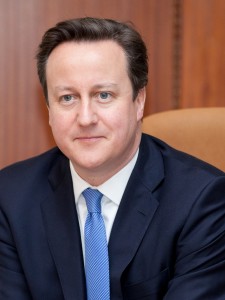
Tag: David Cameron

  • David Cameron – 2014 Speech at Skanska

    davidcameron

    Below is the text of the speech made by David Cameron, the Prime Minister, at Skanska on 22nd April 2014.

    Mike Putnam

    I hope everybody had a very good Easter. I guess you weren’t expecting something like this when you arrived back. We’ve also got a number of people from the media here today, so if I could say welcome to Skanska, welcome to Maple Cross; my name is Mike Putnam, I’m the president and CEO of Skanska here in the UK.

    Now as a business, we’ve taken the opportunity to link what you’re about to hear with an announcement that we’re looking for 1,500 new jobs here in the UK. And the good news is that that’s right the way across infrastructure, and across building, and it’s to feed the growth that we see ahead. And as I say it links very well to the announcement that you’re about to hear.

    Now as an employer, we pride ourselves on our values, and in particular things like green, things like ethics, people development, and in particular with people development, developing people on the job, but also encouraging diversity and inclusion. Now all of that plays very well into these 1,500 new roles that we’re looking for. And sticking with green for a moment, many of you know that the success that we’ve had in recent weeks with Brent civic centre being announced as the greenest public building, achieving the highest BREEAM rating of any building in the UK. And then there was the Financial Times Boldness in Business Award, where we received the award for corporate responsibility and environment, and the great news about that award is that it’s a global award, not just a UK award, where we beat many international brands in the process.

    And sticking with green, as you know I co‑chair the green construction board, alongside the minister Michael Fallon, and actually some of our team, and I think some in here today, have been in the deck offices looking at how to help them from a green retrofit perspective. Anyway that’s enough from me, what I’d like to do now is introduce David Cameron, the Prime Minister, and George Osborne, the Chancellor of the Exchequer. Thank you.

    Prime Minister

    Well thank you very much; thank you for that welcome. I’m delighted to be here at Skanska, you are helping quite literally to build Britain’s future with the work that you’ve done on Crossrail, the countless hospitals that you’ve built, some of which I’ve been to see, the M1 junction that we’ll be visiting later on this afternoon, and all of the great buildings that you’re putting up in our capital city and elsewhere. And infrastructure is an absolutely vital part of our economic plan, and I just wanted to say 3 things before handing over to the Chancellor, and then we’ll take some questions.

    And the first thing is this. Look, we inherited a very difficult economic situation in this country, in terms of debt and deficit and unemployment, and I’m not standing here claiming that we’ve sorted it all out; far from it. What I would say though, point one, is we have a plan, and we’re delivering on that plan. The plan was about getting the deficit down, and it’s down by a third; next year it’ll be down by a half. The plan was about getting Britain back to work, and we’ve got 1.5 million more people in work than when I walked through the doors of Number 10 Downing Street. It’s a plan about cutting people’s taxes, to allow you to spend more of your hard‑earned money as you choose, and you can now earn £10,000 before you start paying income tax, next year it’ll be £10,500.

    And it’s a plan about delivering the best schools and skills and infrastructure for our country, because those things are vital for the future. Now there are a quarter of a million fewer children in failing schools than 4 years ago; we’ve still got a lot more work to do, though, on all of those items. And fifthly, it’s a plan about cutting immigration, and controlling and curbing welfare. Again we haven’t solved all the problems, but we’ve got a cap on the amount of welfare a family can receive for the first time ever, about half a million fewer people on out of work benefits, and in terms of immigration, we’ve cut net migration into this country by around a fifth over the last 4 years.

    So that’s the first point I want to make. The second point I want to make is that infrastructure is an absolutely vital part of this plan. It’s no good trying to run a modern competitive economy unless you build modern competitive infrastructure. Now we haven’t solved all the problems again, but if you look at our spending, this year we’re going to be spending something like £36 billion on plans getting under way; 200 projects will complete this year; another 200 will start this year. If you look at our roads, we’re building more than any time since the 1970s. If you look at our railways, we’re building at a rate higher than any time since Victorian times.

    Obviously there’s HS2, but I always say to people about high speed rail, we’re actually going to be spending 3 times more in the next Parliament on other road and rail projects than we will be spending on HS2; it’s not taking up all the money, but it is a vital piece of infrastructure. And this infrastructure, it’s absolutely vital that it’s private sector and public sector. We’ve got to modernise our energy infrastructure, modernise our ports, modernise our roads, hospitals, schools, all of that is a vital part of our economic plan.

    Third and final point from me is I’ve given you lots of figures, and believe me I can probably give you even more figures, but in the end, what matters more than the figures is what lies behind the figures. Those 1.5 million more people in work, that is 1.5 million people with the stability and security that a regular pay‑packet brings. Those 400,000 new businesses, that is 400,000 people who are setting out to try and achieve their dream of being in charge of their own destiny. That cut in the deficit means that we’re not going to have to ask our children and grandchildren to pay so much for our debt. So it’s the values of stability, security, peace of mind, those are the things that really matter in terms of sticking to this economic plan and delivering it.

    And rather like in construction, when I know you have to say, nothing is done until the whole job is finished, that is absolutely the attitude that the Chancellor of the Exchequer, George Osborne, and I take. We’re well through this plan, it’s working well, but we’ve got to stick to it and we’ve got to deliver it. The job isn’t done, and that’s why, in a year’s time, we’ll be asking you to give us a chance to complete the job. Now let’s hand over to the man that is helping to deliver that plan, whose been a key architect of that plan, Chancellor of the Exchequer, George Osborne.

    Chancellor of the Exchequer

    Well David, Prime Minister, thank you very much for that, and thank you everyone for coming together here. And what fantastic news we’ve just heard about the 1,500 jobs that are going to be created by this company over the next couple of years. And that is not only a vote of confidence in Britain and the British economy; it’s also, as David was saying, a vote of confidence in economic security, and the economic security that that is going to bring to the families who will get those jobs.

    We are working through a long term economic plan; we found this country in a very difficult situation 4 years ago, where we were borrowing £1 for every £4, and people were starting to ask questions around the world about Britain’s ability to pay its way, and I think people had bigger questions about Britain’s long term future. And we said that we had to take some difficult decisions, we explained that to you and we explained it to the British people, we’ve taken those difficult decisions, and I think you can begin to see that the long term economic plan is working. You see it with the jobs being created, you see it with the lower inflation, you see it with the higher growth.

    Now we have got to go on working through that plan, and a big part of that plan, as the Prime Minister was saying, is infrastructure. Because in the end as a country, we’ve got to be able to trade with the rest of the world through modern ports, we’ve got to transport goods through modern railways and roads, we’ve got to be able to use the technologies of the future like broadband; and you are involved as a company in all of this work. Now, in the end what can government do on infrastructure? I think it needs to do these things.

    First of all, it needs to make sure it can pay for things, and you can only do that if you’ve got a control on the public finances, otherwise your run out of money and things get cancelled and you’re back to square one. Now we have got control of the public finances, and that means we’ve been able to spend more than the plans we inherited on infrastructure, on the roads and the railways that you were just hearing about. That’s crucial; that’s a crucial part of what you’ve got to do. If you’re not, for example, making savings in welfare, then you can’t afford to build those extra roads or lay that extra broadband that we were just talking about. So the first thing is you’ve got to have control of your public finances, and we’ve got control back of our public finances, but the job’s not finished there, we’re still borrowing too much. That’s the first thing you’ve got to do.

    Second thing, you’ve got to inspire confidence. With a company like this, you can go anywhere in the world. The management team at Skanska, they’re making decisions about whether they invest in America or China or other countries in Europe, and you’ve got to be a country that they look at and say, you are the go‑to country. And that means confidence: confidence in the economic team that is managing the economy, confidence in the workforce, in its skills and its ambition, and that’s why it’s great news that your company’s making that vote of confidence in the UK. And that’s what we are seeking to make: a climate of confidence in Britain.

    The third thing you’ve got to do, because you know this, the projects you’re involved in may take a very long time to come to fruition. You’re working on the Crossrail scheme. That’s been discussed for many years, incredibly complicated planning, probably about the most complicated infrastructure anywhere in Europe at the moment. You’ve got to set out your long term plan for infrastructure, that’s what we’re doing more of today, talking about the 200 projects that are going to be completed this year, the 200 projects that are going to start this year – roads, railways, the Northern Hub scheme which you’re involved in in the North West of England, the flood defences in Exeter, the Mersey gateway bridge, the improvements on the M1 and the A1, all over the country. We have set out the pipeline, the long term plan for infrastructure, so you as a company can make decisions and you as people working in this company can make decisions about your own jobs and your own careers, and where you want to go in this company. That is the third component of having an infrastructure plan. It is much more than just a list; it is part of a long term economic plan.

    Now as I said, we came to you 4 years ago, explained the difficult decisions that had to be taken; we’re working through that plan, the job isn’t finished, and now we’re here today to talk to you about how we’re going to go on developing that plan, go on investing in British infrastructure, and with your help and your hard work we will get the job done. Thank you very much; let’s take some questions.

    Right, let’s take some questions from members of staff here, and then we will take some questions from the media. And you can direct the questions at myself, the Prime Minister, or both of us. First question over here.

    Question

    Thanks very much for coming to see us today. I’ve heard a lot about British jobs for British workers in the past; there’s also the skills shortage in the construction industry, and it’s great news that we’re going to be having so many new jobs coming through the pipeline. How can we alleviate people’s fears that the skills for those jobs are in mainland Europe coming across to Britain, and how can we, you know, help to make sure that British jobs do go to British workers?

    Prime Minister

    I think the short answer is, we’ve got to make sure we’ve got a welfare system that encourages people to work, and we’ve got to have an education skills system that provides young people with the skills that they need to take the jobs that are being created. And I think if you look back 5, 10 years ago, we had a real problem there, in that when we did generate jobs, a lot of those jobs were going to people from overseas coming here, quite understandably, to do those jobs because we weren’t creating a skilled workforce here at home. I think we’ve made some big, big improvements.

    During this parliament so far we’ve trained 1.6 million apprentices. I want us to get to 2 million apprenticeships by the end of this parliament, so that we really are training up young people for those jobs. I did one of these meetings at Mercedes the other day, and they said they were trying to take on 5,000 apprentices. And I said, ‘How many people do you have applying?’ And they said, ‘30,000.’ And I thought, how do you decide who gets the apprentices? They said, ‘The trouble is, of the 30,000 that apply, not enough have the basic English and maths.’

    We’ve got to remind young people that English and maths are vocational subjects. There isn’t a job – I would say to my children, there isn’t a job in the world that doesn’t require English and maths. My son said, ‘What about football players?’ I said, ‘Well, you’ve got to be able to read the contract, and you’ve got to be able to count the money!’ Everything requires English and maths. So if we get our school system right, and get the apprentice system right, and we have a welfare system that encourages work, then every confidence that we can see those new jobs going to young British people coming out of school, coming out of college, with the skills they need. A lot of planning. We want to work with you.

    You know, if you look at what we’re doing with Crossrail, we created a tunnelling academy. We’re training experts in tunnelling in Britain, and as soon as Crossrail is completed, we can then move them on to the HS2 project, where there’s going to be a massive amount of tunnelling, and there’ll be other projects that follow that. So let’s plan with industry the skills that we need, and make sure that you’re working with us, and working with the colleges, to deliver those vital skills. Okay. Lady here?

    Question

    We’re delighted to hear about the level of investment. How’s the government going to support easing the procurement process, so that this investment actually turns into reality of construction.

    Prime Minister

    And shorten the times, too, that’s part of the problem. Chancellor?

    Chancellor of the Exchequer

    The short answer to that is, you’ve got to have the confidence in the government’s procurement plans. In other words, we’re not going out on speculative tenders that you have to invest huge sums of money in, and then the tenders may not ever materialise, and I know there have been some problems in the past with that. The purpose of setting out this list of projects that we’re aiming to undertake – and these, by the way, are not just government funded projects; these are also privately funded projects, or projects where there’s part government money, part private money, private finance.

    By setting all of that out, you as a company can work out where the main work is going to be. You can build up your procurement expertise in that particular space, or expand your department, and then have confidence that that project is actually going to be built. You know, if I didn’t have control on the public finances, you’d say well hold on, he’s going to run out of money in 2 years’ time and it’s all going to be cancelled, so why are we bothering with this UK project? Or if you thought well, it’s quite an unstable economic situation in the UK, I’m not sure we want to be putting our bets there.

    So the purpose of what I’m saying there is that in procurement, of course you want simpler processes, easier to apply, you’ve got to try and make it easy to comply with all the European rules and UK rules around that, and we have a very open place where you can go and bid – I think one of the great advantages of the UK is, you know, whatever company you are, you can come here and invest and help us build our infrastructure. But ultimately, if you don’t have the economic plan behind it, you don’t have confidence that the project’s actually going to be built and paid for, then you’re wasting your money on procurement and you’d soon spot that.

    Prime Minister

    Simplifying the planning system as well, has been another major reform of this government – not always popular; I think a lot of the things that the Chancellor and I do are not popular, but they’re right. Simplifying the planning system, making it faster, is absolutely essential if we’re going to build that infrastructure that the country needs. Let’s see who else has got any questions, up here on the balconies, we’ll have questions from anywhere. Lady here – hold on, here’s a microphone.

    Question

    Following on from the theme about the 1,500 jobs, how do you think that UK government can help Skanska and construction attract more women into construction, and more diverse groups into construction?

    Prime Minister

    This is something I think, for both of us. Frankly, we should do our part by making it easier to train and employ people. So from next year, for instance, when you employ someone, you’re not going to have to pay National Insurance if they’re under 21. We should be making sure there’s proper careers guidance in school, and there’s a new organisation, the National Careers Service, NCS, in our schools, providing the information for young people about the careers that are available, in things like engineering, construction, careers many people in this room have taken on.

    But we do need your help. We need businesses to get into schools and inspire people about what you do. Because, you know, our teachers do an incredible job in schools, and they give brilliant advice to young people. But they give particularly good advice about the path they followed, which has tended to be school, A‑Levels, fill out the UCAS form, go to university… I don’t think we’ve been as good in our schools about giving information about apprenticeships and about vocational training. And we do need businesses to get behind the National Careers Service, get into the schools, and inspire people about what can be done. And I think more women in engineering and construction – it is changing, but we still need to do more, but nothing succeeds like seeing the role model. You know, seeing the person who decided on that career going into the schools. I’m sure Skanska does have a project like that, but we’re very happy to work with you to do more. Sir?

    Question

    Prime Minister, we invest in as well as build infrastructure. And on Thursday, I’ve got to sit in front of our main board and put to them an investment proposition for a sizeable investment with a utility company in green energy, onshore wind. One of the questions they’re going to ask is about political risk, given some of the hard knocks we’ve had on cancelled projects. What reassurance can I give them on your position on ongoing support for renewable energy in the UK, please?

    Prime Minister

    Well, I think the overall – the big picture is that we have put our money where our mouth is. We said we’re going to be the greenest government ever; we set up a Green Investment Bank, which is investing in these schemes, and we’ve set out long term plans so that you can see the subsidy that is available for renewable energy. So we’ve got a levy control framework that goes out into 2020 and beyond in terms of the amount of money that is going to go into renewable energies. We’ve also made some very long term decisions, for instance in nuclear power, with the first nuclear power station, Hinkley Point, for 30 years going ahead.

    So I think you can say to Skanska, ‘Look there is a long‑term plan, there’s long‑term funds available, the off‑shore wind industry that Britain has is now the biggest in the world.’ We’ve got the largest off‑shore wind farm anywhere in the world built off the coast of the UK and another one coming on stream, almost as big very, very shortly. In terms of on‑shore wind, obviously there will come a time when we will have built enough to meet all our targets and so I’ve always said with subsidies, we shouldn’t keep subsidies for longer than they are necessary and so that is something we will be looking at. But I would argue that if you look anywhere around Europe, I would challenge anyone to find a more open, more attractive set of renewable incentives for energy in this country. I don’t know, George do you want to add to that? You’ve been very involved in this.

    Chancellor of the Exchequer

    We need investment in renewable energy, we’re absolutely clear about that. We need a mix of energy in this country. We need it in nuclear, we need it in renewables, we need it in gas, five generation oil. We want to make sure that all our eggs aren’t in one basket and again, in the plans we have set out, we’re very clear about the energy projects we are seeking investment in. We have this regime, as the Prime Minister was saying, a levy‑control framework and the electricity market review.

    Now they’re – it’s quite technical but what that means in practice for a company like Skanska is you know how much money you are going to get if you commit to this project and there are many other European countries where you can’t get that kind of commitment at the moment. And I thought, you know, a very encouraging decision was the decision of Siemens the other day to make that investment in manufacturing in Hull in renewable energy and wind energy and that is a big company like yours that could go anywhere in the world choosing to put its money in investment into helping the renewable energy supply chain in the UK.

    Prime Minister

    And they are reckoning that they are going to be producing off‑shore wind turbines, not just for the UK but also exporting elsewhere in Europe. They have based themselves here because they see such an attractive off‑shore wind market.

    Next question – lady here. I’ll just get you a microphone – here we go.

    Question

    I’d just like to ask Mr Osborne, if Scotland do decide to go independent later this year, and given that you have made the commitment that they need to have their own currency, have you thought about how you are going to counter the financial impact on companies like ourselves that obviously work across the whole of the UK? Because there is bound to be some financial implications for us.

    Chancellor of the Exchequer

    Well, the, the short answer is, if Scotland leaves the United Kingdom, that will be economically damaging for the rest of the UK and for Scotland. We don’t want that to happen, but it’s got to be a decision for the people of Scotland and we are setting out some of the economic risks but we are also stressing all the economic benefits that come from Scotland being part of the United Kingdom, the benefits not just for the people of Scotland but the benefits for the rest of the UK and things like an integrated energy market is a really good example of that.

    A lot of our renewable energy is, for example, located, as the Prime Minister was saying, off the Scottish coast as a kind of good example of that – oil and gas investment as well. So, you know, I don’t think we should pretend that it wouldn’t be economically damaging but ultimately, this has got to be a decision for the people of Scotland to make and they will make that decision in September. I think – you know, my priority has been to make sure that they are aware of all the facts, that they are aware of the consequences of that decision and then of course they are free to make that decision.

    Prime Minister

    Okay, let’s have a question from the media.

    Question

    Prime Minister, Chancellor, a question for you both. You were both referred to memorably as ‘2 posh boys who didn’t know the price of milk’. Obviously a very difficult image at a time of austerity. Is the fact that you are out here for the first time at an event like this, for the first time in 4 years – does that mean that you think you are through that period and you don’t have to worry about that image anymore?

    Prime Minister

    No, we’re out here because we want to talk about the long‑term economic plan that we are putting in place for this country and we’re delivering for this country. It’s the most important thing that this government is doing. Lots of things that this government is doing I am very proud of but the most important piece of work is turning our economy round and giving all of our people the chance of security, stability, of peace of mind, of a job and of a secure future.

    That’s what’s it’s about. It is the most important thing we are doing. We are part of a team that is delivering that and so we are here today to talk about a key part of it, which is infrastructure. That is what today is about, that is what the government’s about, that is what our economic plan is about.

    Chancellor of the Exchequer

    We are an economic team, led by a very strong Prime Minister and we set out to the country, 4 years ago, the difficult decisions that we had to take, as a country, together. We explained to people what those decisions were. As a team, we have delivered those decisions and as a result you can see the jobs being created in our economy but the work is not done and we have got to go on working through this economic plan and we have got to make a choice as a country about the team we want to help manage the economy but also the direction we want Britain to go in. And I don’t want Britain to go back to square one. I don’t Britain to go back into the mess it was in 4 or 5 years ago. I want Britain to go on working for a plan that is delivering and delivering for this economic team.

    Prime Minister

    Let’s have the lady at the back there.

    Question

    Prime Minister and Chancellor, you both talk about taking control of public funds and tax‑payers’ money. The people of Hertfordshire are paying more than £0.5 million for last year’s Bilderberg meeting. I am just wondering, do you think it is right that they are paying £500,000 for it and if so, what benefits have the people of Hertfordshire seen for the meeting?

    Chancellor of the Exchequer

    Quite a specific question. But look we host events in this country and we want them to be held peacefully and we want them to be held within the rule of law and there are policing costs associated with all sorts of events that are held here and around the country; and we have a police force precisely so we can police events.

    Prime Minister

    When the costs are excessive, there are opportunities to apply for Home Office help. Very happy to look at this case but normally, as the Chancellor says, police forces are able to cope with events and organisations that come and hold conferences in Hertfordshire or elsewhere and that’s the way the system works.

    Let’s – anyone – or people on the balcony feeling left out? Lady up here.

    Question

    Thanks. What are your thoughts on the recent proposal from the Infrastructure Forum on the extension of the Capital Allowances regime to include structures and related buildings, rather than just plant and machinery?

    Prime Minister

    Right, Chancellor, sounds like [inaudible] for bringing him along this year.

    Chancellor of the Exchequer

    We looked very closely at this idea for the most recent budget and in the end you have got, in a budget, a certain amount of money you can deploy and lower taxes. And, when it came to encouraging investment, we looked at that proposal which organisations like the CBI had put to us and we looked at it alongside another proposal which was to increase the Annual Investment Allowance that goes to all companies for investing in things they want.

    And in the end, I thought that was the better measure. I thought it was better targeted. I thought it would also help a lot of small- and medium-sized companies as well as big companies like Skanska which are helped by our lower Corporation Tax rate. So in the end in the budget – you know, the budget is about choices and I thought the best tax measure to encourage capital investment is the Annual Investment Allowance and that is why we chose to do that.

    Prime Minister

    It is worth dwelling on the main rate of Corporation Tax, now at 21%, coming down to 20%. That is going to give us the lowest rate of Corporation Tax of any G7 country. I think it is one of the things that we can use internationally to attract businesses to come and invest in Britain, to come and headquarter in Britain. We have seen some big steps forward with that in recent weeks with companies coming to locate here and I think, you know, attractive low rates of tax that then companies actually pay – I think that is the right way for a country to go and the Chancellor has been absolutely solid in delivering those tax reductions year after year as a really important choice because, in the end, we want private sector jobs, a private sector‑led recovery so that we can afford the public services our country needs and a low rate of Corporation Tax is absolutely key to delivering that.

    Anyone on the top floor or are you – okay, no microphones up there so you will have to shout but if you, if you feel inclined, put your hand up and let’s take another question from over here. Gentleman in the stripy shirt.

    Question

    Question for the Chancellor. With the 45% tax rate for income – income tax, the – if that had been kept in line with inflation, at what level would that be now and also when will that difference be redressed?

    Chancellor of the Exchequer

    Well, there are, there are 2 things here. First of all there is the rate of tax so we inherited a 50% income tax rate which had just been put in before the election and I thought that was sending a terrible signal to the rest of the world about Britain as a place to invest and you can see some other European countries that have tried those very high tax rates and it has done huge damage to their economies, not just because of the actual impact of the tax but the signal it sends to the rest of the world, to the kind of things we have been talking about here, you know – the boardroom in Stockholm, what are they thinking about a country with a high rate of tax like that?

    So we took a difficult decision that was not the most popular one we’ve taken, to reduce the tax rate to 45p to make it more competitive and actually now, the richest in our country are paying more as a proportion of income tax than they have ever done before. So we’ve also, by the way, insisted that they do pay taxes and done a lot to crack down on offshore tax avoidances and some of you may have seen some of the adverts in the papers and the like.

    On the question of the thresholds you’re asking, this budget was the first time in a number of years we have been able to increase the threshold for which people pay the 40% rate but we’ve also ‑ as the Prime Minister was saying earlier– increased the personal allowance which has just now gone up to £10,000 and higher rate tax payers earning up to £100,000 also benefit from that, so everyone up to £100,000 is paying less income tax.

    Prime Minister

    It’s an important point, there’s a French Prime Minister that once said, ‘To govern is to choose.’ We had to make a choice. When we did have money to make available, how should we spend it? How should we help people? And the choice we made was to help the lowest paid by taking now over 2 million of them out of income tax altogether by introducing that increase in the personal allowance to £10,000. So to put a sort of figure on this, what this means is that if you’re on minimum wage and you work a full 40 hour week, you see your income tax bill come down by two thirds.

    So I think that when you don’t have huge resources to deploy I think it’s right to deploy the resources on the lowest paid in our country, that’s what we’ve done. Cutting the highest rate of tax, the 50p to 45p, as the Chancellor said, that was just about – it was a bad signal. We had a higher top rated tax than other European countries and we thought we were going to lose revenue from that; it was a bad signal for Britain so we took the unpopular decision. But the real weight of our tax reform has been helping the lowest paid in our country, 2 million of who used to pay income tax don’t pay it anymore. Lady at the back?

    Question

    Two very quick questions if I may, the first relating to the UKIP ad campaign. Now, fellow Conservative MP Nicholas Soames has said today, quote, ‘Their campaign is deeply divisive, offensive and ignorant.’ Is that what you think?

    And secondly on a slightly lighter note… you talk there about the importance of things like English and Maths, even football. Any tips there for anyone who takes over from David Moyes today?

    Prime Minister

    On your second question, as an Aston Villa fan, we’ve had a bit of a ropey season so I think I’ll save the advice on the subject of football management, a subject in which I know precious little. So I’ll leave that out.

    Parties have to defend their own advertising campaigns, so they’ll have to do that. What I want to talk about is the issues.

    Question

    Hi. As part of the spending review, improvements and replacements to schools and other educational establishments was cut. Are there any plans to improve that going forward into the next parliament?

    Prime Minister

    Yes. We are actually now spending more on school buildings and investment in schools than in previous parliaments, so the investments are there. We inherited a program called ‘Building Schools for the Future’ which actually was very wasteful, very slow, didn’t build a lot of schools, and we put in place much better arrangements that are now getting those additional school buildings and schools built.

    But schools – as well as bricks and mortar, they are important. I think it’s important to open up our state sector and have more choice for parents and have new schools coming into the state sector. And what you see with our free schools and converter academies is actually new teams coming in and setting up new schools and offering excellent education within the state sector and that is, I think, absolutely vital for our sector. And that is, I think, absolutely vital for our future; the schools and skills that we have alongside the infrastructure, they will be one of the key determinants of our future economic success. Final question. Still can’t tempt anyone up on the balcony? We’ll have the lady at the back. Sorry.

    Question

    This is a question for both the Prime Minister and the Chancellor. I’m interested to hear whether you support the recommendations made by Sir John Armitt in his review around the need for an independent commission on infrastructure projects in the UK.

    Chancellor of the Exchequer

    I have a lot of respect for John Armitt who has delivered some of the biggest infrastructure projects in the world. And where I agree with him is, the more you can build cross‑party consensus for some of these big schemes that last many, many years and need the support of all the political parties, we should try and achieve that consensus and I think you’ve seen that happen over the last couple of years on High Speed 2. That was a project, of course that is controversial, particularly for the communities affected by it, but we’ve actually now got support – and this was clear in the recent vote in the House of Commons.

    And I think that means that companies like Skanska who probably want to be involved in this have some of the political risk removed, and there’s some of the certainty that I want that the project’s going to go ahead and is going to be built.

    And that’s what John Armitt was talking about with his commission, trying to force that political consensus. I think HS2 is a good example of where that is working, and where attempts to break the consensus by some politicians have actually not got anywhere because the rest of the political party concerned said, ‘Well, hold on, we want to go ahead with this thing, which is going to be transformative, for the economic geography of the country?’ So I think John’s idea of trying to get more cross party consensus for these very big infrastructure projects is a good one.

    Prime Minister

    It would be more important were it not for the fact that we now have a national infrastructure plan that sets out a multiyear program of all the infrastructure we want to see built and so anyone in the construction industry can ask the different political parties, ‘Well do you support what is in the plan?’ And I think not just HS2 but also it’s interesting, Hinckley Point, this massive multiyear investment getting Britain back into operating and constructing nuclear plants. Again, that’s going ahead on an all‑party basis. So I think actually it is very important that we have this cross party support and the National Infrastructure Plan is a way for everyone to see that these projects have support for the future.

    Can I thank you all again very much for the warm welcome. Can I thank Skanska for everything you’re doing in terms of building Britain’s future. Thank you also for your commitment to the green economy and also to a subject we haven’t discussed today, but something Britain can be very proud of which is safety in construction. I think one of the most remarkable things about the Olympics is that that extraordinary park, that extraordinary set of stadia was built without the loss of life in terms of construction. I think that really shows another reason people should choose British companies, British based companies and Britain to come and build. And it has been something we can all be extremely proud of.

    So thank you for what you do good luck with your 1,500 new members of staff, good luck with the work you’re involved in. We’re looking forward to going to see this junction of the M1; I hope that traffic will be moving smoothly but if it isn’t the work you’re going to do will make it run smoothly in the future. Thank you very much indeed.

  • David Cameron – 2014 Speech for Flood Volunteers

    davidcameron

    Below is the text of the speech made by David Cameron, the Prime Minister, at a reception for flood volunteers at Downing Street, London on 7th April 2014.

    A really warm welcome to everybody here. We have quite a lot of parties and receptions in this room, but I have to say, there are few that give me as much pleasure as having all of you here this afternoon. Because the fact is, in December, in January, in February, we saw some of the worst British weather we have ever seen. We had coastal surges, we had storms, we had river flooding, surface water flooding and parts of the country underwater for weeks.

    But while we saw the worst of British weather we saw the best of British spirit. And that is why all of you are here: because of the community spirit that was shown up and down our country, of people looking out for their neighbours, of helping each other, of giving to each other was truly remarkable.

    And I tell you, as Prime Minister, it is such a privilege and an honour to travel the country and see that community spirit at first hand. Whether it was Facebook sites to clean up Chesil Beach; whether it was community cafes in Somerset; whether it was Scouts, Guides and others pitching in; whether it was a group of young Muslims from Yorkshire, who headed all the way down to the Somerset levels. We saw schools and churches used as community hubs; our emergency services were amazing; our military were extraordinary – let’s give them a round of applause. We saw it with flood wardens, with councillors, with volunteers; people of all ages with all skills, everybody asking ‘What can I do?’

    And it’s that great quote by Ghandi, who said that the best way to find yourself is to lose yourself in the service of others. And I’m sure that there are many, many people here, who, although you had to work incredibly long hours, although you stood in that flood water – and it’s freezing when you stand in flood water for hour after hour – who look back and think of it actually as a time when communities came together, and we all really showed what an incredibly resilient and compassionate and caring people and country that we are.

    So all that I wanted to do today really was 3 things. First of all, I wanted to say a very big thank you to all of you; in your own ways you performed extraordinary community service. And the whole country should be really grateful for that. The second thing to say is, please keep at it. Because I hope we won’t have weather quite as bad as that, but the fact is we have seen more extreme weather events, we have had things that we keep being told are 1 in 100, or 1 in 200 year events, and they seem to be happening more frequently. I think my own constituency flooded so badly in 2011, some floods again, this time, but you know, these things just a few years apart. So please keep doing what you’re doing.

    There are 2 things I want to say in respect of that. First is, I think there’s been an extraordinary community fundraising effort, in terms of hardship funds to make sure that people who perhaps didn’t have insurance have been able to get support. Today I can announce we are going to put another £500,000 into the community foundations around the country in the areas that have flooded because I think they play a key role in helping people and families get back on their feet.

    But there’s a second thing we’re doing which came directly out of a meeting I had during 1 of my flood visits. I remember standing in Surrey, talking to some of our volunteer rescue services, and someone explaining to me that he’d come – as soon as he heard about the floods, he’d come all the way down from Cheshire and he was working 24/7 helping getting people out of their homes and helping people in the very bad floods around the river Thames. And he pointed out to me that our volunteer rescue service people have to pay for their own equipment and pay for their own training. Well I don’t think that is right. And so, you know we’ve taken £4 million from the so called Libor fines to be used to help pay for uniforms and training for our volunteer rescue services.

    So that was the second message. Keep on doing what you’re doing, because it is such a vital work. And I know we’re not out of the woods yet; we’re not out of the water. So let’s stick at it, all of us, whether we are farmers, whether we’re businesses, whether we’re government, whether we’re flood wardens, whether we’re councillors, we’ve all got to stick at it. The recovery phase is often the most different – difficult.

    The third thing I wanted to say is just that, I believe that we should do more as a country to recognise extraordinary voluntary service. We have good ways of doing that: we have obviously the honour system which has a role to play, we have Big Society Awards that go to organisations that do a great job in terms of stepping up and stepping out for our communities. But there’s something else I want to do. In America for a long time now, they’ve had these wonderful awards called the Points of Light. George Bush Senior made a great speech when he talked about the 1,000 points of light in our society, extraordinary volunteers who do extraordinary things, shining out particularly in dark and difficult times. Well you were in many ways those first points of light here in the UK. So today I’m announcing that Britain is going to have its own Points of Light scheme, working in alliance with the Americans who have already had their 5,000th award given out.

    Today I’ve had a huge privilege of handing out the first 5 awards to people who did extraordinary things during the storms and the floods in terms of community service. But I think it’s really important as a country that we recognise that people who step forward – who volunteer – they are the best of British, they show that great British spirit, and we should celebrate that properly in our country.

    But above all, a very big thank you. Please enjoy coming here to Number 10 today. You will meet people who did similar things to you, but in totally different parts of the country; I’m sure you’ll have great stories to tell and great experiences to share. But above all, as Prime Minister, I just want to thank you for showing the best of British spirit. Thank you very much indeed.

  • David Cameron – 2014 Press Conference with Matteo Renzi

    davidcameron

    Below is the text of the press conference held between David Cameron, the Prime Minister, and Matteo Renzi, the Italian Prime Minister, at Downing Street in London on 1st April 2014.

    Prime Minister

    Good afternoon. I’m delighted to welcome Matteo on his first visit to London as Prime Minister. We’ve already worked together at the European Council, at last week’s G7 meeting in The Hague. And, today, we’ve had the opportunity for more in‑depth discussions about our bilateral relationship, about the European Union and, of course, about Ukraine. And I just want to say a word on each.

    On our bilateral relationship, we’re both leaders who are taking the difficult decisions needed to build strong and resilient economies to create jobs and to create a more secure future for hard‑working people. Here in Britain this week, we’re bringing in the most important changes to our tax system for a generation, including cutting corporation tax to 21% today. And I support Matteo’s efforts to implement a package of ambitious reforms in Italy that will strengthen the economy there and encourage foreign investment and help hard‑working Italians too.

    We want to increase the trading relationship between our 2 countries. It’s already worth over £32 billion a year, and Britain is the leading European destination for Italian investors, up 5% last year, with new projects creating almost 1,800 new jobs here at home. But we believe we can do more to strengthen ties, particularly in the advanced engineering, energy and tech sectors, and we’re already looking at how British businesses can seize the opportunity of the world expo in Milan next year.

    We also want to work together to make the EU more competitive. Europe is falling behind the powerhouses in Asia and South America, and we need to match the difficult decisions we’re taking at home with ambitious reforms in Brussels. Italy will be taking over the presidency of the EU later this year at a vitally important time. I know that Matteo wants to make growth and jobs a central theme of the Italian presidency, and today we’ve agreed the next Commission must put an unrelenting focus on driving growth across Europe: cutting red tape, completing the single market in energy, unleashing Europe’s digital economy. These are all things that we agree about and discussed over our meeting.

    We also want to see these trade agreements with the rest of the world. A deal with the United States would be a massive prize: €119 billion a year to the European economy. That is equivalent to €545 for every family of 4 across Europe.

    Finally, we discussed the situation in Ukraine. We remain united in our condemnation of Russia’s completely unacceptable behaviour in recent weeks. Russia needs to choose the path of de‑escalation and dialogue. President Putin should accept this means entering direct talks with the Ukrainian government. We share Secretary Kerry’s view: there should be no decisions about Ukraine without Ukraine at the table. In the long term, we want to do more to support the Ukraine government as they get to grips with their debts, they implement reforms and they build a more prosperous future for the Ukrainian people.

    We also want to secure and diversify Europe’s energy supply, and this is an area where we intend to do more work together in the coming months. So, Matteo, a very warm welcome. We’ve had good discussions. We share many objectives for the future. I look forward to working with you in that future. And I don’t know whether it’s just me, but Prime Ministers seem to be getting younger all the time. Matteo, over to you.

    Matteo Renzi

    Thank you. Thank you David and thank you everybody, and thank you for your invitation. Downing Street, Number 10, is a dream for everybody, so thank you so much for – also for the cooperation and the partnership.

    Matteo Renzi (via interpreter)

    I think that it is very important for Italy to strengthen the importance and stress the importance of our relation with Prime Minister David Cameron, with the United Kingdom, and I think that it is very important to present reforms for our country which is a prerequisite for Italy to face, together, the reforms that Europe needs. Italy must be more simplified and more streamlined and must improve. Italy must play its role. In this case, Italy will be able, together with all its partners, and the historic partners in particular, to create a different Europe.

    Matteo Renzi

    We want better Europe, not more Europe: a better Europe. A very balanced Europe, against the red tape of bureaucracy and with an idea of future for our children, not also for our [inaudible].

    Matteo Renzi (via interpreter)

    I believe that it was very important to share strategies on the Mediterranean, on the digital agenda, on the energy challenges and also on the future of economy and growth at a time when, unfortunately, we still have many things to do. I was talking with Italian journalists today, and we also touched upon it with David, about the figures for unemployment. 2011: UK unemployment, 8%, Italy, 8.4%. 2013: UK, 7%, Italy, 12.3%. What happened?

    Over the last 3 years, we have lost a lot of ground and now it’s the time to run again with an economic performance which can be valuable by looking at the European Union and our partners so that we can base ourselves on growth and not on red tape.

    David has already talked about Ukraine and also about our joint interests. In our partnership, I think that we should stress that we are going to be in Cardiff in Wales for the NATO summit, and I am extremely grateful to the Prime Minister for accepting to have the G7 of energy ministers in Italy before the Brussels G7.

    So, there are many things that we share. I think that it will be very interesting if this different Europe that we want to build – we are going to be able to build it fighting against the fear of those who are afraid of changing, but clearly there is no great Europe without the presence of the United Kingdom: without David Cameron and all British people. So, it is essential for us in this path – which is a complex path which we have in front of us. The UK presence in Europe is not questionable. It is essential and crucial for us, and we are going to work together, I’m sure.

    Prime Minister

    Thank you Matteo.

    Question

    Mr Renzi, listening to you, it makes it sound as if Italy and you are an ally of David Cameron’s in wanting fundamental reform of the European Union. Am I right? And does that mean that Italy wants to bring powers back from the centre to Italy, or is your vision of a reformed Europe completely different from the Prime Minister’s?

    And, Prime Minister, can I ask you 1 question about Ukraine, which is: do you really share similar ideas about the level of pressure that should be applied to Moscow, because those countries, like Italy, which are much more energy dependant on outside sources, tend to be much less in favour of applying the sort of pressure on Moscow which could produce retaliation?

    And finally to you, Prime Minister, many people are very angry about what they see as Royal Mail being sold off far too cheaply. Do you think people are right to feel angry? The tax payers feel that they were given a very poor deal by the government.

    Prime Minister

    Thank you very much. Well, Matteo perhaps you’d take the question first.

    Matteo Renzi

    Absolutely – absolutely yes. I think there is an alliance, not ideological, not confused, in the process of a reform of Europe. But for us, for Italy, today is absolutely important start for ourselves. It’s impossible in Italy to fight against bureaucracy of Brussels if we spent few days to conclude a process of administration in our country. It’s impossible for us to fight against the ideas of bureaucracy, of red tape, in Brussels if our system is old. So, for this reason, in this moment in Italy, it’s absolutely important to change institutions, to change electoral law, to change the constitutions. Yesterday, maybe you know, we presented the reform: the law of reform of constitutions. Very important because this is also the problems between central government and the regions, because change the role of Senate, because change the role of a part of politician. So, for us, it’s possible to speak about reforms in Europe only if before we change ourselves, and this is the challenge in the second half of 2014, when Italy will lead the semester of European presidency. I think we can discuss with our partners and with David about the future of Europe.

    Prime Minister

    Thank you very much. I’m sure we’re going to be great allies in fighting the bureaucracy that Matteo’s just referred to. I think it’s really important for all countries in Europe to do that.

    To answer your questions very specifically: on Ukraine, of course different countries have different perspectives, but, actually, I think the EU has done well, in that 28 countries came together and set out a tough, consistent and predictable set of measures to send a very clear message to Vladimir Putin about what had happened, why it was wrong and what needed to happen next. And crucially, at that last EU Council, we agreed that the European Commission should start to draw up detailed plans for sanctions if Putin and Russia went further into eastern Ukraine. And I think that was a good step forward, and we agreed that: right across the EU we agreed that. And we also agreed the important steps, in terms of travel bans and asset freezes.

    So we all bring our different perspectives and our different histories and arguments but, actually, we came together, and I think we’ve set out a very consistent way forward and the right way forward for the EU.

    On the issue of energy dependence on Russia: we discussed this in our meeting. Again, different countries have different positions. Britain is very un‑reliant on Russian gas; we have a very small percentage of Russian gas coming into our system. But, I think, where there’s agreement across Europe is that this is a long‑term piece of work that has to be done. It is in all our interests – whether, frankly, we’re reliant on Russian gas or not, it’s in all our interests that all of Europe becomes less reliant, so we’re a more resilient continent. So that when shocks take place they don’t affect the gas and oil prices so badly, and countries are able to make more independent decisions.

    So, it’s a long‑term piece of work, but I’m delighted that Matteo’s taking on the work of chairing the G7 energy ministers – the meeting will take place in Italy – because that’s going to be a start of the process – as the EU will also take forward – of making us all more energy independent. That’s going to mean building LNG terminals, it’s going to mean new pipelines, it’s going to mean more interconnections between different European countries, it’s going to mean completing the single market in energy. These are good things in themselves, but they will also make us less reliant on Russian gas, and that will be strengthening for all of us in the long term. But a long‑term piece of work: you can’t expect results immediately on that one.

    On the Royal Mail, what I would say is this: you know, a decade ago this company was losing money and people thought that it was in an unrecoverable situation. I would argue the British taxpayer has benefited in 3 ways from the changes we put in place and the privatisation that’s taken place. There’s the benefit of a sale of Royal Mail and the capital receipt. There’s the benefit that this is now a profit‑making company, paying taxes into the Exchequer. And thirdly, this is a successful company, doing well, doing well for Britain. So I think we’re much better off with Royal Mail in the private sector, and I look forward to that work being completed.

    Question (via interpreter)

    So you’ve had endorsement abroad on reforms in Italy. The priority is work; you say that we have to run. How can we run and match that with the possibility of a mediation in Italy?

    Question

    Mr Cameron, in the same way Renzi’s government has proposed a series of reforms, your government has proposed a few points to remain in Europe. So what kind of support the euro‑sceptical United Kingdom can find in Italy, whose dreams is the United States of Europe? Thank you.

    Matteo Renzi (via interpreter)

    The Italian path is very clear: constitutional reforms, changing the public administration, a deep change in the tax system and in the civil justice system and, naturally, changing the rules on the job market. On the labour market we have a system whereby there is no flexibility.

    I talked about statistics earlier. These statistics have seen a growth of unemployment despite the rules that had been made – should have improved and simplified the situation. Therefore, what happened over the past few years is wrong. It has produced more bureaucracy in the labour market and it hasn’t solved any problems. In the sector of vocational training in Italy, the trainers worked a lot but those people who needed to work didn’t work enough. So, we must simplify and accelerate. That is why I told David what choice we made: a law decree, which has already been approved, on fixed‑term contracts and apprenticeships, which is already a law. And yesterday we officially presented, in parliament, a bill which, will have to be discussed by the Italian parliament, on the reform of the labour code. Also, to give guarantees so that companies can have more opportunities to invest in Italy.

    1 example: in Italy today there are 2,100 articles dealing with rules on the labour market. Obviously, in the end you always end up in court. Today, we want only 50 or 60 articles, which are also written in English, for investors, so that if you carry out an operation you know how long it will take, who carried out this operation and what the rules are.

    There are all possible mediations in the parliamentary debate, but it will not be possible to change the basic approach. That is to say: giving guarantees to those who don’t have any, and give the freedom to entrepreneurs to hire, in a real way.

    Prime Minister

    A lot of the support that I hope to get from Italy, which was your question – of course, Matteo and I will have our differences: he’s on the centre‑left, I’m on the centre‑right. But we’re both reformers. We both want to reform Europe so it focuses more on the economy and jobs. We both want to reform Europe so it focuses on cutting bureaucracy. And we both want to achieve keeping Britain in a reformed European Union. So I think there’s lots of opportunity to work together.

    What I’m taking from what Matteo’s just said is that, frankly, there’s no point deregulating in Italy if you have those regulations re‑imposed in Brussels. And that is exactly the approach that I take, and so I think there’s a really good alliance that we can forge on this vital issue.

    Question

    Could I ask both of you whether you had the opportunity to discuss your expectations for the first match at the World Cup at some point? And Prime Minister Renzi, is it clear, from what you’re saying, that treaty change in Europe cannot be a priority for you or your country at the moment? And, on the specific issue of freedom of movement, you will know that David Cameron has said that freedom of movement should not be an absolute right, that he’s making sure that he feels that there should be restrictions on, for example, welfare benefits for people who come from one country to another. Is that an agenda that you agree with? That you are willing to pursue?

    And Prime Minster, David Cameron, could I ask you: what is your issue with the Muslim Brotherhood at the moment? Because, looking at the situation in Egypt currently, many people would say that the organisation is perhaps more sinned against than sinning?

    Prime Minister

    Let me take the question on the Muslim Brotherhood. Look, I think it’s very important people understand that, as a government, we are obviously opposed to violent extremism, the violent extremism that we’ve seen on our streets – tragically in, for instance, that dreadful incident in Woolwich – but we’re also a government that is opposed to extremism. We want to encourage people away from a path of extremism, and we want to challenge the extremist narrative that some extreme Islamist organisations have put out.

    What I think is important about the Muslim Brotherhood is to make sure we fully understand what this organisation is, what it stands for, what its links are, what its beliefs are – in terms of both extremism and violent extremism – what its connections are with other groups, what its presence is here in the United Kingdom. Our policies should be informed by a complete picture of that knowledge and that’s why I’ve commissioned this piece of work, by a very experienced and senior ambassador: John Jenkins, who’s our ambassador in Saudi Arabia. And I think it’s an important piece of work, because we’ll only get our policy right if we fully understand the true nature of the organisation that we’re dealing with.

    We did discuss the World Cup, but –

    Matteo Renzi

    This is a problem. This is a problem because I’m a big supporter of the trainer of the Italian soccer team, Cesare Prandelli, so I support him, and obviously I support our national team. But in this moment it’s not – we are not sure about their results. I think our alliance is not a problem for the match, so –

    Jokes apart, in this moment in Italy the priority is a different idea of the future of our countries. In the last period, Europe – this is my personal opinion – lost the quality of dream, and became only a place of bureaucracy and of red tape. So, for this reason, I believe the first challenge is not to discuss about your questions, but about division for the next generation of Europe as a place of freedom. And first of all, this could be possible only if we invest in a different idea of growth, a different idea of institutional levels and, for this reason, the alliance with David is absolute.

    For the rest, we have a lot of time to discuss but, in this moment, I believe that, absolutely crucial for Italy, is the presence of UK in Europe. Not only for the past of the UK, but for the future of Europe, because this is not simply a tradition. This is not simply an idea of the past. This is the challenge for the future generation and for our children’s, and this is the priority. For the rest, we discuss in the future.

    Question (via interpreter)

    Italy and the UK have many links in the world of finance, as shown by the merger between Borsa di Milano and the London Stock Exchange. What is the message to give to the City in view of the new privatisations in Italy and the need to support the Italian treasury? Are you going to meet people from the finance world or have you already done so?

    For Mr Cameron, since Mr Renzi underlined the different trend of unemployment in the UK than in Italy, I’d like to know if you have a recipe to suggest. Any suggestions to give? Thank you.

    Matteo Renzi (via interpreter)

    Very briefly, I believe that while I cannot give a message to the City, I can take a message from the City. Over the past few days and weeks there has been a lot of attention in the Italian market from all over the world. Since London is the capital of world finance, this city is where things happen, but if you look at the data from the last few weeks, many investors are betting on the future of Italy, and to me this is positive.

    The fact that, also, Italian media are starting to face, just now – I’m not going to name any names – but they have a lot of interest for Italy for many reasons, because Italy has a lot of stability in front of it, until 2018, because Italy is no longer a problem for Europe. Because thanks to reforms they understand that this country wants to invest in the future and not just pay the debts of the past.

    For these reasons – there aren’t any specific meetings in the City. I have taken the message. Clearly this message can be meaningful only when unemployment is reduced in Italy. This is the beginning of a journey. We will see, over the next few months, how this change will bring Italy below the double digits of unemployment: below 10%. This is what we want to do; this is our objective, and we are going to reach it over the next few months and years. We can reach this objective.

    Members of the financial world – well, it is impossible not to meet them in London. You meet them everywhere, even in the street. We are going to meet some members of the British finance tomorrow morning at the residence of the Italian ambassador, whom I would like to thank. And we are going to meet some newspapers, specialist newspapers. But today, among the many things we are going to do, there is a field which is growing in the export – also in the UK: fashion. And it is not the only one. I think that it will be important to work together also on food to show that Italian food is good for you. And the event David referred to, Expo Milano, is very important. But, this evening, for me, there is going to be a very interesting event on fashion and on the Italian history in fashion, which is very important for Italian export.

    Prime Minister

    I’m sure Matteo doesn’t need my advice. He has a very clear programme for cutting unemployment. But, for countries that have big deficits, that have large debts, there is no choice; you can’t increase employment by expanding the public sector. You have to do something very simple, which is you have to make it easier for one person to say to another person, ‘Come and work for me.’

    And so, what we’ve done here in the UK is we’ve backed start‑up businesses, we’ve cut jobs taxes, we’ve invested in apprenticeships, we’ve helped small businesses. We’ve made it easier for people to get a job and to keep a job. And, in the end, there are no shortcuts to that. It’s about having a flexible and active and attractive labour market.

    We’ve got 1.3 million more people in work than when I first walked through the doors of Number 10 Downing Street. I know that Matteo has the same sorts of ambitions for Italy, to make it easier to employ people, to get people more jobs and to make sure that right across Europe we see unemployment fall, which we need to.

    And we must – here in the UK, we’re going to keep at it. This week, we give a £2,000 national insurance rebate to small businesses, which will help them, we hope, to take on even more people and keep this good jobs story going.

    Thank you.

    Matteo Renzi

    Thank you so much.

  • David Cameron – 2015 Statement in Paris

    davidcameron

    Below is the text of the statement made by David Cameron, the Prime Minister, in Paris on 23 November 2015.

    Good morning.

    It is good to be back in Paris – a city whose people have shown such courage, determination and resilience.

    A city where millions came out on Friday night to live their lives and to send a very clear message to the terrorists that you will never win, you will never beat us.

    Just over one week on from the devastating terrorist attacks, our thoughts are still with all those who lost loved ones and with the injured who are still recovering.

    I want to praise the swift and decisive action taken by the French authorities in response and to prevent further attacks in Paris.

    And, in particular, pay tribute to the bravery of French police officers.

    It is absolutely right to take decisive action to stop terrorists when they are threatening the lives of innocent citizens.

    The United Kingdom will do all in our power to support our friend and ally France to defeat this evil death cult.

    Today, President Hollande and I have discussed how we can further strengthen the counter-terrorism co-operation between our 2 countries and work together to defeat ISIL in Iraq and Syria.

    Let me say a word about each.

    Counter-terrorism

    First, counter-terrorism.

    We face a shared threat.

    And we must share information and intelligence to better protect ourselves from these brutal terrorists.

    The UK and France are already doing this but today we have agreed to step up our efforts even further and to work more closely with our European neighbours.

    In particular, we must do more to tackle the threat of returning foreign fighters.

    This requires a pan-European effort.

    We need a stronger external EU border to protect our security more effectively, with screening, systematic security checks and greater sharing of data amongst member states.

    We must, without any further delay, finally agree rules that will enable us to share passenger name records. It is frankly ridiculous we can get more information from countries outside the EU than we can from each other.

    And we must do more to crack down on the trade in illegal firearms to stop them getting into the hands of terrorists who are determined to wreak such misery with them.

    I welcome the strong backing of the EU Justice and Home Affairs Council for all these measures but now we’ve got to turn words into action.

    We simply cannot afford to wait.

    Syria and Iraq

    While we do more to protect ourselves here in Europe, we must also do more to defeat ISIL in their heartlands in Syria and Iraq.

    The UK is already playing its part as a member of the counter-ISIL coalition – striking targets in Iraq, providing intelligence over the skies of Syria and helping our allies with vital air-to-air refuelling.

    On Friday, the United Nations unanimously backed action to destroy ISIL in Syria and Iraq.

    And later this week, I will set out in Parliament our comprehensive strategy for tackling ISIL.

    I firmly support the action that President Hollande has taken to strike ISIL in Syria and it is my firm conviction that Britain should do so too.

    Of course, that will be a decision for Parliament to make.

    Today I have offered President Hollande the use of RAF Akrotiri for French aircraft engaged in counter-ISIL operations and additional assistance with air-to-air refuelling.

    We also discussed ongoing efforts to secure a political solution to the conflict in Syria.

    We welcome the recent talks in Vienna and we will do all we can to sustain the momentum and to bring all parties to the table so they can agree on a way forward that ends the bloodshed and puts Syria on the path to a more democratic, inclusive and stable future.

    Conclusion

    These have been important talks this morning.

    Later this week, President Hollande will hold discussions with President Obama, President Putin and Chancellor Merkel.

    It is clear that the world is coming together to tackle this evil terrorist threat.

    That was clear on Friday night when – almost exactly one week after the brutal terrorists murdered people here in Paris and sought to divide us…

    …the world united in New York.

    We have shown our firm resolve and together we will destroy this evil threat.

    Nous sommes solidaires avec vous.

  • David Cameron – 2014 Speech on Savings and Pensions

    davidcameron

    Below is the text of the speech made by David Cameron, the Prime Minister, at a PM Direct event held by Saga in Brighton on 24th March 2014.

    Thank you very much. Thank you, thank you. Great – great to be here. No long introduction from me because I really want to spend this time answering your questions. Let me just make 2 points; about the budget and the thinking behind it.

    The first is this: you can tell a lot about a society by how much it enables people to live in dignity and security in their old age. Now, I am not claiming that we have solved all the problems of helping pensioners in our country, but this government, while making difficult long term decisions about our economy and our future, has tried to help pensioners live out their lives in dignity and security.

    We protected the basic state pension with the triple lock, so it always goes up by earnings, prices, or 2.5%: whichever is the highest. That’s had a real impact over the last few years. We protected those pensioner benefits, a promise that we’ve kept in terms of the Winter Fuel Allowance, the free TV licences, the bus passes and suchlike. That is important.

    Then you’ve got these moves in the budget which will help pensioners to use their savings better. And so you’ve got the abolition of the 10p rate on savings income up to £5,000; you’ve got the pensioner bonds. The pensioner bonds are very important because a lot of pensioners say to me, “Look, I’ve worked hard, I’ve put some money aside, but because interest rates are so low I don’t really get any income from my savings.” These pensioner bonds will help pensioners to do that; there’s £10 billion worth of them available, but there’s a limit of how much any one person can take. And so it’s a good way of helping pensioners have that dignity and security.

    So that’s the first thing I wanted to say. The second thing I wanted to say is that all of this links to the long term economic plan that we have for our country. We’re involved in a giant turnaround exercise: to take an economy that was truly troubled after the 2008 Great Recession and give it a chance of success in the modern age.

    Now this plan, at its heart, is about creating jobs, and we’ve got more people in work. It’s about cutting people’s taxes, and we’ve now lifted to £10,000 the amount of money you can earn before you start paying income tax. It’s about making sure that we build the schools and provide the skills that are going to be essential for future generations. It’s about controlling immigration and controlling welfare, so that people who work hard and do the right thing get rewarded. And it’s about building the infrastructure that this country needs.

    So, it’s a plan and you can see every aspect of this plan and we’re going to report in on this plan over and over again. By the end of it I expect you’ll be bored to death of hearing about this plan but the point I want to make about this plan is actually not the facts and figures, but the values behind it. Because in the end, that’s what matters most of all: why are we doing this? Who are we doing it for? And what will the country feel like when this plan is successful?

    And the values, I would say, at the heart of it are, first of all, that if you work hard the system should be on your side and help you, rather than punish you. That’s why being able to earn £10,000 before paying tax is so important. That’s why allowing pensioners to keep more of their savings, get a decent income in retirement and not to have to take out an annuity, so they can spend their money as they choose. That’s why that value – about trusting people, helping people and recognising the worth of working hard and saving – is so important.

    But perhaps the most important value of all – particularly at a time when people see economies struggling, and, worldwide, the difficult positions people are in – most important value of all is stability and security. Giving people a sense that we want to help you have that security and stability in your life, whether that’s about helping people to get a job, whether it’s about helping people to start a business or whether it’s giving people that dignity and security in old age. Those are the values that lie behind this plan and this budget was very much in line with this plan and I’m really pleased about the steps we’ve been able to take to help pensioners have that dignity and security, to reward saving and to say, “It’s your money to spend as you choose.”

    But I’m sure there’ll be many other things that pensioners want, that future pensioners are worrying about, that you want to ask me about today. So please don’t hold back; any question you like and I will do my best to answer it.

    Question

    Thank you. Prime Minister, I’m not going to talk about pensions; I’m talking about inheritance tax. And I recall your promise when you came into power – or just before you came into power – about inheritance tax was going to have a quantum leap – I think it was about £1 million – and now we see that it’s not. A lot of us save not just for ourselves but for our children, our grandchildren, and in this particular area we see house prices rising year on year, in fact, month on month, and yet we’re not being able to pass on a lot of that inheritance because most of our equity is tied up in a house. So that 1 issue, I think, gives us a lot of concern. Are you able to address that?

    Prime Minister

    If we go back – I’m not going to give you a history lesson, sir, I wouldn’t dare – but if we go back to 2007: in those days you could only – the threshold for inheritance tax was £325,000. And if you remember, George Osborne – then shadow Chancellor – made this speech and made this promise that we wanted to radically change that and lift it to £1 million. That was our aim. Straight away after that, Gordon Brown – realising what a brilliant pledge it was by George Osborne – then changed the rules so that you could pass between husband and wife, and also between civil partners. So the effective threshold for inheritance tax went from £325,000 to about £700,000.

    But would I like to go further in future? Yes I would. I believe in people being able to pass money down through the generations and pass things onto their children. I think you build a stronger society like that. And I think, of course we should – you know, you have to have caps and limits and we have to think about those, but generally speaking we should be encouraging people to pass things on to their children. And 1 of the reasons why George Osborne made that pledge was this point about property, was that when the limit was £300,000 or so, quite a lot of, you know, hard working families who’d worked hard, who’d saved, who’d put that money into their house, were being caught by inheritance tax. And inheritance tax should only really be paid for by – only really be paid by the rich; it shouldn’t be paid for by people who’ve worked hard, who’ve saved and who’ve bought a family house in Peacehaven for example.

    So the ambition is still there; I would like to go further. It’s better than it was [Party political content] but it’s something we’ll have to address in our manifesto.

    Question

    I wonder if I could ask you a question about infrastructure? We’re in this great county of Sussex – West Sussex, Brighton and Hove, East Sussex – 1.5 million people, but a bare 5 miles of motorway, Prime Minister, in the whole county. Is it possible you could ask the transport secretary to look at that motorway deficit, particularly in respect of lack of East/West motorway and the possibility of expansion of Gatwick Airport?

    Prime Minister

    Well, first of all, on the Gatwick Airport, I can’t really say anything about that because we’ve got the Davies Review that is looking at our airport capacity, and he’s said there are really 3 options. He said we need more – we need more capacity. Not immediately, it’s not a panic, but he says we do need to add another runway if we want to try and keep our hub status as a country. And he’s got 3 suggestions: he says that there is the Heathrow suggestion, the Gatwick suggestion, or possibly – the east of London option.

    So all of those 3 are being looked at. I think he’s doing a good job. 1 of the things he’s done is stop people panicking about this issue. He says that it has to be addressed but we don’t have to do it tomorrow, but we do need to make a decision in good time and we will in the summer of next year.

    In terms of roads, actually I would say this government has stepped forward with quite a lot of investment into road and rail schemes. I know sometimes in places like Sussex people say, “Well all the money’s going to go on HS2.” Does anyone think that; all the money’s going to be wasted on HS2? Here’s the fact of the day for you: in the next Parliament, we’re going to spend 3 times more on other road and rail schemes as we will on HS2. I think HS2’s really important, it’s actually going to link up our country, it’s going to help drive economic development through the Midlands and the North and bring the country together – but we’ll be spending lots of money on other things. So there will be money available for pinch-point schemes in places like Sussex, for road and rail improvements. In terms of motorway deficits I’m very happy to look at what you say. There have been some specific road upgrades in Sussex in the last few years, but we we’re happy to look at more.

    Question

    I’m 70 years old. I have a pension pot which I haven’t touched yet, but I’ve been looking into an annuity. With the budget changes, what benefits do you see for my pot?

    Prime Minister

    Right. Okay. One of the most important things in the budget is the money for face-to-face financial advice, because I think this is a very complicated area – pensions – and people really need to have good advice before they take a decision. What we’ve decided to do, sir, and this may help you – I don’t know your own circumstances – we’ve got the bigger decision that happens in April 2015, which ends the need to have to buy an annuity if you’re in a defined contribution scheme, and most people are now in defined contribution schemes. But even before that, we’ve taken a set of measures that help people to draw down income from their pensions by changing the rules around that they help people take a bigger cash lump sum, including in small pension pots, and they change some of the tax circumstances around those things. So my advice would be to talk to your own financial advisor, see your own circumstances, and whether these changes can help you.

    Behind them all is a very simple piece of thinking, which is that you’ve worked hard, you’ve saved during your life. That money in your pension pot is basically your money and you should have greater freedom to spend that as you choose.

    Now of course you then get the argument – and we’ve heard a bit of this over the last few days – “Well, if you allow people to spend their own money, they’ll blow it all on a cruise; they’ll spend all the money, and then where will we be?” Well first of all I’d say it’s deeply condescending to say to people who’ve worked hard, who’ve saved all their lives, who’ve been thinking about the future –to say, “Well you can’t trust them to spend their own money because they’re irresponsible people.” They’re not irresponsible people; they’re responsible people. That’s why they saved in the first place.

    But if you want to get technical there’s another reason for feeling confident about this change which is that we’re changing the basic state pension system in this country. Right now, as you know, you get your basic state pension and then there’s a minimum income guarantee and a top-up through the pension credit which takes you up above £140 if you’re a single person. And what we’re doing is we’re replacing that basic state pension and the pension credit top-up – replacing it with what’s called a single tier pension, so when people retire, they will retire on a basic state pension of above £140.

    Now why that matters so much is because it is lifting people out of the means test, it’s lifting people out of that pension credit top up, so even if they do go and spend lots of money on certain things they’re not going to be reliant on a means tested system. They’ll be reliant on the basic state pension which will have lifted them above the means test system. So I would argue this is the right thing to do; giving people more opportunity to spend their own money as they choose, giving people more freedom, but it’s also the right time to do it, because we’ve changed the system fundamentally so that it wouldn’t have the bad consequences were people to go and blow all their money. But I don’t believe they will, because I don’t believe people are fundamentally irresponsible; I think people are fundamentally responsible. I believe in trusting the people, a slogan my party came up with at the turn of the 20th century, and I think we should stick to it now.

    Question

    All I want to do is say thank you. I’ve been holding on to my trivial pension since you got elected, and I’ve been asking you to change it to what it is now. If I’d have cashed my pension in when I should have done, I’d have had 25% and £14,000 a year pension. Now, I can draw the whole lot out and thank you very much indeed.

    Prime Minister

    Thank you. I mean, there’s – what’s interesting about this argument is that we were – when I was a back bench MP – I was elected in 2001 – there was a private member’s bill then called the Curry Bill, and it was to try and abolish the need to take out an annuity. And we went along and we voted for this bill Friday after Friday, and tried to get it through, but even that bill wasn’t as good as what we’re doing now because there was no single tier pension proposal then so even an abolition of annuities proposal still had lots of small print about how much income you had to have before you could guarantee that you wouldn’t need an annuity. And so it’s this single tier pension move that’s made it possible to do what we’ve done, and I’m really glad that it’s going to benefit people like you.

    You still pay tax on it, of course. You draw it down, but you pay it at your marginal rate and this is a really good argument, because then you can draw down money year after year in a way that makes sure that you pay tax on it, but you pay at your marginal rate, rather than pushing yourself up into a higher rate.

    Question

    The budget seemed almost perfect. What has George got left for next year; he needs to pull a few rabbits out of hats. Has he got anything left?

    Prime Minister

    Well, I mean, budgets are – it’s a very dramatic event, the budget, isn’t it? I think we all – it’s sort of a national event. I’m not sure other countries get quite as excited about their budgets as we do. But you know, a budget is only as good as the underlying economy that it is commenting on, and I think while, you know, I’m very keen today to talk about these important steps for pensioners and trusting people to spend their own money as they choose and rewarding savings, actually, in a way the real news in the budget was that the economy is improving. We still haven’t reached the peak that we were at before the crash, as it were, but we’re working our way back and the really encouraging thing is we’ve seen 1.3 million more of our fellow countrymen and women in work – that’s good news – we’ve got 400,000 more business operating in Britain, we’re exporting more to fast growing markets on the other side of the world.

    So the economy’s on the mend but there’s a lot more work to do. What George and what I and others will be thinking about for next year’s budget will depend on how well the economy is doing and whether we can continue to make some progress in helping people to keep more of their money to spend as they choose. But that’s what it’s all about – budgets are great events, great buzzy events – but in the end what really matters is the long-term economic plan, turning the economy around and making sure we have an economy that is delivering a recovery for all. Because the truth is there’s still lots of people in our country, who – they may have found work, they may have found that job, but earnings are still going up quite gradually, prices in the shops are still quite high, people are still feeling that it’s a very tough set of circumstances, recovering from this very difficult, long and great recession. But we are getting there, and if we stick at the plan, we can make sure more people feel it.

    Question

    There are many people who’ve worked hard all their lives, done the right thing, as you rightly said, and when they get to pension age they obviously are, so-called, wealthy. Are you able to give any commitment on withdrawing Winter Fuel Payments and bus passes for so-called wealthy pensioners.

    Prime Minister

    Well I made a very clear pledge at a Saga gathering, and I made it again at the election, that we should keep the pensioner benefits. Obviously all pledges are about the Parliament that you’re going into and we make new pledges in our manifesto for the next Parliament. But we said very clearly we would uprate the basic state pension, keep the Winter Fuel Allowance, free TV license, the bus pass, the cold-weather payments, and we’ve done all of those things. We’ve kept our promises in all of those areas.

    We’ll set out our policy for the next Parliament at the next election. I don’t want to pre-judge that. The only thing I would say to people who think you save lots of money by not giving these benefits to top-rate tax payers is that you save a tiny amount of money and you always introduce another complexity into the system. But we made our promise to this Parliament, we’ve kept our promise in this Parliament. I’m very proud of that, because I don’t think older people in Britain should be asked to suffer for the difficult decisions that we have to make. Making promises and keeping promises is a very important part of politics so woe betide the politician that makes one of these big promises and then says “Oh, sorry, I didn’t really mean it.”

    Question

    We’ve just very recently done a scrutiny in Brighton & Hove on the effects of alcohol in the city, because we do have quite a problem with binge drinking etc, and 1 of the things that came out of that was the amount of excessive drinking that is done in people’s homes by older people. It’s something that really came to the fore, and I just wondered if you could tell us what the thinking was in reducing the tax on beer by a penny a pint, and were health issues taken into account when that was considered?

    Prime Minister

    Absolutely they were. I think the decision behind the beer duty is really much more about our pubs.

    We do have a problem in terms of binge drinking, and sometimes that’s spilling over into violence and bad behaviour and anti-social behaviour on our streets. We do have a problem with that, and we have to tackle it in lots of different ways. We need to address, 1 of the biggest causes of the problems, which is excessively cheap drink provided by supermarkets deep discounting and that’s why we’ve passed this rule to say you can’t sell for less than duty plus VAT, and that will have an impact. I think there are all sorts of things we need to do in terms of policing and in terms of public order which we are doing, and the evidence is that the situation is getting better rather than worse.

    But I don’t think we should take steps that would disadvantage the responsible drinker and the responsible pub,. Pubs have had a pretty tough time in recent years – a combination of the smoking ban, very cheap drink in supermarkets, some of the other regulations and all the rest of it. And I’m a great supporter of Britain’s pubs, I think they provide a sort of social glue to help bring communities together – the focus for the village, the focus for your part of the town – and so trying to help pubs by cutting beer duty, which we’ve done in both of the last 2 budgets is the right thing to do.

    I did look at the idea of minimum unit pricing for alcohol, which is an idea that’s got a lot of merit, because you’re basically saying a unit of alcohol, however it’s consumed, should never cost less than, say, 40p, and they’re trying this in Scotland. And that wouldn’t actually put up the price of a pint in a pub, nor would it put up the price of a bottle of wine in a supermarket. But I think 2 things: 1 is, we should wait and see how it goes in Scotland, and see whether it works in Scotland, and the second thing is, at a time when families are having to take difficult decisions about budgets and everything else, I think it’s just a change too many. So I let’s let the duty plus VAT thing settle down, let’s see what happens in Scotland, but yes, public health concerns about alcohol, public order concerns about alcohol, very important part of what the government’s doing. But don’t let’s clobber pubs as we try and get this right.

    Question

    I can see that ending the annuities is very popular with many people, myself included, and I can see that spending money on cruises would be a very good idea. But you were talking about dignity in old age, and you’ve only got to visit hospitals where perhaps 60% of the beds are taken by elderly people who are called patients, to see that many people don’t have dignity. And it feels like politicians have been asleep by the fireside for the past 30 years. Isn’t the truth that a lot of the pension pot that I and others will take – isn’t that going to end up in the pockets of private nursing home owners?

    Prime Minister

    Well look, first of all, I would repeat what I said about giving people the choice. You don’t have to take out an annuity; you don’t have not to take out annuity: you’ve got the choice now; you can decide whether that’s right for you. If what you’re saying is, “Does dignity and security in old age have a lot to do with much more than money?” I absolutely agree with you. We won’t have true dignity and security in old age until we make sure our NHS really does everything it can to look after older people better. Now, there are some great examples of care and frankly there are some less good examples of care and the Health Secretary and the Care Quality Commission are now really shining a light on standards and quality of care.

    I think we need to do a lot more on dementia. That’s why I’ve set a dementia challenge for the country. We’re going to double the amount of research that’s going in. We’re encouraging communities and people to become more dementia friendly, to learn about the nature of these diseases. We’ve got to stop this rather condescending and wrong attitude that dementia is just part of ageing. It isn’t. It’s a disease and we ought to be trying to tackle it like we’re trying to tackle cancer or heart disease.

    But the point about care homes is also important, because I know there is a concern that, of course, if you take your money out of your pension pot and have it as your own money, then it counts as your money when you are assessed for care needs. That is true; that is the case. But, again, you have the choice: you can leave money in your pension pot or take it out. And also, we are putting in place a cap on the amount of money that someone can be charged for their care needs. And I think this was a very important step we took in this Parliament, a step we took very much as a coalition; we talked about it, it was a very big change. And I think there was a great unfairness that if you were hit, say, with dementia, sometimes at a relatively young age, you could be facing hundreds of thousands of pounds in nursing home charges eating up every last penny of savings that you had in your house, in your savings account or elsewhere. Putting a cap on the maximum amount that you can lose is a fair and a good step to take.

    We haven’t solved the problem of dignity and security in old age but protecting spending on the NHS, protecting the pension, protecting the pension benefits and now allowing pensioners more freedom to spend their own money as they choose are all good steps forward.

    Question

    Now, talking of health, pensioners have nothing unless they have health to enjoy their life. The Royal Sussex County Hospital, our local large hospital, in fact has had planning permission – you know where I’m going now, I think – has had planning permission for a massive extension which will be beneficial, should the need arise, to everybody here in this room. Could you assist to get the capital released to enable the build?

    Prime Minister

    You’ve given me a very clear message. I can’t say anything about it now. It’s something that the Treasury and the Department of Health are looking at. I know how important it is. You know, this is a vibrant city and people want to see really good health services in their community. So message received and understood.

    Question

    What can you do or what would you like to do where people own their own homes and when they go into a nursing home they’re made to sell their homes to pay for their care, whereas somebody that has not got their own home, they get exactly the same as I or any of my friends would get that have to pay for it and it costs them nothing? After all, national health is from the cradle to the grave and not everybody needs a nursing home.

    Prime Minister

    That’s absolutely right. It’s what I was discussing with the gentleman here. I mean, I think there has been this unfairness in the system in that you can have 2 people living next door to each other; 1 person’s worked hard, saved, bought their own home, the person next door has not done any of those things. The person next door without the savings, without owning the home, gets the whole of their care paid for while the person who’s saved gets charged. That’s why we’ve brought in the Dilnot cap, so that there’s a cap of £75,000 on how much you can draw down in terms of paying for that care. This should mean – because this is early days in terms of this policy coming in – that no one has to sell their home to pay for their care.

    What we’re hoping it’s going to do once we’ve brought the cap in and said there’s a maximum that you can have to spend on your own care, is drive the creation of a really exciting insurance market so that people can insure even against losing the £75,000.

    Now, this is all coming in in the next few years, it hasn’t started yet, so this insurance market hasn’t taken off in the way that I’d like yet, but it will. It’s an expensive step we’ve taken, because obviously, tragically, lots of people are having to sell their homes to pay for care now, but the ideal is a situation where you’ve got a cap, you’ve got an insurance market, no one has to sell their home to pay for care. And even if people choose to, they should be able to delay that into the future.

    So that’s the aim, and I think again it links to this thing about dignity and security in old age, which is absolutely what drives me and drives this government in terms of coming up with the right policies.

    Thank you very much indeed.

  • David Cameron – 2014 Press Conference on European Council

    davidcameron

    Below is the text of the press conference made by David Cameron, the Prime Minister, on the European Council on 21st March 2014.

    Good afternoon. This has been a wide-ranging European Council, obviously with the situation in the Ukraine at its heart. I’ll come to that shortly, but first I want to say a few words on other important issues.

    First, on the economy. In this week’s budget we set out more action to build a resilient economy that delivers security for hard-working people in Britain. And we set out specific measures to support manufacturers, investors, exporters, savers. Here at the summit we’ve discussed how to make Europe more competitive, to generate more growth and create more jobs. As I set out at Davos, there’s a real opportunity to bring back jobs to Britain and the rest of Europe, to re-shore those jobs. And today we’ve agreed to encourage that by doing more to cut red tape, to attract investment, and to stimulate innovation. As I’ve said, I believe Britain can be the re-shore nation. The news yesterday that Hitachi will be having their train-making headquarters in the UK is a good example of that.

    We’ve also discussed how businesses need affordable energy prices to keep pace with their competitors elsewhere, so we’ve agreed to accelerate our efforts to complete the internal energy market and to improve the energy flow across the continent with more interconnections. We want the EU to play a strong leadership role in efforts to secure a global climate deal next year in Paris. That means swift agreement on a target for reducing greenhouse gas emissions, and I fully support the 40% target proposed.

    On tax, I’ve also led the charge on tax reform, tax transparency, attacking tax evasion around the world, putting it at the heart of the G8 agenda. 44 countries have now committed to the early implementation of automatic information exchange on tax matters. And I’m delighted that at this summit, we’ve finally unblocked this issue in the EU with Luxembourg and Austria now committed to automatically exchange too, and a new commitment by all of us to agree new rules by the end of this year to ensure that the EU keeps pace with the new global standard.

    I also raised the situation in Sri Lanka. As you know, this is an issue I care deeply about. I want to see reconciliation in the country, and that means properly addressing issues of the past. President Rajapaksa has failed to do this, so now we need an international, independent investigation into alleged war crimes. The UN human rights commissioner has called for this, and that is what a UK co-sponsored resolution at the UN human rights council supports. Countries will vote on that resolution next week, and today I secured the full backing of all of the European Union for that approach.

    Turning to Ukraine. Since we last met, a sham and illegal referendum has taken place at the barrel of a Kalashnikov, and Russia has sought to annex Crimea. This is a flagrant breach of international law, and something we will not recognise. This behaviour belongs to the Europe of the last century, not this one. It cannot be ignored, or we risk more serious problems in the future.

    So it was very important that the European democracies represented here should send a strong and united message that Russia will face further consequences. And that it what we have done. We have subjected 12 more individuals to travel bans and asset freezes, bringing the total to 33. We have cancelled the EU-Russia summit, agreed not to hold bilateral summits, and we’ll block Russian membership of the OECD and the International Energy Agency. We’ve agreed to rapidly implement economic, trade and financial restrictions on occupied Crimea. We will only accept Crimean goods in the EU if they come from Ukraine and not Russia, and it’s clearly set out in the conclusions agreed today.

    We’ve also reiterated that if Russia takes any further steps to destabilise Ukraine, there will be far-reaching economic consequences. And we have, for the first time, in the conclusions published today, tasked the European commission to prepare such possible measures. Our message to Russia is clear: choose the path of diplomacy and de-escalation, or face increasing isolation and tighter and tighter sanctions. We’ve already seen 10% wiped off the value of the Russian stock market this month, reports of capital flight and down rated credit ratings.

    But the best rebuke to Russia is a strong and successful Ukraine, free to make its own choices about its own future. Every leader at this summit is very clear on that. So this morning we took a formal step to closer relations between the EU and Ukraine, with the signature of a landmark agreement between us both. We welcomed President Yatsenyuk to our meeting for the second time in a fortnight, and I support his efforts to lead a stable democratic government that reaches out to the regions and respects the rights of minorities.

    We also commend the restraint of the Ukrainian authorities under particularly difficult circumstances. We want an OSCE mission rapidly deployed, or we’ll send an EU mission instead. In the long term, the biggest challenge will be to build a strong Ukrainian economy, rooted in strong institutions that respect the rule of law. We continue to work on an IMF package for Ukraine, and we’ve called on MEPs to rapidly confirm the removal of customs duties on Ukrainian exports, which should benefit businesses there by up to €500 million a year.

    Finally, we agreed to set up our efforts to reduce Europe’s dependency on energy from Russia, and we’ve asked the European Commission to produce, by June, a comprehensive plan to achieve this. So today we’ve agreed action to stabilise Ukraine in these difficult circumstances, to support the Ukrainian government, and to build closer ties between the EU and Ukraine. In the long run, Ukrainian success will be one of the most powerful answers to Russian aggression. This is the vital contribution that Europe can make to help the Ukrainian people in their hour of need, and we are determined to deliver it.

    Thank you very much, happy to take some questions.

    Question

    You mentioned the future list of sanctions, possible sanctions, being drawn up, and these would be triggered if there’s further destabilisation of the Ukraine, so I wanted to know what you would regard as destabilisation.

    And also, you’re sharing your thoughts on the unsatisfactory process by which Qatar was awarded the World Cup in the Sun this morning, obviously you want to say a bit more about that. But I was wondering under the current circumstances, given we’re pulling out of cooperation with Russia on a whole range of fronts, is Russia a suitable host for the World Cup?

    Prime Minister

    Well, first of all, on football, I’ll leave that for the football authorities. I said what I said about being involved in that process in my memories of it, but I think the football authorities will want to look at this evidence and see what they make of it. I think that’s the important point there.

    On the issue of what counts as further destabilisation of the Ukraine: well, if – for instance, if Russian troops were to go into the east of the country, you know, the Russians need to know that would trigger, as it says in the conclusions that we’ve published, far reaching consequences in a broad range of economic areas. And that’s why for the first time these conclusions talk about the European Council asking the commission and member states to prepare possible targeted measures.

    So I think it is very, very clear that we’ve done – I think, today, in respect of what’s happened in Crimea, I don’t think people were fully expecting what we’ve done, which is to say, from now on, goods from Crimea have to come through Ukraine or they’re going to get very hefty penalties and tariffs put on them. That is a step that I think is very important that we’ve taken, that I don’t think people were expecting. But we’re still being clear that the third stage of sanctions would be triggered by further destabilisation of the Ukraine and we’ve made further progress in setting out exactly what that means.

    Question

    America announced some measures yesterday that seemed to – sort of, highlighted the different approach between Brussels and Washington. Why is it that there are no businessmen or oligarchs on the EU list, and indeed, none have even been put forward to go on that list? I understand. Surely if you hit people like Abramovich, who uses the city London as a sort of playground, you would send a much stronger message to Russia.

    Prime Minister

    Well, first of all, I don’t really accept this idea that there’s a divergence between the EU and the US. I think actually both the US and the European Union have been taking strong, predictable, consistent and tough measures.

    If we actually look at the number of people affected by these visa bans and asset freezes, it’s 32 from the US, 33 from Europe. In some respects, Europe has gone further than the US, obviously, with respect to what I’ve just said about trade measures against the Crimea.

    I think the difference is the slightly different processes we have about how to highlight who should be subject to a visa ban or an asset freeze. The EU approach is very much to target people who had a direct connection with what has happened in the Crimea. And that’s why the figures that we have singled out are military figures, figures from the Duma, presidential advisors, heads of the Russian state news agency, and of course, a range of Crimeans. The Americans have done that and then also added also some other people as you said.

    But we have slightly different approaches, but generally I think the EU and US are actually working well together actually demonstrating, as I said, a strong, tough, consistent and predictable approach.

    Question

    Also on the American side in the White House statement yesterday, they name economic sectors such as metallurgy, energy, trade, etc, as possible areas for the stage 3 sanctions potential. Is that something that you think the Europeans should be following – in the sense of naming and asking the commission to prepare further sanctions – that they should be naming the kind of parts of the economy that might be hit, to let the Russians know how they might be hurt.

    And secondly, could you also tell us whether at last night’s dinner you had a mobile phone with you?

    Prime Minister

    On last night’s dinner, I did have a mobile phone on me but it didn’t work. I think very sensibly we decided to block the use of mobile phones at last night’s dinner so we could focus on the text and the work. It was hard pounding, it was a long night of negotiation, but I think actually we ended up with a, as I said, strong, clear, predictable set of things.

    In terms of, you know, what I came to this council wanting to see was really 3 things. I wanted to see an expansion in terms of the number of people subject to travel bans and asset freezes, and that was achieved. I wanted to see clear measures in respect to what’s happened in the Crimea, and that has happened, particularly with the point I’ve made about how we’re going to target goods from occupied Crimea. And the third thing I wanted was to, more clarity on what would happen if Russia went further in destabilising the Ukraine, and for the first time we have tasked the Commission to prepare possible targeted measures.

    To answer your question very directly about, well, what areas could these affect. The text says a broad range of economic areas. Now obviously, that must include some of the key areas like finance, like the military, like energy. There’s nothing left out from that text, and I want to be clear that all of those sorts of areas in my view would be and should be considered, and obviously the Commission and member states now need to prepare possible targeted measures in order to be in compliance with what we agreed last night.

    Question

    Just talking about the different approaches to individuals in the lists of sanctions, does that mean that you have ruled out, or the EU has ruled out ever adding oligarchs and businessmen to that list? I mean, yesterday we saw that Russian politician Alexei Navalny called from Roman Abramovich to be sanctioned by the West. Would you ever consider that?

    Prime Minister

    Well we certainly haven’t ruled anyone out from this approach. But as I say, the EU approach, and the way that it works under the laws that we have, is that you need to target people who have a direct relationship with the action that’s been taken.

    That is why, if you go back a couple of weeks, I said very clearly, it should include Russian Members of Parliament. They have acted to vote again and again to accept this illegal referendum, to annex the Crimea to Russia. They are part of the problem, they’re part of what caused this, and so they should be targeted. And the same should apply in terms of military advisors, presidential advisors, and yes, anyone else, if there’s a direct link between what they are doing and the situation with Russian destabilisation of the Ukraine.

    So that’s the approach that we should take, and people who get involved in that should know that they are liable to possibly be subject to an EU travel ban or asset freeze.

    Question

    A lot of countries, particularly in Eastern Europe, have this concern about their energy supply, and there is a suggestion that should these harsher sanctions – these harsher measures be taken – they should be compensated in some way for losses to their economies. Was this something that was discussed, and is this something you think is feasible?

    Prime Minister

    Well, it wasn’t something that was discussed. I mean, look, there’s a longer term issue here, which is that Europe needs to make itself more resilient and more independent in terms of its energy. And there was a good and long discussion about that, there were some good conclusions that you’ll see published today, asking the Commission to draw up a plan. But also, at – at my insistence, actually explanations of some of the things – like the Southern gas corridor, like making sure that shale gas can be imported from the US, like the way we approach the TTIP agreement – that I think could make a difference.

    I also think that if you look at a map of Europe, and you look at a map of where shale gas is available, you see substantial shale gas reserves, not just in the UK, which we should be looking at, but also you see a lot of shale gas in Southern and Eastern Europe, which is worth exploiting as well.

    So there is I think the issue with energy is that we should be looking at the long term energy diversification security and resilience right across Europe, that’s something I think colleagues are now enthusiastically pursuing.

    We should also remember that of course Europe is, I think, 25% or so reliant on Russian gas, but if you look at Gazprom’s revenues, something like 50% of them come from Europe. So, you know, Russia needs Europe more than Europe needs Russia, and that’s an important point to make in these conversations.

    Question

    Prime Minister, have you had a chance to talk to the Portuguese government about the disappearance of Madeleine McCann and Scotland Yard’s investigation into her disappearance?

    And on a lighter note, bingo – the Chancellor says he loves playing the game, Nick Clegg says he’s a fan. Are you a fan? Do you play? Or do you plan on playing bingo in the near future?

    Prime Minister

    On Madeleine McCann, I have spoken to the Portuguese Prime Minister before, I didn’t speak to him at this Council about this issue, but obviously, I’m pleased that the Metropolitan police have taken this case forward, and they’ve been working with the Portuguese, and I stand ready if ever required to speak to the Portuguese Prime Minister or other Portuguese authorities again. But I haven’t been asked to by the Metropolitan police, so I think then they seem to be making some progress.

    On the issue of bingo, the issue here is trying to make sure that we have a fair tax system, and I think bingo wasn’t taxed fairly, and I’m very pleased that we’ve managed to cut the tax on bingo.

    Question

    I wanted to ask you whether you have discussed other regions around Russia, such as Transnistria? Have you mentioned Moldova, and do you plan on signing DAAs with Georgia and Moldova sooner than August?

    Prime Minister

    Yes, we do actually. The conclusions say that the European Union reconfirms its objective to further strengthen the political association and economic integration with Georgia and the Republic of Moldova. We confirm our aim to sign the association agreements, including the deep and comprehensive free trade areas, which we initialled in Vilnius last November, no later than June 2014. That was a change that we made last night, and I think that was a very positive signal.

    Obviously there were discussions about other regions and areas, and I think a general lesson people were drawing, which is that if this can happen in Ukraine, then we have to be very clear about how unacceptable it is, because otherwise we will face similar situations in similar countries with a similar sort of unacceptable behaviour.

  • David Cameron – 2014 Speech to Knesset

    davidcameron

    Below is the text of the speech made by David Cameron, the Prime Minister, to the Knesset in Israel on 12th March 2014.

    Shalom lekulam. Prime Minister, Mr Netanyahu, Mr Speaker, Mr Chairman of the Opposition, Members of the Knesset, ladies and gentlemen. Thank you for that welcome. Well, if I was thinking of missing Prime Minister’s questions in the House of Commons, and finding somewhere to spend a quiet Wednesday afternoon, clearly I’ve come to the wrong place. But it is a great honour to address this historic parliament, for 65 years at the heart of the state of Israel, and a beacon of democracy to the region and the world.

    My ambassador did warn me about what may happen today. He said, ‘People may shout. Some people might leave. Fights may break out.’ He said you may learn the meaning of a new Hebrew word: balagan. I don’t think we’ve even got close to that this afternoon. And let me say this: we should think of all of those who don’t have a parliament, who don’t have a democracy, who don’t have a voice, and we should be proud of our democracies, our parliaments and our disputes.

    When I was last here in Jerusalem I came as leader of the opposition, and I remember being quite bemused as I sat listening to Israeli politicians telling me all about the challenges of coalition politics. They told me about building a coalition, keeping it together, balancing the demands of different parties. Sorting out all the disputes. And I just didn’t understand this strange system of government. But after nearly 4 years as Prime Minister of my own coalition, all I can say is, achshav ani mevin.

    What I have always understood is the extraordinary journey of the Jewish people. Thousands of years of history in this holy land, thousands of years of persecution, and even today some people despicably questioning your right to exist. Now, my Jewish ancestry is relatively limited but I do feel some sense of connection from the lexicon of my great-great grandfather, Emile Levita, a Jewish man who came from Germany to Britain 150 years ago, to the story of my forefather, Elijah Levita, who wrote what is thought to have been the first ever Yiddish novel. But more importantly, I have learnt to understand something of Jewish values and character, and I have grown to appreciate the extraordinary contribution of the Jewish people to my country and to the world.

    That sense of understanding has shaped my determination to remember the past, my commitment to Israel in the present, and my hopes for Israel’s future, and I would like to say something about each of those today.

    First, remembering the past. One of the most moving experiences I’ve had as Prime Minister came in January this year when I held a reception in Downing Street for 50 survivors of the Shoah. I met some of the most inspiring people and heard some of the most extraordinary stories. Gena Turgel, who witnessed her brother being shot by the Nazis and lost another brother and 2 sisters before she was eventually liberated from Bergen-Belsen and went on to marry the British soldier who freed her.

    And Ben Helfgott, who endured 3 years in a ghetto, 2 labour camps and 3 concentration camps before he made it to England, where he was reunited with one of his sisters, the only other member of his whole family to survive. Ben went on to represent Britain as a weight lifter in 2 Olympic Games, he set up a society for Holocaust survivors, was honoured in Poland for his reconciliation work between Poles and Jews, and I’m delighted that Ben has come with me here today.

    All of the survivors have made such an incredible contribution to Britain, and one of the things so many of them have done, which never ceases to amaze me, is to go into our schools and share their testimony at first hand. It is hard to imagine the sheer strength of humanity it must take to do that. And let me say this – I am determined that long after they are gone and long after we are all gone, their memory will be as strong and vibrant as it is today.

    As a father, I will never forget last year visiting the Holocaust Memorial in Berlin with my young children and for the first time trying to explain to them quite what had happened. I want every child in Britain to learn about the Holocaust and to understand just how vital it is to fight discrimination and prejudice in our world. It is vital we do all we can with our international partners to preserve the site at Auschwitz, which I will be visiting later this year. But we need to do more, and that is why I have set up the Holocaust Commission in Britain. A number of the Commissioners are here with Ben and me today and as we visit Yad Vashem later today, our pledge to Ben will be that Britain will never forget what he and his fellow survivors have taught us. We will preserve the memory of that generation for every generation to come.

    But remembering the past goes far beyond that horrific suffering by that generation; it is about remembering the long and rightful search of a people for a nation, and the right for the Jewish people to live a peaceful and prosperous life in Israel. From the early pioneers, the men and women of the Palestine Exploration Fund, who saw the Jewish history in this land and the possibilities for the future, to the Balfour Declaration, the moment when the State of Israel went from a dream to a plan, Britain has played a proud and vital role in helping to secure Israel as a homeland for the Jewish people. And just as important as the history is the partnership we are building between our countries today. That begins with our commitment to Israel’s security.

    On my last visit here, I took a helicopter ride heading north over Israel, looking right to the Jordan River and left to the Mediterranean Sea, I really appreciated for the first time just how narrow and vulnerable this land is. A vulnerability that has already seen 38 missiles from Gaza this year alone, a vulnerability that just this week has seen the interception of the KLOS-C ship, yet another despicable attempt by the Iranians to smuggle more long-range rockets into Gaza, a vulnerability that has too often seen nearby Palestinian schools being named in honour of suicide bombers. It gave me a renewed understanding of what it must be like to be afraid in your own home. So let me say to you very clearly – with me you have a British Prime Minister whose belief in Israel is unbreakable and whose commitment to Israel’s security will always be rock solid.

    I will always stand up for the right of Israel to defend its citizens, a right enshrined in international law, in natural justice and fundamental morality, and in decades of common endeavour between Israel and her allies. When I was in opposition, I spoke out when – because of the law on universal jurisdiction – senior Israelis could not safely come to my country without fear of ideologically motivated court cases and legal stunts; when I became Prime Minister, I legislated to change it. My country is open to you and you are welcome to visit any time.

    When I saw the threat the Hezbollah represented to Israel and beyond, I forged a Europe-wide consensus to proscribe its military wing, a key step in the fight against this enemy on your borders. I have led the fight against anti Semitism and extremism in Britain. We have removed over 26,000 pieces of illegal terrorist content from the internet, we’ve worked with the police and our universities to stop extremists spreading their divisive messages on our university campuses, and we’ve excluded more foreign preachers of hate on the basis of our strategy for preventing extremism than ever before. We said ‘no’ to Zakir Naik, we said ‘no’ to Yusuf Qaradawi and we said ‘no’ to Judon Mumbala Umbala, whose abhorrent displays of anti-Semitism have no place in a tolerant and inclusive Britain.

    I have stood up to protect Jewish practices too. The Jewish community has been an absolute exemplar in integrating into British life in every way. But integration doesn’t mean that you have to give up things that you hold very dear in your religion. When people challenged Kosher Shechita I have defended it. I fought as a backbench Member of Parliament against the last attempt to do something to change this, and there is no way I’m allowing that to change now I’m Prime Minister – on my watch Shechita is safe in the United Kingdom.

    I am proud to be pursuing the strongest and deepest possible relationship between our 2 countries, from our trade, which has doubled in a decade and is now worth £5 billion a year, to the world-leading partnerships between our scientists, academics and hi-tech specialists. Britain and Israel share a commitment to driving the growth of hi-tech start-ups. In Britain we’ve introduced huge tax breaks on early stage investment and special visas for entrepreneurs and in just 3 and a half years we’ve grown our Tech City in east London from 200 digital companies to more than 1,300 today.

    Israel is the start-up nation, with the second highest density of start-ups outside Silicon Valley anywhere in the world. As your inspirational President Peres has put it – Israel has gone from oranges to Apple. Israel’s technology is protecting British and NATO troops in Afghanistan, it is providing Britain’s National Health Service with one in 6 of its prescription medicines through TEVA. Together British and Israel technical expertise can achieve so much more.

    And to those who do not share my ambition, who want to boycott Israel, I have a clear message – Britain opposes boycotts; whether it is trade unions campaigning for the exclusion of Israelis or universities trying to stifle academic exchange, Israel’s place as a homeland for the Jewish people will never rest on hollow resolutions passed by amateur politicians. It is founded in the spirit and strength of your people, it is founded in international law, it is founded in the resolve of all your allies to protect an international system that was forged in our darkest days to put right historic wrongs. And it is founded in the achievement of your economy and your democracy, a country pledged to be fair and equal to all its citizens, whether Jewish, Muslim, Christian, Arab or Druze, it is your destiny. De legitimising the State of Israel is wrong, it is abhorrent and together we will defeat it.

    Let me turn to my hope for Israel’s future: we all yearn for a lasting and secure peace between Israel and its neighbours. Britain fully supports the great work that American Secretary of State John Kerry has been leading, and we believe that in Prime Minister Netanyahu and President Abbas, you have leaders who want peace too. We back the compromises needed, including a halt to settlement activity and an end to Palestinian incitement too. And we recognise the difficult and courageous decisions both sides are taking, not least with Prime Minister Netanyahu’s decision to release terrorist prisoners, with all the anguish that can bring for affected families.

    But people come to this Parliament from all over the world and talk about maps and population numbers and processes and deadlines; they tell you how to run your peace process – I will not do that. You know that I want peace and a 2 state solution; you don’t need lectures from me about how to get there. What I want to say is something different; what I want to say is this – imagine what this land would be like if a 2 state solution was actually achieved.

    Think of all the aspects of life that would change: Israel’s relationships with the world, its security, its long-term prosperity and the quality of life for all of its people. On Israel’s relationships, imagine – as John Kerry put it – mutual recognition of the nation state of the Palestinian people and the nation state of the Jewish people. And let’s be clear what that means: an end to the outrageous lectures on human rights that Israel receives at the United Nations from the likes of Iran and North Korea; an end to the ridiculous situation where last year the United Nations General Assembly passed 3 times as many resolutions on Israel as on Syria, Iran and North Korea put together; no more excuses for the 32 countries in the United Nations who refuse to recognise Israel; and for the Arab League, how many of those states yearn today for a different relationship with Israel, which the peace agreement would enable them to deliver.

    Think of the capitals in the Arab World where Israelis could travel, do business and build a future. Imagine Israel, like any other democratic nation, finally treated fairly and normally by all. On security, imagine a peace deal that would leave Israel more secure not less secure, not a temporary deal broken by Hamas firing rockets at you or Iranian proxies smuggling weapons through the Jordan Valley, but a proper, lasting peace that allows a strong, moderate Palestinian government to end the fears of a failed state on Israel’s border, a deal that means the end of all claims and the end of all conflict, Israelis and Palestinians no longer each other’s enemy but actually working together to maintain security against those who would seek to harm us all.

    On prosperity, the possibilities of peace are extraordinary. This is a region where demographics are demanding 40 million jobs in the next decade to keep pace with the rising expectations of young people, a region with a thirst for higher education today will need to be met with the jobs of tomorrow. So imagine the engine of Israel’s economy fully unleashed to work in the region and to meet the needs that are common to all, how to make the best use of land and technology to feed a rising population, how to harness water resources that are so precious to all. Imagine Israel’s technology working hand-in-glove with those making strides in renewables, securing the future needs of their peoples for a time when their economies are no longer so reliant on carbon.

    Imagine the agreements, ready to be signed off with every major trading bloc in the world, committees deliberating not on what products to stop from Israel but what products they can bring in, and imagine too, how this new future would feel, because this isn’t just about security and prosperity, as important as those are; this is about justice for 2 peoples; dignity for the Jewish people and yes dignity for the Palestinian people too, generations of Jewish and Palestinian children for once growing up in hope, not fear.

    Israel is a nation where around every corner there is a memorial and a reminder of those who fought to create a modern Israel from the human tragedies of the past. But those sacrifices, they weren’t just to build a state that was physically secure; they were to build a state that would fulfil its rightful moral position in a region where security, dignity and mutual respect would be the new watchwords. For Israelis, a life free from the everyday fear of terror; for the Palestinians, finally, the chance to live autonomously in a state of their own. Imagine if you could look your children and grandchildren in the eye and know that your hope could become their reality.

    These are the dividends of peace that I long for in Israel and I will do everything I can to help to bring them about, and at the same time, we must be constantly vigilant about the wider challenges in the region. These are challenges we all face: the threat of a nuclear-armed Iran, and perhaps the greatest challenge of all, the poisonous ideology of Islamist extremism. And to people who try to say that Israel is the cause of these problems, I say that fundamentally misunderstands what these problems are about.

    Take Iran: Israel is not the cause of the shadow that Iran casts over the world, there is no rule that says if Israel and Palestinians make peace, Iran is somehow going to dismantle its despotic regime or abandon its nuclear intentions. That can only be done through sustained international pressure. Now, I share your deep scepticism and great concern about Iran. I am not starry-eyed about the new regime. A nuclear-armed Iran is a threat to the whole world, not just to Israel. And with Israel and all our allies, Britain will ensure that is never allowed to happen.

    Similarly, while, of course, extremism feeds on conflict in the Middle East and elsewhere, Israel is not the cause of the poisonous ideology that fuels terrorism across the region and across the world. We must be clear what we mean by this term – the poisonous ideology of Islamist extremism – and we must distinguish it from Islam. Islam is a religion observed peacefully and devoutly by over 1 billion people; Islamist extremism is a warped and barbaric ideology that tries to set our societies against each other by radicalising young Muslims all across the world.

    At its furthest end are those who back terrorism to promote their ultimate goal – an entire Islamist realm governed by an interpretation of Sharia; move along the spectrum and you’ll find people, yes, who may reject violence but who accept various parts of the extremist world view, including real hostility towards Israel and the West, towards our democracy and liberal values. They provide succour for the men and women of violence and we must confront and challenge them too. That is what Britain’s approach to anti-extremism is all about. Now, no country knows more about the threat of terror, justified by this grim Islamist mind-set than you do here in Israel, but we too have paid our price on the streets of London and elsewhere in our country, and indeed around the world. So we share your resolve to overcome this evil.

    And I believe that like our closest allies, Britain and Israel have the history, the values, the capability, and yes, the historic responsibility to take this on. We need a response that is tough, intelligent and patient. Tough, in that it does demand a strong security response, whether it’s that military action to go after the terrorists or international cooperation on intelligence and counter terrorism, to make sure the Taliban don’t take over in Afghanistan, or to support AMISOM against Al-Shabaab in Somalia.

    And yes, it requires a tough, strong security response to defeat the Al-Qaeda linked terrorists and extremists in Pakistan, in Syria in Sinai and wherever else they’re found. But alongside a tough security response must be an intelligent political response. We know that the Al-Qaeda franchises thrive where there is political instability and weak or dysfunctional political institutions, so we must match a strong security response with a political approach that addresses these issues. That means supporting the building blocks of democracy, the rule of law, the independence of the judiciary, the rights of minorities, free media and association, a proper place in society for the army.

    I’m a Conservative. I don’t believe in dropping these things from a great height. Every country must make its own way, but we should never forget those values that are at the heart of our own progress and that means supporting the evolution of effective and accountable government, and backing people in their search for a job and a voice.

    Third, we must be patient and resolute. We are in the middle of a generational struggle against a poisonous ideology which is an extreme distortion of the Islamic faith, and which holds that terror and mass murder are not only acceptable but necessary. I’m convinced we will be fighting Islamic extremism for the rest of my political lifetime and we must tackle this poisonous thinking at home and abroad and resist the ideologues’ attempts to divide the world into a clash of civilisations.

    The underlying conflicts and grievances that are exploited by terrorists are in many cases long standing and deep, and the building blocks of democracy which are a big part of the solution take time to put in place. But this tough, intelligent and patient approach is the best way to defeat terrorism and ensure our own security. And we must, and we will, pursue it with an iron resolve.

    Later this week, you will celebrate Purim. You will recall the time when the Jewish people were under threat of extermination in ancient Persia, and you will experience a day of joy in memory of the way the Jewish people were saved and freedom was delivered. All of us here long for the day that the Jewish people can be free and safe in their homeland. I know the challenges in getting there are great, but far greater is the friendship I bring from Britain and the strength of our collective resolve. So as I stand here with you today and look to the future, my message is simple: we will be with you every step of the way.

    Thank you.

  • David Cameron – 2014 Press Conference with Shimon Peres

    davidcameron

    Below is the text of the press conference between David Cameron, the Prime Minister, and Shimon Peres, the Israeli Prime Minister, in Israel on 12th March 2014.

    Shimon Peres

    Mr Prime Minister, thank you very much for your visit. Your address and [inaudible] moved the heart of the people, and you spoke about the heart of the issue.

    But before I shall make any comments, I have to refer to what’s going on now in Gaza. It’s a very severe attack; over 40 or 50 missiles were fired against civilian population. All the mothers are now in the shelters, and they have to decide, the people in Gaza. It’s either peace or violence. We cannot behave as though nothing happened, and as I said this was the most severe attack for a long time. And I’m sure that the government will take the necessary steps to stop it.

    Hamas must understand that you cannot have both ways. Either you run a normal life, or you made it a centre of terror. We shall not accept it as a centre of terror; we cannot permit ourselves. It’s not just a matter of how many people were wounded or killed; it’s a million, a million and a half people who are living there. They cannot have a night’s sleep, and they cannot have security. So right now I think we are weighing what will be the best response to put an end to it.

    That also shows the dilemma that stands before us. We would clearly like to have peace, but we must stop this terror. And appreciate very much what you did with the Hezbollah. I think if they want to save Lebanon, they have to stop Hezbollah as well. You cannot have it in any other way. And this is very much right now on our mind, and I hope the sooner it will be settled the better it will be. We’re not interested to raise the flames, but we have decided to stop the fire.

    Now I want to go back to the major issues. I think for all of us, Arabs or Jews, we have a real option: either to make a peaceful Middle East, or to break everything in the region.

    What impressed me very much in your remarks was the vision you put before the people. It is the right one. There are times when you don’t have a choice; this time we have a choice, all of us. We made our choice. Our choice is peace, based on a compromise; a 2-state solution that was agreed. We have to implement it; we shouldn’t postpone it. And unfortunately, time is running out. Decisions will be taken in the coming few weeks, because there are some dates, I mean including the visit of Abu Mazen to Washington, the release of the 30 prisoners – all this is coming very soon. And one will affect the other.

    So we have to act with much energy, and understand that if we shall make a mistake, it will cost a double price. It was very hard to renew the negotiations. If it’s re-interrupted, I can hardly see how we are going to come back. And, I know it’s difficult, but you have to make difficult decisions; all decisions are difficult. And I think your words were to the point about it. I believe that there are many in Israel, the real majority that would like to have it in a peaceful way, based on a 2-state solution. And I appreciate very much the position Great Britain took, and you have today announced in very clear words where you stand.

    And also you, know, there’s a difference between war and terror. War may be local, between 2 sides; terror doesn’t have a location, and it involves hundreds of different organisations, that don’t have a policy nor a responsibility. So we have to work together – as we do by the way, Great Britain and Israel – to stop this menace, clearly and sharply.

    I know that your time is short so I won’t extend my remarks, but I want also to thank you for the cooperation that exists between Great Britain – it started with Marks & Spencer, as you know, with trade – and now there is no Marx, or Marxism, but I think you were very – responding to us, when you went over to science, the future is science. We’re very grateful that under your premiership, science became the main issue, and I think we can see already the fruits of it. And I think the scientists are doing it with a full heart, because science belongs to everybody: it cannot support neither racism, nor nationalism, nor extremism. And we have to move ahead, and we can move ahead.

    So again, thank you for coming, thank you for your clear position, thank you for your vision, and thank you for the way you handle our friendship. Thank you very much.

    David Cameron

    Well thank you very much, Mr President, for your welcome, and for what you’ve said about my speech today. To hear that from someone with your long track record of seeking peace and seeking solutions is a great honour for me to hear.

    Let me be absolutely clear about these attacks from Gaza. We condemn them completely. And I think there are 3 important points to bear in mind. First of all, they are a reminder, once again, of the importance of maintaining and securing Israel’s future, and the security threats that you face. And you have Britain’s support in facing those security threats.

    The second is that these attacks are completely indiscriminate, aimed at civilian populations, and people indiscriminately, and that is a demonstration of how barbaric they are.

    And the third point is we must be absolutely clear in the international community and all friends of Israel and the Palestinian people as well, that there is no violent route to statehood. Statehood can only be achieved through dialogue and discussion, and through agreement between the Israelis and the Palestinian people; that is the only way progress can be made.

    I wanted to come to Israel to once again demonstrate my friendship and support for Israel. I wanted to come to build the very strong bilateral relationship that we have, that I think has been strengthened over these last few years. We see that strengthening in trade, and investment; we see that strengthening in scientific research and collaboration. We see it strengthened in the extraordinary hi-tech investments taking place between Israeli companies and British companies.

    But I also wanted to come to demonstrate again my strong support for the peace process, and as you said Mr President, this is a time of real opportunity: an opportunity to have a 2-state solution, and to make that work for the people of, of Israel, and for the Palestinians. And I think that now is the moment when we need the leaders of Israel, and the leaders of the Palestinian people, to take bold steps, courageous steps, and to take, yes, some risks, in order to deliver that 2-state solution. And you will have the strongest possible support from Britain, from members of the European Union, from all friends of Israel in taking those steps.

    So that is what I’ve come here for this visit to discuss, but it’s an honour and a pleasure to be received by you Mr President, and I look forward to the discussions that we’ll have. Thank you.

  • David Cameron – 2014 Press Conference with Mahmoud Abbas

    davidcameron

    Below is the text of the press conference between David Cameron, the Prime Minister, and Mahmoud Abbas, the Palestinian President, on 13th March 2014.

    Mahmoud Abbas (via interpreter)

    Ladies and gentlemen, the Israeli occupation force have recently – have killed with cold blood, 3 Palestinians in the West Bank and 3 others in Gaza Strip and we did not hear any apology or condemnation by the Israeli government. Yesterday rockets were fired from Gaza, so Israel responded to that, we condemn the aggression and the military aggression with all its forms including the rockets.

    We stressed once again to His Excellency, that we will continue efforts to achieve a peaceful political solution that achieves peace and stability in our region. That ends the Israeli occupation that has started in 1967. Until we establish the independent viable state Palestine, sovereign state of Palestine with East Jerusalem as its capital. A state that we want – Jerusalem, we want it, an open city where all the 3 monotheistic religions can come and pray within the 2 state solution, to realise that the state of Palestine, that lives or co exists besides the state of Israel in security and good neighbourhood.

    And here we appreciate the efforts exerted by President Obama and Secretary of State Kerry to push forward the peace process, to achieve its objectives within the specified 9 months for negotiations, at the same time we cannot forget to appreciate the important role played by the international quartet, including Russia, the EU, the UN and also the friendly counties all over the world.

    In particular, we mention the tremendous efforts by the EU, represented in its statements, decisions and measures – all of which stress the need to have a solution for the Israeli-Palestinian conflict according to the international references and stressing that settlement is illegal based on international law. This is the position that was stressed by the Arab League Council, at the level of foreign ministers at its session held on the 9th of this month that once again stressed its support for the Palestinian position and support for the peace process that is sponsored by the US Administration, provided that it will be on the basis of international [inaudible] resolutions and the Arab peace initiatives and not to accept the Jewish State.

    Your Excellency, once again, we stress our commitment to consolidate or cooperation, mutual cooperation, and our appreciation for the United Kingdom, Queen, nation and government, for all the support you provide for our people, at all levels. And we are satisfied as we see this relation grow and consolidate in all areas. Thank you, Your Excellency for your visit, your precious visit to Palestine, and I welcome you again on this Holy Land, as a guest, a friend – a dear guest for Palestine, from a dear nation and dear country that we respect. Thank you.

    David Cameron

    Well thank you very much, Mr President. And I’m delighted to be here today, alongside you President Abbas, in your own country and on my first visit to Palestine as Prime Minister. We have had good discussions today and I want to focus on 3 issues. First the peace process and the leadership that both you and Prime Minister Netanyahu show by entering these negotiations. As I said in the Knesset I believe you are a partner for peace. I know that achieving lasting peace means difficult decisions and real determination to keep going. Britain has faced its own experiences on this front and we will do everything we can to help you.

    Our position is clear and has not changed; we want to see a 2 state solution. A sovereign, viable and independent Palestinian state, based on 1967 borders, with mutually agreed land swaps, alongside a secure Israel. And Jerusalem, a sacred city to 3 great world religions, must be the shared capital for both sides, with Gaza a fundamental part of the Palestinian state. We must not let those who seek to undermine the process, by firing rockets from Gaza, succeed.

    I unreservedly condemn yesterday’s attacks and I know that you, Mr President, have repeatedly rejected violence, and I heard again what you said today. I know that you understand that Palestinian statehood will not be achieved through violence; that in the end this 2 state solution, can only come about from the 2 sides talking to each other.

    Over the last 2 days I have been encouraged from my discussions with both yourself, Mr President, and Prime Minister Netanyahu, that the will is there, so I urge both sides to seize this window of opportunity. Second, we’ve discussed the opportunities that peace can bring. Britain wants to help Palestine to build strong institutions and a strong economy, so today we have agreed further support to help almost 100 Palestinian businesses to become more competitive; £6 million to help restore farming land in Area C.

    This will benefit nearly 1,000 farming communities and increase production which the World Bank estimates could boost the Palestinian economy by $700 million. And finally we will fund HALO to clear 3 West Bank minefields, which will hand back land to rural Palestinian communities, freeing them up for economic growth. I am also delighted that the British Council will be reopening their English language centre in East Jerusalem after more than a decade. We want to see more institutions reopen in Jerusalem and the protection of Palestinian, life, culture and heritage in this unique city.

    And let’s not forget that all of this will benefit Israelis next door, where a vibrant economy will find new partners. Third and last, Mr President, I know that the path to this future vision will not be an easy one, the final difficult steps towards peace will be hard, but the prize could be great. A Palestine without checkpoints; where you can travel freely in your own country and beyond, where you can visit your friends and family wherever they may be, and the West Bank and Gaza are together again. A world in which you have your dignity and your freedom at last and security for the Palestinian people too. It won’t be easy but this is a vision that we stand absolutely committed to helping you to realise. Thank you.

    Question (via interpreter)

    Your Excellency, after this meeting you are on your way to the United States of America to meet President Obama. We know that there are a lot of pressures to extend negotiations to the end of the year; are there any specific issues that you will ask the US Administration? Maybe to accept extending the negotiations?

    Your Excellency, Prime Minister Cameron, yesterday at your speech in the Knesset, you said you support Israel to be a national homeland for the Jews. Don’t you think this position might harm the peace negotiations? Thank you.

    Mahmoud Abbas (via interpreter)

    We are on our way, yes, to visit the United States of America within the framework of our pursuit for the political solution that the United States of America is trying to do. Until this moment, we did not receive – maybe for –this will be in the near future. We didn’t receive the framework that we were promised to read and see, and based on what we read then we will have our position. We have agreed for 9 months for negotiations and we have a great hope that we achieve something tangible within this period of time. That’s why we did not discuss at all the issue of extending the negotiations, and it was not proposed either.

    David Cameron

    Thank you. In terms of describing Israel as the national homeland for the Jewish people; I said that because to me that is what Israel is, and that it is what it will be. Jews were persecuted around the world, 6 million were murdered in the Holocaust, and so the decision was taken that Israel should be homeland for the Jewish people; and that’s what it is. I also said, though, yesterday that the status of Israel and the description of Israel should be something for Palestine and Israelis to negotiate together and we shouldn’t interpose ourselves into those negotiations.

    And I also said in that speech to the Knesset that it was important that Israel continued to be a country that gave rights to those who are of a different religion, to Christians, to Muslims, to Israeli Arabs. And that’s an important point too.

    Question

    Mr President, could I ask you the – in the Knesset the British Prime Minister said he opposed all boycotts of Israel. Do you agree with him?

    And secondly, Prime Minister, in 2010, you said you opposed – you said that you regarded Gaza as a prison camp. Has anything happened since then to make you change your mind?

    Finally, John Kerry yesterday said he had never seen such large levels of mistrust between the Israelis and the Palestinians as at present. Having seen both leaders in the past 24 hours, is that your assessment?

    David Cameron

    I think the question for you, Mr President was about boycotts. But the question for me on Gaza – I mean clearly the situation in Gaza is unacceptable. There are 1.7 million people living in Gaza. A huge number are reliant for their life on – on food aid. There is extremely high unemployment. There’s very low provision of healthcare and other things. It’s very important to get the economy, society moving in Gaza. And what we want to see is a Palestinian state that includes both the West Bank and Gaza and we need to work hard to achieve that.

    As for the question about mistrust between Palestinian leadership and Israeli leadership, of course, what I’ve seen over the last 2 days is serious disagreements over vital issues that will have to be settled, if there ever is to be a successful 2-state solution, if there is to be a peace deal.

    But what I’ve also seen is, I believe, 2 leaders who both want to be and can be partners for peace. I see that in Prime Minister Netanyahu and I see that in President Abbas. They both will have to take difficult and unpalatable and sometimes, unpopular decisions with their own constituencies in order to achieve that peace and to achieve that settlement.

    But what I sense is that it is possible. I’m not saying it is definite or even that it is probable. But it is certainly possible. And what the international community should be doing and what countries like Britain should be doing is doing everything we can to encourage these leaders to be those partners for peace and doing everything we can to marshal aid and assistance and help and security from the rest of the world, to help point the size of the prize that will be there, if these leaders can make those steps forward and all the ways in which we can help.

    And so I prefer to put it that way, in an optimistic way rather than simply referring to what we all know the disagreements and issues that remain between the 2 sides.

    Mahmoud Abbas (via interpreter)

    As for the Gaza Strip, we are fully aware that the State of Palestine includes the West Bank and Gaza strip, for sure. And this has to be there. That’s why we are trying to achieve reconciliation with Hamas, for them and for the national unity to be re-established for the Palestinian people. And that’s why we want to go for negotiations between us and Hamas, and this is what we continue repeating, and this is what we want to achieve, God willing.

    As for the boycotters, we did not call – we never called for boycotting the State of Israel, because we deal with the State of Israel. As a matter of fact, we deal with the State of Israel so it’s not logical to say that we boycott the State of Israel. But, rather, we boycott and call for boycotting to what’s going on in the settlements, because settlement – all the world recognises that it is illegal, and so it its products should be boycotted. The Israeli products coming from the settlements need to be boycotted, and this is what happened in Europe, and this what we encourage. But boycotting Israel? No, we don’t call for this.

    Question (via interpreter)

    As for achieving the framework, is this the only way [inaudible] to achieve agreement?

    How – how do you know – how do you deal with these concerns.

    Question

    [Inaudible] narrow these gaps and allow me to ask a question on Ukraine. Are you interesting in putting restrictions in Russian businessmen and Russian state’s banks, over Ukraine crisis? Thanks.

    Mahmoud Abbas (via interpreter)

    As for the issue of framework agreement we did not suggest a framework, but the one who suggested it are the Americans. And we said when we see the framework, we can judge this, or have a position. But so far we cannot say this is wrong or right, or acceptable or not acceptable, depending on what we hear from the media or unofficial channels until we get that framework; then we’ll have a position on that based on what we feel that it is necessary for the framework to be in line – totally in line with the international legitimacy.

    David Cameron

    In answer to your question, can Britain and countries like Britain narrow the gap between the Palestinian leadership and the Israeli leadership, I think all we can do is encourage leaders to take difficult and tough decisions to find compromises so that both sides can achieve the outcome everyone wants to see, which is a 2-state solution.

    There’s no outcome that’s possible where every Israeli will be satisfied and there’s no outcome that’s possible where every Palestinian will be satisfied. There has to be compromise. And compromise is difficult. Compromise will take bravery, and our aim is to encourage these leaders to be brave and make the compromises because the prize is so great at the end of the day.

    On the issue of sanctions against Russia because of what has happened in Ukraine, Britain as part of the European Union has set out a very clear map of those things that we will do in any event because of what has already happened, those steps that we will take in terms of asset freezes and travel bans if the contact group and talks between Ukraine and Russia don’t get going. And those will be brought into place if that doesn’t happen.

    And then thirdly, we’ve said if there is further Russian destabilisation of the Ukraine we would consider – and we’ve set it out very clearly – action across a range of economic areas. And I expect the European Union countries to stick to what they have agreed to, those important 3 steps, and Britain would support that.

    Question

    A domestic question, Prime Minister if you don’t mind. Polls – a poll this week shows that most people don’t trust the government when it comes to immigration. Isn’t it time to admit that you’re never going to hit your target of bringing it down to tens of thousands and that in fact, you’re so far from hitting it that when you have the opportunity to employ a British nanny, you don’t even bring the numbers down by one yourself?

    David Cameron

    On immigration, we have a very clear approach, which is to say that it has been too high and it needs to come down. And it has come down. It has come down across the course of this government by almost 20%.

    If we look at the components of that immigration, we’ve actually brought immigration from outside the EU down by something like a third to its lowest level since 1998. And we’ve done that by taking a range of steps. We’ve put in place a cap on economic migration from outside the European Union because we should be training British young people to do more of the jobs that are available. We’ve closed down something like 700 bogus colleges in our country because people were abusing the student route into Britain and we’ve taken a range of steps to make sure that family reunion is family reunion rather than another way of breaking the rules.

    As to my own arrangements, I think I’ve answered lots of questions about this over the years. I have an excellent woman, Gita Lama, who looks after my children, who is a British citizen. She came originally from Nepal. She carried out her exam to become a British citizen and she does a fantastic job. And she certainly fits the description of someone who works hard and wants to get on.

    I can confirm as well that I didn’t give her any assistance in these exams you have to take to become a British citizen. She did once ask me – one of the questions in the exam is what is the role of the British cabinet. And I won’t – I won’t share with you the answer that I gave. But I’ll leave you to speculate in the way that you normally do. Mr President.

  • David Cameron – 2014 Statement on Ukraine

    davidcameron

    Below is the text of the speech made by David Cameron, the Prime Minister, to the House of Commons in London on 10th March 2014.

    With permission, Mr Speaker, I would like to make a statement on last week’s emergency European Council.

    What has happened to Ukraine is completely indefensible. Its territorial integrity has been violated and the aspirations of its people to chart their own future are being frustrated.

    This European Council sent a clear and united message to Russia that its actions are in flagrant breach of international law and will incur consequences. We agreed on a three-phase approach to stand up to this aggression and uphold international law: first, some immediate steps to respond to what Russia has done; secondly, urgent work on a set of measures that will follow if Russia refuses to enter dialogue with the Ukrainian Government; and thirdly, a set of further, far-reaching consequences should Russia take further steps to destabilise the situation in Ukraine.

    Let me say a word on each of those steps. First, as a response to what Russia has already done, we agreed on some immediate steps. We have suspended preparations for the G8 in Sochi indefinitely. As I told the House last week, my view is that it would be completely wrong for a G8 summit to go ahead at all under current circumstances. We decided to stop work on a comprehensive new agreement on relations between Russia and the European Union, and we immediately suspended the talks that were under way on a more liberal visa regime in the Schengen area—the thing that Russian Ministers and business delegations have pushed for more than anything else.

    Here in Britain, I have ordered an urgent review of all Government business with Russia. We have already announced that no Ministers or members of the royal family will visit the Sochi Paralympics. Many other planned ministerial-level contacts will be cancelled in current circumstances. All bilateral military co-operation is under review, with the presumption that we will suspend it, except for work carried out to fulfil international treaty obligations, such as European arms control inspections. I have ordered a review of licences for arms exports to Russia. It is hard to see how anything that could be used in Ukraine could be justified. As with other measures, it is best if possible to take these decisions in concert with our European allies.

    There has been intense work to persuade Russia to come to the negotiating table with the Government of Ukraine and to discuss its stated concerns face to face. The idea of such a contact group, including other countries and organisations, was one I first proposed to the Polish Prime Minister back in January. The European Council agreed it was essential for such talks to start within the next few days and for them to deliver progress quickly. We also agreed that if Russia did not co-operate there would need to be further measures—the so-called second phase—which would need to start rapidly.

    Therefore, at my instigation, the Council tasked the European Commission to begin work on additional measures which could be taken against Russia if these talks do not get going or do not start producing results. These will include asset freezes and travel bans. We are working closely with our American, European and other international partners to prepare a list of names, and these sanctions, plus the measures already agreed against Yanukovych and his circle, will be the focus of a meeting here in London tomorrow with key international partners.

    There is an urgent need to de-escalate tension in Crimea. We are all clear that any referendum vote in Crimea this week will be illegal, illegitimate and will not be recognised by the international community. In addition, I have to say that any campaign would be completely impractical as well as illegal. There is no proper register or proper campaign, and the territory is covered with troops. It is completely impossible for a proper referendum campaign to be carried out. As I discussed with Chancellor Merkel last night in Hanover, Russia can choose the path of de-escalation by signalling it understands that the outcome cannot be acted on as legitimate. Chancellor Merkel and I were clear that any attempt by Russia to legitimise an illegal referendum would require us to respond by ratcheting up the pressure further.

    Thirdly, and most significantly, we agreed that it was essential to stop Russia taking further unacceptable steps in Ukraine. The Council agreed that if further steps are taken by Russia to destabilise Ukraine, there will be additional and far-reaching consequences for the relationship between the Russian Federation on the one hand and the European Union and its member states on the other. The Council conclusions state that these consequences would “include a broad range of economic areas.”

    Britain played a leading role in helping to reach this agreement, including through a meeting I convened with fellow leaders from France, Germany, Italy and Poland on the morning of the Council. Such sanctions would have consequences for many EU member states, including Britain, but as I argued at the meeting, the costs of not standing up to aggression are far greater. Britain’s own security and prosperity would be at risk if we allow a situation where countries can just flout international rules without incurring consequences.

    Finally, we decided to send a political message of support to the Ukrainian Government and people. The interim Ukrainian President spoke at the European Council with great power and force. The Ukrainian people want the freedom to be able to choose their own future and strengthen their ties with Europe, and they want a future free from the awful corruption that they have endured for far too long.

    At the request of the Ukrainian Prime Minister, we therefore agreed to bring forward the signing of the political part of the EU’s association agreement with Ukraine, and we agreed to help Ukraine tackle corruption. The EU has now frozen the assets of 18 people linked to the former regime, and Britain has deployed a team to Kiev from our National Crime Agency to help the new Ukrainian Government go after ill-gotten funds and return them to the Ukrainian people.

    It is now vital that Ukraine proceeds towards free and fair elections that enable all Ukrainians, including Russian speakers and minorities, to choose their leaders freely, so Britain is now providing substantial and immediate technical assistance to Ukraine to support elections and assist with reforms on public finance management, debt management and energy pricing. Ukraine also needs support to stabilise and repair its economy. The EU agreed unilaterally to lower trade tariffs, and to work with the International Monetary Fund on a package of financial assistance to the Ukrainian Government.

    As I agreed with President Obama during our call this weekend, there is still an opportunity for Russia to resolve this situation diplomatically. It should engage in direct talks with the Ukrainians, return Russian troops to their bases in Crimea, withdraw its support for this illegal and unconstitutional referendum in Crimea, and work with the rest of the international community to support free and fair elections in Ukraine in May. No one should be interested in a tug of war. Ukraine should be able to choose its own future and act as a bridge between Russia and Europe.

    Britain’s own future depends on a world where countries obey the rules. In Europe, we have spent the past 70 years working to keep the peace, and we know from history that turning a blind eye when nations are trampled over stores up greater problems for the longer term. We must stand up to aggression, uphold international law and support the Ukrainian Government and the Ukrainian people, who want the freedom to choose their own future. That is right for Ukraine, right for Europe, right for Britain. I commend this statement to the House.