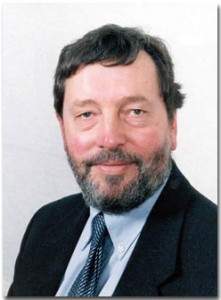
Tag: David Blunkett

  • David Blunkett – 2003 Speech on Airport Security

    davidblunkett

    Below is the text of the speech made in the House of Commons by the then Home Secretary, David Blunkett, on 13th February 2003 on airport security.

    Since Tuesday, there has been an enhanced level of security throughout the capital. As the Metropolitan police said in its statement, which was made on behalf of all those engaged in the operation, this was likely to be most visible at Heathrow airport. At the request of the operational services, it was agreed that, as in the past, the armed services could be called on for preventive and protective measures.

    It may help the House if I set the events of this week in the context of what was said in my statement of 7 November, and if I recall key points. As I made clear, we face a real and serious threat. We know that al-Qaeda will try to inflict loss of human life and damage upon the United Kingdom. That is why we have explicitly pointed to some of the most obvious risks, such as to transport infrastructure, and why the Government have taken a range of measures to improve public protection. In doing so, we have been mindful of the importance both of keeping the House informed, and of keeping continuity of operational policing and security measures.

    The House will forgive me if I quote the most relevant passages of the statement of 7 November. I said:

    “Aviation security measures remain at an enhanced level following the attacks on September 11th and the government keeps these measures under constant review. From time to time additional protective steps are being taken, and will continue to be taken as the situation demands.”

    The statement continued:

    “Where threats are specific, we seek to thwart them. Where they are general, we seek to analyse them, and take whatever responses we believe to be necessary to ensure the protection of the public.”

    This is precisely what we have done this week, and will need to do from time to time in the future. If the situation were to change, I would inform the House. If there are specific incidents-as tragically occurred in January, with the death of Detective Constable Oake-I will come back to the House. However, I do not believe that it is responsible to provide a running public commentary from the Dispatch Box on every end and turn-any more than previous Governments did during the past 30 years, when facing the threat from Irish terrorism. As with those Governments, our view is that we must do nothing to undermine the work of the police and the security services. We have to make fine judgments, which must ensure the safety of sources of information. The terrorists must not be able to assess what we know and how we know it.

    We must give the public the information that they need to protect themselves and others. We did precisely that with the statement last Tuesday morning. However, we must also avoid frightening people unnecessarily or causing the sort of economic and social damage that does the work of the terrorists for them. The public must be alert but not alarmed. That is why I have consistently-and again this week-facilitated confidential briefings for the shadow Home Secretary and the Liberal Democrat spokesman.

    Finally, I again pay tribute to the work of our police, security and armed services. We owe them our deepest gratitude for the continuing vigilance, courage and professionalism that they have shown.

  • David Blunkett – 1998 Speech to TUC Conference

    davidblunkett

    Below is the text of the speech made by the then Education and Employment Secretary, David Blunkett, to the 1998 TUC Conference.

    President, Congress, it is a pleasure to be back with you and to be able to share thoughts this morning, and my congratulations to the award winners. It is very good indeed to be able to celebrate success and the work of the trade union Movement in the cutting edge task of the future.

    I was going to crack a joke about Cabinet Ministers stacked up over Blackpool waiting to land, but apparently all my colleagues are stacked up over Tokyo waiting to land instead which underlines the nature of the global economy. More of that in a moment.

    I want to thank all of you. I want to thank the trade union Movement for the work that has been done since the general election 16 months ago, for the constructive way in which partnerships have been developed locally and nationally, for the way in which we have been able to forward the common agenda which we share, of improving people’s lives, of greater equality of the opportunity to learn and to work. I would like to thank specific individuals. I would like to thank Bill Morris and Rodney Bickerstaffe for the work that they are doing on the New Deal Task Force, you, John, as President, and Ken Jackson and Tony Dubbins, for the work that has already been started on the Skills Task Force which I will mention later, Roger Lyons on the UFI embryo board for developing the University For Industry for the future and, of course, you, John Monks, for the continuing leadership and vision that you share. It is just a pity about Manchester United! That is a problem. My club has had a bid from the local radio station, I think, but I will probably get shot when I get home for saying that.

    Over the last 16 months we have started the process of committing ourselves to meet the pledges and promises that we made. For the first time ever this country has a childcare strategy to begin the process of bringing equality into practice and decent childcare in every community. We have allocated , 600 million for a new Sure Start programme for work with families from the very moment a child is born, to change the inequality that makes such an impact on the lives of every child. We have already established an early years place for every 4-year-old whose parents wish it from this September, and over the next three years we will establish 190,000 additional places for children in nursery classes aged 3 in order to begin the process of providing that foundation on which success in later life can be built.

    We have started the process of implementing the pledge on class size: 100,000-plus youngsters aged 5 to 7 will, from last week, be in smaller class sizes so that that pledge can be fulfilled over the next three years, and we have commenced the implementation of our literacy strategy so that children can read and write when they leave primary school and have the same opportunity that the better off have taken for granted over generations.

    We have acted against exclusion and we have invested in lifelong learning, , 550 million extra next year for further and higher education – and that is only the beginning. Today the Prime Minister and John Prescott will be announcing the £800 million programme of investment in regenerating our communities, in linking the needs of that community to the will and the desire of men and women to work and to put back into the community their talents and their experiences, the ability to build an environment and a quality of life that is worthy of Britain as we move into the 21st century.

    We have set up the Learning Grid, we have established a Training Challenge Fund. We have got centres of excellence emerging in information technology across the country and we have started work on the individual learning accounts and their links with the University For Industry.

    But I recognise that there is a real challenge that all of us share together. The debates that are being held, the controversy that is highlighted in this morning’s papers, is a real challenge for Britain as well as for the rest of the world, and only by working together can we really tackle the new rapid change and uncertainty that faces every man and woman in this country, every community and increasingly every industry and service. The old certainties have gone for ever.

    We live in a global economy, as John Prescott was describing yesterday, in which we cannot control the particular price of a particular commodity at a particular time, where rapid change disintegrates a market that looked certain only two years ago, whether it is in semi-conductors or the electronics industry, a period of rapid change in which we are not powerless but we are not all powerful either, where we should not accept economic determinism, but nor should we believe that a Government can wave a magic wand and solve all our problems.

    I realise, as a visitor, I am sandwiched between the Deputy Prime Minister and the Governor. I watched Eastenders on Sunday night because we are doing a launch tomorrow of the Year of Reading with them and it reminded me of what the power of the Governor really is in all our communities. When you welcome him this afternoon, as the Governor of the Bank of England, it is worth just reflecting that the ratio of the pound to the deutschemark this morning is 5 pfennigs less than it was when we took over on May 1st 1997. The world is a funny place. Long-term underlying interest rates are the lowest they have been for years. The certainties about what needs to be done are uncertainties. The world changes day by day and our response needs to change with it.

    All of us have a key role to play – my Department in terms of education, skills and training and tackling unemployment, you in terms of the response that you are making and feeling your way through in terms of what is happening with globalisation, the recognition that what happens in the United States, as well as what has already happened in the Far East economies, makes a big difference. I say to newspapers that think it is none of our concern as to whether instability exists in the United States, “Get real. We live in a global economy and we have to live through the changes and the uncertainties of that economy.”

    But nor should we, in recognising that real challenge and the fact that this Government is not going to change its economic profile or its policies, accept that determinism that believes that nothing can be done. We can intervene but in entirely new ways, not by trying to save industries where the market has disappeared, money after jobs, as was the case in the 1970s, nor the “Hands off, there is nothing we can do” of those economists who, in my view misguidedly, believe that it is the means and not the end that are all important.

    We can, for instance, recognise – all of us – the absolute critical nature of what is happening to men and women in our economy. I know about the theories that emerged 30 years ago from Milton Friedman, the words that are used so easily, “The natural rate of unemployment”, as some economists talk of it, “The non-inflationary rate of unemployment”; but I also know about the hopelessness and the misery and the despair of men and women up and down this country when they face unemployment, when they face, in their own community and family, the worthlessness of not having a job. That is why this Government will find a different way forward which bridges the gap between the belief that Government can do everything and those who believe that Government can do absolutely nothing. That is why, Congress, it is critical for us to join together in recognising what can be done.

    Tomorrow the Prime Minister will launch a package of measures in the North-East, which will be put together with my Department, , 38 million which will tackle, through the new Regional Development Agencies, through a new rapid response unit, and a fund to back it up nationally, through further and higher education skills action, the job together with you to make it work for people in our communities.

    Today I launch the interim report of the Skills Task Force — a Task Force that is looking at both the short term and the long term needs of our communities: the ability to change, the available pool of labour which in turn will have an impact on what is possible in our economy, and the reactions of the Monetary Policy Committee and the wider international monetary scene.

    We can widen the pool of skilled labour and I know that over the years all of us have said, “What is the point in training people if people do not have a job to go to?” Of course that is right. Of course skills of training on their own are not adequate, but with a quarter of a million vacancies we have a massive task in terms of getting the right people with the right skills into the right place at the right time. We can do it; you are doing it.

    We are celebrating this morning the activities of the trade union Movement in their commitment to lifelong learning. It is not just a slogan; it is not just for an awards ceremony. It is actually day‑to‑day the thing that will change the opportunity for all of us in that rapidly changing world. The task force recommend better coordination of the plethora of agencies and providers that exist locally and nationally, and we certainly need to do that. They talk about ensuring consistency of high quality learning in the workplace and in the wider community, and we need to do that. Employers as well as Government and trades unions have a responsibility in making that happen. We have a responsibility in linking public and private together, linking the individual, the company and the trade union Movement in making it happen on the ground.

    There is the availability of information through the new Learning Direct Line that we have established, the development and investment in the Careers Service, the ability — as the Prime Minister will spell out tomorrow — to respond on the ground where it matters to changes that are taking place around us over which we do not have control but in circumstances where we do have a key part to play. There is the credibility of the high status apprenticeships and investment in replacement of the Youth Training Scheme; the national traineeships, the development and investment that we are making in modern apprenticeships and hope for the future; the help for small and medium sized enterprises in recruitment.

    Whilst we are debating, and understandably debating, the fears that exist particularly for manufacturing industry in the immediate months ahead, we know that if the people we are able to get to were supported with greater mobility to be able to fill the jobs that already exist, we could lesson that fear, and we could make our labour market more flexible and responsive to the needs of the moment.

    Of course, we need a strategy as the task force spells out for the development of information and communication technology where massive shortages exist. All of it needs to be put together with a review of the Training and Enterprise Councils, with the development of the new National Training Organisations (over 60 of them) that now exist in which the trade union Movement are playing a key part.

    The development of those regional development agencies and the funding streams that we have set in place are all part of a process of change and of renewal, and all of it engages everyone, whatever their part in the trade union movement and at work. It is a critical and important contribution in drawing together the strands of a modern economy, not disengaging and washing our hands from the circumstances and the consequences for men and women across the country.

    That is why I am so proud today to reinforce the message that Jimmy Knapp and the Learning Services Group have put out, about the work that you have been doing in the workplace. I am pleased to announce that 21 trades unions and 45 different schemes have benefitted from the , 2 million that we have allocated for the Union Learning Fund. I am also pleased to announce that because of its success I intend to invest another , 6 million over the next three years in making it possible to have continuity and to expand that scheme.

    On the ground we have the Transport and General Workers Union with the Transferrable Skills Initiative using telematics; the scheme by USDAW and BIFU working together to support men and women to overcome dyslexia; the GMB with the Life Skills Task Force, and the way in which they are ensuring paid time off from work, even for one or two of the men and women who have only one parent to sustain them. And I was not thinking of one parent families. The MSF with their Virtual Learning Centre for mobile workers; UNISON with the accreditation scheme for care workers in Suffolk; and the AEEU working with Coca Cola and Schweppes. What a cocktail! What a new Labour programme that really is for the future of those workers.

    Given the success of those schemes, we are clearly just at the beginning of a process of linking good intentions with practical action on the ground, making it happen where it really matters. While we are doing it, and while we are investing an extra , 19 billion in education, , 21 billion in health, whilst we are beginning at last to tackle head on the things that the Congress have demanded over the years, that John spoke about yesterday afternoon, the legislation and the beginnings of a long awaited national minimum wage, the Fairness at Work White Paper, the ability to be able to take on the key rights that have been taken for granted in other parts of Europe.

    Whilst we are doing that, just take a look at our opponents. Just remember 16 months back, just recall what it was like, where we were. Just look at them now. A major referendum is taking place inside the Tory Party. I gather that William Hague and John Gummer are the key protagonists. You have to hold your breath to see which knocks the other one out first! The nation will have a referendum on the single currency. The Tory Party’s is a complete and utter irrelevance to all of us. For theirs is the old politics; theirs is an agenda of the past, looking over their shoulder, trawling over past failures. Ours is a new politics for the future.

    Over the last 16 months we have been able to sustain month on month more people getting jobs, fewer people without a job. My task in the Department for Education and Employment is to ensure that people do have a job. There is no economic policy that justifies higher unemployment. There is no economic policy that seeks to waste the lives and talents of men and women or to increase public expenditure in keeping them unemployed. There is every justification for what we have been doing: , 3.5 billion on the new deal for the unemployed, for single parents, for men and women with disabilities, for those in long‑term unemployment who from this November will also have additional programmes at their disposal.

    There is every reason to celebrate what we have achieved, to face the difficulties of the months ahead together, to see the old battles behind us, and to develop that new partnership, not for scoring points, not for blaming someone else, but for working together to tackle the changed environment we work in, the uncertainties that we face together and the needs of men and women in the workplace and the community who rely on us to continue that partnership; to continue working together in their best interests and ours, with a Labour Government that will fulfil its pledges and will, at the end of its term of office, have fulfilled its commitment to economic growth with stability, to jobs that are sustainable and that matter, and to a quality of life of which all of us can be proud.

    Thank you very much indeed.
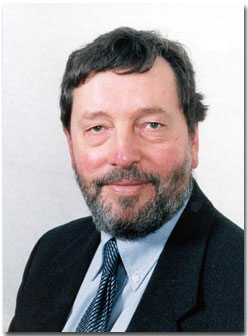
  • David Blunkett – 1997 Speech to TUC Conference

    davidblunkett

    Below is the text of the speech made by David Blunkett, the then Secretary of State for Education and Employment, to the 1997 TUC Conference.

    It gives me very great pleasure to congratulate the TUC and all those staff who have made it possible to gain the Investors in People award. After hearing the Archbishop and Prime Minister, I think I had better keep my speech very short. It is not so much the organ grinder and the monkey but something that I would rather not say at an open TUC meeting! I am delighted to be here. I am very pleased indeed that after New Labour, the TUC now have Investors in People, and it is my job to make sure that the Department for Education and Employment receive it as well because they have not yet achieved this.

    In offering congratulations and presenting the award of the Investors in People plaque to be displayed in the foyer at Congress House, we have a very clear message which is that the trades union Movement is taking a lead in achieving one of the most prestigious awards in terms of quality for development of staff, for training and ensuring the skills of the future. If the TUC can give this lead, then every employer in the country has a beholden duty to make sure that they are also taking steps to get Investors in People status and to treat their employees in a civilised and acceptable way. This should not be dealt with merely in terms of basic rights, which are the foundation that you have been debating at Congress this week and on which Tony Blair spoke this afternoon, but it should be taken much further, not looking backwards over our shoulders but looking to the future and taking the example of Bargaining for Skills and the Return to Learn programmes and other similar measures that unions within the TUC have been implementing.

    They should join in partnership with the new Government in making it possible to bring alive adult and continuing education in the way that the early Labour and trades union Movement began so many years ago with the Mechanics Institutes. That is why we have appointed Bob Fryer, the principal of the Northern College, to head the Advisory Group to reinvent adult and continuing education in the community and the workplace so that we can draw on the experience that members of the TUC, and the TUC itself, have had.

    Earlier this afternoon, a delegate spoke about her experience on the Health and Safety courses, Levels I and II. I used to teach those courses back in the 1970s. I was proud of that and, as a Secretary of State, it is my job to make sure that trades union education and skills for life are at the top of the agenda. As we invest in nursery provision ‑‑ we have removed the nursery voucher scheme which people said it would take us a year to do; we did it in three months ‑‑ as we remove the assisted places’ scheme and divert the money in the coming years to lower class sizes, and as we take up the cudgel of stopping the cut‑backs, redundancies and retrenchment from next April as we invest the , 1 billion that Tony Blair talked about, we do so only as a foundation. Many of your members, just like myself when I was a youngster in the community in which I was born and grew up, did not have a first chance, never mind a second or third chance.

    The idea is to bring about lifelong learning in and out of the workplace, making the issue of employability and skills come alive for people who have been denied those opportunities. It is bringing alive partnership in practice for everyone in our communities and taking up the cudgel that the TUC have so gallantly laid down in terms of setting an example. That is why I am so proud to be able to be here and to offer the award this afternoon. I have been on a learning curve over the last few weeks as well. In fact, I am thinking of inventing an NVQ Level IV for Cabinet Ministers so that we can make ourselves qualified for the job. We just have to hang on to it long enough to be able to ensure that we make it in practice. Just as we get to the point where we think we are experts, we are either sacked or reshuffled!

    The skills’ revolution is about job security in the cabinet and job security at work. I commend everyone this afternoon in taking the agenda forward in the way that the Prime Minister indicated, a modern trades union Movement in a modern Britain, moving to a new century, preparing and equipping people to take on that challenge. You will be looking at the global economy anew but ensuring that in your hearts you know what you are doing to ensure that the people who rely on you have the grasp, equipment and tools to be able to do the job and to fend for themselves.

    It is a tremendous challenge. Together with Margaret Beckett and Ian McCartney from my department who have been here, I hope to be able to work on that new agenda. I congratulate the TUC and all of you for the Investors in People Award. I present the award this afternoon, not to Morecambe, not to Wise, but to John Monks, General Secretary of the TUC.

  • David Blunkett – 1987 Maiden Speech

    davidblunkett

    Below is the text of the maiden speech made by David Blunkett in the House of Commons on 25th June 1987.

    I wish to pay tribute to Joan Maynard who, for 13 years, represented the people of the constituency that I am here to serve, and the people of Sheffield, to the best of her ability. On 12 June, I was the only Opposition Member who could genuinely say that he was looking on the bright side.

    I congratulate the mover and seconder of the motion — the hon. Members for Davyhulme (Mr. Churchill) and for Sherwood (Mr. Stewart). I remind the hon. Member for Davyhulme, who talks about high-rated local authorities and eulogises about the sort of solutions that the Government are proposing for other parts of the country, that until last year the district council in whose area his constituency lies was controlled by the Conservative party. I remind the hon. Member for Sherwood that Robin Hood was born in Locksley in Sheffield, and, like the right hon. Member for Tweeddale, Ettrick and Lauderdale (Mr. Steel), I recall that Robin Hood took from the rich to give to the poor, and not the other way round. From Sheffield, we shall continue to advocate that as hard as we can.

    It is not surprising that the issue of what sort of democracy we are and the nature of our local government is a primary part of the Government’s programme. The Prime Minister has spelt out on many occasions that it is her intention to sweep Socialism from the face of Britain. This afternoon she has reminded us that she has nothing but disdain for collectivism. Like the trade unions, local government has stood in the way of the restructuring of our economic and social life; instead of the democracy of the ballot box at all levels, the democracy of the bank balance and of the privilege that comes with wealth and property will be how our democracy operates in a Conservative Britain.

    In other words, we shall be taking a step back 100 years to the time when people fought to ensure that democracy was based on citizenship and not on the property that people owned. Talk of a property or share or capital-owning democracy is an insult to the people of Sheffield, Brightside, who, day in and day out, look not at where they can put their money on the Stock Exchange or in the best possible share dealing but at where they can put their money to ensure that their children have food on the table and clothes on their backs. Any family or parent would expect to ensure that the money that they wish to earn will keep their families well looked after.

    The words that the Prime Minister used this afternoon about decreasing dependence are hollow to those whose dependence on the state has been increased by mass unemployment, by the increased poverty that goes with it and by the ever increasing dependence on state benefits that they experience. If we want to lift people out of dependence on a central state, we need to ensure that they can earn their living and that they have the dignity and status that go with using their skills. They must earn their money, not make money by speculating on the Stock Exchange or selling property that they may have acquired at a knock-down price from a give-away Conservative Government. They must be able to earn it by hard work in our factories, offices, shops and communities, by providing services and producing goods, and making sure that we have wealth for the future.

    The people of Brightside do not want to hear talk of pricing themselves into jobs. Lower wages mean increased dependence on benefits for those who are in work. The number of those who receive housing benefit as rents are pushed up and their earnings go down has dramatically increased—it has doubled during the eight years of the present Government.

    In that spirit, we need to examine a different future. This afternoon we heard a dangerous and disturbing comment from the Prime Minister about the security of local government finance. I hope that she will withdraw that remark at some point, because the interest rates for all local authority borrowing and the well-being of local government finance as a whole are not served by statements such as that made by the Prime Minister. That applies to Conservative, alliance or Labour-controlled local governments.

    We have, I hope, a pluralistic democracy that is based not solely on the ownership of wealth or the votes that put us in this House, but on being able to make decisions across the country for the well-being of our communities. The cultural, political, social and economic diversity of the country must be respected if we are not to have the elective dictatorship of which Lord Hailsham spoke some years ago. We must not have a single solution imposed on every part of our country, or a position in which the zealots and missionaries from down south believe that they have the answers for Scotland, Wales and the inner cities of the north.

    Some of us are working together. Industry, commerce, business, trade unions, higher education and research institutions are working with local government to come up with solutions of their own. We do not want the solutions imposed through urban development corporations, for which public money is readily available as long as it is directed from the centre and is in the hands of those who wish to offer our communities as hosts to those who want to come in and make for themselves, rather than to stimulate and support the community.

    I wonder whether the intentions of the right hon. Member for Cirencester and Tewkesbury (Mr. Ridley) or of the Secretary of State for Trade and Industry reflect what the Government intend to do. Is it to be the colonisation of Scotland, the north and Wales, or the self-help programmes for the inner cities? There is a considerable difference. Sheffield alone has lost almost exactly the same amount of money in local government grant and subsidies as has been pumped in public money into the London docklands. I challenge the Prime Minister to give the city of Sheffield the money about which she spoke, in terms of the urban development corporations that were mentioned by the right hon. and learned Member for Richmond, Yorks (Mr. Brittan), to use for the benefit of local people through the democracy that has existed for generations, rather than to impose her solutions from outside. Working together, we can use enterprise arid initiative to rebuild our communities. Until eight years ago our people had jobs. They had pride in the crafts and skills that they used in steel and engineering. I was appalled to hear those industries described today by the Prime Minister as the bad parts of our industry. They were the industries on which our wealth was created and on which many people in this part of the country were happy to live for generations. We want the opportunity to do that all over again. We expect even this Government to respect those differences and that diversity.

    If we are to have the opportunity to extend and develop democracy, we must stop the vilification and undermining of confidence in local democracy, as the leader of the Liberal party said earlier. If we remove the safety valve that allows people to determine what will happen in their communities for themselves, if we remove the opportunity for people to be helped to change the nature of their lives, we pose a dangerous threat to democracy itself. If people cannot find an outlet for their frustration, and if the symptoms of the present decay of inner city areas are not allowed a democratic outlet, the Government will inevitably be forced into even greater authoritarianism in order to suppress those symptoms and overcome the frustrations and difficulties that people in such areas will be displaying.

    I appeal to the Prime Minister to take account of all that. Democracy is not a slogan about whether people own capital or shares; it is something that belongs to us, which our grandparents fought to achieve. The ballot box, in local as well as in national elections, is an important part of the pluralistic democracy of which we have been so proud.

    I hope that we will also ensure that public money is made available for our people and not simply for those who are willing to come from abroad to exploit our country. We do not need the Japanese and Americans, and we certainly do not need to invest in golf courses or in mansions to provide for them. We want leisure facilities and decent housing for our people, because that is their birthright.

    If the Government are to invest public money in inner city areas through housing action trusts, as described this afternoon, why are the Government not prepared to provide the same resources to those local authorities that are willing to work with their tenants to ensure that together they are able to repair the desperate housing stock currently existing in many of our major areas? Why is the money that is being made available to the London Docklands Development Corporation not being made available to local government? Is it that the direction of the LDDC suits the Government? Two hundred-year leases without rent review are being given to speculative companies willing to put their money into the London docklands. Property is being sold at well below the market price to encourage people to make a quick buck. If that was done by the much vilified local government system, those councillors would be surcharged and disqualified for neglecting their fiduciary duties.

    I say to the Government, to the Secretary of State for Trade and Industry, who is, of course, not with us in the House, and to those who, on his behalf, listen and report back to him that we do not want solutions imposed as though we were colonies of an underdeveloped nation. We are not a separate part of the country. We want the opportunity to do things for ourselves with our people. If the Prime Minister means what she says about the need to listen and to be willing to co-operate with those who wish to regenerate their economies and communities, I hope that, respecting the cultures and the politics of those areas, she will be willing to put some of those resources and some of that commitment into areas where it is clear that the whole of the community, speaking with one voice, is unified in seeking a way forward. It is statesmanship of the first order that unites a nation and does not divide it. It is those who give people the dignity of having a job and of using their skills who will be remembered. Those of us who have to suffer the difficulty of Opposition in the years ahead will continue to ask that this country should see our democracy operate in the interests of everyone, and not just in the mission for a few.