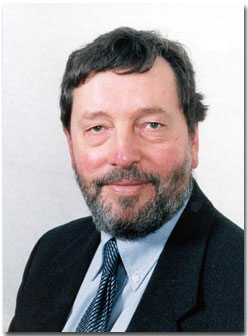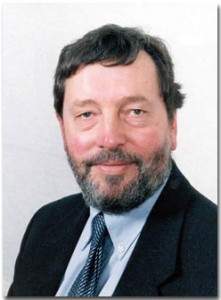
Tag: David Blunkett

  • David Blunkett – 2014 Parliamentary Question to the HM Treasury

    David Blunkett – 2014 Parliamentary Question to the HM Treasury

    The below Parliamentary question was asked by David Blunkett on 2014-05-02.

    To ask Mr Chancellor of the Exchequer, if he will review the applicability of VAT to vouchers for spectacles and other prescriptions under the voucher scheme; and if he will make a statement.

    Mr David Gauke

    The NHS optical voucher scheme provides financial support by way of a voucher to eligible persons to help them buy goods such as spectacles. The vouchers are simply a means of financial support; the VAT consequences result from the goods and services that the voucher is used to buy. Therefore, VAT exemption will apply to the eye test, fitting services and any medical treatment of an eye condition and VAT will apply to the spectacles, irrespective of how payment is made.

  • David Blunkett – 2014 Parliamentary Question to the Department for International Development

    David Blunkett – 2014 Parliamentary Question to the Department for International Development

    The below Parliamentary question was asked by David Blunkett on 2014-05-02.

    To ask the Secretary of State for International Development, how many of the teachers it aims to train by 2015 will be trained in providing inclusive education to children with disabilities.

    Lynne Featherstone

    The UK Government has committed to help train 190,000 teachers by 2015, to help improve the quality of education for all children, including those with disabilities. By 2012/13, DFID had trained 99,000 teachers. A major challenge in poor countries is developing the data systems which can capture the needs of children with disabilities. We are therefore supporting UNESCO Institute for Statistics (UIS) to regularly publish education indicators which disaggregate people with disabilities, and to develop new standards for school censuses and surveys related to marginalised populations.

  • David Blunkett – 2014 Parliamentary Question to the Department for International Development

    David Blunkett – 2014 Parliamentary Question to the Department for International Development

    The below Parliamentary question was asked by David Blunkett on 2014-05-02.

    To ask the Secretary of State for International Development, what steps her Department has taken to ensure that the work carried out under the Girls’ Education Challenge Fund is fully inclusive of girls with disabilities.

    Lynne Featherstone

    The Girls Education Challenge programme has seven projects providing over £9 million to fund disability-focused girls education projects in Uganda, Kenya and Sierra Leone.

  • David Blunkett – 2014 Parliamentary Question to the Cabinet Office

    David Blunkett – 2014 Parliamentary Question to the Cabinet Office

    The below Parliamentary question was asked by David Blunkett on 2014-04-03.

    To ask the Minister for the Cabinet Office, how many members of the Board of the Big Lottery Fund have their main residence north of the city of Birmingham.

    Mr Nick Hurd

    There are currently nine members of the UK Board of the Big Lottery Fund, two of whom have their main residences north of Birmingham. Of the remainder, three live in London and the others are based in other parts of the UK.

    The Big Lottery Fund is committed to bringing real improvements to communities and the lives of people most in need, across the United Kingdom.

  • David Blunkett – 2014 Parliamentary Question to the Department for International Development

    David Blunkett – 2014 Parliamentary Question to the Department for International Development

    The below Parliamentary question was asked by David Blunkett on 2014-04-03.

    To ask the Secretary of State for International Development, what steps her Department is taking to ensure that all the education programmes it funds are inclusive of children with disabilities; and what monitoring her Department undertakes to ensure that all such programmes include accessible materials for use by children with disabilities.

    Lynne Featherstone

    The UK is committed to ensuring all children, with a focus on the most marginalised and those with disabilities have access to education institutions and complete a full cycle of quality education. We are working with partners, such as UNICEF and UNESCO Institute for Statistics, to improve data for monitoring purposes.

  • David Blunkett – 2014 Parliamentary Question to the Department for Education

    David Blunkett – 2014 Parliamentary Question to the Department for Education

    The below Parliamentary question was asked by David Blunkett on 2014-04-02.

    To ask the Secretary of State for Education, pursuant to the Written Statement of 27 March 2014, Official Report, columns 35-6WS, on primary and 16-to-19 assessment and accountability, how the progress of pupils with severe educational needs will be taken into account in his Department’s accountability reform programme.

    Mr David Laws

    We plan to continue to publish information on attainment and progress of pupils with special educational needs at national and local authority level. A new web portal, which is under development, will improve access to 16-18 performance data, including the core demographic information such as special educational needs that is currently available for primary and secondary schools.

    Any pupils not able to access the relevant end of key stage test will continue to have their attainment assessed by teachers, and we will retain P scales for reporting teachers’ judgements.

  • David Blunkett – 2014 Parliamentary Question to the Department for Education

    David Blunkett – 2014 Parliamentary Question to the Department for Education

    The below Parliamentary question was asked by David Blunkett on 2014-04-02.

    To ask the Secretary of State for Education, pursuant to the Written Statement of 27 March 2014, Official Report, columns 35-6WS, on primary and 16-to-19 assessment and accountability, what account will be taken of the progress made by children who have entered the school beyond the baseline reception assessment procedure, but who do not warrant exemption under the final two years prior to Key Stage 2 exams.

    Mr David Laws

    Schools will continue to be expected to assess all of their pupils upon entering school and track their progress. Ofsted will expect to see evidence that pupils are making appropriate progress, with inspections informed by the school’s data on pupil progress. Assessment at key stage 1 will remain a statutory requirement.

  • David Blunkett (Lord Blunkett) – 2022 Tribute to HM Queen Elizabeth II

    David Blunkett (Lord Blunkett) – 2022 Tribute to HM Queen Elizabeth II

    The tribute made by David Blunkett, Lord Blunkett, in the House of Lords on 9 September 2022.

    My Lords, it is a pleasure to follow the noble Baroness, Lady Evans, and to thank her for her time as Lord Privy Seal and Leader of the House.

    Much has been said, and there will be much more to say over the weeks and months ahead—condolences, of course, to the Royal Family and heartfelt thanks for a life of historic proportions. All of us in public life in one way or another hope to leave a tiny footprint, some small legacy, behind us, but Her Majesty strode as a colossus through decades and generations, dealing with the most incredible personal and public events and taking on those challenges, to quote the noble Lord, Lord Judge, “with fortitude”.

    Much has been said about service and duty, but I make no apology for repeating them. This is what Her Majesty’s life was about, right from those early days, described so graphically in this House today. That is why so many felt, like my noble friend Lady Smith of Basildon, shock when we learned that Her Majesty’s life was fading. Is it only yesterday? The shock was obviously greater, as has been alluded to, because of the juxtaposition with her role as our monarch on Tuesday, inducting the new Prime Minister and doing—yes—her duty. I found myself yesterday evening in a situation that I had never expected to, one of complete irrationality. I started to think, “Not now, not at this moment, please, not yet”. It was totally irrational, but it was because our Queen, over my lifetime, not only demonstrated how a constitutional monarch can do that duty but did it in a way that has held our nation, our United Kingdom, together. I hope that the memory will last with us for decades to come.

    Holding our fragile constitution together, as the noble Lord, Lord Butler, put it so well, is not an easy matter. We live in very delicate, difficult times for liberal democracy. Our Queen will be deeply missed, but her guidance and example will carry into the life and work of His Majesty King Charles III. Through turbulent and sometimes difficult times, he will display his great strength and compassion, which I have experienced, and his understanding of that duty to us as a nation and to our kingdom.

    In my very brief speech this afternoon, I want to say a simple word about conducting ourselves for the future. Of course our respect requires our mourning, but in my view we need to celebrate and rejoice in the life of Elizabeth II. We need to lift people, as well as mourn. I hope it will be possible for public events to resume as quickly as possible so that people, in gathering together, can pay their respects and show their grief, but in a positive and uplifting way.

    I have lots of anecdotes, particularly about dogs, as noble Lords will understand, from over those many years, but perhaps appropriately I will finish by giving just two. One was when I was inducted as a privy counsellor 25 years ago. I am sad that decisions have been taken that preclude so many of us on the Privy Council from the Accession Council. Back in those days, I knew it would be difficult and, unusually for me, I was quite nervous. I knew I could not drag the dog across the floor because dogs are not very good at showing you where to kneel on cushions. They are brilliant at all other kinds of other things, but that is not one of them, so I left the dog with Jack Straw. I moved across the room and I managed to hit the cushion, but facing the wrong way. Her Majesty, in what was always her gracious, careful and never patronising way, managed to gently shift me round by touching my arm so that I could just brush her hand.

    I also remember seven years ago, much later, when she came to undertake the Maundy Thursday distribution at the cathedral in my city of Sheffield. Because I was retiring from the House of Commons as the longest serving Sheffield Member of Parliament, I had the privilege once again of sitting at a table with her at lunch. I had a member of the charitable community in Sheffield between me and Her Majesty. There was a silence, and I thought I would fill it—inappropriately, as it turned out—by saying to her, “Your Majesty, I have been reading in the papers that the breed of corgi is dying out.” There was a tremendous pause, and Her Majesty then did what she did so cleverly and so appropriately in putting me down. “Mr Blunkett,” she said, “of all people, you should know not to believe what you read in the newspapers.” I know that His Majesty King Charles III will not need, want or ask for my advice, but if he did I would give him one simple piece of advice: in the years to come, do not believe everything you read in the newspapers, and above all, sometimes do not bother reading them.

  • David Blunkett – 2002 Speech on Entitlement Cards and Identity Fraud

    David Blunkett – 2002 Speech on Entitlement Cards and Identity Fraud

    The speech made by David Blunkett, the then Home Secretary, in the House of Commons on 3 July 2002.

    With permission, Mr. Speaker, I wish to make a statement in launching a consultation exercise on entitlement cards and identity fraud. Copies of the consultation paper will be placed in the Vote Office.

    Since the terrorist atrocities in the United States, I have been asked a number of times whether the Government would introduce identity cards. I have made it clear that any debate must not focus on issues of national security alone. Of equal importance are the issues of citizenship and entitlement to services. The focus should therefore be on whether entitlement cards would be genuinely useful to people in their daily lives and in affirming their identity. That will be the acid test of any scheme.

    In a parliamentary answer on 5 February, I ruled out a compulsory card scheme—compulsory in the sense that the card would have to be carried by each individual at all times. As I made clear, any scheme that was eventually approved would not entail police officers or other officials stopping people in the street to demand their card. We are not, therefore, consulting on that option.

    Instead, we would welcome views on a universal entitlement card. Everyone would register for and be issued with such a card, which would be required for the purpose of gaining access to services or employment. We also consider in the consultation paper the pros and cons of a voluntary card, in respect of which people could choose to opt into the scheme. That would be based primarily on their wish for secure and verifiable identification.

    The key issue is the use to which a card might be put, so a genuine consultation exercise is aimed at hearing from the public what services people would like to be linked to a card. We wish to hear from organisations in the public and private sectors about whether they would take advantage of the card to help them with delivering and providing access to their services. We have set out for illustration examples of some areas in which a card might be helpful. In each of them, we demonstrate the cons as well as the pros, to ensure that people understand the downside as well as the gains that can he made.

    I have already mentioned the use of a card to help to provide better and more appropriate access to services. It could also act as a convenient travel document and as a proof of age card, and could help to promote new ways of voting.

    Crucially, an entitlement card could help us to tackle illegal working. Illegal working undermines the minimum wage and the rights and conditions of the lowest paid. An entitlement card could give businesses and employees a simple, straightforward and verifiable way of establishing the right to work legally. It could thereby assist us in tackling the sub-economy.

    Although we have an open mind on how a card scheme could operate, we have set out a possible scheme for comment. Most people already possess some form of photo-id such as a passport or photocard driving licence. Many have already said that they would like fewer cards in their purse or wallet, and some have suggested that a scheme might incorporate both the driving licence and the recently announced passport card. Entitlement cards for those not covered by existing documents would be provided in the form of a non-driving licence card, which would be similar to those issued in many states in the United States. Existing powers to require proof of identity would reflect those used for the purposes of driving and travel.

    The consultation paper asks whether existing passport and driving licence checks are sufficiently secure, given the increasing sophistication of fraud. We would welcome views on whether biometric information such as fingerprints or iris images should be recorded. That would ensure that people could not establish multiple or false identities, which allow the personal fraud with which public and private services are bedevilled.

    Any scheme will have costs, which we spell out for the different options that are given in the paper. We are not talking about large bids to the Treasury that would displace investment in public services. The entitlement card scheme could be made self-financing by increasing charges for more secure passports and driving licences, discounted over the lifetime of the card, and by charging a lower card fee for those who do not have either a driving licence or a passport.

    There is always a danger of bureaucracy in such areas. We spell out that possible downside and illustrate potential ways of dealing with it.

    However, by building on existing systems and expertise we should be able to reduce the risk and costs inherent in an undertaking of this size. [Interruption.]

    Mr. Ronnie Campbell (Blyth Valley)

    This is a vote winner for us.

    Mr. Blunkett

    I am grateful for my hon. Friend’s humour, especially given that 38 million people hold a driving licence and 44 million people, including young people, hold a passport. Technological advance is already projecting major change.

    As I said earlier, we recognise that there are inevitably real worries about the infringement of personal freedoms and historic concerns as regards the legal requirement to carry a card. The paper sets out the way in which a scheme would comply with the Data Protection Act 1998.

    The amount of data required and its accessibility or relevance would be determined by Parliament; the use of a chip would he determined by individuals.

    I hope that my comments will reassure all hon. Members that we painfully understand the genuine need to protect privacy. However, we are asking the following question: given that to drive a car, move freely in and out of the country, open a bank account or obtain credit, we need to identify ourselves correctly, would it be easier or harder if there was one entitlement card to assist the process?

    In addition, each year, thousands of people have their identities stolen by criminals, often without their knowing about it. Bank accounts are raided, and goods and services bought in their name. Identity fraud now amounts to £1.3 billion a year. For good reason, there is genuine concern among the public about that growing criminal activity. A universal entitlement card would be a powerful weapon in the fight against identity fraud. However, it would take time for a card to make its full impact. We are therefore also using the consultation exercise to seek views on several other projects that could provide rapid gains. Today, we are publishing a separate paper on identity fraud, which I have placed in the Library.

    I thank my right hon. Friend the Secretary of State for Work and Pensions for the work that he undertook on the matter when he was Chief Secretary.

    No one should fear correct identification. There is nothing to fear from the proper acknowledgement and recognition of our identity. There is everything to fear from wrongful identification, or the acquisition of our identity for fraudulent purposes.

    Freedom from intrusion into our private lives by public or private organisations is crucial. Freedom to avoid abuse and ease of access to our identity is an essential part of the consultation process. I commend it to the House.

  • David Blunkett – 2016 Speech on Britain in the EU

    davidblunkett

    Below is the text of the speech made by David Blunkett, the former Labour Home Secretary, on 26 May 2016.

    The 23 June referendum could be and still might be, the opportunity to demonstrate the gritty grasp of reality which is surely the hallmark of the British people. A reality which has been displayed time and time again, in the glories and the tragedies of the past. In creating and developing alliances, in making sacrifices on behalf of others and yes, calling on others to rally to our defence in times of need.

    Forty years ago I voted ‘No’ to staying in the European Union. So what has changed? The simple answer is “the world”. The dramatic change of the last four decades can be summed up in one word, “power”. Who exercises it, on whose behalf and how those without wealth and influence can use democratic politics to have their voices heard, their needs met and their rights and wellbeing protected.

    From the school playground through to international negotiations, strength lies in numbers. From the emergence of the United Kingdom, to the development of the Trade Union movement, men and women understood that combining together provided power that individuals could never exercise alone.

    In today’s world this has never been more apparent. Global companies exercise enormous power over the world economy; the lives, the jobs and the wellbeing of individuals and families across the world. From finance to modern communication, it is the global giants who exercise sway over our lives.

    Some have compared the Googles and Amazons to the Roman Empire, and the collection of tribute and the exercise of cultural hegemony, whatever and wherever the nation state they touch.

    Why is it that these giants, including companies like Apple, are prepared to do entirely different deals with China than other parts of the world, including on issues such as personal privacy? The answer is of course simple – 1.2 billion people provide a market which any international company would wish to get its hand on.

    This is an example of a highly populated and increasingly powerful nation-state being able to “do a deal” with extraordinarily powerful forces in the private sector. It is about the reality of political power confronting market forces.

    In or out of the European Union we are affected by decisions taken collectively by other European nations. In or out of the European Union we are directly affected by how the rest of the world perceive the United Kingdom, its economy, its potential trade, its standing in relation to influence in international affairs and decision making outside its own boundaries.

    Hence the announcements of the International Monetary Fund, the view of the Credit Rating agencies, the opinion of the President of the United States, senior statesmen and women past and present really do matter. They matter because we are in a global economy, affected by decisions made collectively in relation to trade, to the handling of the threat and insecurity posed by terrorism, and of mass people movements across the world.

    None of this can be dealt with or understood sensibly, with belligerence and bluster. The buffoonery of Boris Johnson is no substitute for rational thought or an assessment of and counterweight to, the reality of power. I have over recent weeks come to wonder whether the BBC should be renamed the Boris Broadcasting Corporation. Not a day goes by without some mention made by our main broadcaster of the increasingly irrational and almost irrelevant remarks of this newly converted politician, to leaving the European Union.

    But this decision is not about individuals, it’s not about a contest for the leadership of the Conservative Party, it is not about the Conservative Party. This is a decision about the future of the United Kingdom, the future of our children and grandchildren, and above all facing the reality of life in a very changed landscape.

    So, let me address two central issues that the Out campaign constantly say are upper most in people’s minds. Namely, security and immigration.

    As Home Secretary in the period covering the attack on the World Trade Centre on the 11 September 2001, and at a time of enormous upheaval and instability leading to large scale people movements across the world at that time, I think I can claim to have some understanding of how decisions are made, and the impact that collaboration offers to achieving a successful outcome.

    Fifteen years ago, I was in partnership with the then Interior Minister of France, Nicolas Sarkozy, later to become President. He and I got to know each other precisely because we were working together on what was then the Justice and Home Affairs Council of the European Union. Both of us were opponents of the grinding bureaucracy that we sought to change. Yes, there is bureaucracy, there is enormous need for continuing reform but I make the point entirely to demonstrate that we are not the only people within the European Union, who believe in progressive change. The notion that only the plucky Brits are against bureaucracy, against overbearing centralism and the top down edicts of the Commission is frankly insulting to the rest of the democratic world!

    We worked together with other partners including the then Interior Minister of Germany Otto Schilly, to get the right decisions made and to ensure that they were practical, workable and relevant to the key threats that existed at the time.

    The benefits arising from enhanced co-operation and collaboration within Europe – rather than on a bilateral basis – apply equally to countering the threat of terror and dealing with the major challenge of the movement of people across the world.

    In both cases we are talking about a global threat, not solely a breach of our own borders. On the one hand, the perverted ideology and interpretation of the world which leads to a threat to our life and economic wellbeing is nurtured and propagated on a global scale. Whilst it is true that the European Union is only one part of a multiplicity of collaborative processes for information gathering, data collation and sharing, it is an important element in ensuring common cause.

    This is not simply (and this is true of so much of what we are dealing with in relation to our future in Europe), a matter of what we can “get out of” other countries including the European Union machinery. It is about what we are able to contribute in both helping and improving the ability to collaborate, with other countries. In other words, being part of the process is essential both in terms of workable practical measures but also the overall direction, relevance and competence of what is done by all those in a position to contribute. We should be asking ‘what can we do for you’, as well as ‘what can we gain from you?’

    Yes, we are in a fortunate position that we are trusted by and able to work extremely closely with the United States on intelligence gathering, analysis and action. But it is extremely silly and beneath those who should know better to suggest that this somehow “trumps” if I dare use such expression these days, wider co-operation against terrorism on our doorstep.

    The meetings we held at the Justice and Affairs Council, at a Europe-wide level after 11 September, were illustrative of the importance of the ability to work quickly and effectively with all those who were then part of the Union.

    The European Arrest Warrant, the data sharing improvements, the use of biometrics and yes, improved collaboration on the wider European border all demonstrate the importance of what we call the European Union. In simple terms, if we had not had the EU, we would, on these issues, have had to invent it.

    Suggesting that this amounts to some conspiracy for a “European State” and analogies with the intent of Hitler are not only dangerous and risible but illustrate the lengths to which the Out campaign will now go to distort reality in attempting to frighten people in a way that they claim to be a hallmark of the In campaign.

    Actually, it is collaboration across Europe, building alliances with both historic friends and neighbours with the United Kingdom and new entrants from the East that ensure a balance of power within the Union. Power being one theme of my contribution to this debate, should to any intelligent human being, equal ensuring that no one nation or two nations working together can dominate not just the structures and decision-making processes of the European Union but of Europe as a whole. Remembering that in or out, decisions taken in Europe, the balance of power within Europe, the economic, social, cultural and wider influences, all impact on this, our nation off the geographic coast of mainland Europe.

    We understood this in relation to the debate as to why it was important that Scotland remained within the United Kingdom. The same argument apply equally to the debate about the future of Britain in Europe. For it is about the future of Europe as a whole and not just the future of Britain, that should determine our vote on 23June.

    Which brings me to immigration. The agreement that Nicolas Sarkozy and I reached in 2002, which saw the closure of the Sangatte camp outside Calais in 2003 was mutually beneficial. Both of us recognised that this was not a matter that either nation on their own could deal with nor for that matter was solely about France and the United Kingdom. This was about people being trafficked by organised criminals across the world, attracted by both a better life as well as in many cases, escaping from death and torture.

    To reach the United Kingdom by land and water, involved having arrived in the European Union through its outer borders. The Out campaign talk as though what we are dealing with is “fortress Britain” where we erect on our own soil mechanisms to stop people actually arriving, touching our soil and therefore becoming entitled under international – not European – treaties, to claim asylum. Or, to disappear into the sub-economy to work and operate below the radar. This is frankly nonsense. The best way of illustrating why collective action can be effective and is important in terms of dealing with global displacement is the agreement, temporary or otherwise, between the bulk of the European Union and Turkey. The dramatic stemming of those breaching the European borders and flowing across Europe is a remarkable example of how you have to negotiate together. We are as much beneficiaries of the agreement and the steps taken as those who initiated these measures.

    But as Nicolas Sarkozy and I recognised 14 years ago, you have to ensure that those seeking a better life realise exactly what will happen when they make their way across the European continent, and that this will impact on countries in the pipeline as well as those countries to whom the migrants aim to settle.

    That is why in closing the camp, it was necessary to reach agreement on immigration, security and customs personnel, to be located on French soil. Effectively and for the French, counter-intuitively, to move the UK border to northern France.

    I am absolutely clear that this agreement could not have been reached had we not built an understanding, worked together as part of and understood that our future was in, the European Union. Why would the French in other circumstances wish to prevent people reaching Britain? What measures do the Out campaign believe they could implement that would return those reaching our soil were we not to have this zone on French soil, which would enable them to return such individuals to France? Eurostar checks in Paris and Brussels, the double-lock of both French and UK officials on French soil dramatically reducing illegal entry into Britain is possible because we are part of the European Union.

    Let me be clear. The fact is that having our security service representatives on French soil in Calais, at Paris Gard de Nord and Brussels Midi is a major safeguard that we have grossly underestimated in recent years. Were the French to decide to revoke the agreement, which leading French spokespeople have indicated, it would be a calamity for robust and rational border controls. This in practice means that we couldn’t use these immigration and security controls to stop people reaching our country. This would lead to an increase in asylum claims from people who came to our shores and the disappearance of tens of thousands of people into the illegal economy.

    And to illustrate the point still further, and to lay aside the misunderstanding about “free movement”, it is worth just recalling that 40 per cent of those who declared themselves as applicants for the right to work when the E8 countries fully joined the EU in May 2004 were already in the country. I repeat, they were already here.

    I have heard no one of any stature suggest that we would prevent people coming on holiday to the United Kingdom.

    Once people are here they can so easily disappear into the sub-economy, as I have already illustrated. Our current mechanisms for electronic data processing, does not allow us to ensure accuracy in terms of those who leave our borders (embarkation) as well as those arriving. As the Home Secretary who initiated the E-borders programme, I am as frustrated as anyone else that over a decade has past and we are still not in a position to fully implement a secure and reliable system scheme.

    It is in no way to dismiss the genuine fear that many people have in this country about too rapid and large scale immigration, to indicate that working together to tackle the causes, to reduce the flow and to manage what is inevitable, must be the only rational way of proceeding in a world which cannot be wished away, and where global events have to be dealt with on a global scale.

    When the coalition government in 2010 abolished the Migrant Impact Fund, they undermined the proper preparation for and investment in new arrivals and the communities bearing the biggest challenge. With the introduction of net migration targets, which included full time graduate and post-graduate legitimate students, the Government set an impossible hurdle. Failing to reach it added to the sense that we were not in control of our borders. We are!

    And here’s a thought. Were we to be Italy or Greece, or in the past Spain, finding 100,000’s of migrants seeking to enter the European Union through our shores, would we not expect and wish for help from the European Union as a whole? Would we quite rightly point out that we were carrying an enormous burden in circumstances where those entering our country wished to settle elsewhere? Germany and Sweden in particular, have taken decisions over the last three years to welcome extraordinarily large numbers of those fleeing from death and torture.

    So, whether on countering terror and improving our security, or rational policies to reduce unmanageable immigration inside or from outside the European Union, we are able to use appropriate opt-out mechanisms when it is right for Britain to do so. This places us in a highly favourable situation in terms of cooperation and collaboration when needed, and separate national policies when required.

    In a world of global markets, people movements and global blocks, we need each other more than ever before. In terms of finance and business, in terms of the nation state and democratic politics, the challenge in front of us is blindingly obvious. To have power, we need to be able to work together.

    To gain that power, you need critical mass. The capacity and the clout go with scale, and with understanding the nature of globalisation.

    That is why the strength, the innovation, and the talent present in the United Kingdom provides leverage beyond our capacity to deliver in isolation. By joining instead with others of like mind who want a better Europe, a less bureaucratic and corporatist Europe, but who also understand that we can only achieve this and our wider goals, by working together, a vote to stay in on 23 June is self-evidently the right thing for our future.