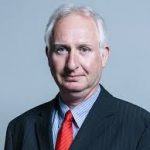
Tag: Daniel Zeichner

  • Daniel Zeichner – 2016 Parliamentary Question to the Department for Transport

    Daniel Zeichner – 2016 Parliamentary Question to the Department for Transport

    The below Parliamentary question was asked by Daniel Zeichner on 2016-03-23.

    To ask the Secretary of State for Transport, pursuant to the Answer to Question 31603, from which funding stream the additional £130 million funding for repair of roads and bridges damaged by Storms Desmond and Eva will be taken.

    Andrew Jones

    The Chancellor of the Exchequer announced on 16 March 2016 as part of the Budget 2016 that the Government will be allocating a further £130 million to those authorities affected by this winter’s Storms. This funding is on top of the £49 million already committed to repair transport infrastructure damaged by Storms Desmond and Eva. This funding is being met by savings made by the Department for Transport in other transport programmes during the 2015/16 financial year.

    This funding is in addition to the £6.1 billion we are providing to local highway authorities in England for local highways maintenance between now and 2021.

  • Daniel Zeichner – 2016 Parliamentary Question to the Department for Culture, Media and Sport

    Daniel Zeichner – 2016 Parliamentary Question to the Department for Culture, Media and Sport

    The below Parliamentary question was asked by Daniel Zeichner on 2016-04-18.

    To ask the Secretary of State for Culture, Media and Sport, what recent assessment he has made of the (a) accountability of internet service providers to their customers and (b) role of the regulator in upholding the rights of those customers.

    Mr Edward Vaizey

    Internet Service Providers are accountable to Ofcom – and in turn to their customers – through Ofcom’s ‘General Conditions (14)’. These conditions include ensuring that an effective complaint handling procedure is in place, and Ofcom can impose a penalty of up to 10% of turnover for failure to comply.

    Ofcom, as the UK’s independent communications regulator, has a duty to secure alternative dispute resolution (ADR) schemes for domestic and small business customers to make sure their rights are upheld. Ofcom periodically reviews the two approved ADR schemes (Ombudsman Services: Communications and the Communications and Internet Services Adjudication Scheme) and monitors their ability to deal with complaints independently, transparently and effectively.

  • Daniel Zeichner – 2016 Parliamentary Question to the Department for Transport

    Daniel Zeichner – 2016 Parliamentary Question to the Department for Transport

    The below Parliamentary question was asked by Daniel Zeichner on 2016-05-05.

    To ask the Secretary of State for Transport, pursuant to the Answer of 12 February 2016 to Question 25870, how many (a) officials and (b) other staff are working on the Government’s response to the Law Commission’s recommendations on taxi and private hire vehicle legislation.

    Andrew Jones

    There are currently (a) three officials and (b) no other staff in the Department for Transport working on taxi and private hire vehicle policy. One of those officials works full-time on taxi and private hire vehicles, and it forms a core part of the work load of the other two. Their responsibilities include scrutiny of the Law Commission recommendations for reform of taxi and private hire vehicle legislation. This level of staffing for work on taxis and private hire vehicles remains essentially consistent with that going back to 2009/10. The Government will respond to the Law Commission report once scrutiny is complete.

  • Daniel Zeichner – 2016 Parliamentary Question to the Department for Transport

    Daniel Zeichner – 2016 Parliamentary Question to the Department for Transport

    The below Parliamentary question was asked by Daniel Zeichner on 2016-06-08.

    To ask the Secretary of State for Transport, how many and what proportion of transport projects delivered from the Local Growth Fund have been dedicated to walking to date.

    Mr Robert Goodwill

    To date, around 36% of transport projects in Local Enterprise Partnerships’ Local Growth Fund programmes are solely or in part dedicated to walking projects.

  • Daniel Zeichner – 2016 Parliamentary Question to the Department for Business, Energy and Industrial Strategy

    Daniel Zeichner – 2016 Parliamentary Question to the Department for Business, Energy and Industrial Strategy

    The below Parliamentary question was asked by Daniel Zeichner on 2016-07-08.

    To ask the Secretary of State for Business, Energy and Industrial Strategy, if he will take steps to ensure that UK researchers have the same level of funding as before the EU referendum.

    Joseph Johnson

    The UK economy is fundamentally strong and our research and innovation are world leading. We have a long established system that supports, and therefore attracts, the brightest minds, at all stages of their careers. We fund excellent science wherever it is found, and ensure there is the freedom to tackle important scientific questions. While the UK remains a member of the EU, current EU arrangements continue unchanged, including those that apply to students, researchers, and businesses. We remain fully open to scientists and researchers from across the EU. We hugely value the contribution of EU and international staff and there are no immediate changes to their rights to live and work in the UK. The Government intends to maintain and enhance the strength of our research base, which is why we have protected the science resource budget in real terms from its 2015/16 level of £4.7 billion for the rest of the parliament.

  • Daniel Zeichner – 2016 Parliamentary Question to the Department for Transport

    Daniel Zeichner – 2016 Parliamentary Question to the Department for Transport

    The below Parliamentary question was asked by Daniel Zeichner on 2016-09-02.

    To ask the Secretary of State for Transport, what research his Department has conducted on the potential effect of cashless payments and smart ticketing on buses on (a) bus journey times, (b) bus patronage and (c) congestion.

    Andrew Jones

    Through Transport Focus, the Department has conducted three pieces of bus related research on contactless payments and smart ticketing:

    a) Oxford SmartZone smart card evaluation – published in September 2013

    b) Norfolk’s smart card evaluation – published in March 2015

    c) Non-London bus passenger attitudes towards contactless payments – not yet published.

  • Daniel Zeichner – 2016 Parliamentary Question to the Department of Health

    Daniel Zeichner – 2016 Parliamentary Question to the Department of Health

    The below Parliamentary question was asked by Daniel Zeichner on 2016-09-02.

    To ask the Secretary of State for Health, what steps he is taking to tackle fraud relating to European Health Insurance Cards.

    Mr Philip Dunne

    The Department takes any allegations of fraud and abuse seriously and works with the National Health Service on an on-going basis to detect and tackle any suspected fraud relating to the European Health Insurance Card (EHIC).

    We have introduced a raft of measures to tighten up systems and procedures, both for issuing EHICs and checking the subsequent claims made to the United Kingdom. These measures include requiring additional proof of entitlement, mandatory declaration and email verification processes.

    The Department is also undertaking a major system redesign project which aims to strengthen existing processes. Reducing further the potential for fraud and error is one of the key objectives of this work.

  • Daniel Zeichner – 2016 Parliamentary Question to the Department for Education

    Daniel Zeichner – 2016 Parliamentary Question to the Department for Education

    The below Parliamentary question was asked by Daniel Zeichner on 2016-09-12.

    To ask the Secretary of State for Education, whether the examination boards in England, Wales and Northern Ireland collect data on the number of private candidates who sit GCSE and A-Level examinations.

    Nick Gibb

    These questions are a matter for Ofqual, the Office of Qualifications and Examinations Regulation. I have therefore asked its Chief Regulator, Sally Collier, to write directly to the Hon. Member. A copy of her reply will be placed in the House libraries.

  • Daniel Zeichner – 2022 Speech on the Annual Fisheries Negotiations with EU and North Atlantic States

    Daniel Zeichner – 2022 Speech on the Annual Fisheries Negotiations with EU and North Atlantic States

    The speech made by Daniel Zeichner, the Labour MP for Cambridge, in the House of Commons on 20 December 2022.

    I congratulate the hon. Member for Waveney (Peter Aldous) on securing the urgent question. I share the hon. Gentleman’s frustration that it took an urgent question to hear about the negotiations. I hear what the Minister said about the timeframes, but there was a convention under which each year the House had a proper discussion about the outcome of the negotiations. I hope the Minister will promise today to return to that convention so that we can have proper and full discussions.

    I pay tribute to the Royal National Lifeboat Institution and other charities, as well as the fishers, who last week intervened so effectively to save human life in the channel. I remind the Minister of the continuing anguish that is being caused to many in the inland fleet at the hands of the Maritime and Coastguard Agency; the Minister really needs to work with colleagues to get a grip on that.

    On the recent negotiations, it is clear that many industry players have welcomed the outcomes of the various sets of talks, and that is positive, but may I ask the Minister about the status of the Faroe talks? What efforts were made to ensure that the deals made with the EU and other coastal states included a commitment to keep Russia’s fleet out of their waters? Although we welcome the promise to stop the fishing of sand eels in our waters, will the Minister tell us when that will take effect and whether we have secured commitments from others during the negotiations?

    In general, we will, of course, want to see the detail of the outcome and understand the potential environmental impact, but not everyone in the industry is quite as happy as the Minister says. Therein lies a fundamental problem that we have identified in the new architecture, including in the latest version of the joint fisheries statement, something also recently published and not discussed in this House. Although the Minister speaks for the UK Government, the devolved Governments of Scotland, Wales and Northern Ireland also play an important role in fisheries management, so we ask again: who speaks for England?

    Labour has consistently pointed out that no one fights the corner for English fishing in these negotiations. The statement has been welcomed by the Scottish Government and fishing sector, but can the Minister explain how much of the increase in catch will be available to the hard-hit English fishing sector? What will be the overall impact on jobs and economic opportunities in our English North sea fishing ports and surrounding communities?

    The Minister mentioned the distant fleet. Jane Sandell, the chief executive officer of UK Fisheries Ltd, which is based in Humberside and operates in distant Arctic waters, did not react with any positivity about this outcome. She called it

    “yet another body blow for fishers in the North East of England. While the government is gloating over its ‘success’ in the Norway talks, we are having to make skilled people redundant in the Humber region. It’s an absolute travesty of fairness and common sense.”

    She also said:

    “The few extra tonnes of whitefish in the Norwegian zone won’t come close to offsetting the loss in Svalbard due to the reduced TAC. Defra knows this, and yet it simply doesn’t seem to care about the English fleet.”

    That was borne out at the Select Committee on Environment, Food and Rural Affairs a couple of weeks ago, when the Secretary of State appeared to be unaware of the problems facing the English distant fleet. So perhaps the Minister can explain today why the English distant fleet has fared so badly, and what he plans to do about it.

    Mark Spencer

    We have of course tabled a written statement; we did that as soon as we were able, give that we signed the deal this morning. Once again, it is a little disingenuous to say that we were not prepared to make a statement, as the deal was not signed until after the statement deadline.

    I am sure that the hon. Gentleman will be aware that the Faroe Islands has just concluded its general election and is in the process of forming a Government, so it is difficult to negotiate with its Fisheries Minister when that Minister has not been appointed. As soon as that Minister is appointed, we will be back around the table talking to them to try to sort out the challenges we face, particularly on the Russian fleet, which the Faroes has allowed access to its waters.

    I will write to the hon. Gentleman with the details on sand eels. He talked about the devolved Administrations, the north-east fleet and who represents England. We tried very hard on this. We work with our devolved Administration colleagues constantly and we worked very hard to get a fair deal for all parts of the UK. We get the best deal for the UK and we try to divvy that deal up as best as we can among the devolved Administrations and around the coastline. I think we have struck the right balance. It is entirely possible to increase quota for any part of the UK that we want to, but we have to take that off somebody else. If he wants to write to me to tell me from whom he wants to remove quota, we will give due consideration to that representation and consider his thoughts.

  • Daniel Zeichner – 2022 Speech on the Cost of Food

    Daniel Zeichner – 2022 Speech on the Cost of Food

    The speech made by Daniel Zeichner, the Labour MP for Cambridge, in Westminster Hall, the House of Commons, on 14 December 2022.

    It is a pleasure to serve under your chairmanship, Mr Gray. I congratulate my hon. Friend the Member for Liverpool, West Derby (Ian Byrne) on securing this timely debate. He is a hugely passionate and determined campaigner on this issue who speaks up for people across the country who are left hungry as prices soar. It is striking that, with one honourable exception—the hon. Member for Central Suffolk and North Ipswich (Dr Poulter)—the Government Benches are empty, while the Opposition Benches are overflowing with Members who have spoken passionately in this debate. I have been impressed by the contributions from my hon. Friend the Member for Jarrow (Kate Osborne), my right hon. Friend the Member for Hayes and Harlington (John McDonnell), and my hon. Friends the Members for Salford and Eccles (Rebecca Long Bailey), for Plymouth, Sutton and Devonport (Luke Pollard), for Leeds East (Richard Burgon) and for Swansea West (Geraint Davies). I am not going to repeat the points they made because time is short.

    I will go straight to a point made by my hon. Friend the Member for Plymouth, Sutton and Devonport, who observed the effect of food prices on primary producers. We have seen with rising egg prices that the issue has been well rehearsed but not resolved. Consumers pay more but producers do not cover their costs, so they stop producing, leading retailers to turn to lower standard imports. The excellent and widely reported research by Sustain last week shows just how fine the margins are for many producers, and how, when they are locked into fixed-term contracts, they are blown away by sudden and dramatic rises in costs.

    For probably the third or fourth time in these debates, I ask the Minister for an update on the dairy code, the pork code and the fate of the Grocery Code Adjudicator. I do not expect any answers. I could not help smiling at the comments by Minette Batters of the National Farmers Union at the weekend, when she told The Times that the Secretary of State, the right hon. Member for Suffolk Coastal (Dr Coffey), was “asleep at the wheel”. I thought that was a bit unfair; the Secretary of State does not even think she should be at the wheel. As my hon. Friend the Member for Swansea West will recall, she made clear it to the Environment, Food and Rural Affairs Committee last week that she does not think it is the role of the Government to hand out free food or make price interventions.

    That prompts this question: if it is not for the Government to intervene when people go hungry, then whose role is it? Ministers may be surprised to find that many people in this country do think that the Government have a role—just not this Government. My big question for the Minister is: what does he think his role is as the Food Minister? What is he for? It is almost exactly a year on from the Government sneaking out the food security review under the Agriculture Act 2020. Can he tell us what the situation is today? Farmers tell me that we are less food secure than we were a year ago. Growers are not planting, the sow herd is smaller and poultry farmers are not restocking. Are the Government concerned? Do they have a view? Can he even tell us whether we are more or less secure than we were a year ago?

    I am grateful to the Royal Society for the Protection of Birds for pointing out in its briefing for this debate that the Government said the biggest medium to long-term risk to the UK’s domestic production

    “comes from climate change and other environmental pressures like soil degradation, water quality and biodiversity.”

    What have the Government done to address that challenge, other than miss their own so-called legally binding date to publish the targets promised under the Environment Act 2021?

    Has there been any progress on the Government’s half-hearted food strategy from a few months ago? Although we all accept that there are big cost pressures, a more active Government would be using their convening power to make a difference. Will the Minister tell us how often he meets the major players in the industry? What are they telling him? What is he telling them? Is it down to just the big retailers to decide the nation’s food policy, or does anyone else get a say? Perhaps he can tell us how often the Food and Drink Sector Council meets and what it has achieved to tackle this crisis. Its website says that it last met in February, although I understand there was a more recent meeting. What did the Minister get from it? Can he tell us?

    What assessment have the Minister and his colleagues made of the impact of the rising cost of food? What discussions has he had with Department for Education colleagues on the impact on children of real cuts in the nutritional value of school meals? Caterers try to provide meals, and yet they are handed just a few pence to make up the loss when costs soar.

    What are the health consequences of the changing buying patterns, as people move to cheaper options? What discussions has the Minister had with colleagues at the Department of Health and Social Care; or has he succumbed to his Secretary of State’s clear intention to dump any plans to tackle the obesity crisis that Henry Dimbleby highlighted? There are plans to ban adverts for foods that are high in saturated fat, salt and sugar before 9 o’clock. Why, when type 2 diabetes is rising faster in children and young adults in Britain than anywhere else in the world, has implementation been delayed until 2025?

    I doubt we will get any answers today. I wish the Minister and his colleagues a merry Christmas and a happy new year, but my sense is that on the cost of food—a very real issue facing every family in the country this Christmas—this Government have nothing to say, and frankly they show little interest. As always, their message is, “Leave it to the market; it is nothing to do with us. You’re on your own.” For too many this Christmas, that is exactly how it will feel.