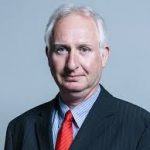
Tag: Daniel Zeichner

  • Daniel Zeichner – 2025 Good Food Cycle Speech

    Daniel Zeichner – 2025 Good Food Cycle Speech

    The speech made by Daniel Zeichner, the Secretary of State for Environment, Food and Rural Affairs, in Bradford on 15 July 2025.

    Well, good afternoon everybody and thank you. First of all, thank you to Andrew, and to all our brilliant contributors – really fantastic.

    Politicians often say they’re really pleased to be in places. And I am pleased to be in places – but I have been really thrilled to be here. I’ve not been to Bradford before, and I’ve been absolutely knocked out by what I’ve seen this morning. I’m so pleased to be here.

    I’m told you’re one of the UK’s youngest, most diverse, and dynamic cities. I represent Cambridge, and we probably could have a little discussion about that – but I think you may be winning! What I know for sure is that you’ve got a rich food culture here. I’ve been seeing it outside, I’ve been hearing about it, and I’m so thrilled that we made the decision that Bradford should be the place to come and talk about the government’s vision for our food system. What we’re calling the Good Food Cycle.

    And I hope that’s a phrase that will stick in your minds – because that’s what this is all about.

    Let me start, though, by thanking some of the people who’ve made this morning possible: Bradford 2025, the local council – I’m delighted to be here working with you – and Inn Churches. Very impressed by the work you’re doing.

    I’ve heard about Jamie Oliver’s Ministry of Food, I’ve seen some of the demonstrations that are being done outside with some of the children – I’ve met some of the children – who are extraordinarily confident and well-informed about raw beans! Very good for them!

    Living Well, the wider community, all the efforts being made to empower, educate, and inspire as many people as possible to cook great-tasting, healthy food for themselves and their families. I think this project here, which I’ve been hearing about – clearly a long time in the making – what a fantastic achievement in this year of 2025.

    It really does show how communities, local government, food producers and processors can work together for the community. Because it shows that good, healthy food can be accessible to everyone, and help bring communities together.

    And just in my brief tour around, I could see how that’s being brought to life.

    I’m told it’s £31 million of investment into the heart of Bradford – it shows what can be done to support local food producers, what you’re making, and how we used to have those strong local food production systems. What a chance to re-energise that!

    But of course, this sits in a wider context – one that includes household-name food businesses with a national footprint, like Morrisons, like Marks and Spencer. They all play a part in our national food system.

    And let’s pay tribute to that national food system, because it is one of the most extraordinary and advanced in the world. Huge, huge things. I remember, I was the shadow minister during the Covid crisis, and there was a point where it wasn’t entirely clear that we could carry on feeding the nation. But people stepped up. And it really showed what an amazing system this is.

    But we also have to be aware that the current food system does have some challenges.

    Henry Dimbleby – a lot of you will be aware – did a lot of work a few years ago on this. He called it the junk food cycle. Which, at one level, is harsh. But what he was pointing out was that there are internal dynamics within the system that keep producing negative feedback loops.

    That’s the thing we want to address.

    I think it can be addressed. I think there are many people in this room who have been working on this for many, many years. But it’s possible to do something about it. To do it differently.

    And that’s why I’ve come here today – to launch what we’re calling the Good Food Cycle. We think it’s a really significant step in the change we want to take together.

    And I think this is actually a very special moment because it’s the first time, as far as I can see, that the whole of government is aligned on a vision for the food system, looking ahead to the future. And it’s one which puts people and the planet at its heart.

    Now, we haven’t done this alone. This is not just about government. We’ve worked across the food system.

    Sarah [Bradbury, IGD CEO] has been saying this – and our colleagues involved in the systems process have told us too – we’ve worked with industry, trying to do what only government can do: convene and coordinate action on food.

    And the reason we’re doing this is not just because it’s a good thing to do – it’s because what we’re hearing from people, right across the country, across generations and communities, is that this is really, really important.

    Because the one thing we all do – is eat. And we should take joy and celebration in that. It’s really important.

    So, over the last six months – in the early part of this government – we’ve spoken to over 400 individuals. That’s been coordinated through the process – thank you to everyone who helped make that happen.

    We’ve heard from organisations, from businesses. We’ve been asking the question: What would a good food system look like?

    I’m very grateful to the people who’ve been sitting on the Food Strategy Advisory Board – some of you may have read about that – Sarah has been providing the secretariat and more; keeping together a complicated group of people with very different views, but we’re working well together – and the Systems Advisory Council. Also, the F4 – that’s the grouping of the key parts of industry. All of them have been involved in this discussion. So many people from academia as well – I see leading academic figures locally.

    All have given time and effort to help us develop what we believe is a shared vision.

    [Political line removed]

    Well, I’m absolutely determined, as the food minister, that we will not make that mistake.

    We will listen. We’ll work alongside those in the food system who make key decisions – and also those who play key roles in that system. Whether that’s a supermarket boss, or someone who’s making the Sunday lunch. Or someone working in a shop.

    All those people are going to be involved in this discussion.

    This is a vision for a healthier, more affordable, sustainable, and resilient 21st-century UK food system that grows the economy, feeds the nation, nourishes people, and protects the environment and climate – now and in the future.

    So, for the next steps to make our Good Food Cycle vision a reality, we’ve identified ten priority outcomes that we’ll be working with people to deliver.

    Those outcomes are focused on:

    • Ensuring everyone has access to healthier and more affordable food
    • Creating the conditions for a thriving and growing food sector, with more investment in healthy, sustainable, affordable food
    • Ensuring a secure, sustainable and resilient food supply
    • Building on vibrant local food cultures – like we’ve seen here in Bradford

    We know there’s a huge prize for investing in the UK food system, which is why we are focused on creating the right conditions to bring money and talent into the UK food system.

    Because when we grow, make, and sell healthy food, frankly, everyone benefits.

    Now, the cost of healthy food is a key concern for working people across the country. And we’re focused on food and nutritional security, from a household to a national level.

    One way to support a secure and more resilient food system is to enhance our food security monitoring – in response to continued volatility from geopolitical and climate shocks.

    It’s critical that this information is transparent and available to people across the food system.

    Today I am committing to a new annual food security statistics publication to be published in the years between the triennial UK Food Security Report, starting this year.

    It will be a more frequent and focused publication, designed to ensure that key UK food security analysis is made public in order to capture emerging trends, and to support both policymakers and the public.

    That’s a government step we’re announcing today – to ensure we continue to support a more secure food supply chain in this country, so we can build a stronger future.

    I believe now is the time to act and make positive change to support our nation. Because with climate, health, and economic pressures growing, we stand to lose out if we don’t act now. Action on improving the food system isn’t just for national government – frankly, it’s for all of us.

    So, I’d like to say just a little bit about what I’ve heard is happening here in Bradford – and I hope you’ll find it as inspirational as I do.

    I understand that in February of this year, the Bradford 2025 UK City of Culture, in collaboration with others, unveiled over 30 innovative projects as part of its Creative Health programme, harnessing the transformative power of culture and creativity to tackle some of the district’s most urgent health and social challenges.

    And we’re already seeing great outcomes from this work.

    The Cookery School, run by Inn Churches in this Market, in partnership with Jamie Oliver’s Ministry of Food,  teaches children and adults how to make healthy, fresh, tasty meals from scratch for themselves and their families.

    Living Well is an initiative led by Bradford Council Public Health, the NHS Bradford and Craven Health and Care Partnership and a wide range of key stakeholders and community groups. They are helping to address the rising levels of obesity and reduce the high levels of early and preventable deaths within the district.

    I’d like to thank the initiatives leaders, the Bradford Council and Bradford District and Craven Health and Care Partnership for all their hard work in helping individuals to live well.

    This government wants to work across the food system to make the healthy choice the easy choice for people in Bradford and across the country.

    But a healthy food system is not only about what we eat, it is also about how our food is produced and the impact it has on the environment.

    When we come together to eat – we are sharing in something incredibly powerful. Culture.

    Which brings me back to why I am here in Bradford today. Culture and Community are closely interlinked. Communities build culture. This building is the site of a shift in culture. One which is about connecting people with their local food producers, as well as supporting them to have the skills to use this amazing bounty of British ingredients.

    Everyone should be able to take pride and joy in what they grow and eat. And we want local producers to grow more of what we eat and communities to eat more of what we grow.

    This Government is here to enable, protect and prepare. Enable health, growth and productivity. Protect food standards. Prepare for the impacts of a more extreme weather and more volatile world.

    This is a cross-government strategy, and we will work collaboratively to ensure we take the right steps to address the needs of the nation.

    This is a milestone in our commitment to transform the food system. So today, we set out what we want to achieve, and why it’s important.

    Now and in the future, we’ll work with citizens, with civil society, with farmers, with fishers, with food businesses to agree how to reach that vision, and how we will measure our progress.

    If we can replicate some of the energy and commitment I have seen today and enable the growth of other Darley Street markets in other towns across the country; enable every class of school children to enjoy healthy, delicious food; enable investment in responsible food businesses , we will be well on our way.

    Friends, together we can make the healthy, sustainable choice the easy and obvious one – for everyone. Together, we can create the Good Food Cycle.

  • Daniel Zeichner – 2024 Speech at the NFU Summer Reception

    Daniel Zeichner – 2024 Speech at the NFU Summer Reception

    The speech made by Daniel Zeichner, the Farming Minister, in the Attlee and Reid Room in the House of Lords on 18 July 2024.

    Thank you so much, Tom, thank you for that very, very kind introduction. Ministers often say they are really pleased to be here. I think you will understand I’m really, really pleased to be here.

    And let’s start by thanking you Tom, David, Rachel, Abby and Aled for the advice and help you have given me in learning this brief over the last four or five years. I suppose I’m in a slightly fortunate position in the sense of having done the shadow brief for four and a half years. I’ve always said, I was always finding out how much I didn’t know. And now I’m in the department, that’s really quite clear. It’s a learning process but you and all your staff have been hugely supportive in providing support for me.

    Can I just start by saying that the Secretary State would have loved to have been here today. He’s actually visiting one of our key facilities in terms of protecting our biosecurity, which I think you will be pleased to hear. He sends his very best wishes and we were delighted to first meet Rachel at the Great Yorkshire Show last week. We wanted to send a very clear message in our first few days. And I listened very closely to the wise words of Lord Carrington and your wise words, Tom. And let me say, absolutely at the outset, I recognise the pressures that so many people are under – very much echoing your points. The climate issues, which have led to flooding in an unprecedented way, is a real challenge. The threat of disease, which we know is all too real. And of course, the cost pressures. And we know that, put together, they’re putting a huge toll on people’s mental health. And let’s be frank, uncertainty. Uncertainty about policy direction and change – all of which contributes to making life really, really hard.

    Now, some of those things are big things that we must address but the policy uncertainty, it is my responsibilities to address. So, I keep coming back and I will keep coming back to the key point the Prime Minister has been making. That it’s about public service, it’s about stability. And this job isn’t actually about us. It’s about you and the people you represent. For a long period of time now, my boss, Steve Reed, the Secretary of State, has been saying “we’re not going to upset the apple cart”. I always thought it’s a slightly interesting phrase really; I’m not sure there are that many apple carts anymore. All those Australian Pink Lady apples, I doubt they come by apple cart.

    But the point is an important one, we absolutely recognise the need for stability. I’d also say that in terms of public service, I look around and I see some familiar colleagues from the last Parliament. And I say, welcome back to all of those. But I also see many, many new people, and a really warm welcome to all the new colleagues. Let me make an offer to all of you.

    In the last Parliament, I think it’s fair to say that some of us enjoyed many a happy day in Westminster Hall or at Defra questions on a Thursday morning. Sometimes it was a slightly small, select band. But I think we always tried to work in in a friendly, positive and collegiate way. And it’s true that some of the big characters have left. Jim Shannon is still here and I’m sure he’ll be making his voice heard. But what I want to say is, I will try and make sure that the debates will continue to be conducted in a spirited, collaborative manner. And I’ll try and work it out in a cross-party way wherever I can because these challenges are bigger than just one particular party or one particular government.

    I’m going to say a little bit about where the current government is coming from. You’ve heard the words: food security is national security. This is absolutely at the centre of Labour’s mission to grow the economy and actually underpins the agendas of multiple government departments and constituencies. So, food security is a shared mission of this government. Absolutely, we share it with you. And to get there, we’ve pledged a number of things and this will be familiar to many from the manifesto.

    We’re absolutely determined to boost rural economic growth and enhance Britain’s food security with a new deal for farmers. We really, really want to seek a new veterinary agreement with the EU to get our food exports moving and absolutely want to make sure that farmers aren’t undercut by low welfare and low standards in trade deals. We want to cut people’s energy bills by switching on GB Energy. We absolutely want to speed up the planning decisions to allow farmers to rapidly plug renewable energy into the grid.

    Whenever I’ve gone around – I’ve done many, many visits over the last couple of years – I’ve always been shocked by crime. It’s a horrible thing. It’s unsettling. In some cases, it’s more than unsettling. It’s downright vicious. I’m talking about people which are not easily intimidated. But some of the stuff people face is really horrible. So, we’re absolutely committed to the first ever cross-government rural crime strategy. Of course, this will cover agricultural theft, fly-tipping and livestock worrying but also that personal sense of people feeling anxious.

    More positively, we want to empower agricultural businesses to upskill the workforce through a reformed apprenticeship levy. Going back to my earlier point, we want to tackle mental health and loneliness, with a mental health hub in every rural community and 8500 more mental health professionals.

    Let me go back to the point about stability and continuity. That’s one of the ironies of the election campaign – the change was the change to stability. And I think that’s an absolutely key point. It’s what many of you need most of all because remember, you are businesses. You’ve got to be able to run effective businesses. And every sector, it’s the same – business needs stability. So, that will be our goal. So, when people have asked me about whether we’re committed to the ongoing transition to the environmental land management schemes – absolutely, we are committed. Of course, there will be tweaks, changes; it’s been an iterative process so far and that will continue to be the case. But we’re absolutely committed to working with you to make sure that this system works for farmers and delivers both food security and also provides the protections we need for our environment.

    And let me conclude on one of the most difficult issues which you raised with me the other day, Tom. We are determined to eradicate bovine TB. The goal is 2038. That’s quite a long time away. But we’re absolutely determined to do it. It’s a complicated issue. Everybody knows that. We absolutely believe we can do a lot through biosecurity, herd management, and speeding up the development of a vaccine that works with an effective test and all the things that need to come in terms of trade and so on. And I know the culling debate is a really, really hard one. Very, very contentious. Huge passion on both sides of the argument. But let me tell you, the Secretary of State has been clear: the current round of licences will be honoured. I absolutely believe we’re only going to eradicate bovine TB by working closely and constructively together to use all the science and everything that we’ve got to beat it. We are going to beat it. I tell you, I’ve already said to the department, that is my top priority. So, you have my assurance.

    In conclusion, we’re committed to supporting farmers and rural communities to boost Britain’s food security, protect and enhance the environment and grow the rural economy. We absolutely want to increase confidence and build trust between farmers and government. And I so look forward to working with you, Tom, and everyone else here throughout this Parliament to deliver the practical policies that are needed to achieve that mission. Thank you very much.

  • Daniel Zeichner – 2023 Speech on Bee-killing Pesticides in Agriculture

    Daniel Zeichner – 2023 Speech on Bee-killing Pesticides in Agriculture

    The speech made by Daniel Zeichner, the Labour MP for Cambridge, at Westminster Hall, in the House of Commons on 1 February 2023.

    It is a pleasure to serve with you in the Chair, Ms Nokes. I am grateful, as ever, to my hon. Friend the Member for Plymouth, Sutton and Devonport (Luke Pollard) for securing yet another debate on this important topic, and for drawing attention to the attached petitions. As ever, his introduction was full and thorough, and I will echo many of his points.

    I commend other Members for their contributions. The hon. Member for Brighton, Pavilion (Caroline Lucas) hit the nail on the head in highlighting the contradiction between this decision and the Government’s wider aspirations. I very much enjoyed the account from my hon. Friend the Member for Wirral West (Margaret Greenwood) on the work done by Flourish, as well as hearing about the urban bee corridors that my hon. Friend the Member for Plymouth, Sutton and Devonport mentioned. A lot is being done on that in many places, including in my city of Cambridge, where Cambridge City Council is doing important work on it.

    I was very pleased to hear the first Westminster Hall contribution from my hon. Friend the Member for City of Chester (Samantha Dixon). I must tell her that this is not an entirely typical Westminster Hall debate, because we did not hear from the hon. Member for Strangford (Jim Shannon)—I am sure that he will not mind me saying that—but we normally do. My hon. Friend made important points about run-off, which must be taken seriously.

    So here we are again, Minister—last week, he was a great advocate of following scientific advice, but this week, it is all different. As many here have pointed out, the Government’s decision to issue an emergency authorisation to allow for the use of Cruiser SB—which contains thiamethoxam, a type of neonicotinoid—on sugar beet goes against the advice from the Government’s expert committee on pesticides and the Health and Safety Executive.

    While the UK Government turn against the science, it is ironic that that comes just days after the European Court of Justice ruled that authorising derogations for the use of banned neonicotinoids was prohibited, stopping further applications for emergency use. That means that we are now an outrider, with lower standards than our neighbours. That is not a place that we should be, and it is not a place that Labour would be, because, for us, pollinator health is not negotiable. I said that last year and the year before, and it was as true then as it is now.

    People will look back and ask why on earth this Conservative Government were so slow to act on the damage that is being done. Never mind worthy targets, never mind environmental improvement plans—this decision has been taken here and now. The attack on nature continues for as long as the Conservatives remain in power.

    This is a long-standing debate and, as colleagues have pointed out, the Government have ignored the advice of the panel for three years in a row—they have ignored the science and the advice of the expert committee for three years. We have heard the advice, but I will repeat it: the committee advised against authorising a derogation on Cruiser SB because

    “potential adverse effects to honeybees and other pollinators outweigh the likely benefits.”

    Last week, the Minister said that he believed in science and supported the work of experts, but now that advice is being ignored. I simply ask: why, Minister? I suspect that part of his answer may be the rules that go alongside the use of the Cruiser SB neonicotinoid-treated seeds. A period of time has been specified that must elapse before flowering crops can be planted in the same field. Herbicides must also be used to remove weeds in the field to reduce the exposure of pollinators to insecticides—I am afraid that that provision also adversely impacts pollinators through the reduction of available flowers, but we understand the goal to reduce overall potential risk.

    It will probably be said that the threshold that will allow for its use has been increased this year, from 19% to 63%.We all hope that that threshold will not be reached—it was not the year before last. The truth is, however, that we genuinely do not know whether that will happen or not; it will depend on the weather.

    But we do know for sure that neonicotinoids are extremely harmful to the environment. They affect the nervous system of bees and other insects, leading to their death. I cannot resist repeating what everyone else has said about the 1.25 billion honeybees that can potentially be killed by one teaspoon of the chemical. We all know how critical bees are for pollinating crops. As the brief provided by the all-party parliamentary group on the environment pointed out, wild bees are responsible for pollinating between 85% and 95% of the UK’s insect-pollinated crops. We also know that run-off into waterways and leaching into the soil and nearby wildflowers is a real threat, as the Bumblebee Conservation Trust highlighted in its brief on the impact not just on bumblebees, but on other animals and aquatic life.

    We also understand the wider context, which is very difficult. Virus yellow is a cause of significant yield losses. The National Farmers Union reports that, for some, it is up to 50%. The most complex and serious is that spread by the peach potato aphid, and it is hard to control. In 2020, the sector lost 40% of the national sugar beet crop, bringing down the five-year average yield by 25%.

    Frankly, the weather over the past few months has been really difficult. We all remember the searing heat from last summer—the drought—that hit particularly hard in key beet areas along the A14 and around Bury St Edmunds. And then, just before Christmas, there was a very harsh frost followed immediately by a big temperature rise, resulting in a rapid, rotting thaw. It has been really difficult, and that has been added to by a new pest, the beet moth, which seems to be attracted from Europe by the warmer temperatures here.

    The overall result is that we are short of beet sugar this year, with beet having to be imported by the processor. That is tough on the growers, tough on the processor and adds more costs up the supply chain. With beet becoming a less attractive prospect to many growers, British Sugar already had to pay more to encourage people back into production. None of that is easy, and there are consequences and costs to any decision. I appreciate that, for farmers, it too often feels as though the tools that they need for the job are being systematically taken away. That is very difficult, because nature does not compromise.

    We have to look at alternatives, as British Sugar and the NFU acknowledge in their helpful briefings. There are high hopes for varieties resistant to virus yellows and there is potential for the use of gene editing to secure that resistance. I hope that the Government follow our advice on the regulatory structures needed to make that happen. I am told that there is already a variety resistant to two virus yellow strains, but it is expensive and there is a yield penalty. I am also told that yield protection insurance is available, but again, that incurs more costs. Those are difficult decisions.

    There are things that we can do, some of which have been outlined by other Members. We can develop non-chemical approaches, such as boosting beneficial insects, cover crops, better rotation and maintaining good farm hygiene. There is evidence that some farms have had success by adopting such measures. We should move much more quickly on adopting integrated pest-management systems. Ironically, as has been explained, that was part of the sustainable farming incentive package that the Government announced last week, and we welcome that. So I say to the Minister: be bold on that, listen to the scientists and get away from falling back on neonicotinoids, which we know do so much harm.

  • Daniel Zeichner – 2023 Speech on the Agricultural Transition Plan

    Daniel Zeichner – 2023 Speech on the Agricultural Transition Plan

    The speech made by Daniel Zeichner, the Shadow Minister for Food, Farming and Fisheries, in the House of Commons on 26 January 2023.

    I thank the Minister for advance sight of the statement. It provides detail following announcements made not to this House, Mr Deputy Speaker, but to the Oxford farming conference some weeks ago. It will be scrutinised closely as farmers rightly try to work out what it will mean for them. With intense cost pressures on fertiliser, fuel and labour supply, many people are hurting and worrying. At the same time, the reduction in basic payments moves inexorably onwards. For people on the margins, especially in the uplands, the withdrawal of that essential support will make life harder and harder. Next year, half of it will be gone and the value of the other half will be eroded substantially by inflation.

    So what is on offer today? Not nearly enough, I am afraid. There are more than 100 pages of complexity. There are lots of schemes, which are worthy in themselves, but in far too many cases, I fear they will be insufficiently attractive. There is a risk that take-up will be very low, as we have seen with the SFI so far, with just 224 paid out last year, compared with the over 80,000 receiving basic payments. I hope take-up improves—we want these schemes to work—but we have real doubts. Will the Minister tell us how much of the £1 billion already cut from farmers will go back to them this year through environmental land management schemes? How many people does he expect to take up the SFI in this calendar year? I welcome the reference to tenant farmers, but can he guarantee access to those schemes, because he will be aware of the issues highlighted in the Rock review?

    There are also real questions about the environmental benefit. In the absence of a whole-farm approach, there is real risk, particularly on countryside stewardship, that the Government will pour money out to people to do pretty much what they already do and then intensify alongside that. Will the Minister tell us today what measures of environmental improvement are in place to ensure that public goods are really being secured in return for public money? Crucially, what impact does this all have on our food security? Will he tell us today whether we produce more or less food in this country this year as a consequence of these changes?

    It is fully three years since we discussed the Agriculture Bill in Committee. I asked many of the same questions then and got vague answers. We will soon be halfway through the so-called transition. The Government have been good at cutting the funding to hard-pressed farmers, but frankly woeful at guaranteeing our food production here in the UK and enabling the switch to the more sustainable nature-friendly food production system we all want to see.

    Mark Spencer

    I honestly entered the Chamber with optimism. I thought today was the day we would get a positive Opposition able to join the people up and down the country who are being positive about this. I am sure the hon. Gentleman is disappointed we have had positive comments from non-governmental organisations and farming organisations, which seem to be welcoming the plans.

    Let us get to the points the hon. Gentleman made. He said we made announcements at Oxford, but what we announced at Oxford was the lifted payments for countryside stewardship. Today we are announcing the SFI, which is the other scheme. That is on the website now. There are six extra schemes in there, some of which—the low-input grassland and improved grassland schemes, for instance—are designed to help and support exactly those upland farmers he mentioned. There is also support through countryside stewardship to assist with the maintenance of stone walls, so there are lots of things for farmers to embrace.

    The hon. Gentleman asks: can we do both? Can we keep the nation fed and improve the environment? We have full confidence that we can. Looking at the data and at history, this country gets about 1% more efficient year on year in the way we produce food. That means that in 10 years’ time we can produce the same amount of food on 10% less land. I think we can do better than that. With investment in new technology, we can be more productive on the most productive land, and on the margins around those fields we can add true biodiversity and environmental output.

    Let me give a practical example. If we convince farmers not to cut their hedgerows in August or September, as was traditional, but encourage them to cut them in February, that would provide a huge pantry of berries for small birds to feed on throughout the winter. Combining that with support for wildflower strips next to the hedgerows would encourage the development of lacewings and ladybirds, which eat aphids, which are the pests farmers use pesticides on to stop the damage to their crops. That would be a win-win by working with, not against, nature. That is what we want to encourage farmers to do, and that is how we will deliver food security, environmental benefits and better biodiversity.

  • Daniel Zeichner – 2015 Parliamentary Question to the Department for Transport

    Daniel Zeichner – 2015 Parliamentary Question to the Department for Transport

    The below Parliamentary question was asked by Daniel Zeichner on 2015-10-30.

    To ask the Secretary of State for Transport, what plans he has to fund Bikeability beyond 2015.

    Mr Robert Goodwill

    Funding for Bikeability is currently confirmed until the end of March 2016. We will take a decision on future funding for the Bikeability programme beyond March 2016 following the outcome of the Spending Review.

  • Daniel Zeichner – 2015 Parliamentary Question to the Department for Transport

    Daniel Zeichner – 2015 Parliamentary Question to the Department for Transport

    The below Parliamentary question was asked by Daniel Zeichner on 2015-11-09.

    To ask the Secretary of State for Transport, what recent estimate he has made of the proportion of people who (a) died and (b) were injured on the road who were vulnerable road users.

    Andrew Jones

    (a) In 2014, 51 per cent of people killed in reported personal injury road accidents were vulnerable road users – pedestrians, pedal cyclists, motorcyclists and horse riders (899 of 1,775).

    (b) In 2014, 34 per cent of people injured (serious or slight) in reported personal injury road accidents were vulnerable road users (65,606 of 192,702).

  • Daniel Zeichner – 2015 Parliamentary Question to the Department for Transport

    Daniel Zeichner – 2015 Parliamentary Question to the Department for Transport

    The below Parliamentary question was asked by Daniel Zeichner on 2015-11-17.

    To ask the Secretary of State for Transport, if he will extend free bus travel for people with disabilities to include peak hours.

    Andrew Jones

    The statutory minimum bus travel concession scheme applies to off-peak travel when there is likely to be unused operational capacity on buses. Concessionary bus travel applies to bus journeys made between 9.30am and 11.00pm Monday to Friday and all day at weekends and on bank holidays. These times were set out in legislation in the Transport Act 2000. Whilst I appreciate that concessionary pass holders might wish to use buses before 9.30am, in the current economic climate there are no plans to extend the statutory scheme to include peak time travel.

    I would point out that the statutory minimum is indeed just that – a minimum. It remains very much open to each local authority to decide whether to offer its residents local concessions over and above the statutory minimum, including peak hour concessions.

  • Daniel Zeichner – 2015 Parliamentary Question to the Department for Transport

    Daniel Zeichner – 2015 Parliamentary Question to the Department for Transport

    The below Parliamentary question was asked by Daniel Zeichner on 2015-11-19.

    To ask the Secretary of State for Transport, pursuant to the Answer of 10 November 2015 to Question 14816, how much funding was allocated to local authorities for road resurfacing in 2014-15.

    Andrew Jones

    For 2014/15, the Department for Transport allocated £1.133 billion of funding to local authorities in England for highways maintenance, comprising maintenance block funding, block funding top-up and the pothole repair fund, plus the winter weather repair fund which was allocated in March 2014 but where most of the money would have been spent in 2014/15. This sum represents record funding over the two Parliaments from 2005/06 to 2014/15 for local roads maintenance. (Note that in the figure above London is not allocated maintenance block funding). It is for local authorities to determine how this money is spent, according to local priorities. This includes road resurfacing, as well as other work on the highways network, which includes roads, street lighting and bridges.

  • Daniel Zeichner – 2015 Parliamentary Question to the Ministry of Justice

    Daniel Zeichner – 2015 Parliamentary Question to the Ministry of Justice

    The below Parliamentary question was asked by Daniel Zeichner on 2015-11-30.

    To ask the Secretary of State for Justice, if he will bring forward legislation to encourage the greater use of non-custodial sentencing options for driving offences where danger was caused but with no evidence of intent or wilful risk-taking on the part of the driver.

    Andrew Selous

    Parliament sets the maximum penalties for driving offences and it is for the courts to decide what sentence to impose, taking into account aggravating and mitigating factors of the offence and the offender, and in line with the sentencing guidelines. The previous Secretary of State established a review into these issues. We are considering how to take this forward. My right honourable friend the Secretary of State is meeting colleagues to discuss this issue in the new year.

  • Daniel Zeichner – 2015 Parliamentary Question to the Department for Transport

    Daniel Zeichner – 2015 Parliamentary Question to the Department for Transport

    The below Parliamentary question was asked by Daniel Zeichner on 2015-12-10.

    To ask the Secretary of State for Transport, when he plans to give local authorities the power to enforce moving traffic contraventions under the provisions of the Traffic Management Act 2004.

    Andrew Jones

    There are no plans to do so at present.