
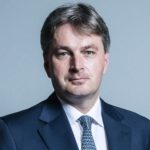
Tag: Daniel Kawczynski

  • Daniel Kawczynski – 2023 Parliamentary Question on Broadband Coverage in Rural Areas

    Daniel Kawczynski – 2023 Parliamentary Question on Broadband Coverage in Rural Areas

    The parliamentary question asked by Daniel Kawczynski, the Conservative MP for Shrewsbury and Atcham, in the House of Commons on 26 January 2023.

    Daniel Kawczynski (Shrewsbury and Atcham) (Con)

    What progress her Department has made on expanding broadband coverage in rural areas.

    Selaine Saxby (North Devon) (Con)

    What progress her Department has made on expanding broadband coverage in rural areas.

    The Minister of State, Department for Digital, Culture, Media and Sport (Julia Lopez)

    I wish to echo your words about the Holocaust Memorial Day Trust’s important work, Mr Speaker.

    We are investing £5 billion through Project Gigabit to deliver lightning-fast broadband to hard-to-reach areas across our country. Last week, we announced that thousands of people living in rural Cornwall will benefit from a £36 million contract. We have now awarded six such contracts, covering up to 681,000 premises. More procurements are in the pipeline and we have also upped our voucher scheme so that more premises can benefit.

    Daniel Kawczynski

    I thank my hon. Friend for that answer. Obviously, I am delighted that last week we secured nearly £19 million from the levelling-up fund for Shrewsbury town centre, but we will never really have levelling up across the whole of the United Kingdom unless rural parts of our constituencies have broadband coverage commensurate with metropolitan areas in coverage and speed. What is she doing specifically to make sure that improvements are made in the county of Shropshire?

    Julia Lopez

    My hon. Friend is right to talk about the importance of digital connectivity to the whole levelling-up agenda, which is why we are prioritising our procurement to some of the really tough-to-reach parts of the country that have been poorly served by broadband previously. I know that he has been campaigning hard on these issues since 2015. He has good superfast coverage now in his constituency, but I appreciate that gigabit is not where it should be in his county. I am pleased to say that our Mid West Shropshire procurement is going to be awarded in April to June this year, and I hope that his constituents will benefit from that.

    Selaine Saxby

    The roll-out of rural broadband has made great progress in the past three years. Will my hon. Friend outline when the new framework and guidance for fibre community partnerships and the gigabit roll-out will be available, so that the roll-out can continue at pace across North Devon?

    Julia Lopez

    I thank my hon. Friend, because the progress has been substantial and she has been a key part of that by making sure that political pressure is maintained to get this kind of connectivity to places such as her constituency. On the fibre community partnerships, Openreach temporarily paused the registration while the supplier worked through the current requests. We have been working closely with Openreach to assist its review of that scheme. We hope it will be reopening it as soon as possible, but she will be pleased to hear that we are also on track to launch the Devon and Somerset procurements in April. Again, I hope that her constituents will stand to benefit from that.

    Drew Hendry (Inverness, Nairn, Badenoch and Strathspey) (SNP)

    I recently met people from CityFibre in my constituency to celebrate the roll-out of full fibre in Inverness. CityFibre is now moving into the rural areas, and it has taken the full fibre coverage from 0.8% to 60%. What steps is the Minister taking to ensure that companies such as CityFibre, working in partnership with local councils and others, can continue to operate in this market as there is this competition, and that they have the ability to operate in and expand into rural areas?

    Julia Lopez

    I thank the hon. Gentleman for his constructive intervention and question. CityFibre been fundamental in driving stiff competition in this area, which has really accelerated the roll-out. We thank CityFibre and other altnets and providers for all the work they are doing. We absolutely prioritise having a competitive framework, because we think it has been so crucial to making sure that areas such as his are covered.

    Angus Brendan MacNeil (Na h-Eileanan an Iar) (SNP)

    As has been said, if levelling up is to mean anything, it would mean it in broadband. Often, what is needed is just a green cabinet and small amounts of money for rural areas. What confidence can people have that the Government will act in this Parliament? Other countries with a much worse topography have seen their rural areas get broadband years ago. What confidence can people have that the UK is going to act in the next two years—in this Parliament?

    Julia Lopez

    I am always grateful to hear from the hon. Gentleman. I know that his constituency is a very rural one with an island population, which creates particular challenges. Much of the broadband roll-out is being driven by the Scottish Government. Their R100 programme has had some problems, and I have spoken to Ivan McKee about how we can assist with those. We are keeping a very close eye on the matter, because we want to make sure that every part of our country is covered by this connectivity and is not disadvantaged by some of the local ways in which the projects are being managed.

    Esther McVey (Tatton) (Con)

    The Gigabit Broadband Voucher Scheme is not working as intended in the smaller rural villages of Tatton. The community groups have found that the scope of the local authority contract includes commercially viable areas, but excludes the remote areas. I thank the Minister for being very helpful, but, ironically, the more work that we did, the more we exposed the weaknesses. Will she meet me, representatives of Lower Peover and Building Digital UK to solve the issue?

    Julia Lopez

    I thank my right hon. Friend for all the work that she has done to make sure that Cheshire is connected. I have looked at the issues of Lower Peover. In particular, she highlights challenges with the voucher scheme. I want to assure her that we have upped the amount that can be claimed to £1,500 per premises. I am always happy to meet hon. Members on these issues, but I also hold BDUK surgeries regularly, so please book in for those, but, of course, I will meet her personally to discuss this.

    Jim Shannon (Strangford) (DUP)

    I thank the Minister for her answers and for the help that the central Government at Westminster give to Northern Ireland for rural broadband. One issue is banking, online shopping and postal services. Has the Minister had the opportunity to assess how, in relation to rural broadband, these things impact on banking services in rural areas? We are moving forward to new technology and new times. We need help.

    Julia Lopez

    The hon. Gentleman highlights just how important good connectivity is to accessing all the services that are going online. One great thing about Northern Ireland is some of the progress that it has made on gigabit connectivity from its contract with Fibrus, and we thank Fibrus for all that it has done. I am happy to look into any of the issues that he raises, but, as I have said, he highlights very well just why it is so important that people do have that connectivity.

    Mr Speaker

    I call the shadow Minister.

    Stephanie Peacock (Barnsley East) (Lab)

    Thank you, Mr Speaker. I wish to begin by echoing your words about Holocaust Memorial Day.

    From April, families across the country will face a 14% rise to their broadband bills, but, even before that increase, there were already more than 1 million households struggling to pay for the internet. Expanding gigabit coverage is vital, but it is pointless if families cannot afford a broadband package. How will the Department work with Ofcom to examine the impact of mid-contract price increases and wholesale prices rising by inflation?

    Julia Lopez

    I thank the hon. Lady for her question. She is right to highlight the cost of living challenges that are affecting so many households. We have worked hard on this. It is important that we have a stable regulatory framework that allows companies to invest, but we have hitherto had some of the most competitive telecoms prices in Europe and consumers have benefited from that. In relation to those who are really struggling with their bills, we have done a lot of work with telecoms providers on social tariffs. Unfortunately, the uptake of those tariffs is not where it should be, so I ask every Member of this House to help us raise awareness, because their constituents can get deals from as little as £10 a month. Trying to get them that connectivity is so important to people’s job chances, life chances and so on.

  • Daniel Kawczynski – 2023 Parliamentary Question on the Holocaust Memorial Day in Schools

    Daniel Kawczynski – 2023 Parliamentary Question on the Holocaust Memorial Day in Schools

    The parliamentary question asked by Daniel Kawczynski, the Conservative MP for Shrewsbury and Atcham, in the House of Commons on 16 January 2023.

    Daniel Kawczynski (Shrewsbury and Atcham) (Con)

    What steps her Department is taking to commemorate Holocaust Memorial Day in schools.

    The Minister of State, Department for Education (Robert Halfon)

    Many schools and colleges already mark Holocaust Memorial Day—I have attended such a remembrance service at Harlow College—and they work closely with the Holocaust Memorial Day Trust and the Holocaust Educational Trust, two institutions that the Government support. That is all the more important given the 128 incidents of antisemitism in one year in our higher education institutions, and the fact that, sadly, such incidents are now at an all-time high.

    Daniel Kawczynski

    As well as educating children about the horrors of the holocaust and the second world war, can we take the opportunity to educate children about the tremendous courage, bravery and sacrifices of the Righteous Among the Nations? Many people on the continent gave up their lives to protect their Jewish friends and neighbours. One example was a member of my family, Jan Kawczynski, his wife Helena and their 13-year-old daughter Magdalena, who were all shot by the Germans for protecting and hiding their Jewish friends and neighbours on their estate in western Poland. As well as educating children about the misery of the holocaust, we must give them inspiration from the fact that many of our brothers and sisters in occupied Europe made the ultimate sacrifice to protect friends and neighbours of the Jewish faith.

    Robert Halfon

    Hear, hear. It was very moving to hear of the experience of my hon. Friend’s family, and I entirely agree with him: we must teach and remind people that there were many righteous Gentiles who suffered while doing everything possible to save Jews. A famous Polish lady, Irena Sendler, saved 2,000 Jewish children from the Warsaw ghettos, and was remembered in a special exhibition in the House of Commons in 2018, which I was pleased to attend. My hon. Friend has made a powerful point, and I am sure that schools up and down the country will be listening to what he says.

  • Daniel Kawczynski – 2015 Parliamentary Question to the Foreign and Commonwealth Office

    Daniel Kawczynski – 2015 Parliamentary Question to the Foreign and Commonwealth Office

    The below Parliamentary question was asked by Daniel Kawczynski on 2015-12-11.

    To ask the Secretary of State for Foreign and Commonwealth Affairs, what steps the Government is taking to prevent the inadvertent use of Libyan financial assets for the funding of militias in that country.

    Mr Tobias Ellwood

    Funding of militias by the Libyan Government dates from the immediate aftermath of the 2011 revolution. The ongoing conflict has made it difficult for subsequent governments to regularise the situation. We welcome the announcement that the Libyan political dialogue members are expected to sign the Libyan Political Agreement. A ceasefire will be essential in order for a Government of National Accord (GNA) to operate. It will be crucial for the new GNA to quickly integrate supportive militias into a regularised national budgetary and security framework.

    As underlined at the Rome Conference on 13 December, the United Kingdom stands ready with our international partners in supporting a new Government of National Accord in restoring stability, including economic, technical and security assistance, as requested.

  • Daniel Kawczynski – 2016 Parliamentary Question to the Foreign and Commonwealth Office

    Daniel Kawczynski – 2016 Parliamentary Question to the Foreign and Commonwealth Office

    The below Parliamentary question was asked by Daniel Kawczynski on 2016-02-03.

    To ask the Secretary of State for Foreign and Commonwealth Affairs, what steps the Government is taking to support the House of Representatives in Libya, Tobruk and General Haftar to take over the running of the state of Libya.

    Mr Tobias Ellwood

    The UK strongly supports the Libyan Political Agreement (LPA) signed at Skhirat on 17 December by the majority of the Libyan delegates to the UN facilitated political dialogue, and by a wide range of representatives of Libyan society, municipal leaders and political parties. The Agreement paves the way for a Government of National Accord (GNA) and was unanimously endorsed by the UN Security Council Resolution 2259. The House of Representatives, which endorsed the agreement with some reservations on 25 January, has a key role under the LPA. To ensure a lasting peace in Libya, we urge all parties to quickly take the necessary steps outlined in the Agreement, including the agreement of key leadership positions, to create a Government of National Accord based in Tripoli. Only a unified national government can begin the difficult work of establishing effective, legitimate governance, restoring stability and tackling the threat posed by Daesh.

  • Daniel Kawczynski – 2016 Parliamentary Question to the Foreign and Commonwealth Office

    Daniel Kawczynski – 2016 Parliamentary Question to the Foreign and Commonwealth Office

    The below Parliamentary question was asked by Daniel Kawczynski on 2016-04-08.

    To ask the Secretary of State for Foreign and Commonwealth Affairs, what the Government’s policy is on supporting proposals for a new Libyan government involving restoration of a monarchy and a return to the 1951 Libyan Constitution.

    Mr Tobias Ellwood

    The UK, along with our international partners, is focused on working closely with the Government of National Accord (GNA) as the only legitimate government in Libya. It is clear the GNA, agreed after more than a year of political talks between a range of Libyan parties, enjoys clear majority support as the institution to govern the country.

    It is for the Libyan people to decide whether they want to pursue proposals for the restoration of the monarchy and return to the 1951 Libyan Constitution. There is no strong evidence that these proposals have broad support at this time.

  • Daniel Kawczynski – 2016 Parliamentary Question to the Department for Education

    Daniel Kawczynski – 2016 Parliamentary Question to the Department for Education

    The below Parliamentary question was asked by Daniel Kawczynski on 2016-09-02.

    To ask the Secretary of State for Education, what the annual funding from the public purse is for English Speakers of Other Languages schemes.

    Robert Halfon

    Funding for English for Speakers of Other Languages is not ring-fenced but forms part of the Adult Education Budget (AEB). Providers will use their AEB allocation to put on appropriate provision based on their judgement of the economic and social needs of their local area. We expect that this will include ESOL where there is significant demand.

    In addition, the Government has pledged up to £10 million over five years for a jointly funded DfE and Home Office programme to enable Syrian refugees across the UK to access language tuition and integrate into British society.

  • Daniel Kawczynski – 2015 Parliamentary Question to the Foreign and Commonwealth Office

    Daniel Kawczynski – 2015 Parliamentary Question to the Foreign and Commonwealth Office

    The below Parliamentary question was asked by Daniel Kawczynski on 2015-12-11.

    To ask the Secretary of State for Foreign and Commonwealth Affairs, what assessment his Department has made of the implications for future Government policy of the suspension of the Temporary Financial Mechanism on Libyan assets following the 2011 revolution in that country.

    Mr Tobias Ellwood

    The Temporary Financial Mechanism (TFM), established by the Contact Group in Doha in 2011, was a temporary response to the urgent financial needs of the new Libyan National Transitional Council, intended to be used until the new Libyan administration was able to take control of Libyan state assets and revenues. The TFM was used to provide a range of critical financial support, including the import of refined fuel, the treatment of injured Libyans, and family support payments to Libyans who had depended on government welfare payments.

    Our focus now is on supporting the expected signature of the Libyan Political Agreement and the establishment of a Libyan Government of National Accord (GNA). In addition to restoring stability and dealing with the threat of terrorism in Libya, a priority for the new GNA will be returning oil and gas production to pre-crisis levels to sustain stability and growth to the benefit of all Libyans.

  • Daniel Kawczynski – 2016 Parliamentary Question to the Ministry of Justice

    Daniel Kawczynski – 2016 Parliamentary Question to the Ministry of Justice

    The below Parliamentary question was asked by Daniel Kawczynski on 2016-02-04.

    To ask the Secretary of State for Justice, what training is available for judges and barristers to assist them when questioning child witnesses in cases involving sexual offences.

    Mr Shailesh Vara

    Judicial training is a judicial matter and fulfilled by the Judicial College, which reports to the Lord Chief Justice. Training for barristers is a matter for their own professional bodies.

    The Judicial College have advised me that a workshop on the cross examination of vulnerable witnesses is incorporated into their Serious Sexual Offences Seminar. This is mandatory training for all judges who have been authorised to hear cases involving serious sexual offences.

  • Daniel Kawczynski – 2016 Parliamentary Question to the Foreign and Commonwealth Office

    Daniel Kawczynski – 2016 Parliamentary Question to the Foreign and Commonwealth Office

    The below Parliamentary question was asked by Daniel Kawczynski on 2016-04-08.

    To ask the Secretary of State for Foreign and Commonwealth Affairs, what steps the Government is taking through its membership of the UN Security Council to achieve (a) democratic sustainability, (b) economic viability and (c) physical security in Libya.

    Mr Tobias Ellwood

    The UK continues to play an active role in the UN Security Council in supporting the Government of National Accord (GNA) as the only legitimate government in Libya, endorsed unanimously by the UN Security Council Resolution 2259 (2015). That resolution, drafted by the UK, highlighted the importance of the Libyan State financial institutions, including the National Oil Corporation, the Central Bank of Libya, and the Libyan Investment Authority, continuing to function for the benefit of all Libyans, and stressed the need for the GNA to exercise sole and effective oversight over them as a matter of urgency.

    The UK also worked in the UN Security Council for the adoption of Resolution 2278 (2016) on 31 March, which renewed measures against illicit oil exports from Libya, extended the mandate of the Expert Panel assisting the UN Libya Sanctions Committee, and affirmed the Security Council’s readiness to consider changes, when appropriate, to the UN asset freeze at the request of the GNA.

  • Daniel Kawczynski – 2016 Parliamentary Question to the Department for Education

    Daniel Kawczynski – 2016 Parliamentary Question to the Department for Education

    The below Parliamentary question was asked by Daniel Kawczynski on 2016-09-02.

    To ask the Secretary of State for Education, what role Ofsted has in its (a) reports and (b) other work in monitoring the level of integration of asylum seekers and refugees in schools.

    Nick Gibb

    Ofsted’s role is to inspect and report on the education provided by a school for all pupils, including all groups of pupils. Where asylum seekers make up part of the cohort, this will be included in the contextual information about the school.