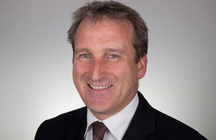
Below is the text of the speech made by Damian Hinds, the Secretary of State for Education, at the Association of School and College Leaders’ Conference in Birmingham on 10 March 2018.
I’m delighted to have this opportunity to speak directly to school and college leaders here at ASCL – two months into the job.
Secretary of State for Education is a hugely exciting role to be taking on. But I also feel the weight of responsibility, the enormous responsibility of working with this whole sector – the lecturers, the social workers, and, of course, with teachers and with school leaders like yourselves.
What you and your teams do is one of the highest callings, the noblest of roles, with an impact on our society, far, far into the future.
In my first couple of months, I have had the opportunity to visit some of our nurseries, schools and colleges in different parts of the country.
And, everywhere I’ve visited, I have been so struck by the hard work, the care, the imagination shown by teachers and leaders – their dedication to doing the best for their pupils.
So, I’m going to begin today with a thank you.
We have, together, been striving harder than ever to make sure every child in this country gets the very best education – so that when they finish their formal education they have the knowledge, the skills and the qualifications that set them up for life, whatever path they take.
A core part of our approach has been to hand power back to headteachers, because we know you are the ones best placed to make the right decisions for your schools.
And thanks to your efforts, and to the dedication of teachers across the country, our schools are improving.
Since 2010, there are now 1.9 million more children attending good or outstanding schools. More children are studying the key subjects that can keep their options most open. And the attainment gap between disadvantaged children and their more affluent peers has shrunk by 10% since 2011.
Our national curriculum and the new rigorous GCSEs have put England’s system on a par with high performing countries.
And we will look to keep raising our game, investing in the vital subjects of the future like maths, coding and modern languages; making sure that the next generation is best prepared to face the challenges and opportunities that lie ahead.
I know that education is, above all, a people business. Syllabus, technology, structures – these things all matter. But ultimately it is about people: the teacher, the head teacher, the lecturer, the support staff.
There can be no great schools without great teachers. To motivate children, to make knowledge meaningful, to inspire curiosity. The quality of teaching matters more than anything else; and it matters even more for disadvantaged pupils.
Right now, we have so many brilliant teachers in our schools – the best generation of teachers yet. And my top priority is to make sure this does remain an attractive and fulfilling profession.
But, with rising pupil numbers, and a competitive employment market, I do recognise that employment and retention are difficult for schools – and it is not getting easier.
And, clearly, one of the biggest threats to retention, and also to recruitment, is – as Geoff (Geoff Barton, ASCL general secretary) says – on workload.
Too many of our teachers, and our school leaders, are working simply too long hours – and too often on tasks that the evidence shows are not helping children to learn.
We need to get back to the essence of successful teaching; strip away the workload that doesn’t add value and give teachers the time and the space to focus on what actually matters. Trust teachers to teach. That’s in the interests of teachers but it is also in the interests of children.
As Geoff has set out you, as leaders of your schools, you have the power to drive real change. You are the ones who can help to meet this challenge directly and it is, ultimately, your actions that will make the most difference.
But I fully understand that you don’t operate in a vacuum, you react to, you respond to, you operate in the context and climate around you. And two of the most powerful forces in shaping that environment are the Government and Ofsted.
When I talk to teachers one thing I sometimes hear is this question: are we actually all on the same side?
And that’s why I was so keen that today you would see up here Amanda (Amanda Spielman, Chief Inspector for Schools), Geoff and me together, standing together. Because we are all on the same side, and we all need to take collective ownership of the workload burden on schools.
Now I do realise, of course, that I am not the first person to talk about this – I’m not the first person probably to stand here and talk about this.
A lot of work has already taken place, and including in your schools.
But, clearly, we need to go further.
The issue of teacher workload is not new. It is one of the great unsolved issue in schools for well over a decade.
Eight years ago, just before I became an MP for the first time and before the change in government in 2010, I spent a week in a secondary school in my constituency. Now you could make the very legitimate criticism that it wasn’t a typical school and it’s absolutely true that my constituency is a relatively affluent area.
But this was a comprehensive intake, local authority maintained secondary school.
I learnt a lot there. I learnt a lot in that week.
Now I know in the intervening years a lot has changed. But I am also struck by what hasn’t changed in those intervening years; what I hear in schools today, compared to what I heard then, before the change in government in 2010.
And one of the things that hasn’t changed is how often the subject of workload can come up in conversation.
Teachers then were also having to spend too much time on non-teaching tasks out of proportion to how much those things would help children improve.
So as we all know, it isn’t a problem with a quick fix.
It is not as simple as going around searching for bits of bureaucracy that day by day you can cross off.
It is a deep-seated, endemic issue and multiple forces play a part in it – and I want to go through some of those now.
First, I do want to acknowledge the government’s part in this – because the pace of change has been fast these past 8 years, as indeed, to be fair, it was pretty quick in many of the preceding years as well.
These changes have been important and necessary and we are now seeing their positive impact. As I’ve said, schools and teachers have risen remarkably to the challenge and raised standards. But I recognise that you now need a period of greater stability.
That is why – beyond those changes already announced and which are working their way through the system – apart from those, for the rest of this parliament there will be:
– No new additional statutory tests or assessment for primary schools;
– No further changes to the national curriculum; and
– No more reform of GCSEs and A levels.
I will also look at the accountability system and how it can drive unnecessary workload.
I know that the current accountability regime can feel very high stakes for school leaders – and this does then filter down to all staff.
Now, I don’t think anybody can argue that we should dispense with accountability – it is crucial. And we must continue to hold schools to high standards – because children only get one chance at their education and they deserve the best.
But I’m also clear accountability must also lead to the right support, at the right time.
I want the default assumption to be firmly and increasingly about effective support for headteachers, so that they can receive the tailored help they need to help turn their schools around and move them further forward.
I also know that schools can at times feel accountable to multiple masters, and even subject to multiple ‘inspections’. That is why I will be making a statement – following consultation with ASCL and others – to clarify the roles of the different actors in the system.
We do need to ensure that headteachers have clarity about how the system works. We need a transparent, supportive system, where schools know the rules, but they also know the roles, of every player within it.
That is why I want us to work together – government and the Regional Schools Commissioners, Ofsted, local authorities, teachers and unions – to make this a reality.
But what about the immediate challenges in schools?
I think we need to confront the fact that there are practices that have developed and spread based on beliefs about what Ofsted or what the government want to see, or required to see happening in our schools. And that, at their worst, these simply don’t help to improve outcomes for children, but do make life more difficult for teachers.
And so you hear things like:
– we need to colour code our marking like this in this way;
– we need to fill in all these repeated forms or make these data entries about who is making progress and who is not; and
– we need to give the senior leadership team extensive lesson plans every week.
Why? Because Ofsted and others demand this of us.
Yet, Amanda – who you’ll hear from in a moment – and Ofsted are clear that they don’t need all of this. And we’ll hear a little more on that later on.
School leaders are increasingly rejecting these practices and developing more effective strategies.
Such as 15 schools in Wigan which replaced various forms of deep marking with verbal feedback instead, leading to a reduction in workload and improvements in pupil outcomes.
Or Whitley Bay High School which, working with two schools in the North East, have created coherent long-term curriculum plans, making it easier for teachers to share high-quality lesson resources, reducing the time teachers spend making their plans.
Or Linton Village College which replaced onerous and ineffective whole school data drops, empowering subject leads instead to only collect data when it fits with their subject-specific curricula and teaching.
I want all school leaders to be able to trust your teachers and make decisions you think, that you know, are in the best interests of children.
My department has worked with Ofsted on their positive myth-busting work on inspections. And I want to build on this today with the launch of a video, making clear the things that we – and they – do not expect, because there is no evidence that they work.
We want to demonstrate a clear, united approach on tackling workload. And our key message is that you have our backing to stop doing those things that add to workload but don’t actually help children to do better.
No one should be asking you for those things, and no one else should be telling you it is what Ofsted or government expect.
And to anyone who says otherwise – please play them that video.
I am also working with teachers, school leaders, Ofsted and unions to create an online workload reduction toolkit.
This will help schools identify what is eating up teachers’ time away from the classroom and offer practical solutions.
In particular, we need to tackle the propensity of schools to collect more and more data, even when there’s no clear benefit to pupils.
So I am going to bring together a high level group of sector experts and teachers to look at the kind of data and evidence schools are collecting and look at what, and who, is driving that. And they will work with me on a set of actions, which we will publish by the end of the summer term.
As part of this, I also want to look at the role of technology, which Geoff also talked about. In so many other walks of life, modern technology has been a time-saver. But I know for many teachers it can sometimes feel like technology has had the opposite effect – actually adding to the work that needs to be done.
Of course, technology can never replace the role of the teacher in a classroom. And we know that there have been times in the past when technology has been used to promote some of the fads and gimmicks that have spread around the school system – despite a lack of evidence on how this will help children learn.
My goal is to support schools to use technologies in ways that actually reduce the workload burden, while supporting teachers to deliver great lessons.
I understand that if we want to really tackle workload, then we also need to look at the broader questions around teacher recruitment and, particularly, retention.
This needs to begin by setting out an overarching strategy on both.
So, my Department will develop this plan, working with the profession – including ASCL and the teaching unions – identifying clearly what steps we will take. This strategy will cover areas like workload, professional development, career progression, flexible working and entry routes into teaching.
In particular, I recognise that teachers need additional support and the highest quality development in the early years of their career, when the learning curve is inevitably at its steepest. This is what can attract more of the best graduates into teaching, set them up for success and keep them in the profession.
That is why our plans to strengthen Qualified Teacher Status are so important. Our consultation has just finished – with over 2,000 responses – and I’m very grateful to all those of you who took the time to respond.
We will be taking these plans forward, working hand in hand with the profession, and we will set out the next stage of this process by the summer.
I also think it is particularly important that we do more to make sure teachers have ready access to high quality teaching materials that they can choose to draw on, with the confidence that they are used and approved by their peers.
At the heart of great professions is the concept of building on the best practice and body of knowledge that has gone before. And I want to make it easier for teachers to do that throughout their careers.
That is why, as a starting point, I intend to use our new Curriculum Fund to make it easier for schools and teachers to share and access high quality teaching resources.
And I will work with the profession to help teachers to access a broad set of quality curriculum and teaching materials that teachers and leaders can adapt for their schools and classes, without having to write them from scratch.
Finally, we will continue to work on making flexible working more possible, and easier for schools and teachers. The modern world demands this, and if teaching is to remain attractive to the next generation, it is a challenge we will all have to meet.
As part of this, my department will be launching a new recruitment website that will help schools to recruit teachers and reduce costs – and we will adapt this specifically to help teachers to pursue flexible working, including job shares.
Conference, I certainly do not think we’re going to fix all of this overnight – but I do promise to stick with it. I commit to you that I will work with all of you, I will work with ASCL, I will work with the other unions, I will work with Ofsted, I will work with the Regional Schools Commissioners, with teachers up and down country – with every part of our education system.
I think between all of us we have the opportunity to do something materially different here: to change the culture in schools and to reduce workload for the long-term.
As I said at the start, ultimately education is all about people. And my top priority must be to support you as a profession, helping to build on your successes, and making sure that all children get the world-class education they deserve.
And I very much look forward to working with you.