Tag: Comments

  • James Cleverly – 2022 Comments on Direct Flights Between Tel Aviv and Doha for the World Cup

    James Cleverly – 2022 Comments on Direct Flights Between Tel Aviv and Doha for the World Cup

    The comments made by James Cleverly, the Foreign Secretary, on 14 November 2022.

    The UK congratulates Israel and Qatar for reaching an important deal to open direct flights between Tel Aviv and Doha for the World Cup.

    We welcome the commitment that this will benefit football fans in both Israel and the Occupied Palestinian Territories, and foster stronger people-to-people links across the Middle East.

  • Caoimhe Archibald – 2022 Comments on £400 Energy Payments in Northern Ireland

    Caoimhe Archibald – 2022 Comments on £400 Energy Payments in Northern Ireland

    The comments made by Caoimhe Archibald, the Sinn Fein economy spokesperson in Northern Ireland, on 10 November 2022.

    It is now more than six months since people here were promised they would receive £400 to help them tackle soaring energy costs during the cold winter months.

    The DUP’s blockade of the Executive delayed getting this money out into people’s pockets earlier in the year.

    And despite former DUP economy minister Gordon Lyons promising people they would be getting the payment in November, this is looking increasingly unlikely.

    Yesterday British minister Steve Baker was unable to say when the payments will be made.

    That is simply unacceptable.

    People need this payment now as they struggle to heat their homes and we move deeper into winter.

    The British government need to get this money out the door as soon as possible and ensure that people can afford to put the heat on.

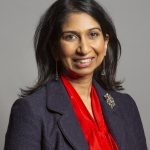
  • Suella Braverman – 2022 Comments on Reducing Number of Asylum Seekers Crossing English Channel

    Suella Braverman – 2022 Comments on Reducing Number of Asylum Seekers Crossing English Channel

    The comments made by Suella Braverman, the Home Secretary, on 14 November 2022.

    We must do everything we can to stop people making these dangerous journeys and crack down on the criminal gangs. This is a global challenge requiring global solutions, and it is in the interests of both the UK and French governments to work together to solve this complex problem.

    There are no quick fixes, but this new arrangement will mean we can significantly increase the number of French gendarmes patrolling the beaches in northern France and ensure UK and French officers are working hand in hand to stop the people smugglers.

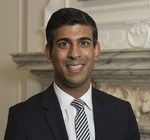
  • Rishi Sunak – 2017 Parliamentary Question on Free Ports

    Rishi Sunak – 2017 Parliamentary Question on Free Ports

    The parliamentary question asked by Rishi Sunak, the Conservative MP for Richmond, in the House of Commons on 18 April 2017.

    From Merseyside to Teesside, ports are a great northern success story. Will my right hon. Friend look into the potential for the creation of free ports throughout the United Kingdom? Free trade zones would increase trade, create manufacturing jobs and boost regional growth, which are all key ingredients of our future economic prosperity.

    Mr Hammond

    My hon. Friend has made the case for free ports, and the Government have heard that case very clearly. We will consider all options that have the potential to support our ambition to see Britain as a great global trading nation, but before making any decisions we shall need to consider carefully not only the advantages that free ports can deliver, but the costs and potential risks associated with them.

  • Rishi Sunak – 2017 Parliamentary Question on the Friarage Hospital

    Rishi Sunak – 2017 Parliamentary Question on the Friarage Hospital

    The parliamentary question asked by Rishi Sunak, the Conservative MP for Richmond, in the House of Commons on 4 July 2017.

    Last week I met doctors and nurses at the Friarage, an excellent small hospital serving a rural population spread over 1,000 square miles. Will my right hon. Friend urge South Tees Hospitals NHS Foundation Trust to do everything it can to ensure the continued provision of emergency care clinicians and anaesthetists at this vital local hospital?

    Mr Dunne

    I am aware that my hon. Friend has taken a strong interest in the number of consultants and anaesthetists available at the Friarage hospital. I will be happy to meet him to discuss his concerns in person.

  • Rishi Sunak – 2017 Parliamentary Question on Reducing Protectionism

    Rishi Sunak – 2017 Parliamentary Question on Reducing Protectionism

    The parliamentary question asked by Rishi Sunak, the Conservative MP for Richmond, in the House of Commons on 6 July 2017.

    I thank my right hon. Friend for giving way and for his powerful and optimistic speech on free trade. On reducing protectionism, does he agree that leaving the customs union will give us the ability to reduce import tariffs on many goods that we do not produce here at home, which will reduce costs for ordinary working families and benefit many developing countries by helping them trade into prosperity?

    Dr Fox

    That is an important point. At this morning’s International Trade questions, we made the argument that being outside the common external tariff will give us freedoms to help many developing countries in a way that we are currently unable to. I hope that that will act as a spur to others taking similar measures, because we will encourage poorer countries to trade their way out of poverty and become less dependent on international aid programmes. I do not think that that is a party political issue, but the question is how best to achieve it in practice.

    On the progress that has been made, we have reduced poverty levels to their lowest in history. As the world’s emerging economies have liberalised trade practices, prosperity has spread across the globe, bringing industry, jobs and wealth where once there was only deprivation. According to the World Bank, the three decades between 1981 and 2011 witnessed the single greatest decrease in material deprivation in human history. It was a truly remarkable achievement.

    The Leader of the Opposition has accused the Prime Minister of following “free trade dogma”. He went on to say that this has often been pursued at the expense of the world’s most fragile economies. In fact, any economist worth their salt can see that free trade has been one of the most potent liberators of the world’s poor. Let us take India as a specific example. In 1993, about 45% of India’s population sat below the poverty line as defined by the World Bank. By 2011, it was 22%—too many, but a phenomenal achievement. It is no coincidence that, in the intervening period, India had embraced globalisation and started to liberalise its economy. It is hard to imagine an international aid programme—even one as generous as our own—that would or could have been so effective on its own.

    Sadly, it is also easy to find examples of where a lack of free trade has harmed the most vulnerable. If we want to see the contrasting results of open and closed economies, we should look across from China to the Korean peninsula, where so much attention is focused today. In 1945, both North and South Korea began from a very similar base, but while South Korea was more embracing of open trade and free markets, despite any shortcomings, Pyongyang turned inwards, with the tragic consequences for its citizens that we see to this day. [Interruption.] I am happy to give way to the hon. Member for Bishop Auckland (Helen Goodman) if she thinks that North and South Korea enjoy the same living standards today.

  • Rishi Sunak – 2017 Parliamentary Question on “Living Within Our Means”

    Rishi Sunak – 2017 Parliamentary Question on “Living Within Our Means”

    The parliamentary question asked by Rishi Sunak, the Conservative MP for Richmond, in the House of Commons on 18 July 2017.

    The Chancellor will be aware that the current cost of Government borrowing is at a historical low, with gilt yields at 1%. Does he agree that, if markets lose confidence in our ability to live within our means, the cost of that borrowing would spiral, costing us billions of pounds? That would mean less to spend on our public services.

    Mr Hammond

    My hon. Friend is right to warn of the danger of a loss of market confidence in UK fiscal policy—I am looking very hard at the right hon. Member for Hayes and Harlington (John McDonnell). If markets lose confidence in UK fiscal policy, they will re-price lending to the United Kingdom. We already spend more every year on servicing our debt than on our armed forces and police services together. It would do a huge disservice to taxpayers in this country if we created conditions that would cause the cost of that debt to rise.

  • Rishi Sunak – 2017 Parliamentary Question on Transport Funding for the North

    Rishi Sunak – 2017 Parliamentary Question on Transport Funding for the North

    The speech made by Rishi Sunak, the Conservative MP for Richmond, in the House of Commons on 6 November 2017.

    Does my hon. Friend agree with the point made by the hon. Member for Bradford South (Judith Cummins) that the Treasury and the Department for Transport need to consider economic development and the rebalancing of the economy as criteria for the allocation of new money, so that it does not go only to the places that are already economically vibrant?

    Kevin Hollinrake

    I absolutely agree. I have looked at the figures in detail and, as my hon. Friend said in his speech, the distribution of central Government spending is much more level before other factors are added in. In London, the money allocated by central Government per person per year is about £40 per person, but if other investment is added in—from the European Investment Bank, local authorities and private finance—that is when the disparity occurs. We have to find mechanisms to make sure that the north gets a fair deal. It is not just about central Government distributing money unfairly; other factors are at work, which is why we need to work across party lines to make sure we can deliver a solution.

    As I said earlier, the way things are now is how they have been for decades—for generations—so we all need to work together. It is not just north versus south; it is principally London versus the rest of the country. We have a big constituency of MPs and businesses right across the country who have a stake in making sure that we get a fair deal, but we need to look behind the broad, headline figures, because it is simply not right that the Chancellor is allocating lots of money to London and not to the rest of the country. Other factors are at work that we need to take into account and find solutions for.

    Once we have found those solutions, there are so many projects that we need to support. It is absolutely right that we should look at northern powerhouse rail or HS3. As my hon. Friend the Member for Cleethorpes (Martin Vickers) said, we need to look at extending the M11 up to the Humber bridge. We need a tunnel across the Pennines. We also need to look at the small regional roads, such as the A59 and the A1079 in my constituency, and particularly the A64, on which a journey of around 40 miles from York to Scarborough can take two hours. We need more funding for the smaller, less high-profile projects that are so critical to our local economies. If we can get the money—if the people holding the purse strings will give us the tools—we can do the job.

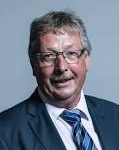
  • Sammy Wilson – 2022 Question on “Obsessive Pursuit of Net Zero”

    Sammy Wilson – 2022 Question on “Obsessive Pursuit of Net Zero”

    The question asked by Sammy Wilson, the DUP MP for East Antrim, in the House of Commons on 9 November 2022.

    In the relentless and obsessive pursuit of net zero, the Government are now adopting policies that are contradictory and, in some cases, dangerous. We are going to import billions of pounds-worth of natural gas from countries who frack that gas, yet we are turning our back on the natural resources we have in our own country, sacrificing revenue, jobs and energy security. We are going to rely more on wind and solar power, the earth metals for which are in the hands of autocratic regimes, especially China. We are importing wood from America to burn in a power station in the United Kingdom at a cost of billions to electricity consumers. Those policies might be welcomed by the chattering classes, but does the Prime Minister understand the bewilderment, frustration and anger of those who struggle to pay their electricity bills and worry about energy security?

    The Prime Minister

    I agree with the right hon. Gentleman about importing liquified natural gas, which is why I am keen to encourage more exploitation of our domestic oil and gas resources in the North sea. He and I are aligned on that. We have conducted a new North sea licensing round, leading to about 100 new licensing applications. That will increase jobs in the UK and our energy security, and that is the right thing to do.

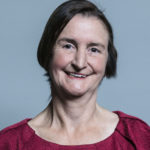
  • Nia Griffith – 2022 Question on Publicly Owned Energy Companies

    Nia Griffith – 2022 Question on Publicly Owned Energy Companies

    The question asked by Dame Nia Griffith, the Labour MP for Llanelli, in the House of Commons on 9 November 2022.

    The Welsh Labour Government are setting up a publicly owned company to accelerate investment in onshore wind and other renewables, thus reducing emissions, increasing energy security and using profit for the public good. Given that onshore wind is the cheapest form of renewable energy, when will the Prime Minister step up to the mark, match the Welsh Government and bring forward an accelerated investment programme for onshore wind across England?

    The Prime Minister

    There has been a slightly chequered history of Labour councils and publicly owned energy companies—in Nottingham, from memory—and that is not a model that we want to emulate. However, we are supporting Wales with the transition. We invested in the Holyhead hydrogen hub, which is a potential future opportunity, and we are looking at nuclear sites and, as we heard from my right hon. Friend the Member for Preseli Pembrokeshire (Stephen Crabb), at the huge potential of floating offshore wind in the Celtic sea, which will also all be good for Wales.