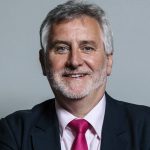
Tag: Clive Efford

  • Clive Efford – 2023 Speech on the Budget

    Clive Efford – 2023 Speech on the Budget

    The speech made by Clive Efford, the Labour MP for Eltham, in the House of Commons on 16 March 2023.

    When I looked at the clock as the Chancellor finished speaking yesterday, I was shocked that his speech had been only an hour. The speech was well padded out. I thought at one stage that he was going to tell us how much the Government planned to spend on paper clips in the next year. He started by announcing that we were not going into a recession, expecting praise for not taking us into a recession that the Conservatives had brought us to the brink of in the first place. It was a bit like an arsonist asking to be thanked, having set light to your house, for then ringing the police. Average energy bills have doubled in the past 18 months, the average mortgage is up by £2,000, and household incomes are lower in real terms than 13 years ago. Those are the worst figures since records began.

    We have had 13 years of cuts to our public services, leaving them in a parlous state, and we went into covid with record numbers on NHS waiting lists—2.5 million people. We now have an estimated 7 million people waiting for hospital appointments. According to a Nuffield Trust report published last year, our NHS is short of 12,000 doctors and 50,000 nurses and midwives, and we will need over 500,000 more NHS and care workers by 2030. Where was anything in the Budget to deal with that crisis? Oh, we did have one thing; we had a tax cut for the wealthiest 1% to keep doctors in the NHS. Only the Tories could turn a crisis in the NHS into an excuse to cut taxes for the wealthiest 1% in this country.

    Someone with a £2 million pension pot will get a tax saving of £275,000. How is that justifiable? Yet next month the tax thresholds will be frozen. For a basic rate taxpayer, that is £500 a year, for a higher rate taxpayer, that is £1,000, but in this Budget it is somehow justifiable to make that tax cut to the richest 1%. It is just not fair. In the past decade, we have seen the Conservatives stand by while a disproportionate share of national income has gone to the wealthiest. The OBR has confirmed that the cost of living crisis means that living standards will fall by 5.7% over the next two years. Average real-terms household incomes are at a 50-year low due to a decade of consistent low growth. The Resolution Foundation’s “Stagnation nation” report, published late last year, shows that in each decade since the 1970s, average household incomes rose by 33% until 2007, but since the Tories took power, weak productivity growth has fed directly into flatlining wages and sluggish income growth, with real wage growth falling below zero in the 2010s.

    The Government’s own figures show that incomes have grown by an average of 9% since 2008—0.7% a year—having grown by an average of 2.2% in each of the previous 20 years. Their excuse is to blame everyone else, but everyone else internationally has been through the same shocks as us. How do the Tories explain the fact that average household incomes in the UK are 16% lower than in Germany and 9% lower than in France, having been higher than both in 2007?

    Wealth inequality in this country has grown under the Conservatives, and a failure to tax the assets of the super-rich is leading to widening inequality. The more wealth someone accumulates, the less tax they pay. The Government should be looking at how we tax wealth and tackle that growing inequality. Since the banking crash in 2007-08, it has become easier to borrow money, which has meant that the wealthiest people have been able to buy assets, and we do not tax those assets. I would like to see a discussion about a tax on wealth above £10 million. A 1% tax on that wealth would raise £11 billion. I have spoken to many people who are in that tax bracket, and they say that a 1% tax on their wealth at that level would not cause them to take flight and go abroad—they would not notice it. No one is going to up their family and their children’s future because they would pay 1% tax on their wealth above £10 million.

    We could equalise capital gains with income tax rates. There is cross-party support for this measure, which could raise £15.2 billion. It is not a radical suggestion, because it is what Nigel Lawson did back in the 1970s. I welcome the fact that the Government are offering tax relief for investment in R&D, because that could reward people who pay their tax in that way.

    It is not fair that people who pay rent to somebody who has bought properties pay national insurance contributions on their wages, but the person they pay rent to does not pay national insurance contributions on the income from that rent. We should look at expanding the range of national insurance to make the system fair. The Labour party supports reform of non-dom status, which would raise £3.2 billion.

    There is money in the system that we can use to resolve many of the problems we face with the crisis in our public services. It is a travesty that, given the strikes we are facing and the crisis in the national health service, there was nothing about that in the Chancellor’s statement yesterday. It is time for a new form of government. It is time for a Government who will tackle inequality and create a fairer taxation system that will benefit the whole country, not leave people to sink or swim. We need an active Government who will be on people’s side, intervene when necessary and do what is necessary to create a fairer and more equitable society.

  • Clive Efford – 2023 Parliamentary Question on Operation Safeguard

    Clive Efford – 2023 Parliamentary Question on Operation Safeguard

    The parliamentary question asked by Clive Efford, the Labour MP for Eltham, in the House of Commons on 10 January 2023.

    Clive Efford (Eltham) (Lab)

    For what reason he triggered Operation Safeguard in November 2022.

    Feryal Clark (Enfield North) (Lab)

    For what reason he triggered Operation Safeguard in November 2022.

    The Minister of State, Ministry of Justice (Damian Hinds)

    There was an unprecedented short-term rate of growth in the requirement for places in adult male prisons in October and November, and Operation Safeguard creates a contingency to maintain headroom should it be needed. Meanwhile, we press on with our programme of estate modernisation and expansion.

    Clive Efford

    I am grateful for that answer. The Prison Officers Association says that the lack of staff is exacerbating the crisis in prison places. The Police Federation says that Operation Safeguard puts its members and the public in danger. Napo says that there is a link between the lack of prison places and the workload crisis, which is leading to an increase in the number of recalls. If Operation Safeguard fails, where on earth will the Government go next?

    Damian Hinds

    As I said, Operation Safeguard is a contingency that provides additional headroom; we are not currently housing prisoners in cells as a result of Operation Safeguard. The hon. Gentleman is absolutely right to identify that physical capacity is one side of the coin and staffing is the other, which is why we are putting so much emphasis on recruitment and retention in the prison service.

    Feryal Clark

    Napo has said that the insufficient capacity to hold prisoners is directly linked to staffing and workload crises in probation, as my hon. Friend the Member for Eltham (Clive Efford) said. Does the Minister agree with Napo’s view that there is a workload crisis in probation services? If so, who caused it?

    Damian Hinds

    That is similar to the point of the hon. Member for Eltham (Clive Efford). Of course, all the services are linked, but as with the Prison Service—it is a fact across many different occupations in the public and private sector—there is a very tight labour market with high rates of employment and low rates of unemployment by historical standards. Recruitment is a challenge, but we are putting a huge emphasis on recruitment into the Prison Service and probation, which fundamentally drives workload. The other side of that is, as always, making sure that we retain staff.

    Mr Philip Hollobone (Kettering) (Con)

    I do not blame my right hon. Friend for triggering Operation Safeguard—in the circumstances, it was sensible—but he would not have needed to if the 12% of the prison population who are foreign national offenders had been imprisoned in their countries of origin. The top three groups are made up of 1,300 Albanians, 800 Polish nationals and 750 Romanians. Can we have more compulsory prisoner transfer agreements so that those people are sent to jail in their own countries?

    Damian Hinds

    My hon. Friend is correct that there are a large number of foreign national offenders in our prisons, and facilitating the movement back to their home country is important. We have had the prisoner transfer agreement with Albania since May 2022, and we are looking at more.

  • Clive Efford – 2015 Parliamentary Question to the Department for Culture, Media and Sport

    Clive Efford – 2015 Parliamentary Question to the Department for Culture, Media and Sport

    The below Parliamentary question was asked by Clive Efford on 2015-11-09.

    To ask the Secretary of State for Culture, Media and Sport, what progress his Department has made on plans to introduce a Horserace Betting Right; and if he will make a statement.

    Tracey Crouch

    Work is continuing on the detailed policy design of the Horserace Betting Right. We will make an announcement in due course.

  • Clive Efford – 2016 Parliamentary Question to the Department for Transport

    Clive Efford – 2016 Parliamentary Question to the Department for Transport

    The below Parliamentary question was asked by Clive Efford on 2016-01-21.

    To ask the Secretary of State for Transport, pursuant to the Answer of 19 January 2016 to Question 22574, for what reasons, during the closure of the Bexleyheath rail line during the week beginning 11 January 2016, (a) Southeastern services on adjacent lines were cancelled, (b) there was a lack of information about alternative services and (c) staff had no information to pass onto customers about alternative services or when replacement bus services would arrive; what systems were put in place to communicate regular updates of information to staff so customers could be given accurate advice; what advice was given to staff regarding assistance for people with disabilities; what steps he is taking to determine whether the responses to the situation from Network Rail and Southeastern were adequate; and if he will make a statement.

    Claire Perry

    Following the unfortunate landslip at Barnehust, it was necessary to close the line serving Bexleyheath in order that repairs could be carried out.

    As a result of the Bexleyheath line closure, Southeastern have had to run more trains on the adjacent lines to provide extra capacity for passengers. This led to minimal cancellations to the scheduled timetable on adjacent lines.

    Information regarding alternative travel arrangements was provided by posters at affected stations, station announcements, on National Rail Industry systems, the Southeastern website and on social media.

    Staff were given regular updates on the alternative travel arrangements and station announcements were made where appropriate. Replacement buses were in operation between Lewisham and Dartford via Bexleyheath in both directions. Other bus services were accepting Southeastern tickets, additionally, Docklands Light Railway and London Underground were accepting tickets where appropriate. Regular updates were provided to station management, who provided briefings to their station staff. The Passenger Assist service was in effect and Southeastern staff were advised to book taxis from stations that were not accessible for those passengers who required them.

    My officials were in regular contact with Southeastern and Network Rail, who ensured that the line was opened as quickly as possible and that passengers were kept informed at all times.

  • Clive Efford – 2016 Parliamentary Question to the Department of Health

    Clive Efford – 2016 Parliamentary Question to the Department of Health

    The below Parliamentary question was asked by Clive Efford on 2016-09-02.

    To ask the Secretary of State for Health, what assessment his Department has made of the implications of Circle Holding plc being awarded the contract to provide musculoskeletal services in Greenwich for other services provided by Greenwich and Lewisham NHS Trust; and if he will make a statement.

    Mr Philip Dunne

    The procurement of local health services by means of competitive tendering is a matter for the local National Health Service.

    However, we are advised that NHS Greenwich Clinical Commissioning Group does not envisage that the recent award to Circle Health of the contract to provide musculoskeletal services will have any implications for other services provided by Lewisham and Greenwich NHS Trust.

  • Clive Efford – 2016 Parliamentary Question to the Department of Health

    Clive Efford – 2016 Parliamentary Question to the Department of Health

    The below Parliamentary question was asked by Clive Efford on 2016-10-17.

    To ask the Secretary of State for Health, what discussions he has had with Greenwich Clinical Commissioning Group and Healthwatch Greenwich on patient involvement in the commissioning process prior to the granting of the contract to provide musculoskeletal services to Circle Holdings PLC; and if he will make a statement.

    Mr Philip Dunne

    The provision of local health services is a matter for the local National Health Service.

    There have been no meetings between Ministers at the Department and Greenwich Clinical Commissioning Group and Healthwatch Greenwich about patient involvement in the commissioning process prior to the granting of the contract to provide musculoskeletal services to Circle Holdings PLC.

  • Clive Efford – 2015 Parliamentary Question to the Department for Culture, Media and Sport

    Clive Efford – 2015 Parliamentary Question to the Department for Culture, Media and Sport

    The below Parliamentary question was asked by Clive Efford on 2015-11-09.

    To ask the Secretary of State for Culture, Media and Sport, what assessment his Department has made of the potential benefit to sport of the introduction of a Sport Betting Right; and if he will make a statement.

    Tracey Crouch

    The government has no plans to introduce a sport betting right.

  • Clive Efford – 2016 Parliamentary Question to the Department of Health

    Clive Efford – 2016 Parliamentary Question to the Department of Health

    The below Parliamentary question was asked by Clive Efford on 2016-02-04.

    To ask the Secretary of State for Health, what progress the Food Standards Agency has made on coordinating steps in partnership with the Medicines and Health Products Regulatory Agency and the National Crime Agency to stop the marketing of Miracle Mineral Solution as a cure for children with autism; and if he will make a statement.

    Jane Ellison

    The Food Standards Agency (FSA) has issued advice that Miracle Mineral Solution (MMS) is not safe and should not be sold as a supplement. It has been working with local authorities across the country to share knowledge, investigate and disrupt the sale of MMS and other similar products.

    Further activity is being conducted with the support of the Medicine and Healthcare products Regulatory Agency and with the involvement of the FSA’s National Food Crime Unit. This activity is ongoing and it would not be appropriate to comment in detail.

    However, the FSA has secured the removal of MMS products from some major marketplace websites, and it has shared information internationally through the National Crime Agency, alerting authorities in other countries to planned seminars at which the use of MMS is promoted.

  • Clive Efford – 2016 Parliamentary Question to the Department of Health

    Clive Efford – 2016 Parliamentary Question to the Department of Health

    The below Parliamentary question was asked by Clive Efford on 2016-09-02.

    To ask the Secretary of State for Health, how many GP practices in Greenwich borough have vacancies for practice nurses; what the consequential cost savings were per practice in (a) 2015-16 and (b) the current financial year to date; and if he will make a statement.

    David Mowat

    The information requested is not centrally held.

  • Clive Efford – 2016 Parliamentary Question to the Department of Health

    Clive Efford – 2016 Parliamentary Question to the Department of Health

    The below Parliamentary question was asked by Clive Efford on 2016-10-14.

    To ask the Secretary of State for Health, whether he has made an assessment of the procedures that Greenwich Clinical Commissioning Group followed when it took its decision to award the contract for musculoskeletal services to Circle Holdings PLC; and if he will make a statement.

    Mr Philip Dunne

    The procurement of local health services by means of competitive tendering is a matter for the local National Health Service.

    We are informed by NHS England that Greenwich Clinical Commissioning Group follows standard NHS procurement procedures and these procedures were followed for this procurement.