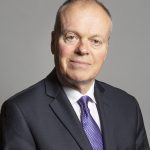
Tag: Clive Betts

  • Clive Betts – 2016 Parliamentary Question to the Department for Culture, Media and Sport

    Clive Betts – 2016 Parliamentary Question to the Department for Culture, Media and Sport

    The below Parliamentary question was asked by Clive Betts on 2016-02-11.

    To ask the Secretary of State for Culture, Media and Sport, how many public libraries have (a) closed and (b) opened in England since May 2010; and how many libraries which were previously run by professionally-qualified staff are now run by volunteers.

    Mr Edward Vaizey

    While the Department for Culture, Media and Sport does not commission specific information relating to the closure or opening of public libraries, or of libraries run entirely by volunteers, the Department does monitor closely proposed changes to library service provision throughout England. Based on desk research undertaken by the Department, we estimate that from January 2010 to January 2016 approximately 110 static public libraries in England closed and at least 77 new public libraries have opened, including relocations to new buildings.

  • Clive Betts – 2016 Parliamentary Question to the Department for Culture, Media and Sport

    Clive Betts – 2016 Parliamentary Question to the Department for Culture, Media and Sport

    The below Parliamentary question was asked by Clive Betts on 2016-06-06.

    To ask the Secretary of State for Culture, Media and Sport, what recent assessment the Government has made of the contribution of the work of the Olympic Legacy Park in Sheffield to breaking down distinctions between sport and wider physical activity.

    David Evennett

    Government is committed to increasing physical activity as set out in our sport strategy, ‘Sporting Future: A New Strategy for an Active Nation’ published late last year. That strategy removed the artificial barriers between sport and wider physical activity, broadening Sport England’s remit to include cycling, dancing and walking. The recently published Sport England strategy, ‘Towards an Active Nation’, sets out their plans to implement this new approach.

    I recognise that creating a more active society will require action by a range of bodies working together over a significant period of time. I therefore welcome the work of Legacy Park Ltd in Sheffield in bringing together partners across local government, the health sector, academia, elite and community sport and the private sector. I look forward to seeing their ambitious plans to establish sport facilities for elite and community use and an Advanced Wellbeing Research Centre that would work with the National Centre for Sport and Exercise Medicine to provide health and wellbeing research and learning.

  • Clive Betts – 2016 Parliamentary Question to the Department for Communities and Local Government

    Clive Betts – 2016 Parliamentary Question to the Department for Communities and Local Government

    The below Parliamentary question was asked by Clive Betts on 2016-03-07.

    To ask the Secretary of State for Communities and Local Government, which local authorities have (a) an adopted local plan in place, (b) a local plan found sound by the planning inspectorate but not yet adopted, (c) a plan that has been submitted but not yet assessed by the planning inspectorate and (d) a plan published but not yet submitted for inspection.

    Brandon Lewis

    As of 29 February 2016 (a) 237 authorities had an adopted local plan in place, (b) 1 authority had a local plan that had been found sound by the planning inspectorate but not yet adopted, (c) 29 authorities had plans that have been submitted but not yet assessed by the planning inspectorate and (d) 17 authorities had published a plan but not yet submitted it for inspection.

    We have committed to publishing league tables, setting out local authorities’ progress on providing a plan for the jobs and homes needed locally. Last month we set out our intention to publish this information from summer 2016, on a six monthly basis, further details of our proposals can be found at: www.gov.uk/government/consultations/implementation-of-planning-changes-technical-consultation.

  • Clive Betts – 2016 Parliamentary Question to the Department for Business, Innovation and Skills

    Clive Betts – 2016 Parliamentary Question to the Department for Business, Innovation and Skills

    The below Parliamentary question was asked by Clive Betts on 2016-03-22.

    To ask the Secretary of State for Business, Innovation and Skills, if he will publish the review carried out by McKinsey and Company into his Department’s budget.

    Joseph Johnson

    The Department will not be publishing the McKinsey work on the grounds that to do so would be likely to reduce the Government’s ability to protect the policy-making process and maintain the delivery of effective Government.

  • Clive Betts – 2016 Parliamentary Question to the Department for Communities and Local Government

    Clive Betts – 2016 Parliamentary Question to the Department for Communities and Local Government

    The below Parliamentary question was asked by Clive Betts on 2016-03-22.

    To ask the Secretary of State for Communities and Local Government, pursuant to the Answer of 10 March 2016 to Question 29982, on local plans, which local authorities fall into each of the four categories of authority.

    Brandon Lewis

    The Planning Inspectorate publishes this information for all authorities across England, available at https://www.gov.uk/guidance/local-plans.

  • Clive Betts – 2016 Parliamentary Question to the Department for Communities and Local Government

    Clive Betts – 2016 Parliamentary Question to the Department for Communities and Local Government

    The below Parliamentary question was asked by Clive Betts on 2016-03-22.

    To ask the Secretary of State for Communities and Local Government, under what criteria local authorities will be compensated for the change in the updating of business rates from RPI to CPI.

    Mr Marcus Jones

    Our business rates tax cuts provide significant support to local businesses.

    The Small Business Rate Relief measure announced at the Budget which starts in 2017-18 will mean 600,000 of the smallest businesses will not have to pay business rates. We will compensate local authorities, in full, for the loss of income as a result of this measure, in the same way as we have done for every other reduction to business rates we have made since the introduction of the business rates retention scheme.

    In addition, from April 2020, the annual indexation of business rates will be changed from RPI to be consistent with the main measure of inflation, currently CPI. The impact on local authority revenues, post-2020, of this and the other changes announced at the Budget will be considered as part of the Government’s work with the sector on implementing 100 per cent business rate retention.

  • Clive Betts – 2022 Parliamentary Question on TransPennine Express Rail Services

    Clive Betts – 2022 Parliamentary Question on TransPennine Express Rail Services

    The parliamentary question asked by Clive Betts, the Labour MP for Sheffield South East, in the House of Commons on 1 December 2022.

    Mr Clive Betts (Sheffield South East) (Lab)

    The other day, I read with amazement an article in The Guardian which said, with regard to cancellations on the TransPennine Express, that between the middle of October and the middle of November, the reported figures were between 5% and 12% a week, but actual cancellations were over 20% each week. The difference is that train operators do not count as a cancellation a train that is cancelled before 10 pm the night before. When train operators are penalised under their contracts for non-performance, are the cancellation figures used those that the train operators report, or those that passengers experience?

    Huw Merriman

    I will write to the hon. Gentleman and specify how those figures are calculated. I will also give him up-to-date figures from the methodology that we calculate. I am confident that those figures recognise the same experience that passengers have suffered and he has described, but I will write to him and set that out in full.

  • Clive Betts – 2022 Speech on Social Housing Standards

    Clive Betts – 2022 Speech on Social Housing Standards

    The speech made by Clive Betts, the Labour MP for Sheffield South East, in the House of Commons on 16 November 2022.

    May I associate myself with the aims that the Secretary of State has set out in his statement? I think they will be supported across the House.

    I draw the Secretary of State’s attention to the Select Committee’s report, “The Regulation of Social Housing”, published in July—I gently remind him that the Department has not yet replied to it. In the report, we identified some social housing that was unfit for human habitation, and causing the sorts of health problems that tragically have been seen in this case. We identified problems with repair reporting, complaints handling, and a lack of proactive inspection of properties by housing providers and the social housing regulator. We put that in context and said

    “some blame must attach to successive Governments for not investing enough in new homes, which has increased the sector’s reliance on outdated stock, and for not providing funding specifically for regeneration.”

    Some of those are not individual repairs; there are failures of whole blocks and whole estates. I say to the Secretary of State: let us share the common objectives, and let us work together to get the money to ensure that those objectives can be realised.

  • Clive Betts – 2014 Parliamentary Question to the Department of Health

    Clive Betts – 2014 Parliamentary Question to the Department of Health

    The below Parliamentary question was asked by Clive Betts on 2014-06-27.

    To ask the Secretary of State for Health, with reference to the Care Act 2014 and the care and support statutory guidance, what guidance his Department gives to local authorities on the action they should take if they receive evidence that self-funders and those with personalised care budgets are not paying social care firms enough to pay their staff at least the minimum wage, including remuneration for travel time between appointments.

    Norman Lamb

    Self-funders and people with personal budgets whose care is arranged by their local authority have no obligations under the provisions of the Care Act 2014, draft statutory Care Act guidance or draft regulations on the Care Act, to show that they pay social care providers enough to pay their staff at least the minimum wage, including remuneration for travel time between appointments. Social care providers must fulfil their legal obligations as employers which include ensuring that staff salaries conform to the national minimum wage.

    If a person chooses to request their personal budget as a direct payment to purchase their own care and support, the draft Care Act guidance details what the local authority should do as part of its general monitoring of the direct payment to ensure that the person fulfils their legal obligations as an employer. This includes ensuring that the person is registered as an employer with Her Majesty’s Revenue and Customs and is making the appropriate contributions for PAYE and income tax, and that payments conform to the national minimum wage. Where it is apparent that these obligations are not being met, the local authority should review the care plan and making of the direct payment to ascertain if alternate arrangements need to be made that result in the person no longer being an employer (para 12.46-12.49, p172-73).

    The draft guidance and regulations on the Care Act are currently open for public consultation. The Department is also undertaking a series of engagement events with social care stakeholders to gather feedback on the content of the guidance and regulations.

  • Clive Betts – 2014 Parliamentary Question to the Department of Health

    Clive Betts – 2014 Parliamentary Question to the Department of Health

    The below Parliamentary question was asked by Clive Betts on 2014-06-27.

    To ask the Secretary of State for Health, with reference to the Care Act 2014 and the care and support statutory guidance, whether self-funders and those with personalised care budgets are under an obligation to show that they are paying social care firms enough to pay their staff at least the minimum wage, including remuneration for travel time between appointments.

    Norman Lamb

    Self-funders and people with personal budgets whose care is arranged by their local authority have no obligations under the provisions of the Care Act 2014, draft statutory Care Act guidance or draft regulations on the Care Act, to show that they pay social care providers enough to pay their staff at least the minimum wage, including remuneration for travel time between appointments. Social care providers must fulfil their legal obligations as employers which include ensuring that staff salaries conform to the national minimum wage.

    If a person chooses to request their personal budget as a direct payment to purchase their own care and support, the draft Care Act guidance details what the local authority should do as part of its general monitoring of the direct payment to ensure that the person fulfils their legal obligations as an employer. This includes ensuring that the person is registered as an employer with Her Majesty’s Revenue and Customs and is making the appropriate contributions for PAYE and income tax, and that payments conform to the national minimum wage. Where it is apparent that these obligations are not being met, the local authority should review the care plan and making of the direct payment to ascertain if alternate arrangements need to be made that result in the person no longer being an employer (para 12.46-12.49, p172-73).

    The draft guidance and regulations on the Care Act are currently open for public consultation. The Department is also undertaking a series of engagement events with social care stakeholders to gather feedback on the content of the guidance and regulations.