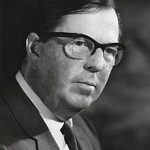
Tag: Cledwyn Hughes

  • Cledwyn Hughes – 1967 Statement on Aberfan Inquiry

    Cledwyn Hughes – 1967 Statement on Aberfan Inquiry

    The statement made by Cledwyn Hughes, the then Secretary of State for Wales, in the House of Commons on 26 October 1967.

    I beg to move, That this House takes note of the Report of the Tribunal appointed under the Tribunals of Inquiry (Evidence) Act 1921 to inquire into the disaster at Aberfan (House of Commons Paper No. 553). Just over a year ago this House and the whole world was shocked to learn of the dreadful tragedy which had occurred at Aberfan, a small mining village near Merthyr Tydfil. Hundreds of thousands of tons of colliery waste suddenly moved down the steep mountainside and overwhelmed a large part of the junior school and a number of houses in the vicinity. Desperate efforts at rescue were made by those nearby, who were joined by others who poured into Aberfan from all over South Wales and beyond, but no one was taken out of the ruins alive later than two hours after the first movement of the tip, and a hundred and forty four persons, the majority of them young children, lost their lives.

    As soon as news of the tragedy reached me I went immediately to Aberfan to see whether I could be of use. After seeing the site my first concern was to clarify the division of responsibility for the work that was going on. The Chief Constable of Merthyr had been placed in overall operational charge, and I confirmed this. The National Coal Board was asked to concentrate on the stabilisation of the tip, and the local authority was asked to take full responsibility for all the rescue work. The other local authorities, who had so readily and promptly come to help, willingly accepted my invitation to put their resources temporarily under the control of the officials of the Merthyr Tydfil Borough Council.

    Later that evening I was joined by my right hon. Friend the Prime Minister, who made it clear that the whole of the resources of the Government were at my disposal for the rescue operation. Other colleagues in the Government also came to the site.

    I have already in this House thanked all those who took part in the rescue operation for the splendid work which they performed in the most harrowing circumstances.

    No time was lost in setting up a Tribunal of Inquiry into all the circumstances of the disaster and we were fortunate to secure the services as Chairman of Lord Justice Edmund Davies, a Welshman born and bred in a neighbouring valley and renowned for his distinction as a lawyer and for his humanitarian sympathy, and as members of the Tribunal with him, Mr. Harold Harding, the eminent civil engineer, and Mr. Vernon Lawrence, the greatly respected former Clerk to the Monmouthshire County Council.

    Lord Justice Edmund Davies promptly visited the scene of the disaster and arrangements were quickly made for the Tribunal to sit at Merthyr Tydfil and a preliminary meeting was held on 8th November. The proceedings were opened on 29th November by my right hon. and learned Friend the Attorney-General, and so began what was to prove the longest inquiry of its kind in British legal history.

    Written statements were taken by the Treasury Solicitor from all who wished to give evidence, about 250 witnesses in all, and of these 136 gave oral evidence also, being examined and cross-examined by counsel and questioned by members of the Tribunal. Including the preliminary meeting the Tribunal sat in public for 77 days, first at Merthyr Tydfil and later at Cardiff, and commanded, I believe, universal admiration for their patience and thoroughness in elucidating the facts. The Tribunal finally rose at the end of April and the members then addressed themselves to the massive task of sifting the evidence and drawing up their report and recommendations.

    As the House knows, the Chairman placed a copy of the Tribunal’s Report in my hands in the latter half of July and it was printed by order of the House and published on 3rd August. It is not my intention to go through the Report, but I am sure that it would be the wish of the House that I should express our admiration for the high sense of duty with which the Tribunal applied itself to its most onerous task and our gratitude for its findings and for its recommendations on the measures needed to prevent a recurrence of such a disaster. These findings and recommendations, as has been made clear already, have commanded general acceptance by Her Majesty’s Government. We are all much indebted to Lord Justice Edmund Davies and his colleagues who have performed a great public service.

    Before I come to action taken on receipt of the Report, I should like to say a word or two about action taken during, and even before, the sittings of the Tribunal. Immediately after the disaster the National Coal Board ordered an inspection of all tips, active or disused, in the Board’s ownership and my right hon. Friend, the Minister of Housing and Local Government and I invited local authorities in England and Wales, invoking the assistance of the National Coal Board as necessary, to arrange for an inspection of all tips in private ownership. These measures disclosed potential instability in several tips and appropriate precautions were taken and remedial action put in hand at once.

    The incidents which occurred during the heavy rains of last week, however, although relatively minor in character, demonstrated that some tips can still present problems and that much remains to be done. As hon. Members will hear from my right hon. Friend who hopes to wind up this debate, the efforts of the National Coal Board, the Government, and all concerned, are being directed to ensure that all problems, both large and small, can be foreseen and promptly dealt with.

    One of the results of the disaster at Aberfan was to give a new stimulus also to the effort to clear up the land left derelict by industrial processes of the past, a problem of which everyone has long been uncomfortably aware, especially in the mining valleys of South Wales. The objective of this effort is not only to reclaim land now useless so that it may be available for industry or housing or other beneficial use, but also to make these areas more attractive to incoming industry and for those who live in them. To pursue this objective more effectively, shortly after the disaster I set up in the Welsh Office in Cardiff a Derelict Land Unit to work closely with the local authorities in preparing schemes of rehabilitation and getting them carried out.

    With the co-operation of the Board of Trade, progress has already been made to an extent which is, I think, most encouraging. So far, the unit has had discussions with 60 local authorities and has visited 115 derelict sites, covering approximately 2,650 acres, in 42 of these local authority areas. The unit has been asked to help by preparing outline proposals for 48 sites, covering about 1,000 acres, and has prepared such proposals for 10 of these sites and is at present engaged on preparing them for others.

    The first stage of one large tip scheme has been completed and work on others is well under way—for example, work on the huge Lewis Merthyr tip in the Rhondda, being done in conjunction with a coal recovery operation. Achievement of the objective inevitably takes a very long time. One cannot heal in a day the scars of great wounds made over generations. It is a task of great magnitude. But during this past year much more work has been done or started than in the whole of the preceding five years—and the way has been prepared for a much accelerated rate of progress in the future.

    The National Coal Board has also changed its basic structure and now has three levels of authority instead of the former five. This change, which was in hand before Aberfan for other reasons, should go a long way to reducing the difficulties of communication to which the Tribunal drew attention. This reorganisation took effect from the beginning of April this year. The Board’s civil engineering organisation has also been strengthened and a post of area civil engineer has been created in each area. The many detailed measures which the Board has taken to improve its organisation and avoid blurring of responsibilities are summarised in a note which has been made available in the Vote Office by my right hon. Friend the Minister of Power.

    Now to return to the Report. The oral evidence tendered to the Tribunal was recorded in a daily transcript which was made available to all the parties appearing before the Tribunal, and of course, to the Tribunal members. Copies of the written evidence received a similar circulation so far as the number of copies available permitted. The Tribunal, in its Report, quotes freely from both the oral and the written evidence and the Report promised the publication of the papers recording the results of the investigations carried out, in view of their scientific interest and importance.

    Arrangements for the publication of this material are well forward, but I must tell the House that the volume is unlikely to appear before next Easter. The reason for this is that it is necessary to redraw, so as to render them suitable for printing, the large number of maps, diagrams and drawings which accompany the text. To publish the text alone would be simpler, but useless, as much of it is a commentary on the illustrations drawings and diagrams. The work is going ahead with all speed and I am told that those who are familiar with the processes of printing scientific documents will be well satisfied if the date I have mentioned can in fact be met.

    Now I come to the Tribunal’s lessons and recommendations and the action which is being taken, or has already been taken, to implement them. Some, as the Tribunal pointed out, require legislation and this is being prepared with a view to its being introduced next Session.

    One of the Questions to be considered is what should be done about the remaining tips at Aberfan. I say “remaining tips” because, during the course of the very extensive work which has been done by the National Coal Board since the disaster, to ensure safety, the rest of the disaster tip has virtually disappeared, and the area of hillside over which it slipped has been cleaned up and covered with a new growth of grass.

    In the spring of this year, the National Coal Board commissioned a landscape consultant, who has lived 20 years in Wales, to prepare a scheme taking into account all the considerations. This scheme, illustrated by a large scale model, was explained to representatives of the Aberfan Parents and Residents’ Association, accompanied by their expert advisers, and to representatives and officials of the Merthyr Tydfil Corporation, at a meeting in the Welsh Office a week ago, under the chairmanship of my hon. Friend the Under-Secretary of State. The model is now on display in the village of Aberfan.

    This scheme incorporates all the further safety measures proposed by all the expert advisers who gave evidence before the Tribunal. Apart from these further safety measures, the proposals involve reducing the height of the tips, smoothing the contours, and sowing and planting the whole area below the area of burning tip material with grass, gorse, broom and a variety of trees, including some fairly large transplanted trees.

    I understand that the preliminary civil engineering works—that is to say, the further drainage measures, the removal and redisposition of substantial quantities of tip material, and the terracing—can be completed in about a year. If a beginning is made soon, perhaps all and certainly the greatest part of the sowing and planting can then be done in the planting season of the winter of 1968–69; and, by the spring of 1969, not only would the whole of the tips complex be greatly altered in outline, but also the whole of the area below the burning tips would be green.

    Most of the Tribunal’s recommendations are of general application. First of all, the Tribunal stated that tips should all be regarded as potentially dangerous, although the Tribunal recognises that the dangers mainly arise with active working tips; secondly, tips should all be treated as engineering structures and, therefore, the procedures of preliminary site investigation and subsequent control customary in other branches of civil engineering should be applied. These two propositions are accepted by the National Coal Board and are already being acted on. I commend them to all who are in any way concerned with spoil heaps, whether connected with the coal industry or not.

    I have already mentioned the new structure of the National Coal Board, which will improve, among other things, the state of internal communications. The observations of the Tribunal upon this aspect are not, I am sure, unheeded by many—and I am not now referring only to the coal industry—who have had occasion to consider how their own conduct would have stood up to a similar searching inquiry. I am sure that all hon. Members would agree that there is a lesson here for us all, for everybody engaged in any enterprise where more than a handful of people are involved.

    My right hon. Friend the Minister of Power proposes to appoint a National Tip Safety Committee to advise him, and perhaps other Ministers, also, on problems affecting the stability of tips. Discussions are now going on as to the terms of reference such a Committee might have and I hope to see it constituted in the very near future. The Committee, when set up, will be asked as one of its first tasks to consider a standard code of practice.

    The Tribunal’s recommendations which require legislation fall mainly within the field of my right hon. Friend the Minister of Power, who will be replying to this debate on behalf of the Government, though there is one matter affecting local authorities which is in the field of my right hon. Friend the Minister of Housing and Local Government and myself.

    My right hon. Friend the Minister of Power is preparing legislation to amend the Mines and Quarries Act, 1954, so as to give effect to those of the Tribunal’s recommendations which require new legislation. He will give the House details of his proposals and the House may take it that they will be comprehensive. Broadly speaking, the Ministry of Power and the Mines Inspectorate will be given the additional powers and duties recommended by the Tribunal and tips forming part of active mines and quarries will be regularly inspected by persons competent to judge their stability.

    I should like myself to say something about the powers and responsibilities of local authorities, although details will need to be worked out in consultation with local authority associations. If any local authority has any reason to fear that a working tip presents a hazard, it should at once inform the Ministry of Power or the local Inspector of Mines. The Ministry will immediately make an investigation and, if need be, require the owner to carry out tests or remedial work. If the local authority is still not satisfied, the matter can be referred to an independent arbiter, who will be empowered to order further work to be done.

    In the case of a disused tip which gives cause for anxiety, a local authority should also get in touch with the Ministry and obtain the advice of the Mines Inspectorate. In the light of this advice, the local authority could decide whether there was a prima facie case of instability. The authority would be empowered to require the owner to carry out specified tests and to furnish a report and also to carry out specified remedial work. The local authority would also have default powers to carry out tests or do the works themselves or appoint contractors to do so. If the owner objected to any test or remedial work, he could appeal to the Minister of Power.

    These proposed arrangements should go far to ensure that local authorities are fully empowered to protect the inhabitants of their area—a protection which, as the Tribunal pointed out, it is every citizen’s right to expect.

    Besides safety, there is the question of the general appearance of working tips. The local planning authorities are able to control this by imposing conditions when they grant planning permission. This applies both to tipping operations and also to the recovery of material from disused tips.

    I now turn to a subject on which the Tribunal very properly made no recommendation, though no small part of its Report was concerned with it, namely, the responsibility of individuals for the disaster and the strictures passed on other individuals whose conduct was censured by the Tribunal. This aspect of the Report has received long and anxious consideration by the Government, by my right hon. Friend the Minister of Power and by the National Coal Board. My right hon. and learned Friend the Attorney-General came to the conclusion that the facts disclosed by the Report did not justify the institution of criminal proceedings. My right hon. Friend the Minister of Power did not accept the offered resignation of the Chairman of the National Coal Board and made known his reasons for asking Lord Robens to continue in office. Those individuals named in the Report who are still in the service of the National Coal Board have been moved to other work.

    In paragraph 210 of the Report the Tribunal referred to “the vastly disagreeable task of censure” which the sense of public duty of its members obliged it to carry out. In a moving passage in paragraph 207, the Tribunal expressed its belief that Whether or not named or adversely referred to in this Report, there must be many today with hearts made heavy and haunted by the thought that if only they had done this, that or the other the disaster might have been averted. Of these, some will blame themselves needlessly; others, while blameworthy in some degree, will condemn themselves with excessive harshness; yet others must carry the heavy burden of knowing that their neglect played an unmistakeable part in bringing about the tragedy. There, in my view, the matter ought now to be allowed to rest.

    Finally, I should like to speak of the village of Aberfan as it is today. A sad anniversary has just passed and renewed the poignancy of grief for those who lost loved ones. But life must go on, and Aberfan is bravely facing the task of physical reconstruction and its families the no less difficult task of restoring mental tranquillity. Thanks to the wonderfully generous response of the public to the appeal for the Aberfan Fund, the resources are not lacking. But if the inhabitants are to find peace, they need a period away from the glare of publicity to which they have been exposed for so long. I appeal to everyone to give them the quiet they need to bear their burden of grief and to rebuild their shattered lives.

  • Cledwyn Hughes – 1966 Statement on Aberfan

    Cledwyn Hughes – 1966 Statement on Aberfan

    The statement made by Cledwyn Hughes, the then Secretary of State for Wales, in the House of Commons on 24 October 1966.

    All Members will have already shared in the nation’s grief over the disaster that overtook the small community of Aberfan on Friday morning, when a coal tip avalanched into a farmhouse, 20 houses and two schools.

    Despite the efforts of the rescuers, few lives could be saved. The bodies of 111 children and 32 adults have been recovered. It is difficult to give precise figures of the persons who are still missing, but about 49 are unaccounted for.

    Alongside the rescue efforts, other work has been going on to stabilise the tip and to prevent further slippages. The Chairman of the National Coal Board, Lord Robens, who has been personally directing this work, has reported to me that the tip can now be regarded as generally stable. While there may be local adjustments of portions of the tip itself and of its widespread extensions lower down, these should not give cause for concern. In the unlikely event of a major movement, the alarm system that has been installed should give adequate warning.

    As regards other tips of the National Coal Board that might constitute a hazard, the Board has intensified its inspection procedures and in certain cases has put special precautionary measures in hand. Local authorities have been asked to inspect pit heaps not owned or operated by the Coal Board, to identify which of these might constitute a hazard.

    It is possible that the present legal responsibilities and powers of the appropriate authorities in relation to the safety of pit heaps need to be extended and this will be one of the important questions that will be considered by Lord Justice Edmund Davies.

    I have discussed his inquiry with Lord Justice Edmund Davies today. He is travelling to South Wales this afternoon and will spend tomorrow at Aberfan. I shall be having a further meeting with him on Wednesday. As the Prime Minister has already made clear, he will have wide terms of reference to cover all aspects of the disaster, and he will be given all the powers that he considers necessary. After discussion with Lord Justice Edmund Davies it has been decided to ask Parliament for the inquiry to be conducted under the Tribunals of Inquiry (Evidence) Act, 1921, and the necessary Resolutions will be moved later this week.

    Those of us who have had to be at the scene of the disaster will never forget its horror and tragedy; nor shall we forget the selfless and unremitting efforts of the thousands who, since last Friday morning, have been engaged on the appallingly difficult tasks of rescue, recovery and reclamation.

    The House will wish to express its own deep sympathy with the bereaved. The House will also wish to record its appreciation of the work of Merthyr County Borough Council, other local authorities and national and local organisations and services and the public.

    Hon. Members

    Hear, hear.

    Mr. Davies

    Will my right hon. Friend accept from me that the bereaved relatives and all my constituents will be most grateful to him for his assurances and, may I add, for the long days and nights which he personally has spent in the stricken village, and to the Prime Minister for his visit and for his great encouragement to those who are still fighting the battle in Aberfan?

    May I express my own sympathy to the bereaved relatives and, on their behalf, great appreciation for the thousands of people who have volunteered their services and their resources to the people in Aberfan who need so much help?

    Mr. Hughes

    I am grateful to my hon. Friend, who is so closely identified with the people he represents.

    Mr. Gibson-Watt

    On behalf of my right hon. and hon. Friends, may I record our deep sympathy with those who have suffered bereavement in this tragic disaster at Aberfan? We wish also to praise those many thousands of helpers who have worked and who are still working on the job of recovery with such gallantry. We support the Secretary of State for Wales in his appointment of Lord Justice Edmund Davies to head the public inquiry and, of course, we will support steps taken by the Government to prevent a repetition of such a tragedy in Wales.

    There are certain disturbing features about this tragedy, but, in view of the inquiry, I will put only two questions to the right hon. Gentleman. First, to allay public anxiety, as he quite properly went out of his way to do in his statement, can he say what other tips owned by the National Coal Board at present give cause for concern? Secondly, will the court of inquiry be prepared to issue an interim report if it feels that to be necessary so that any lessons learned may bring immediate benefit?

    Mr. Hughes

    I am grateful to the hon. Gentleman. The inquiry has full power to do what he suggests in his second question and I will certainly discuss that with Lord Justice Edmund Davies on Wednesday.

    The National Coal Board has informed me that there are three tips which it regards as presenting a hazard. These are in the Aberdare area. The first is the Albion Colliery, at Cilfynydd. The colliery is now closed and tipping has ceased. The tip is burning and a continual watch is being maintained. There is no cause for concern.

    The second is the Mardy Colliery, where, in exceptionally wet weather, some movement of fine slurry has been noted, although there is no danger to property, the nearest of which is about three-quarters of a mile away and is not in line with any possible slip. Continual observation is being maintained here as well.

    The third is Penrhiwceibr, where the old tips have consolidated and have a considerable cover of vegetation and where work has now ceased. Present rubbish disposal is on the other side of the mountain and there are no signs of any danger, although a continual watch is being maintained.

    Mr. James Griffiths

    May I, on behalf of all of us, express our deep regret at this awful tragedy and our sympathy with the bereaved and our considerable thanks to the very courageous people who have worked so well? We are very proud of the way in which, once more, our people have shown their traditional courage in times of distress.

    I wholeheartedly welcome the appointment of Lord Justice Edmund Davies as chairman of the inquiry. He carries with him the confidence of all of us who know him and who know that he will do a thorough job. Will my right hon. Friend provide for him a complete record of all the coal and slag tips in South Wales? Secondly, as the Coal Board is responsible for some but not all of them, can my right hon. Friend say what is the number of tips in Wales and who is responsible for them and whether information of that kind will be put before the inquiry?

    Mr. Hughes

    I am grateful to my right hon. Friend. As he is aware, under the 1921 Act the inquiry will have full power to summon witnesses and call for papers. It is estimated that there are some 500 coal tips in South Wales. Ownership is divided among the Coal Board for all tips on its property, and local authorities and private landowners on whose land disused tips stand. Only 80 tips are at present in use, but the Coal Board has a regular inspection procedure for all tips on its land, whether these tips are in use or not.

    However, in the light of events at Aberfan, the Board has intensified its inspection procedures. The Board states that there is no imminent danger from any of its tips, but in the three cases I have mentioned, because of the experience at Aberfan, special measures are being put in hand forthwith. This involves continual inspection, and not inspection once a day, which is a statutory requirement.

    Mr. Finch

    Can my right hon. Friend say what warning system is involved in those pits in the South Wales coalfield where the tips are regarded as a hazard?

    Mr. Hughes

    A 24-hour watch is being kept at Aberfan. There are klaxon hooters and the men on watch have walkie-talkie sets, keeping them in constant communication with the base.

    Mr. Hooson

    On behalf of my right hon. Friend and my hon. Friends I would like to be associated with the expressions of sympathy which have followed this appalling tragedy. It is an appalling tragedy for the Welsh nation apart from anything else.

    May I also congratulate the right hon. Gentleman the Secretary of State for Wales on his appointment of Lord Justice Edmund Davies to conduct the inquiry. No one is better qualified to carry it out.

    I would also like to associate myself with the thanks and appreciation expressed in the House to all of those who have given such unstinting help in this terrible situation.

    Does the right hon. Gentleman not feel that it would be wiser, since this inquiry has now been ordered, if no one made statements as to the cause of this tragedy? It should be a matter for the tribunal to investigate rather than for anyone, however eminent, to make statements. Would he also reassure the House that the inquiry will not confine itself to the dangers from existing slag heaps in South Wales? From my own knowledge I can tell of one slag heap in North Wales, not owned by the National Coal Board, which gave some trouble some years ago. I am sure that the House is very pleased to hear the Secretary of State say that the legal position with regard to responsibility for these tips is being investigated by the Lord Justice Edmund Davies committee.

    Mr. Hughes

    The possible causes of the accident are a matter for the inquiry, and it is inappropriate and improper for me or anyone else to comment upon them.

    We are taking similar action in relation to tips in North Wales.

    Mr. Berry

    As a member of a Merthyr family and as one who had the privilege of holding an ancient office in the county only a short time ago, may I add my sympathies to those already expressed. May I also express my admiration for the people of Merthyr for the way in which they have struggled through these past few days, so typical of them in times of adversity.

    Finally, may I express the hope that the inquiry, under Lord Justice Edmund Davies, than whom there could be no more suitable chairman, may find a solution which will ensure that never again will such a disaster occur, either in Wales or any other part of the country.

    Mr. Arthur Pearson

    While associating myself with the entirely appropriate condolences and tributes, and although welcoming what the Secretary of State has said about intensified inspections, may I ask him whether the inspections will be regular and in association with the engineering departments of local authorities who are closest to the people in these areas? Is he aware of the growing anxieties of people living near to these tips, and of the danger in mentioning the three dangerous tips, since this will cause greater anxiety?

    Mr. Hughes

    As I have informed the House, the Coal Board is inspecting and maintaining a continual watch on the tips which it regards as presenting a hazard. Local authorities are very much aware of the problem and I have asked them to look carefully at all tips which do not belong to the Coal Board and which lie in their areas. I can tell the House that local authorities who may feel that they do not have the expert advice to look carefully at a tip and assess whether it is a hazard will be able, on request to the Coal Board, to obtain the advice of the Board’s engineers. I am grateful to the Board for making this offer.

    Mr. Probert

    While welcoming what my hon. Friend has said, may I ask him if, when asking local authorities to report on this matter, he will impress upon them the urgency of such reports, in view of the prevailing anxiety? In addition, will he recommend that local authorities should obtain, not only the advice of the Coal Board’s experts, but of outside experts, for obvious reasons?

    Mr. Hughes

    Certainly. I have asked for reports from the Coal Board and I have discussed this matter with my right hon. Friend the Minister of Power. We shall be working in close collaboration to obtain up-to-date and urgent reports of all the spoil heaps in South Wales, in order to allay the anxieties which I know my hon. Friend and his constituents feel.

    Dr. David Kerr

    I am perhaps not the most appropriate person to say this, but on behalf of a constituency which does not live under the constant threats, and the ugliness of a bygone age, and on behalf of most of us in this House, may I say that this tragedy has reminded people a long way from Wales that we are still one nation.

    May I also offer the Secretary of State for Wales an assurance that, whatever the Government decide to do, first, to ensure that this sort of tragedy never recurs and, secondly, to see that the children of Aberfan have a fitting memorial in the future, he will have the fullest support from everyone all over the country.

  • Cledwyn Hughes – 1978 Speech on the Loyal Address

    Below is the text of the speech made by Cledwyn Hughes, the then Labour MP for Anglesey, in the House of Commons on 1 November 1978.

    I beg to move, That an humble Address be presented to Her Majesty, as follows:

    Most Gracious Sovereign,

    We, Your Majesty’s most dutiful and loyal subjects, the Commons of United Kingdom of Great Britain and Northern Ireland, in Parliament assembled, beg leave to offer our humble thanks to Your Majesty for the Gracious Speech which Your Majesty has addressed to both Houses of Parliament.

    This is an unexpected privilege, but one that I greatly appreciate. I did not think, as I left the House for my constituency at the beginning of August, that I would be speaking here on 1st November. However, I am not surprised because unpredictability is one of the hazards and charms of political life and I am not sorry to be here for a while longer and, I hope, to be able to enjoy a few more farewell parties.

    My constituents share this honour, and it has been a joy to represent the island of Anglesey in the House for more than 27 years. There have been enormous changes in Anglesey in that period. From being an island economy dependent, in the main, on agriculture and the port of Holyhead, it now has a range of new small and medium industries and one large aluminium smelter. Anglesey Aluminium Limited has plans for expansion that would provide over 400 new jobs in the Holyhead area. I hope that the Government will do everything possible to ensure that that materialises.

    During my period as the Member for Anglesey the population of the island has increased by over 30 per cent. We have retained more of our young people on the island because of the new industries that I have mentioned. Others have come to Anglesey to live because of its attractions. The tourist industry has flourished greatly during the past few years.
    Our unemployment problem remains serious. I am glad that the Gracious ​ Speech stresses the evil of unemployment at the outset and undertakes to

    “pursue every available means of moving to full employment.”

    The Government are entitled to take credit for the wide range of special employment and training measures that they have taken and for the measures that are proposed in the Gracious Speech, but still more needs to be done. The effect of high investment in industry must be studied far more profoundly, because its effect on future employment prospects could be significant.

    I welcome the promise of legislation to provide additional finance for the Welsh Development Agency as well as for the National Enterprise Board and the Scottish Development Agency. The Welsh Development Agency and the Welsh Rural Development Board have achieved a great deal and they deserve our support. I also warmly welcome the reference in the Gracious Speech to the examination of the special problems of slate quarrymen suffering from pneumoconiosis. The problem is especially acute in Gwynedd and the Government have shown a determination to resolve it. For this we are grateful.

    As the House knows, Anglesey is a beautiful island. There is a convention that the sitting Member for the island is always one of the presidents of the annual eisteddfod of Anglesey. That event is held at Whitsuntide. I have fulfilled the task on 27 occasions; whether I do so next Whitsun is largely a matter for my right hon. Friend the Prime Minster.

    In 1907 one of the presidents was one of my predecessors—namely, Ellis Griffith. The other president was David Lloyd George. Speaking in the afternoon, Lloyd George said in his peroration that Anglesey was an excellent platform from which to view the grandeur of Caernarvon, for which he was one of the Members. In the evening session Ellis Griffiths retorted that Caernarvon stood on tiptoe in wonder to see the incomparable beauty of Anglesey. This is still there for all hon. Members to see if they have not already paid us a visit. I have cause to be grateful to the people of Anglesey for their kindness to me over a long period.

    I read the Gracious Speech with particular interest on this occasion because it was suggested in some quarters that there would not be enough work for us to do. The Speech seems to be just right as regards quality and volume. There is a school of thought that believes that a Gracious Speech is defective unless it is bursting at the seams with exciting legislation. As my right hon. Friend the Chief Whip knows, I am not a member of that school. Of course, there are times when essential and adventurous legislation to which a Government have pledged themselves must be dealt with promptly; there are also times when it is advisable that the legislative field should lie fallow.

    We should consider from time to time the effects of heavy legislative programmes not only on the House—for example, the manning of Standing Committees—but on those outside who are affected by legislation. I am not suggesting that it has happened over the past few years, but legislation that is inadequately processed can bring the House into disrepute. As I have said, I consider that this Speech is just about right. There are some extremely important Bills in the pipeline.

    Again in the context of Anglesey and the Welsh coast, I welcome a merchant shipping Bill which, among other things, will help to control marine pollution. We have had some unpleasant experiences in recent weeks with the “Christos Bitas”, and “Eleni V” and the “Amoco Cadiz” before those off the coast of Brittany. We need the oil, and all of us use oil. However, I think that the House would welcome a full statement from my right hon. Friend the Secretary of State at an early date. I believe that the House would wish very soon to debate what he says and the near disasters to which I have referred.

    I am glad that the Gracious Speech refers to the

    “expansion of food production in the United Kingdom and its efficient processing and distribution.”

    I mentioned earlier the significance of agriculture to Anglesey.

    It is, of course, crucial to the whole country. North Sea oil is important and it is accepted that it can make a timely contribution if the revenues are properly used for the benefit of the country as a ​ whole. However, in the longer term agriculture is even more important than North Sea oil. The human race one day will have to live without oil, but it cannot live without food. The increasing world population and the demands and needs of the third world make it imperative that we and other advanced countries concentrate on producing more food. It frightens me sometimes when I remember that even today, after all the exhortations to produce more food and after what successive Governments have done to make that possible, we still import about half of all the food that we eat.

    We must get away from the myth that the producer and the consumer are at opposite sides of a great divide. Their interests are identical and our policies must recognise that.

    Improvements in the common agricultural policy are imperative as the Gracious Speech recognises. The surplus in European milk production is especially worrying, and great thought needs to be given to its implications.

    The most important section of the Gracious Speech is that which deals with the economy. If we do not get that right, and if we cannot keep inflation down, the future is not bright for us. The Government have achieved a great deal over the past three years and I pay a warm tribute to my right hon. Friend the Prime Minister for what he has already done and the lead that he has given.

    The Chancellor of the Exchequer has borne a heavy burden for a long time. He has occupied the office of Chancellor for longer than most of his predecessors. He has been criticised, and he will have expected that. He has been abused at times, and he can take that as well. He has shown courage and determination and he deserves our praise. I am glad to have this opportunity to give it to him.

    I can see no real alternative to the reasonable control of incomes. There is a danger that the term “free collective bargaining” has become an outdated slogan, as outdated as “Two acres and a cow” or “We want eight and we can’t wait”. What is essential, and what takes place in the main, is informed and constructive negotiation based on three factors, namely, the cost of living, the state of the industry or firm concerned in the negotiations and, last but not least, the ​ state of the nation’s economy at any given time.

    If we allow inflation to get out of hand again, we shall be courting disaster. I believe that the country as a whole is conscious of that. An effective incomes policy and a skilful control of the money supply are essential. It is not always easy to get the right balance, but that is the key to our survival.

    For those of us who remember the 1930s—I have regard to what is said about foreign affairs in the Gracious Speech—the greatest achievement of the post-war period is stability in Western Europe. Remembering Western Europe in the 1920s and 1930s and considering it today, one sees that fundamental change has taken place. Notwithstanding our continuing economic difficulties, we in Britain have retained our stability and our basic values.

    There has been a tendency for some to denigrate and belittle Great Britain in the past few years. We must be careful, because if we do that others will take us at our own valuation. We have much to be proud of. It is not for a Welshman to tell Englishmen about their inheritance. It is one of the greatest heritages of any nation on earth. I believe that we have the skills, imagination and experience to compete with any country. But much depends upon this House. It is here that the maintenance of stability, of freedom under the law and of the rule of law itself must be guarded and here that leadership must be given, and it is from the House that leadership is expected. I hope and pray that we can provide that leadership. I believe that the Prime Minister is doing his utmost to give us the right lead now. We must give that leadership in the years to come.