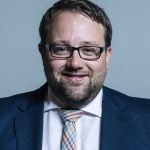
Tag: Chris Elmore

  • Chris Elmore – 2025 Speech on Human Rights Day

    Chris Elmore – 2025 Speech on Human Rights Day

    The speech made by Chris Elmore, the Foreign Office Minister, in London on 10 December 2025.

    Good morning.

    It’s great to see you all today.

    The UN’s theme this year – “Human Rights, Our Everyday Essentials” – couldn’t be more timely.

    And it really resonates with me after my visit to Jamaica to see the aftermath of Hurricane Melissa, just five short days ago.

    We often speak about our basic human rights and needs in jest, but meeting a seven year old boy – who will be eight-years-old on the 28th of December – in Jamaica last week, whose home was destroyed by Hurricane Melissa and whose only Christmas wish was a working toilet, brought home to me the stark reality of millions around the world living without these essentials, whether through disaster, poverty, conflict or political oppression.

    Hurricane Melissa was devastating, and I pay tribute to the Government of Jamaica and its people for their extraordinary response and resilience in the face of such hardship.

    Today we reflect on how human rights are at the heart of our daily lives and when I talk about human rights, I also mean democracy and the rule of law.

    The three go hand in hand.

    Yet today, more and more people threaten to roll-back our hard-won freedoms.

    That’s why our commitment to human rights – here at home and around the world – matter.

    Not just because it’s morally and legally right, though of course it is, but because it’s in our shared interest. They allow us as individuals, as communities and as societies to thrive and prosper.

    As an MP, I’ve seen people campaigning for fairness, equality and safety.

    From local charities helping the homeless, to residents campaigning for clean air, to families hosting thousands of Ukrainian refugees.

    This is civic engagement at its best – people exercising their rights to speak out, to organise, to assemble, and to live free from discrimination.

    But it’d be a mistake to think that human rights are there just to protect our freedoms.

    Because they also serve our national interest, our security, our growth and our long-term prosperity. 

    Respect for the rule of law gives businesses confidence.

    Economic and social rights help create a healthy, educated workforce.

    And the right to life, freedom from torture, freedom of religion or belief and expression keep us safe.

    Security and prosperity cannot be achieved without guaranteeing human rights.

    How we protect rights must also evolve to reflect the challenges of the 21st century.

    We believe in the European Convention on Human Rights.

    It helped create a neighbourhood of countries with a strong record on human rights, directly contributing to the peace and security Europe has enjoyed since the second world war.

    It has also delivered real benefits for British people – a full inquest for the families of the Hillsborough victims, the abolition of corporal punishment in schools, and the right for gay people to serve in our armed forces.

    So of course, the UK remains committed to the Convention.

    At the same time, we also believe that it must evolve to face the challenges of the day.

    As the Prime Minister has said, we need to modernise how it’s interpreted in the context of irregular migration.

    And that work is already underway, with the Deputy Prime Minister in Strasbourg today meeting other Justice Ministers to take it forward. 

    But laws and conventions only matter if they make a difference to real lives.

    And right now, across the world, too many lives are under attack.

    • Palestinians assaulted in olive groves in the West Bank.
    • Women in the DRC raped with impunity.
    • Prisoners tortured in Damascus.
    • Children killed by missiles in Ukraine.
    • And crimes in Sudan so appalling that they can be seen from satellites in space.

    These are outrageous examples of tragedies, entirely inconsistent with international human rights and humanitarian law, and they are unfolding as we speak.

    They remind us why we must act.

    Doing nothing will only normalise impunity, making everyone, everywhere less safe.

    That is why FCDO funds partners in Syria to document atrocities and build evidence to achieve accountability.

    That is why we work with leaders like Nobel Laureate Dr Denis Mukwege on a survivor-centred approach when addressing sexual violence.

    And that’s why the Foreign Secretary, who sends her apologies today, is personally determined to end impunity for sexual violence in conflict, pursue peace in Gaza and the West Bank, and drive urgent action in Sudan.  

    But we cannot do this alone.

    Today as we mark the end of 16 days of Activism to End Gender-Based Violence, it is clear that we all have a role to play.

    Over the last two weeks, my officials have met activists and organisations working to stop violence against women and girls in Sudan and elsewhere.

    We want to do everything possible to help amplify their calls for justice and change and it makes me immensely grateful for the work you do.

    Not just in responding to these issues but in raising their profile, keeping the pressure on us to act, and holding us to account to do so.

    That’s why I’m concerned that civil society is under attack in so many countries because of repressive legislation.

    I want to pay particular tribute to courageous human rights defenders and advocates around the world, putting their lives in danger day after day to fight for what’s right.  

    I’m honoured that some of them are with us today, and I look forward to hearing from them shortly.

    Now, last year my predecessor set out the FCDO’s approach to human rights and governance.

    I’m proud of the progress we’ve made since then and I will build on this excellent work.

    We’ve strengthened the rule of law worldwide by offering free legal expertise in over 50 countries.

    We’re holding war criminals to account, including for war crimes committed in Ukraine. 

    We helped set up the Atrocity Crimes Advisory Group which supports the Ukrainian government in delivering justice.

    We’re supporting the establishment for a Special Tribunal for the Crime of Aggression against Ukraine, and I am pleased that we formally endorsed its legal basis earlier this year.

    And we’re championing equal rights for all, including through the Deputy Prime Minister’s powerful global campaign to ensure every child grows up in a safe, loving family environment.

    Yet there is still so much to do.

    And that’s why I’m pleased that the UK has been re-elected to serve on the UN Human Rights Council for the next two years, giving us the chance to share our experiences with others.   

    Now, while this is a significant opportunity, I know that many of you are concerned about cuts in our foreign aid budgets.

    So I want to reassure you that we’re determined to find new innovative ways to support change on the ground, working ever more closely with local actors, focusing on impact, and publicly reporting what we do.

    And all of this will be backed by a strong diplomatic network of Embassies and High Commissions who will continue to champion these agendas around the world.   

    And we’ll use our influence in the multilateral system to keep human rights at the heart of its work while making sure they remain the foundation of all that FCDO does.

    Because it is only when human rights are protected that everyone has the chance to live with dignity and freedom. And that freedom being understood.

    Thank you all.

  • Chris Elmore – 2025 Statement on Abductions in Nigeria

    Chris Elmore – 2025 Statement on Abductions in Nigeria

    The statement made by Chris Elmore, the Parliamentary Under-Secretary of State of Foreign Affairs, in the House of Commons on 27 November 2025.

    My noble Friend the Minister of State for International Development and Africa (the right hon. Baroness Chapman of Darlington) has today made the following statement:

    I am writing to update the House on recent abductions in Nigeria, and the UK’s ongoing security partnership with Nigeria.

    In the last week, Nigeria has faced a further series of abhorrent abductions from schools and churches, including the attack on St Mary’s catholic school in Niger state, which is one of the largest recorded mass abductions in the country’s history. These crimes are intolerable. Everyone should be safe to exercise their fundamental human rights to education and freedom of worship. The UK stands firmly with the people and Government of Nigeria during this difficult time, and of course with the families of those children who have been abducted.

    As a valued Commonwealth friend, we are working closely with our Nigerian partners as they respond to these incidents, and welcome the efforts to date to secure releases of schoolgirls in Kebbi state and worshippers in Kwara state. One year on from the signing of the UK-Nigeria strategic partnership in November 2024, which includes our security and defence partnership as a key pillar, our co-operation continues to strengthen security and prosperity. This includes assisting the Nigerian Government to establish a dedicated unit, the multi-agency kidnap fusion cell, which brings together Nigeria’s police, military and justice agencies to rescue victims and bring perpetrators to justice.

    The safety of school children is paramount. UK education funding has supported school safety improvements including through the “Partnership for Learning for All in Nigeria Education” programme. In March 2025, with UK support, a safe school rapid response co-ordination centre was launched in Jigawa state, providing training and deployment of security personnel to public schools.

    Abductions and kidnap for ransom remain a prevalent issue across Nigeria. Across the country, insecurity continues to devastate communities and severely impact ordinary people, driving displacement, heightening protection risks and eroding livelihoods. In the north-east, terrorist groups including Boko Haram and Islamic State West Africa have indiscriminately killed individuals not just from Christian but also from Muslim communities. In the north-west and north-central, criminal bandits are primarily targeting communities for profit and ransom.

    This Government are committed to strengthening our security and defence partnership with Nigeria to address the roots of insecurity. In my meeting with Nigeria’s Foreign Minister, Yusuf Tuggar, on 11 November, we discussed the security situation in Nigeria and issues relating to freedom of religion or belief, and the Foreign Secretary also discussed with him on 10 November the ongoing importance of UK-Nigeria security co-operation.

    Through our security and defence partnership, we are helping to build capacity within Nigeria’s security agencies to effectively undertake counter-terrorism operations, investigations and intelligence analysis to prevent future attacks. Our “Strengthening Peace and Resilience in Nigeria” programme is working with Nigerian partners to address the root causes of intercommunal conflict, support collaboration and productive livelihoods for farmers and pastoralists and strengthen conflict early warning and response systems.

    Through our strategic partnership, this Government remain committed to working with the Government of Nigeria to tackle insecurity in all its forms.

    We will continue to express our solidarity with the people of Nigeria, to express our condemnation of these abhorrent abductions, and to stand up for freedom of religion or belief both in Nigeria, and throughout the world. We join the Government of Nigeria in calling for the safe return of all those who have been kidnapped, and call for all perpetrators to be brought to justice.

  • Chris Elmore – 2016 Parliamentary Question to the Department for Business, Energy and Industrial Strategy

    Chris Elmore – 2016 Parliamentary Question to the Department for Business, Energy and Industrial Strategy

    The below Parliamentary question was asked by Chris Elmore on 2016-09-02.

    To ask the Secretary of State for Business, Energy and Industrial Strategy, what options his Department provides to people whose application for a Start Up Loan has been unsuccessful due to their credit score.

    Margot James

    I refer the hon Member to the answer I gave to Question UIN 44747.

  • Chris Elmore – 2016 Parliamentary Question to the HM Treasury

    Chris Elmore – 2016 Parliamentary Question to the HM Treasury

    The below Parliamentary question was asked by Chris Elmore on 2016-09-05.

    To ask Mr Chancellor of the Exchequer, if he will make an assessment of the effect of recent increases in Financial Services Compensation Scheme levies on small businesses.

    Simon Kirby

    The Financial Services Compensation Scheme (FSCS) is an independent non-governmental body. The Prudential Regulation Authority (PRA) and Financial Conduct Authority (FCA) determine the maximum level at which the FSCS levy is set, and how it should be apportioned across industry. The FSCS sets annual levies within these limits.

    In March 2016 the Government and FCA published the Financial Advice Market Review which observed that the unpredictable nature of the FSCS levy can make it hard for independent financial advisors to plan effectively. It recommended a number of options regarding FSCS funding, which could make the levy more manageable for independent financial advisors. The FCA is currently reviewing FSCS funding and will publish a consultation later this year.

  • Chris Elmore – 2016 Parliamentary Question to the Cabinet Office

    Chris Elmore – 2016 Parliamentary Question to the Cabinet Office

    The below Parliamentary question was asked by Chris Elmore on 2016-09-08.

    To ask the Minister for the Cabinet Office, pursuant to the Answer of 18 July 2016 to Question 42682, whether he is taking steps to reduce the number of spoilt ballots in elections.

    Chris Skidmore

    The Government has made improvements to ballot papers, forms and instructions used by voters at elections and referendums in order to make voting as accessible as possible. This involved public user-testing of the revised voting forms. The Government will consider reports from the Electoral Commission and other organisations on the polls held during 2016 and decide whether any further action is required.

  • Chris Elmore – 2016 Parliamentary Question to the HM Treasury

    Chris Elmore – 2016 Parliamentary Question to the HM Treasury

    The below Parliamentary question was asked by Chris Elmore on 2016-09-08.

    To ask Mr Chancellor of the Exchequer, how many times he has visited South Wales in an official capacity since his appointment; and what future plans he has to visit South Wales.

    Simon Kirby

    The Chancellor will visit constituencies all across the UK in due course. All his visits are recorded in the transparency data published on gov.uk.

  • Chris Elmore – 2016 Parliamentary Question to the Department for Transport

    Chris Elmore – 2016 Parliamentary Question to the Department for Transport

    The below Parliamentary question was asked by Chris Elmore on 2016-09-13.

    To ask the Secretary of State for Transport, what steps his Department is taking to encourage the construction of new railway stations along the England-Wales border.

    Paul Maynard

    We launched the second round of our New Stations Fund on 26 August, with up to £20 million available to promoters of new stations throughout England and Wales. Successful bids may be awarded up to 75% towards the capital expenditure on the station.

  • Chris Elmore – 2016 Parliamentary Question to the Department for Communities and Local Government

    Chris Elmore – 2016 Parliamentary Question to the Department for Communities and Local Government

    The below Parliamentary question was asked by Chris Elmore on 2016-10-10.

    To ask the Secretary of State for Communities and Local Government, what steps he is taking to promote investment in former coalfield communities.

    Andrew Percy

    In England, local investment is mainly determined by Local Enterprise Partnerships based on their local economic growth priorities and funded through programmes such as City Deals, Devolution Deals, the Local Growth Fund and Enterprise Zones.

    My officials continue to work with the Coalfields Regeneration Trust to support former coalfields communities.

    Local growth is a devolved issue in the rest of the UK.

  • Chris Elmore – 2016 Parliamentary Question to the Department for Exiting the European Union

    Chris Elmore – 2016 Parliamentary Question to the Department for Exiting the European Union

    The below Parliamentary question was asked by Chris Elmore on 2016-10-10.

    To ask the Secretary of State for Exiting the European Union, what plans he has to involve representatives from the Welsh Government in negotiations for exiting the EU.

    Mr David Jones

    The Prime Minister has committed to full engagement with the Devolved Administrations to get the best possible deal for all parts of our United Kingdom as we leave the EU. We will give the Welsh Government every opportunity to have their say as we form our negotiating strategy and we will look at any suggestions they put forward.

  • Chris Elmore – 2016 Parliamentary Question to the Department for Education

    Chris Elmore – 2016 Parliamentary Question to the Department for Education

    The below Parliamentary question was asked by Chris Elmore on 2016-10-07.

    To ask the Secretary of State for Education, whether she plans to facilitate the learning of the Welsh language by pupils in England.

    Nick Gibb

    Primary and secondary schools can choose to teach the Welsh language to pupils if there is sufficient demand. It is possible for a pupil in England to take privately a Welsh language GCSE offered in Wales if an examination centre is willing to enter them. This will include a revised Welsh Second Language GCSE available for first teaching from September 2017.