Tag: Caroline Lucas

  • Caroline Lucas – 2021 Comments on the Queen’s Speech

    Caroline Lucas – 2021 Comments on the Queen’s Speech

    The comments made by Caroline Lucas, the Green Party MP for Brighton Pavilion, on 10 May 2021.

    The surge in votes we’ve seen for the Green Party this weekend shows that people up and down the country recognise the urgent need for real action on the environment, and that this can be done whilst dramatically improving the quality of peoples’ lives.

    The government must use the Queen’s Speech tomorrow to put us on the right track to addressing the huge challenges of climate and ecological breakdown.

    If the government was serious about making life better for all, then tomorrow we would see a Green New Deal to create millions of Green jobs alongside Bills to help the UK meet its climate targets and shift the focus of our economic model away from relentless GDP growth and towards the health of people and planet.

  • Joint Statement from Opposition Leaders on Behaviour of Dominic Cummings

    Joint Statement from Opposition Leaders on Behaviour of Dominic Cummings

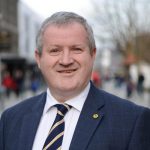
    The below letter was issued jointly by Ian Blackford from the SNP (pictured above), Sir Ed Davey from the Liberal Democrats, Liz Saville Roberts from Plaid Cymru, Colum Eastwood from the Social Democratic and Labour Party, Caroline Lucas from the Green Party and Stephen Farry from the Alliance Party, on 26 May 2020.

    It is now a matter of record that Mr Dominic Cummings broke multiple lockdown rules.

    He is yet to express any apology or contrition for these actions. There cannot be one rule for those involved in formulating public health advice and another for the rest of us.

    This is an issue that transcends politics. It has united people of every party and political persuasion, who believe strongly that it is now your responsibility as Prime Minister to return clarity and trust in public health messaging.

    We are clear that this can now only be achieved by removing Dominic Cummings from his post without further delay.

  • Caroline Lucas – 2020 Speech on the Coronavirus Bill

    Caroline Lucas – 2020 Speech on the Coronavirus Bill

    Below is the text of the speech made by Caroline Lucas, the Green Party MP for Brighton Pavilion, in the House of Commons on 23 March 2020.

    I very much appreciate the spirit of co-operation and purpose in the Chamber today. We all want the same thing: for the coronavirus outbreak to be over, for people to be safe, and for our public services to be resilient and well resourced enough to cope. I believe that to achieve that, we need today’s legislation, but we also need to speak the truth, which is, sadly, that we have wasted weeks—time that could have been spent ramping up testing, acquiring more protective equipment and ordering more ventilators. This emergency legislation is welcome, but more than anything else, decisive Government action is overdue.

    The UK had the advantage of being able to learn from the experiences of China and other countries, yet to people watching from the outside, we have too often seemed like a nation in denial. We cannot change where we are now, but only by understanding the answers to ​those questions can we ensure that similar errors of forward planning do not cost lives. So let us put that right now with a clearer and stricter lockdown—I agree with the shadow Secretary of State, the hon. Member for Leicester South (Jonathan Ashworth), on that—and, crucially, with the economic security that will make that possible. I echo everything that others have said about the importance of underpinning the livelihoods of those who are self-employed, and crucially—I make no apology for repeating this—we need a much, much clearer, more comprehensive, wall-to-wall public education campaign to underpin all that.

    The message from our health workers could not be clearer: stay home to save lives. We owe them a massive debt of gratitude, but more than that, as MPs in particular, we owe it to them to listen and model the behaviour that we are asking of our constituents. The clearest way to do that is for Parliament to start meeting virtually and voting electronically, rather than putting staff at risk here and risking sending mixed messages to the rest of the country.

    I have three brief points to make about the Bill. The first, on sovereignty and democracy, has been made by many others and I am very grateful that the Government have accepted the amendments to ensure that the legislation will come back to the House after six months, rather than waiting two years. It is crucial that we have the opportunity to correct any mistakes that could easily have been made in the understandably speedy drafting of this very large piece of legislation.

    My second concern is about what is missing from the legislation: from closing detention centres and safely housing those released to allowing asylum seekers to work and have recourse to public funds; and from preventing utility companies cutting off anyone’s water, gas, phones, internet or electricity to putting real pressure on the insurance companies who are hiding behind the definition of notifiable diseases and refusing to pay out to businesses that are forced to close. Powers are needed to make them play fair. The Bill should give local authorities the power to grant council tax holidays and suspend all business tax payments, with central Government meeting the lost revenue. It needs to freeze household and business rental payments across all sectors, again, with compensation for landlords for the lost rent—not just for three months but for as long as is necessary—and to allow for flexible provision for those at risk from domestic abuse, sexual violence and child abuse. Above all. the Bill needs to include those measures to protect people’s incomes, not just their wages.

    So many people in Brighton have raised with me the fact that their concerns have not been covered by the Government’s guarantees so far. As a nation, we are rightly proud of our entrepreneurs, creators and innovators. We need to remember that many of them lack all the legal protections of redundancy and other rights that exist to help employees who are faced with a sudden lack of income. They need to be included in the Government’s scheme. Something like 80% of their average wage needs to be made available to them as well and it needs to happen very fast.

    My last point is simply that, as we go through this crisis, we need to do it in a way that prepares us for the next crisis, which is still there, my friends—the climate crisis. Therefore, the kinds of measures that we put in place—for example, when it comes to choosing which ​businesses we are bailing out—must also be driven by a concern for the climate and ensure that we are supporting the green economy, not the fossil fuel economy of the past.

  • Caroline Lucas – 2020 Speech on a Green Industrial Revolution

    Caroline Lucas – 2020 Speech on a Green Industrial Revolution

    Below is the text of the speech made by Caroline Lucas, the Green Party MP for Brighton Pavilion, in the House of Commons on 15 January 2020.

    I will start with a few words about the maiden speeches that we have had the privilege of hearing this afternoon, and I single out that by the hon. Member for Coventry South (Zarah Sultana). I completely agreed with her powerful and uncompromising statement about climate change and austerity, and I completely agree that Parliament should be moved out of Westminster. I am perfectly happy to check out Coventry South as a possible new venue, but we should be decentralising far more of the institutions of government and Parliament.

    There is new evidence every day of the increasing scale of the climate emergency. Just yesterday, scientific analysis showed that ocean temperatures have hit a record high as the rate at which our planet is heating increases. Yet, despite the weight of the irrefutable and overwhelming evidence, the UK continues to do far too little, far too late to cut greenhouse gas emissions from every sector of our economy. In a year when the COP26 climate talks will be hosted in Glasgow, it is time to demonstrate real climate leadership, not just talk about it. While I welcome the Government’s decision to invest in a green industrial revolution, I will set out how their approach is not up to the task in three fundamental ways.

    We need Ministers to start speaking the truth. The Prime Minister claimed that the UK is leading the world on tackling climate change, and we have heard the same thing from other Members on the Front Bench, yet they have already been pulled up on that claim on several occasions, with people pointing out that, for example, ​the figures look an awful lot less impressive when we factor in consumption emissions. When we do that, we see that emissions have fallen by just 10% over the past 20 years, which is nowhere near enough. What is more, historical reductions are no indicator of future progress. Coal is now all but gone from the power sector, meaning that the biggest source of reductions so far has now been exhausted, and there is little sign of the policy required to ensure that the necessary reductions continue. The truth is that if the Government’s green revolution includes spending on new roads, bailing out failing airlines, and promoting more airport expansion, they will remain part of the problem, not the solution.

    A target of 2050 is not leadership. When someone’s house is on fire, they do not dial 999 and ask for a fire engine in 30 years’ time; they want the fire engine right now because the crisis is happening right now. Targets on their own do not bring down emissions; action does. However, the Committee on Climate Change warns that

    “actions to date have fallen short of what is needed for the previous targets and well short of those required for the net-zero target”.

    While we are at it, let us examine what the “net” in net zero means. It means positively heroic—I would rather say criminally reckless—assumptions about the potential for negative emission technologies to suck carbon out of the atmosphere. Such technologies are almost entirely unproven, and even unknown in some cases, so let me be clear about what we are doing when we rely on those net negative emission technologies: we are simply passing the buck to our children and leaving it to them to sort out. That is not a moral position.

    Our targets also rely on our taking far more than our fair share of the global carbon pie than we are entitled to. We are on course to emit around 2% of the remaining safe carbon budget, even though our population accounts for only 4.9% of the global total. Not only that, but we have taken far more than our fair share for decades. We have emitted around 4.5% of the world’s historical fossil fuels and industry emissions. Again, that is around five times our fair share of the historic carbon budget given our percentage of world population. That legacy of colonialism has to stop. Let me be clear that intergenerational and international justice are at the heart of the climate issue, and the UK is failing on both counts.

    We must also be clear that the primacy of GDP growth as the overarching priority for our economy is the elephant in the room. Our house is on fire and that elephant is blocking the door to the emergency exit and devouring our efforts to decarbonise. Take the IPCC report that tells us that we have to reach net zero by 2050 globally: during that period—the next 30 years—the global economy is set to triple in size. That means three times more production and consumption each year. It will be hard enough to decarbonise the existing economy in such a short timescale, so the idea that we will be able to do it three times over is fantasy. If we carry on with growth as usual, halving emissions by 2030, as the IPCC has made clear we need to do, would require decarbonisation of the economy at its current size at 11% a year. That is five times faster than historical rates of decarbonisation and about three times faster than even the most optimistic scientists project is possible.

    Let me explode the myths surrounding the possibilities of endlessly extending the concept of green growth, which relies upon the assumption that we can achieve ​the full and adequate decoupling of economic growth from environmental harm. Although decoupling is undoubtedly useful and necessary and has occurred at certain times and in certain places, green growth cannot reduce resource use on anywhere near the scale required to deal with global environmental breakdown and to keep global warming below the target of 1.5° C above pre-industrial levels.

    The IPCC has set out one lifeline scenario that does not rely on speculative and harmful negative emission technologies, and it is our emergency exit from climate breakdown. So what does it look like? Fundamentally, it is about scaling down material consumption in the richer countries by 20% globally, and with the richest among those richer countries leading the way. This cannot be about preventing poorer countries from developing; it has to be about the richer countries, and the richer people in them, doing their fair share. Transitioning away from the growth dogma is not about hurting people’s welfare—quite the opposite. It is about placing wellbeing centre stage, reducing inequalities, cutting waste and inefficiency, and prioritising quality of life over quantity of things. Instead of measuring progress in terms of GDP growth alone, we need to shift to indicators that tell us an awful lot more about whether people have high levels of wellbeing, whether there is clean air and clean water, whether we have a safe atmosphere, and whether we are reducing the gaping inequalities that diminish us all.

    That is where the proposals for a green new deal come in. My colleague the hon. Member for Norwich North and I—[Interruption.] The hon. Member for Norwich South (Clive Lewis)—I will flagellate myself when I get back to my office—and I have worked on a cross-party basis on a private Member’s Bill, which we intend to reintroduce in this parliamentary Session, that will set out what the green new deal needs to do. In the process of transforming the infrastructure of our society at the speed and scale that the science demands, we have a once-in-a-generation opportunity to fix an economic model that is failing the vast majority of people in this country. At the heart of the green new deal is the recognition that the current climate, nature, and inequality crises are all driven by how our economy and financial system is managed and that that has benefited a small number of people and a few giant corporations, with the price being paid by the rest of us and by the Earth that we share.

    That situation will not be fixed by an acceleration of business as usual, because business as usual is what got us into this situation. Unless the Government’s so-called decade of renewal is targeted on the transformation needed to move us to a world beyond carbon, all that investment will be washed away long before the decade is out. What is required is a redistribution not only of resources but, crucially, of real power, starting with those communities that have been most excluded from prosperity.

    The transition we need is not just to net zero but to a new kind of economy. The green new deal is a transformational programme to transform everything from the way we produce and consume energy to the way we heat and cool our homes, the way we travel, the way we connect our communities, the way we grow ​our food and the way we work. It will create jobs and generate income, including tax revenues for the Government. It will be a real revolution that enables us to transform our society so that it is fairer, more democratic and works better for all of us, here and around the world, while safeguarding and restoring the ecological systems on which we all depend.

    With the window for making a difference rapidly closing, what we do in the next 18 months will be literally life changing. Quite honestly, standing here and thinking about what that really means for the next parliamentary Session, we cannot afford any more pretence about the scale of the challenge we face or the idea that just tinkering with business as usual will get us to where we need to be, because it simply will not.

    The world’s addiction to fossil fuels started here in the UK as the birthplace of the industrial revolution. We have caused the fifth highest emissions of any country in the world. We have built our economy, our prosperity and our society on the over-consumption of finite resources, which has trashed the planet and taken away the life chances of people in other parts of this world.

    Our share of causing this emergency is vast, and we must now do our fair share in addressing it.

  • Caroline Lucas – 2019 Speech in Commons Following General Election

    Caroline Lucas – 2019 Speech in Commons Following General Election

    Below is the text of the speech made by Caroline Lucas, the Green Party MP for Brighton Pavilion, in the House of Commons on 17 December 2019.

    I join those who have paid tribute to the two young people who were tragically killed on London bridge.​
    Mr Speaker-Elect, on behalf of an admittedly small party, but one with a lot of ambition, I should like to add my congratulations to you. I know from my own experience just how serious you are when you say that you will champion the interests of all of us from smaller parties. With our democracy being tested to its limits in recent months, I look forward to seeing your strong sense of fairness prevail, so that we can ensure that we hold the Executive to account, especially by continuing to uphold your long tradition of giving Back Benchers the opportunities to be heard and to play our part, no matter the size of the political party from which we hail.

  • Caroline Lucas – 2015 Speech to Green Party Conference

    Below is the text of the speech made by Caroline Lucas to the Green Party Conference held in Bournemouth on 27 September 2015.

    In 10 weeks’ time, the world’s leaders will gather in Paris for the next round of international climate talks.

    We’re at a crossroads: climate change is accelerating, the daily lives of millions are already being devastated by the consequences, and time is running out.

    And we are under no illusions. For more than 20 years, governments have been meeting at global conferences to talk endlessly about the crisis, yet greenhouse gas emissions have continued to rise.

    For those of us who remember Copenhagen and Kyoto, Lima and Nairobi, it’s easy to be cynical. World leaders jet in. They fail to do a deal – then either pretend they’ve saved the world, or break down in bitter recriminations.

    What will be different this time? Well, it being Paris, I’m sure the champagne will be properly chilled and the canapés second to none. But the fear is that once again our leaders will put their own, short-term political interests above those of their citizens.

    Once again, the main winners will be the corporations and their lobbyists. The stakes are high and the obstacles even higher.

    We know that global corporations and governments will not easily give up the profits they reap through the extraction of coal, gas and oil reserves. The brilliant 350.org tell us that just 90 companies are responsible for two-thirds of recorded greenhouse gas emissions worldwide.

    Genuine responses to climate change threaten corporate power and wealth, threaten free market ideology, threaten the structures and subsidies that support and underwrite them. But resistance is fertile. And Paris is as much a beginning as it is an end.

    Because in 10 weeks’ time, Paris will also be home to the world’s largest non-violent direct action civil disobedience. It will be home to a mass mobilisation from global movements that aim to leave political leaders no other choice than to change everything.

    Conference, the Stone Age didn’t end because we ran out of stone. It ended because we had a vision of something we thought was better.

    And so in and after Paris, we will be articulating a vision of a fairer, more compassionate world, where energy is in people’s hands, not the hands of corporations, and powered by the sun, the wind and the waves. And sending a message, loud and clear, as we do from our own conference here today, that we need to leave fossil fuels in the ground.

    That the era of fossil fuels must end.

    That change also requires a transformation in the way we do politics.

    The future we want for our children is not going to be created through the politics of the past. When everything has changed so much, and the threats we face as a society and a planet are so deep and complex, we need a new kind of political life.

    From Obama’s first election, to the Arab Spring, from Spain to Greece, from Scotland to the Green surge, and now Corbynism – politics is increasingly defined by waves of energy that swell up – seemingly from nowhere – and coalesce around people, parties and decisions.

    These waves are not, sadly, the monopoly of those who believe in a better world. The future can also be more brutish and authoritarian, if we let it.

    But by being open to doing politics differently, we can ensure the future is about change made by and for people, in places and ways that make sense for them.

    Of course, we need an effective state to intervene on many issues such as the regulation of global financial markets. But more than anything, the politics of the future must be about the creation of platforms, spaces and spheres in which people can collectively change the world – from workplace democracy and self-management, to civic engagement and generating our own community renewable energy.

    But these efforts will be fatally undermined if the neoliberal deregulating zeal of the Tories remains the dominant force in British politics.

    Slashing public services; stamping out trade union rights; and environmental vandalism on an epic scale – ripping up energy efficiency measures, privatising the Green Investment Bank, and taking a wrecking ball to what was once our thriving solar industry.

    Conference, we say enough. We are working for something better.

    And Conference, being in a position to actually deliver that vision of something better is what, I believe, makes it so imperative that we see a realignment of progressive votes to maximise electoral impact.

    Finding and cooperating with others with whom we share a belief in a much more equal, democratic and sustainable world.

    Of course we will have differences. But we also know that no one individual, no one party, has a monopoly on wisdom. Cancelling out each other’s votes is bad enough, but fighting in essentially the same terrain for the same issues and fundamentally the same belief set is madness, when it simply lets the Tories in.

    We share a commitment to a much more equal, democratic and sustainable world.  It is beholden on us to find a way to make the desirable feasible. In a world as complex and rich as ours, we need an equally complex and rich political response. To create a different mood, culture and sentiment to our national politics – one where we see that our differences can become a source, not of division, but of strength.

    Conference, the truth is, we need a progressive Labour Party – if that’s what Jeremy Corbyn transforms it to be – to do well. Because, like you and me, it’s part of the movement for change.

    Progressives are spread about the political battlefield – often more intent on fighting each other – and not the real enemy. But things are changing fast. Old tribal loyalties, that are blind to the good in others, are dying away. We can – we must – respond to that change.

    And conference, I’m about to say something a bit controversial!

    Who has been one of the most effective advocates of human rights in Parliament? Conservative MP David Davies. Who has pushed the case tirelessly for a reformed voting system? UKIP MP Douglas Carswell.

    If we can make common cause, on a case by case basis, even with those with whom we most profoundly disagree on most issues, then why not with those with whom we have so much in common, in other progressive parties?

    There is here a simple truth.  We are stronger when we work together.

    We know this in our own lives, as families, communities, amongst our friends and in our workplaces. This is one of the inspiring principles of the co-operative movement, of the trade union movement.

    And I believe it should guide us as a political movement – strong and self-confident in ourselves, but also ready to reach out to work with others.  With 1.1 million votes we Greens have a vital place in shaping that future, and a distinctive responsibility to the politics of people and the environment, over the politics of individualism and greed.

    We don’t have forever to get this right, and I don’t say it will be easy. But Conference, if we’re serious about the urgency of our task, I believe we have no other option.

    As in politics, so in Europe. The same underlying principle that we are stronger when we work together.

    That doesn’t mean closing our eyes to what is wrong with the European Union. Too much power is in the hands of the elites.  Too little democracy and accountability. Ordinary people feeling closed out from its decisions.

    But the same can be said about our own British Parliament. Concentration of power, corruption, remoteness.

    Our response to that is not to say, ‘let’s do without Parliament’. It’s to say we must reform it.

    The same can be said of the United Nations. But would the world be better off if there were no international institutions to try – yes, failing much of the time, but still trying – to solve the world’s problems?

    From the climate crisis to the refugee crisis, from air pollution to workers rights, consumer protection to hazardous waste, we face so many challenges that can only be tackled at a European level.

    We need institutions where we can meet as Europeans and try and resolve these issues. And as with the realignment of progressive politics, we have a duty to engage, and to recognise that much for which the EU is criticised is the responsibility of the individual member states.

    Greece is, in the main part, suffering because of the intransigence of free-market national governments.

    TTIP – the deeply damaging Transatlantic Trade and Investment Partnership – is simply an extension of the free-market logic that pervades all trade relationships negotiated by right-wing governments like our own, and others across Europe.

    The way we can free Europe from the forces of globalisation and elitism is not by walking away, but by fighting at the ballot box at general elections in every member state.

    As Greens we are committed to the principle of EU existence, to working internationally on the shared issues we face, and to making Europe better from within.

    If we want the kind of future we believe is possible, then we need to harness the amazing energy, passion and skills that can be found throughout our party.

    Our members have always been the life-blood of our organisation. Democracy, participation and giving people a voice is at the very core of our identity.

    And at a time when other political parties are looking to us, to try and rediscover radical ideas such as a party conference that is there to make policy, not look good on TV, it seems right to take some ideas from them in return.

    One of these is how we can best nurture our talent, including bringing on the next generation of Green MPs: potential leaders and opinion formers who have the judgement, commitment and a propensity for the incredible hard work that it takes to get elected under our first past the post system.

    We will be asking an awful lot from them in the years to come. We must do everything we can for them in return.

    That’s why, today, I am proud to announce the launch of Generation Green – a new programme to nurture talent within our party.

    It will start by giving five of our election candidates the kinds of training and preparation that their rivals in the other political parties have always accessed. It’s part of a vision to make our party stronger from the grassroots up; to amplify the voices setting out why we are distinct. Leading by example. The party of the future.

    Which brings me on to Sian Berry: one such talent, and whom I am delighted to introduce as the Green candidate in next year’s London Mayoral elections.

    I’ve had the pleasure of working with Sian and I know she will bring conviction, intellect and professionalism to the campaign. On everything from housing and transport – both vital issues across the capital – to making sure the UK’s economy is no longer in thrall to the city’s financial sector, Sian will be a fearless and dedicated voice for Londoners and for Green ideas.

    In the 2009 Mayoral race, with Jenny Jones at the helm, we won a record share of the vote and became London’s third party, reflecting her long and remarkable service as a London assembly member.

    In 2016, we are aiming even higher.

    Conference, please put your hands together and welcome onto the stage, Sian Berry.

  • Caroline Lucas – 2015 Speech on Syrian Air Strikes

    Below is the text of the speech made by Caroline Lucas to the House of Commons on 2 December 2015.

    I am pleased to follow the hon. Member for Plymouth, Moor View (Johnny Mercer). Although I do not agree with the position he put forward, I think he put it very clearly and passionately, for which I thank him. I thank the armed forces for the work they do.

    I share the horror and revulsion at recent atrocities in Paris, Beirut, Syria itself and elsewhere. yet I have still to hear convincing evidence to suggest that UK bombing of ISIS targets in Syria is likely to increase our security in Britain or help to bring about a lasting peace in the region. On the contrary, the evidence appears to suggest that it would make matters worse. I want to highlight that in the few minutes available.

    If we are interested in evidence, a good place to start might be to examine the effect of the US-led bombing campaign so far, explore whether it has been successful and see whether our contribution would make a real difference. From what I have seen, the sustained bombings to date have not done much to push Daesh into retreat. According to the latest figures from the US Department of Defence, US-led forces have flown some 57,000 sorties, while completing 8,300 airstrikes over a 17-month period, but they have relatively little to show for it. While the air war has so far killed an estimated 20,000 ISIS supporters, the number of fighters ISIS can still deploy—between 20,000 and 30,000—remains unchanged.

    Moreover, there are very real dangers that airstrikes on Syria have become increasingly western-driven. All four of the middle eastern states previously involved—Jordan, Bahrain, Saudi Arabia and the United Arab Emirates—have now withdrawn. That risks feeding the Daesh propaganda, in which it presents itself as the true guardian of Islam under attack from the crusader west. Although utterly pernicious and wrong, precisely that message is being reinforced by western bombings, with every indication that the attacks are an incredibly effective recruiting sergeant. According to US intelligence sources, last September, 15,000 recruits were reported to have joined Daesh from 80 countries; a year later, the figure has risen to 30,000 recruits from 100 countries. I have had no reassurance that western military action would not simply drive more recruitment.

    I have not heard any evidence to contradict the conclusion of the Foreign Affairs Committee’s report about the military challenges. The report very clearly stated that its witnesses did not consider that extending air strikes into Syria

    “would have anything other than a marginal effect.”

    Indeed, as other Members have pointed out, far from the issue being a lack of allied aircraft above Syria, the real problem is actually a shortage of viable targets on the ground. The dangers are compounded by ISIS’s deeply cruel use of human shields, which makes targeting more difficult and will add to the civilian death toll.

    There is much talk of focusing on Raqqa, but according to recent exiles, many in the ISIS leadership have gone to ground in places such as Mosul. They suggest that to get rid of ISIS in a city like Mosul, which has 1.5 million people and perhaps 150,000 ISIS terrorists, we would literally have to flatten the entire city.

    Those of us who are sceptical about the use of air strikes are often accused of saying that we do not want anything to happen and that we want inaction. Nothing could be further from the truth. The Government can and should be playing a role in brokering peace and stability in the region. The Prime Minister could be redoubling his commendable efforts to find a diplomatic solution. The civil war is inextricably linked to the rise of ISIS in Syria, as the Foreign Affairs Committee report emphasised repeatedly. ISIS flourishes where chaos reigns, so renewed efforts are needed to end the Syrian civil war.

    Lady Hermon (North Down) (Ind):

    Is the hon. Lady inviting the House to ignore completely UN Security Council resolution 2249?

    Caroline Lucas:

    That resolution calls on us to use “all means”. I want to make sure that we are using all of the means short of military action. [Interruption.] I do not believe that we are doing that and I do not believe that we should use military action unless there is evidence that it would make things better. There is laughter on the Government Benches at the idea that we might not want to take military action if there is no evidence that it will work.

    One reason I do not want to use military action is that there are no ground forces. We have heard again and again that air strikes will not work without ground forces, yet when we ask where the ground forces will come from, it turns out that they are mythical—they are “bogus battalions”, as the Chair of the Defence Committee said.

    Let us not suggest that those of us who do not think that there is an instant military answer are not just as committed to seeing an end to ISIS as those on the other side of the House who seem to think that there is a military answer. All of us are committed to getting rid of ISIS. Some of us are more committed than others to looking at the full range of measures in front of us and to looking at the evidence that suggests that bombing, to date, has not been successful.

    I was talking about the other measures that I would like to see taken forward. I talked about the diplomatic efforts, building on the Vienna peace talks. The diplomatic effort must extend to Iraq, where the Abadi Government must be encouraged to reach out to the neglected Sunni minority, especially in those parts of the country where ISIS is recruiting.

    Why are we not applying sanctions to Saudi Arabia and other Gulf states that have turned a blind eye and allowed the flow of finance to ISIS and, potentially, other terrorist groups? Why are we still selling weapons to Saudi Arabia, when they are then used in a vicious and destabilising war in Yemen that has killed thousands and made millions homeless, and that is creating yet more chaos in which al-Qaeda can thrive? Why are we not putting pressure on Turkey over the oil sales and the transit of fighters across its border?

    Why are we not doing more on refugees? We should have more refugees here in the UK—of course we should—but we should also put more pressure on our allies to put more resources into the refugee camps in the region. I appreciate that the Prime Minister has done a lot on that. This country has been good on that issue. Let us make sure that our allies do the same, because those refugee camps are becoming absolutely desperate. It is cold, there is more poverty and desperation, and we can be sure that ISIS will be recruiting in those refugee camps too.

  • Caroline Lucas – 2010 Maiden Speech in the House of Commons

    Below is the text of the maiden speech in the House of Commons made by Caroline Lucas on 28th May 2010.

    Mr Speaker,

    I am most grateful to you for calling me during today’s debate.

    The environment is a subject dear to my heart, as I’m sure you know, and I’ll return to it in a moment.

    I think anyone would find their first speech in this chamber daunting, given its history and traditions, and the many momentous events it has witnessed.

    But I have an additional responsibility, which is to speak not only as the new Member of Parliament for Brighton Pavilion, but also as the first representative of the Green Party to be elected to Westminster.

    You have to go back several decades, to the election of the first Nationalist MPs in Scotland and Wales, to find the last maiden speech from a new national political party.

    And perhaps a better comparison would be those first Socialist and Independent Labour MPs, over a century ago, whose arrival was seen as a sign of coming revolution.

    When Keir Hardie made his maiden speech to this House, after winning the seat of West Ham South in 1892, there was an outcry.

    Because instead of frock coat and top hat, he wore a tweed suit and deerstalker.

    It’s hard to decide which of these choices would seem more inappropriate today.

    But what Keir Hardie stood for now seems much more mainstream.

    Progressive taxation, votes for women, free schooling, pensions and abolition of the House of Lords.

    Though the last of these is an urgent task still before us, the rest are now seen as essential to our society.

    What was once radical, even revolutionary, becomes understood, accepted and even cherished.

    In speaking today, I am helped by an admirable tradition – that in your first speech to this House, you should refer to your constituency and to your predecessor.

    David Lepper, who stood down at this election after thirteen years service as Member for Brighton Pavilion, was an enormously hard-working and highly-respected Member whose qualities transcend any differences of Party.

    I am delighted to have this chance to thank him for his work on behalf of the people of Brighton.

    It is also a great pleasure to speak about Brighton itself. It is, I am sure, well-known to many Members, if only from Party conferences.

    My own Party has not yet grown to a size to justify the use of the Brighton Centre, although I hope that will change before long.

    But I can say to honourable members who are not familiar with it, that it is one of the UK’s premier conference venues; and there are proposals to invest in it further to help ensure that Brighton retains its status as the UK’s leading conference and tourism resort.

    There are also the attractions of the shops and cafes of the Lanes and North Laine, the Pier and of course the Royal Pavilion itself, which gives its name to the constituency.

    And beyond the immediate boundaries of the constituency and the city, there is the quietly beautiful countryside of the South Downs and the Sussex Weald.

    Brighton has always had a tradition of independence – of doing things differently. It has an entrepreneurial spirit, making the best of things whatever the circumstances, and enjoying being ahead of the curve.

    We see this in the numbers of small businesses and freelancers within the constituency, and in the way in which diversity is not just tolerated, or respected, but positively welcomed and valued.

    You have to work quite hard to be a “local character” in Brighton.

    We do not have a single dominant employer in Brighton. As well as tourism and hospitality, we have two universities, whose students make an important cultural, as well as financial, contribution to the city.

    There are also a large number of charities, campaigning groups and institutes based there, some local, others with a national or international reach, such as the Institute of Development Studies, all of which I will work to support in my time in this place.

    I would like also to pay tribute to those wonderful Brighton organisations that work with women. In particular I’d like to mention Rise, who do amazing work with women who have been victims of domestic abuse.

    Many of my constituents are employed in the public and voluntary sectors. They include doctors and teachers, nurses and police officers, and others from professions that do not always have the same level of attention or support from the media, or indeed from politicians.

    But whatever the role – social workers, planning officers, highway engineers or border agency staff – we depend upon them.

    I’m sure that members on all sides would agree that all those who work for the State should be respected and their contribution valued. In a time of cuts, with offhand comments about bureaucrats and pencil-pushers, that becomes yet more important.

    There is also a Brighton that is perhaps less familiar to honourable members. The very popularity of the City puts pressure on transport and housing and on the quality of life.

    Though there is prosperity, it is not shared equally. People are proud of Brighton, but they believe that it can be a better and fairer place to live and work.

    I pledge to everything I can in this place to help achieve that, with a particular focus on creating more affordable, more sustainable housing.

    Brighton was once the seat of the economist Henry Fawcett who, despite his blindness, was elected there in 1865. Shortly afterwards he married Millicent Garrett, later the leader of the suffragists, a movement he himself had supported and encouraged.

    So he lent his name to the Fawcett Society, which is still campaigning for greater women’s representation in politics.

    The task of ensuring that Parliament better reflects the people that it represents remains work in progress – and as the first woman elected in Brighton Pavilion, this is work that I will do all that I can do advance.

    I said when I began that I found this occasion daunting.

    Perhaps the most difficult task is to say a few words about the latest radical move that the people of Brighton have made – that is, to elect the first Green MP to Parliament.

    It has been a long journey.

    The Green Party traces its origins back to 1973, and the issues highlighted in its first Manifesto for a Sustainable Society – including security of energy supply, tackling pollution, raising standards of welfare and striving for steady state economics – are even more urgent today.

    If our message had been heeded nearly 40 years ago, I like to think we would be much closer to the genuinely sustainable economy that we so urgently need, than we currently are today.

    We fielded fifty candidates in the 1979 general election as the Ecology Party, and began to win seats on local councils. Representation in the European Parliament and the London Assembly followed.

    Now, after nearly four decades of the kind of work on doorsteps and in council chambers which I am sure honourable members are all too familiar, we have more candidates and more members, and now our first MP.

    A long journey.

    Too long, I would say.

    Politics needs to renew itself, and allow new ideas and visions to emerge.

    Otherwise debate is the poorer, and more and more people will feel that they are not represented.

    So I hope that if, and when, other new political movements arise, they will not be excluded by the system of voting. Reform here, as in other areas, is long-overdue.

    The chance must not be squandered. Most crucially, the people themselves must be given a choice about the way their representatives are elected.

    And in my view, that means more than a referendum on the Alternative Vote – it means the choice of a genuinely proportional electoral system.

    Both before the election and afterwards, I have been asked the question: what can a single MP hope to achieve? I may not be alone in facing that question.

    And since arriving in this place, and thinking about the contribution other members have made over the years, I am sure that the answer is clear, that a single MP can achieve a great deal.

    A single MP can contribute to debates, to legislation, to scrutiny. Work that is valuable, if not always appreciated on the outside.

    A single MP can speak up for their constituents.

    A single MP can challenge the executive. I am pleased that the government is to bring forward legislation to revoke a number of restrictions on people’s freedoms and liberties, such as identity cards.

    But many restrictions remain. For example, control orders are to stay in force. Who is to speak for those affected and for the principle that people should not be held without charge, even if it is their own homes?

    House arrest is something we deplore in other countries. I hope through debate we can conclude that it has no place here either.

    A single MP can raise issues that cannot be aired elsewhere.

    Last year Honourable Members from all sides of the House helped to shine a light on the actions of the international commodities trading group Trafigura, and the shipping of hazardous waste to the Ivory Coast.

    There was particular concern that the media in this country were being prevented from reporting the issues fully and fairly.

    This remains the case, for new legal actions concerning Trafigura have been launched in the Dutch courts, and are being reported widely in other countries, but not here.

    Finally, I would like to touch on the subject of today’s debate.

    I have worked on the causes and consequences of climate change for most of my working life, first with Oxfam – for the effects of climate change are already affecting millions of people in poorer countries around the world – and then for ten years in the European Parliament.

    But if we are to overcome this threat, then it is we in this chamber who must take the lead.

    We must act so that the United Kingdom can meet its own responsibilities to cut the emissions of carbon dioxide and other gases that are changing our climate, and encourage and support other countries to do the same.

    This House has signed up to the 10:10 Campaign – 10% emissions reductions in 2010. That’s very good news. But the truth is that we need 10% emission cuts every year, year on year, until we reach a zero carbon economy.

    And time is running short. If we are to avoid irreversible climate change, then it is this Parliament that must meet this historic task.

    That gives us an extraordinary responsibility – and an extraordinary opportunity.

    Because the good news is that the action that we need to tackle the climate crisis is action which can improve the quality of life for all of us – better, more affordable public transport, better insulated homes, the end of fuel poverty, stronger local communities and economies, and many more jobs.

    I look forward to working with Members from all sides of the House on advancing these issues.