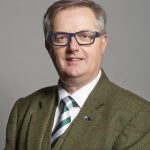
Tag: Brendan O’Hara

  • Brendan O’Hara – 2023 Speech on the Extension of Universal Jurisdiction

    Brendan O’Hara – 2023 Speech on the Extension of Universal Jurisdiction

    The speech made by Brendan O’Hara, the SNP MP for Argyll and Bute, in the House of Commons on 25 April 2023.

    I beg to move,

    That leave be given to bring in a Bill to provide that offences of genocide, crimes against humanity and war crimes may be tried in the United Kingdom regardless of the nationality or residence of the offender; and for connected purposes.

    The Universal Jurisdiction (Extension) Bill would tighten existing legislation on how we bring to justice those responsible for the world’s most heinous crimes. The Bill would allow legal systems across the UK to do that, irrespective of where the crimes were committed, regardless of the nationality or location of the perpetrators or victims, and without having to consider whether the accused person or the victim had any specific connection to the UK. In short, the Universal Jurisdiction (Extension) Bill is about saying to the world’s worst criminals that there is no hiding place and there will be no immunity.

    Under international law, states are required to investigate and, if necessary, prosecute certain crimes under the principle of universal jurisdiction. It is the international community’s way of recognising that there are crimes so grave that we all have an inherent responsibility and collective interest to ensure that they are prosecuted. The Bill seeks to help the UK meet its international responsibilities by amending the International Criminal Court Act 2001. Although that Act gives courts jurisdiction over war crimes, genocide and crimes against humanity, it is still woefully deficient in providing what we would want from legislation claiming to operate universal jurisdiction.

    The main problem with the 2001 Act is that even with the most heinous crimes, if they were committed outside the UK, they can be prosecuted here only if the accused person is a UK national, a UK resident or subject to UK service jurisdiction. While some may say that the UK does have universal jurisdiction when it comes to such crimes, the reality is that what we have in the UK could best be described as a system of extraterritorial jurisdiction. That is what the Bill seeks to remedy, so that we instead have a real and meaningful system of universal jurisdiction for those crimes of genocide, crimes against humanity and war crimes. That is important, because given what is happening in the world right now, this is a live and pressing issue, whether in Ukraine, Myanmar, Xinjiang, Tigray or many, many other places.

    Many people are working right now on how the UK should change its definition of universal jurisdiction. I put on record my thanks to Dr Ewelina Ochab of the International Bar Association’s Human Rights Institute for her invaluable assistance in putting the Bill together. I also thank the Clooney Foundation for Justice, which has done an enormous amount of work on this topic in recent months, and which will in the next couple of months release its own report on universal jurisdiction in the United Kingdom.

    I understand that among that report’s key recommendations will be that the UK Government amend section 51(2)(b) of the International Criminal Court Act 2001 to remove the requirement that for genocide, crimes against humanity and war crimes, the crime needs to have been committed either in the UK or, if committed outside the UK, by a UK national or resident for our courts to have jurisdiction. The report will argue instead that the UK should provide jurisdiction over those international crimes committed anywhere in the world, even when that offence bears no relation to the UK.

    As the Clooney Foundation for Justice report will set out, our courts already have universal jurisdiction when it comes to torture and certain other war crimes, which can be prosecuted regardless of the defendant’s nationality. There is no convincing explanation for the distinction that is drawn between the law on torture and those other international crimes. One consequence of the loophole might well be that Russian generals with blood on their hands could still travel to the UK, go shopping in Knightsbridge, undergo medical treatment and dine out in London’s best restaurants without facing the risk of arrest for the most serious and heinous crimes in the world. The foundation argues that that must change, and I wholeheartedly agree.

    In this changing world, it is becoming increasingly clear that the UK’s position on universal jurisdiction is simply not fit for purpose. That is not just because we operate this extraterritorial jurisdiction, but because under current law, proceedings for international crimes cannot be brought without the consent of the Attorney General. Ultimately that means that decisions to prosecute these crimes will be a political decision. Consequently, the UK cannot possibly play as meaningful a part in ensuring justice and accountability as it should. That may go some way to explaining why, to this day, British courts have not prosecuted anyone for their involvement in genocide, despite the fact that we have suspected perpetrators residing in the UK from both the Rwandan and the Yazidi genocides.

    Even by the Government’s own assessment, almost 1,000 British nationals travelled to Syria and Iraq to join Daesh. They were all complicit in the horrific atrocities, the killings, the rapes, the sexual enslavement of Yazidi women and girls, and much more—so much more, indeed, that this House unanimously declared in April 2016 that Daesh atrocities did indeed constitute a genocide. The UK Government also estimate that 400 British Daesh fighters are now back in the UK, yet only 32 of those returnees have been convicted for terror-related offences, or less than 10% of the returnees. Not one—not a single—Daesh fighter has stood trial in the UK for the rape and sexual enslavement of Yazidi women and children. Not one of them has been charged with torture or the forced recruitment of young boys into the ranks of Daesh fighters. Not one of them has been held to account for the mass graves that are still being uncovered in Sinjar, and not one of them has been asked to explain the fate of the 2,700 Yazidi women and girls who are still unaccounted for. They have all gotten away with genocide.

    But it does not have to be this way. Many of our friends and allies have changed their law to meet the changing situation. In Germany, the law is unambiguous, saying that universal jurisdiction will apply to all criminal offences against international law. That means, regardless of where an offence was committed and whether it involves a German citizen, an accused person can be tried before a German criminal court. It has been this determination to pursue universal jurisdiction—genuine universal jurisdiction—that has resulted in the first ever prosecutions and convictions for members of Daesh for genocide.

    In January 2023, President Biden signed into law the Justice for Victims of War Crimes Act, which greatly expands the scope of individuals who can face prosecution for US war crimes. That Act will assist the Department of Justice in prosecuting alleged war criminals who are found in the United States, regardless of where they committed a crime or the nationality of either the perpetrator or the victim. The law was given extra impetus in the wake of Russia’s invasion of Ukraine, where there is now a growing body of evidence of war crimes being perpetrated by Putin’s army.

    Despite many warm words, the harsh truth is that, if UK domestic law is not strengthened, we will be unable to play a full part in bringing some of the world’s worst criminals to justice. That is why we need proper, universal jurisdiction, and that is why we also need to remove that extra political hurdle of seeking the permission or consent of the Attorney General before we can prosecute for genocide. This Universal Jurisdiction (Extension) Bill aims to address these issues, and help the UK play a full and appropriate role in ensuring justice, accountability and the upholding of international law.

    Question put and agreed to.

    Ordered,

    That Brendan O’Hara, Drew Hendry, Caroline Lucas, Liz Saville Roberts, Kirsty Blackman, Claire Hanna, Patrick Grady, Jim Shannon, Ben Lake, Patricia Gibson and Stewart Malcolm McDonald present the Bill.

    Brendan O’Hara accordingly presented the Bill.

    Bill read the First time; to be read a Second time on Friday 24 November, and to be printed (Bill 296).

  • Brendan O’Hara – 2023 Speech on the UK Visit of Governor of Xinjiang

    Brendan O’Hara – 2023 Speech on the UK Visit of Governor of Xinjiang

    The speech made by Brendan O’Hara, the SNP MP for Argyll and Bute, in the House of Commons on 9 February 2023.

    The right hon. Member for Chingford and Woodford Green (Sir Iain Duncan Smith) is absolutely right that the Government have handed a propaganda gift to Beijing.

    In 2020, the Uyghur tribunal found that, beyond any reasonable doubt, China is responsible for crimes against humanity and the crime of genocide, yet today we find that someone at the heart of those crimes is coming to the UK next week—a man accused by the Inter-Parliamentary Alliance on China of playing a central role in the persecution of the Uyghurs.

    As we have heard, the Government’s position on China has been appallingly weak and goes no further than to urge the Chinese authorities to change their approach. Given that, hitherto, they have failed to move Beijing one iota in its treatment of the Uyghur people, why does the Minister believe that allowing this man to come to the United Kingdom and to meet FCDO officials will suddenly change things? Will it not be exactly the same message that they have given before, and will the Chinese not treat it with exactly the same contempt? Given that that is what will happen, why does the Minister honestly believe that meeting this man will make the slightest difference to Beijing’s approach?

    Leo Docherty

    The hon. Gentleman is questioning the utility of this kind of diplomacy, and it is a reasonable question, but our judgment, institutionally, is that opportunities to send strong messages to these sorts of individuals are useful and will be taken heed of by the state apparatus. I think the expectation of officials was that an invitation should be extended to Uyghur human rights groups in the UK to enable them to engage with this individual directly and send that strong message. I think that was at the core of the judgment that was made.

    Sir Desmond Swayne (New Forest West) (Con)

    Thank you, Mr. Speaker, for making it absolutely clear that this man is not getting in here, even if the Minister is going to give him space in the office. But I ask you this, Sir: is not the very fact that an announcement of his intention to travel has been made—in the language habitual to the Government of China—“a provocation”?

    Mr Speaker

    That is more for the Minister to answer, even though I am tempted.

    Leo Docherty

    I think this is an opportunity to send a robust message from our side about everything we judge completely outrageous and unacceptable in Xinjiang. We therefore judge that there is utility in the prospect of officials meeting this individual.

    John Cryer (Leyton and Wanstead) (Lab)

    Is this the best we can do? This country used to have a tradition—on both sides of the House, in both major parties—of standing up to tyrants, butchers, fascists and great persecutors. That seems to have been abandoned. Is not the only conclusion to be drawn in Beijing from the actions of this Government that we will do nothing to stand up to them?

    Leo Docherty

    We have stood up to China when it comes to Xinjiang. We have sanctioned individuals, and we continue to make the strongest possible representations. That is in line with our policy of robust pragmatism. We will be robust, but we will also engage and send a strong message when opportunities arise.

  • Brendan O’Hara – 2015 Parliamentary Question to the Ministry of Defence

    Brendan O’Hara – 2015 Parliamentary Question to the Ministry of Defence

    The below Parliamentary question was asked by Brendan O’Hara on 2015-11-20.

    To ask the Secretary of State for Defence, what operational assessment has been undertaken of proposals to use the upgraded TPS-77 radar systems at RRH Benbecula and RRH Buchan as mitigation for planned wind turbine developments.

    Mr Philip Dunne

    In respect of the upgrade of the Air Defence radar at Remote Radar Head (RRH) Buchan, the Ministry of Defence (MOD) is in contact with the developers who proposed the upgrade as mitigation for their wind farm proposal.

    At RRH Benbecula, the MOD is in contact with the Western Isles Council and developers via the Council’s Working Group. In addition, the MOD provided an Air Defence update at the Aviation Management Board meeting on 5 November 2015 at which Scottish Government, the wind industry and RenewableUK representatives were present.

    The MOD continues to undertake full technical and operational assessments of all site specific Air Defence radar mitigation proposals, including those to the upgraded TPS-77 radar systems at RRH Benbecula and RRH Buchan. It remains the responsibility of developers to submit site specific mitigation proposals. The MOD will determine whether the impact upon the radar is of a permissible level.

  • Brendan O’Hara – 2016 Parliamentary Question to the Ministry of Defence

    Brendan O’Hara – 2016 Parliamentary Question to the Ministry of Defence

    The below Parliamentary question was asked by Brendan O’Hara on 2016-02-09.

    To ask the Secretary of State for Defence, what the estimated radiological dose uptake was in terms of (a) individual whole equivalent dose in milli-Sievert and (b) collective dose in man-Sievert for (i) Services and his Department’s civilian personnel involved in and responding to the incident, (ii) civilian emergency services personnel responders attending and (iii) members of the public during each Astral exercise between February 2011 and November 2012.

    Penny Mordaunt

    The Ministry of Defence maintains a Defence Nuclear Emergency Organisation (NEO) to respond in the unlikely event of an emergency involving the transport of defence nuclear materials. The NEO organises regular exercises to test the effectiveness of its emergency response planning and arrangements. These include the Astral series of exercises, which are designed to be challenging, and thus simulate the extremely unlikely event of a release of radioactive material from the transport containers. No radioactive materials are used or released to the environment during the exercises. The specific exercise objectives do not require assessments or estimates of decontamination, environmental or other post-incident decontamination costs or of radiological dose uptakes. The Atomic Weapons Establishment (AWE) undertook the modelling for each Astral exercise between February 2011 and November 2012.

    I am withholding information about the physical state, mass quantity, release fraction and total released radioactivity assumed for these exercises as disclosure would or would be likely to prejudice national security.

  • Brendan O’Hara – 2016 Parliamentary Question to the Ministry of Defence

    Brendan O’Hara – 2016 Parliamentary Question to the Ministry of Defence

    The below Parliamentary question was asked by Brendan O’Hara on 2016-05-18.

    To ask the Secretary of State for Defence, when the Section 104 Order covering fatal accident inquiry military deaths will come into force.

    Penny Mordaunt

    The Section 104 Order aims to make a Fatal Accident Inquiry (FAI) mandatory for any Service personnel who are killed in the course of their duties in Scotland. This provision will bring Scotland in line with the equivalent position in England and Wales. The Order is scheduled to be made in December 2016 subject to agreement from both UK and Scottish Ministers.

  • Brendan O’Hara – 2016 Parliamentary Question to the Ministry of Defence

    Brendan O’Hara – 2016 Parliamentary Question to the Ministry of Defence

    The below Parliamentary question was asked by Brendan O’Hara on 2016-10-10.

    To ask the Secretary of State for Defence, whether a British firm made a bid to supply steel for the Trident replacement.

    Harriett Baldwin

    No viable UK bid was received by the Prime Contractor, BAE Systems, to supply the specialised steel required for this part of the Successor submarine manufacture.

    Other stages of construction will include grades of steel manufactured by British suppliers and we expect them to take the opportunity to bid.

    The Successor programme represents billions of pounds of investment in thousands of British jobs across hundreds of companies from Scotland to the South East.

    85% of BAE System’s supply chain for the new submarines is based in the UK.

  • Brendan O’Hara – 2015 Parliamentary Question to the Ministry of Defence

    Brendan O’Hara – 2015 Parliamentary Question to the Ministry of Defence

    The below Parliamentary question was asked by Brendan O’Hara on 2015-12-10.

    To ask the Secretary of State for Defence, what steps his Department is taking to reduce shortages in the number of trained air warfare personnel; and what assessment he has made of the effect of that shortage on military operations in Iraq and Syria.

    Penny Mordaunt

    The term "air warfare personnel" is not recognised within the Royal Air Force. Allocation of manpower is sensibly prioritised to ensure that operational needs are met in full.

  • Brendan O’Hara – 2016 Parliamentary Question to the Ministry of Defence

    Brendan O’Hara – 2016 Parliamentary Question to the Ministry of Defence

    The below Parliamentary question was asked by Brendan O’Hara on 2016-02-09.

    To ask the Secretary of State for Defence, what (a) atmospheric stability class was assumed for the downwind dispersion and deposition of the release fall-out; and what the assumed distribution and gross area of ground and surface contamination was in terms of contours versed in Becqueral per square metre in each Astral exercise between February 2011 and November 2012.

    Penny Mordaunt

    I am withholding the requested information as its disclosure would or would be likely to prejudice national security and international relations.

  • Brendan O’Hara – 2016 Parliamentary Question to the Department for Business, Innovation and Skills

    Brendan O’Hara – 2016 Parliamentary Question to the Department for Business, Innovation and Skills

    The below Parliamentary question was asked by Brendan O’Hara on 2016-07-06.

    To ask the Secretary of State for Business, Innovation and Skills, what the UK Trade and Investment Defence and Security Organisations’ priority markets are for 2016-17.

    Anna Soubry

    The UK Trade and Investment business forecasting process for 2016/17 has identified 35 markets with strong defence and security opportunities. They are:

    Australia

    Bahrain

    Belgium

    Brazil

    Brunei

    Canada

    Chile

    Colombia

    Denmark

    Finland

    France

    Germany

    India

    Indonesia

    Italy

    Japan

    Kuwait

    Lithuania

    Malaysia

    Mexico

    Netherlands

    New Zealand

    Norway

    Oman

    Poland

    Qatar

    Saudi Arabia

    Singapore

    South Africa

    South Korea

    Sweden

    Thailand

    Turkey

    United Arab Emirates

    United States of America

  • Brendan O’Hara – 2016 Parliamentary Question to the Department for International Development

    Brendan O’Hara – 2016 Parliamentary Question to the Department for International Development

    The below Parliamentary question was asked by Brendan O’Hara on 2016-10-10.

    To ask the Secretary of State for International Development, what steps her Department is taking to assist the government of Malawi with minimising the risk of corruption in the distribution of aid funds.

    James Wharton

    The UK does not provide any direct financial aid to the Government of Malawi. DFID has a zero tolerance approach to corruption and rigorous checks are in place to protect taxpayers’ money.

    DFID has an active programme of work in Malawi designed to tackle the root causes of corruption and protect the poorest from its effects. Through support provided to the Malawian law enforcement agencies since 2013, the UK has helped to convict those guilty of corruption-related offences to a total of 125 years in prison. DFID is also working with the Government of Malawi to strengthen its public financial management systems and increase the accountability of public officials.