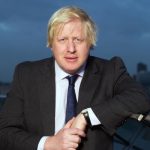
Tag: Boris Johnson

  • Boris Johnson – 2021 Speech at the Global Education Summit

    Boris Johnson – 2021 Speech at the Global Education Summit

    The speech made by Boris Johnson, the Prime Minister, on 29 July 2021.

    Well, good evening, good afternoon ladies and gentlemen, thank you. Thank you and congratulations to you all. Great to see you in person, by the way, isn’t it wonderful that the vaccines have liberated us to be able to come to this conference in London, a wonderful thing.

    Great to see you all, despite your masks, I see some familiar friends in spite of the masks, some of you have taken your masks off in a daring way, but that’s absolutely fine – you’re socially distanced.

    Now listen everybody I want to thank you all for raising your hands, raising your hands high and then thrusting them deep into your pockets in the way that you are, producing this staggering sum of $4 billion going on $5 billion. We often go to summits, we did before COVID struck, and we’d see very often a lot of men in suits, let’s be clear men in suits basically saying that there was a problem before humanity that was so big and so intractable that there was no silver bullet, no quick fix, no simplistic solution. Have you ever been in a meeting like that? Well, this is not that meeting. I want to say this GPE, this Global Partnership for Education, is completely different because this is the silver bullet, this is the magic potion, this is the panacea. This is the universal cure, this is the Swiss Army knife, complete with allen key and screwdriver and everything else that can solve virtually every problem that afflicts humanity.

    And I’m absolutely serious, if you educate the world properly and fairly then of course you end a great natural injustice. But also, if you end the injustice that nine out of ten 10 year olds cannot read a story around the country, 132 million kids aren’t in school or in many of the countries represented here, alas, there are too few girls in school, and there is a gross disparity, a gross disparity in the education of boys and girls. If you end that injustice and you give every girl in the world the same education as every boy, 12 years of quality education, then you perform the most fantastic benefits for humanity- you lift life expectancy, you lift per capita GDP, you deal with infant mortality, and if you educate proper people properly in the way that they deserve then of course you end or you help to end all kinds of ignorance and prejudice and by educating people you help to end all the things that ignorance and prejudice help to create so you deal with terrorism and with war and extremism, and you help people to tackle climate change.

    And so I’m immensely proud of the achievements of this GPE Summit today, I’m proud of what the UK has been able to contribute in spite of the difficult financial circumstances that we’re all going through. We have lashed out 430 million pounds, as Julia rightly pointed out, the biggest sum we’ve ever contributed and I’m proud of the work we do around the world helping to educate young people across our planet, giving lessons in Hauser on the radio in Nigeria, I think it’s amazing to see what we do in South Asia teaching young girls in schools. Now I know, as Uhuru has said, that this pandemic has made things more difficult and we’ve lost ground and we all know the risk that inequality will now be entrenched but now is the time to make up that ground.

    Necessity has been the mother of invention, we’ve all learned how to cope with Zoom, some of us better than others. I think the younger generation probably are getting the hang of this electronic technology perhaps even better than some of us here in this room and they understand how to impart and imbibe information through the internet and I think we’ve got to make sure that we support through our GP, we support Edtech, we support the technical progress that we can make through laptops, through devices of all kinds, we should support the creation of infrastructure of classrooms, of course that’s the right thing to do.

    But never forget fundamentally what this is all about, what is education? Education is the imparting of knowledge of instruction by one human being to another. The people we really need to thank and the people we really need to think about are the teachers across the world. Everybody in this room will probably have somebody that you can think of that was the teacher who made the difference to your life, who encouraged you, who gave you confidence, can you think of one Julia? Mr Crow, there you go, well Julia would not be here without Mr Crow, let’s hear it for Mr crow. Uhuru, I seem to remember that lesson, do you remember that lesson we did with your kids. I owe a lot to all my teachers but I think in particular have a guy called Mr Fox, when I was about, I think about 10 years old, and he took me into the library and I don’t know whether he thought I was in need of remedial help, or whether he thought I had potential, it was never clear to me but he said to me I want you to read these books and it made a fantastic difference and a lasting difference to my life.

    I just want to say the best thing about this summit here today is that we are supporting with huge injections of cash those amazing people across the world who are inspiring young people to think that they can succeed. And they can succeed. And by the way let me give you one idea, someone somewhere, some child somewhere who is being supported by the over 4bn dollars, [what is it? there’s some doubt about this, oh it’s over 4bn dollars but going to be 5bn over 5 years] but some child somewhere may well be the one who goes on to develop the next vaccine to deal with cancer or whatever other problem afflicts humanity. Some kid around the world will absolutely no doubt have their lives transformed, many many kids will have their lives transformed by these funds and that is the objective- to unleash potential across the planet.

    It’s a fantastic thing that you’ve done, I’m very very proud the UK has been able to be part of it and with Uhuru with Julia to offer leadership.

    Thank you for coming to London, thank you for supporting the GPE, thank you for digging into your pockets and thank you for investing in education and young people across our planet, it is the single best investment we can make in the future of humanity. Thank you all.

  • Boris Johnson – 2021 Comments on Beating Crime Plan

    Boris Johnson – 2021 Comments on Beating Crime Plan

    The comments made by Boris Johnson, the Prime Minister, on 27 July 2021.

    When I first stood on the steps of Downing Street as Prime Minister, I promised to back the police and make people safer, because we cannot level up the country when crime hits the poorest hardest and draws the most vulnerable into violence.

    That is why my government has remained unstinting in its efforts to protect the British public and this plan delivers a fresh commitment, as we emerge from the impacts of the pandemic, to have less crime, fewer victims and a safer society.

  • Boris Johnson – 2021 Statement on Foreign Aid Cuts

    Boris Johnson – 2021 Statement on Foreign Aid Cuts

    The statement made by Boris Johnson, the Prime Minister, on 13 July 2021.

    I beg to move,

    That this House has considered the Written Ministerial Statement relating to Treasury Update on International Aid, which was made to the House on Monday 12 July.

    I believe that, on this vital subject, there is common ground between the Government and hon. Members on both sides of the House, in the sense that we believe in the power of aid to transform millions of lives. That is why we continue to agree that the UK should dedicate 0.7% of our gross national income to official development assistance.

    This is not an argument about principle. The only question is when we return to 0.7%. My purpose today is to describe how we propose to achieve this shared goal in an affordable way.

    Here we must face the harsh fact that the world is now enduring a catastrophe of a kind that happens only once a century. This pandemic has cast our country into its deepest recession on record, paralysing our national life, threatening the survival of entire sectors of the economy and causing my right hon. Friend the Chancellor to find over £407 billion to safeguard jobs and livelihoods and to support businesses and public services across the United Kingdom. He has managed that task with consummate skill and ingenuity, but everyone will accept that, when we are suddenly compelled to spend £407 billion on sheltering our people from an economic hurricane never experienced in living memory, there must inevitably be consequences for other areas of public spending.

    Last year, under the pressure of the emergency, our borrowing increased fivefold to almost £300 billion—more than 14% of GDP, the highest since the second world war. This year, our national debt is climbing towards 100% of GDP, the highest for nearly six decades. The House knows that the Government have been compelled to take wrenching decisions, and the International Development (Official Development Assistance Target) Act 2015 expressly provides that fiscal circumstances can allow departure from the 0.7% target.

    Sir Robert Neill (Bromley and Chislehurst) (Con)

    I am grateful to my right hon. Friend and the Chancellor for their constructive engagement with those of us who have been profoundly concerned about our departure from the aid target. Will he reconfirm to me and to the House that this is not a fiscal trap, and that the mechanism set out in a written ministerial statement is a genuine and full-hearted attempt to return to our commitment of 0.7% at the very earliest economically sustainable opportunity?

    The Prime Minister

    I thank my hon. Friend for his work on and expertise in this matter. I know how deeply he cares about this, in common with many other Members across the House, and I can indeed give him that confirmation. The decision that we made was temporary, to reduce our aid budget to 0.5% of national income.

    Mr Andrew Mitchell (Sutton Coldfield) (Con)

    Will the Prime Minister give way?

    The Prime Minister

    With great respect, if the House will allow me, I will make as much progress as I can in this speech, and then allow the, I think, 77 others who wish to contribute to have their say, so I will not take any more interventions.

    In the teeth of this crisis, amid all the other calls on our resources, we can take pride in the fact that the UK will still invest at least £10 billion in aid this year—more, as a share of our GDP, than Canada, Japan, Italy and the United States. It would be a travesty if hon. Members were to give the impression that the UK is somehow retreating from the field of international development or lacking in global solidarity. As I speak, this country is playing a vital role in the biggest and fastest global vaccination programme in history. We helped to create COVAX, the coalition to vaccinate the developing world, and we have invested over half a billion pounds in this crucial effort, which has so far distributed more than 100,00 million doses to 135 countries.

    The Government’s agreement with Oxford University and AstraZeneca succeeded in producing the world’s most popular vaccine, with over 500 million doses released to the world, mainly to low and middle-income countries, saving lives every hour of every day. The UK’s expertise and resources have been central to the global response to the emergency, discovering both the vaccine and the first life-saving treatment for covid. We have secured agreement from our friends in the G7 to provide a billion vaccines to protect the world by the end of next year, and 100 million will come from the UK. We are the third biggest sovereign donor to the World Health Organisation, and the top donor to Gavi, the Vaccine Alliance, which vaccinates children against killer diseases.

    We are devoting £11.6 billion, double our previous commitment, to helping developing countries to deal with climate change, including by protecting their forests and introducing green energy. I can tell the House that this vital investment will be protected.

    When it comes to addressing one of the world’s gravest injustices—the tragedy that millions of girls are denied the chance to go to school—the UK has pledged more than any other country, £430 million, to the Global Partnership for Education, in addition to the £400 million that we will spend on girls’ education this year.

    Later this month, I will co-host a summit of the partnership in London with President Kenyatta of Kenya. Wherever civil wars are displacing millions or threatening to inflict famine in Syria, Yemen, Ethiopia or elsewhere, the UK is responding with over £900 million of help this year, making our country the third-largest bilateral humanitarian donor in the world. It bears repeating that we are doing this in the midst of a terrible crisis, when our public finances are under greater strain than ever before in peacetime history and every pound we spend in aid has to be borrowed. It represents not our money, but money we are taking from future generations.

    Last year, we dissolved the old divide between aid and diplomacy that once ran through the entire Whitehall machine, by creating the new Foreign, Commonwealth and Development Office. In doing so, my objective was to ensure that every diplomat in our service was actuated by the mission and vision of our finest development officials, and that our aid was better in tune with our national values and our desire to be a force for good in the world. So I can assure any hon. Member who wishes to make the case for aid that they are, when it comes to me or to anyone in the Government, preaching to the converted. We shall act on that conviction by returning to 0.7% as soon as two vital tests have been satisfied. The first is that the UK is no longer borrowing to cover current or day-to-day expenditure. The second is that public debt, excluding the Bank of England, is falling as a share of GDP.

    Mr Mitchell

    Will the Prime Minister give way?

    The Prime Minister

    I am just coming to the end. The moment the Office for Budget Responsibility forecasts show that both of those conditions will sustainably be met, from the point at which they are met we will willingly restore our aid budget to 0.7%.

    Yvette Cooper (Normanton, Pontefract and Castleford) (Lab)

    Will the Prime Minister give way?

    The Prime Minister

    Plenty of people want to speak in this debate. The Government will of course review the situation every year and place a statement before this House in accordance with the International Development (Official Development Assistance Target) Act 2015. But as we conduct that annual review, we will fervently wish to find that our conditions have been satisfied. This is one debate where the Government and hon. Members from across the House share the same objective—

    Yvette Cooper

    Will the Prime Minister give way?

    The Prime Minister

    I am sure the right hon. Lady will have plenty of time later on.

    As I was saying, we share the same objective and the same fundamental convictions. We all believe in the principle that aid can transform lives, and by voting for this motion, hon. Members will provide certainty for our aid budget and an affordable path back to 0.7%, while also allowing for investment in other priorities, including the NHS, schools and the police. As soon as circumstances allow and the tests are met, we will return to the target that unites us, and I commend this motion to the House.

  • Boris Johnson – 2021 Statement at Press Conference on Covid-19

    Boris Johnson – 2021 Statement at Press Conference on Covid-19

    The statement made by Boris Johnson, the Prime Minister, on 12 July 2021.

    Like millions of people across this country I woke up this morning sad and rueful, but also filled with pride and hope and with thanks to Gareth Southgate and the whole England squad for the best campaign by any England team in any tournament that I can remember.

    They made history. They lifted our spirits – and they brought joy to this country and I know that they will continue to do so.

    And to those who have been directing racist abuse at some of the players, I say shame one you, and I hope you will crawl back under the rock from which you emerged.

    Because the entire team played like heroes and I’m sure that this is just the beginning of their achievements. I say bring on Qatar next year, and let’s also dare to start to hope that together with Ireland our United Kingdom can host the World Cup in 2030.

    Turning now to step four of our roadmap, we’ve come to a stage in the pandemic when there is no easy answer or obvious date for unlocking. We have cases rising significantly – with more than 30,000 per day. And we can see what is happening across Europe as the Delta variant takes hold among our friends.

    We know we’re going to see more hospitalisations and more deaths from Covid. But we also know that this wave was clearly foreseen by our scientists when we first set out that roadmap in February.

    And if anything, so far, we are in the middle range of their projections for infections and at the lower end of their projections for mortality.

    And we also know that if we were now to delay this 4th step – for instance to September or later – then we would be re-opening as the weather gets colder and as the virus acquires a greater natural advantage and when schools are back.

    And so we think now is the right moment to proceed, when we have the natural firebreak of the school holidays in the next few days. And Chris and Patrick will set out, in just a minute, how we are meeting the four tests for step 4 in England.

    But it is absolutely vital that we proceed now with caution. And I cannot say this powerfully or emphatically enough. This pandemic is not over. This disease coronavirus continues to carry risks for you and for your family.

    We cannot simply revert instantly from Monday 19th July to life as it was before Covid.

    We will stick to our plan to lift legal restrictions and to lift social distancing, but we expect and recommend that people wear a face covering in crowded and enclosed spaces where you come into contact with those you don’t normally meet, such as on public transport.

    We’re removing the Government instruction to work from home where you can but we don’t expect that the whole country will return to their as one desks from Monday. And we’re setting out guidance for business for a gradual return to work over the summer.

    And as a matter of social responsibility we’re urging nightclubs and other venues with large crowds to make use of the NHS Covid Pass – which shows proof of vaccination, a recent negative test or natural immunity – as a means of entry.

    We’re updating our guidance for the Clinically Extremely Vulnerable on how they can keep themselves safe and I generally urge everyone to keep thinking of others and to consider the risks.

    We’ll keep our tough border policy, including quarantine for those arriving from red list countries.

    And we’ll keep the test, trace and isolate system in place.

    Every week that goes by we are getting hundreds of thousands more jabs into arms and our delay to the road map that we announced last month has enabled us to get 7 million more jabs in the last 4 weeks alone.

    By next Monday, two-thirds of adults will have received a second dose and every adult will have been offered a first dose.

    And it is the single most crucial thing now that you get that jab. A jab that could protect you and your family – and allow you, for instance, to go on holiday.

    And it is of course only thanks to the vaccine programme that we are able to take these cautious steps now. But to take these steps we must be cautious and we must be vaccinated.

    So please get that jab.

  • Boris Johnson – 2021 Comments on the CPTPP Partnership

    Boris Johnson – 2021 Comments on the CPTPP Partnership

    The comments made by Boris Johnson, the Prime Minister, on 22 June 2021.

    Membership of the CPTTP [sic] free-trade partnership would open up unparalleled opportunities for British businesses and consumers in the fast-growing Indo-Pacific.

    It’s an exciting opportunity to build on this country’s entrepreneurial spirit and free trading history to bring economic benefits across the whole of the UK.

  • Boris Johnson – 2021 Comments on Amazon Destroying Large Quantities of Unsold Stock

    Boris Johnson – 2021 Comments on Amazon Destroying Large Quantities of Unsold Stock

    The comments made by Boris Johnson, the Prime Minister, on 21 June 2021.

    It sounds incredible to me, an indictment of a consumerist society, if it’s as you say, we will look into it.

    Obviously we don’t like stuff going to landfill under any circumstances that’s why we have the landfill tax and landfill credit scheme, and everything else.

    I’m afraid it’s one of those things we’re just going to have to look into and get back to you.

    We want to see more reuse, we want to see more recycling but above all we want to stop people using things that are going to be, ultimately, polluting our seas, our world and that means cutting down our use of plastics, you name it.

  • Boris Johnson – 2021 Article on Science

    Boris Johnson – 2021 Article on Science

    The article written by Boris Johnson, the Prime Minister, on 21 June 2021. The article was published in the Daily Telegraph and republished by the Cabinet Office.

    I cannot think of a time in the last 100 years when the entire population of this country has been so deeply and so obviously indebted to science – and to scientists.

    Had it not been for our scientists, we would not now be able to enjoy the most basic human freedoms: hugging relatives, meeting friends, playing football, going to the pub; or at least not without the risk of spreading a lethal disease.

    It is thanks to the vaccine roll-out that literally every person and every family in this country has an immediate future that is happier, more prosperous, more full of hope and opportunity, and if you think I am belabouring this point, it is because it needs belabouring.

    We have spent too long in a state of semi-detachment from science, as though it was something intimidating and remote from our lives. Too many people in our country lack training in science and technology, too many children think STEM subjects are not for them.

    Most glaringly of all, this country has failed for decades to invest enough in scientific research, and that strategic error has been compounded by the decisions of the UK private sector.

    It is a wretched fact that British firms are currently investing a fraction of the OECD average on research; and though the speed of the discovery of Oxford AstraZeneca was little short of miraculous, it was also something of a miracle that it took place here at all. Before Covid, the UK domestic vaccine industry had almost perished out of benign neglect.

    Had a couple of investment decisions gone the other way, this country might not have possessed the skills or practical capability to make vast batches of the vaccine that has been so indispensable to our success.

    So this is the moment to learn this stark lesson of the pandemic – our daily dependence on high-quality scientific research. It is also the moment to abandon any notion that government can be strategically indifferent, or treat research as a matter of abstract academic speculation.

    I am not suggesting that government should try to exercise scientific judgment, or impose some dogma on the scientific world – like the deranged genetic theories of Stalinist Russia.

    On the contrary, it is because we want to support high science, and to foster research that may or may not lead nowhere, that we are setting up the high-risk high reward ARIA agency, on the lines of DARPA in the US. We need to intensify the search for the unknown unknowns.

    And then there are the known unknowns, the nuts we know we need to crack, for the sake of our health and happiness. If the covid experience has taught us anything, it is that government does have a role in making demands, in explicitly framing the challenges we hope that science can meet.

    If we don’t, there are others who will. We made no particular effort to develop 5G, for instance, and we have paid a price. For the first time since the second world war, the largest western democracies were left behind in the race for a major new communications technology. It is a mistake that has proved expensive to rectify, and we don’t want to make another one like it.

    So we are investing unprecedented sums, increasing government spending to £22 billion for scientific research of all kinds; and we need to use those billions of state spending to leverage in the many more billions of the markets.

    One way to encourage those private sector investments is to give the market players the confidence that they are backing national priorities – so that public and private sector come together to deliver the breakthroughs, like the covid vaccine, that can transform our lives and economic prospects.

    To shape those priorities I will be chairing a new National Science and Technology Council, with Sir Patrick Vallance as my National Technology Adviser, so that together we can give the scientific world – in academia and across commercial laboratories – a sense of where we think we need to go.

    Some imperatives are already obvious. We need science urgently to accelerate the solutions that will help us to tackle climate change. We need progress on efficient power storage, hydrogen manufacture, net zero aviation, and other knotty problems raised in our ten point plan. We have a huge challenge to meet net zero by 2050, and not much time. But the vaccine programme has shown that when the pressure is on, humanity can produce feats of Manhattan Project-like speed, as the research of decades is compressed into months. It will be the job of the new National Science and Technology Council to signal the challenges – perhaps even to specify the breakthroughs required – and we hope that science, both public and commercial, will respond.

    We will be thinking about medical imperatives, such as tackling dementia or using new gene therapies to cure the hitherto incurable.

    We will be thinking about the new threats and opportunities in cyber, in space, and in the field of AI. We will of course be hoping that British science will play a leading role in fixing the problems of the world, providing everything from cheaper pharmaceuticals to drought-resistant crops.

    We will pursue these missions not just because each breakthrough could be a boon for humanity, but also because we want to see the expansion of scientifically-led start-ups and scale-ups, and a growth that goes beyond the golden triangle of Oxford-London-Cambridge and across the whole country.

    We want the UK to regain its status as a science superpower, and in so doing to level up. The UK has so many of the necessary ingredients: the academic base (four of the world’s top ten universities), a culture of innovation, the amazing data resource of the NHS, the capital markets.

    What we are offering now is record funding combined with the strongest possible political support and backing for science and a clear indication of where government sees greatest need.

    Of course we must generously fund pure science. We must allow for serendipity. You cannot plot or plan every breakthrough. But you can certainly set out to restore Britain’s place as a scientific superpower – while simultaneously driving economic prosperity and addressing the great challenges we face – and that is the plan of the government.

  • Boris Johnson – 2021 Statement on Covid-19

    Boris Johnson – 2021 Statement on Covid-19

    The statement made by Boris Johnson, the Prime Minister, in Downing Street on 14 June 2021.

    When we set out on our roadmap to freedom a few months ago, we were determined to make progress that was cautious but irreversible. And step by step – thanks to the enormous efforts of the British people and the spectacular vaccine roll-out we now have one of the most open economies and societies in this part of the world.

    And as we have always known and as the February roadmap explicitly predicted – this opening up has inevitably been accompanied by more infection and more hospitalisation. Because we must be clear that we cannot simply eliminate Covid – we must learn to live with it. And with every day that goes by we are better protected by the vaccines and we are better able to live with the disease.

    Vaccination greatly reduces transmission and two doses provide a very high degree of protection against serious illness and death. But there are still millions of younger adults who have not been vaccinated and sadly a proportion of the elderly and vulnerable may still succumb even if they have had two jabs.

    And that is why we are so concerned by the Delta variant that is now spreading faster than the third wave predicted in the February roadmap. We’re seeing cases growing by about 64 per cent per week, and in the worst affected areas, it’s doubling every week. And the average number of people being admitted to hospital in England has increased by 50 per cent week on week, and by 61 per cent in the North West, which may be the shape of things to come. Because we know the remorseless logic of exponential growth and even if the link between infection and hospitalisation has been weakened it has not been severed.

    And even if the link between hospitalisation and death has also been weakened, I’m afraid numbers in intensive care, in ICU are also rising. And so we have faced a very difficult choice. We can simply keep going with all of step 4 on June 21st even though there is a real possibility that the virus will outrun the vaccines and that thousands more deaths would ensue that could otherwise have been avoided.

    Or else we can give our NHS a few more crucial weeks to get those remaining jabs into the arms of those who need them. And since today I cannot say that we have met all four tests for proceeding with step four, I do think it is sensible to wait just a little longer.

    By Monday 19th July we will aim to have double jabbed around two thirds of the adult population including everyone over 50, all the vulnerable, all the frontline health and care workers and everyone over 40 who received their first dose by mid-May. And to do this we will now accelerate the 2nd jabs for those over 40 – just as we did for the vulnerable groups – so they get maximum protection as fast as possible.

    And we will bring forward our target to give every adult in this country a first dose by 19th July that is including young people over the age of 18 with 23 and 24 year olds invited to book jabs from tomorrow – so we reduce the risk of transmission among groups that mix the most. And to give the NHS that extra time we will hold off step 4 openings until July 19th except for weddings that can still go ahead with more than 30 guests provided social distancing remains in place and the same will apply to wakes. And we will continue the pilot events – such as Euro2020 and some theatrical performances. We will monitor the position every day and if after 2 weeks we have concluded that the risk has diminished then we reserve the possibility of proceeding to Step 4 and full opening sooner.

    As things stand – and on the basis of the evidence I can see right now – I am confident we will not need any more than 4 weeks and we won’t need to go beyond July 19th. It is unmistakably clear the vaccines are working and the sheer scale of the vaccine roll-out has made our position incomparably better than in previous waves.

    But now is the time to ease off the accelerator because by being cautious now we have the chance – in the next four weeks – to save many thousands of lives by vaccinating millions more people. And once the adults of this country have been overwhelmingly vaccinated, which is what we can achieve in a short space of time, we will be in a far stronger position to keep hospitalisations down, to live with this disease, and to complete our cautious but irreversible roadmap to freedom.

  • Boris Johnson – 2021 Statement at the G7 Summit

    Boris Johnson – 2021 Statement at the G7 Summit

    The statement made by Boris Johnson, the Prime Minister, at the G7 Summit in Cornwall on 13 June 2021.

    This Summit was the first gathering of G7 leaders – in fact the first gathering of pretty much any leaders – in almost two years.

    And I know the world was looking to us to reject some of the selfishness and nationalist approaches that have marred the initial global response to the pandemic, and to channel all our diplomatic, economic and scientific might into defeating covid for good.

    And I do hope we have lived up to some of the most optimistic of hopes and predictions

    I should say I am sorry to hear that, owing to their pre-existing commitments, the England football team are not able to watch this press conference live in the way I’m sure they’d like to.

    But I hope that, following their resounding victory, they will be able to catch up on the triumphs of the G7 later on.

    A week ago I asked my fellow leaders to help in preparing and providing the doses we need to help vaccinate the whole world by the end of 2022.

    I’m very pleased to announce that this weekend leaders have pledged over 1 billion doses – either directly or through funding to COVAX – that includes 100 million from the UK, to the world’s poorest countries – which is another big step towards vaccinating the world.

    And that’s in addition to everything scientists and governments and the pharmaceutical industry have done so far to roll out one of the largest vaccination programmes in history.

    And here I want to mention, in particular, the role the Oxford-AstraZeneca vaccine – the world’s most popular vaccine, developed 250 miles from where I’m standing today- by scientists who have rightly been given honours by the Queen this weekend.

    Today over half a billion people are safe because of the development and production of that vaccine, funded – I may add – by the UK Government. And that number is rising every day.

    It is popular, of course, because it is being sold at cost to the world and it was designed for ease of use in mind.

    And because of that act of generosity by AstraZeneca who, just to reiterate, are making zero profit on the production of that vaccine, millions more vaccines have been rolled out to the poorest countries in the world. In fact 96% of the vaccines delivered by the COVAX distribution scheme have been Oxford-AZ.

    But this weekend our discussions went far beyond defeating the pandemic.

    We looked towards the great global recovery our countries have committed to lead, and we were clear that we all need to build back better in a way that delivers for all our people and for the people of the world.

    And that means preventing a pandemic like this from ever happening again, apart from anything else by establishing a global pandemic radar which will spot new diseases before they get the chance to spread.

    It means ensuring that our future prosperity benefits all the citizens of our countries and indeed all the citizens of the world.

    At the G7 Summit this weekend, my fellow leaders helped the Global Partnership for Education – an organisation working to make sure that every child in the world is given the chance of a proper education – reach half of its five-year fundraising goal, including a £430m donation from the UK.

    It’s an international disgrace that some children in the world are denied the chance to learn and reach their full potential, and I’m very very pleased that the G7 came together to support that cause.

    Because educating all children, particularly girls, is one of the easiest ways to lift countries out of poverty and help them rebound from the coronavirus crisis. With just one additional year of school a girl’s future earnings can increase by 20%.

    I’m proud that G7 countries have agreed to get 40 million more girls into school and 20 million more reading by the end of primary school in the next five years, and the money we have raised this week is a fantastic start.

    But of course the world cannot have a prosperous future if we don’t work together to tackle climate change.

    Later this year the UK will host the COP26 Summit, which will galvanise global action on fighting climate change and create a healthy planet for our children and grandchildren.

    G7 countries account for 20% of global carbon emissions, and we were clear this weekend that action has to start with us.

    Carbis Bay is one of the most beautiful places in the world as you can see and it was a fitting setting for the first ever net zero G7 Summit.

    And while it’s fantastic that every one of the G7 countries has pledged to wipe out our contributions to climate change, we need to make sure we’re achieving that as fast as we can and helping developing countries at the same time.

    And what unites the countries gathered here this weekend – not just the G7 but Australia, India, South Africa and South Korea who have joined us (I should say in India’s case joined us virtually) not just our resolve to tackle climate change, but also our democratic values.

    It’s not good enough for us to just rest on our laurels and talk about how important those values are. And this isn’t about imposing our values on the rest of the world. What we as the G7 need to do is demonstrate the benefits of democracy and freedom and human rights to rest of the world.

    And we can partly achieve that by the greatest feat in medical history – vaccinating the world.

    We can do that by working together to stop the devastation that coronavirus has produced from ever occurring again.

    And we can do that by showing the value of giving every girl in the world access to 12 years of quality education.

    And we can also do that by coming together as the G7 and helping the world’s poorest countries to develop themselves in a way that is clean and green and sustainable

    I want to thank finally, the police, everyone who helped organised this summit and all the people not just of Carbis bay (who certainly helped us put the carbs into Carbis Bay), but all the wonderful people of Cornwall for their hospitality. It’s been a fantastic summit and I know that all the other delegations would want to express their thanks as well.

  • Boris Johnson – 2021 Comments on NATO

    Boris Johnson – 2021 Comments on NATO

    The comments made by Boris Johnson, the Prime Minister, on 14 June 2021.

    NATO is not just important to the UK’s security, it is our security.

    NATO owes it to the billion people we keep safe every day to continually adapt and evolve to meet new challenges and face down emerging threats. This will ensure NATO is still the bedrock of global defence for generations to come.

    As we recover from the global devastation wreaked by the coronavirus pandemic we need to do so with secure foundations. The peace and stability brought by NATO has underpinned global prosperity for over 70 years, and I have every confidence it will continue to do so now.