Tag: Book Reviews

  • BOOK REVIEW : Ten Years to Save the West by Liz Truss

    BOOK REVIEW : Ten Years to Save the West by Liz Truss

    BUY ON AMAZON


    It’s fair to say that Liz Truss had a difficult few weeks as Prime Minister. She’s not the only politician to have faced a troubled reputation, but the careful crafting together of a clever, thoughtful and penetrating auto-biography can change matters somewhat. Although Truss hasn’t written a full auto-biography, she has sought to address many of the issues which caused her trouble when in office.

    Early on in the book, Truss addresses her thoughts about the Monarch dying, noting “why me, why now?” to hearing the news. This is an honest thing to recount, any individual would feel that this is unfortunate timing at best, although perhaps it needed more humility in general to balance what feels instead as quite a self-centred first few chapters. And that is the challenge here, writing a book which shows an understanding of what went wrong, but the writing style doesn’t burden itself with focusing on that.

    Some passages are odd, the former Prime Minister writing “I have strong views about the bold changes required to ensure that freedom and democracy win”, but this is inevitably true of most those who seek to be elected to the House of Commons. There are few political figures who don’t have strong views about making changes to the current system. However, these appear to be views she genuinely holds, as later on she accuses David Cameron of “not being prepared to do the bold things that Britain needed”. She might have disagreed with his views and policies, but Cameron did oversee some substantial structural changes in many areas.

    On justice, her views look towards the United States and she is unashamedly in support of their criminal justice system, writing “I looked enviously across the Atlantic where there were elected judges and prosecutors and a constitutionally appointed Supreme Court”. The attacks on others come thick and fast, “the sheer level of snobbery, the power of vested interests and the disdain for the democratically decided will of the British people, whether it was over Brexit or immigration, shocked me”.

    There are some aspects where criticism seems to flow easily from Truss, condemning Sue Gray for hugging her after she received bad news and noting “I didn’t welcome her unsolicited embrace, but given how delicate I was feeling, she got off lightly”. It felt like a passage that didn’t need to be included in the book, a cheap attack on someone trying to be kind that could have been dealt with at the time. Truss then smashes into the “anti-growthers” in Cabinet, as if any Conservative Cabinet Minister was supportive of shrinking the economy. Instead of looking like a thoughtful and reflective former senior political figure, there’s almost a sneering attitude which is missing from the last several books written by former Prime Ministers.

    Truss is better on Ukraine, perhaps because she can point her obvious anger at Putin, rather than directing it towards whatever civil servant or Cabinet colleague she could find. She seems to have accepted the view early on that Putin was a real threat to Ukraine in terms of a widespread military attack far more extensive than their previous occupation attempts, trying to get other countries to get behind her concerns. But, the approach that Truss takes is finding a common enemy and although it might play well on Ukraine, there is an argument that politics should bring people together and not divide them.

    When Johnson was deposed, this led Truss to see her opportunity, although it was inevitable that she had some concerns. She wrote:

    “My husband Hugh said it would be impossible to lead the party, given the level of infighting and nihilism demonstrated by the removal of Boris. The Conservatives were too divided to back any decisive course of action, he said. Even Hugh, who predicted it would all in tears, accepted that this was the moment I was expected to run and that if I didn’t, people would say that I had bottled it. Ian Sherwood, my political agent in my Norfolk constituency, also thought I should run – but he thought it would be for the best if I came second”.

    Whereas other former Prime Ministers talk about the sense of wonder of Downing Street and the new life, Truss focuses on the negatives with some force. She notes that she couldn’t exercise and when her security would take her to Hyde Park or a private garden, she noted it was like “a prison exercise yard”. The former Prime Minister risks verging into Marie Antoinette territory, complaining that “I had to spend time organising my own hair and make-up appointments”. She’s not the first Prime Minister to have encountered issues such as this, it was made into a brilliantly written sketch in Yes, Prime Minister, but it sounds resentful rather than being a little annoyance amidst one of the most exciting opportunities possible to have for a politician.

    On the Government’s economic policy, she said that after a meeting with Treasury officials, “there was no word of warning about any likely issues with the bond markets and no-one mentioned the issues surrounding liability-driven investments (LDIs)”. Startlingly, she also writes that “I had no confidence in the methodology I knew the OBR used and believed its modelling to be fundamentally flawed”. Truss, as a former Chief Secretary to the Treasury, simultaneously expresses an astounding lack of personal knowledge of LDIs, whilst also condemning the OBR who could have warned her of her economic model. Concerns were raised about LDIs, including by Simon Wolfson, at the very time she was the Chief Secretary.

    Truss does address the LDI issue with her comment that “I hadn’t heard of LDIs and neither had most Treasury officials, one of the impacts or removing so much expertise from the Treasury and putting it into the Bank of England and OBR”. This does perhaps make matters worse, Truss had condemned in full flow the Bank of England and OBR, before recognising the knowledge base that would have saved her budget from failure was within those organisations. And as a failed budget, it was undeniable, rolled back by Truss herself it was an expensive mistake that required the Bank of England to dig Truss out of a hole. There is no depth of argument in the book about what happened, no finesse or structure, it’s a disappointingly empty explanation of the self-inflicted economic crisis.

    In the final chapter, Truss comes up with some plans for the future based on her experiences. Anyone who has held the position of Prime Minister inevitably has a contribution to make and this is the area of the book where she could have detailed her strategic plan based on what she encountered. It was an opportunity to inspire, bring people together and look towards the future. The first point she made was, in capitals, “WE MUST BE CONSERVATIVES”. This apparently “means rejecting net zero zealotry and wokeism”, an easy culture wars argument that seems to be an important priority for Truss. What does it actually mean? She doesn’t say. Secondly, “WE MUST DISMANTLE THE LEFTIST STATE”, effectively saying that conservatives were too willing to accept institutional frameworks and that the people must be trusted more. Thirdly, “WE MUST RESTORE DEMOCRATIC ACCOUNTABILITY”. This includes “abolishing QUANGOs such as the OBR”. Liz Truss is clear that institutions such as the OBR are a real problem, so clear it’s mentioned perhaps more times than necessary, points are often laboured in the book, although that saves an explanation of the details.

    Fourthly, “CONSERVATISM MUST WIN ACROSS THE FREE WORLD, PARTICULARLY IN THE UNITED STATES”. Not content with condemning institutions in the UK, she explains that this is a global problem. Fifthly, “WE MUST REASSERT THE NATION STATE”. Again, a complaint again about international institutions working together which she doesn’t feel have sufficient democratic accountability. Sixthly, “WE MUST END APPEASEMENT”. This is in reference to countries such as China, Russia and other threats to the nation state. All combined, it’s a surprising set of priorities, with effectively no mention made of public services or how to improve them, matters which many people might want to find more about.

    Establishments must evolve and modernising and changing institutions is important, but much is in the detail rather than the generality. It would be very easy for an elector to say ‘there’s no point in politicians, none of them care’, but the reality is that the vast number of MPs do care a lot. Sweeping statements are dangerous, indeed rather than condemn the Bank of England with such glee, Truss could have come with challenging solutions for them to change.

    The book is a very tough read, full of negativity and arguably limited self-awareness or solutions to tackle the problems in society. With broad sweeping strokes of how so many politicians or officials didn’t want growth, the book struggles to hit its mark. The Prime Minister who rolled back nearly the entirety of Liz Truss’s budget was Liz Truss, she sacked Kwarteng and then reversed the budget she said was essential. Truss does accept mistakes in the book, but it’s not clear exactly what those mistakes were and she once again apologises in broad sweeps. At times she launches attacks on institutions and individuals, whilst forgetting that she was the Prime Minister and could have changed any institution or over-ridden their decisions. In fairness, the book is accessible and easy to read, a title that can be completed in one sitting it does flow in a way that some other more stodgy biographies fail to achieve.

    It could be suggested that friends of the former Prime Minister might have cautioned her not to write a book such as this. This isn’t because of the establishment and institutions that would want it to remain hidden, but instead because it explains why Liz Truss was ousted so quickly and that only one person is responsible for that. Few political memoirs miss the mark, there are some that show great humility such as those of John Major, Rory Stewart, David Cameron, Ken Clarke, Alan Johnson and Gordon Brown. Others go into considerable depth, more formal tomes such as those by Margaret Thatcher, Nigel Lawson, Tony Blair and Winston Churchill. Few seem to have failed to engage, perhaps only Edward Heath’s auto-biography equals this with its lack of self-reflection and awareness. This is a useful and interesting contribution, but it feels as though a more positive approach for the future could have transformed this title. Why was the book rushed out? It might be unkind to suggest that this was some positioning by Truss in preparation for what seemed at the time as a potential second term for Donald Trump, a President who she might have thought was in alignment to her and a way to justify her global big thinking.
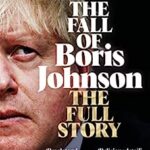
  • BOOK REVIEW : The Fall of Boris Johnson – The Full Story by Sebastian Payne

    BOOK REVIEW : The Fall of Boris Johnson – The Full Story by Sebastian Payne


    Published in late 2022, shortly after the resignation of Boris Johnson was announced, the Financial Times columnist Sebastian Payne wrote this account of what was happening behind the scenes to have caused his sudden fall from grace. He starts the account in November 2021 with Johnson arriving for drinks at the Garrick Club at an reunion event for former Telegraph journalists. It was held at the height of Johnson’s powers and notable as it was suggested that discussions were had about how to save the career of Owen Paterson. Charles Moore has denied that he was involved with these discussions, but the book quotes a Cabinet Minister who said “the first rule of politics is that if you listen to Charles Moore and do the complete opposite of what he says, you won’t go far wrong”. Johnson, it is suggested, may have received bad advice on Paterson and was given false confidence on how strong his position was.

    A substantial section of the book is given over to the controversial parties which were taking place in Downing Street, whilst the rest of the country was ordered to stay at home. Ultimately, this brought down the Prime Minister, but it was the confusion and false denials that was ultimately the problem rather than the parties themselves. But there was much naivety at the time, the book quotes one senior official at Number 10 who said staff were advised not to come out of the front door grinning, adding “I didn’t think anybody would need reminding not to have a massive piss-up in the garden”.

    Whilst Sue Gray was writing her report into the Downing Street parties, supporters of Johnson realised the danger that he was in and started their campaign entitled “Operation Big Dog”. This included politicians such as Nigel Adams, Chris Heaton-Harris, Grant Shapps and two young advisors, Charlotte Owen and Ross Kempsell who have recently and controversially been elevated to the House of Lords for their efforts to support the beleaguered Johnson premiership. On 31 January 2022, the first interim report was issued by Gray which noted that the parties had been “difficult to justify” and that there had been “failures of leadership”. Although sounding damaging, Payne notes in the book that when Johnson received the report “the Prime Minister’s reaction was relatively positive according to those in the room as it wasn’t as hostile as it might have been”.

    The book then moves into a chapter entitled “Putin’s Move”, which is when Russia launched their illegal invasion of Ukraine on 24 February 2022. The author notes the close relationship between the Ukrainian President Volodymyr Zelenskyy and Boris Johnson, with this political event looking like one where Johnson could restore some credibility and show leadership. This looked like the distraction that Johnson needed, with Payne noting that “over the following weeks, Johnson would garner some of the greatest praise of his premiership thanks to the confident response to the situation in Ukraine”. The events weren’t enough, as the author writes “his political standing in the UK would rapidly crash back down to earth when an email dropped in his personal inbox from the Met police, informing him of a penalty notice”.

    Johnson faced a no confidence vote after 15% of Conservative MPs wrote letters to Graham Brady, the chair of the 1922 committee, but he was determined to fight. Instead of going to speak to MPs, he had a mail merge letter sent to 358 MPs and “spent hours topping and tailing letters by hand with a fountain pen”. The printer jammed, the process took hours and he “geared up for the battle of his political life”. The result announced that evening by Brady was that 211 MPs had confidence in Johnson, whilst 148 did not. It was a poor result, but it was sufficient for Johnson to believe he had another 12 months before he could be challenged again.

    A few weeks later an incident with Chris Pincher brought Johnson’s credibility and judgement into question once again and on the same evening Sajid Javid and Rishi Sunak announced their resignations as Health Secretary and Chancellor. Attempts were made to begin an emergency reshuffle, but as the author notes “privately, near all of the [inner team] knew the end was almost nigh”. The book continues with a blow by blow account of how the wave of Ministerial resignations forced Johnson out, the end was indeed nigh.

    The final chapter of the book is entitled “Was it always going to end this way?” and Payne asked this question of many Cabinet Ministers, senior civil servants and confidants of Johnson. Reflecting on the responses, Payne broadly says yes it was, noting “throughout the interviews, one consistent theme emerged, and that was that Johnson resists the idea that he has to bother with the consequences for his actions that normal people have to contend with”. It’s a well written and interesting book which is even handed, although there’s scepticism about the competence of Boris Johnson, but it’s a recommended read for those wanting to find out more about how he went from winning a General Election to be forced out under three years later.

  • BOOK REVIEW : Standing Down 2017 – Interviews with Retiring MPs by Rosa Prince

    BOOK REVIEW : Standing Down 2017 – Interviews with Retiring MPs by Rosa Prince


    This book, published by Biteback Publishing, is a series of interviews with MPs who decided to stand down at the 2017 General Election. 13 MPs from different political parties were interviewed and asked about their experiences in the Commons and the reasons that they had for standing down. The MPs interviewed were Michael Dugher, Peter Lilley, Gisela Stuart, Sir Simon Burns, Dame Angela Watkinson, Douglas Carswell, Sir Edward Garnier, Iain Wright, Sir Eric Pickles, Alan Johnson, Sir Alan Haselhurst, Graham Allen and Pat Glass.

    The first interview in the book is with Michael Dugher, who retired at the relatively young age of just 42, the youngest of the MPs in the book. He mentioned that the 2015 General Election result was “horrific” and he struggled with the subsequent leadership of Jeremy Corbyn and he quit after four months in the Shadow Cabinet. He found great pride in the role of being an MP, but ultimately he wanted to do more with his life with politics.

    The oldest MP in the book was Alan Haselhurst who was 80 when he made the decision to stand down after having served as the Conservative MP for Saffron Walden for 40 years and previously he had been the MP for Middleton and Prestwich for 4 years. He wasn’t keen to leave, but thought his age meant that 2017 was the right time to stand down, with the highlight of his career being the Deputy Speaker for 13 years. All of the MPs had expected to serve until 2020, which is when the Fixed Terms Parliament Act had scheduled the General Election to be, meaning many had to make decisions on whether to stand again in 2017. Haselhurst clearly left the Commons with some reluctance, with his greatest disappointment being that he didn’t get the chance to become the Speaker of the House.

    Pat Glass stood down at the age of 60 and she was one of the few interviewed who didn’t feel quite at home in the Commons, being someone who had never previously intended to be an MP. She accepted that it’s a tough job and one of the reasons that she stood down was the abuse that she received from the Vote Leave campaign, she felt that she didn’t need that sort of negativity and wanted other ways to help her community. She served as Shadow Secretary of State for Education for just three days under Jeremy Corbyn, resigning over his treatment of Hilary Benn, although she did return later on in a more junior Shadow role and enjoyed that more.

    One MP was felt that his job was done was Douglas Carswell, who left the Commons at the age of 46 after representing the constituency of Clacton since 2005. As soon as the Brexit referendum was over he felt that he had achieved what he wanted, having entered the Commons on the subject of the European Union. He had nearly left the House earlier on, he was soon disillusioned by the workings of the Commons and he nearly left on a few previous occasions. He is the only MP interviewed in the book who felt entirely fulfilled about their purpose for entering the House.

    Others explained that their reason for leaving was they didn’t want to over-stay their time in the House, with Sir Edward Garnier retiring at 64 and saying it was best for people to ask why you were leaving rather than asking why you’re still here. He was one of the MPs who found that there were too many emails to deal with, many of which were automated to some degree rather than being personal contacts from constituents. Garnier had controversially been one of the MPs who kept on with his legal career whilst serving in the House, noting that he felt it was long hours staying in the Commons during late night debates and then going to Chambers to “earn his living” the next day.

    Peter Lilley, who was appointed to become the Secretary of State for Social Security by Sir John Major in the 1990s, also comments on the volume of emails, saying that his constituents were “too literate”.

    Eric Pickles remarked that he had joined the Commons because Margaret Thatcher had asked for him to be found a seat, impressed at his work when he was leader of Bradford Council. He had found it difficult in the 1990s, watching a few Conservative MPs enjoying the problems they were causing Sir John Major on Maastricht, and he was angered by their behaviour. He enjoyed his Cabinet role after the 2010 General Election, but noted he stood down from that when David Cameron decided to ask Liz Truss to lead on a housing debate and he commented that she “didn’t know an awful lot about it”.

    The book is an interesting look at why MPs stood down and they were all asked about their highest and lowest points during their career. There is unfortunately no summary from the author to try and bring the interviews together, they are just presented in the book in summary form but that doesn’t overly detract from the quality of the book. It’s intended that there will be a series of these books, with no shortage of MPs available to be interviewed for the next General Election.

  • BOOK REVIEW : The War on the Old by John Sutherland

    BOOK REVIEW : The War on the Old by John Sutherland


    The War on the Old is a book published in 2016, shortly after the Brexit referendum result, written by John Sutherland. It’s a short book which is a slightly whimsically written title with a serious message that the elderly population is being treated badly by the Government and by society. There’s a clever touch throughout the book where everyone who is quoted has their age in brackets. This is of course irrelevant, but that’s the point of the mechanism, to show that people shouldn’t be judged by their age but instead by the quality of their arguments and contributions.

    There is a relevance to Brexit here as the author argues that the post-referendum debate was framed to suggest that the elderly population voted in a way that was to the cost of the young and the author wanted to re-examine the logic behind that. He is critical of Giles Coren who wrote in an article that “the referendum shows that old folk can’t be trusted with big decisions. They’re always wrong about everything”. He also notes that baby boomers have been said to have “trouble as their middle name”. He is right to pull up journalists on these lazy tropes, even if Coren was intending to be deliberately provocative.

    The book does address serious points, including the Southern Cross debacle where one of the largest care home companies in the country collapsed following poor decision making and the racking up of debt. The ultimate losers, just as when pubs were purchased in vast numbers by corporate giants, were the customers, which were the elderly in the case of the care homes. Although written in 2016 and using examples from newspapers at the time, these type of problems still persist and care home scandals are a recurring and unfortunate reality today.

    However, the book does feel a little unstructured and doesn’t always particularly flow well as if it has been a long article that has been extended. The author complains when health checks were expanded so that everyone between 40 and 74 could visit their GP every five years, as if this was somehow unfair to those over 74. It would have been, but those over that age are entitled to checks every year, a case noted by GP surgeries up and down the land, so the point seems unclear.

    The author makes an underlying point that the elderly are being put in a dangerous position by Government policies and how they are treated. This is no doubt true in many cases and during lockdown it was the situation that those in care homes weren’t always treated with the respect that they should have been. But, giving Part II the title of “Final Solution” and a section header of “Mein Kampf” are odd and sit uncomfortably. The whimsical nature of the book doesn’t sit well with using Holocaust related terminology, especially when there is no serious effort made to explain with clarity why those terms are being used.

    The book’s underlying premise is though one that should be explored and John Sutherland is an impressive author with a long career in ensuring a message is put across clearly to readers. There aren’t a lot of solutions offered and the author comments that the “pension triple lock is trivial financially”. However, the cost of pensions have gone from £70 billion in 2010 to £105 billion in 2021 and making no comment in this review on whether that is right or wrong, there should perhaps be some explanation in the book of how the author would deal with the challenges of an ageing population simply in terms of financing it.

  • BOOK REVIEW : Nicholas Ridley – My Style of Government

    BOOK REVIEW : Nicholas Ridley – My Style of Government


    My Style of Government – The Thatcher Years by Nicholas Ridley

    Nicholas Ridley (1929-1993) was one of the key Cabinet Minister supporters during Margaret Thatcher’s period of Government, serving as the Financial Secretary to the Treasury, the Secretary of State for Transport, the Secretary of State for the Environment and finally as the Secretary of State for Trade and Industry. This book was published in 1991 and it was the first insider’s account of the Thatcher years.

    The book isn’t an autobiography by Ridley, although he briefly touches on what inspired him to become involved in politics and he cites the radical Government of Attlee in the immediate post-war period. Rather than being inspired by the ideas of Attlee it was the case that Ridley despised them, he was an early advocate for privatisation and he wanted the Government to be less involved in the lives of people. On nationalised industries he claims in the book that they are “dominated by their workforce, not their customers”.

    Ridley initially liked the direction of the Heath Government in 1970, but then felt it lost its way quickly as events made the radical direction that Edward Heath desired much harder to deliver. He didn’t remain involved as when in 1972 Heath got in contact with Ridley regarding a sideways move in Government he said that he would rather return to the backbenches. Others such as Margaret Thatcher also had similar concerns about the direction of Heath’s Conservative Party, but she instead stayed inside the Cabinet as Education Secretary. When Heath lost in 1974, it was though Thatcher who reacted quickly to put her name forwards as soon as Keith Joseph ruled out standing for the leadership.

    One element of the book is that it is very much ‘us against them’, whether that be the internal disputes between what Ridley refers to as the wets and the dries or between the two main parties. He writes that: “the Labour Party is bad at opposition. It is is basically lazy and goes home too early at night. Humour is virtually absent: their rhetoric is all righteous indignation and humour doesn’t fit with that. Tory oppositions are better at keeping the House late and mounting surprise attacks in the early hours”. There are these perhaps intellectually lazy sweeping assertions dotted around the book, but it is in general otherwise well written and readable.

    The author deals with the issue of Thatcher’s preferred successors to her early on in the book, naming the three politicians who were at various times the heir apparent and having some sympathy with all of them. They were Cecil Parkinson, who was brought down more through scandal than political ability, John Moore who Ridley has more time for than some colleagues and finally John Major, who he says was “highly competent and very pleasant”.

    On policy, Ridley refers a lot to his support for supply-economic measures and it’s evident that this was a point on which he had long firmly believed and he wasn’t a late convert on it. Margaret Thatcher in a speech in 1996 mentioned that Ridley could be argued to be more Thatcherite than her because of the length of time that Ridley had held his economic arguments. He was a firm supporter of privatisation, although makes claims about the deregulation of the bus industry that he was involved with, noting that his policies created large numbers of smaller independent bus companies and this was showing an increase in passenger usage. Unfortunately for Ridley, one of his proudest policies ultimately turned out very differently with passenger numbers almost relentlessly falling in the years and decades that followed.

    Ridley continues on the policy theme with a defence of what he refers to as the poll tax, although formally called the Community Charge. Defending it is inevitable as he was one of the architects and designers of the policy, aimed to replace what he notes was the unfair rates system which needed radical modernisation. He remained someone who believed in the principles of the tax, but thought that it was essential to be brought in at a low level, which it ultimately wasn’t by his own admission. Ridley believed that the system would give voters a financial interest in keeping the tax levels set by local councils low. He makes nearly no criticism of Thatcher on the tax other by saying “she hadn’t taken the action necessary to ensure the new system’s acceptability by relating it more closely to ability to pay”.

    The author makes clear that he supported a smaller state and lower taxes, but he didn’t want public services to be neglected. He cites figures that Margaret Thatcher over her period in Government increased real-terms spending on areas of health, social security and education by 37%, 35% and 16% respectively. This is part of his focus on defending against what opponents had said were the Thatcher cuts, noting that he felt she valued public services highly and that suggestions of the reverse aren’t backed by the economic evidence.

    On the key issue of Europe, Ridley was a Euro-sceptic and firmly opposed to a single currency or monetary union. He was though a proponent of the Single Market and writes that Thatcher’s support “resulted in very great progress being made towards freeing the market of the Community”. Ridley was delighted with the Bruges speech made by Thatcher and how “it set out at length her concept of a Europe of nation states”. For anyone wanting to know what Thatcher would think of Brexit, there aren’t many clues as Ridley focuses nearly entirely on economic monetary union and doesn’t touch at all on the UK’s membership of the then European Community, simply noting how important the Single Market had been.

    Ridley was devastated with the 1990 leadership election which led to Margaret Thatcher resigning as Prime Minister, but his criticisms are again mostly of other people. Although he notes Thatcher should have canvassed her MPs more as it proved she only needed to have changed the minds of a small number to have won the first ballot, much of the blame is laid at what Ridley refers to as “her weak campaign team”. This perhaps ignores the reality that if the Prime Minister had won by just one vote then it would have been politically challenging to have led what would be such a clearly split Conservative Party. This is a theme running through the book, nearly no criticism of Margaret Thatcher or at least only gently chiding, but plenty of time is spent finding scapegoats to explain why things did go wrong.

    In his conclusion he notes that “I believe most of the supply side reforms will stick” and on this Ridley seems right as Tony Blair and Gordon Brown maintained and even built on some of the Thatcherite economic changes. Again Ridley mentions the work that Thatcher delivered on the Single Market, but he predicted that there would not be a European market open either internally or externally. He adds that “there was never a hint of corruption against her” and many in politics would agree that this was a period when the office of Prime Minister was taken very seriously by its occupants and in a way which might not have always been the case more recently. He ends the book writing that “the nation was oppressed by many dragons in 1979 and that Margaret Thatcher had come forth to slay them and the nation no longer had need of her”.

    There’s never any doubt in the book that Ridley was one of the key supporters of Thatcher, but most readers of the book would perhaps be unlikely to have expected anything different. At the time of publication this was an important work because there was relatively little else available written by an insider, but since then there have been no shortage of books about the politics of the 1980s and also of course the auto-biography of Margaret Thatcher. Regardless of that, this remains an interesting book and it does make valiant efforts in explaining the logic behind policy decisions and it does touch a little on what went wrong.

  • BOOK REVIEW : Bash the Rich by Ian Bone

    BOOK REVIEW : Bash the Rich by Ian Bone


    This book is the autobiography written by Ian Bone, who the Sunday People branded the “most dangerous man in Britain”. Bone has been involved with the anarchist and class war movement in various forms for several decades, with this book being a well-written look at his role. The author doesn’t pretend that the movements were always well run and there’s no shortage of humour running through the title, but it is a reminder of how strong the feeling was against the move towards Thatcherism.

    There are elements of vandalism and damage being caused which do give more of an impression of the Bullingdon Club, but there is a different dynamic about wanting to change society for the better. Bone refers to the corruption within Swansea council from the elected Labour councillors, testament to his concern that this wasn’t just a movement against the Conservatives, it was against those who wanted to make the working class worse off. When recounting the story of a bomb attack the author notes that he felt “bombings were a sign of failure” and there was a purpose to what Bone wanted to achieve. Although the book doesn’t cover this period of Bone’s life, he was involved in the respected Bristolian newspaper which he edited for a time during the early 2000s.

    It’s undeniable that some will find it challenging to read about the dancing on the grave of Michael Roberts, a Conservative MP who died at the despatch box, but the book is likely one of the better accounts of the radical groups that were at the fringes of politics. And if the Sunday People thought that Bone might be disheartened or disappointed by their defining him as dangerous, they were seemingly very wrong. As to whether individuals love, hate or are indifferent to Bone, they’ll likely find this book authentic and genuine.

    For those who want to see Bone in action, here’s his appearance on television being interviewed by Jonathan Ross.

  • BOOK REVIEW : Callaghan – The Road to Number Ten by Peter Kellner and Christopher Hitchens

    BOOK REVIEW : Callaghan – The Road to Number Ten by Peter Kellner and Christopher Hitchens


    This book was published in 1976 by Cassell of London, following the appointment of James Callaghan as the Prime Minister after Harold Wilson stepped down from his second spell in the role. The authors need little introduction, Peter Kellner is a polling expert and long-time journalist, whilst Hitchens became one of the best known and respected British journalists in the United States, speaking frequently on religious, cultural and political matters, rarely being afraid of controversy.

    Over the last half century there have been a few leaders who took over from a long-serving Prime Minister with relatively little time before the next General Election, including Gordon Brown, John Major and James Callaghan. Major was able to win his own mandate, but Brown and Callaghan were less successful, with Rishi Sunak facing the same challenges in current politics. Harold Wilson has resigned on 16 March 1976, not entirely a surprise to Callaghan who was serving as Foreign Secretary, as he had already been told by the Prime Minister that he would be stepping down in the short-term. But the date was a surprise and there is still debate on why Wilson retired whilst still relatively young, having just reached sixty. Although the book starts covering this period, it then returns to the birth of Callaghan in 1912 and examines how and why he reached the position of Prime Minister.

    It was a complex family history given that his mother was Protestant and his father Catholic, which presented Callaghan with a challenge in the late 1960s when he was the Home Secretary dealing with the growing turbulence in Northern Ireland with the Troubles. Callaghan lost his 41-year old father when he was aged just nine, a tragedy for any child, but this also a financial problem for his mother as although she received a small payout, there was no widow’s pension to help her. Callaghan related later on that his mother voted Labour because they were offering a pension, which hadn’t been offered during the Conservative’s period in government.

    Callaghan didn’t go to university because his mother wanted him to settle down and secure a well-paid job where he wouldn’t struggle for money, although the authors of the book aren’t clear that he would have succeeded into getting into university anyway. He quite sensibly took a job working for the Inland Revenue and as the authors note, “the job protected him from the slump that was about to hit Britain”. Callaghan worked hard and also became heavily involved with union matters, working tirelessly on them and become engaged with the trade union movement and its meetings.

    Callaghan’s job was a reserved occupation and so he didn’t have to take part directly in the Second World War, but he chose to in any event, picking the Royal Navy and receiving his call up in late 1943. He continued his politics, not winning the nomination to become the Labour candidate for Reading, but instead winning the selection for Cardiff South, a constituency he won at the 1945 General Election. One of the limitations of this book is that there is relatively little commentary from the authors from this period of his life, which would likely be useful and informative, and it reads as more of a formal biography. However, this is likely down to how the writing of the book came about, which was to extend a long article that the authors had written for the Sunday Times.

    The authors did though note that by the 1951 General Election Callaghan had shifted away from the previous left-wing views that he held within the party. The authors write “his attitudes and move to the right had little to do with deeply held ideological convictions. They are the arguments of a practical man, firmly anchored to a keen sense of what will keep the show on the road, they are the arguments of a man who reduces political ideas to issues of tactics”.

    The then Labour leader Gaitskell gave Callaghan a substantial promotion in November 1961, when he was made the shadow Chancellor of the Exchequer. However, the book notes that “according to close friends of Gaitskell, he wanted Callaghan to be shadow Chancellor because of his debating skills, not to be an actual Chancellor in a Labour Government, because Callaghan knew too little of economics”. If nothing else, the promotion was evidence of the political skills which Callaghan possessed and the importance which Gaitskell placed upon that. History may well have been very different if Gaitskell hadn’t died suddenly in 1963, as it was likely that he would have become Prime Minister. Callaghan sought to become the party leader, although this was never likely at that time and he was the first to be eliminated in the three man leadership race, which was ultimately won by Harold Wilson.

    Callaghan continued to be the shadow Chancellor under Wilson’s leadership, with the authors of this book commenting positively on this period, that “he was a political heavyweight”. They added that “he had established his authority as shadow Chancellor, he was a formidable adversary for Maudling in the Commons and the media were taking him seriously”. Gaitskell might not have wanted him to be the actual Chancellor in a Labour Government, but that’s what he became in 1964.

    Much of Callaghan’s legacy in the Treasury is considered from the prism of the devaluation which so undermined the Labour Government, even though they inherited a poor economic situation from the Conservatives. The authors of the book were balanced, noting that “he had partial success concerning tax reform, but corporation tax, capital gains tax and betting tax have worked well and survived”. They add that “Callaghan’s actions to secure international monetary reform must count as an important achievement”, a job done well enough to ensure that he was given a different senior Cabinet position, this time Home Secretary in 1967.

    Callaghan proved to be a very different Home Secretary to his predecessor Roy Jenkins, who the authors note took great care in making decisions and considered matters in depth. They comment that “his very first red box occupied him for just 45 minutes, causing one stunned official to note that he had just done three weeks’ work”. His time in the role is summarised by the authors as “having started as an unhappy and defeated ex-Chancellor, Callaghan finished his stewardship of the Home Office as a confident and restored man”.

    The book is well written, although that isn’t much of a surprise given the talent and ability of the two authors who put it together. They are willing to praise Callaghan, but note in the conclusions of the book that “his record in office contains more failures than triumphs”. They were also sceptical about the future, writing that “our view is not hopeful, as we write the responses of the Government to Britain’s economic problems, and the pressures from abroad on sterling, are uncomfortably reminiscent of the spineless strategy of the last Labour Government ten years ago”.

    This book is a useful introduction to what the future looked like in 1976 for Callaghan, given what was known about him from his time in Parliament and in leading Cabinet roles. The authors were notably pessimistic and that was perhaps the correct view to be taken given that Labour ultimately lost office in 1979 and didn’t regain it until 1997. The book is also testament to how far a politician can go in politics by being a strong team-player, by remaining close to fellow MPs and having a deep understanding of the party machine.

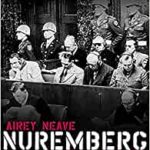
  • BOOK REVIEW : Nuremberg – A Personal Record of the Trial of the Major Nazi War Criminals by Airey Neave

    BOOK REVIEW : Nuremberg – A Personal Record of the Trial of the Major Nazi War Criminals by Airey Neave


    This book is a recent reprint by Biteback Publishing, using the foreword from the 1978 edition which was written by Dame Rebecca West. The author of the book, Airey Neave, had what could be called a busy war, escaping from the Colditz prisoner of war camp and working as an intelligence agent for MI9. At the end of the Second World War, and somewhat to his surprise, he was asked to support the International Military Tribunal, not least as he spoke fluent German. This is the book that he wrote about the war crimes trials and his involvement in them in Nuremberg. Neave became the Conservative MP for Abingdon in 1953 and he was the Shadow Secretary of State for Northern Ireland in the second half of the 1970s, later becoming one of the key supporters of Margaret Thatcher. The end of Neave’s story was tragic, assassinated by the INLA who killed him on 30 March 1979 by planting a car bomb which exploded in the estate of the Palace of Westminster.

    Neave is understated in the book about how he received the call to assist in the Nuremberg Trials, although his credentials to work alongside the allies to deliver justice were strong. He had experience of interrogation having been grilled by the Gestapo, he was able to speak German, he knew how prisoners were kept and had studied some international law at Oxford University. Neave notes in the book that the trials nearly didn’t take place, as Winston Churchill had been keen for German leaders to have been shot dead during the advance of the allied troops, but Roosevelt felt that there should be a trial. Neave mentions that numerous countries such as the Netherlands, Belgium, Norway and Poland were “urging vengeance” and that the “Americans and British had not experienced the horrors of Nazi occupation and misunderstood the depth of feeling in liberated countries”.

    One of Neave’s responsibilities was informing the German prisoners what they were being tried for and explaining their rights to legal assistance. He found Rudolf Hess to be a “worn figure” and he was also “disturbed by his wild appearance”, but Neave was confident that he was fit to face trial mentally and physically. Many years later Neave was one of the MPs who appealed for the release of Hess from Spandau prison, where he was the only inmate from 1966 and 1987.

    Neave had little respect for Julius Streicher, noting that he was “primarily a sex criminal” and noted that he had the lowest IQ of any of the prisoners and “was a primitive creature”. He noted that it was Streicher’s anti-semitism, and his control of the Der Stürmer newspaper, which he had founded, that helped the propaganda campaign the Nazis wanted against the Jewish community.

    During 1941, Neave had escaped from a prisoner of war camp in what is now Torun, in Poland, and had seen himself the way that Jews were treated. He also formed many friendships with Poles and notes in the book that “I felt particularly devoted to their Resistance movement”. This was on his mind when he served legal notice on Hans Frank in his cell, as he had been the Governor General of the Polish territory between 1939 and 1945. Although recognising the effective and brutal way in which Frank had slaughtered hundreds of thousands of Jews, Neave noted “Frank had not been squeamish about murdering innocent people, why should the world be squeamish about his end?”. When serving legal notice on Ernst Kaltenbrunner, Neave admitted saying to a colleague who asked him why he spent longer reading the charges to this prisoner “because of Mauthausen, because of Warsaw and not for the first time that afternoon I felt that I had come to speak for the dead”. Much of this inevitably felt personal to Neave, although he did attempt to remain a dutiful servant of the courts and didn’t let his experiences during the war impact on that element of his role.

    Neave spends a lot of time in the book writing pen portraits of those facing trial, noting their physical appearance (often fat or bloated) and how they him feel when talking to them. Although not taken in by the Nazis, he was sympathetic to some more than others, describing his exchanges with the prisoners with considerable clarity. There is relatively little about the trial itself in the book, as Neave mentions that “there were few highlights” and “relentless hours of boredom” of the legal proceedings themselves.

    Neave’s writing comes across as making him sound as a fair man and he did try and get an understanding of the individuals and how their emotions changed during their time in prison cells awaiting trial. He concluded though that “I sought for any signs of true remorse and did not find them. They were crocodile tears, they wept for themselves and not for the dead”. It is the human side of this book which is its greatest strength, as there is no shortage of material written about the trials themselves. Neave was able to observe the prisoners in a manner that few others had the opportunity to do so, making this account authentic and deeper.

    As for the trials themselves, Neave concluded:

    “Those who did not experience Nazi occupation or are too young to have taken part in the death struggle with the Third Reich should not ignore the lessons of Nuremberg. The mass murder of Jews dominated the trial, but there were other acts of cruelty displayed to an unbelieving world”.

    It is fortunate that Biteback have enabled the book to be republished and hopefully it will be a useful resource not just to those wanting an historical account of the trials, but also to those wanting a greater understanding of Airey Neave himself, who would have likely become one of the more distinguished politicians during the Thatcher years.

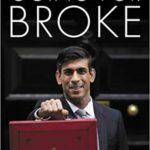
  • BOOK REVIEW : Going for Broke – The Rise of Rishi Sunak by Michael Ashcroft

    BOOK REVIEW : Going for Broke – The Rise of Rishi Sunak by Michael Ashcroft

    This book was published in late 2020 following the appointment of Rishi Sunak as Chancellor of the Exchequer earlier on in the year, with Michael Ashcroft noting that it was the first book on the relatively new MP, but adding “I somehow doubt it will be the last”. On that, the honourable Lord is certainly correct.

    The book glides through Sunak’s youth with relatively few anecdotes or notable stories, but recounting his elevation to Parliament in glowing terms. And Ashcroft never really moves away from this, it’s a gushing book perhaps designed to flatter Sunak rather than be a compelling study of how the politician thought, acted and recovered from his mistakes. There are very rare moments in the book where any hint of Sunak making a mistake is mentioned, it’s almost as if the now Prime Minister has written a chunk of this text himself.

    The reader is rarely left in any doubt of Sunak’s brilliance, such as when the author is writing about the politician’s first promotion onto the Ministerial ranks, “with a first-class degree from Oxford, an MBA from Stanford and several stellar years in the City under this best, Sunak clearly outclassed many of those who surrounded him in the BEIS department”. Soon after, as if Ashcroft thinks that this isn’t enough praise, he adds “[Sunak] approached the job with characteristic charm and professionalism”.

    The rest of the book manages to find new superlatives alongside reusing some previous ones, with such observations as “such a question might have disconcerted a less assured performer, but Sunak did not miss a beat” in response to his appointment as the Chief Secretary to the Treasury, his first Cabinet role. It’s also clear that the author doesn’t have as much time for Liz Truss, as when referencing her period as Chief Secretary, he mentions that “the department muttered about the amount of time and energy she devoted to her Instagram account”. And that’s pretty much the entire coverage of Liz Truss in the book, although there will be more coming as Ashcroft is writing a biography of the country’s shortest serving Prime Minister.

    Any reader hoping that the book might become more balanced when Sunak became Chancellor will perhaps be a little disappointed. Ashcroft says about Sunak’s first budget that “he passed his first test as Chancellor in spectacular fashion, surpassing expectations, impressing colleagues and commentators and putting himself at the forefront of the government”. With the Chancellor’s measures on Covid, the book finally starts to pile on the criticism, noting “glitches with Sunak’s other measures had begun to emerge”. Not a killer criticism by any means, but an acknowledgement at least that the Chancellor wasn’t practically perfect in every way. It’s as critical as the author ever gets.

    Although clearly fighting from Sunak’s corner, there’s more even handed coverage from Ashcroft about how Sunak handled the rescue package for businesses in 2020, accepting that there were a range of criticisms for the proposals. There’s comments about how Sunak thought up the ‘Eat Out to Help Out’ but very little commentary on the legacy of that scheme, it all means that there are just too many gaps in the narrative of this book.

    In the epilogue, the author notes that “we leave the tale at a point when our subject is liked as well as admired”, which is perhaps stretching the late 2020 opinion polls just a little. In fairness to the author, it’s clear he was never trying to write an Anthony Seldon type biography and it would have likely been too early to do so in any event. More balance in the book might though have brought out more telling truths about Sunak and helped the reader understand him even more, rather than just trying to sift between the various written forms of what a marvellous politician he was.

    However, the book does have some interesting elements in terms of the Sunak’s own family and the very wealthy one that he married into. As a biography it’s lengthy and does cover the major promotions in Sunak’s career, but it all perhaps leaves the reader with more questions about the now Prime Minister than answers.

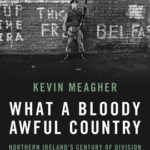
  • BOOK REVIEW : What a Bloody Awful Country by Kevin Meagher

    BOOK REVIEW : What a Bloody Awful Country by Kevin Meagher

    Reg Maudling returned from Northern Ireland in 1971 somewhat overwhelmed by what he had seen, a part of United Kingdom which had been given unprecedented levels of devolution over the decades simply falling apart as terror spread across its streets. The Home Secretary got back to London, asked for a Scotch and said to an aide “what a bloody awful country”, from which this book by Kevin Meagher takes its title.

    The book starts with a detailed look at how Catholic and Protestant divisions were ramped up by politicians and how that formed the first Troubles between 1920 and 1922. Although noting with reference to the situation in 1970 that “a problem that had laid dormant for two generations had exploded” the author perhaps skates over this period and not really examining with enough detail just why matters didn’t come to a head earlier. Catholics were even until the 1990s twice as likely to be unemployed and gerrymandering had ensured that Protestants were more likely to hold elected positions of power or had comfortable jobs within the institutions of Ulster.

    The author points towards the passionate maiden speech made in the House of Commons by Bernadette Devlin in 1969, calling out the excesses of the unionist Government and for Westminster to remove the power of Stormont and to run the Province from London. The next two decades, and particularly the next few years, saw a move away from the Unionist Government and their mistakes of not looking after the Catholic population and instead towards rule from London which the author notes marked a new level of mismanagement of governance.

    It would be difficult not to treat Bloody Sunday as one of the defining moments in the Troubles in political, economic, social and military terms, and the author notes “Bloody Sunday was a human rights disgrace, a reckless and unjustified slaughter. But, militarily, it was a disaster; revealing the limits of the British Army’s ability to police a civilian theatre”. He adds that “it was caused by a poisonous cocktail of ill-disciplined soldiers, inept commanders and hand-wringing politicians”. Maudling was out of his depth, showed nearly no remorse and was physically attacked by Devlin, who considered his speech to be not just factually inaccurate but also coldly delivered, in the chamber of the House of Commons and she said that she regretted pulling his hair, instead angrily stating to journalists “I’m just sorry I didn’t get him by the throat”. Selwyn Lloyd, the Speaker of the House of Commons, inexplicably failed to call Devlin during the debate despite her being the only MP present at the scene, a mistake showing the levels of disconnect between Westminster politicians and Northern Ireland.

    Political decisions can have implications long into the future, which is noted in the book when mentioning that the Irish Question of the late nineteenth century was never ultimately dealt with. History could have been very different if the 1914 Government of Ireland Act hadn’t of been pushed to one side due to the First World War, as that gave devolution to the entire country without partition. If that had been delivered, there is the possibility that Ireland would have been governed very differently and perhaps ultimately become entirely independent from Great Britain. Instead, there was the restriction of the 1949 Ireland Act which enshrined into law the right of residents of Northern Ireland to determine their future, which meant that Willie Whitelaw’s investigation into holding a referendum of the whole country fell away. Meagher addresses this, writing that although partition might not have been inevitable, there would have likely been a full blown civil war without it. He does though comment that “what 1914 certainly represented was the last best opportunity for Britain to avoid the century that followed”.

    The author over a number of chapters explains the chronological history of how violence and hatred continued in Northern Ireland, despite growing demands from the public for it to end. After progress made by the Governments of Thatcher, Major and Blair in opening and expanding dialogue between the different sides, albeit with many setbacks along the way, power sharing was delivered. Although that has often fallen apart, the author notes that “it is clear that this amounts to the most successful period in Northern Ireland’s history” and that despite the collapse of the Assembly, it is still “the best that Northern Ireland has ever been governed”.

    The book is thoughtfully written and well researched, with the author being even-handed in his text between the Republican and Unionist sides. Perhaps more sympathetic to Labour Prime Ministers than Conservative Prime Ministers, but that isn’t surprisingly since the author is from the left and was an adviser to Shaun Woodward, the last Labour Secretary of State for Northern Ireland. An excellent book which is a comprehensive introduction to the state of play in Northern Ireland, and with ideas on how to tackle the en passe that currently exists.