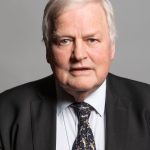
Tag: Bob Stewart

  • Bob Stewart – 2023 Speech on Holocaust Memorial Day

    Bob Stewart – 2023 Speech on Holocaust Memorial Day

    The speech made by Bob Stewart, the Conservative MP for Beckenham, in the House of Commons on 26 January 2023.

    I congratulate the new hon. Member for Stretford and Urmston (Andrew Western)—I know his area pretty well—on his excellent maiden speech, which was delivered with confidence and poise. I hope that he has a very long membership of this place.

    I rise to speak because I have been witness to genocide. I consider this remembrance of genocide—the holocaust and genocide since the second world war—to be hugely important. May I just say a little about my own experience to put it in context?

    In April 1993, I was the British United Nations commander in Bosnia and I had been there for about five months. My job was to help deliver humanitarian aid, but the best way to do that is when there is no fighting, so I spent a lot of time trying to stop the fighting. At that time, the fighting around my base was pretty horrendous. The fighting was between Bosnian Muslims, Bosnian Croats and Bosnian Serbs. It was ferocious.

    The European Community monitoring mission ambassador had arranged a ceasefire, but it was not working, so he asked me to go to the frontlines of all the belligerents to try to stop them fighting. On 22 April, I led about six armoured vehicles up into the mountains, above the Lasva valley, to try to do just that. I did not think that I had much chance of success, but I did as he asked.

    The first people I met were Bosnian Muslim soldiers on the mountains. When I asked them to please stop fighting because a ceasefire was meant to be in place, they said, “No, no, in the village of Ahmići, women and children have been massacred.” I said, “No, that can’t be. People don’t do that in 1993.” They said that it had happened. I said, “If I go there, look, witness and come back and tell you that it hasn’t happened, will you stop fighting?” They said yes. I took myself off the mountains. It took me about an hour to get to Ahmići. I approached it from the south, from the main road. The first thing I saw was a mosque with its minaret toppled—it looked like a rocket pointing to the sky. The rest of the village of Ahmići was largely destroyed. Houses were burned down.

    I went about a mile to the end of the village, and asked my soldiers to check through. There were a few houses that had not been touched. Later, I discovered that they were houses owned by Bosnian Croats. Some soldiers said that they had crosses on the door to identify them, but I never saw that.

    A third of the way down, we went into a house and saw the remains of a man and a boy burned at the doorway. The soldier said, “Come round the back, sir.” We went in the back of this house and there was a charnel —it was like a charnel house. When I first saw it, I did not understand what it was. Then the smell hit me. I was horrified. It looked to me like a couple of women and a few children. They were burned and on their backs. They had obviously died in agony. One had an arched back and their eyes were still there—gosh. We just rushed out and were sick. We went on and found the skull of a baby further down. Mostly, though, people were hidden because, after being shot, killed or burned, the roofs had come down on top of them, so we did not find many of them. A day or so later, I found a whole family: mother, father, son and daughter, all dead in a row. The daughter was holding a puppy. She was killed by the same bullet that killed the puppy.

    We reckon that about 120 people were killed at Ahmići. I buried in a mass grave what we thought were about 104 people, mainly women and children—Bosnian Muslims, by the way. The holocaust is also about Bosnian Muslims.

    I went on the international media and said, “This is genocide. It is the classic definition of genocide: deliberate targeting of a people.” They did not agree with me to start with at the United Nations, but a couple of years later they did, and Ahmići became part of the genocide and was defined as genocide.

    I have given evidence in the war crimes trials—five trials, to be honest—and I am still in shock that it happened. My men could not believe it, and they too are still in shock. I am going back at Easter. I will be representing all of us in this House when I lay a wreath at the village of Ahmići for the 30th anniversary of the massacre. I also lay a wreath to the memory of Dobrila Kalaba, my interpreter. When we discovered the village, she interpreted for me. A couple of months later, the Bosnian Croats shot her dead. We put up a memorial to her. She was a Bosnian Serb.

    I will finish by saying two things. If the theme this year is ordinary people, it is dead right, because ordinary people suffer, and ordinary people carry out some of these atrocities. Strange circumstances make ordinary people do very vicious things. I must say that I have met people, and even had dinner with them, before they carried out such things, and they were very normal people.

    My final point is that the reason why we have this debate and why we must remember the holocaust is that memory fades. We must ensure that future generations do not lose the fact that man can be really inhuman to man.

  • Bob Stewart – 2016 Parliamentary Question to the HM Treasury

    Bob Stewart – 2016 Parliamentary Question to the HM Treasury

    The below Parliamentary question was asked by Bob Stewart on 2016-10-07.

    To ask Mr Chancellor of the Exchequer, if he will assess the potential merits of abolishing UK corporation tax.

    Jane Ellison

    The Government is committed to a competitive and fair tax system, one that encourages innovation and business investment and taxes the profits of economic activity that occur in the UK. That is why this Government has cut the main rate of corporation tax from 28% in 2010 to 17% in 2020, and announced a package of measures at Budget 2016 to tackle aggressive tax planning by multinationals, forecast to raise around £8 billion across the next five years.

    Corporation tax raised £44.4 billion for the Exchequer in 2015/16. This revenue makes a vital contribution to the Government’s wider objectives of delivering vital public services and fiscal sustainability.

    The Government will continue to explore how the tax regime can be reformed to best support business investment and growth.

  • Bob Stewart – 2016 Parliamentary Question to the Home Office

    Bob Stewart – 2016 Parliamentary Question to the Home Office

    The below Parliamentary question was asked by Bob Stewart on 2016-10-07.

    To ask the Secretary of State for the Home Department, if she will assess the potential merits of deploying fishing trawlers to patrol the UK coastline to prevent illegal immigration.

    Mr Robert Goodwill

    Border Force is actively engaged through partners in the Marine Management Organisation (MMO) with commercial fishing operators. The UK’s commercial fishing operators already form a valuable part of the Project KRAKEN network providing ‘intelligence’ reports based on their assessment of unusual activity, however, they are not specifically tasked with official patrolling.

    Border security is a priority for this Government. We are committed to countering threats to the UK coastline using an intelligence-led approach and through working with the wider law enforcement community. Border Force has long-standing working relationships and intelligence-sharing practices in place, and is increasing interaction with key partners as well as undertaking joint operations in order to disrupt organised criminal gangs looking to facilitate illegal entry into the UK.

    Border Force and operational partners are conducting activity on a number of fronts to prevent migrants from entering the UK via clandestine and illegal means, strengthening the coordination of maritime security assets so that maximum coverage at sea is delivered. Border Force currently operates three cutters in UK territorial waters at any given time.

    The cutters form part of a layered approach to coastal defence, including patrols comprising additional law enforcement vessels, on-shore resources and intelligence and surveillance. Border Force has invested in additional coastal patrol vessels (CPV) to complement the work being done by our cutters to combat attempts to smuggle migrants and illicit goods into the UK illegally.

  • Bob Stewart – 2015 Parliamentary Question to the Department for Environment, Food and Rural Affairs

    Bob Stewart – 2015 Parliamentary Question to the Department for Environment, Food and Rural Affairs

    The below Parliamentary question was asked by Bob Stewart on 2015-11-02.

    To ask the Secretary of State for Environment, Food and Rural Affairs, if she will bring forward proposals to increase the level of fines available to local authorities for fly-tipping.

    Rory Stewart

    The fine for fly-tipping is unlimited.

    Tackling fly-tipping is a priority for the Government. As set out in our manifesto, next spring we will be giving councils the power to tackle small scale fly-tipping through fixed penalty notices as an alternative to prosecutions.

  • Bob Stewart – 2015 Parliamentary Question to the Department of Health

    Bob Stewart – 2015 Parliamentary Question to the Department of Health

    The below Parliamentary question was asked by Bob Stewart on 2015-11-05.

    To ask the Secretary of State for Health, if he has any plans to inform NHS users of the actual costs of visits, treatments and prescriptions.

    Alistair Burt

    The Government intends to publish the indicative medicine costs to the National Health Service on the dispensing label of all medicines dispensed in the community in England costing more than £20 from late 2016.

    Reference costs, which show the average unit costs to National Health Service hospital trusts of treatments and visits, are published annually by the Department on the Government website. There are no plans to inform patients of these costs each time they use the service.

  • Bob Stewart – 2016 Parliamentary Question to the Foreign and Commonwealth Office

    Bob Stewart – 2016 Parliamentary Question to the Foreign and Commonwealth Office

    The below Parliamentary question was asked by Bob Stewart on 2015-12-17.

    To ask the Secretary of State for Foreign and Commonwealth Affairs, through what means his Department communicates with and receives communications from Christian communities in Syria; and how he assesses the quality of information received otherwise by his Department on the situation of such communities in that country.

    Mr Tobias Ellwood

    Foreign and Commonwealth Office representatives meet Church leaders and Non-Governmental Organisations representing Christian communities in Syria on a regular basis in London, through our Embassy to the Holy See and at our Syria Offices in Beirut and Istanbul. We also receive regular correspondence from groups highlighting the situation of Christians in Syria. These sources provide us with valuable insights into the situation facing Christians in Syria and the region. We recognise the contribution that recognised religious leaders can make on the Syria political track. They and other leading members of civil society will need a strong voice in the debate on Syria’s future.

  • Bob Stewart – 2016 Parliamentary Question to the Department for Education

    Bob Stewart – 2016 Parliamentary Question to the Department for Education

    The below Parliamentary question was asked by Bob Stewart on 2016-01-25.

    To ask the Secretary of State for Education, what progress she has made in Beckenham on implementing the Government’s proposal for 30 hours’ free child care for working parents.

    Mr Sam Gyimah

    We have made substantial progress towards implementing the offer of 30 hours of free childcare to working parents of three- and four-year-olds. At the Autumn Statement, the Chancellor announced a significant increase in funding to support the policy, which means that by 2019-20 we will be spending over £1billion extra per year on the free childcare entitlements for two-, three- and four-year-olds.

    The Childcare Bill, which provides the legal framework for the extended entitlement, has completed its Commons stages and Lords Consideration will take place on 2 February. We have announced that parents will be able to check their eligibility for both the working parents’ childcare offer and Tax-Free Childcare through a joint online system, making it easier for working parents to access Government childcare support.

  • Bob Stewart – 2016 Parliamentary Question to the Ministry of Defence

    Bob Stewart – 2016 Parliamentary Question to the Ministry of Defence

    The below Parliamentary question was asked by Bob Stewart on 2016-06-08.

    To ask the Secretary of State for Defence, if he will provide field surgical teams for the Peshmerga Regional Government.

    Penny Mordaunt

    The UK keeps its contribution to the Global Counter-Daesh Coalition in Iraq (including the Kurdish region) under review with wider Coalition partners, but has no plans to deploy a field hospital to the region. Any such deployment would need to be carefully balanced against medical commitments to current and future planned operations.

  • Bob Stewart – 2016 Parliamentary Question to the Ministry of Defence

    Bob Stewart – 2016 Parliamentary Question to the Ministry of Defence

    The below Parliamentary question was asked by Bob Stewart on 2016-06-08.

    To ask the Secretary of State for Defence, if he will support the provision of specialist treatment at the Queen Elizabeth Hospital Birmingham for seriously injured Peshmerga from the Kurdistan region in Iraq.

    Penny Mordaunt

    We would consider whether to support any individual case for such treatment on its merits. The limited treatment provided in the UK to foreign nationals in the past has only been offered in very exceptional circumstances.

  • Bob Stewart – 2016 Parliamentary Question to the Department of Health

    Bob Stewart – 2016 Parliamentary Question to the Department of Health

    The below Parliamentary question was asked by Bob Stewart on 2016-06-10.

    To ask the Secretary of State for Health, when he plans to publish the final decisions on the Pharmacy Integration Fund.

    Alistair Burt

    NHS England is responsible for the oversight of the Pharmacy Integration Fund. Initial priorities for the Fund in 2016/17 will be to support urgent care services and enhancing the health of care home residents. NHS England will publish further details throughout the five-year period of the Fund.