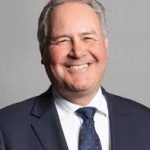
Tag: Bob Blackman

  • Bob Blackman – 2024 Speech on Freedom and Democracy in Iran

    Bob Blackman – 2024 Speech on Freedom and Democracy in Iran

    The speech made by Bob Blackman, the Conservative MP for Harrow East, in the House of Commons on 1 February 2024.

    I beg to move,

    That this House condemns unreservedly the actions of the government of Iran and the violent conduct of the police in suppressing protests in that country; is deeply concerned over Tehran’s growing use of terrorism, espionage, cyber attacks and hostage-taking diplomacy to restrict and eliminate the Iranian democratic opposition, the National Council of Resistance of Iran (NCRI), targeting in particular members of the organised opposition, PMOI (MEK), in Ashraf 3, Albania and NCRI gatherings since 2018; notes that the resistance is struggling for the establishment of a secular democratic republic; calls on European governments, especially the government of Albania, to counter Tehran’s illegal activities and uphold the rights of members of the Iranian opposition PMOI (MEK) at Ashraf-3 in accordance with the 1951 Geneva Refugee Convention, the European Convention of Human Rights and international law; is further concerned by reports of threats made to Iranian dissidents in the UK; urges the Government to include Iran’s Islamic Revolutionary Guard Corps on the list of proscribed terrorist organisations; and further calls upon the Government to work with international counterparts to ensure that further sanctions are placed on Iran without delay and Iran is held to account for its illegal activities at home and abroad.

    I thank the Speakers-collect and the Backbench Business Committee for the various arrangements that had to be made because of this afternoon’s emergency business.

    I am truly horrified by the current situation in Iran, which was sparked by the brutal murder of a young girl by the authorities while she was in police custody. Her crime—if we could call it a crime—was merely wearing her hijab in a manner that the Islamic Revolutionary Guard Corps determined to be too loose. I thank Mr Speaker in particular for allowing me on a number of occasions to debate this issue in the House. However, I wish this debate had taken place under different circumstances and that by now our Government had taken decisive action to proscribe the IRGC in its entirety.

    The urgency for this charge is now more relevant than ever. Not only does the human rights situation in Iran remain dire, but the uncertainty around the middle east, which is spreading further afield at a rapid rate, is predominantly driven by the funding and support from this exceptionally threatening, conniving and deceitful regime.

    Anna Firth (Southend West) (Con)

    My hon. Friend is making an excellent speech. Does he agree that the Iranian people are locked in a vital struggle for justice, democracy and particularly equality, and that that struggle must go on until the oppression of women in Iran and the use of sexual violence as a means of doing so stop?

    Bob Blackman

    I thank my hon. Friend—she must have looked at the next section of my speech. The IRGC literally runs and rules Iran, disregarding democracy, freedom of expression and basic human rights. The majority of people live in fear of speaking out or engaging in political matters in any form, with vigorous covert intelligence deployed to all parts of the country, seeking to sift out any potential opposition that might pose a threat to the regime.

    The authorities censor all media, jamming satellite TV channels and filtering and blocking social media platforms such as X, Facebook, Instagram, Twitter and YouTube. Further, the authorities shut off or disrupt the internet and mobile phone networks, particularly during protests, in order to suppress mobilisation and hide from civilians the sheer scale of the violations and privacy breaches committed by the security forces. In attempting to justify the infringements, the IRGC is even trying to push an internet user protection Bill through the Parliament in Iran. That legislation would further erode online freedoms and people’s access to the global internet.

    All opposition in Iran, whether it is independent political parties, trade unions, striking workers, protesters, civil society organisations or simply truth-sharing journalists, is brutally suppressed. There has never been a clearer example of an undemocratic self-claimed democracy. Political opposition frequently receives the harshest treatment from the regime, and Iran is the country responsible for the second highest number of executions each year, behind only China. Whatever people’s views on capital punishment, it cannot be acceptable that that position persists.

    The House will no doubt recall the uprising that took place in September 2022, sparking nationwide protests that continue even today. I take this opportunity to honour the bravery of those people. It cannot be easy for anyone to stand up and speak for basic rights when there is a high likelihood that they or their family will be brutally targeted as a result. Following the riots, the United Nations special rapporteur on the situation of human rights in Iran, Javaid Rehman, raised the alarm about the concerning trend of arbitrary arrests, detentions and executions targeting individuals for merely exercising their freedom of expression.

    Ian Paisley (North Antrim) (DUP)

    The hon. Member is making a brilliant speech. The dead hand of Iran is, unfortunately, everywhere; its influence and impact is incredible, and I would suggest that it is even in this place. There is an all-party parliamentary group whose secretariat is BIRD—the Bahrain Institute for Rights and Democracy. That is led by a man, Sayed Al-Wadaei, who was outed as a front leader for the promotion of Iranian foreign policy. In 2012, a man called Saeed Al-Shehabi was exposed by the London Evening Standard as part of a terrorist group with links to Iran. That organisation and those people are part of a secretariat to an APPG here, and that needs to be exposed and Members need to take action.

    Bob Blackman

    I thank the hon. Member for raising that point. That is now clearly on the record, and the House authorities will need to look at that particular issue.

    Recently released figures, which I am sure will have been generously tainted by the regime, show that 870 executions took place in 2023 alone. That is a 30% increase on the previous year, and many of those people were women and children. Tens of thousands of political prisoners, the overwhelming majority being peaceful, have been arrested in Iran—arrested for merely holding a sign or removing a headscarf. Once arrested, their treatment is utterly unfathomable. Amnesty International has recently reported that the atrocities such prisoners are subjected to include being beaten, raped, gang raped and psychologically abused; the list of horrors goes on. It is truly despicable, as my hon. Friend the Member for Southend West (Anna Firth) said.

    The plight of women remains intensely troubling. Women remain second-class citizens in Iran: they continue to receive intensified opposition from the regime; they face entrenched discrimination in both law and practice; and they are subject to domestic violence, child marriage, unequal divorce and custody rights, mandatory dress code, restricted nationality and travel rights, and unfair inheritance laws—to name but a few examples. Women in Iran have been jailed for merely singing in public or publishing their work on social media.

    Perhaps even more troublingly, Iran celebrates the greatest number of female executions, beating even China on that particular front. Armita Geravand was a 16-year-old schoolgirl, who was tragically killed through the brutality of the so-called Iranian morality police. Like Mahsa Amini, her only crime was refusing to wear her hijab. Sadly, such stories are not isolated in Iran, and I am sad to say that they will continue without significant intervention from international communities and the Iranian people.

    I am proud that in this House alone, we have an abundance of great women representing us; their contribution is vital and championed by us all. It is shocking that, in 2024, this is far from the case across many other parts of the globe.

    Anna Firth

    I am grateful to my hon. Friend for giving way yet again. He is making an absolutely brilliant, first-class speech, and shining a light on the despicable, brutal regime in Iran. Does he agree that that brutal regime is literally on an execution spree at the moment, having executed more than 350 protesters and dissidents since the conflict in Gaza began? That is a rate of execution of not far off 100 protesters per month. Does he agree that it is long overdue that the UK and our partners demand that the UN Human Rights Council dispatch an international fact-finding mission to Iran to visit the regime’s prisoners—to meet political prisoners and detained protesters—so that, globally, we can finally shine a light on what is happening in Iran? And, of course, he is right that the IRGC should be proscribed.

    Bob Blackman

    I thank my hon. Friend—that was almost a speech rather than an intervention!

    I have had the privilege on a number of occasions to visit Ashraf 3, which is home to some 2,700 Iranian refugees. The museum on the site exceptionally depicts the long struggle that people have endured, with brutal attacks and massacres occurring all too frequently. In Albania, the regime’s claws continue to menace the people. The IRGC has repeatedly targeted the Albanian Government through cyber-attacks, disinformation and terror attacks. I am saddened that, on occasion—most notably in June last year—the camp has been raided by the Albanian police forces. There have been reports of unjustified force and copious amounts of pepper spray being used. Unfortunately, one man died from the injuries that he suffered. I am almost certain that that attack was founded on false claims generated by the IRGC.

    The regime holds a power over Albania. Its continued attacks on cyber-systems are used as so-called warnings to the Government, blackmailing them with threats of continued attacks if they do not suppress the rights of camp members. I urge the Albanian Government to stand up to those threats. No country should infringe its morals for fear of such a corrupt and wicked enemy. This is a time for western allies to stick together and stand up to malicious terror acts. I am glad that our Inter-Parliamentary Union delegation will be going to Albania shortly, and I hope that they will raise this issue.

    The Albanian Prime Minister has said publicly that residents of Ashraf 3 should not engage in any political activity—even peaceful conversation. That is tantamount to denying the right to freedom of expression. I am saddened that that announcement came after a show of support for the camp by Albanian parliamentarians, showing that the dramatic shift in opinion must be down to the negotiations with the IRGC. I hope that the Minister will assure the House that he will offer support to our Albanian counterparts, encouraging them to stand up to the regime and protect the rights of those in that camp, who have already experienced too much brutality.

    This debate comes at a time when the world has never been so unsafe. We have a war raging in Europe, attacks by the Houthis in the Red sea, an illegal war in Gaza by the Hamas terror group, Hezbollah in Lebanon and war in Syria, as well as other dangerous militant groups. The one thing that links all those examples is the IRGC, which stands as the head of the snake, funding, training and supplying weaponry to all those organisations. Its outreach and capabilities are frankly frightening.

    The IRGC has been found to have supplied drones and weapons to Russia as Moscow and Tehran deepen their co-operation in a partnership that is likely to continue and intensify as they commonly seek to weaken the west. Furthermore, the IRGC provided significant direct funding and training to Hamas in the lead-up to the dreadful 7 October attacks. Most recently, the Houthis in Yemen have targeted shipping lanes in the Red sea. The Houthi militant group was set up by Iran and remains under its influence. Linked to those attacks, Iran announced that it had subsequently launched into low-earth orbit three satellites that the US believes can be used to more accurately target intercontinental ballistic missiles.

    The regime in Iran ignites a threat not only to the international community, but, perhaps most concerningly, to the domestic security of the UK. Individuals with Iranian links, or who have spoken out against the IRGC in this country, have frequently been targeted. Furthermore, MI5 announced last year that it had intercepted a significant number of Iran-backed terror attacks.

    Holly Lynch (Halifax) (Lab)

    The hon. Member is making an incredibly powerful speech, and I congratulate him on securing the debate. He is quite right: last year, we heard from the director general of MI5 and the head of counter-terrorism policing that they had intervened to disrupt up to 15 kidnapping and assassination attempts in the UK coming from Iran. That is why the argument for proscription is such a powerful one. It would not be merely symbolic; it would be about granting the security services and police forces in the UK additional powers to truly dismantle any foothold that the IRGC has in the UK that allows it to facilitate those assassination attempts, which we must close down. Does he agree that that is why proscription is so important?

    Bob Blackman

    I thank the hon. Lady for her intervention. The position here is that the Iranian Government are funding professional gangs to inflict attacks and violence on individuals in this country. They have neither mercy nor morals in how far they will go. A Spanish politician and vocal opponent of the Iranian regime was shot outside his home by a criminal gang employed by the IRGC. We must not allow such despicable attacks to occur on domestic soil. It is completely unacceptable that people in this country are being followed home or having to suppress their freedom of expression for fear of being targeted. I urge the Government to tackle this issue with urgency.

    The Iranian authorities have been targeting BBC Persian staff, who are predominantly based in the UK, and their families since 2009 in an attempt to intimidate them into stopping their work as journalists. The intimidation escalated in 2017 and has been at an unprecedented level since September 2022. BBC Persian staff frequently receive credible death threats, threats of horrific violence, thousands of abusive comments and increased threats to their personal safety on online platforms.

    With several colleagues, I was a target of the Iranian regime when we attended the annual gathering of the National Council of Resistance of Iran, with delegations from almost every major democracy, back in 2016. An Iranian diplomat tried to bomb the conference. He had the audacity to smuggle the bomb through security in diplomatic bags. Thankfully, the Belgian and French authorities apprehended the terrorist and no one was harmed. Had he succeeded, there would have been a world war.

    The Iranians assumed responsibility, and they forced the Belgian authorities to hand over this despicable so-called diplomat after they kidnapped two Belgian journalists and held them as hostages. If this does not highlight to the Government that we cannot engage in dialogue with the Iranian regime, I do not know what will. The key point is that the current policy on Iran is not working. Its influence is stretching across the middle east and further. It is time to look for an alternative solution, and I urge the Government to proscribe this merciless regime with utmost priority.

    I am aware that we have already sanctioned individuals, but we must go further. Until we start cracking down on the IRGC, it will continue to extort and suppress innocent people. Its military capacity is growing and, even if it does not already possess a nuclear capability—I have my doubts—its nuclear capability will also grow.

    The international community must wake up and protect countries such as Israel by killing the initial piece of the chain. Without funding and support from Iran, terrorists like Hamas will not be able to carry out their dreadful attacks. Iran will feel the pinch only if there is full proscription, and I reiterate my plea for the Government to do so. Hezbollah is already proscribed, and it is the birthchild of the IRGC. The IRGC must therefore be proscribed, too.

    I have heard the rumours that the Government are holding off such action in order to continue a line of dialogue, but there is no honest or trustworthy dialogue to be had with this terrorist regime. Instead, we must show Iran that such action is not and will not be tolerated. Fifty per cent. of the IRGC’s training efforts are on indoctrination, creating more ruthless, more radical and more committed generations. The dangers are only increasing, so we must act before it is too late.

    It is high time that we work together to banish this unlawful regime, to protect innocent protestors and to champion free democratic rights across the world—we often take those rights for granted. To oppose the Iranian regime is no longer a political calculation but a simple humanitarian choice. We must support the Iranian people and acknowledge the legitimacy of the Iranian opposition if we are ever to see a free and democratic Iran.

    I look forward to hearing from colleagues on both sides of the House. I know that several Members who wanted to take part in this debate have unfortunately had to leave, but I hope we will have excellent replies from my hon. Friend the Minister and, indeed, the shadow Minister.

  • Bob Blackman – 2023 Speech on the Ballot Secrecy Bill

    Bob Blackman – 2023 Speech on the Ballot Secrecy Bill

    The speech made by Bob Blackman, the Conservative MP for Harrow East, in the House of Commons on 24 March 2023.

    I rise to support the Bill in the name of both my hon. Friend the Member for Peterborough (Paul Bristow) and, as he rightly says, Lord Hayward in the other place, who has done a brilliant job over many years on electoral reform and ensuring that our ballots are cast fairly and properly.

    It is a fundamental part of democracy that people can go to a polling booth if they are on the electoral register. They give their name, they show their polling card and they are issued with a ballot paper. No one should then influence them over which way they cast their vote. In my long experience serving in the London Boroughs of Brent and Harrow, we have witnessed that at first hand all too frequently: not just the influence of one man over one woman, but often a man over a whole family—and it can be a large family who go in, with the women and young men being told which way to vote.

    In certain places, particularly London, we have elections on many different systems: we often have local elections the same day as a general election, and we have the London mayoral and assembly elections, where three ballot papers are issued at one time. There is potential for confusion and a need for clarification. My hon. Friend the Member for Peterborough has outlined that it would not be an offence for someone to ask for help and assistance.

    In my experience, presiding officers and clerks are always available to offer that help and assistance, particularly to those who have disabilities. They often go out of their way to come to the doors of a polling station if necessary, to assist someone who is disabled to register their vote properly. The problem arises when some people seek to influence others and make sure that they vote in a particular way, especially when it is against their will and they do not really want to do it.

    The most important thing is that we safeguard the ballot in a free and fair way through this Bill, which I am sure will receive cross-party support. I know it was supported when I had the pleasure of serving on the Bill Committee—albeit very briefly—and hon. Members want to ensure that it makes progress. In my borough, we pride ourselves on being very diverse. We have someone from every country on the planet, every religion, every race, every background, every language—you name it, we have it. People need to feel free when they go to vote, and to feel that their vote is going to count in the way that they wish it to.

    However, I am afraid we have had many experiences of families coming together into polling stations and almost being forced to vote in a particular way. That cannot be right and it needs to change. Many may agree with the candidates they are voting for, but the most important thing is that family voting needs to be outlawed.

    In supporting this Bill, I say to my hon. Friend that it clears up one issue of concern. The Government have taken action on preventing personation, and the requirement for identity cards and suchlike to be used at polling stations to prove that someone is the person entitled to cast the vote is an important reform. I look forward to that having a massive impact on stopping people from personating other individuals on the register.

    My one concern is that we have seen rapid growth in the use of postal voting. I support this Bill completely, but, where large households register for and are sent postal votes, there is still the risk of those people being coerced into voting in a particular way, or—even worse—not even voting themselves, but just filling in the identity element, with the head of the household filling in the rest of the ballot papers before they are sent back. That is something we must think about if we wish to safeguard our democracy.

    I will end there, because I know other colleagues wish to speak and we want other Bills to go through. Despite that note of caution, I warmly welcome this Bill, which will improve the secrecy and sanctity of our ballots.

  • Bob Blackman – 2023 Speech on Holocaust Memorial Day

    Bob Blackman – 2023 Speech on Holocaust Memorial Day

    The speech made by Bob Blackman, the Conservative MP for Harrow East, in the House of Commons on 26 January 2023.

    It is a pleasure to follow the speech of the hon. Member for Putney (Fleur Anderson). I pass on my congratulations to the new hon. Member for Stretford and Urmston (Andrew Western) on his maiden speech. He will remember it forever, because we all do. We all do it once, and he will remember it forever. He is clearly going to be an asset to this House as well as to his party, and I look forward to debating housing issues with him over the time he is here. I wish his team every success tomorrow night.

    I thank my right hon. Friend the Member for Bromsgrove (Sajid Javid) for securing this debate, as we remember the 78 years since the end of the holocaust. For me and for most of us, it is incredible to think of 6 million people being murdered because they were people, and it is important to remember that the holocaust was not an isolated event. It was systematic state-sponsored persecution by the Nazi party and its affiliates. It began in 1933, when the Nazis came to power in Germany, and went all the way through to 1945, when the second world war concluded. I hope to take a bit of a different tack during this speech, because if we ask how we can understand how ordinary people could do such atrocities to ordinary people, we need to understand what led to it in the first place.

    Antisemitism is not new, and it was not new in the 1930s. Jewish people have been subjected to antisemitism throughout Europe since the middle ages. The hatred escalated significantly after the great war, when the reparations on Germany and its allies were extreme, and we had the Wall Street crash and the depression, which led to rampant inflation in Germany and the collapse of the Weimar republic. This led to the rise of Hitler and the Nazi party as he assumed control of Germany.

    It is unclear to me what was behind Hitler’s hatred towards Jews. Why did this man decide that he hated Jews? However, it is quite clear that Hitler held the Jewish community responsible for the defeat of Germany in world war one. Why? It is because someone had to be to blame. That was clearly what we now call fake news —vicious propaganda, enabling the national feeling to be against the Jewish population of Germany and beyond. It was completely wrong, given that Jews were fighting on the side of Germany in defence of their country during world war one, including Otto Frank, who fought at the battle of the Somme.

    After Hitler came to power, he wasted no time in using the Government to target and exclude Jews from German society, claiming they were inferior. Any book that contained ideas threatening to the Nazis was banned, and a concentration camp was immediately created for political prisoners, initially holding 200 communists. By 1935, the anti-Jewish movement had gained momentum. Jewish newspapers could no longer be sold, and Jews were stripped of their citizenship and other basic rights. In September 1935, the Nuremberg laws were passed by the German Parliament, which meant that many of the Nazis’ radical theories were institutionalised, and legal grounds were created to justify the prosecution and persecution of the Jewish community.

    It is unimaginable in this day and age how the vast majority of Germans were coaxed into believing that Nazi ideology, but members of the general public were clearly unaware of the growing indoctrination until it was too late. They had adopted a strong stance against the entire Jewish community, and therefore could justify Hitler’s actions. Despite the shocking morals, Hitler was a calculated and systematic man, carefully thinking through his long-term plan before enacting it. He was able to persuade the German people by providing free radios that played only antisemitic programmes, ensuring that all children’s books depicted the villain as a Jewish character, showing posters blaming the Jews for every evil, and introducing strong censorship on all anti-Nazi media.

    On 9 November, Kristallnacht, or the “night of broken glass”, took place. That was the terrorisation of Jews throughout Germany and Austria, which had recently been annexed by the Nazis. Hundreds of synagogues were destroyed and thousands of Jewish-owned businesses ransacked. The deaths of nearly 100 Jews took place on that dreadful night, which is often seen as the turning point in the persecution of German Jewry. The aftermath of Kristallnacht saw dozens of further discriminative restrictions. Jews now had to carry ID cards at all times and have the segregating “J” stamped on their passports. They could longer head or own businesses, and they could not attend concerts or theatres. They had their driver’s licences removed, and all Jewish children had to be taken out of their schools to attend “Jewish-only” institutions. They had to be in certain places at certain times—all dictated by the Führer. Furthermore, more than 30,000 Jews were arrested on that night.

    The whole House will be aware that in 1939 world war two was declared, as Germany took over Czechoslovakia and began the invasion of Poland. Simultaneously, the Jewish restrictions became even more constraining and discriminatory. By 1940, the Nazis had begun deporting German Jews to Poland, where they were forced into ghettos and concentration camps. They were brutally tortured and their human rights completely violated. Devastatingly, 1940 saw the first of an onslaught of mass murders of Jewish people.

    The situation became graver and graver, and in 1942, the Nazis’ discussions were centred around their “final solution”, a despicable plot to kill every European Jew. At that point, Jews were not allowed to own pets, leave the house without police consent, buy newspapers and eggs or attend school, among all sorts of further restrictions. Once Hitler took control of Hungary, a year before the end of world war two, he began deporting 12,000 Jews to Auschwitz every day to be killed. That continued until 1945, when Auschwitz-Birkenau was liberated. Sadly, 6 million Jewish people—two thirds of European Jews—had lost their lives. That shattered communities, and provided the few who outlived the war with experiences that scarred their lives for ever.

    But before we get too comfortable, we should remember what was going on in this country. The British Union of Fascists was around before world war two, led by Oswald Mosley, an MP in this House, and he modelled it on Nazi Germany. The BUF was fuelled by antisemitism, inspired by the Nazis, and Mosley held huge rallies in this country, pushing a strong nationalist and fascist agenda. Unemployment was very high, poverty widespread, and homelessness rising. Someone had to be to blame, and Mosley blamed the Jews. It could have happened here. Sensible action took place by the Home Secretary, and once war broke out the BUF was banned and its members became enemies of the state. But we must never be too comfortable that this could not happen again, even in this country. I will end with one line from Zigi Shipper, who made this important point: do not hate.

  • Bob Blackman – 2023 Parliamentary Question on the Maintenance of Churches and Cathedrals

    Bob Blackman – 2023 Parliamentary Question on the Maintenance of Churches and Cathedrals

    The parliamentary question asked by Bob Blackman, the Conservative MP for Harrow East, in the House of Commons on 26 January 2023.

    Bob Blackman (Harrow East) (Con)

    What assessment the Church of England has made of the steps needed to put the maintenance of churches and cathedrals on a sustainable basis.

    The Second Church Estates Commissioner (Andrew Selous)

    The Taylor review of cathedral and church building sustainability was published in 2017. There is an urgent need for dialogue with the Government about it, because without a bedrock of basic maintenance and repairs funding, there is a real risk to many of our amazing church and cathedral buildings. In passing, I note that such issues are always easier to address with a full church.

    Bob Blackman

    I thank my hon. Friend for that answer. My constituency is home to no fewer than 24 churches, including every branch of Christianity, but St Lawrence’s church in particular is in dire need of repair. It is a very well populated church, but it does need additional funds to restore it to its previous good keeping. Can my hon. Friend tell me what help will be given to St Lawrence’s church?

    Andrew Selous

    I have read up on St Lawrence, Little Stanmore: its baroque interior and internationally renowned organ—Handel was employed as a composer in residence —are real treasures. I will put my hon. Friend in touch with the national church buildings department, which advises parishes on grants and support for refurbishment. I can also tell him that the Willesden area council of the diocese of London is able to distribute grants of up to £20,000 for urgent repairs.

    John Cryer (Leyton and Wanstead) (Lab)

    As the hon. Member said, a large number of churches and cathedrals in this country are in serious danger, including a number in my constituency. He also mentioned discussions between the Government and the Church of England on securing the future of churches. Will he say if those discussions are imminent?

    Andrew Selous

    I am very grateful to the hon. Gentleman for raising that point, and I think the answer is that they need a bit of a boost, if I could put it that way. I would welcome his support, and indeed that of hon. Members on all sides, because I think all places of worship—and the Church of England does have an enormous number of grade I and grade II buildings—are important in all of our communities, and we do need a serious national conversation about how we keep them going for the future. Other countries fund them from the state. Personally, I do not think that is right, but I do think we need a dialogue with Government as to how we go forward in this area.

  • Bob Blackman – 2015 Parliamentary Question to the HM Treasury

    Bob Blackman – 2015 Parliamentary Question to the HM Treasury

    The below Parliamentary question was asked by Bob Blackman on 2015-11-23.

    To ask Mr Chancellor of the Exchequer, if his Department will undertake an analysis of the feasibility of further financial devolution to London.

    Greg Hands

    The government is strongly committed to devolving powers and responsibilities to the local level. The Chancellor has announced details of the reform to Business Rates nationally whereby Local Government will be able to retain 100% of Business Rates. The government will set out in due course the implications of this reform for London

  • Bob Blackman – 2016 Parliamentary Question to the Department of Health

    Bob Blackman – 2016 Parliamentary Question to the Department of Health

    The below Parliamentary question was asked by Bob Blackman on 2016-05-04.

    To ask the Secretary of State for Health, what progress has been made on approving the business case for rebuilding the Royal National Orthopaedic Hospital.

    George Freeman

    A Full Business Case for the new inpatient ward at the Royal National Orthopaedic Hospital was submitted to NHS Improvement for review on 6 April 2016 and is due for consideration in June 2016. This remains a priority project for the Department and NHS Improvement.

  • Bob Blackman – 2015 Parliamentary Question to the Cabinet Office

    Bob Blackman – 2015 Parliamentary Question to the Cabinet Office

    The below Parliamentary question was asked by Bob Blackman on 2015-11-26.

    To ask the Minister for the Cabinet Office, what plans he has to support charities during this Parliament.

    Mr Rob Wilson

    In the last five years the number of registered charities has increased by over 2,000, and the sector’s annual income has grown by over £10bn.

    Looking ahead, the Government’s priority is supporting a strong, independent, transparent and accountable voluntary sector. Plans will include a focus on outcomes based commissioning, restoring public trust in fundraising and strengthening the Charity Commission to protect charities from abuse through the Charities Bill.

  • Bob Blackman – 2016 Parliamentary Question to the Department of Health

    Bob Blackman – 2016 Parliamentary Question to the Department of Health

    The below Parliamentary question was asked by Bob Blackman on 2016-05-09.

    To ask the Secretary of State for Health, how many tests for Vitamin D were carried out by pathology laboratories in England in (a) 2015-16, (b) 2014-15 and (c) 2013-14; and what the cost to the NHS was of providing such tests in each of those years.

    Jane Ellison

    This information is not held centrally. Clinical commissioning groups are responsible for commissioning laboratory testing locally.

  • Bob Blackman – 2016 Parliamentary Question to the HM Treasury

    Bob Blackman – 2016 Parliamentary Question to the HM Treasury

    The below Parliamentary question was asked by Bob Blackman on 2016-01-11.

    To ask Mr Chancellor of the Exchequer, if he will place in the Library HM Revenue and Customs’ full workings, including the methodology, modelling and assumptions, which underpinned the figures included in the Tobacco Levy Consultation, published in September 2015, on the tobacco levy yield after behavioural effects.

    Damian Hinds

    The response to the tobacco levy consolation included the HMRC costing note and the DEFRA review of HMRC’s methodology, alongside consultation responses and the government’s summary. Since the government does not generally publish analysis of polices that do not go ahead, the publishing of these documents goes significantly beyond usual practice. HMRC also publish a methodological paper on tobacco entitled Econometric Analysis of Cigarette Consumption in the UK. This can be found on gov.uk.

  • Bob Blackman – 2016 Parliamentary Question to the Foreign and Commonwealth Office

    Bob Blackman – 2016 Parliamentary Question to the Foreign and Commonwealth Office

    The below Parliamentary question was asked by Bob Blackman on 2016-06-09.

    To ask the Secretary of State for Foreign and Commonwealth Affairs, with reference to the Answers of 27 April 2016 to Questions 34797 and 34798, what assessment he has made of the implications for the UK’s role in Israeli-Palestinian peace negotiations of UK funding being used by UN-funded non-governmental organisations to commemorate Palestinian terrorists.

    Mr Tobias Ellwood

    We have made no such assessment.