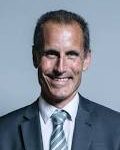
Tag: Bill Esterson

  • Bill Esterson – 2024 Speech on the Loyal Address

    Bill Esterson – 2024 Speech on the Loyal Address

    The speech made by Bill Esterson, the Labour MP for Sefton Central, in the House of Commons on 17 July 2024.

    It is always a pleasure to speak in this Chamber. I have had the pleasure of doing so for the past 14 years, but it is not half a big improvement to be standing on the Government side of the Chamber. I look forward to giving full support to this new Labour Government in their endeavour, as they take their first steps in changing our country for the better.

    I congratulate my hon. Friends the Members for Bolton North East (Kirith Entwistle) and for Wolverhampton West (Warinder Juss), who gave outstanding maiden speeches. They have set the bar rather high for the rest of my hon. Friends, as I think they would all agree, but I wish them all well in their endeavours. Indeed, I congratulate all new and returning Members.

    We have an inheritance after 14 years, and I would just say to some of the Conservative Members who have defended the previous Government’s record, or at least have attempted to do so as they have made their various leadership pitches, that the economic performance of those 14 years tells a rather different story, with low living standards, a cost of living crisis and low growth. In fact, growth has been so low that, had we maintained the growth of the last Labour Government, GDP would be £140 billion higher, every household would on average have £5,800 more every single year and there would be £50 billion more, on the same tax rates, for spending and investing in our public services and our infrastructure. That is what 14 years of Conservative Government have meant for this country, and to cap it all we had the Liz Truss and Kwasi Kwarteng exuberance of the mini-Budget, with the disastrous crashing of the economy, which has left people paying high interest rates even now, two years later. That is the record we inherit, it is what we have to fix and we have made a very good start.

    In the Gracious Speech, the importance of economic stability was underlined with the announcement of a Budget responsibility Bill to deliver stability and to attract investment by creating confidence throughout the economy. There is the national wealth fund to attract private investment and to invest in the massive opportunity available to us in this country, which, almost uniquely in western Europe, is through clean energy, with our geographical and geological opportunities, as well as our marvellous tech in this country, our science base and our universities. There are the reforms to planning to deliver infrastructure and housing, and the reform to skills to deliver for our workers and for their employers. The investment we have announced in transport, which is so important—the improvements in rail and in buses and the commitment to sustainable aviation fuel—show that this is a Government who actually understand the importance of integrated transport in delivering societal and economic improvements.

    Turning to the impact on my constituency, we, like everybody in this House, will benefit from the commitments to take action on NHS and dental waiting lists, and to improve appointments, as well as to recruit additional teachers and to bring in breakfast club places for our children. All of those will make a massive immediate difference, and they are part of the down payment that the Prime Minister committed to during the election campaign and reiterated in his brilliant speech earlier. In my constituency, one piece of legislation announced today above all is of particular significance. I represent many people whose loved ones died at Hillsborough, or who were injured or who attended, so I am very pleased—along with all of my Merseyside and Liverpool city region colleagues, and indeed many more in this House—for everyone who has campaigned so hard for justice for 35 years. The legal duty of candour on all public officials and authorities will now be created, as it should have been so many years ago.

    I am thrilled at the announcement about and the commitment to mental health in the Gracious Speech. Maghull health park in my constituency arguably has the most comprehensive array of mental health services in Europe, with medium and low secure provision to go with the well known high-secure Ashworth hospital, which is the best arrangement on a single location. Mersey Care NHS foundation trust, along with the Liverpool city region combined authority and Sefton council all want to see, as do I, investment in a world-leading diagnostic and research mental health facility on the same site. What we heard in the Gracious Speech gives me great confidence that such investment is likely to be available so that we can make the most of what we are already very good at in this country and make so much more of it. It must be right, as the sovereign said in the other place, that mental health should have the same attention as physical health.

    This brings me on to speak in more detail about energy. The Liverpool city region and the north-west of England are supremely well placed to be at the heart of the Government’s plans for investment in clean energy and energy security. Contrary to what some Conservative Members have been saying, this is about jobs, cheaper transport and lower energy bills. It is an economic investment as much as it is an environmental one. It is of course essential that we support workers in the oil and gas industry, so that we avoid the mistakes of deindustrialisation, and that there are jobs and training for people to make the transition and take advantage of the lower-carbon future that we all know is coming.

    In the Liverpool city region and across the country, it is absolutely right that we make the most of opportunities in fixed and floating offshore wind. I am so pleased that one of the Secretary of State’s first acts has been to end the ban on onshore wind, and indeed that he has announced three new solar farms. In the north-west and elsewhere there are plans for hydrogen, for carbon capture and storage, and for nuclear, and uniquely in the north-west, in the city region, we have great plans for the Mersey tidal project. They are all key to growth, to prosperity and to addressing the climate crisis, so I am thrilled that this is front and centre of Labour’s plans for government.

    There are many other aspects of the low-carbon future, including improvement in insulation in housing and plans for solar for people at home. That is something I have invested in, and I have seen the benefits with lower bills already. I would advocate that for everybody, and it is brilliant that we are committed to giving everybody the ability to make the most of such an opportunity.

    The Liverpool city region and the north-west are part of the HyNet project, which is a commitment to a series of green hydrogen generation units. We are also committed to improvements in green transport through the roll-out of EV charging points—something that has to happen much more quickly right across the country—and there are already net zero hydrogen buses in service in the city region. Elsewhere in the city region, Glass Futures is leading the way internationally in decarbonising the production of glass, and we are also looking at battery storage.

    Whether in the city region or elsewhere in the country, this really is key not just to Labour’s energy mission, but to the mission of sustaining the highest growth in the G7, and whether through investment in energy or improvements in public services, by having growth at the centre we really will see improvements in this country and we really will see a change from what we have seen over the past 14 years. The 14 years of chaos are over, and it is time to turn the page. As the Prime Minister said, it is time to work together—and he offered to do so with all Members in this House and people beyond this House—to start to rebuild Britain. Today’s Gracious Speech is an important down payment in securing Britain’s future.

  • Bill Esterson – 2023 Parliamentary Question on Interest Rates and Inflation Impacting on Inequality

    Bill Esterson – 2023 Parliamentary Question on Interest Rates and Inflation Impacting on Inequality

    The parliamentary question asked by Bill Esterson, the Labour MP for Sefton Central, in the House of Commons on 9 January 2023.

    Bill Esterson (Sefton Central) (Lab)

    What assessment he has made of the potential impact of changes in the level of (a) interest rates and (b) inflation on regional inequality.

    Gavin Newlands (Paisley and Renfrewshire North) (SNP)

    What recent assessment he has made of the impact of increases in inflation on the adequacy of levelling-up funding.

    The Parliamentary Under-Secretary of State for Levelling Up, Housing and Communities (Dehenna Davison)

    I wish you a very happy new year, Mr Speaker.

    The recent autumn statement protected the most vulnerable by uprating benefits and pensions with inflation, strengthening the energy price guarantee, and providing cost of living payments for those who are most in need. My Department is continuing to analyse and respond to the challenges that inflation presents to the delivery of our levelling-up programmes and the levelling-up agenda, working closely with the places affected. We are continuing to explore what other support can be offered to mitigate against those inflationary pressures.

    Bill Esterson

    Happy new year, Mr Speaker.

    According to the Department, construction of major projects has stalled because industry prices are well above the headline rates of inflation. As the Minister knows, UK inflation is projected to be the highest in the G7 this year, as it was last year. In the north-west, the Government have cut £206 million from the much-needed shared prosperity fund, so will the Minister confirm that her Department will make up the shortfall in the funds to help the construction industry play its part in rebuilding the economy and communities across the country?

    Dehenna Davison

    I am grateful to the hon. Gentleman for bringing attention to the shared prosperity fund, which is just one of the many measures that this Government have put in place to help to promote investment in local areas right across the country. One point that I draw his attention to is that, in recognising the challenging landscape that we face at the moment, our Department is making an additional £65 million of funding available to successful applicants to ensure that they can take on board consultants, train up extra staff and increase their capacity so that they are responding to the challenges that they face.

    Gavin Newlands

    Happy new year, Mr Speaker. It is great to see the former Prime Minister, the right hon. Member for Uxbridge and South Ruislip (Boris Johnson), take a break from his career break to come and join us today—he is very welcome.

    The UK is already the second most unequal G7 country, with inflation higher in poorer regions—including many parts of the west of Scotland—than in London and the south-east of England. That is set to become even worse as a consequence of the Tory cost of living crisis. Local initiatives such as the Clyde green freeport are designed to boost economic prospects in the west of Scotland, but inequality is still a major impediment to economic growth. How can the Tories fix that inequality when they largely caused it in the first place and have spent the last decade making it worse?

    Dehenna Davison

    I am grateful to the hon. Gentleman for again drawing attention to the green freeports programme, which will provide brilliant opportunities for residents in Scotland; we hope to make an announcement on that incredibly soon. I draw his attention to the incredible UK Government funds going into Scotland: the UK shared prosperity fund, the levelling-up fund and the community ownership fund—all things that Scottish people can access thanks to the UK Government improving opportunities for Scottish people.

    Sara Britcliffe (Hyndburn) (Con)

    Happy new year, Mr Speaker.

    In Hyndburn and Haslingden, we welcome the shared prosperity funding we have received, which will support places such as Haslingden market. But after significant stakeholder engagement, we now eagerly await the outcome of our levelling-up fund bid. Can the Minister confirm that the results will be known before the end of the month?

    Dehenna Davison

    I am grateful to my hon. Friend, who is an excellent champion for her community—this is not the first time she has bent my ear on the levelling-up fund, and I am sure it will not be the last. I can confirm that we will announce the full outcome of the levelling-up fund by the end of January.

    Sir Jake Berry (Rossendale and Darwen) (Con)

    In Darwen, our town deal is absolutely crucial as part of our levelling-up plan. However, because of inflation, not only is time a wasting asset, but so is the value of that deal. Will the Minister meet me and representatives of Blackburn with Darwen Borough Council to discuss how we can speed up the release of the Darwen town deal funds?

    Dehenna Davison

    Yes, I absolutely will.

    Mr Speaker

    I call the shadow Minister.

    Sarah Owen (Luton North) (Lab)

    Thank you, Mr Speaker, and happy new year.

    Conservative failure to tackle regional inequality is just one in a long list of let-downs. Thirteen years of Tory rule, and parts of the UK have plunged further and further into poverty. Local authorities spent over £27 million applying for levelling-up bids, only for many to lose out—places such as Barnsley and Knowsley, which have been denied multiple bids with little transparency, leaving many colleagues in the dark and resorting to questioning Ministers about local bids, with no answers at all. Will the Minister please clarify the lack of transparency and the financial costs of these bids to cash-strapped councils, particularly during the cost of living crisis?

    Dehenna Davison

    I thank the shadow Minister for her question. We are keen to get the levelling-up funding announced by the end of the month, with additional funding to what we were originally forecast to put out. We had £1.7 billion in the pot; we are now going to be divvying out £2.1 billion to local areas that really need it. It is the Conservative Government who deliver for the people across this country.

  • Bill Esterson – 2016 Parliamentary Question to the HM Treasury

    Bill Esterson – 2016 Parliamentary Question to the HM Treasury

    The below Parliamentary question was asked by Bill Esterson on 2016-01-13.

    To ask Mr Chancellor of the Exchequer, what assessment he has made of the effect of late payment of claims by insurance companies on SMEs.

    Harriett Baldwin

    In the Enterprise Bill, Government has proposed to introduce a new requirement for insurers to pay claims within a reasonable time, which will also entitle policyholders to claim damages where a claims is paid late. An assessment of the impact of late payment of insurance claims, including on small and medium sized enterprises, has been published by the government:

    https://www.gov.uk/government/uploads/system/uploads/attachment_data/file/461200/BIS-15-517-IA-late-payment-of-insurance-claims.pdf

  • Bill Esterson – 2016 Parliamentary Question to the Department for Business, Innovation and Skills

    Bill Esterson – 2016 Parliamentary Question to the Department for Business, Innovation and Skills

    The below Parliamentary question was asked by Bill Esterson on 2016-04-19.

    To ask the Secretary of State for Business, Innovation and Skills, what support his Department plans to provide to the Pubs Code Adjudicator; and which directorate of his Department will oversee that support.

    Anna Soubry

    The Department is providing support to Mr. Newby to set up the Pubs Code Adjudicator office and prepare for the service it will deliver. The support includes finalising the office location and helping with logistical matters such as staff recruitment, IT provision, communication and stakeholder planning, financial modelling and service design. As the Pubs Code Adjudicator office becomes staffed, the Department will reduce its support.

    Following commencement of the Pubs Code, the Department will perform a sponsorship role to ensure that the Pubs Code Adjudicator is accountable and delivering value for money services whilst maintaining its independence.

    The Consumer and Competition Directorate in Economics and Markets Group will provide the ongoing support and the sponsorship function.

  • Bill Esterson – 2015 Parliamentary Question to the Ministry of Justice

    Bill Esterson – 2015 Parliamentary Question to the Ministry of Justice

    The below Parliamentary question was asked by Bill Esterson on 2015-10-29.

    To ask the Secretary of State for Justice, if he will make representations to the Criminal Cases Review Commission on reviewing the case of James Thompson.

    Mike Penning

    The Criminal Cases Review Commission is independent, and it would not be appropriate for Ministers or officials to intervene in individual cases.

  • Bill Esterson – 2016 Parliamentary Question to the Cabinet Office

    Bill Esterson – 2016 Parliamentary Question to the Cabinet Office

    The below Parliamentary question was asked by Bill Esterson on 2016-01-13.

    To ask the Minister for the Cabinet Office, what information his Department holds on the number of Government departments which failed to pay outstanding debts to SMEs within the 60 day maximum period set out in the Prompt Payment Code.

    Matthew Hancock

    Government does not hold this information centrally. When undisputed public sector invoices are not paid within 30 days, interest becomes liable under the Late Payment of Commercial Debts (Interest) Act 1998.

    In March 2015 central government restated its longstanding commitment to pay 80% of undisputed and valid invoices in 5 days with the remainder paid in 30 days. To increase transparency through publication, departments are required to publish performance against these targets on a quarterly basis on GOV.UK.

  • Bill Esterson – 2016 Parliamentary Question to the Department for Business, Innovation and Skills

    Bill Esterson – 2016 Parliamentary Question to the Department for Business, Innovation and Skills

    The below Parliamentary question was asked by Bill Esterson on 2016-04-19.

    To ask the Secretary of State for Business, Innovation and Skills, which directorate of his Department oversaw the appointment of the Pubs Code Adjudicator.

    Anna Soubry

    The development of the Pubs Code and the appointment of the Pubs Code Adjudicator were overseen by the Pubs Code and Adjudicator Team.

    Due to departmental restructuring this team has sat within two different directorates in BIS: the Consumer and Competition Directorate (prior to July 2015 and currently) and Enterprise Directorate (from July 2015 to March 2016).

  • Bill Esterson – 2015 Parliamentary Question to the Department for Business, Innovation and Skills

    Bill Esterson – 2015 Parliamentary Question to the Department for Business, Innovation and Skills

    The below Parliamentary question was asked by Bill Esterson on 2015-11-02.

    To ask the Secretary of State for Business, Innovation and Skills, what recent assessment he has made of the effect on (a) businesses affected by pre-pack insolvencies and (b) employees of such businesses of such insolvencies.

    Anna Soubry

    The University of Wolverhampton undertook research as part of Teresa Graham’s June 2014 review into pre-pack administrations. This found that returns to creditors from a pre-pack were slightly lower than from non pre-packed administrations.

    The report also found that in about 60% of pre-pack deals all jobs were saved, and in a further 10% some jobs were saved. No data is available on the impact of the insolvency on employment at creditors of the company.

    A voluntary package of reforms to pre-packs, as recommended by the Graham review, was launched on 2 November with support from the insolvency industry and creditor groups. The reforms are intended to bring greater transparency and improved creditor confidence in pre-packs, and especially those in which sales are to connected parties.

  • Bill Esterson – 2016 Parliamentary Question to the Department for Business, Innovation and Skills

    Bill Esterson – 2016 Parliamentary Question to the Department for Business, Innovation and Skills

    The below Parliamentary question was asked by Bill Esterson on 2016-01-12.

    To ask the Secretary of State for Business, Innovation and Skills, which 10 companies owed the greatest amount of late payment debt to SMEs in each six-month period of the last 10 years.

    Anna Soubry

    The Department does not hold the information required. However, BACS data shows that small and medium businesses are owed a total of £26.8 billion, and the average small business is waiting for £31,900 in overdue payments.[1]

    The Government recognises that late payment remains an important issue for small businesses in the UK and is taking significant steps to assist small businesses to recover late payment debts. This is part of a package of measures to tackle late payment. We have also legislated for new transparency measures in the public and private sectors.

    The Small Business Enterprise and Employment Act 2015 legislated for new reporting requirement on the UK’s largest companies and Regulations will be introduced this year which will compel larger companies to report on payment practices and performance. This information will be published on a six-monthly basis and will be made publicly available.

    The Public Contracts Regulations 2015 introduced a requirement for all public-sector buyers to publish annually, from 2017, their liability to debt interest payments. In central government we have gone further and faster. We will be publishing against these requirements quarterly from April this year. This will allow full public scrutiny of payment performance.

    Through the Enterprise Bill, currently before Parliament, we will legislate to establish a Small Business Commissioner to give general advice and to help small businesses resolve disputes relating to payment matters with larger businesses.

    Tackling late payment is about creating a responsible payment culture where larger companies recognise the benefit of having a sustainable and robust supply chain, and smaller businesses feel able to challenge poor behaviour. Once implemented, the Government is confident that these measures will lead to significant changes in the UK’s payment culture.

    [1] BACS Data June 2015.

  • Bill Esterson – 2016 Parliamentary Question to the Department for Business, Innovation and Skills

    Bill Esterson – 2016 Parliamentary Question to the Department for Business, Innovation and Skills

    The below Parliamentary question was asked by Bill Esterson on 2016-04-19.

    To ask the Secretary of State for Business, Innovation and Skills, which directorate of his Department oversaw the development of the Pubs Code.

    Anna Soubry

    The development of the Pubs Code and the appointment of the Pubs Code Adjudicator were overseen by the Pubs Code and Adjudicator Team.

    Due to departmental restructuring this team has sat within two different directorates in BIS: the Consumer and Competition Directorate (prior to July 2015 and currently) and Enterprise Directorate (from July 2015 to March 2016).