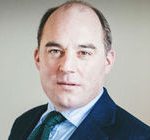
Tag: Ben Wallace

  • Ben Wallace – 2022 Speech to Conservative Spring Conference

    Ben Wallace – 2022 Speech to Conservative Spring Conference

    The speech made by Ben Wallace, the Secretary of State for Defence, in Blackpool on 19 March 2022.

    Good morning Conference.

    Before I begin, can you all join me in giving a very warm welcome to the Ukrainian Ambassador – Vadym Prystaiko.

    Vadym, we are extremely pleased to welcome you here today.

    Conference, I can’t tell you how nice it is to be here.

    How genuinely nice it is to be home. Not only because Blackpool is next to my wonderful constituency of Wyre and Preston North but also because Lancashire is where I live and because as a county it is one of the places that helped shape the modern Conservative party.

    If we can win in Lancashire, we can win the country.

    Every year in this town, veterans of my regiment, the Scots Guards, meet here to remember the Falkland Islands and the Battle of Tumbledown.

    This year it will be especially important as we mark the 40th anniversary of the liberation of the Falklands Islands from the grip of the Argentinian Military dictator General Galtieri.

    Many said it couldn’t be done. That sending a force 8000 miles to the south Atlantic was an impossible task.

    But history is littered with those that underestimate this plucky island.

    General Galtieri was not the first dictator to do so.

    While many here will remember the amazing Sea Harrier and the battles of Tumbledown, Goose Green and Mount Kent we sadly can also remember the 255 British lives lost and also the lost lives of the young Argentinians who were sent so needlessly in order to save a dictator’s political position.

    There were many stand out contributions to that campaign.

    But Margaret Thatcher stood out for her leadership and determination to stand up for the values and freedoms we all hold so dear.

    By her leadership she equipped the forces with the most important weapon of all. – the moral component:

    That deep sense that what we were fighting for was legal, justified and right.

    Today that same moral component is what is arming the men and women of Ukraine.

    Who would have thought that 31 years after the end of the cold war we would be once again facing such a direct threat to our freedoms and values.

    As we gather today, spare a thought for the brave Ukrainians fighting the occupying forces of Russia as we sit here in comfort.

    I am proud of what the UK has done to add to that moral fight.

    Through Boris Johnson’s leadership on sanctions and military aid, Britain has led the way.

    Since 2015, we have helped train Ukrainian forces, underwritten equipment sales when no one else would, and we were the first in Europe to join the US in sending defensive weapons to the forces of Ukraine.

    To date we have sent over 4000 of our new light anti-tank weapons (known as NLAWs), a further consignment of Javelin anti-tank missiles and thousands of items of body armour and other defensive equipment.

    But we also have led, alongside Poland and the US, the distribution of many other nations’ donations.

    Just like 1982, Putin’s arrogant assumptions have directly led to the level of casualties and attrition amongst the Russian army.

    The Kremlin assumed that Ukraine would not fight – he was wrong.

    He assumed that his Army was invincible – he was wrong.

    And he assumed that the international community would splinter – he was wrong.

    We have never been more united on sanctions, on military aid and in NATO.

    The deaths of so many young Russian soldiers are the responsibly of the Kremlin.

    During the Soviet invasion of Afghanistan mothers of those killed in action called the dead “boys in zinc” because of the zinc-lined coffins that came back.

    None of us should let today’s Russian President forget that despite dozens of Presidents and Prime Ministers urging him not to invade, he did.

    The International community called for peace. President Putin chose “zinc”.

    The UK can and will do more to help Ukraine.

    That’s why last week I announced that we would be upgrading our aid to include the Starstreak anti-air missile.

    But the UK doesn’t just stop there. We are standing by our NATO and European partners.

    Countries such as Poland, Romania and the Baltic states who border the conflict.

    President Putin has been clear in his threats that all of us are at risk.

    So in the last few months I have sent 450 soldiers to Poland to help with engineering, air defence and humanitarian tasks. We have also added another Battlegroup in Estonia and at the same time increased Typhoon and F-35 deployments over Romania and Bulgaria. Typhoon jets, that, by the way, are made here in Lancashire.

    Conference, I used to joke to my officials that “defence never sleeps”. It turns out my joke is a little flat because it turns out to be true.

    Over the last 3 years we have been at the forefront of the COVID response, the evacuation in Afghanistan and now Ukraine. My team of excellent Ministers – Baroness Goldie, Jeremy Quinn, James Heappey and Leo Docherty – never stop working and delivering, both on operations and on defence reform.

    But even before the events of the last 2 years the Prime Minister’s generous defence settlement of an additional £24 billion over this 4-year spending round, has enabled us to once and for all have a proper defence programme that puts the men and women of the armed forces at the heart of all we do.

    The defence command paper we published in March last year was very timely and many of the reforms we are delivering are right for this competitive age.

    But defence isn’t about just the front line. It is also about everything that goes on behind it. The defence industry, the training and skills, the civil servants, and veterans’ services. Behind every front line is a strong support base.

    The failures of the Russian Army in Ukraine show us that, unless you invest in the people, then nothing can achieved. Defence and levelling up go hand in hand.

    As a Lancashire MP I am incredibly proud of our Prime Minister’s determination to level up the UK and to invest in skills and jobs up and down the country.

    After COVID we all have a duty to “Build Back Better”.

    Through the Ministry of Defence’s Defence and Industrial Strategy, supported by £6.6 billion of investment into R&D over this 4-year spending round, we are ensuring that the UK continues to have competitive, innovative and world-class defence and security industries, that underpin national security, drive investment and prosperity across the Union, and contribute to strategic advantage through science and technology.

    A great example of this is the new Defence Science and Technology Laboratory due to be opened next week in Newcastle Helix.

    The location of the new unit, with its proximity to world-class universities with a high proportion of STEM and computing students, will allow it to thrive.

    Supporting world-class defence development from the heart of Newcastle, whilst also supporting new jobs in the North East. Newcastle is DSTL’s first established Science and Technology Hub and will specialise in Artificial Intelligence and Data Science.

    AI and Data Science will benefit from a £142 million investment from DSTL over the next four years.

    This is not the only new Defence investment taking root in the North.

    Last autumn I announced that the recently established National Cyber Force will be permanently located in Samlesbury, Lancashire.

    The site will contribute to national security whilst also boosting skills, employment, and investment in the local area, delivering on this Government’s commitment to level-up whilst also bringing together Government, skills and industry to build a world-class capability.

    Backed by over £5 billion of investment before 2030 and run jointly by the MoD and GCHQ, the new Northern site is due open in 2023 and will sit between Blackburn, Preston, Bolton and Burnley and create thousands of skilled jobs in a region with award-winning further education colleges, world class universities, and a thriving defence and aerospace sector.

    And, further delivering against this Government’s pledge to level-up and decentralise, I can announce that new home of Defence Business Services (the organisation that support the MoD’s financial and HR services as well as Veterans UK) will be right here in Blackpool.

    Conference, just last year Labour claimed that our new plan for UK defence ‘risked the UK being out of step with our NATO allies’.

    Quite to the contrary, the principles set out in the Prime Minister’s Integrated Review have served NATO and our allies well in this dark hour.

    Of course I welcome that our policy has attracted support from across the House.

    Let us not forget, that many members of Labour’s front bench, were also on the front bench of Jeremy Corbyn – who wanted to abolish NATO, AND blamed the West for Russia’s annexation of Crimea in 2014.

    In contrast, the year of the Falklands conflict, Mrs Thatcher told the Conservative Party Conference that “peace, freedom and justice are only to be found where people are prepared to defend them.”

    That remains the case today.

    40 years ago the 74 days of the Falklands conflict tested the resolve of the British nation, but freedom prevailed.

    I am proud that today we see that same resolve across all generations standing in support of Ukraine.

    Slava Ukriani.

  • Ben Wallace – 2022 Comments on Provision of NLAWs to Ukraine

    Ben Wallace – 2022 Comments on Provision of NLAWs to Ukraine

    The comments made by Ben Wallace, the Secretary of State for Defence, on 8 April 2022.

    The UK Government is resolute in our support for Ukraine and determined that no barbaric Russian act goes unanswered.

    Another 800 NLAWs will not only support the Ukrainian defence, but show Putin that his brutality only stiffens our resolve.

  • Ben Wallace – 2022 Comments on Two Additional Typhoon Aircraft Being Sent to Romania

    Ben Wallace – 2022 Comments on Two Additional Typhoon Aircraft Being Sent to Romania

    The comments made by Ben Wallace, the Secretary of State for Defence, on 8 April 2022.

    The UK and Romania are steadfast in the defence of our shared values and commitment to NATO’s collective security, in the air, at sea, and on land.

    Together we are supporting Ukraine in its defence against Putin’s illegal invasion and I pay tribute to Romania’s generosity providing shelter for the tens of thousands of innocent civilians fleeing this horrific conflict.

  • Ben Wallace – 2022 Statement on International Military Services Limited

    Ben Wallace – 2022 Statement on International Military Services Limited

    The statement made by Ben Wallace, the Secretary of State for Defence, in the House of Commons on 16 March 2022.

    On Thursday 10 March 2022 I authorised the release of £393.8 million to discharge the debt owed by the Ministry of Defence-owned company, International Military Services Limited (IMS).

    The debt resulted from contracts which were signed between IMS Ltd. and the pre-revolution Iranian Government. Following the Iranian revolution, the contracts were not fulfilled, despite prepayments made by Iran to the UK. The UK courts and the International Court of Arbitration (ICC) subsequently confirmed that the debt was still owed to the Iranian Government.

    The payment of the debt reflects the UK Government’s determination to meet that international obligation, while seeking to ensure that such funds can only be used in accordance with applicable sanctions, and domestic counter-terrorism and anti-money laundering legislation, for example to purchase humanitarian goods.

    I have been a consistent campaigner on IMS settlement, including as Chairman of the All-Party Parliamentary Group on Iran and securing a Westminster Hall debate in March 2014 in which I called to “honour the debt once and for all”.

  • Ben Wallace – 2022 Comments on Shipbuilding

    Ben Wallace – 2022 Comments on Shipbuilding

    The comments made by Ben Wallace, the Secretary of State for Defence, on 10 March 2022.

    As Shipbuilding Tsar, I am proud to be announcing our new strategy, this is an exciting time to be involved in the sector.

    With significant government investment, we will be levelling-up across our shipbuilding, workforce, from shipyard to supplier, from procurement to designer, creating tens of thousands of new employment opportunities, boosting living standards and pay.

    Our refreshed strategy will see the sector galvanised at a crucial time for our economy and see a vital part of British industry expand and flourish.

  • Ben Wallace – 2022 Statement on Ukraine (9 March 2022)

    Ben Wallace – 2022 Statement on Ukraine (9 March 2022)

    The statement made by Ben Wallace, the Secretary of State for Defence, in the House of Commons on 9 March 2022.

    With permission, Mr Speaker, I would like to update the House on the situation in Ukraine and Her Majesty’s Government’s support to the Government in Kyiv.

    The situation on the ground is grave. As we can recall, on 24 February, forces of the Russian army, unprovoked, crossed into Ukraine’s sovereign territory. Along three main axes, Russian armour has attempted to occupy Ukraine. Its plan was to reach and encircle Kyiv, encircle Ukrainian forces near the border and invade from the south to link up with its forces via Mariupol.

    Russian high command committed 65% of its entire land forces, which are indisputably in possession of overwhelming firepower and armour. It is estimated that at the start of the invasion they had between 110 and 120 battalion tactical groups dedicated to the task, compared with approximately 65 in Ukraine. Their missile stocks gave them even greater strength to reach Ukraine at distance. However, what they did not and still do not possess is the moral component so often needed for victory.

    After 14 days of the war, according to the Ukrainian general staff, at 6 March, Russian casualties were assessed to include 285 tanks, 985 armoured fighting vehicles, 109 artillery systems, 50 multiple launch rocket systems, 44 aircraft, 48 helicopters and 11,000 soldiers, who have lost their lives needlessly. There are numerous reports of surrenders and desertions by the ever-growingly disillusioned Russian army. To be clear, those are Ukrainian figures; I have to caution the House that we have not verified them by defence intelligence or other means.

    I can announce to the House our assessment that, of the initial Russian objectives, only one has been successfully achieved. While Russian forces are in control of Kherson, Melitopol and Berdyansk in southern Ukraine, they currently encircle the cities of Chernihiv, Sumy, Kharkiv and Mariupol but are not in control of them. In addition, their first day objective of targeting Ukrainian air defence has failed, preventing total air dominance. The Ukrainian armed forces have put up a strong defence while mobilising the whole population. President Putin’s arrogant assumption that he would be welcomed as a liberator has deservedly crumbled as fast as his troops’ morale.

    For our part, the United Kingdom continues to play a leading role in supporting Ukraine. On 17 January, I announced to the House the Government’s intention to supply military aid to the Ukrainian armed forces. The aid took the form of body armour, helmets, boots, ear defenders, ration packs, rangefinders and communication equipment, and for the first time it also included weapons systems. The initial supply was to be 2,000 new light anti-tank weapons, small arms and ammunition.

    In response to further acts of aggression by Russia, we have now increased that supply. I can update the House that, as of today, we have delivered 3,615 NLAWs and continue to deliver more. We will shortly be starting the delivery of a small consignment of anti-tank javelin missiles as well. I want to assure the House that everything we do is bound by the decision to supply defensive systems and is calibrated not to escalate to a strategic level.

    Britain was the first European country to supply lethal aid. I was pleased that not long after a military aid donor conference I held on 25 February, many more countries decided to do the same. From right across Europe, the donations came. In particular, I want to highlight the Netherlands, Sweden, Finland, Denmark, Poland, Romania, the Baltic states, Belgium and Slovenia for their leadership, and we should not ignore the significance of the German Government joining us, in a change of stance, and donating such aid.

    Donations are not enough; the delivery of aid to the frontline is just as important. Here, again, Britain is leading, because alongside Canada, the United States and Sweden, we have invested in building Ukrainian military capacity since 2015, and we find ourselves able to co-ordinate the delivery alongside our partners.

    As the conflict intensifies, the Russians are changing their tactics, so the Ukrainians need to, too. We can all see the horrific devastation inflicted on civilian areas by Russian artillery and airstrikes, which have been indiscriminate and murderous. It is therefore vital that Ukraine maintains its ability to fly and to suppress Russian air attack. To date, the international community has donated more than 900 man-portable air defence missiles and thousands of anti-tank guided weapons of varying types, as well as various small arms. However, the capability needs strengthening, so in response to Ukrainian requests the Government have taken the decision to explore the donation of Starstreak high-velocity, man-portable anti-aircraft missiles. We believe that this system will remain within the definition of defensive weapons, but will allow the Ukrainian forces to better defend their skies. We shall also be increasing supplies of rations, medical equipment, and other non-lethal military aid.

    As with any war, the civilian population is suffering horrendous hardships. According to the Ukrainian Minister of Education, 211 schools have been damaged or destroyed, and media footage shows Russian strikes hitting kindergartens. The Chernihiv regional administration reported that the Russian air force was employing FAB-500 unguided bombs against targets in the city, and according to Human Rights Watch, civilians in Mariupol have now been without water and power for almost a week. President Zelensky talked of children dying of thirst. Today the estimated number of Ukrainian civilians killed or injured stands at more than 1,000, but the true figure is expected to be much higher, and I am afraid that worse is likely to come. It is for that reason that the UK will increase its funding for Ukraine to £220 million, which includes £120 million of humanitarian aid. That will make the United Kingdom the single biggest bilateral humanitarian donor to Ukraine. We are also supporting humanitarian work with the Polish and Romanian Governments on the borders.

    As I said in my last statement, we still believe that it is worth trying to build diplomatic pressure on Russia. This week, my good friend the Prime Minister met the Prime Ministers of Canada, the Netherlands and Poland. He also spoke to the leaders of France, Germany and the United States, and the Prime Ministers of Hungary, Slovakia and the Czech Republic. The Foreign Secretary is in Washington at the G7, and also attended the NATO Foreign Ministers meeting earlier this month. I myself met the Ukrainian Ambassador just this morning. President Putin should be and can be in no doubt that the international community is united against his actions. It remains strong, and will not back down.

    As well as giving direct military support to Ukraine, we continue to bolster our contribution towards NATO’s collective security. NATO Defence Ministers will gather next week in Brussels to discuss the next steps. The UK is doing its bit in giving military support and reassurance to its allies. We are currently supplying significant air power to NATO, including increased air patrols, with both Typhoons and F-35s for NATO air policing. We have also deployed four additional Typhoons to Cyprus to patrol NATO’s eastern border, and have sent an additional 800 troops to Estonia. Over the last week, Apache and Chinook helicopters were involved in exercises in Estonia. Meanwhile, HMS Diamond has sailed to the eastern Mediterranean, HMS Northumberland is taking part in a northern deployment, and HMS Grimsby is in the Norwegian sea supporting NATO mine countermeasures.

    On Monday HMS Prince of Wales, RFA Tidesurge and HMS Defender joined HMS Albion and RFA Mounts Bay for Exercise Cold Response, a multinational exercise off the coast of Norway, and HMS Richmond will be exercising with our joint expeditionary force. We have put over 1,000 more British troops on readiness to support humanitarian responses in the bordering countries. Britain’s contribution to NATO is significant and enduring. It is important at this time that, in order to maximise our reassurance and resilience effect, we co-ordinate through NATO and the Supreme Allied Commander Europe.

    Few of us will not have been moved by President Zelensky’s speech yesterday. His people are fighting for their very survival. His country is united against this aggression, and it is indeed his country’s darkest hour. Yesterday I saw footage of a Russian armoured train, bristling with guns, heading towards Mariupol. A single brave Ukrainian woman ran to the train and shouted “Slava Ukraini”—unmoved, unintimidated by the guns. That woman’s bravery should inspire us all.

    I know that many of our constituents, and our colleagues, are fearful of what will happen next. President Putin and the Kremlin continue to threaten countries that offer help to Ukraine. Their military campaign will, I am afraid, become more brutal and more indiscriminate, but it is my firm belief that our strength to stand up to such bullying comes from our alliances. As long as we stand united, both as a House and as the international community, the Kremlin’s threats cannot hurt us. We should take strength from the peoples right across Europe who are standing shoulder to shoulder to protect our values—our freedom, our tolerance, our democracy and our free press. That is our shield.

  • Ben Wallace – 2022 Comments on Invasion of Ukraine

    Ben Wallace – 2022 Comments on Invasion of Ukraine

    The comments made by Ben Wallace, the Secretary of State for Defence, on 4 March 2022.

    President Putin’s invasion of Ukraine is an attack on our freedoms, our values and the security of Europe. He has sought to break our defensive alliances, which is why now, more than at any point in the history of the JEF, our partnership is so vital.

    We are united in our resolve across the JEF nations to support Ukraine. Our values are Ukraine’s values and we will continue to provide lethal and non-lethal aid, alongside sending additional forces to Estonia serving with our Danish allies.

  • Ben Wallace – 2022 Statement on Ukraine

    Ben Wallace – 2022 Statement on Ukraine

    The statement made by Ben Wallace, the Secretary of State for Defence, in the House of Commons on 21 February 2022.

    With permission, Mr Speaker, I will update the House on the latest situation regarding Russia’s actions towards Ukraine. As I have already said, I apologise that the Opposition had such late sight of the statement.

    As of 09.00 hours today, there are now more than 110 battalion tactical groups massed around Ukraine’s borders with Russia and Belarus. In addition, in the Black Sea Fleet, there are two amphibious groups, nine cruise missile-equipped Russian ships and a further four cruise missile-capable vessels in the Caspian sea.

    In the last 48 hours, contrary to Kremlin assurances, we have seen a continued increase in troop numbers and a change in force disposition, moving from holding areas to potential launch locations. All the indicators point to increasing numbers and readiness of Russian forces, and, not surprisingly to many of us, the pledge to withdraw Russian troops from Belarus at the end of their joint military drills on 20 February was not carried out, and the exercise has now been extended until further notice.

    Complementing this troop build-up has been the proliferation of false flag operations, propaganda stunts, and Russian news outlets carrying fictitious allegations. These are not the actions of a Russian Government fulfilling their repeated declarations that they have no intention of invading Ukraine. In fact, over the last few weeks, we have seen the Russian “playbook” being implemented in a way that gives us strong cause for concern that President Putin is still committed to an invasion. I believe that he is in danger of setting himself on a tragic course of events, leading to a humanitarian crisis, instability, and widespread suffering—not just of Ukrainians, but of the Russian people.

    Like many of us, the Russians know the consequences of military interventions. The Soviet Union in Afghanistan and the first war in Chechnya are just two examples of where Russia saw too many young men returning home in zinc-lined coffins. The Government therefore urge President Putin—for the sake of his own people and even at this eleventh hour—to rule out the invasion of Ukraine and recommit to a diplomatic process for us to address the perceptions of the Kremlin.

    Over recent weeks, my right hon. Friend the Foreign Secretary and I have engaged numerous times with our international counterparts, including my own visit to Moscow to meet Defence Minister Shoigu and General Valery Gerasimov. We have made clear our determination to uphold the defensive principles of NATO and to defend the right of sovereign countries to make choices about their own security arrangements. As the Russian Government have signed up to, states have

    “an equal right to security. We reaffirm the inherent right of each and every participating state to be free to choose or change its security arrangements, including treaties of alliance.”

    That statement was signed by the Russians in 1975 in the Helsinki Final Act, in 1994 in the Budapest summit declaration, in 1999 at the Istanbul summit, and, most lately, in 2010 at the Astana summit. We urge Russia to stick to its commitments that it has openly made and signed up to over the years. My counterpart, Defence Minister Shoigu, repeated to me in person that Russia has no intention of invading Ukraine, but, while we take them at their word, we must judge them by their actions.

    At our meeting I also took the opportunity to address the proposals in Russia’s draft treaty, because, while this is not a return to normal UK-Russia relations, it is important that, as one of Europe’s biggest military powers, the UK maintains strong lines of communications with Russia in order to avoid miscalculation and the risk of inadvertent escalations. I also continue to speak regularly to my Ukrainian counterpart, Defence Minister Reznikov, as we continue to support the armed forces of Ukraine.

    Since 2015, the UK—alongside the likes of Sweden and Canada—has responded to Russia’s previous illegal occupation of Crimea with defence capacity building, including training and reform. As I announced to the House last month, we took the decision to also provide lethal aid to Ukraine. That now means that, alongside the United States, Canada, Estonia, Latvia, Lithuania and the Netherlands, the United Kingdom has not just spoken, but acted.

    I am pleased with the efforts being made by a range of European leaders, including President Macron, to find a way through. We must remain resolute in our commitment to NATO’s formal response to the Russian draft treaties, which all NATO members signed up to. Intimidation and aggression, however, must not be rewarded.

    We should be under no illusion: the Russian forces have now massed on Ukraine’s borders 65% of all their land combat power. The formations present and the action of the Russian state to date not only threaten the integrity of a sovereign state, but undermine international law and the democratic values in which all of us in Europe so strongly believe.

    The Foreign Office has now relocated the embassy further west in the country, and two weeks ago advised that all UK nationals should leave Ukraine via all means possible. The Ministry of Defence will continue to monitor Russian actions, support Ukrainian defensive efforts and contribute to NATO’s response measures. We continue to hope that President Putin will relent and pull back from an invasion, but we must prepare ourselves for the consequences if he does not. I will update the House, as I have done over the past few weeks, both in the Chamber and to colleagues online.

  • Ben Wallace – 2022 Statement on Ukraine

    Ben Wallace – 2022 Statement on Ukraine

    The statement made by Ben Wallace, the Secretary of State for Defence, in the House of Commons on 10 February 2022.

    Further to my commitment to keep this House informed on the security situation in Ukraine, I am today providing an update on the package of defensive equipment the UK is sending to Ukraine.

    I can today announce that, in response to a request from the Ukrainian Government, we are providing additional defensive equipment including body armour, helmets and combat boots. The first shipments arrived in Kyiv this week. They are a purely defensive capability and pose no threat to Russia. This package, requested by the Ukrainians, complements the training and capabilities that Ukraine already has and those that are being provided by the UK and other allies in Europe and the United States.

    The UK Ministry of Defence has a long-standing relationship with our Ukrainian counterparts. We unequivocally support Ukraine’s sovereignty and territorial integrity, and we will continue to support them through diplomacy and by providing defensive capabilities to Ukraine, focusing on areas where the Ukrainians seek our assistance.

  • Ben Wallace – 2022 Comments About UK and Nordic Countries Defensive Alliance

    Ben Wallace – 2022 Comments About UK and Nordic Countries Defensive Alliance

    The comments made by Ben Wallace, the Secretary of State for Defence, on 15 January 2022.

    The UK and our Nordic partners are united in our approach to upholding European security.

    My discussions this week have been directly about deepening bilateral relations, shared security and the consequences of Russian aggression towards Ukraine.

    Our discussions were clear that a Russian invasion of Ukraine would be a strategic mistake, violating the most basic freedoms and sovereignty.

    Britain and the Nordic countries have a long and shared history. Our European neighbours and allies remain vital partners as we work together to defend our common values, counter shared threats and build resilience in our neighbourhood – the UK will always stand with them.