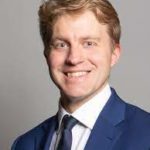
Tag: Ben Spencer

  • Ben Spencer – 2024 Speech on the Terminally Ill Adults (End of Life) Bill

    Ben Spencer – 2024 Speech on the Terminally Ill Adults (End of Life) Bill

    The speech made by Ben Spencer, the Conservative MP for Runnymede and Weybridge, in the House of Commons on 29 November 2024.

    Prior to my election to Parliament, as a consultant psychiatrist with a PhD in decision-making capacity, I would have met both criteria to be a medical expert assessor under clause 9(3)(b), so I have a particular perspective as someone who, in different circumstances, might have been called upon to make these assessments.

    I strongly believe that we should respect and support the right to bodily autonomy for people with full decision-making capacity, subject to the caveat that it does not cause serious harm to others. I argued for this when I was on the working group of the independent review of the Mental Health Act 1983 and on the pre-legislative scrutiny Committee on the Mental Health Bill, which, among other things, aims to prevent people from coming to harm when suffering from severe mental illness. These reforms were debated in the House of Lords this week, and they demonstrate how Parliament should legislate in complex areas that balance individual autonomy and risk.

    In contrast, as a private Member’s Bill, there is limited ability for scrutinising this Bill’s provisions. It has had no independent review, no pre-legislative scrutiny and no impact assessments. Many MPs support the principle of assisted dying yet have concerns about implementation, resource implications and safeguarding. That is why I, along with colleagues on both sides of the House, tabled a reasoned amendment calling for an independent review and consultation before a vote in Parliament, to provide a third way through. I thank the Members who supported the amendment, particularly the hon. Members for Shipley (Anna Dixon) and for Twickenham (Munira Wilson), for their work and their extensive and careful consideration.

    Although the general debate on assisted dying may focus largely on the principles, legislation must address the limits to and the safeguards on consent. Should people be able to agree to a medically assisted death? If so, what restrictions, if any, should there be on people who can make this decision—age, capacity, terminal illness, intolerable suffering? And then, what safeguards are there to uphold these limits and to prevent abuse—assessments by two doctors, judicial scrutiny?

    Given that the main argument I see in favour of assisted dying is the exercise of personal autonomy, I believe the most substantive issues we need to wrestle with are the limits that we set. Why is this Bill limited to the terminally ill and not those who are suffering without that being terminal? What even comes within the scope of terminal illness? With the refusal of treatment and medication, conditions such as type 1 diabetes and HIV can be designated as terminal, despite being fully treatable.

    There are many questions, but in this Bill the most prominent problem is that, in a legal context, if the availability of assisted dying is limited only to those who are terminally ill, it is discriminatory either to those with or without terminal illness. Either their right to autonomy is greater than others’, or the value of their life is worth less.

    We must also ask whether autonomy can be exercised where there is no choice. If good palliative care is simply not available, can we really rely on this as a true and free decision? I would argue that we cannot, and that this Bill does not safeguard against coercion through state neglect.

    Lola McEvoy (Darlington) (Lab)

    Will the hon. Gentleman give way?

    Dr Spencer

    I usually would, but unfortunately that would impact on other Members who wish to speak. I apologise.

    What is fundamental to me, given my interest in capacity, is that we have not considered how much human decision making is driven by altruistic intentions. “I did it for my children” is rightly a primary motivation in many settings, but as a society are we comfortable with a decision to seek a medically assisted death so as not to be a burden on one’s family or to save them money?

    This will not impact on capacity. We cannot pretend that capacity assessments will be a shield for these moral concerns. Where is the line, if there is one, between indirect coercion and the natural human responses in a stressed family unit looking after a sick loved one?

    I believe that we could introduce legislation on assisted dying that has fully reviewed and addressed these issues, but parliamentarians must deal with what we have in front of us today. Proponents on both sides of the debate frame this vote on Second Reading as a vote on the principle of assisted dying, but in reality it is a vote on implementation as put forward in this Bill.

    As a former mental health doctor, I am proud that I was there for the most vulnerable. Today, I think about those without a voice in this debate or in the TV studios. I think about the elderly woman in the care home with mild cognitive impairment, who retains capacity but is nevertheless vulnerable to coercion and undue influence, or the sick mother whose child may lose their job or their relationship due to the burden of caring responsibilities. The Bill would not protect them. It risks placing implicit pressure on people already vulnerable at a time of life when they should receive our unwavering care and support. We should and must vote it down.

  • Ben Spencer – 2022 Speech on the Expansion of the Ultra Low Emission Zone

    Ben Spencer – 2022 Speech on the Expansion of the Ultra Low Emission Zone

    The speech made by Ben Spencer, the Conservative MP for Runnymede and Weybridge, in the House of Commons on 20 December 2022.

    I thank my hon. Friend the Member for Dartford (Gareth Johnson) for securing this important debate. Conservative Members have been campaigning assiduously on this issue, in particular my hon. Friend the Member for Orpington (Gareth Bacon), who has been leading on it for some time. The ULEZ will have a profoundly negative impact on many of our constituents. Hon. Members should be under no illusion: the ULEZ is about revenue generation on the back of poor financial management. This is a London tax, put forward by the Labour Mayor of London, and it hits the poorest, who cannot afford to update their vehicles. In Runnymede and Weybridge, families and businesses will suffer the most.

    I put out a local petition, and there was an overwhelming response against the ULEZ. That is interesting in itself, but what perhaps gives more power to the arguments against it is the individual comments that people made in response to the petition. People explained that they cannot afford to update their car, because they do not have enough money. Public sector workers, who need to go into London to work, said that the ULEZ will have a serious impact on their ability to continue to do that sort of job. Businesses felt that it would make them go under. People living with disabilities need to use their cars to travel around, and that is a particularly substantial issue at the moment because, yet again, the lift at Weybridge station is broken—sadly, I have had to campaign too often to get it repaired. People are therefore forced into using cars to get to and from London.

    Sadiq Khan says that the ULEZ is about air quality. If it really was about air quality, why does he use such a blunt tool to deal with the issue, as opposed to focusing on the areas with the most acute air quality problems, which are along trunk roads? Why the blanket approach rather than a targeted approach? If he really wants to improve air quality, why does he not push even faster car scrappage? Why does he not invest more in the bus fleet conversion to electricity and hydrogen vehicles? Why does he not listen to industry?

    Earlier this year, I was at an event hosted by Octopus Electric Vehicles in Weybridge, which was looking at the transition to electric vehicles. There were lots of representatives from all sorts of businesses and innovators, and they said that the key policy to drive forward the uptake of electric vehicles is the zero emission vehicle mandate. They welcomed the Government’s incredible position in terms of bringing it forward, but they said that if we want to really push things, we need a more ambitious ZEV mandate. Why is Sadiq Khan not talking about practical, proper solutions to air quality, rather than pressing his attack on, in essence, the poorest?

    I will finish with this: the ULEZ is a London tax to prop up a failing administration. My constituents should not have to pay the price for Sadiq Khan’s failings.

  • Ben Spencer – 2022 Speech on the Supported Housing Bill

    Ben Spencer – 2022 Speech on the Supported Housing Bill

    The speech made by Ben Spencer, the Conservative MP for Runnymede and Weybridge, in the House of Commons on 18 November 2022.

    It is always a pleasure to follow the hon. Member for Croydon Central (Sarah Jones). I will also talk about support for vulnerable individuals. It was harrowing to hear the examples from her constituency, where care—if we can call it that—in supported exempt accommodation has gone horrendously wrong and needs to be fixed urgently. I thank my hon. Friend the Member for Harrow East (Bob Blackman) for bringing forward this important Bill.

    Supported accommodation covers a range of people with a range of needs: those with learning disabilities, care leavers, prison leavers, those with mental health needs—both complex and quite simple mental health needs—refugees and victims of domestic abuse, to name a few. In my previous career as a mental health doctor, I looked after people from all those backgrounds and in all those situations. I looked after many patients who have required supported accommodation of one form or another, and I visited lots of different types of supported accommodation that was providing care, both in a broad sense and in a more specific, medical sense.

    Finding good accommodation is a huge issue when it comes to providing care and treatment for people, particularly those with mental health needs, and it can be—I am sure this remains the case—a huge barrier to discharging people from hospital. When I was the consultant on Gresham ward 1 in Croydon hospital—I suspect, although I am not sure, that some of the people I looked after will have been discharged to the constituency of the hon. Member for Croydon Central—we would prioritise in the first few days of any admission consideration of the discharge location and any barriers to such accommodation. That is absolutely critical in the context of providing care to people, particularly those with very complex and severe mental illness.

    In preparing my speech for this debate, I was thinking back to all the different types of accommodation I have visited that patients I have looked after have lived in or been discharged to, and I was trying to think whether they would come under the category of supported exempt accommodation. I struggled to try to make sense of commissioning arrangements and which precise regulatory framework would be in operation, to be honest. I would like to be able to say to the House, “I have been to one of these places. I have seen patients there”, and so on, but I cannot, because I cannot be sure. I strongly suspect that people I have seen and looked after, particularly people in wet hostels, for example, or people with low-level mental health needs but in complex circumstances, have been in supported exempt accommodation, but I cannot be sure. That in itself is concerning.

    I am also concerned how all that fits with a new regulatory framework, because any care and treatment provided by NHS services will be regulated by the Care Quality Commission. Personal care is CQC-regulated. The question is where that fits into the whole regulatory morass of supported exempt accommodation that provides general supportive care. The CQC badge may come from personal care that is outsourced to an external provider. Going through this exercise of trying to think where it all fits is concerning and challenging.

    Some of the remarks I have found interesting in this debate were about unpacking the whole area of general support. General support is really important, too, and it can have powerful impacts on people’s transitions and people’s lives going forward. General support in accommodation is not to be belittled as the second-class cousin to the more intense interventions we get from regulated providers with the CQC. For example, there was a discussion earlier about providers not giving employment support, because if people get into work, it creates more problems for them in how much profit they can make. That is probably the most perverse situation I can imagine. When I was previously working as a mental health doctor, one of the critical things I would try to do for my patients was support them to get back into work, for their health and wellbeing going forward. Employment support is not a little thing; it is a huge thing that has a huge impact on people’s overall health and wellbeing.

    Dr Luke Evans

    My hon. Friend is making an excellent point. Drawing on his expertise, and looking on a system-wide basis, does he think that the invention of the integrated care boards, pulling together social services, councils and the NHS all in one place, provides the chance to try to join up exactly the care he is talking about?

    Dr Spencer

    I thank my hon. Friend for his intervention. It is a really good question. As the Bill goes through, and hopefully in the Minister’s response, I would like to hear how the regulatory framework it puts forward sits alongside the role of the new integrated care systems, particularly in regard to the duties of organisations that provide healthcare-type treatments to people in exempt settings.

    To give a different example of how important general support is, in my career I have looked after many people with complex and severe psychotic illnesses. I recall quite a few cases where people sadly were, despite best treatment and intervention, quite disabled and continued to be quite disabled as a result of their illness, and they were being discharged back into community settings and supported accommodation. Although over the past 30 or 40 years we rightly dismantled the asylum system and brought in care in the community, we then expected the community almost organically to provide general support to people who had severe chronic mental health needs.

    However, what I quite often saw was that we had created what I call an asylum of one, where somebody was in a type of supported accommodation on their own with very little social interaction and not much of the sort of stuff coming under general supportive care going in. With many of the people I saw, my conclusion was that they did not have reason to be well, because in the community there was not the outreach, support or ongoing engagement, and that led to destabilisation, worsening mental health problems and admission to hospital.

    I want to stress the importance of the general supportive care that is being provided to people in supported exempt accommodation, and how necessary and important it is that there is proper oversight and scrutiny, as well as thought about how and what is delivered and making sure it is badged so that it meets the appropriate criteria. Not giving this the same importance as other regulated activities, such as those regulated by the CQC, is unwise and, as we have discussed and seen today, has the potential to do a disservice to some of the most vulnerable people in society.

    I congratulate again my hon. Friend the Member for Harrow East on bringing forward the Bill. I am really pleased that this is being supported to make these very important changes, particularly the national supported housing standards, the advisory panel, which makes a lot of sense, and the licensing framework. To finish, there is a need to collect data, because without data we do not know what the situation is or how many of these organisations operate. With data, we can understand where the problems are and we can scrutinise what is being done to ensure that the most vulnerable in society—this is a group of highly vulnerable people—are getting the support, care and treatment they need. I very much welcome the Bill, and I am very pleased to have had the opportunity to take part in this debate.

  • Ben Spencer – 2022 Speech on the Situation in Ukraine

    Ben Spencer – 2022 Speech on the Situation in Ukraine

    The speech made by Ben Spencer, the Conservative MP for Runnymede and Weybridge, in the House of Commons on 14 November 2022.

    It is always a great pleasure to follow the hon. Member for Rotherham (Sarah Champion), and I want to develop some of the points that she made so powerfully about the humanitarian response. I want to talk about the local response and about support for refugees.

    It is hard to believe that, for almost the entire year, we have watched the horrors unfolding in Ukraine, unleashed by Putin, and have witnessed an absolutely awful war and senseless bloodshed and violence. We have seen an incredible response from constituents across the country, and I have seen that particularly in my community, where we have opened our hearts and our homes to refugees in their plight. That is something quite special. There is no more personal response than the support that so many people are giving in opening up their homes to refugees from Ukraine, and I think we should be very proud of that.

    Alongside the “big stuff”—the amazing international leadership we have shown in terms of sanctions and the forming of a coalition to support the Ukrainians with military technology, kit and training—there is the domestic “small stuff”. In fact, I think that some of the most powerful support we have given is the opening up of our homes to refugees. I want to send a huge thank you to everyone in my constituency who has done that. I am sure many other Members across the country have thanked their constituents as well.

    Dean Russell (Watford) (Con)

    May I echo my hon. Friend’s comments? In Watford, we have seen an incredible burst of love and care for Ukrainian people who are over here. Yesterday in St Mary’s church, as part of the remembrance ceremony—supported by Luther Blissett, the Watford football legend, and his partner Lauren—a lady in the group read a beautiful Ukrainian poem from the pulpit. It was an incredible moment, bringing home to us the loss of her family back in Ukraine since she has been here, but also the incredible strength that these people are showing by being here and giving support from afar.

    Dr Spencer

    I thank my hon. Friend for his intervention. It builds on a point I was about to make about paying tribute to particular individuals and groups. It is always invidious to do this because there are so many people to single out and so many groups to thank for what they are doing, but I want to raise four areas in my constituency that deserve special attention, in among the work that so many individuals and community groups are doing. One is the Revive café in Chertsey, which has a coffee morning for refugees. One of the key players there is a lady called Lizzie Wayland, who is a member of the Beacon Church, which hosts the cafe. It gives incredible support to people locally.

    I also want to draw the House’s attention to Lesia Scholey and Councillor Charu Sood, who have set up Weybridge Friends of Ukraine. They have been pivotal in leading support in Weybridge, alongside Elmbridge CAN and the Weybridge community hub. We also have a lady called Olena Melnyk, a refugee from Ukraine who now works in Runnymede Borough Council helping with translation for Ukrainian refugees. I would also like to thank my team in my office who have been incredible in supporting people going through the visa application process and in working on many pieces of casework supporting refugees once they have moved into my constituency.

    Building on that spirit, I would like to give my thanks to the Right Rev. Kenneth Nowakowski, the bishop of the Ukrainian Catholic Eparchy of the Holy Family in London, who came to speak to community groups in my constituency last week. I do not know whether Members have heard him speak, but he is incredible. Without doubt it was one of the best community speech events I have ever been to. He has been central to the refugee response from the start and he spoke about the support he has set up and the lessons learned, and gave a cautious commentary on what he sees for the future. He made two points in his speech that I hope he will not mind me mentioning. One of them really sent a chill through me. When he visited Ukraine recently, he went to a school and a little boy came up to him, very excited to see him. He said, “Come, come—you have to see our bomb shelter. It’s really cool.” That sent a chill, but in a sense it is also quite sweet, because it shows the resilience of children and the excitement of how life changes and we have to adjust in the context of conflict.

    The other thing the bishop reflected on in his talk was when people can start thinking about forgiveness. Given where we are now, that is very difficult to contemplate, but of course every war ends and things move on. One of the important things that we are talking about today is the rebuilding of Ukraine and what peace will look like. I say this cautiously to the House, because it is a difficult statement to make right now, given where we are and the pain that everyone is suffering, but perhaps these could be the early stages of thinking about the future that we want to have and the future that we can start hoping for as this awful conflict comes to an end.

    I would like to thank all the people who came to the event in my constituency: the community groups, the elected representatives and the people who have supported refugees across my constituency. Our communities are precious, and my communities in Runnymede and Weybridge are without doubt the things that make my constituency the best place, in my view—I am sure my colleagues would say similar things about their constituencies—and we need to support them. We need to recognise the incredible work that they do.

    Andy Carter (Warrington South) (Con)

    I was not intending to intervene in this debate, but my hon. Friend is making some excellent points. I attended a meeting of Ukrainian family sponsors in my constituency two weeks ago, and the thing I took away from it was the message that we need to encourage the Government to do more to support our fabulous sponsors and encourage them to continue to provide that service. In many cases, they are coming to the end of the six-month initial term, and in parts of Warrington we have high levels of Ukrainian families who are thinking about where they can live next. The sponsors have given up six months and they are thinking about what they do next as well. Does my hon. Friend agree that the Government could take a more active lead in supporting and encouraging sponsor families to continue?

    Dr Spencer

    I thank my hon. Friend for his intervention. It is almost as if he had foresight of my speech—which I know he did not—because I am going to go on to talk about the challenges when sponsor-refugee relationships break down. I will come on to that in a moment.

    We must all cherish our communities and the support that they are giving. There is something very special about that, and if we do not fight to protect, cherish and thank them, it will be too late and we will lose them. I am sure that that is something that we all share. For a few months now, sadly, we have been hearing in my constituency about breakdowns in the relationships between sponsors and refugees. This is getting more concerning as we approach Christmas. A lot of people, when they generously offered to take part in the scheme, saw it as only a six-month commitment. It is important to recognise that if some can continue after six months that is fantastic, but for those who cannot, it is fantastic that they have helped out. There should be no animus if people feel that they cannot continue beyond the initial six months.

    I have had many conversations with the leader of Runnymede Borough Council, Councillor Tom Gracey, and its chief executive officer regarding concerns about the matching process. Some refugees are not able to be rematched, and Runnymede is going to give them homelessness support. It will help to rehouse refugees locally if they cannot be rematched. The concern is that this will put an additional burden on to the local authorities. I know that the Government have been very generous in their support to local authorities, but this will nevertheless be a challenge, especially in constituencies such as mine where the availability of affordable housing and affordable rents is very much at a premium.

    I have a question for the Minister about cases in which a refugee’s sponsorship has broken down and they cannot be rematched, and the state effectively takes on the role of sponsoring them through homelessness provision. Under the Homes for Ukraine scheme as it currently stands, the sponsor gets a monthly payment of about 350 quid, so when the Government effectively take over in a state sponsorship role, could the Minister look at the possibility of local authorities getting that sponsorship payment in lieu of the sponsor getting it? That would seem to be a cost-neutral provision—those are at a premium at the moment—to support local authorities when those relationships have broken down so that the homelessness provision does not put them under undue pressure.

    Sarah Champion

    I am glad that the hon. Member has raised that point, because it is key. Is he also aware that the Home Office currently seems to be funding schemes such as these from official development assistance—foreign aid money—but it is able to attribute that only for the first year? I am very concerned that, come February, all the support that we are able to give to Ukrainian refugees here will come to an end. I am interested to see if the Minister has any information about whether the Treasury will step up and fund those people from that point forward.

    Dr Spencer

    I thank the hon. Member for her intervention. Looking back at the past year and the incredible support given to Ukrainians at all levels, I am absolutely confident that the Government will ensure that they are doing their part, but equally I too would be interested to know what the specific plans are. Unfortunately, given where we are at the moment, it seems that this is going to be a long war that will displace people for a long period of time, so it will be interesting to hear about the medium-term and long-term transition plans.

  • Ben Spencer – 2022 Tribute to HM Queen Elizabeth II

    Ben Spencer – 2022 Tribute to HM Queen Elizabeth II

    The tribute made by Ben Spencer, the Conservative MP for Runnymede and Weybridge, in the House of Commons on 9 September 2022.

    I rise to speak on behalf of my constituents in Runnymede and Weybridge as we and the nation mourn. Her Majesty Queen Elizabeth II was an inspirational figure who embodied selfless service. She provided stability, support and succour in challenging times.

    Runnymede and Weybridge has the privilege of being a neighbour to her home in Windsor, and my constituency is adorned with plaques inscribed with her name. We have a statue of Her Majesty at the Runnymede pleasure grounds, unveiled at the 800th anniversary of Magna Carta, which shows just how far we have come in Runnymede since 1215. Her first public visit following lockdown in March 2021 was to Runnymede and Weybridge, where she attended the centenary of the Royal Australian Air Force at the Air Forces Memorial, which she had opened in 1953. That is a fitting example of her commitment to duty and service throughout her reign.

    I saw at the recent jubilee what the Queen meant to my constituents; there were all the celebrations, garden and street parties, and the lighting of the Chertsey beacon. One of the highlights of the jubilee for me was my school visits, on which I saw countless portraits of the Queen created by local schoolchildren. They were mostly da Vincis; there were some Picassos. Every one of them represented Her late Majesty. As we mourn her passing, the scale of the impact on all of us, the UK and the Commonwealth is clear.

    If we all aspired to have even a fraction of the compassion, integrity and dedication that the Queen displayed for the world, we would be in a much better place. I hope that part of her legacy will be that each and every one of us uses this time to reflect on her example and what it can teach us. In the long tradition of the monarchy, her attributes will live on in the reign of our new king, Charles III. Runnymede and Weybridge sends its love, thoughts and prayers to His Majesty the King and all the royal family. If our grief is raw, I cannot imagine the pain that the Queen’s family are feeling. Our Queen was loved throughout the world; her legacy lives on. God save the King.

  • Ben Spencer – 2022 Speech on the Public Order Bill

    Ben Spencer – 2022 Speech on the Public Order Bill

    The speech made by Ben Spencer, the Conservative MP for Runnymede and Weybridge, in the House of Commons on 23 May 2022.

    This is an important Bill, which I support. During this debate, we have heard a lot from Opposition Members about peaceful protest. I support peaceful protest and peaceful demonstration, but today’s debate suggests to me that there is some confusion about what peaceful protest is and what it is not.

    My constituents know what peaceful protest is. As Members of Parliament, we see it every day on Parliament Square—people singing, people heckling us, people making themselves and their opinions known to us as legislators. My constituents also know what peaceful protest is not: it is not people blocking the M25, or roads to hospitals, which I think is particularly egregious. I was horrified years ago watching when ambulances were trying to get through to St Thomas’ Hospital. People from Extinction Rebellion were taking it upon themselves to decide who was worthy to pass the blockade and get urgent medical treatment. We have seen the same thing with the recent M25 protests. Peaceful protest is not stopping people going to work or blocking the distribution of newspapers. It is not blockading fuel at a time of particular pressures around fuel. It is not slashing the tyres of trucks or smashing up petrol stations.

    This Bill is not an anti-peaceful protest Bill; it is an anti-criminal behaviour Bill. It is a Bill to tackle the tactics deployed by people with no regard to the consequences of their actions or democratic process and who use criminal damage to try to hold the public to ransom. What really infuriates my constituents is that the people they see deploying these tactics seem to be above the law. They go and lock on and do protesting round and round again, with seemingly no powers to act to stop them. That is why the serious disruption prevention orders are so critical in stopping it. These behaviours are not on and cannot be accepted in any society committed to the rule of law and democracy. This Bill is essential to tackle this criminal behaviour.

  • Ben Spencer – 2021 Speech on Covid-19 Restrictions

    Ben Spencer – 2021 Speech on Covid-19 Restrictions

    The speech made by Ben Spencer, the Conservative MP for Runnymede and Weybridge, in the House of Commons on 14 December 2021.

    I will speak briefly to ensure colleagues can get in on this important debate.

    I will go through the four measures and come up with some big questions that I think we need to ask about what we are doing and how things go forward. First, the self-isolation statutory instrument makes quite a lot of sense. I welcome the Government’s bringing in this change and bringing in daily testing.

    On the vaccination of health staff, I declare an interest. I used to work as a doctor and my wife currently works as a doctor. I really have no issue with this measure. When I went through medical school, I had to be vaccinated. I would flip the argument on its head. I would be very concerned about a relative of mine going into hospital and being treated by someone who was unvaccinated. I would be very concerned about them getting covid and becoming very poorly. Fundamentally, this is a basic duty of care issue, but I recognise there are different views on that.

    I struggle a bit with the mandatory face mask provisions. This, along with the working from home guidance, will cause harms. Given the Secretary of State’s update today on the omicron wave that is coming forward, I wonder what actual impacts it will have and what the harm-benefit ratio looks like, but there we are.

    My real issue is with the covid status certificates. There are many reasons to be concerned about covid status certificates, but I will focus on one. As a doctor, I have spent my career looking after people who are marginalised: people with severe mental illness, people with a learning disability and the digitally excluded. Looking at the measures and the explanatory notes, I cannot see how one can show evidence of a negative test without having access to the internet or having a phone—how any validation process can go through. It is clear to me that it will exclude people. I cannot support excluding anyone, but especially those people who are the most marginalised in our society.

    My big three questions relate to what comes next. I had a chat with the leaders of the Ashford and St Peter’s Hospitals NHS Foundation Trust in my constituency about what is happening and what their plans are for the next few weeks. They tell me that already, because of the pivot towards vaccination by primary care, they will have to look at shoring up A&E, because there will not be enough GP capacity and people will be going to A&E. That may have a knock-on effect. The hospital will have to cancel elective care so that A&E can be shored up. They do not want to cancel elective care. It is a great hospital trust and its leaders think they can get through and still do some elective measures. One thing they asked me to ask Ministers today is whether they can have flexibility on what they do around elective care to try to keep it going as much as possible.

    There will be a cost in terms of missed GP appointments and missed screening. We have already seen what the cost was in the past year in terms of waiting lists and so on. I would like to hear from the Minister what the plan is to recover NHS as usual after we have got through this wave. Trust me, a protected NHS is not an NHS in which GPs abandon routine care to focus on vaccination. A protected NHS is one in which people can get their blood pressure screening or have a conversation about their mood. It is one in which health visitors see young families and have important conversations about whether a woman feels safe with her husband at home.

    My second question is: what happens when the next vaccine escape variant comes? We all feel it is inevitable that another one will come after this wave, so what is the plan to prevent our having to repivot like this again? What is the long-term strategy for living with covid?

    My third question is more of a plea. The costs of this pandemic have largely fallen on the shoulders of our children. Please, please, please, will the Minister confirm that there are no plans for mandatory restrictions on schools and that we will never again close our schools?