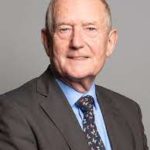
Tag: Barry Sheerman

  • Barry Sheerman – 2014 Parliamentary Question to the Department for Transport

    Barry Sheerman – 2014 Parliamentary Question to the Department for Transport

    The below Parliamentary question was asked by Barry Sheerman on 2014-04-30.

    To ask the Secretary of State for Transport, what estimate his Department has made of the cost of urgent repairs to roads managed by the Highways Agency in (a) Huddersfield constituency, (b) Kirklees and (c) Yorkshire.

    Mr Robert Goodwill

    The Highways Agency does not separately identify the cost of urgent repairs on its roads by constituency area. This type of expenditure forms part of a wider contracted service, which includes a number of other general maintenance activities.

  • Barry Sheerman – 2014 Parliamentary Question to the Department of Health

    Barry Sheerman – 2014 Parliamentary Question to the Department of Health

    The below Parliamentary question was asked by Barry Sheerman on 2014-06-10.

    To ask the Secretary of State for Health, what criteria his Department uses to evaluate tenders to provide Children and Adolescent Mental Health Services.

    Norman Lamb

    NHS England has responsibility for commissioning Tier 4 (in-patient) Child and Adolescent Mental Health Services (CAMHS). Tiers 1-3 CAMHS are commissioned locally by clinical commissioning groups (CCGs).

    As with all procurement exercises undertaken by the National Health Service, there will be a clear service specification and evaluation criteria will be developed specific to the requirements of the service being tendered. Providers will then be able to submit a response, which NHS England or the CCG will assess and make a decision based on the outcome.

  • Barry Sheerman – 2014 Parliamentary Question to the Department for Education

    Barry Sheerman – 2014 Parliamentary Question to the Department for Education

    The below Parliamentary question was asked by Barry Sheerman on 2014-06-04.

    To ask the Secretary of State for Education, what assessments he has made of the successes and failures of the differing primary school starting age in other countries such as Finland and Norway.

    Elizabeth Truss

    Formal school starting ages vary across OECD member states. However it is useful to compare the state provision of education for young children prior to the start of compulsory education as the majority of children in OECD countries have entered the education system at a young age – participation rates in formal childcare and pre-school are broadly similar across Finland, Norway and the United Kingdom.

    Research indicates that most countries have published curricula governing the provision of early years education from the ages four to six years which are consistent in their use of learning objectives and expected outcomes. The Department has commissioned the OECD to carry out an international review of pedagogy and practice in the early years to investigate this issue further. We anticipate a report in autumn 2014.

    Research has demonstrated that all-round development is enhanced for those children attending nursery compared to those who don’t before starting school. This suggests that attending a formal learning environment from an earlier age is typically beneficial. Furthermore duration in nursery matters, with every month of nursery experience after age two years linked to better intellectual development and improved independence, concentration and sociability at age five with a continued effect at Key Stage 1.

    High quality early years education will help close the attainment gap that already exists by the beginning of primary school between disadvantaged children and their peers. Evidence is clear that children’s learning and development in their early years is crucial to later attainment. The Effective Provision of Pre-School Education Project found that high quality early years education is a strong predictor of achievement in English and mathematics later on in school.

    We cannot provide the information requested on representations on this topic. The Department receives a huge volume of mail and representations on education and children’s issues. There would be a disproportionate cost to providing a response in this case.

  • Barry Sheerman – 2014 Parliamentary Question to the Department of Health

    Barry Sheerman – 2014 Parliamentary Question to the Department of Health

    The below Parliamentary question was asked by Barry Sheerman on 2014-06-10.

    To ask the Secretary of State for Health, what recent assessment he has made of the quality of service provided by companies with contracts to provide Children and Adolescent Mental Health Services.

    Norman Lamb

    NHS England has responsibility for commissioning Tier 4 (in-patient) Child and Adolescent Mental Health Services (CAMHS). Tiers 1-3 CAMHS are commissioned locally by clinical commissioning groups (CCGs). There are a number of measures in place to ensure the quality of Tier 4 CAMHS provided by companies:

    – All providers of CAMHS need to be registered with the Care Quality Commission (CQC).

    – National service specifications have been developed for Tier 4 CAMHS to which all service providers are required to adhere. These are used as part of the standard National Health Service contract. A copy of these documents can be found on NHS England’s website and accessed via the following links:

    www.england.nhs.uk/ourwork/commissioning/spec-services/npc-crg/group-c/c07/

    www.england.nhs.uk/wp-content/uploads/2013/06/c07-tier4ch-ado-mh-aut.pdf

    – All providers are monitored against the standard contract through evidence based contract meetings. NHS England and the CQC may also undertake visits to the units to assess the quality of service being delivered.

    – Where concerns or issues are raised about a particular unit, such matters are referred to the Area Team Quality Surveillance Group, chaired by Directors of Nursing, for consideration and discussion.

    – Where there is significant cause for concern, NHS England may restrict or stop referrals to a particular unit. In extreme circumstances, the CQC has the powers to de-register a provider from being able to provide CAMH Services.

  • Barry Sheerman – 2014 Parliamentary Question to the Ministry of Justice

    Barry Sheerman – 2014 Parliamentary Question to the Ministry of Justice

    The below Parliamentary question was asked by Barry Sheerman on 2014-04-28.

    To ask the Secretary of State for Justice, what steps he is taking to ensure that women’s rights are not undermined by the use of Sharia law.

    Mr Shailesh Vara

    The Government is committed to the protection and promotion of women’s rights. Sharia law has no jurisdiction in England and Wales and the Government has no intention of changing this position. Everyone is equal before the law.

  • Barry Sheerman – 2014 Parliamentary Question to the Department for Education

    Barry Sheerman – 2014 Parliamentary Question to the Department for Education

    The below Parliamentary question was asked by Barry Sheerman on 2014-06-04.

    To ask the Secretary of State for Education, with reference to his Department’s School Admissions Code, published in February 2012, what steps his Department is taking to ensure the consistent and effectual application of sections 2.16 and 2.17 of that code to primary education admissions for summer-born children.

    Mr David Laws

    We published advice on the admission of summer-born children in July 2013. We are now monitoring the impact of this advice and have committed to review it one year after its publication.

    Officials are investigating cases referred to them to ensure admission authorities are complying with the provisions in the Code.

  • Barry Sheerman – 2014 Parliamentary Question to the Department for Education

    Barry Sheerman – 2014 Parliamentary Question to the Department for Education

    The below Parliamentary question was asked by Barry Sheerman on 2014-06-12.

    To ask the Secretary of State for Education, what assessment he has made of the effect of the current starting age for children entering primary education on the wellbeing and attainment of those born in summer months.

    Elizabeth Truss

    The Department for Education has not made an assessment of the effect of the current starting age for children entering primary education on the wellbeing and attainment of those born in the summer months.

    However, research[1] carried out by the Department has demonstrated that the age at which tests are taken is the dominant reason for month of birth gaps in educational attainment, and not the age at which children start school; it is simply the fact of being younger when tested that accounts for most of the differences observed. The research reported no evidence of a causal relationship between school entry age and attainment.

    Parents of summer born children who think their child is not ready to start school can request that their child is admitted outside of their normal age group and be admitted to reception year in the September following their fifth birthday. The school’s admission authority is responsible for making the decision which must be based on the individual circumstance of each case.

    [1]https://www.gov.uk/government/uploads/system/uploads/attachment_data/file/182664/DFE-RR017.pdf

  • Barry Sheerman – 2022 Comments on Boris Johnson Returning as Prime Minister

    Barry Sheerman – 2022 Comments on Boris Johnson Returning as Prime Minister

    The comments made by Barry Sheerman, the Labour MP for Huddersfield, on Twitter on 21 October 2022.

    A Party so lacking in talent or leadership they would haul back Johnson to captain their ship of shame.

  • Barry Sheerman – 2021 Comments on His Retirement

    Barry Sheerman – 2021 Comments on His Retirement

    The comments made by Barry Sheerman, the Labour MP for Huddersfield, on 5 December 2021.

    After 40 years as Huddersfield’s Member of Parliament, I have taken the decision that I will not be standing at the next general election.

    Serving Huddersfield has been the honour of my life.

    Thank you to my constituents for the kindness, support and warmth you have shown me.

  • Barry Sheerman – 2019 Speech on 25th Anniversary of John Smith’s Death

    Below is the text of the speech made by Barry Sheerman, the Labour MP for Huddersfield, in the House of Commons on 9 May 2019.

    It is of course a pleasure to speak in this debate on Europe Day about my dear old friend John, and I say that with humility. David Ward, his special adviser, is here, and one of the Deputy Speakers, my right hon. Friend the Member for Doncaster Central (Dame Rosie Winterton), knew John well. Many of us worked with him, and you could not work with him without saying that you loved him. I knew him from about 1979, so for about 15 years. We were always in opposition; it is terrible that John never got that chance to be Prime Minister. When I got in, what I realised about this man who had asked me to join his team was what a rumbustious character he was.

    I did not know anything about Scottish politics, and when I joined his team I suddenly realised that there were all sorts of internal wars in Scotland that I did not know about. I soon worked out who John loved, loathed and disagreed with, and it seemed that it all went back to time immemorial—or at least to their student debating days. I mean, it was no secret. Look at the quality of the speakers in those days, when I was first in the House: Robin Cook, Donald Dewar and John. I will not go into too much detail, but I will say that there was a very close friendship between Donald Dewar and John Smith, although the same could not be said about his relationship with Robin Cook, which was very deep in some student disagreement they had in the past.

    John was a rumbustious character. He was larger than life and an amazingly vibrant speaker. I remember the day we were in here and the Conservative Government were near collapse. It was Black Wednesday—we had come out of the exchange rate mechanism—and he filleted the Chancellor of Exchequer. He did him over in a way that only a brilliant speaker can do.

    I used to be a university teacher when I worked for a living. Some university teachers who come here were probably very good lecturers, but cannot speak in the House of Commons; I may be among them. But I know a lot of lawyers who come here and cannot keep the attention of the House. Their skills are about the courtroom, but they cannot do it in here. John Smith could do it in here—absolutely forensically and funnily. In a sense, it reminded me of Harold Wilson’s reputation. John actually turned down Wilson’s first offer of a job, which was unheard of. Wilson offered him a job in the Scottish Office, but he refused because he did not want to be branded just as a Scottish politician. Of course, Wilson was wonderful at interjections; he loved them. Whether in a public meeting or in the House, everybody knew that in his prime he was brilliant at repartee. John was even better—absolutely brilliant. As the right hon. Member for North East Bedfordshire (Alistair Burt) said, people were told not to intervene on him because it was like offering human sacrifice in a debate. It was a rollercoaster working for John because he lived well and loved to party, but his work rate was enormous.

    Neil Gray (Airdrie and Shotts) (SNP)

    The hon. Gentleman talks about the fact that John Smith was a fantastic parliamentarian. There is often an issue with ​some politicians being very good parliamentarians, but not very good constituency Members of Parliament—having difficulty interacting with their constituents. However, former local councillor Peter Sullivan, who I spoke to about John last night, said that he was incredible on the doorstep, and that he would often take too long speaking to some of his constituents, even when it was clear that they were not going to vote Labour. Will the hon. Gentleman reflect on the fact that John Smith was not just a brilliant parliamentarian, but a very astute and caring local constituency Member of Parliament?

    Mr Sheerman

    I certainly do not disagree with that. He seemed to operate brilliantly at every level. He had the common touch. When we took people in to see him, he always knew how to communicate with them, whatever their background. As I said in an intervention, he would sometimes give people a steely look. When he first met me, he said, “I don’t know what to make of you. You’re MP for Huddersfield, but you don’t have a Yorkshire accent. I don’t know where you’re from,” which was quite perceptive of him. But we worked well together.

    John was looking at new ideas all the time. He and Giles Radice asked me to be, I think, the very first person to work in the Department for Education on the employment side, so that we could develop a proper youth policy that covered not just conventional education, but training, job opportunities and so much else. I am a Co-operative Member of Parliament, and John was deeply interested in co-operatives. The interest in the Co-operative Development Agency and all that was down to him. He was passionate about it, and chaired the international co-operative movement for some time. Whatever he looked at, he had the passion and ability to push on.

    John was also what we always need in this Labour movement of ours—a talent spotter. I remember when he had been at the Beaconsfield by-election, he came bustling back into the Commons and said, “It was a hard day and we’re never going to win Beaconsfield, but there’s a brilliant new candidate there—Tony Blair, his name is. I think we’ve got to get him a safe seat somewhere.” He was a talent spotter, even in terms of seeing new Members of Parliament coming in, identifying their skills and giving them a hand.

    He was a bruiser, absolutely—you should not cross him. If you crossed him, politically or personally, he did not forget easily. When we had an attempt by Militant—a left-wing Trotskyist group—to take over the Labour party, he led the fightback, with Roy Hattersley, Gerald Kaufman and other giants of the Labour party who identified the problem and formed a new group called Solidarity. I think that our Chief Whip would probably have painful memories of the battles of those days. When that triumvirate said, “We’re not going to take this,” John Smith was central to the fight to keep the Labour party as a central, democratic socialist party. We all owe him for the fact that he did that.

    I think there was a bit of a myth after John died that he was almost a saint. John Smith was not a saint, I can tell you. He was not a bad man, but he loved life. He and Elizabeth were a great host and hostess at a party. We would never forget the lovely feeling of inclusion that the Smiths gave whenever they entertained.​

    When John become ill—when he had his heart attack—many of us were absolutely terrified. We were really, really concerned. We knew that we had to support him. There was a sort of little mafia. We used to co-ordinate to make sure that he got home at a reasonable time—that he did not stay in the House precincts too late and got his taxi back to the Barbican, where he lived on the 35th floor. I took on something of a role, because he lived in No. 352 and I lived in No. 92. Gwyneth Dunwoody lived in No. 112, so there was a kind of political and parliamentary presence. It was sometimes a very good excuse for me to say to John, “I’m going home—shall we share a cab?”, which we sometimes did.

    Sadly, I was in my flat in the Barbican on that dreadful morning when someone rang me from John’s flat and said that he had collapsed in the shower. By the time I got out into the reception area, John was being brought out on a stretcher, very ill indeed. It was a very sad moment. I had a feeling of lost, missed opportunity for this person who had such a range of talents, passion and moral purpose. He wanted to change the world for the better—and to do it now. He was intolerant of waiting too long before the changes in low pay and the minimum wage—all those things—could be achieved.

    I remember John fondly and dearly. I hope we can keep that spirit alive. He was not a saint, but a passionate, moral man who wanted to make change. He also wanted to have good politics—yes, to have a good fight and really scupper someone in this place, but to go outside and have a civilised relationship afterwards.

    The quality of John’s life and the sort of environment he engendered was something all of us can learn from. I have never spoken on any occasion about John Smith. I loved him dearly. He had a huge influence on my life, and for Elizabeth and his daughters we should say today how much we appreciated what he did in touching our lives.