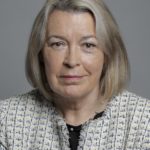
The speech made by Barbara Keeley, the Labour MP for Worsley and Eccles South, in Westminster Hall, the House of Commons on 18 January 2023.
I declare that I am chair of the all-party parliamentary group on classical music. It is a pleasure to speak with you in the Chair, Mr Bone. I thank the hon. Member for Bromley and Chislehurst (Sir Robert Neill) for securing the debate and for the way he opened it, and all right hon. and hon. Members who have contributed to it.
I start by congratulating colleagues across both Houses and the wider arts sector on achieving the apparent 12-month reprieve announced yesterday for the funding of the English National Opera. It does not settle all the questions raised about the damage done by the decision, but I am pleased that there can at least be a longer-term conversation about the ENO’s future, which is right. The ENO has worked hard to increase access to opera, bringing it to younger and more diverse audiences. It has delivered innovative education and health projects throughout the country, and it is right that this is finally being recognised. However, the back and forth of the decision has caused acute anxiety among the ENO’s 300 full-time employees and the 600 freelancers whose job security was put at risk. The screeching U-turn is further indication of the total lack of strategic planning involved in the national portfolio organisation funding decisions that we have been debating.
First, I want to reflect on the arm’s length principle of arts funding, which we have heard about in the debate. At the core of the recent dispute about arts funding is the issue of who makes decisions about arts funding and what the criteria for those decisions are. When the answers to those questions are unclear, there will always be discontent and frustration about how the investment of taxpayers’ money is being made.
Andy Slaughter
My hon. Friend makes a very good point: there is a lack of transparency. I am very lucky that the two main theatres in my constituency, the Bush and the Lyric, have maintained their grants—in one case, it has slightly increased—but every organisation was on tenterhooks waiting for the announcements, and they will be next time as well, because they have no idea on what basis Arts Council England makes a decision. Other theatres in London, such as the Donmar Warehouse, have lost 100% of their funding. What is the rationale behind this?
Barbara Keeley
Indeed. It is important to focus on that principle. The arm’s length principle has been in operation since public subsidy for the arts began in the aftermath of the second world war. At the inception of the original Arts Council, Keynes wrote that:
“It should be a permanent body, independent in constitution…but financed by the Treasury”.
However, as we have heard, the former Culture Secretary, the right hon. Member for Mid Bedfordshire (Ms Dorries), issued a clear instruction to Arts Council England last year and ordered it to move money outside the capital through a reduction in the London budget. Even the places at which the additional investment would be targeted were decided with input from DCMS, with removals and changes to the “Let’s Create” priority places, which had been originally identified in Arts Council England’s 2020 strategy.
As we heard earlier, the former Culture Secretary has now criticised the decisions made by Arts Council England for their “undue political bias”, and accused the leadership of pulling a “stunt” to try to reverse levelling up. We have heard a variety of ways of describing the very strange decision making, but we have to see that it was this directive that led Arts Council England to the decision to make cuts to the English National Opera, the Welsh National Opera, Glyndebourne’s touring and other organisations, such as the Britten Sinfonia, the Oldham Coliseum and the Donmar Warehouse. The comments made show that Ministers and Arts Council England had not thought through the implications of the directive, both on art forms such as opera and on the other arts organisations I mentioned.
Sir Oliver Heald (North East Hertfordshire) (Con)
Will the hon. Lady give way, just for one second, so that I can put on the record my views about the English National Opera?
Barbara Keeley
No; I will run out of time.
Through the directive, Ministers and Arts Council England reallocated a shrinking budget for London. I recommend to the Minister an excellent blog post from Border Crossings that can be found on Twitter and makes the point that we cannot level up at the same time as cutting. That is the problem: the aims have become confused. It is this inconsistency and short-sightedness that is so frustrating for so many arts organisations.
The second major issue with the NPO decisions—we have heard much about this in the debate—is the glaring lack of any art form-specific strategy, planning or consultation. Opera is the major victim of this approach. Before the reprieve—the reversal of the ENO decision—overall funding for the sector was down by 11 %. It is reckless and irresponsible to remove £19 million of funding with no strategy in place. The decisions should be based on evidence and audience data, not on a whim.
Under such acute constraints, it is the expense of touring that is often the first activity to be sacrificed, as we are seeing already. As we have heard, Glyndebourne has had the subsidy for its touring budget halved, so has been forced to scrap its entire autumn tour, which would have held performances in Liverpool, Canterbury, Norwich and Milton Keynes. As my hon. Friend the Member for Cardiff West (Kevin Brennan) rightly said, Welsh National Opera has responded to a 35% cut by removing Liverpool from its touring plans. As we have heard, it is estimated that the cuts to those two companies alone will deprive 23,000 people from access to opera throughout the country. In addition to that gap, the consequences for the arts ecosystem will be severe, given that there are already pressures on the workforce and on skills retention.
Jennifer Johnston is a mezzo-soprano who was born in Liverpool. She told me about the impact that the Arts Council funding allocations will have on young students at the Liverpool Philharmonic Youth Choir. These young people in Liverpool come from backgrounds where there is no money for singing lessons, with their fees for the choir paid by bursaries. She said:
“Now that live staged opera isn’t going to come to the city, these young singers won’t have a chance to see any at all. They don’t have funds to travel, and the educational workshops carried out by both Welsh National Opera and Glyndebourne now won’t happen.
It’s a simple equation—inspire a young person by showing them excellence in an artform and demonstrate what they could achieve if given the chance, defeating assumptions of elitism and thoughts of ‘Opera’s for posh people, not for me’.
These young people now won’t have the chance to be exposed to, and be inspired by, live staged opera, and are unlikely to want to train as an opera singer in the future. Arts Council England funding cuts will therefore affect life choices, making a nonsense of the idea of ‘levelling up’.”
I am interested to hear the Minister’s response to those comments. How does his Department intend to ensure that there is support for the next generation of England’s opera singers when there is no coherence to the decisions being made about the sector?
There are other arts organisations that have had their income slashed in this funding round, with little apparent sense in the decisions. We have heard that Britten Sinfonia was entirely cut from the NPO programme, despite being the only orchestra based in the east of England. Many other regional orchestras were funded only at standstill. Meanwhile, the funding settlement for producing theatres is short-sighted and risks having a negative impact on the programming of regional theatres—as we have heard in the debate—as well as compromising the UK’s cultural reputation in the longer term. Sam Mendes, the former chief executive of the Donmar Warehouse, has been predicted that it will “wreak long-lasting havoc” on the industry.
Speaking of the Donmar Warehouse, it received a 100% cut in its Arts Council funding. Its representatives told me that the hit to their budget means they will no longer be able to create work outside London and will have to reduce or cease altogether their excellent CATALYST programme, which supports 13 people a year with paid training to develop the next generation of writers, artists and administrators. Given the flexibility in exit funding that has suddenly been found by Arts Council England for ENO, will the Minister say whether Minister similar flexibility can be found for the Donmar Warehouse? It is really important that Arts Council England is transparent and equitable in its funding processes, as the hon. Member for Bromley and Chislehurst said earlier.
The combination of a top-down approach from DCMS and poor planning have given the impression that the Government’s goal is more about political gimmickry around levelling up than a true rebalancing of power to the regions. It is a fact that 70% of the organisations that are being entirely cut from the programme are based outside London, including the Oldham Coliseum, the Britten Sinfonia and, as highlighted so effectively by the hon. Member for Newbury (Laura Farris), the Watermill Theatre. In addition, the lack of consultation, which has been most clearly evidenced by all the reaction to the decision about ENO, speaks of insincerity in making the changes. That risks the very existence of our essential cultural organisations and makes it more difficult to achieve regional parity in arts provision.
Before I move on, I want to make the point that it has rarely been more important to get these decisions right, because having weathered the challenges of the covid pandemic—the Father of the House said that situation was well handled by Arts Council England—and a decade of funding cuts to the arts, organisations now face a perfect storm of other challenges, including increased energy and operating costs and a cost of living squeeze on their audiences.
The U-turn on ENO is an admission that the choices announced in November were not well considered. This situation could have been avoided if there had been proper consultation with the sector, as many contributors to this debate have said. I hope that DCMS will now undertake an internal assessment of the process behind the NPO funding round for 2023 to 2026, so that this chaotic approach is never repeated. It is vital that we now have a transparent and equitable process.
There are still some important decisions to be made to ensure that ENO can continue and so that future decisions are made based on strategy and in consultation with the sector, with a particular focus on supporting the organisations that we have heard about today, such as the Donmar Warehouse, Welsh National Opera, the Glyndebourne tour and the Watermill Theatre. They need to continue their vital work outside London and I hope to hear more from the Minister about what can be done to ensure that.
