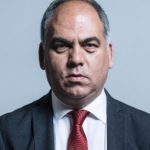
Tag: Bambos Charalambous

  • Bambos Charalambous – 2022 Speech on the Yemen Peace Process

    Bambos Charalambous – 2022 Speech on the Yemen Peace Process

    The speech made by Bambos Charalambous, the Labour MP for Enfield Southgate, in Westminster Hall on 3 November 2022.

    It is a pleasure to serve under your chairmanship, Mr Davies, I believe for the first time. I welcome the Minister to his place, and I look forward to working with him on this and many other issues. I thank the hon. Member for Meon Valley (Mrs Drummond) and my right hon. Friend the Member for Walsall South (Valerie Vaz) for securing this timely and important debate on the peace process in Yemen.

    I believe the debate is important to raise awareness about the fragile political situation in Yemen and the ongoing humanitarian crisis. I welcome the opportunity to hear from the Government about what actions they are taking to help the people of Yemen. All of us, regardless of political party, are united in wanting to see a permanent ceasefire in Yemen and a political reconciliation between the warring factions. I and the Labour party believe that there is no military solution to the conflict and that inclusive political dialogue is the only route to a sustainable resolution.

    The UK is the penholder on Yemen at the UN Security Council, which means the UK has the power to draft and table Security Council products on Yemen, including press statements, resolutions, presidential statements and more. Within the UN, the UK has the power to lead the way in efforts to forge a political, not military, solution to the conflict. It is important to consider that in our discussions about Yemen and about the actions the UK Government can take to help bring about a lasting peace. We need to focus on those efforts.

    The relative calm brought about by the six-month truce has allowed some Yemenis to dream of a better future. It is therefore deeply disappointing that the truce came to an end last month, on 2 October, and that efforts to renew it have been unsuccessful so far. I will return to the truce and the prospects of its renewal in more depth, but first I want to outline the devastating impact of the war.

    As hon. Member know, the conflict began in 2014 when the Iranian-aligned Houthis seized the capital, Sanaa, and much of northern Yemen, and later forced the Government into exile. In March 2015 a Saudi-led coalition, including the United Arab Emirates, began a military campaign, backing the internationally recognised Government. The toll of eight years of war on Yemen’s population has been extreme and the war has devastated the country. There have been thousands of civilian deaths, and the famine caused by the war has endangered millions of lives. Across Yemen, 16.2 million people—60% of the Yemeni population—continue to experience acute food insecurity. The UN has described the war in Yemen as the world’s worst humanitarian crisis, and it is estimated that 377,000 people have been killed or have died as a result of the war and the associated crises in basic food and other necessities.

    Against this dire backdrop, the recently ended truce offered a beacon of hope and brought some welcome developments. Despite claims of violations by both sides, the truce brought about a sharp drop in fighting. Save the Children has calculated that the truce led to a 34% drop in child casualties and a 60% drop in the displacement of people. According to al-Jazeera, residents in Sanaa reported that their daily lives dramatically improved during the truce, and that prices came down as more essential goods entered the city. Evani Debone, a communications co-ordinator at the Adventist Development and Relief Agency Yemen, told al-Jazeera that the truce had given Yemenis hope for peace. She said:

    “Children who go to school are not afraid of airplanes any more. Having the next generation of Yemen not being afraid and not running from the war, as well as having the right to live their lives again is the most important thing when we think about the truce.”

    The truce established a partial opening of the Houthi-controlled Sanaa International airport and the key Houthi-held Red sea port of Hodeidah. During the truce, flights restarted at Sanaa International airport for the first time since 2016 and, according to the UN, fuel imports into the port of Hodeidah are calculated to have quadrupled during the truce, allowing people to regain some level of normality in their lives. The truce also called for the lifting of the Houthi blockade on Taiz, the country’s third largest city, but little progress was made there after talks aimed at reopening local roads stalled. Another sticking point was the funding of public employees, many of whom have not received salaries for years.

    For now, it appears that some of the main gains of the truce, such as the increase in fuel shipments to Hodeidah and the resumption of flights to Sanaa International airport, have thankfully held. The ability to move freely from Sanaa International airport is particularly important because it means that tens of thousands of Yemenis have been able to visit loved ones and receive vital medical treatment during the truce. It is estimated that the opening of the airport allowed almost 27,000 Yemenis to get medical treatment overseas, and to pursue educational or business opportunities abroad.

    I am sure everyone here agrees that the protection of measures that so improve the lives of ordinary Yemenis must be a priority. Although it appears that there has been no immediate major uptick in violence since the truce expired, the fear is that it will begin again. Two weeks ago UN special envoy Hans Grundberg told the Security Council that a “new uncertainty” and a “heightened risk of war” now prevailed across Yemen. Meanwhile, all sides in the conflict are blaming each other for the failure of the truce, but it is the ordinary people of Yemen who will suffer most if the violence begins again. However, UN special envoy Hans Grundberg has signalled that there is still cause for hope, telling the UN Security Council:

    “It is important to remember that the truce was never intended as an end in itself, but as a building block to enhance trust between the parties”.

    A truce is necessary in order to establish the kind of environment in which a political solution to the conflict can be reached. I have therefore been heartened that the special envoy has stated that he believes there is still a possibility for the parties to come to an agreement. It is vital that the UK Government and the whole international community do everything in their power to try to facilitate that. Re-establishing the truce would be a first step towards a durable peace. There is no doubt that it will take compromises and leadership from all sides.

    To conclude, what specific steps are the Government taking to make the most of the UK’s penholder role in the UN in relation to re-establishing the truce in Yemen? Will the Minister tell us what the UK Government are doing to support the ongoing UN-led process to establish peace, and to encourage the negotiation of an enduring political settlement? It is vital that the Government do all they can to help end this brutal conflict and stop the suffering of the Yemeni people. For the people of Yemen, the stakes could not be higher.

  • Bambos Charalambous – 2022 Speech on the Situation in Iran

    Bambos Charalambous – 2022 Speech on the Situation in Iran

    The speech made by Bambos Charalambous, the Shadow Minister for the Middle East and North Africa, in the House of Commons on 25 October 2022.

    For the past six weeks, Iran has seen huge protests following the death of Mahsa Amini at the hands of its brutal morality police. Ms Amini was violently beaten following her arrest for breaching strict hijab rules.

    Iranians in huge numbers have bravely said that they will accept this no longer. Women and girls are putting their lives on the line to lead a mass movement calling for nothing more than basic human rights and civil liberties. Braving severe state repression, hundreds of thousands of Iranians have joined protests. Over 12,500 have been arrested and, sadly, over 250 people have died at the hands of the security forces. Britain must support all those who stand up for basic freedoms, including freedom of conscience and religion and the freedom to live one’s life as one chooses.

    It is clear that the Iranian regime is restricting information in an attempt to quash the protests. Internet access has been periodically blocked in the country, meaning that details of human rights abuses cannot be shared and protesters cannot organise. Freedom of information is integral to the success of any political movement. The UK must and can play a strong role in supporting an independent press in Iran. Reporters Without Borders has declared Iran one of the worst countries in the world for press freedom: journalists routinely face harassment, detention and threats to their family. What are the UK Government doing to encourage press freedom in Iran? What pressure is the UK putting on Iran to support fundamental human rights and freedom of speech?

    The UK can and should lead calls for the UN Human Rights Council to urgently establish an international investigative and accountability mechanism to collect, consolidate, preserve and analyse evidence of the most serious crimes in Iran under international law. Can the Minister assure me that the UK will do so?

    Gillian Keegan

    There is much that we all agree on in this House, from our condemnation of what is happening in Iran to the actions we take and how we work with others. We are looking at all options to hold Iran to account for its human rights violations, and we are active participants at the UN Human Rights Council. On press freedom, last week we joined a statement of the Media Freedom Coalition condemning Iran’s repression of journalists. We will continue to do so, working with other countries and other groups to call out Iran, as well as taking firm steps, as I laid out in my statement.

  • Bambos Charalambous – 2022 Speech on the Government’s “Plan for Growth”

    Bambos Charalambous – 2022 Speech on the Government’s “Plan for Growth”

    The speech made by Bambos Charalambous, the Labour MP for Enfield Southgate, in the House of Commons on 19 October 2022.

    It is less than a month since the former Chancellor delivered his “Let’s call it a fiscal event” Budget. The so-called mini-Budget turned out to be a full-on, unmitigated, colossal disaster. To say that that horror show of incompetence spooked investors in the financial markets would be an understatement.

    The Government’s unexpected and impulsive tax cut for the richest, withheld from even senior Ministers, plus promises of more reductions to come, were breathtaking in their unfairness and recklessness. Most importantly, none of those crazy plans was costed by the Office for Budget Responsibility, which was also kept in the dark, along with most of us. The Government left a huge un-costed hole in the nation’s finances—no wonder they tipped the City into total panic.

    It beggars belief that the Government did not stop to consider for just one minute the consequences of their actions on the global markets and beyond. Despite the Prime Minister’s hero worship of Margaret Thatcher, she clearly paid no heed to her aphorism, “You can’t buck the markets.” It has added insult to injury that the Prime Minister and her Government have repeatedly tried to insist that the chaos they caused has been due to global factors.

    In fact, clear data provided by the Bank of England’s Deputy Governor, Sir Jon Cunliffe, shows the direct relationship between the crisis and the then Chancellor’s Commons statement on 23 September. The data shows that the cost of Government borrowing spiked in the immediate aftermath of the mini-Budget and started to come down again only after the Bank made £65 billion available to bail out the UK pensions industry. By contrast, the cost of Government borrowing in America and the EU markets remained relatively flat while Britain’s financial markets went into meltdown.

    Let us be completely clear: this is a Tory crisis made in Downing Street. They created it. They own it. But it will be paid for by working people, paying higher mortgages and borrowing costs for years to come. That is the worst aspect of this mess—the very real harm it will do to real people and real lives. People’s life choices have been shredded in the blink of an eye by a kami-Kwasi Budget. An ideological fixation with failed trickle-down economics has caused the Prime Minister to wreck people’s hopes and aspirations. I have heard from young couples who are no longer able to buy their first homes, pensioners who are worried about putting the heating on, and parents who are panicking about how to make ends meet. Rents are soaring and landlords are hastily selling, which creates an even greater shortage of rented accommodation.

    In my constituency of Enfield, Southgate, pollsters Survation found that in the aftermath of the mini-Budget, 60% of people are cutting back on their essential groceries and 57% are worried about not being able to pay energy bills. Approximately 11,000 people will also seek to refinance their mortgages in Enfield in 2023. They will face hundreds of pounds in increased costs thanks to the irresponsible ideology of the Prime Minister and her Government. Even now, with the new Chancellor, we are still flying blind with no OBR forecasts and being left in the dark about much of what the latest Chancellor is proposing and its impact.

    Exactly a week ago at Prime Minister’s questions, the Prime Minister said that there would be “absolutely” no public spending reductions. Yet that seems to be another broken promise, with signs that every single public service is again at risk. Public services and local government are already on their knees. My constituents frequently tell me how they cannot get GP appointments for less than four weeks away and how their hospital appointments are regularly cancelled.

    Not only have the ex-Chancellor and the Prime Minister trashed the economy, but they have managed to trash the UK’s international reputation. With no less than the President of the United States, Joe Biden, declaring that the mini-Budget was a “mistake” and its implosion was “predictable”, we know the damage has been done. The Government’s economic credibility has been ruined and lasting damage has been done to the economy and to our international reputation. The same set of people simply U-turning will not fix it.

    The Prime Minister made much of the anti-growth coalition in her speech to her chaotic party conference. If the Government want to understand who the anti-growth coalition truly are, they need only look in the mirror. The effects of the rashness and cult-like following of failed economic dogma over the last seven weeks will be felt for many years to come by ordinary people across the country. Opposition Members will make sure that the public do not forget who caused this chaos and that the blame is placed squarely on the Prime Minister and the Government.

  • Bambos Charalambous – 2022 Speech on the Death of Mahsa Amini

    Bambos Charalambous – 2022 Speech on the Death of Mahsa Amini

    The speech made by Bambos Charalambous, the Shadow Foreign Office Minister, in the House of Commons on 11 October 2022.

    Like many Members of this House, I have been heartened to see the bravery of the protesters in Iran in the past few weeks, and particularly the women and girls who are spearheading these protests. Iran has a young population—a population which is clamouring for change against an oppressive regime that aims to restrict the liberty and vitality of its people

    The Opposition stand in solidarity with those protesting for an end to state violence from the morality police, and in solidarity with the friends and family of Mahsa Amini and all those who have been killed or injured in the protests. These protests are about more than compulsory hijab; they are about ordinary Iranian people’s demands for fundamental freedoms to live their lives as they choose.

    We are seeing a flourishing of Iranian civil society, and the UK must support it. While I am pleased that the Government have increased the sanctions on Iran following the Labour party’s calls for them to do so, the UK must do more to support Iranian civil society and independent journalism. BBC Persian Radio, despite being illegal, is accessed by millions of Iranians, but the BBC has announced that it will be closed down.

    May I ask the Minister what the Government are doing to support access to independent news in Iran?

    If the current regime in Iran ends, the UK Government will need to be ready to work with Iranian partners. The UK, today, should be building links with progressive forces within Iran, supporting all those who speak up for human rights. Will the Minister tell us how the UK intends to build relationships with Iranian civil society? There is a sense that change is coming, and we need to be on the right side of history.

    Gillian Keegan

    I thank the hon. Gentleman for his comments, and agree very much with his sentiments. BBC Persian is a legitimate journalistic organisation with editorial independence from the UK Government, and we condemn some of the things that have been happening in relation to the persecution of its employees and ex-employees and members of their families. It is very important that those people continue their work, and we are of course continuing to support the BBC and the BBC World Service in that regard.

    We are very concerned about Iran’s human rights record. We raise the issue of human rights at all appropriate levels of the Iranian Government and at all appropriate opportunities—at all levels, at all times—and we will continue to take action with the international community to press Iran to improve its poor record, for instance through the Human Rights Council in Geneva and the United Nations General Assembly in New York. Iran’s record has been of serious concern to the UK for a long time, and we will continue to work with the Iranian Government and others at all levels.

  • Bambos Charalambous – 2022 Tribute to HM Queen Elizabeth II

    Bambos Charalambous – 2022 Tribute to HM Queen Elizabeth II

    The tribute made by Bambos Charalambous, the Labour MP for Enfield Southgate, in the House of Commons on 9 September 2022.

    I pay tribute to Her late Majesty the Queen on behalf of myself and my constituents in Enfield, Southgate. In our grief, we remember a lifetime dedicated to extraordinary public service. Her steadfast commitment to the values of duty, public service and family provided comfort to so many here and around the world. My thoughts and condolences, and those of my constituents, are with the King and the royal family at this most difficult time.

    As we all know, the Queen was the one constant in our lives. At times of incredible change, at times of crises and in good times too, she was Britain’s reassuring and constant presence. In 1953, the whole country joined in celebration to mark the Queen’s coronation. I am reliably informed that in Enfield, Southgate there were many local events to mark the occasion, including a parade and procession and athletics games in Broomfield Park. Footage from the time is incredibly poignant after Thursday’s news, but also after this summer’s platinum jubilee, where communities were once again able to come together to celebrate the Queen.

    In 1953, the Queen’s coronation speech was broadcast over loudspeakers in Broomfield Park, but because of the rain many listened at home on the radio. This summer we had no such problems. We had street parties across the borough, with bake-offs and crown competitions, and it was wonderful to bring the community together in that way 70 years later. Today, those events are all the more moving as we pay tribute to the Queen’s life and her service to our country. I am sure we will see the same sense of togetherness again as the nation mourns over the coming days.

    She was our longest-ever serving monarch; like most of us I do not remember a time before Queen Elizabeth II. In that time, she saw 15 Prime Ministers, but somehow managed to stay above party politics. As we know in this House, that is no mean feat. For 70 years, she embodied and represented the nation with unwavering duty on the international stage, a symbol of stability when things were changing.

    The outpouring of emotion internationally that we have seen since the news is testament to Her late Majesty’s success in achieving that. She was not only well regarded, but loved around the world, something I witnessed again and again when meeting foreign representatives from other nations, who without fail would always pay tribute to the Queen. Those who had had the pleasure of meeting her would always share stories of her kindness, her warmth and her sense of humour.

    As we remember Her late Majesty, I personally will remember how she continued to serve the country with duty and kindness until the very end. The Queen was an example for us all. May she rest in peace. God save the King.

  • Bambos Charalambous – 2022 Speech on Srebrenica

    Bambos Charalambous – 2022 Speech on Srebrenica

    The speech made by Bambos Charalambous, the Labour MP for Enfield Southgate, in the House of Commons on 14 July 2022.

    I thank my hon. Friend the Member for Bolton South East (Yasmin Qureshi) and the hon. Member for Rutland and Melton (Alicia Kearns) for securing this immensely important debate today, and Members across the House who have made moving, thoughtful and measured contributions. I also welcome the Minister to his place.

    This House is at its very best where we speak with one voice and in defence of the core values that, despite our political differences, we all share: democracy, a commitment to conflict prevention and the defence of human rights. Peace in the western Balkans is a priority for me and our team, and would be for a Labour Government. The shadow Europe Minister is currently in the region and continues to engage with officials to build consensus on achieving lasting stability, and my right hon. Friend the Member for Tottenham (Mr Lammy) made a moving speech alongside the President of Bosnia and Herzegovina on Tuesday at the Speaker’s House.

    It must be recognised that the UK and its armed forces have played a powerful and lasting role in ensuring peace and stability in Bosnia and across the western Balkans. Labour recognises that the UK must continue to provide that critical support during these deeply concerning times. The horrors of the 1990s are ingrained in the minds of so many people across the country, including our armed forces personnel.

    I put on record our thanks to and continuing support for Remembering Srebrenica, whose work has been so important in paying tribute to those who lost their lives and in warning us that we can never allow this to happen again. I echo the sentiments of the Leader of the Opposition: let us use this day and the memory of Srebrenica not only to remember those we lost, but to educate future generations and bring communities together. That is why Remembering Srebrenica has done so wonderfully. It has done the necessary and critical work of keeping the memory of the tragedy alive, and educating more than 180,000 young people about the evil that took place. That is integral to building stronger and more cohesive communities into the future, and developing an awareness of contemporary challenges.

    This debate, marking the 27th anniversary of the genocide in Srebrenica, comes at a particularly salient time for our continent. During Russia’s invasion of Ukraine, we have seen some of the most shocking and harrowing war crimes committed on this continent in decades. We must ensure that our collective resolve remains unwavering as the conflict across the east and the south continues to intensify. Labour continues to support the Government’s humanitarian, military and diplomatic efforts to support Ukrainians, who face enormous challenges in Putin’s barbaric and egregious war.

    Carol Monaghan (Glasgow North West) (SNP)

    A theme seen in Ukraine and in Srebrenica has been not only the killing of civilians and the genocide, but the sexual violence used as a tool of war. As well as those who have lost loved ones, many people are still living with the scars of the events that happened to them—not just in Srebrenica, but in pretty much every conflict across the world. Does the hon. Member agree that we must do more to support the victims of sexual violence in conflict?

    Bambos Charalambous

    The hon. Member makes an excellent point. Sexual violence is one of the most heinous war crimes that can be committed, and it has a lasting effect. It is unspeakably dreadful. As she says, we need to do so much more to ensure that the victims are supported. I am sure that the Minister will make reference to that in his speech.

    Alicia Kearns

    It strikes me that there is much that we can learn from Bosnia regarding what is happening in Ukraine at the moment. I fear greatly that all the women, men and children who have been raped in Ukraine will be silenced by shame, because Ukraine has not seen anything like this for a long time. Does the hon. Member agree that the Government could facilitate meetings between the Mothers of Srebrenica and women’s groups in Bosnia, which could send a delegation to Ukraine or a nearby safe country to provide advice on supporting women and the mothers of children who are the result of rape to get through the situation, to recover and to rebuild?

    Bambos Charalambous

    Once again, the hon. Member makes an excellent point. I am sure that the Government will consider that and, if they do, they will have the full support of the Opposition.

    For so many reasons, it is crucial to reflect on and commemorate the genocidal crimes committed against more than 8,000 Bosnian Muslim men and boys in July 1995. More than 1,000 victims’ remains are still unaccounted for, and for the families still mourning those lost, every effort must be made to recover them. The massacre at Srebrenica was one of the most heinous and appalling atrocities committed against innocent people since the second world war, and no matter how long it takes, those responsible must face justice. The war in Bosnia resulted in close to 100,000 civilians being killed, 2 million forced displacements and, as colleagues have just mentioned, the systematic rape of more than 20,000 women—all due to ethnic and religious identity. Indeed, the graves at Potočari are a harrowing reminder of what we must work tirelessly to avoid.

    When today we see forces across Europe and the Balkans seeking to sow disharmony, spread acrimony and stir up tensions, it is critical that we remember Srebrenica and how we got there. I pay tribute to the unrelenting work of High Representative Christian Schmidt, who continues to warn of the very real prospect of a return to conflict in the region, given the behaviour of Milorad Dodik and Russian attempts to aggravate the situation further. The task of the High Representative is an enormous responsibility, and it is critical that the Government work with our European allies to support his efforts in preventing a return to the dark days of the past. I also put on record my support for the work of Sir Stuart Peach, the Government’s special envoy to the western Balkans, whose experience will be integral to efforts for long-term stability.

    Ivana Stradner from the Foundation for Defence of Democracies pointed out just this week that,

    “Russia is undermining Bosnia’s stability by working with Serbia to exacerbate ethnic divisions between Croats, Bosniaks, and Serbs…What we see in the Balkans is the same playbook Putin is using in Georgia and Moldova, weaponizing secessionist movements”.

    In these efforts, Putin has a conduit in Dodik to undermine the hard-won peace and stability across the Balkans. Those seeking to undermine stability in Bosnia and Herzegovina, from Dodik to Cvijanović, must face consequences, and Labour will continue to support the targeted measures that the Government brought in in April this year. To that end, I would be grateful if the Minister could set out what assessment he has made of the effectiveness of the sanctions, and what discussions he has had with officials across the western Balkans on how we can apply further diplomatic pressure on Dodik and Republika Srpska.

    Dodik and Putin share the same goals when it comes to Bosnia; they want to strengthen the Serbian-Russian alliance, block Bosnia from securing membership of the European Union and NATO, and undermine the legitimacy of state institutions that have preserved the delicate balance of peace since the 1990s. Russia’s clear intention to undo the authority of the High Representative is a testament to the Kremlin’s nefarious intentions for the Balkans. It has become yet another arena to incite conflict and maximise Putin’s influence. There are also serious concerns about Russian disinformation operations in the region, including in Bosnia and Serbia. Will the Minister explain whether he shares those concerns, and assure the House that serious efforts are being made to support local partners to tackle fake news and rebut the constant tide of provocations that could further drive tensions?

    Russian proxies are integral to secessionist efforts across the western Balkans, and we must heed the warnings of the High Representative, who said last year that a lack of response to the current situation would endanger the Dayton agreement and that instability in Bosnia and Herzegovina would have profound wider regional implications. He has also said that the conflict in Ukraine—not so far away—is a sobering reminder that even in the 21st century another war on European soil is not an impossibility. This would be Putin’s dream come true for the Balkans. If we are to honour the lives lost in Srebrenica and the lives being lost in Ukraine today, Britain must be a force for unity, co-operation and democracy on the global stage, as a foil to Russia’s ambitions to subvert them.

    Today, let us reflect on Srebrenica, the lives lost and how the aggravation of ethnic tensions can lead to appalling evil that should never be forgotten and never be repeated. There are those who would still deny the scale of the atrocities that occurred in the war in Bosnia and those who have avoided justice. One of the most powerful ways to hold those individuals to account is to remember Srebrenica, to pay tribute to the lives lost, to tell victims’ stories and to ensure that the future does not replicate the past. Will the Minister therefore commit to keeping the House informed of developments in Bosnia and the wider region through written and oral statements? What assurances can he provide today regarding countering Russian influence in the region? I appreciate that he has only been in post for just over a week, but what conversations has he had with officials at the Department for Education to ensure that as many young people as possible benefit from the resources and expertise of Remembering Srebrenica?

    I reiterate my thanks to my hon. Friend the Member for Bolton South East and the hon. Member for Rutland and Melton for securing today’s debate, as well as reiterating Labour’s commitment to supporting efforts to hold to account those who would see peace in the region break down for their own secessionist ambitions. We must continue to stand firm against both internal and external forces that we know are seeking to destabilise Bosnia and Herzegovina. The collective resolve the House has shown today is critical. The lives lost needlessly and tragically in Srebrenica must be remembered, and their story must be continually told. I am pleased that today we have reflected, remembered and resolved to continue our efforts against division, conflict and hatred.

  • Bambos Charalambous – 2022 Speech on Iran’s Nuclear Programme

    Bambos Charalambous – 2022 Speech on Iran’s Nuclear Programme

    The speech made by Bambos Charalambous, the Labour MP for Enfield Southgate, in the House of Commons on 30 June 2022.

    I thank the right hon. Member for Newark (Robert Jenrick) and my hon. Friend the Member for Birmingham, Selly Oak (Steve McCabe) for securing this excellent and important debate, and hon. Members across the House who have contributed to it.

    The JCPOA was a landmark agreement. Labour fully supported the Vienna negotiations aimed at restoring it. We remain hopeful that a way forward can be found, including in the latest rounds of talks in Doha, co-ordinated by the European Union. It is absolutely right that the UK Government engage with those negotiations. We continue to believe that the JCPOA framework remains the best option to limit Iran’s nuclear programme, based on restoring Iranian compliance in exchange for sanctions relief. A pragmatic approach should be pursued, as the hon. Member for Bracknell (James Sunderland) said, and it is important that the US engages with Iran as part of the diplomatic process to restore the JCPOA.

    In the short term, pressure must be applied on Tehran to reverse its enrichment programme so that it is within the limits of the initial agreement. Iran must also refrain from further steps that would reduce the possibility of a return to that agreement. In the longer term, however, the UK Government must show leadership. Our aims should be not just to restore the JCPOA, but to address the long-standing issues and other aspects of the Iranian Government’s actions that cause serious concern. These include much more than restricting and monitoring the country’s nuclear capability, important though that is. I note that the right hon. Member for South West Wiltshire (Dr Murrison) has called for a “stronger, longer deal”. Indeed, we are greatly worried about the destabilising influence of Iran, which poses a serious threat to security in the region. That is why I believe we must do more to hold the Iranian regime to account.

    In 2018, as we know, the Trump Administration withdrew the US from the JCPOA. It was completely wrong for the US to walk away from the agreement and reimpose sanctions. That decision was taken without support from the other signatories to the deal, including the UK, and the reckless action of the US Government at the time has been deeply damaging. Since the American withdrawal from the JCPOA, Iran has flagrantly violated the agreement’s terms. It has pursued a dangerous path of non-compliance. It has increased the quality and quantity of its enriched uranium production far beyond the JCPOA limits.

    As the hon. Member for Strangford (Jim Shannon) and the right hon. Member for Clwyd West (Mr Jones) have pointed out today, Tehran’s persistent refusal to co-operate with the International Atomic Energy Agency, the global nuclear watchdog, in matters including its inquiry into prior nuclear activities, signals Iran’s lack of transparency while it continues to increase its nuclear capability. For example, the IAEA has reported that Iran is enriching uranium up to 60% to produce highly enriched uranium, and in August 2021 the IAEA verified that it had begun producing uranium metal, which has little civilian purpose and is applicable to nuclear weapons development. As we heard from the hon. Member for Grantham and Stamford (Gareth Davies), nuclear weapons in the wrong hands are the gravest of all threats.

    Earlier this month, the IAEA announced that Iran was removing 27 surveillance cameras from nuclear sites in what has been described as a “fatal blow” to the JCPOA and the monitoring of Iran’s nuclear programme. As Iran continues to escalate its nuclear activities, we believe that the IAEA’s inspection ability must be strengthened, and I would be keen to hear more from the Minister about the steps that the UK Government are taking to support the strengthening of the IAEA as a matter of urgency.

    More widely, we know that the Vienna talks have stalled since March, not least owing to Russia’s invasion of Ukraine. I would like to hear the Minister’s view on the consequences of the invasion for the future viability of the E3+3 format, which has been the basis for negotiations with Iran for more than 15 years. We also know that Iran is currently holding up conclusion of the agreement, which would return it to its JCPOA commitments and restore US involvement in the deal. As has been noted, a new round of talks is under way in Qatar, and we welcome that, but we cannot underestimate the challenges and the importance of securing an agreement.

    There has been increasing frustration with the Iranian intransigence that has been seen in these negotiations, and concerns remain that the regime is attempting to gain leverage for future negotiations while advancing its nuclear knowledge as talks are stalled. As was pointed out by the hon. Member for Harrow East (Bob Blackman), this may mean that at some point on its current trajectory, Iran will soon make irreversible nuclear progress, rendering the benefits of returning it to its JCPOA commitments meaningless. That is incredibly concerning. It remains our steadfast hope that a compromise can be found that will allow for the restoration of the nuclear agreement, which could then serve as a basis for addressing many other concerns.

    We cannot talk about Iran without discussing wider issues, many of which have been rightly raised by other Members today. Although the JCPOA is a critical agreement to limit Iran’s nuclear capability, it does not address Tehran’s ballistic missiles programme, which is designed to deliver nuclear weapons, or its support for terrorist groups and militias throughout the middle east, including Hezbollah and the Houthis in Yemen. That was mentioned by the hon. Member for Hendon (Dr Offord).

    These issues need to be addressed, and the Labour Party believes it is imperative to move them up the international agenda. We are seriously concerned about the threats that Iran has made against Israel. My hon. Friend the Member for Birmingham, Selly Oak referred to Iran’s stated desire to see Israel’s destruction. Moreover, the JCPOA does not hold Iran to account for its human rights violations against its own people, or for its continued engagement in state hostage-taking—an issue of which we in the House are acutely aware.

    As was pointed out by the right hon. Member for Islington North (Jeremy Corbyn), Mehran Raoof and Morad Tahbaz remain in Iran despite the release of Nazanin Zaghari-Ratcliffe and Anoosheh Ashoori earlier this year. It is shameful that the Iranian regime continues to use the two remaining hostages as political pawns, and the UK Government must do everything possible to ensure their safe return home to the UK, as their families were promised.

    As for the wider nuclear issues, we believe there is an opportunity for the UK to take a leadership role at the upcoming nuclear non-proliferation treaty review conference. The outlook at present is not good. Russia’s invasion of Ukraine has closed the space for dialogue on critical issues involving arms control, transparency and confidence-building. The flagrant violations of the Budapest memorandum send a dangerous message. Proliferation risks are very significant. There are also many crucial new issues that need to be addressed, including threats of emerging technology, especially in the domains of cyber and space. I urge the Minister to update the House on the UK’s priorities for the conference in August, and on how the UK can lead from the front on these matters internationally.

    If diplomacy and efforts to restore the JCPOA fail, the consequences may be severe. The return of sanctions, a rapid expansion of Iranian nuclear activity, and a heightened risk of military tension in the region are likely outcomes. As we have heard from right hon. and hon. Members on both sides of the House today, there is broad agreement that the restoration of the JCPOA would be an important step, and I therefore ask the Government to continue to pursue every possible avenue diplomatically to help to promote and restore the nuclear deal with Iran. However, it is not the only step, and it should not be the only aim. We must continue to support our international partners, including Israel, by holding the regime to account, and we must ensure that the wider issues that I, and many others, have mentioned today are not left unaddressed by the UK and our international allies.

  • Bambos Charalambous – 2018 Speech on the Misuse of Xanax

    Below is the text of the speech made by Bambos Charalambous, the Labour MP for Enfield Southgate, in the House of Commons on 15 January 2018.

    Until five months ago, I was oblivious to the existence of the drug Xanax. It was only after I was contacted by a concerned mother that I became fully aware of the problem that is going on right under our noses. I am holding the first debate about Xanax in Parliament to raise awareness about a problem that could be widespread.

    Xanax, or alprazolam, is a sedative from the benzodiazepine family of drugs. It is physically and psychologically highly addictive. Its sedative effects start 15 minutes after consumption and can last for between 10 and 20 hours. When it is taken with alcohol, the impact is multiplied, and one of the side effects is memory loss.

    Xanax is licensed in the UK, but it is not prescribed on the NHS. It can, however, be prescribed privately by a doctor. Unsurprisingly, it is hardly ever prescribed in the UK, but it is widely available and prescribed to treat anxiety and panic attacks in the United States of America. It is reported to be the eighth most prescribed drug in the USA. Popular culture is glamorising the drug and creating curiosity and demand in the UK, and the drug is available online for as little as £1 a pill. It is causing a problem that seems to be spreading. That brings me back to my initial interest, which was the result of some casework I picked up in my constituency.

    A concerned mother told me about how her 14-year-old daughter—I will call her Zoe for the purposes of this debate—had become a regular user of Xanax and how this had, in just five months, resulted in a downward spiral leading to Zoe’s permanent exclusion from school. This is Zoe’s story.

    Zoe was a bright and popular girl and had a wide group of friends when she started at a local secondary school in 2013. As is sometimes the case with early teenagers, Zoe had some fallings out with her group of friends and was eager to do exciting things. In July of last year, Zoe and her best friend were approached by an older girl at school and introduced to an ex-pupil whom they started hanging out with, together with a group of slightly older people, some of whom were adults. Zoe and her friend started going to private raves with the crowd and to parties in houses across north London where, swept up in the whirl of the excitement of this new lifestyle, Zoe was introduced to Xanax.

    Throughout July and August, Zoe and her best friend would be out regularly with this crowd, taking Xanax, mixing it with alcohol, and getting sedated and into a zombie-like state. On some occasions, Zoe would come home from a night out with marks and bruises on her arms and legs, and no recollection of how she got them. At best, she had a hazy notion as to what had happened. One of the side effects of Xanax is amnesia, and there is always a risk that users become extremely vulnerable to abuse when under the influence of the drug, and although there was no certainty about whether Zoe was sexually abused, the concern was there.

    Over the summer Zoe had completely transformed. Her mother, like most parents, was absolutely horrified at the change in her daughter since she started hanging ​around with this new crowd. She started rowing with Zoe. On one occasion, with Zoe under the influence of Xanax, she tried to stop Zoe going out. Another side effect of Xanax is aggressive behaviour, so, in addition to the normal behaviour that teenagers express when rebelling against their parents, in this instance Zoe physically and violently attacked her mother, leaving her with bruises on her arms and legs. Zoe then ran out of the flat. Zoe’s mother was desperate and frightened, and had no option but to call the police to restrain her daughter. At the same time, she rushed out barefoot into the street to make sure that Zoe came to no harm, and watched in horror as Zoe stepped out in front of cars and a bus. The police came quickly and arrested Zoe, which seemed to calm the situation down; no charges were brought. The next day, after spending a night in the cells, Zoe had no recollection of what had happened, nor of her arrest.

    The problems continued. Zoe’s mother discovered that Zoe and her best friend were visiting various houses across north London where kids were taking drugs and drinking. Zoe’s mother then found out some of the names of the older people Zoe was mixing with. It transpired that some of those people were known to the police. With the help of the police, Zoe’s mother managed to get abduction warning notices served on six people so that they could be arrested if they were found to be associating with Zoe. An even more worrying discovery by Zoe’s mother were some baggies—small plastic bags used by drug dealers for neatly holding small amounts of drugs—hidden in Zoe’s bedroom. Zoe was now hiding things for her new friends.

    In conversations I have had with the NSPCC, its staff have told me that Zoe’s behaviour is typical of someone who is being groomed. Zoe had been cut off from her school friends and had been warmly embraced by this new crowd, who promised excitement. Having been initiated, she was now doing favours for them. Zoe was now at risk of being exploited by people who were drug dealers, whom she regarded as her new friends.

    Despite Zoe’s mother’s heroic efforts, Zoe continued to find ways of accessing Xanax. Things took a turn for the worse when, in September, Zoe and her best friend were found to be high on drugs in a zombie-like state, with dishevelled clothes and messed-up hair, on the school premises. As anyone who has a connection to a school will know, being drunk or intoxicated by drugs on school premises leads to a permanent exclusion. Despite this and after being implored not to exclude Zoe, the school allowed her to stay on and some support services were provided for her.

    The pressure on Zoe’s mother was unbearable. She was so desperate and struggling to manage that she asked the local council if it could step in and find temporary foster parents for Zoe. Zoe was placed in foster care for just over a week. Although that seemed to shake her up, she was soon back to her old routine when she returned home. Despite Zoe’s mother and the school trying their best to help, Zoe was still able easily to get hold of Xanax, which was being peddled by a dealer from a booth in a McDonald’s restaurant two minutes away from the school. At £1 a pill, it was well within what is affordable to some young people. To make matters even starker, the McDonald’s is next to a police station. All the information that had been pieced together was passed on to the police. Following pressure ​from the school, Zoe’s mother and me, in December the police arrested three people on drug-related charges. This was not, however, before Zoe and her best friend were found to be drunk on school premises and then permanently excluded from school.

    Zoe’s case is not the only one of its kind. On researching the subject, I discovered that on 9 May 2017, some 20 15-year-olds and 16-years-olds were taken ill in Salisbury, Wiltshire and received medical treatment after taking Xanax. A further eight young people were hospitalised in Sussex over the Christmas period after taking the drug, and in Scotland in the past month there has been an unconfirmed cluster of deaths from people injecting Xanax. Since securing this debate, I have been informed by hon. Members of further cases of Xanax abuse that have resulted in the hospitalisation of teenagers. Data about how widespread the misuse is of Xanax is patchy at best.

    Last week, I met King’s College London’s emeritus professor of clinical psychopharmacology, Malcolm Lader OBE, who has over 50 years’ experience of working in this field. He told me more about the effects of Xanax. He said that Xanax was a powerful benzodiazepine which, if overused, could lead to a constantly dazed, zombie-like state and cause amnesia, depression, psychiatric disorders, rage and aggression. Taking it with alcohol would result in faster metabolism absorption of the drug and an amplification of the symptoms. He added that it was highly addictive—more difficult to come off than heroin—with prolonged psychological and physical reactions of muscle tensions, tremors, and perception disorders in relation to light, sound and noise. He added that in serious cases of overdose, it could lead to death due to slowing down of the heart and breathing problems.

    So why has Xanax become so popular recently? Apart from being cheap—I mentioned that it is being sold for £1 a pill in my constituency—and just a click away on the internet, it has been glamorised in American rap music. The rapper Future has referred to Xanax in songs such as “Xanny Family” and “Perkys Calling”. Lil Uzi Vert has done the same in his song “XO Tour Llif3”, also known as “Push me to the edge”, which, as of today, has been viewed 147 million times on YouTube. The artist 6ix9ine, who has over 1.5 million Instagram followers, often makes references to Xanax in his songs, as does Lil Wayne, such as in his song “I Feel Like Dying”. The list of rap songs mentioning Xanax, or “Xannies”, is endless. I wish to thank my nephew Alex for enlightening me about rap music.

    Alex Sobel (Leeds North West) (Lab/Co-op)

    This is not a new issue. Body Count, rapper Ice-T’s rock band, sang in their 1997 song, “Dr K”:

    “Need some (X)anax…want some pills..I want the grim reaper as my guest!”

    Ice-T’s social commentary was a way of getting to the heart of the issue 20 years ago. Does my hon. Friend agree that some rappers, like Ice-T, do not glorify Xanax but give the grim reality?

    Bambos Charalambous

    My hon. Friend makes an excellent point. I am about to come on to how some rappers have been dealing with the issue of Xanax in a very different way.​
    Some rap artists have even allowed themselves to be filmed in a zombie-like state, after claiming to have taken Xanax, before they eventually lose consciousness. But even in the world of American rap, things are changing. On 15 November 2017, American rap artist Lil Peep bragged about taking six Xanax pills on camera. Hours later, he was found dead on his tour bus as the result of an overdose. The clip of him bragging is still available for all to see on YouTube and other social media. Following the death of Lil Peep, the rapper Lil Pump, who previously had a song called “4 Xans” and other songs with references to Xanax, and who had posed for a picture with a Xanax cake to celebrate achieving 1 million followers on Instagram, announced on new year’s day that he would no longer be taking Xanax. Three-time Grammy winning artist Chance the Rapper has also been candid about his addiction to Xanax up until 2014. He told his 6 million Twitter followers—I am paraphrasing—that Xanax was the new heroin and not to be fooled. He has gone on to do interviews where he talks about the damaging effects of Xanax on him and his recovery from addiction.

    Whether this is a matter of art imitating life or of life imitating art, the problem is certainly a real one in the UK. Having questioned adults over the age of 30, I found that very few had heard of Xanax, yet those who are younger, ranging from 12 to 24 years of age, had heard of it and would sometimes mock my ignorance and that of their parents. At the older end of the range, users are self-medicating with Xanax to ease their anxiety.

    The truth is that there is a cultural and age divide, and whatever the reason, the fact remains that Xanax is certainly the drug of choice for some young people. It may be because it helps to numb the pain, because it is a fashionable drug, or because it is cheap and easy to get hold of—I can only speculate—but what I do know is that not enough is being done about the problem, which I believe is likely to get worse. Xanax is the drug of choice for the young generation. If steps are not taken now to tackle the problem, we will suffer the consequences both in the cost to the NHS and in personal tragedies.

    Although it is pleasing to find that Xanax is the No. 1 news item on the Government’s “Talk to Frank” website, which is designed to be accessed by young people, much more needs to done. In the United States of America, abuse of Xanax is endemic and even some of those who were legally prescribed Xanax are dependent on the drug.

    There is widespread ignorance of Xanax among the general public. There is very little, if any, research into or data on the misuse of Xanax and the reasons people use it, and very little is being done for those dependent on it. There are also enormous pressures on children’s and young people’s mental health services. There is a mental health crisis in our classrooms, and funding for child and adolescent mental health services has been cut. There is a window for early intervention, and that is key because half of all mental health problems are established by age 14 and three quarters by age 24.

    If the Government want to do something about the problem, I would strongly suggest that they do three things. First, they should be running campaigns to raise awareness of the dangers of misusing and abusing Xanax to inform the public. The lack of knowledge about Xanax and its side effects is startling. Secondly, they should be providing more support, via specialist ​drop-in centres, for young people who develop a dependency on Xanax. They should not be relying on existing addiction centres because adult drug and substance misuse services are not appropriate for young people. Children and young people’s mental health services also need to be better resourced to cover this need. Thirdly, the Government should commission, carry out and publish research into the prevalence of Xanax use and its effects. We do not know how big this problem is nationally, yet we know that young people are attending local A&E units suffering from the effects of Xanax.

    Those three actions will go some way to help to alleviate some of the immediate problems caused by Xanax. They will not help Zoe, who has been robbed of six months of her life with potentially life-changing consequences, but they may help others, and that is something that we should all be striving to do.