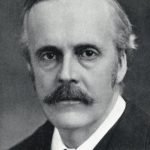
Tag: Arthur Balfour

  • Arthur Balfour – 1903 Speech Following the Loyal Address

    Arthur Balfour – 1903 Speech Following the Loyal Address

    The speech made by Arthur Balfour, the then Prime Minister, in the House of Commons on 19 February 1903.

    I need hardly say that I do not intend, Mr. Speaker, to obtrude any legal opinions upon the House, not merely because the hour is late, but because I am incapable of giving an opinion on such a subject which is worth listening to. But I think I have gathered what it is that has influenced most of the speakers, and many of those who have listened to them, who feel that the House of Commons ought to take some action on the present occasion. I do not misinterpret the feeling of the House when I say that there is no man on either side of the House who, either in public or in private, or even to himself, has made any suggestion of suspicion as to the motives by which the Attorney General was actuated in the course that he has taken.

    There is probably no man in this House, not even those who, like myself, are entirely ignorant of the law, who doubts that the Attorney General’s advice has not only been honestly given, but has been given by a man eminently qualified to give advice upon any matter connected with the laws of this country. The third observation I think I may make with general assent is that it is not intended on this occasion to make an attack upon His Majesty’s Government. It is perfectly true, as an hon. Gentleman said opposite, that every Amendment to the Address is an attack upon the Government, and in that sense, of course, this is an attack upon the Government; but it is not an attack upon them in a matter in which they have any discretion. It is due to the Attorney General to say in the clearest manner, not only in the interests of the Attorney General but in the interest of all, that his position as the District of Public Prosecutions is a position absolutely independent of any of his colleagues. It is not in the power of the Government to direct the Attorney General to direct a prosecution. No Government would do such a thing; no Attorney General would tolerate its being done. Though it is, I believe, peculiar to the British Constitution that political officers, like the Lord Chancellor or the Attorney General, should occupy what are in fact great judicial positions, nobody doubts that in the exercise of their judicial or quasi-judicial functions they act entirely independently of their colleagues, and with a strict and sole regard to the duty they have to perform to the public. That is the position of my learned friend, and that is the position of the Government in connection with this subject.

    Now I pass to what I believe to be the animating motive of almost all the speeches we have heard tonight in favour of the Amendment. I think that motive is a feeling of deep and profound indignation at the fraudulent transactions in which Mr. Whitaker Wright has been engaged. Nobody can have even a most cursory knowledge of those transactions without being conscious that if these are things which can be done in a great commercial centre like London, in connection with a vast transaction like that of the London and Globe, and can be done with impunity, a great fault lies somewhere. The only question is where that evil lies. I venture respectfully to say that no man can have listened to the debate tonight and have weighed—I will not say the reasoned legal view of my learned friend the Attorney General, because I imagine he was precluded by the fact that there were proceedings pending in this matter from going into the details of the reasons which have influenced his judgment—but have listened to what he said, or what the Solicitor General told us of the enormous pains taken by the Law Officers of the Crown in examining this case, without admitting that the fault does not lie either with the Director or Public Prosecutions, or with those who advised him. The fault lies in the law. [An HON. MEMBER on the OPPOSITION side of the House: No, no.] Is that a lawyer or a layman? Does the hon. Gentleman imagine that it is the jury which make the law? My hon. friend below the Gangway says that in his view an offence has been committed.

    SIR ALBERT ROLLIT

    Under the Statutes of 1861 and 1862, and at Common Law.

    MR. A. J. BALFOUR

    Well, both the question of Common Law and the question of Statute Law have been critically and carefully examined by the Law Officers of the Crown, and they, rightly or wrongly, take a different view from that held by my hon. friend. Whilst all admit that if such scandalous frauds are allowed to go unpunished the fault lies somewhere, I venture to say to the House that the fault does not lie with my learned friend, but with the language of the statute. The phraseology of the statute is evidently intended to protect the shareholders in a company and the creditors of a company against fraudulent prospectuses; and it is a very grave omission in the framing of the statute that it does not provide an adequate remedy against fraud, however gross, however scandalous, which is not directed against these persons. My learned friend’s attention has been called to this defect in our law by the very scandalous and painful case of Mr. Whitaker Wright and the Globe Finance Company; and he has expressed his opinion to the Government that there ought to be an amendment to the law making such practices absolutely impossible. The Government, advised in that sense by my learned friend, entirely share his view, and think that an amendment of that kind ought to be introduced as soon as possible. I need hardly say we shall take steps to carry that view into effect.

    Meanwhile, what I ask the House to do is to make the law what it ought to be, and not to attack a judicial officer whose duty it is to administer the law as he finds it. I cannot imagine a worse precedent than that this House should constitute itself a kind of grand jury in criminal matters; that, moved by passions which in this case we all share, and which, I believe, are amply justified by the facts, we should endeavour to compel a judicial officer to do that which, in his conscience, he believes he ought not to do. Let the House reserve itself for the function for which it is fitted—the amendment of the law—bringing it into a condition to meet the needs of the community, and into harmony with the general principles of justice. I hope and believe the House will not differ from the general principle I have laid down, and will be content with the pledge I have given, that we shall endeavour to amend the law in accordance with that broad view of commercial morality so ably defended by my hon. friend. We shall do that which it is our function to do, and not set a precedent which, in this case, may only do an injury to the Government and my hon. and learned friend, but which, followed in different circumstances by the House, may inflict a real blow on the criminal jurisprudence of this country.

  • Arthur Balfour – 1901 Speech on Death of Queen Victoria

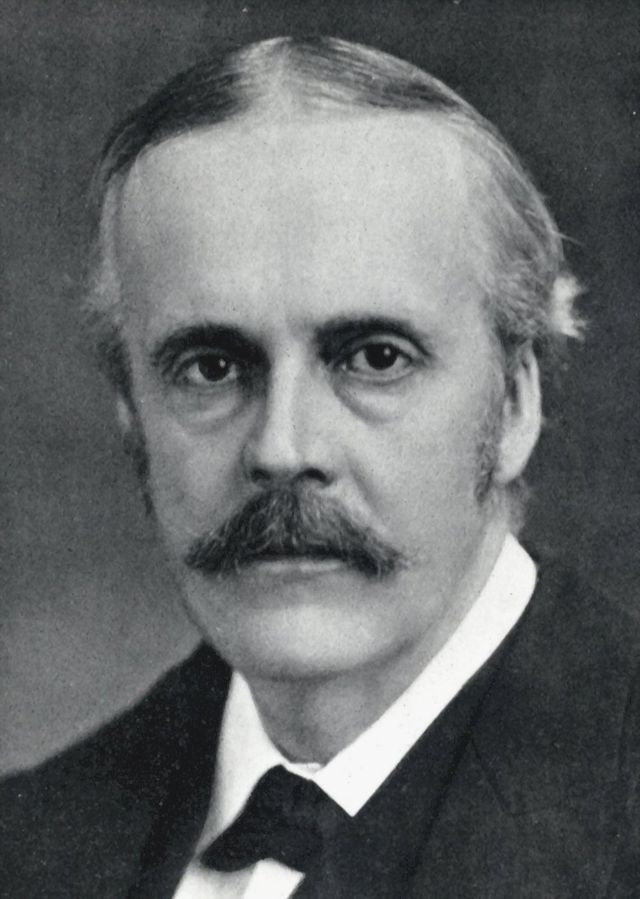
    Below is the text of the speech made by Arthur Balfour, the then First Lord of the Treasury (he wasn’t Prime Minister until 1902, this was a rare period when the First Lord of the Treasury wasn’t also the Prime Minister), in the House of Commons on 25 January 1901.

    The history of this House is not a brief or an uneventful one, but I think it has never met in sadder circumstances than to-day or had the melancholy duty laid more clearly upon it of expressing a universal sorrow—a sorrow extending from one end of the Empire to the other, a sorrow which fills every heart and which every citizen feels, not merely as a national, but also as a personal loss. I do not know how it may seem to others, hut, for my own part, I can hardly yet realise the magnitude of the blow which has fallen upon the country—a blow, indeed, sorrowfully expected, but not, on that account, less heavy when it falls.

    I suppose that, in all the history of the British Monarchy, there never has been a case in which the feeling of national grief was so deep-seated as it is at present, so universal, so spontaneous. And that grief affects us not merely because we have lost a great personality, but because we feel that the end of a great epoch has come upon us—an epoch the beginning of which stretches beyond the memory, I suppose, of any individual whom I am now addressing, and which embraces within its compass sixty-three years, more important, more crowded with epoch-making change, than almost any other period of like length that could be selected in the history of the world. It is wonderful to reflect that, before these great changes, now familiar and almost vulgarised by constant discussion, were thought of or developed—great industrial inventions, great economic changes, great discoveries in science which are now in all men’s mouths-—Queen Victoria reigned over this Empire.

    Yet, Sir, it is not this reflection, striking though it be, which now moves us most deeply. It is not simply the length of the reign, it is not simply the magnitude of the events with which that reign is filled, which have produced the deep and abiding emotion which stirs every heart throughout this kingdom. The reign of Queen Victoria is no mere chronological landmark. It is no mere convenient division of time, useful to the historian or the chronicler. No, Sir, we feel as we do feel for our great loss because we intimately associate the personality of Queen Victoria with the great succession of events which have filled her reign, with the growth, moral and material, of the Empire over which she ruled. And, in so doing, surely we do well. In my judgement, the importance of the Crown in our Constitution is not a diminishing, but an increasing factor. It increases, and must increase with the development of those free, self-governing communities, those new commonwealths beyond the sea, who are constitutionally linked to us through the person of the Sovereign, the living symbol of Imperial unity. Hut, Sir, it is not given, it cannot, in ordinary course, be given, to a constitutional Monarch to signalise his reign by any great isolated action. His influence, great as it may be, can only be produced by the slow, constant, and cumulative results of a great ideal and a great example; and in presenting effectively that great ideal and that great example to her people Queen Victoria surely was the first of all constitutional Monarchs whom the world has vet seen. Where shall we find any ideal so lofty in itself, so constantly and consistently maintained, through two generations, through more than two generations, of her subjects, through many generations of her Ministers and public men?

    Sir, it would be almost impertinent for me were I to attempt to express to the House in words the effect which the character of our late Sovereign produced upon all who were in any degree, however remote, brought in contact with her. In the simple dignity, befitting a Monarch of this realm, she could never fail, because it arose from her inherent sense of the fitness of things. And because it was no artificial ornament of office, because it was natural and inevitable, this queenly dignity only served to throw into a stronger relief, into a brighter light those admirable virtues of the wife, the mother, and the woman with which she was so richly endowed. Those kindly graces, those admirable qualities, have endeared her to every class in the community, and are known to all. Perhaps less known was the life of continuous labour which her position as Queen threw upon her. Short as was the interval between the last trembling signature affixed to a public document and the final and perfect rest, it was yet long enough to clog and hamper the wheels of administration; and when I saw the accumulating mass of untouched documents which awaited the attention of the Sovereign, I marvelled at the unostentatious patience which for sixty-three years, through sorrow, through suffering, in moments of weariness, in moments of despondency, had enabled her to carry on without break or pause her share in the government of this great Empire. For her there was no holiday, to her there was no intermission of toil. Domestic sorrow, domestic sickness, made no difference in her labours, and they were continued from the hour at which she became our Sovereign to within a few days—I had almost said a few hours—of her death. It is easy to chronicle the growth of Empire, the course of discovery, the progress of trade, the triumphs of war, all the events that make history interesting or exciting; but who is there that will dare to weigh in the balance the effect which such an example, continued over sixty-three years, has produced on the highest life of her people?

    It was a great life, and surely it had a, happy ending. She found her reward in the undying affection and the passionate devotion of all her subjects, where so ever their lot might be cast. This has not always been the fate of her ancestors. It has not been the fate of some of the greatest among them. It has been their less happy destiny to outlive contemporary fame, to see their people’s love grow cold, to find new generations growing up who know them not, and burdens to be lifted too heavy for their aged arms. Their sun, once so bright, has set amid darkening clouds and the muttering of threatening-tempests. Such was not the lot of Queen Victoria. She passed away with her children and her children’s children, to the third generation, around her, beloved and cherished of all. She passed away without, I well believe, a single enemy in the world—for even those who loved not England loved her; and she, passed away not only knowing that she was—I had almost said adored by her people, but that their feelings towards her had grown in depth and intensity with every year in which she was spared to rule over them. No such reign, no such ending, can the history of this country show us.

    Mr. Speaker, the Message from the King which you have read from the Chair calls forth, according to the immemorial usage of this House, a double response. We condole with His Majesty upon the irreparable loss which he and the country have sustained. We congratulate him upon his accession to the ancient dignities of his House. I suppose at this moment there is no sadder heart in this kingdom than that of its Sovereign; and it may seem therefore to savour of bitter irony that we should offer him on such a melancholy occasion the congratulations of his people. Yet, Sir, it is not so. Each generation must bear its own burdens; and in the course of nature it is right that the burden of Monarchy should fall upon the heir to the Throne. He is, therefore, to be congratulated, as every man is to be congratulated who, in obedience to plain duty, takes upon himself the weight of great responsibilities, filled with the earnest hope of worthily fulfilling his task to the end, or, in his own words, “while life shall last.” It. is for us on this occasion, so momentous in the history of the Monarchy, so momentous in the history of the King, to express to him our unfailing confidence that the great interests committed to his charge are safe in his keeping, to assure him of the ungrudging-support which his loyal subjects are ever prepared to give, him, to wish him honour, to wish him long life, to wish him the greatest of all blessings, the blessing of reigning over a happy and a contented people, and to wish, above all, that his reign may, in the eyes of an envious posterity, fitly compare with that great epoch which has just drawn to a close. Mr. Speaker, I now beg to read the, Address which I shall ask you to put from the Chair and to which I shall ask the House to assent. I move—

    “That a humble Address be presented to His Majesty, to assure His Majesty that this House deeply sympathises in the great sorrow which His Majesty has sustained by the death of our beloved Sovereign, the late Queen, whose unfailing devotion to the duties of Her high estate and to the welfare of Her people will ever cause Her reign to be remembered with reverence and affection: to submit to His Majesty our respectful congratulations on His Accession to the Throne, to assure His Majesty of our loyal attachment to His person, and further to assure Him of our earnest conviction that His reign will be distinguished under the blessing of Providence by an anxious desire to maintain the Laws of the Kingdom, and to promote the happiness and liberty of His subjects.”

  • Arthur Balfour – 1902 Speech on Becoming Prime Minister

    balfour

    Below is the text of the speech made by Arthur Balfour in the House of Commons on 14th July 1902 on becoming Prime Minister.

    I can assure the House that it is not easy for me to express in adequate terms my sense of its kindness on this occasion. The right hon. Gentleman, in the words he has spoken, has really moved me more than I can well say; and the manner in which his most kind observations have been received, not only among my own friends and supporters, but among Gentlemen on the other side — with whom I am so often brought into what I hope is never unfriendly collision— I can assure them I feel most deeply. In fact, I am quite incapable of saying anything more.

    By leave of the House I think I ought to say one word, though it will only be one word, about the distinguished statesman whose services the country has lost by the new arrangement which has been entered into. It would be improper, and, indeed, impossible, for me to express my personal feelings on the subject, nor would it be any more proper, though it would be easier, to express the loss which Gentlemen on this side of the House, and the Party to which I belong, feel on the subject. But it is the glory of British statesmanship that we have never regarded our Party Leaders, because they are Party Leaders, as otherwise than representative of the country of which they are statesmen. And when I remember that Lord Salisbury has been, I think, four times Foreign Secretary, and three times Prime Minister, and that probably there has not been a man in our generation whose name has carried more weight outside this country, and who has done greater services to the State within this country, I think it will be felt that I can hardly allow the occasion to pass without expressing my deep feelings of the immense public loss which this country has sustained in his retirement from the public service.