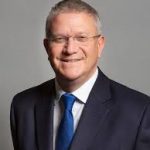
Tag: Andrew Rosindell

  • Andrew Rosindell – 2025 Speech on Gaza and Sudan

    Andrew Rosindell – 2025 Speech on Gaza and Sudan

    The speech made by Andrew Rosindell, the Shadow Foreign Affairs spokesperson, in the House of Commons on 18 November 2025.

    I thank the Foreign Secretary for advance sight of her statement. His Majesty’s Opposition welcome the passing of the US-drafted resolution at the United Nations Security Council yesterday. The US has shown consistent leadership on the middle east, and for that we are grateful. Hamas must now release the final three deceased hostages. We keep their loved ones, and the families of all the deceased hostages, in the forefront of our thoughts. We cannot even begin to imagine what trauma they have endured.

    Key to yesterday’s resolution was a mandate for the International Stabilisation Force, but can the Foreign Secretary set out exactly what Britain’s contribution will be to that force? The Government speak about the need for the force to be deployed quickly, to avoid a potential power vacuum being filled by Hamas. What is Britain’s contribution? Are we looking at technical assistance, the sharing of expertise or intelligence, funding, action on the ground, or all of the above? It is important that the Foreign Secretary is clear and precise about those details. Will she also update the House on which countries are expected to participate, and say what their contributions will be?

    Of course, the removal of Hamas from power and their full disarmament are vital if we are to turn this ceasefire into a sustainable end to the conflict and the cycles of violence. Following yesterday’s vote, what practical contribution will the UK make to those efforts? The Foreign Secretary will be aware that there are several points in the US President’s plan specifically on that, so where does the UK dock into those initiatives? Has she identified which areas the UK will focus on as a contribution to the broader transitional day-after plan? Can she at least confirm that a fundamental curriculum and education overhaul in Gaza, and indeed the west bank, will be a key focus? We have seen huge strides elsewhere in the middle east in that domain, and this must now be a moment of reckoning for the curricula in the Occupied Palestinian Territories—that is vital if we are to build a sustainable peace.

    On the immediate humanitarian crisis in Gaza, what practical actions is the Foreign Secretary undertaking with the Government of Israel to achieve the surge in aid for innocent civilians that we all want to see? Specifically, which crossings does she believe will need attention? What is the quantum of designated British aid that is not getting over the border into Gaza? Have specific proposals and solutions been conveyed by the British side to Israeli Government counterparts on how to address the bottlenecks that we all want to see resolved?

    Turning to the situation in Sudan, in El Fasher and elsewhere we continue to witness atrocities, suffering and human misery beyond words, all in plain sight of a watching world. Accountability must be administered. In the immediate term, the UK should be trying to spearhead a step change in the level of pressure on the warring parties to agree a comprehensive ceasefire. As my right hon. Friend the shadow Foreign Secretary has argued, we need heavy new sanctions on key operators, and action to deter entities, individuals and businesses whose support continues to sustain the conflict. Will that be forthcoming, and what discussions is the Foreign Secretary having on that with counterparts in the US, the EU, the Sudan quad and others? Will she also update the House on the Government’s response to US efforts to bring about a humanitarian ceasefire, and say what role Britain is playing in that?

    On the dire humanitarian conditions, it was confirmed at the Dispatch Box earlier this month that the shifting of frontiers in the conflict is affecting aid delivery. How has the situation evolved in the past two weeks, and what levers can be pulled to try and smash through obstacles to aid delivery? Finally, on day-after planning, will the Foreign Secretary update the House on efforts to build up the capacity and capabilities of organic civilian political groups, to give Sudan the best chance of moving to stable civilian government after a ceasefire? We have seen what the US has achieved through the UN Security Council on Gaza this week, and I hope that similar initiatives will be possible with regards to Sudan. As penholder, the UK Government have a special responsibility, so will the Foreign Secretary confirm her next steps on the UNSC? As the conflict moves from bad to worse, we must shift gear.

    Yvette Cooper

    I thank the hon. Gentleman for his response to the issues relating to Gaza and Sudan, and I will take his points in turn. We do not expect the UK to contribute troops to the international stabilisation force, but we are already providing military and civilian deployment into the civil-military co-ordination committee that is led by the US. It is drawing up practical arrangements for implementing the 20-point plan. On the nature of the role that we expect to continue to play, we already provide training for Palestinian police, for example, and I have met US military forces who are involved in that training. I met them in Jordan, and other countries are also offering to provide such training for Palestinian police, which will be critical to maintaining security and safety. We have also offered expertise on decommissioning. That is an area where, through the Northern Ireland experience, we have experience and expertise, mostly immediately around de-mining capabilities in terms of both funding and expertise.

    The hon. Gentleman raised the issue of curriculum reform, which I agree needs to take place. That is a crucial part of the Palestinian Authority reforms, and I have discussed that directly with President Abbas. The importance of maintaining the commitments that the Palestinian Authority has made to curriculum reform must be central in both the west bank and in Gaza. On practical issues about the opening of crossings, we want to see all the crossings opened and restrictions lifted. The co-ordination committee, which has a UK presence, is working directly with the Israeli Government to seek to improve access and monitoring, and to improve arrangements to get more aid through. I continue to urge swifter action to get that desperately needed aid in place.

    On Sudan, I welcome the hon. Gentleman’s support for sanctions. I have had personal direct discussions with all members of the quad, including most recently the US Secretary of State Marco Rubio last week, and I know how strongly he feels about the terrible, horrendous atrocities that are taking place in Sudan. We will continue to offer our support to that process.

    On aid delivery, based on what the UN and Tom Fletcher have been saying, it looks as though some of the routes into the region are currently completely inadequate, so security and infrastructure need to be provided to get the desperately needed scale of aid into the area. We will need to look at air routes as well as truck routes. He is right to point to the need for the organic support for Sudanese civilian organisations. It is crucial that ultimately we have a transition to a civilian Administration in Sudan and an end to the horrendous fighting, abuse and sexual violence that we have seen, with reports on all sides of those sorts of atrocities taking place.

    Finally, US leadership has been incredibly important in achieving the ceasefire agreement and the peace process so far in Gaza, but it has also depended on the international community coming in alongside the US and working together to deliver the progress so far. We need that same international commitment for Sudan and we need the whole international community to pull together to deliver progress in the same way.

  • Andrew Rosindell – 2024 Speech on the Economy, Welfare and Public Services

    Andrew Rosindell – 2024 Speech on the Economy, Welfare and Public Services

    The speech made by Andrew Rosindell, the Conservative MP for Romford, in the House of Commons on 22 July 2024.

    Thank you, Madam Deputy Speaker. May I say what a pleasure it is to follow the hon. Member for Welwyn Hatfield (Andrew Lewin)? He spoke with great eloquence, and also with passion about his constituency. I know what a wonderful moment it is when we give a maiden speech. We all have that honour when we enter the House. I welcome the hon. Gentleman to his place, and look forward to working with him in the years to come. Of course, Hertfordshire is next to the county where my own constituency is located—Essex and Hertfordshire are twin counties, so we are neighbours in some senses—and I also look forward greatly to hearing more from him in the months and years ahead.

    I think that one of our colleagues who spoke earlier forgot to welcome the hon. Member for Finchley and Golders Green (Sarah Sackman). I know that constituency well. I campaigned for Mrs Thatcher in 1983 as a young Conservative, at the age of 17; I know Ballards Lane very well, and I have often been to Margaret Thatcher House. I must commend the hon. Lady on her kindness and the generous words that she spoke about not only Margaret Thatcher but my friend Mike Freer, whom we were sad to lose in the election. I know that she will be a fine champion of Finchley and Golders Green, which is a proud constituency with a great identity, and I look forward to visiting Finchley again while the hon. Lady is in place as the Member of Parliament.

    Wera Hobhouse

    I do apologise to the hon. Member for Finchley and Golders Green, and to the whole House, for not recognising my duty to thank the hon. Lady for her wonderful speech. This means that even after seven years in the House one sometimes forgets to do certain things. It is very good to see the hon. Lady in the House, and I particularly enjoyed what she said about the rule of law.

    Andrew Rosindell

    I am deeply proud to have been elected for the seventh time as the Member of Parliament for Romford. I am now the longest-serving MP for Romford since 1885, when the constituency was created. I am here because I believe in things. I am here not because I seek titles and positions, but because I believe in this country, and I am also passionate about my constituency, because it is where I am from. I think that those of us who come from our constituencies know how important it is to represent a place where we have lived all our lives, and I will always be proud of being the MP for my home town.

    As I have said, I believe in things, and I believe first in this country. Let me say to Ministers, whom I congratulate on their election to power, that things change and Governments come and go, but the one thing that we must never give away is the freedom and liberties of the British people. I say to them, “Whatever you do, please do not reverse the biggest democratic decision that the British people made.” We want to have sovereignty; we want to have the right of self-governance; but we also want prosperity, and that means free enterprise, low taxes and smaller government. It does not mean creating a larger centralisation of power. Margaret Thatcher taught us that if we have lower taxes and free enterprise, if we give people the freedom to prosper and make their own decisions in life, in the end we create more prosperity and more opportunities for all. That, I am sure, is what all of us, in all parts of the House, want to see, so let us learn from past mistakes.

    I respect the fact that we have different opinions on many issues, and I also understand that all of us here want the best for our country and our constituencies. However, I believe that if we want economic prosperity, we need Governments to stay out of people’s lives. We need to allow business to flourish. We need less regulation, and we need to cut unnecessary public expenditure, so that people are not paying high taxes which disincentivise work and put people off from investing in our country. I hope that the Government, having taken office, will pay heed to that. I also say to them that, yes, we want to protect our environment, but we have to think very carefully about the evangelism of net zero. We do not want to make our country cold and poor, and to give competitive advantage to other countries that do very little about climate change and have not met their targets. I am afraid the policy that the Government have adopted will deliver more power to China, so I warn them about going too far in that direction.

    I believe that we should be a Parliament that makes decisions, so I disagree with more and more quangos, committees of experts and bodies that are not democratically accountable having so much say. Why are we effectively giving the Office for Budget Responsibility a veto over the rights of this Parliament to decide economic policy? Surely that is something that the Government should think again about.

    Before I have to end, I would like to say that if we are serious about devolution, we should give all parts of the country greater control over their local communities. Boroughs such as Havering would rather be independent. We do not want to be under Greater London; we want power devolved back to our local communities. Historically, we are part of Essex, and we do not like being controlled by City Hall—and certainly not by the current Mayor of London. I represent the people of Romford, and they would agree with what I have said. Let us have free enterprise, true devolution and, above all, prosperity for the British people, but let us also stand up for our country abroad and at home.

  • Andrew Rosindell – 2015 Parliamentary Question to the Home Office

    Andrew Rosindell – 2015 Parliamentary Question to the Home Office

    The below Parliamentary question was asked by Andrew Rosindell on 2015-11-02.

    To ask the Secretary of State for the Home Department, what the average time taken has been for a successful extradition request from the US administration to be implemented for deporting a person to the US since 2010.

    James Brokenshire

    Since the start of 2010 the UK has extradited 35 British citizens (including dual nationals) from the UK to the USA, over the same time period the US has extradited 8 US nationals (including dual nationals) to the UK.

    Of those arrested for the purposes of extradition to the US since 1 January 2010, 50 individuals (of all nationalities) have been extradited (up to and including 3 November 2015).

    All figures are from local management information, and have not been quality assured to the level of published National Statistics. As such they should be treated as provisional and therefore subject to change.

  • Andrew Rosindell – 2015 Parliamentary Question to the HM Treasury

    Andrew Rosindell – 2015 Parliamentary Question to the HM Treasury

    The below Parliamentary question was asked by Andrew Rosindell on 2015-11-18.

    To ask Mr Chancellor of the Exchequer, if he will assess the extent to which grants made by his Department to third parties are used for activities designed to influence his Department, other departments or Parliament.

    Greg Hands

    During the current financial year (2015-16), there have been no grants made to third parties which have subsequently been used for activities designed to influence theTreasury, other departments or Parliament.

  • Andrew Rosindell – 2015 Parliamentary Question to the Home Office

    Andrew Rosindell – 2015 Parliamentary Question to the Home Office

    The below Parliamentary question was asked by Andrew Rosindell on 2015-11-23.

    To ask the Secretary of State for the Home Department, what steps she has taken and plans to take to ensure that out of city areas are adequately defended and protected from a repetition of the recent attacks in Paris.

    Mr John Hayes

    Since the attacks in Mumbai in 2008 the Home Office has worked with the Department for Communities and Local Government, Department of Health and the police and security and intelligence agencies to develop a strong, police-led capability to deal with large-scale firearms attacks in the UK. We have also improved joint working between the emergency services to deal with the particular challenges of this type of incident so that specialist joint police, ambulance and fire teams are now in place in key areas across England (including London), with equivalents in Scotland and Wales. Firearms police are trained to respond to a marauding firearms attack and fire and ambulance teams are trained and equipped to manage casualties in higher risk environments. Under the Spending Review, the Government has also committed to protecting police spending in real terms and to further strengthen police firearms resource to protect citizens from terrorism. New funding is also available to the security and intelligence agencies to provide for an additional 1,900 officers to better respond to the threat we face from international terrorism, cyber-attacks and other global risks.

    We are reviewing our response to firearms attacks of the type seen in Paris, to see if there is anything we can learn.

  • Andrew Rosindell – 2015 Parliamentary Question to the Department of Health

    Andrew Rosindell – 2015 Parliamentary Question to the Department of Health

    The below Parliamentary question was asked by Andrew Rosindell on 2015-12-02.

    To ask the Secretary of State for Health, pursuant to the Answer of 23 November 2015 to Question 16779, if he will assess the extent to which grants made by his Department to Action on Smoking and Health were used for activities designed to influence his Department, other departments or Parliament.

    Jane Ellison

    The conditions applicable to grants awarded to Action on Smoking and Health (ASH) are set out in the grant award letters. The Department has made clear that none of this funding is to be used for lobbying purposes.

    ASH’s compliance with the conditions of the grant is assessed at the grant monitoring meetings held between the Deputy Director of tobacco control and representatives from ASH as well as in the final full year grant monitoring and governance reports.

  • Andrew Rosindell – 2015 Parliamentary Question to the Ministry of Defence

    Andrew Rosindell – 2015 Parliamentary Question to the Ministry of Defence

    The below Parliamentary question was asked by Andrew Rosindell on 2015-12-14.

    To ask the Secretary of State for Defence, what assistance his Department is providing to the National Museum of the Royal Navy in making urgent repairs to HMS Victory.

    Mr Philip Dunne

    In March 2012 the custodianship of HMS Victory transferred to the HMS Victory Preservation Company, a charitable trust established as part of the National Museum of the Royal Navy (NMRN) to ensure the preservation of the ship for future generations.

    Part of this arrangement was a £25 million grant from the Ministry of Defence matched by a similar grant from the Gosling Foundation. The Heritage Lottery Fund contributed an addition £5 million from its Catalyst Fund. These funds form an endowment for the maintenance of the vessel. The NMRN continues to receive Grant in Aid from the Royal Navy, but the maintenance and repair of the ship is the responsibility of the Museum and the Trust.

  • Andrew Rosindell – 2016 Parliamentary Question to the Foreign and Commonwealth Office

    Andrew Rosindell – 2016 Parliamentary Question to the Foreign and Commonwealth Office

    The below Parliamentary question was asked by Andrew Rosindell on 2016-01-05.

    To ask the Secretary of State for Foreign and Commonwealth Affairs, what progress he has made in reducing red tape for British business during his Department’s renegotiation of the UK relationship with the EU.

    Mr David Lidington

    The Government is fighting hard to fix the aspects of our EU membership that cause so much frustration in Britain – so we get a better deal for our country and secure our future. That includes cutting red tape to make Europe more competitive, so we create jobs and make British families more financially secure. We have made progress; legislative proposals under the new Commission fell by 80 percent in 2015, and more regulations were repealed in 2015 than in the whole of the previous Commission. But the burden from existing regulation is still too high and so we are working to secure a target to cut the total burden on business.

  • Andrew Rosindell – 2016 Parliamentary Question to the Foreign and Commonwealth Office

    Andrew Rosindell – 2016 Parliamentary Question to the Foreign and Commonwealth Office

    The below Parliamentary question was asked by Andrew Rosindell on 2016-01-11.

    To ask the Secretary of State for Foreign and Commonwealth Affairs, if he will ensure that his (a) Department will not enter into negotiations with Argentina without the full consent of the Falkland Islands government and (b) Department’s position remains to deny any transfer or reduction of British sovereignty over the Falkland Islands without the full consent of the Falkland Islanders.

    Mr Hugo Swire

    We are hopeful for an improvement in bilateral relations with Argentina. Our position on the Falkland Islanders’ right to self determination will not change.

  • Andrew Rosindell – 2016 Parliamentary Question to the Home Office

    Andrew Rosindell – 2016 Parliamentary Question to the Home Office

    The below Parliamentary question was asked by Andrew Rosindell on 2016-01-18.

    To ask the Secretary of State for the Home Department, what the rules are on the use, style and designation in UK passports of UK titles of honour, such as knighthoods, granted to both UK and dual nationals by one of Her Majesty’s Commonwealth Realms as well as titles of honour granted by Commonwealth states where the Queen is not Head of State; and whether those rules have been amended or revised in the last five years.

    James Brokenshire

    British titles of nobility bestowed by the Queen are presented on the biographical page of the British Passport. These include members of the House of Lords, holders of knighthoods and baronetcies as well as Dames of the Realm.

    The response to parliamentary question 19413 on the 15 November 2015 provided information on awards offered by other countries. Her Majesty’s Passport Office guidance states that a title may be recorded as an observation on the British passport to recognise the holder is also known by another name.

    Her Majesty’s Passport Office policy on titles has not been revised in the last five years. Published guidance can be found at:

    https://www.gov.uk/government/uploads/system/uploads/attachment_data/file/118548/titles-included-in-passports.pdf