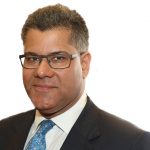
Tag: Alok Sharma

  • Alok Sharma – 2021 Speech at Abu Dhabi Sustainability Week

    Alok Sharma – 2021 Speech at Abu Dhabi Sustainability Week

    The speech made by Alok Sharma, the COP26 President, on 19 January 2021.

    Good afternoon.

    It is an absolute pleasure to join you today. At the beginning of what is a momentous year for our planet.

    Together we must make 2021 the year of climate action.

    And we have just ten years to bring our emissions under control. A decade to limit global temperature rises, to the levels set out in the Paris Agreement.

    The choices we make today will determine whether we or not we achieve it.

    The science is clear on the destruction we will unleash if we do not.

    Water supplies strained. Nature devastated. Human health increasingly stunted by the air we breath.

    So it is vital that we act now.

    As President of the next UN climate conference, COP26, I want this to be the year that all of us unite around the aims of the Paris Agreement.

    From governments, cities, and civil society. To businesses, investors, and development banks.

    So it is great to see Clover Hogan on today’s panel. Who is working to empower young people.

    And of course, my friend Laurent Fabius, who delivered the historic Paris Agreement.

    And Francesco La Camera. Under whose leadership, IRENA is supporting the clean energy transition around the world.

    I have four key goals.

    One, to strengthen adaptation – to respond to the realities of a changing climate.

    Two, to enhance international collaboration among governments, business and civil society.

    Of course, the UK works with the UAE on Mission Innovation, for example. Speeding up innovation in clean energy technologies.

    Three, I want to get finance flowing to climate action – both public and private.

    And I am calling on developed countries to honour their commitments on international climate finance and raise that $100 billion a year.

    And I am urging investors to take climate risk into account, and capitalise on the shift to clean, resilient growth across the world.

    I thank our hosts, Masdar, for their work on the global energy transition,

    including their support for UK offshore wind, which is powering British homes and businesses as we speak.

    The fourth, incredibly important, goal I want us to work towards is reducing emissions.

    I am calling on world leaders to come forward with ambitious Nationally Determined Contributions.

    To set out net zero targets, and long-term plans to achieve them.

    And to introduce policies to make these targets a reality.

    Phasing out fossil fuel subsidies.

    Deploying renewables faster.

    And moving to clean transport.

    I welcome the leadership the UAE has shown amongst the Gulf states.

    Its new NDC last December, setting a target that covers the whole economy,

    and some of the lowest solar power prices in the world.

    I am also urging business, cities and regions to take actions.

    To sign up to the Race to Zero campaign.

    And work to reach net zero emissions by 2050 at the latest.

    By signing up you will be joining over 450 cities, and 1400 firms which have already done so.

    Including the likes of the UAE’s Globesight, Microsoft and EDF.

    This is not just the right thing to do.

    It also helps to drive shareholder value.

    Whether it is finance, business, or our national economies, the opportunities presented by the move to clean growth are enormous.

    Once pre-election commitments made by President-elect Joe Biden are enacted, almost two-thirds of the world’s emissions will be covered by net zero commitments. A club that is growing all the time.

    Global trade in low-carbon goods and services is expected to grow up to 34 times between 2015 and 2050.

    By investing in clean sectors today, as we recover from the coronavirus pandemic, we can build clean growth into the heart of our economies.

    Creating jobs and prosperity.

    Here in the UK for example, our Ten Point Plan for a green industrial revolution will support and create a quarter of a million green jobs.

    Government investment in wind power, hydrogen, carbon capture usage and storage, electric vehicles and much more, will help to leverage in three times the amount from the private sector.

    The opportunities are there for the taking.

    So, friends, in this vital year for our planet, let’s come together.

    Let’s increase our ambition.

    And take action.

    To put the world on course for a clean and prosperous future.

  • Alok Sharma – 2021 Speech at the 11th International Renewable Energy Agency Conference

    Alok Sharma – 2021 Speech at the 11th International Renewable Energy Agency Conference

    The speech made by Alok Sharma, the COP26 President, on 19 January 2021.

    Excellencies, ladies, and gentlemen. It is an absolute pleasure to join you today.

    And I would like to thank Mr Francesco La Camera for the fantastic work IRENA is doing under his leadership.

    Friends, we all know that we must act now on climate change.

    If we do not, the consequences will be almost unimaginable:

    With crops failing.

    Nature devastated.

    And hundreds of millions threatened by rising seas.

    To avoid this, it is vital to decarbonise the energy sector, which accounts for around two-thirds of global emissions.

    And so I am asking governments around the world to do three key things to achieve it.

    First, raise ambition and action at home.

    Second, invest in clean recoveries in response to the COVID pandemic.

    And, third, work together to make progress on our climate ambitions.

    I am urging all countries to come forward with new Nationally Determined Contributions, and long-term strategies.

    And to put clear policies in place to achieve them.

    Policies like improving product efficiency standards.

    Phasing out coal power.

    Encouraging decarbonisation in those sectors where it is a challenge.

    And creating the policy environment to attract private finance.

    Getting finance flowing, both public and private, is one of my key COP26 priorities.

    Including urging developed countries to honour the commitment they have made to raise $100 billion a year in international climate finance.

    I am grateful to IRENA for its work on NDCs and long-term planning. And its support for countries on the clean energy transition.

    And I am pleased to say that here in the UK, we are acting.

    We announced a new NDC, consistent with our target to reach net zero by 2050.

    And last year, Prime Minister Boris Johnson announced our ten-point plan for a green industrial revolution.

    A plan to mobilise £12 billion of government investment.

    That spurs three times as much from the private sector.

    A plan to power every home in the country from offshore wind within a decade.

    And invest in nuclear, hydrogen technologies and Carbon Capture Usage and Storage.

    A plan which will support and create a quarter of a million jobs.

    This shows how investment in clean technology can drive our recovery from COVID-19.

    Which I know has been a focus of IRENA’s work.

    By aligning our recovery packages with the Paris Agreement, we can help to build clean growth into the heart of our economies.

    And of course many countries are doing fantastic work to invest in green recoveries. And now we need all leaders to follow suit.

    We are confident in this approach because we have seen that clean growth is absolutely possible.

    Over the past thirty years in the UK, we have seen our economy grow by 75 per cent while reducing our emissions by 43 per cent.

    We have also seen how, by working together, we can make progress faster.

    By increasing incentives for investment.

    Creating economies of scale.

    And accelerating innovation.

    Solar and wind power costs have fallen by 28% and 15% respectively, each time global deployment has doubled.

    But we only realise these benefits if we tailor our response to each challenge and sector.

    That is why international collaboration is one of the key goals of my COP Presidency.

    Our COP26 campaigns are bringing government, industry, investors, development banks, and civil society together, around five critical areas:

    Finance, nature, adaptation and resilience, clean transport, and, of course, clean energy.

    And we have created new forums for collaboration, like the Zero Emission Vehicle Transition Council, and the Energy Transition Council.

    And I would like to thank everyone involved with this work. Including IRENA, as a member of the COP26 Energy Transition Council.

    The work of this council includes improving the international support to developing countries to move away from coal.

    Friends, together, through ambition, collaboration, and investment in green recoveries, we can transform the global energy sector.

    So let’s take action now, to put the world on track for a clean and prosperous future.

  • Alok Sharma – 2021 Comments on Climate Financing

    Alok Sharma – 2021 Comments on Climate Financing

    The comments made by Alok Sharma, the COP President, on 11 January 2021.

    We have seen ambitious commitments from across the world to net zero targets to meet the goals of the Paris Agreement. But targets can only be met through action. We must preserve nature and our biodiversity, and move more quickly from coal to clean power.

    It is fantastic to see billions of pounds pledged today to support efforts to reduce deforestation and degradation, and to accelerate the transition to clean energy. By working together, on the road to COP26, we can make faster progress towards a sustainable future for our planet.

  • Alok Sharma – 2021 Comments on the Moderna Vaccine

    Alok Sharma – 2021 Comments on the Moderna Vaccine

    The comments made by Alok Sharma, the Business Secretary, on 8 January 2021.

    Vaccines are the key to releasing us all from the grip of this pandemic, and today’s news is yet another important step towards ending lockdown and returning to normal life.

    The UK was one of the first countries in Europe to sign a deal with Moderna, and I’m delighted our Vaccine Taskforce has secured an additional 10 million doses of their highly effective vaccine to protect the British public and save lives.

    From the scientists and trial volunteers to our world-class regulators and clinicians, we are enormously grateful to everyone who has played their part in this national effort to defeat the virus and get our country back on its feet.

  • Alok Sharma – 2020 Speech on Climate Change

    Alok Sharma – 2020 Speech on Climate Change

    The comments made by Alok Sharma, the Secretary of State for Business, Energy and Industrial Strategy, on 11 December 2020.

    Thank you very much and good afternoon everyone. And thank you particularly to His Excellency the Honourable Kausea Natano; Dame Meg Taylor; and the Pacific Island Forum Leaders, for inviting me to speak.

    The message coming from regions like the Pacific on climate change has a moral urgency and the world cannot ignore it.

    I hear what you say. That climate change is the single greatest threat to the livelihoods, security and wellbeing of your people. And I am committed to working with you, throughout my COP Presidency. To make sure that your voices are heard. To address the issues that matter most to you. And to find practical solutions.

    I commend the leadership your region has shown on climate change. Which is reflected in the Kainaki II Declaration, the Framework for Resilient Development in the Pacific.

    And despite contributing only a fraction of the world’s greenhouse gas emissions, many of you are coming forward with updates to your NDCs.

    You are setting a powerful example and encouraging countries around the world to raise their ambition. On mitigation, on adaptation and on finance.

    Last week, the United Kingdom announced its NDC. Committing to cut our emissions by at least 68% by 2030, which keeps us on the pathway to our 2050 Net Zero commitment.

    Soon we will be submitting our first Adaptation Communication.

    And more leaders will announce commitments at the Climate Ambition Summit, which the UK is hosting tomorrow, with the UN and France and in partnership with Italy and Chile.

    And the Summit builds on events that have taken place across the world.

    From the CARICOM Moment of Ambition Roundtable that the UK is co-hosting with Caribbean partners today.

    To this “Kainaki II to COP26” Roundtable.

    I would like to thank all those of you who are making announcements at the Summit tomorrow.

    And also those who have said they will announce new commitments in the coming months.

    Such targets are absolutely vital. But alongside them, we must drive practical solutions for reducing emissions. By working together, we can make progress faster.

    So our COP26 campaigns are focusing attention on five critical areas: transport; energy; nature-based solutions; adaptation and resilience; and finance.

    And we are highlighting adaptation as a priority and encouraging action. We’ve recently appointed a new international champion for adaptation and resilience, Anne-Marie Trevelyan.

    Anne-Marie will help to lead our drive forward towards global ambition and action.

    And it’s by supporting countries on the frontline of climate change that we will be able to help the adaptation to its impacts and build resilience.

    We’re also working to increase public and private finance, urging donor countries to meet the $100 billion commitment. And to go beyond it.

    Leading by example, the UK is doubling its international climate finance commitment to £11.6 billion over the next five years.

    We’re also working to make public finance more accessible.

    And to get more money for adaptation. We’re working with multilateral development banks, investors, and others.

    And I know that this approach is shared by Australia and New Zealand., and I’m committed to our working closely together.

    I have heard this forum’s call on averting, minimising and addressing loss and damage.

    And over the next year I want to increase our understanding of all the issues that matter to you. And how they can be addressed.

    And this includes listening to your views on how best the Kainaki II recommendations can be reflected in the outcomes of COP26.

    So we will be increasing our engagement with the Pacific.

    In the new year, we’ll be holding events to discuss the issues that matter to vulnerable countries.

    And we will also ensure that your priorities are heard at the G7 and the G20. And, of course, at the Commonwealth Heads of Government meeting next year.

    Because I am determined to amplify the voices of climate vulnerable countries and put them at the heart of the COP26 process.

    So that together, we unleash the full potential of the Paris Agreement in Glasgow. And by doing so build a brighter and more sustainable future for us all.

    Thank you.

  • Alok Sharma – 2020 Speech at UN Climate Change Dialogues

    Alok Sharma – 2020 Speech at UN Climate Change Dialogues

    The speech made by Alok Sharma, the Secretary of State for Business, Energy and Industrial Strategy, on 4 December 2020.

    Greetings to everyone on this event and thank you so much for dialling in. Many of you will be dialling in from places where it is late in the day or really very early. So, thank you so much for your commitment, we really are incredibly grateful.

    At the opening of the Climate Change Dialogues last Monday, I made the point that, despite the great difficulties we have faced this year, it is absolutely vital that we that maintain momentum on climate action.

    Over the past months I’ve spoken to very many colleagues across the world and individual governments,

    I have spoken at almost 50 events virtually. And whilst we’ve all acknowledged the need to do as much as we can to support our populations, protect jobs, protect livelihoods, in terms of our individual countries, it is also the case that climate change hasn’t taken time off. The clock is still ticking and those two hands on the face of the clock are getting closer to midnight.

    So, it is important that we keep encouraging ambition across the world. Archie talked about some of the areas that we are looking for leaders to come forward at the Climate Ambition Summit on 12 December. What we want to do is to encourage that ambition on mitigation, on adaptation and support.

    So that we are in prime position to realise the full potential of the Paris Agreement in Glasgow next year. We absolutely owe that not just to our generation but actually generations to come in the future.

    All of you are vital, you’re absolutely integral to that. That is how we’re going to make progress at COP26. And I’ve said this before but I want to repeat this point – the UK and our friends in Italy may have the presidency of COP but success at COP is going to belong to each and every one of us as individuals and as countries.

    It’s only by working together that we will succeed in tackling climate change.

    Whether that’s in Governments, regions, cities, indigenous peoples, business, civil society, and or as individuals, it is going to be vital that we all play our part.

    That is why events like this Open Dialogue are so important. Bringing together representatives from a whole range of constituencies.

    And it is also why our COP26 campaigns are bringing people together to focus on these five critical areas: clean energy, clean transport, adaption and resilience, nature based solutions, and finance, which ties the whole thing together.

    I’d like to speak for one moment directly to all our representatives from observer organisations.

    The reality is reaching net zero and building our resilience will only be achieved through this joint effort.

    And for this, you are absolutely vital. You are vital for helping to raise awareness, for generating support, and asking us to do more.

    And very rightly you encourage us to go further.

    And help to create the conditions for the Parties to raise their ambition around the negotiating table.

    We saw this in Paris in 2015.

    And we continue to see this drive for us to go further today as well.

    For me what is really important is that you are working on the ground. You are building that resilience you are helping us reduce emissions.

    You are creating the changes we need.

    Whether that is indigenous leaders applying their knowledge to protect our biodiversity and ecosystems.

    Or indeed, International Trade Union Confederation’s campaign to climate-proof work and jobs.

    Or the advocacy we have seen from YOUNGO members around the world.

    Your role within the official UNFCCC process is equally important. It really matters, and it really matters to me on a personal level.

    And I want to thank the nine UNFCCC constituency groups for the leadership they have shown.

    As you know, we are committed to a comprehensive agreement in Glasgow.

    One that covers each of the key issues.

    And, really importantly, any agreement has to be informed by the voices that have too often been marginalised. I make this point again and again in public and private.

    By representing those voices. And by contributing your expertise and support. You strengthen our work.

    Whether that’s the Women’s Environment and Development Organisation. Supporting equal participation in UN climate negotiations. Through the Women Delegates Fund.

    Or indeed, the expertise of the Women and Gender Constituency. Which, at COP25, informed the renewed Gender Action Plan, placing gender equality at the heart of climate action.

    This is again a really important thing we need to keep pressing on.

    The UK has committed to implementing the Plan. And I urge all Parties to do the same.

    I am very much committed to working with observers to make COP26 a success.

    I’ve had quite a few engagements over the past few months and will absolutely be ramping up the engagement in the year coming up to COP26.

    That is why I spoke at the Local Governments for Sustainability’s event in October. And it was about encouraging climate ambition among city leaders.

    And supported Indigenous People’s Day in August. To emphasise how important Indigenous People’s knowledge and experiences are in tackling the climate crisis that we all face.

    I know our Italian partners are working closely with YOUNGO too. Preparing for Youth COP, and hosting the Youth4Climate series. And I was very pleased to join one other their webinars recently.

    It’s also really good to see the Research and Independent NGOs working closely with our COP26 universities network. Ensuring the academic sector, which is so important, and universities play a role in delivering a successful COP.

    And of course, universities are part of the Race to Zero campaign as well.

    So I am really looking forward to hearing from you in today’s discussion on the vital issue of the green recovery.

    Urging countries to build back better in response to the coronavirus pandemic is absolutely central to the UK’s COP26 presidency.

    But we really have to do this in a way that involves the whole of society. We have to excite everyone across the world and ensure that COP26 really has meaning for them.

    Just as our work to reduce emissions and build resilience, we must take all interests into account.

    That means bringing in the voices of civil society, young people, Indigenous Peoples, businesses and others in government decision-making.

    And here, non-state actors can help.

    So I urge all parties to look at how you can work more closely with observer groups and non-state actors. To increase ambition in your countries in a way that is fair to all.

    And I am keen to hear examples of successful initiatives from both Parties and Observers today.

    By listening to each other, learning from each other, and working together, we can boost ambition, take action, and strengthen this process. All of this will help pave the way for a successful COP26.

    Thank you so much for being with us today.

  • Alok Sharma – 2020 Comments on Unfair Employment Causes

    Alok Sharma – 2020 Comments on Unfair Employment Causes

    The comments made by Alok Sharma, the Secretary of State for Business, Energy and Industrial Strategy, on 4 December 2020.

    We want to ensure every worker has the freedom and flexibility to work in the way they want, where they want – whether that’s topping up their pay packet by taking on additional work, or being able to start their own business with the skills they’ve gained throughout their career.

    Today’s reforms are another step on our path to making sure the UK is the best place in the world to work, start and grow a business as we build back better from the pandemic.

  • Alok Sharma – 2020 Comments on Vaccine

    Alok Sharma – 2020 Comments on Vaccine

    The comments made by Alok Sharma, the Secretary of State for Business, Energy and Industrial Strategy, on 2 December 2020.

    Since the start of the pandemic, every single person has made an immense sacrifice to protect themselves, their loved ones and the health of our nation. Through it all, we have remained united to defeat a virus that has taken too many before their time.

    As a nation we owe every scientist, clinician and trial volunteer an enormous debt of gratitude for their victory won against odds that at times seemed impossible. It is thanks to their efforts, and of our Vaccine Taskforce, that the UK was the first country to sign a deal with Pfizer/BioNTech and will now be the first to deploy their vaccine.

    While today’s breakthrough is a positive one, we will not end the pandemic overnight. But in years to come, we will look back and remember this moment as the day the United Kingdom led humanity’s charge against this terrible disease.

  • Alok Sharma – 2020 Speech at Opening of the UN Climate Change Dialogues

    Alok Sharma – 2020 Speech at Opening of the UN Climate Change Dialogues

    The speech made by Alok Sharma, the Secretary of State for Business, Energy and Industrial Strategy, on 23 November 2020.

    It’s a pleasure to open the UNFCCC Climate Change Dialogues today, alongside my fellow Presiding Officers, Carolina, Marianne and Tosi. As well of course as the UN Deputy Secretary General Amina Mohammed, and the UNFCCC Executive Secretary, Patricia Espinosa.

    I thank them for their work in organising this event.

    2020 has been a hugely challenging year for everyone.

    And when I spoke at the June Momentum, I said climate action could not be postponed.

    And as incoming COP President, I’m fully committed to working with my fellow Presiding Officers, parties, and stakeholders to keep driving ambition and action on climate change.

    This remains the case today.

    The urgency of the climate crisis demands nothing less.

    That is why all of us on this panel have arranged a series of events to maintain momentum.

    To advance the multilateral process.

    And to drive real-world change.

    Earlier this month, our High-Level Champions Nigel Topping and Gonzalo Muñoz held the Race to Zero Dialogues.

    To build support for decarbonisation amongst cities, amongst regions, amongst businesses.

    And today, we are opening the Climate Change Dialogues.

    We want to make progress on vital negotiating issues.

    On 12 December, we have the Climate Ambition Summit 2020.

    This is co-hosted by the UK COP26 Presidency, the UN and France, in partnership with Chile and Italy.

    And this Summit will provide a platform for leaders to come forward with announcements under the three pillars of the Paris Agreement: mitigation; adaptation; and support.

    Specifically, we are calling for:

    New, more ambitious Nationally Determined Contributions;

    Long-Term Strategies setting out a pathway to net zero emissions;

    Climate finance commitments to support the most vulnerable;

    And crucially, ambitious adaptation plans and underlying policies.

    Ahead of COP26, we as Presiding Officers will host more discussions to build on the progress made at these Dialogues.

    So that we are in the best possible position to unleash the full potential of the Paris Agreement when we meet in Glasgow next year.

    As you know, we are committed to working with all of you to agree a comprehensive, negotiated outcome that leaves no issue behind.

    And we absolutely recognise – as we have always done – that if we are to succeed, parties must lead the process.

    And non-state actors must be involved. Particularly those whose voices are often marginalised.

    That is why we have consulted with all negotiating groups ahead of these Dialogues.

    It is why they have been designed them to suit multiple time zones.

    And why observers are heavily involved.

    Proceedings will be broadcast around the world.

    And their format balances concerns about negotiating virtually with the need to keep these conversations going, which is of course so vital.

    These Dialogues can help to put us in the best position to negotiate in Bonn, and the of course in Glasgow.

    We will use the Dialogues to fulfil vital mandates.

    To improve our understanding of each party’s position and the issues that need to be resolved.

    And to help us to identify what can be done during next year to help secure a comprehensive agreement at COP26.

    The UK has worked closely with Chile, the UNFCCC Subsidiary Bodies, and the Secretariat to design the events for the next fortnight.

    The Presidencies are convening events on finance, adaptation, loss and damage, NDC preparation and gender, alongside the Open Dialogue and the Pre-2020 Roundtable.

    And we will continue to work together, with all parties and stakeholders, over the next twelve months.

    So that next year, when the world comes together and meets in Glasgow, we can fulfil the full potential of the Paris Agreement.

  • Alok Sharma – 2020 Speech on Climate Action

    Alok Sharma – 2020 Speech on Climate Action

    The speech made by Alok Sharma, the Secretary of State for Business, Energy and Industrial Strategy, on 19 November 2020.

    It is a pleasure to join you today.

    And to participate in the opening of Mock COP.

    I want to thank everyone who has worked so hard to deliver this event.

    And I applaud your dedication and commitment to tackling climate change.

    Across the world, young people are leading the charge on climate action.

    We see this, in projects like the Resilient40.

    Which is amplifying the voices of over 60 youth leaders, from 29 African countries in vital climate change discussions.

    Or indeed the Resolution Project, which supports student entrepreneurs with over 300 social ventures in more than 80 countries.

    From recycling solutions in Ethiopia.

    To water management in Brazil.

    And household biogas generation in Nepal.

    Young people are on the frontline of global climate action.

    And this is absolutely vital.

    For the future of our planet.

    And for the success of COP26 next November.

    The gravity and urgency of the situation we face demands that COP26 marks the moment

    when the world unites together behind a fair, resilient and zero emissions future.

    And that means governments committing to ambitious emission reduction targets, and adaptation plans.

    It means donor countries living up to their obligations.

    And fulfilling the commitments that they have made to the global South to put $100 billion a year into international climate finance.

    And it means listening to diverse voices in the negotiations.

    So that we are ensuring the interests of young people, as well as Civil Society as a whole, are heard loud and clear.

    From both the global South and North.

    To achieve this, I have been clear that we want civil society groups to be at the heart of both our preparations for COP, and the summit itself.

    That is why I met with young people and civil society organisations on a visit to the UN in New York earlier in the year.

    And I commit to meeting groups which comprise young people and civil society in every country that I visit going forward.

    It is also why we have established the COP26 Civil Society and Youth advisory council.

    Where young activists, NGOs, indigenous peoples and faith groups are very much part of our conversations in planning COP26.

    We are also supporting our COP partners, Italy.

    Both in their preparations for the Pre-COP and of course the Youth Event next September.

    And in the launch of their Youth4Climate series.

    Helping to support and amplify the work of young climate activists.

    Because such activism plays a really vital role.

    Although the commitments required in the Paris Agreement need to be made by national governments, success will belong to each and every one of us.

    Reaching net zero will only be achieved through a joint effort.

    And for this civil society is absolutely vital.

    You are vital in pushing all of us to go further: governments and regions; businesses and cities; schools and universities.

    By raising awareness, generating support, and asking us to do more.

    That is one of the great benefits of this Mock COP.

    It will show governments and organisations around the world the appetite that exists for ambitious climate action from young people.

    So I will finish with this ask: keep up that momentum.

    Keep showing us what is possible.

    And keep advocating for climate action in your home countries.

    Because if you do, the job of negotiators, who are urging countries around the world to make more ambitious commitments, becomes much easier.

    As does the work of the Race to Zero campaign.

    Which is encouraging non-state actors, such as businesses, cities, regions and universities around the world to commit to net zero as soon as possible.

    And if we work together in this way, I believe COP26 will mark the moment when the potential of the Paris Agreement is fulfilled.

    Thank you.