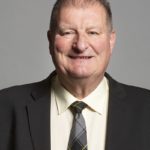
Tag: Allan Dorans

  • Allan Dorans – 2022 Speech on Scottish Independence and the Scottish Economy

    Allan Dorans – 2022 Speech on Scottish Independence and the Scottish Economy

    The speech made by Allan Dorans, the SNP MP for Ayr, Carrick and Cumnock, in Westminster Hall on 3 November 2022.

    Madam Deputy Speaker, you will have heard from many of my SNP colleagues this afternoon. They have spoken eloquently and brought to the attention of the House many reasons, backed by an impressive range of views, statistics, hard facts and reasoned arguments, why Scotland should be an independent country.

    I want to introduce a bit of history. It is fair to say that the history of Scotland and England has been marked by frequent periods of insurrection by Scots against English domination and frequent invasion of each other’s countries, resulting in ongoing wars of independence. From the late 13th century, those include Scottish victories at Stirling Bridge, with the Scots being led by William Wallace, who was tried here in Westminster Hall in 1305 and hanged, drawn and quartered for an alleged crime of treason—an offence for which he could not have been guilty, because he had sworn no allegiance to the English Crown. Following the battle of Bannockburn in 1314, in which the Scots were led by Robert the Bruce, King Edward III and the English Government recognised Bruce as King of an independent Scotland in the treaty of Edinburgh 1328.

    It is recognised that the basis for the current Union began with the Act of Union 1707, which is used by Unionists to justify the continuation of this form of government. What is less well known is that, at the time of the Act, the majority of people in Scotland opposed the Union. It was negotiated by a very small minority of wealthy and influential people widely regarded as acting for their own benefit rather than that of the people of Scotland.

    Rioting in Edinburgh and towns across Scotland was widely reported when the signature of the Act of Union was announced. Scotland—or the wealthy elite, at least—was also pressurised into agreeing with the Union by the introduction of the Alien Act 1705. That stated that, unless Scotland agreed to negotiate terms for union and accepted the Hanoverian succession by December 1705, there would be a ban on the import of all Scottish staple products into England. Scots would also lose the privileges of Englishmen under English law, thus endangering rights to any property they held in England. Many in Scotland considered themselves betrayed by their own elite. Christopher Smout, the eminent academic and historiographer royal in Scotland, argues that the Act of Union was able to pass only thanks to English bribery.

    The point was also recognised by Rabbie Burns, our national bard. He was born in my constituency of Ayr, Carrick and Cumnock, where he decried and condemned those Members of the Parliament of Scotland who signed the Act of Union. His poem “Such a Parcel of Rogues in a Nation”, which he penned in 1791, concludes with the declaration:

    “But pith and power, till my last hour,

    I’ll mak’ this declaration;

    We’re bought and sold for English gold—

    Such a parcel of rogues in a nation!”

    He was clearly referring to the wealthy elite of Scotland at that time.

    I turn to the 2014 referendum, when the people of Scotland were bombarded with anti-independence propaganda with the full weight of the United Kingdom Government and other Unionist-supporting politicians in what has rightly become known as Project Fear. During the incessant campaign by a Unionist-biased media, including the BBC, several Unionist-supporting newspapers and an army of clandestine trolls on social media, the Scottish voting public were essentially scared out of voting for independence.

    Pensioners were terrified and influenced by the false assertions and the prospect that their pensions would not be paid in an independent Scotland, that a number of large businesses would relocate to England, and that an independent Scotland would no longer be part of the European Union—we all know how that turned out, Mr Deputy Speaker. The people of Scotland are now wiser to this blatant pro-Unionist propaganda, including the discredited vow. The people of Scotland will not be fooled again.

    Patricia Gibson (North Ayrshire and Arran) (SNP)

    I am sure my hon. Friend would agree that what the people in Scotland are now seeing, as they have been since 2014, is that the Tories and Better Together are absolutely in lockstep, hand in glove, working together, exerting every effort, and straining every sinew to keep the people of Scotland trapped in this rotten Union. In the next referendum they will continue going round chapping pensioners’ doors and terrifying them into voting against Scottish independence by telling them lies about losing their pensions.

    Allan Dorans

    I welcome the intervention of my hon. Friend and I totally agree with her.

    A significant reason for the need to be independent is the demographic deficit that exists in this United Kingdom. No matter how the people of Scotland vote, they will always be overruled by the Government of the United Kingdom. We are dictated to by a Government for whom the people of Scotland did not vote. This is clearly demonstrated by Brexit where 62% of the people in Scotland in all 32 local council areas voted to remain in the European Union, but, as we all know, Scotland was dragged out of Europe against our will.

    Ian Murray

    I thank the hon. Member for allowing me to intervene. I really take a great deal of offence at what he says about pensioners. While we are on pensioners, if he thinks that they were fearful about voting yes because of propaganda from the BBC and so on, can he tell us now, for the pensioners of Scotland, who will pay their pension in an independent Scotland?

    Allan Dorans

    The people of Scotland have paid into their pensions all of their working lives and will continue to be paid by the Scottish Government after independence.

    Scotland has a clear and unprecedented political mandate to be an independent country, as witnessed at the ballot box. This is shown by the number of SNP Members elected to the Westminster Parliament, to the Scottish Parliament and in the Scottish local authority elections.

    In the 2019 general election, the SNP won 49 of the 59 available Scottish parliamentary seats in Westminster. This is a clear and indisputable mandate for Scottish independence. Since the elections for the Scottish Parliament in May 2021, the SNP holds 64 of the 129 seats available, with the Conservatives achieving only 31 and Labour 22. That is an outstanding achievement with a voting system designed to prevent a significant majority by any one political party.

    In the Scottish local elections held earlier this year, the SNP won 453 of the 1,227 seats available across the 32 local authority areas. Again, this was more than any other single party. It must be emphasised that the SNP MPs, MSPs and councillors won the highest number of seats of any party in every one of these elections and were all elected on a clear manifesto commitment to Scottish independence. In short, Scotland has a clear political mandate to be independent and to hold a referendum on independence, and it intends to do so on 19 October 2023.

    Scotland has what it takes to be a modern, forward-looking, successful, welcoming independent country in the European Union, not tied to a Government in London whom they did not vote for and whose decisions and policies are not in the interests of the people of Scotland. We will always have a social and cultural relationship with our neighbours in England, but what we seek to change is the political relationship where decisions that affect the people of Scotland are best made by the people of Scotland. Decisions involving immigration, the economy, the environment, defence and foreign policy should be best suited to the wishes and needs of the people of Scotland.

    Some of the unique benefits introduced since the reintroduction of the Scottish Parliament, which are the envy of our neighbours in the British Isles and throughout the world, include enhanced childcare provision, free prescriptions and sanitary products, free bus travel for those over 60, disabled people and those under 22, the Scottish child payment—described as game-changing—and additional support for care experienced young people. They also include free university tuition based on the ability to learn rather than the ability to pay, which has enabled people to obtain university education, and many other outstanding initiatives that demonstrate that Scotland is leading the world as a more equal, caring and compassionate country.

    Scotland has a long history of contributing to the modern world. Winston Churchill commented, “Of all the small nations on this Earth, perhaps only the Ancient Greeks surpass the Scots in their contribution to mankind.” It was reported only last weekend in The Guardian that the University of St Andrews was assessed as the top university in the United Kingdom, beating Oxford and Cambridge. Scotland also had a further four universities in the top 18 in the United Kingdom.

    Most important to the country is our people. They are innovative, inventive people, who have contributed to developing all aspects of the modern world, including the previously mentioned Robert Burns, Adam Smith, David Hume, Alexander Fleming, David Livingstone, Sir Sean Connery, Sir Alex Ferguson, Charles Rennie Mackintosh, J. M. Barrie—

    Angus Brendan MacNeil

    Allan Dorans!

    Allan Dorans

    Thank you—James Watt, Andy Murray, Sir Arthur Conan Doyle, Sir Chris Hoy and many more, and outstanding politicians including Keir Hardie, John Smith and, of course, Nicola Sturgeon, First Minister of Scotland.

    My hon. Friend the Member for Stirling (Alyn Smith) memorably said in the European Parliament in 2019, prior to our having Brexit forced upon us, that

    “if we in Scotland are removed from our family of nations against our will—against our clearly democratically expressed view—independence will be our only route back…I am asking you to leave a light on so that we can find our way home.”

    There is much support in the European Union, which indicates that Scotland will be warmly welcomed back into the European Union as a free and politically independent country.

    Scotland has its own unique identity, history and culture and a diverse modern economy, with an abundance of renewable energy resources, a world-class food and drink industry, a booming tourism sector and advanced manufacturing, financial and business services. We are at the cutting edge of the industries of the future, such as life sciences, which are the envy of countries across the world.

    Mike Kane (Wythenshawe and Sale East) (Lab)

    On advanced manufacture, will the hon. Gentleman give way?

    Allan Dorans

    No, I am almost finished. I will not give way, because the hon. Gentleman has only been in the Chamber a few minutes and this debate has been going on for three and a half hours.

    In addition, Scotland has one of the most innovative, highly skilled, educated and resourceful people in the world. With independence, we will always get the Government we voted for; we will not have to waste money on Westminster priorities such as Brexit and Trident and we will be able to have economic and social policies fully tailored to Scotland’s own circumstances. Decisions affecting Scotland must be made by the people of Scotland. Our future should be in our hands, not those of a Conservative Government that Scotland—as we have heard many times—has not voted for since 1955.

    I confidently predict that Scotland will be a thriving, more equal, fairer, greener and more successful independent country and that we will find our way home and again be part of the European Union very soon. It is only a matter of time.

  • Allan Dorans – 2022 Speech on Standards

    Allan Dorans – 2022 Speech on Standards

    The speech made by Allan Dorans, the SNP MP for Ayr, Carrick and Cumnock, in the House of Commons on 18 October 2022.

    Good evening, Madam Deputy Speaker. I declare an interest in this matter as a member of both the Committee on Standards and the Committee on Privileges, appointed by this House in May 2021. I regard it as a privilege to serve on those Committees.

    I start by agreeing with my friend the hon. Member for Warrington South (Andy Carter) about the lay members. The Committee on Standards consists of 14 members, seven of whom are MPs and seven of whom are lay members appointed by the House of Commons Commission following an extensive and comprehensive open recruitment process. All seven lay members have extensive knowledge and experience of public life at a senior level and bring a fresh non-political and unbiased perspective to the work of the Committee. I commend and thank them for their commitment and contribution not only to the report we are debating tonight but to the other work undertaken by the Committee on Standards. The lay members are invaluable in enabling the Committee to reach decisions that more accurately reflect the mood, consideration, interpretation and judgment of the country as a whole, rather than the narrow conclusions that might be reached by elected Members, with conflicting pressures and interests of their own in their Westminster role and in this echo chamber in which we operate.

    The Committee’s recommendations followed our code of conduct review that started in 2020. The Committee took an extensive range of written and oral evidence and commissioned a survey of Members to draw up balanced and informed recommendations, and we were greatly assisted by independent advice from Sir Ernest Ryder, former Lord Justice of Appeal and Senior President of Tribunals for the United Kingdom. Sir Ernest carried out a review of fairness and natural justice in the House’s standards system, and the Committee published his review in March 2022.

    Sir Ernest concluded that the inquisitorial process for code of conduct cases is fair and compliant with article 6 of the European convention on human rights—the right to a fair trial. Two of Sir Ernest’s principal recommendations were to create a single code of procedure, to be approved by the House, and to introduce a formal appeal system. The motions before the House today would implement those two central recommendations.

    The Committee recommended that the Independent Expert Panel, which was established by the House in June 2020 to hear appeals and determine serious sanctions in bullying, harassment or sexual misconduct cases, should be the appeal body. If today’s motions are agreed, there will be an additional step in the process of investigating and adjudicating on breaches. The independent Parliamentary Commissioner for Standards will continue to investigate allegations of breaches of the code. If the commissioner’s opinion is that the MP has breached the code and it cannot be rectified using her own powers, she will refer the case to the Committee for a decision; this is what already happens.

    Once the Committee has published its report, the MP will then have 10 working days to lodge an appeal, if they wish to do so. The grounds are in line with the appeals grounds in Independent Complaints and Grievance Scheme cases. The Independent Expert Panel would then publish the final outcome unless, in the case of a successful appeal, a case is remitted back to the Committee or Commissioner for fresh investigation or decision.

    The Committee published its proposed procedural protocol in July 2022, which brings together material from the Commissioner’s information note, the current chapter 4 of the guide to the rules, and parts of the Committee’s own internal guidance into a single document that we hope is accessible and easy to understand. The protocol also sets out the new process for appeals.

    I welcome the Government bringing forward today’s motions and I hope that the new protocol and appeals process will give hon. Members and the public confidence in the integrity and fairness of our standards system. I also sincerely hope that the Government will bring forward motions before too long to allow the House to debate and decide on the proposed new code of conduct and guide to the rules, and the important changes that the Committee is suggesting.

    The SNP and I support the reform of practices to ensure that hon. Members of this Parliament have a fair process when allegations have been made against them. We also welcome the motion and proposals to ensure that standards in this House are strengthened, and we look forward to engaging on the proposed reforms. We also welcome the Government bringing forward the motions to implement the Committee’s recommendations on appeals and to approve the proposed new procedural protocol.

    In addition, we recommend that consideration be given to training and awareness among hon. Members to provide them with information on the proposed changes. An incredible amount of work has been undertaken by the Committee on Standards regarding the motions being brought before the House today. I also lend my support and that of the SNP to the amendments tabled by the hon. Member for North East Fife (Wendy Chamberlain).

  • Allan Dorans – 2022 Tribute to HM Queen Elizabeth II

    Allan Dorans – 2022 Tribute to HM Queen Elizabeth II

    The tribute made by Allan Dorans, the SNP MP for Ayr, Carrick and Cumnock, in the House of Commons on 9 September 2022.

    It is a privilege to have the opportunity to express my sincere personal sympathies and condolences and those of my constituents in Ayr, Carrick and Cumnock on the death of Her late Majesty the Queen.

    The late Queen will be remembered with great affection, especially for her service, duty, humility, humour and faith. Our thoughts and prayers are with King Charles III, the Queen Consort and the wider royal family at this sad time.

    I met the late Queen in 1973 when, as a 17-year-old cadet in the Metropolitan Police, I was invited with others to attend a royal garden party in the grounds of Buckingham Palace. Her late Majesty chose to speak with me, probably because I was in uniform; we all know how much she valued her uniformed services. Her royal presence, her smile and her gentleness left a lasting impression on me.

    A few years later, when I was attested as a police constable, I took an oath of allegiance, which contained the words:

    “I will well and truly serve the Queen in the office of constable, with fairness, integrity, diligence and impartiality, upholding fundamental human rights and according equal respect to all people”.

    Those words encapsulate for me many of the values, virtues and leadership qualities so clearly displayed by the Queen throughout a long and illustrious reign.

    The oath also greatly influenced my service as a police officer, and I am sure many other generations of police officers, through the feeling that in every action I took I was somehow acting personally on behalf of the Queen for the betterment and benefit of our country. I am sure that everyone who has ever served as a member of our armed services will be able to relate closely to that sentiment, as will anyone who has proudly served in any capacity in the name of the Queen and all she stood for.

    It is with both sadness and joy that we celebrate the unparalleled contribution the Queen made in her 70 years as sovereign, recognising her devotion to duty and the decades of public service she gave to the people of the United Kingdom, the Commonwealth and the world. There is a distinct and profound sense of loss on the death of the Queen throughout Scotland, to where she is bound by close ties of ancestry, affection and duty. Her late Majesty was descended from the royal house of Stuart on both sides of her family, and she has always held a special place in the hearts of the people of Scotland. I know she also held a similar affection for Scotland, its culture and its people.

    The next few weeks are a time for reflection and remembrance and to give thanks to God for the life of an extraordinary individual, the like of whom we will never see again. Thank you, your Majesty, for your life of service; God bless you and may you rest in eternal peace.

  • Allan Dorans – 2022 Speech on the Murder of WPC Yvonne Fletcher

    Allan Dorans – 2022 Speech on the Murder of WPC Yvonne Fletcher

    The speech made by Allan Dorans, the SNP MP for Ayr, Carrick and Cumnock, in the House of Commons on 22 February 2022.

    May I begin by paying tribute to and thanking all the police officers who at this very moment are policing our streets and putting themselves at risk and in danger to protect others and to keep us all safe?

    I declare an interest in this matter: in January 1972, I joined the Metropolitan police as a police cadet, on the same day as John Murray, who features prominently in this speech. We trained together for over a year and became friends. Mr Murray is present this evening in the Under Gallery. In addition, I was a serving detective sergeant in the Metropolitan police on duty and nearby on the day Yvonne was murdered.

    In 1984 Yvonne Fletcher was a 25-year-old police officer who had served in the Metropolitan police for seven years and had recently become engaged to be married. In the words of her late mother, Queenie,

    “Yvonne loved being a policewoman. It was her life.”

    On 17 April 1984, Yvonne and her policing partner and friend PC John Murray had paraded for duty at Bow Street police station expecting to undertake their normal duties as community police officers in the Covent Garden area. However, instead, they were requested by the duty inspector to assist in the policing of a political demonstration which was expected to take place outside the Libyan People’s Bureau in St James Square. The bureau, formerly known as the Libyan embassy, had been taken over and was under the control of a new revolutionary committee consisting of four individuals, including a senior official known as Saleh Ibrahim Mabrouk.

    Just after 10 am, about 70 anti-Gaddafi demonstrators congregated behind barriers on the pavement directly opposite the bureau. WPC Fletcher and PC Murray were positioned on the road in St James Square with their backs to the bureau and facing the demonstrators. At about 10.20 am, two windows on the first floor of the bureau opened, and Sterling sub-machine-guns were pointed out of those windows and opened fire towards the crowd of demonstrators and the police officers standing between the bureau and the demonstrators. Yvonne, who had her back to the bureau, was struck in the back by a bullet and fell to the ground. PC Murray, who was standing next to her, immediately went to her assistance and with colleagues moved her to the safety of a nearby street. An ambulance attended and PC Murray accompanied Yvonne in the ambulance, where it was clear that she had sustained injuries that were likely to prove fatal. At that time, PC Murray promised Yvonne that he would find whoever was responsible. That promise became the basis for the campaign for justice for Yvonne that Mr Murray has continued tirelessly and relentlessly for 37 years.

    Margaret Ferrier (Rutherglen and Hamilton West) (Ind)

    I congratulate my hon. Friend on securing this debate, which I know carries great personal meaning for him as a former officer with the Met. PC Fletcher unfortunately paid the ultimate price in the name of public service, and it is shameful that even now, more than three decades on, the onus remains on her former colleagues and not on the Government to continue to fight to hold those responsible to account. I am keen to know whether the Government intend to open an inquiry into the matter, which I am sure my hon. Friend will push for tonight.

    Allan Dorans

    I totally agree with my hon. Friend.

    Yvonne was conveyed to Westminster Hospital, but sadly she succumbed to her injuries on the operating table about an hour after arriving at the hospital.

    Bob Stewart (Beckenham) (Con)

    I have studied the matter at length and must say that the bravery of that lady after she was wounded was astonishing. I understand that all she was concerned about was the safety of other people. What service. How wonderful for the Metropolitan police.

    Allan Dorans

    I thank the right hon. Gentleman for his intervention and for holding a previous Adjournment debate on this matter.

    The fact that the shots that murdered WPC Fletcher and injured others were fired from the Libyan People’s Bureau is not disputed and is supported by overwhelming eyewitness accounts, videos and forensic evidence. Immediately following the events of 17 April, Saleh Ibrahim Mabrouk, along with other members of the bureau, was deported to Libya. Mr Mabrouk was subsequently allowed to return to this country by the British Government and in 2011 he settled permanently in Reading. As there was evidence that he was involved in a conspiracy, we must ask why he was ever allowed to return.

    Jim Shannon (Strangford) (DUP)

    In Northern Ireland, we have had more than our full share of murder and heartache. It must be remembered that our officers, past and present, offer to pay the ultimate sacrifice in their service. The fact that WPC Fletcher was willing to sacrifice her life will never make that sacrifice acceptable and negate the need for justice for her family. When the hon. Gentleman asks for a public inquiry, I want him to know that I fully support him.

    Allan Dorans

    I thank the hon. Gentleman for his intervention. I will address that matter later in my speech.

    Sir Mike Penning (Hemel Hempstead) (Con)

    As the hon. Member—my friend—knows, I have been involved in this issue for many years; before that, Sir Teddy Taylor was trying to get justice for the murder of Yvonne Fletcher. The question I have to ask—I asked it when I was the police Minister and I have asked it in parliamentary questions—is: why was that man allowed to come in and out of the country? He was not just a suspect in the Yvonne Fletcher murder but accused of other criminal activities, and yet he walked in and out of this country. That is why an inquiry is vital.

    Allan Dorans

    I thank the right hon. Gentleman for his intervention. I agree. Hopefully we will get answers to those questions.

    In 2015, Mr Mabrouk was arrested by the Metropolitan police following an investigation of money laundering and in connection with the murder of Yvonne. Following a two-year investigation, it was announced by the Crown Prosecution Service in 2017 that no prosecution was possible due to evidence withheld by the Government on the grounds of national security not being available to it. Mr Mabrouk was therefore released without charge.

    There is no suggestion that Saleh Mabrouk fired the weapons that killed Yvonne. He was in police custody—perhaps intentionally and conveniently—when the shots were fired. However, there is significant evidence that he, as a senior member of the revolutionary committee responsible for the control of the people’s bureau, was involved in the events that led to the shootings taking place. He is a clearly a major suspect in a criminal conspiracy that led to the death of Yvonne.

    Following the failure of the Government to support a criminal prosecution, the only avenue available to bring Mr Mabrouk to justice of any kind was for John Murray to initiate a civil court action against him. Accordingly, in November 2018, while Mabrouk was still resident in this country, John Murray lodged a civil court action against him in the High Court for the nominal sum of £1. The civil court action was brought primarily to bring the evidence of Mabrouk’s involvement in the death of Yvonne into the public domain and to prove that he was involved in, and liable for, Yvonne’s death. Very shortly after the case was filed on 9 January 2019, the Home Secretary wrote to Mr Mabrouk at his address in Libya informing him that he was excluded from the UK on the grounds that his presence here would not be conducive to good public order due to his suspected involvement in war crimes against humanity in Libya.

    On 1 July 2020, I asked a question at Prime Minister’s questions in relation to reopening the criminal investigation into the murder of Yvonne. The Prime Minister, in response, said:

    “The murder of WPC Yvonne Fletcher was sickening and cowardly.”

    He agreed to meet me to

    “see what we can do to take the matter forward.”—[Official Report, 1 July 2020; Vol. 678, c. 327.]

    We met in the Prime Minister’s office on 29 September 2020. My memory of that meeting is very clear. I asked the Prime Minister a series of questions, the most significant of which was: would he carry out a review of whether evidence, which had been withheld by the Government from the Crown Prosecution Service during the criminal investigation into Saleh Mabrouk on the grounds of national security in 2017, could now be released as Saleh Mabrouk had now left the country and had been excluded from returning by the Home Office. He replied that yes, he would do that and would reply to me.

    On 10 November 2021, the civil court case brought by Mr Murray against Saleh Mabrouk took place at the Royal Courts of Justice and was presided over by an experienced senior judge, the honourable Justice Martin Spencer. Despite being properly served with notice of the court proceedings, Saleh Mabrouk failed to respond. He was also given the opportunity to appear by video link, but again no response was received. The trial judge’s conclusion was that Mr Mabrouk had chosen to play no part in the trial, and that the trial could fairly proceed in his absence. Mr Justice Spencer delivered his judgment on 16 November 2021, which runs to 25 printed pages.

    These are just a few of the highlights from that judgment. Mr Justice Spencer said:

    “I am satisfied on the balance of probabilities that there existed a common design to respond to the planned anti-Gaddafi protest by using violence, and specifically by firing shots at or in the direction of the protestors. Witness statements and statements made by Mr Mabrouk demonstrate not only his knowledge of the common design, but also his views of the inevitability of that response.”

    He quoted Mr Mabrouk as saying: “We have guns here and there’s going to be fighting,” and said that:

    “This is a statement confirming a plan to shoot protestors.”

    The judge went on to say:

    “Coupled with his position as one of the few leaders of the Revolutionary Committee controlling the People’s Bureau, it amounts to confirmation of the common design to fire upon the demonstrators, in which he was an active participant. On that basis, I am satisfied that on the balance of probabilities the defendant”—

    Saleh Mabrouk—

    “is jointly liable for the shooting of WPC Yvonne Fletcher on the doctrine of common design.”

    That was a hugely significant judgment delivered by a senior High Court judge, having heard evidence from witnesses over three days. It was clear that Saleh Mabrouk was involved in, and jointly responsible, for the death of WPC Yvonne Fletcher. It is without doubt a landmark victory secured as a direct result of John Murray’s determination, courage and commitment to seek justice for his murdered friend and colleague.

    I ask the Minister to address the following questions. Given that the evidence presented and accepted at the High Court has been available for over 37 years, how can the Government justify that it was left to John Murray, himself a victim in this case, to bring Saleh Mabrouk to justice in a civil court, rather than see him prosecuted in a criminal court? Will the Government undertake to review whether the evidence withheld from the Crown Prosecution Service in 2017 can now be safely released, as requested by me and agreed by the Prime Minister at our meeting on 29 September 2020? Has Saleh Mabrouk ever been provided with a letter of comfort or letter of assurance by the British Government, which guarantees that he will never be prosecuted in a British criminal court?

    Will the Government acknowledge that the judgment delivered by Mr Justice Spencer confirms Mr Mabrouk’s culpability in the murder of Yvonne Fletcher, and in the light of that, what action are the Government and the Metropolitan police now taking to bring Saleh Mabrouk to justice by requesting his extradition from Libya to face a criminal prosecution for the murder of WPC Fletcher? Will the Government now reconsider the need for a public inquiry into the events surrounding the murder of WPC Yvonne Fletcher and subsequently?

    Before the Minister responds, I pay tribute to John Murray, who, for the past 37 years, has worked tirelessly and relentlessly to achieve justice for Yvonne and without whose efforts the callous murder of a young policewoman, for which no one has ever been charged, may have faded in people’s memories. I also thank the police officers who have served for their service—some of whom are present in the Public Gallery this evening—and those who have helped and supported John through these incredibly difficult years to keep the memory of Yvonne and the campaign for justice for Yvonne alive.

    Finally, in addition to seeking answers to those questions, my hope, in bringing this debate to the Chamber this evening, is that it will send a powerful message to the Government and to Saleh Ibrahim Mabrouk that the murder of Yvonne has not been, and will never be, forgotten. The campaign for justice for Yvonne continues. It will never give up; it is not going away; and it will continue the fight, by any legal means possible, to finally achieve justice for Yvonne.