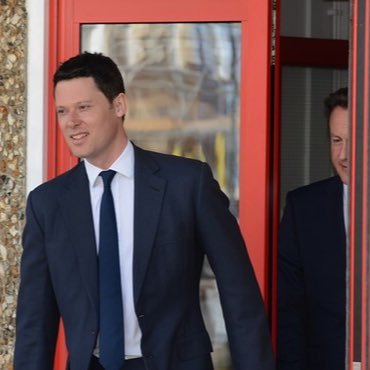
Tag: Alex Chalk

  • Alex Chalk – 2021 Comments on Sentencing of Alfie Spain and Freddie Hanratty

    Alex Chalk – 2021 Comments on Sentencing of Alfie Spain and Freddie Hanratty

    The comments made by Alex Chalk, the Solicitor General, on 10 December 2021.

    Spain and Hanratty set off from London with the sole intention of committing these violent robberies. They inflicted a terrible ordeal on the occupants of the properties they targeted, and the victims will be suffering the effects for a long time. I hope the Court’s decision to increase these sentences can bring some comfort to all of those affected.

  • Alex Chalk – 2021 Comments on Sentencing of Murderers of Luke O’Connell

    Alex Chalk – 2021 Comments on Sentencing of Murderers of Luke O’Connell

    The comments made by Alex Chalk, the Solicitor General, on 29 November 2021.

    The violent actions of these men cost Luke O’Connell his life. My thoughts remain with Luke’s family and friends who have suffered an unimaginable loss. I hope the Court’s decision to increase these sentences acts as a warning to those who commit such violent crimes, that they can expect to spend a very long time in prison.

  • Alex Chalk – 2021 Comments on Sentence of Thomas Thompson

    Alex Chalk – 2021 Comments on Sentence of Thomas Thompson

    The comments made by Alex Chalk, the Solicitor General, on 28 September 2021.

    Thomas Thompson’s actions were predatory and premeditated, and fuelled child sexual abuse. Good police work stopped him in his tracks, and should serve as a warning to those thinking of grooming underage victims in cyberspace. I am pleased that the Court of Appeal has seen fit to increase his sentence.

  • Alex Chalk – 2021 Comments on Probation Officers

    Alex Chalk – 2021 Comments on Probation Officers

    The comments made by Alex Chalk, the Prisons and Probation Minister, on 3 June 2021.

    Probation officers are unsung crime fighters, sending offenders back to prison if they breach their licence conditions, and helping others turn their lives around so that they don’t commit more crime.

    These new recruits are a key part of our plan to make the country safer, alongside 20,000 more police officers, tougher sentences and the building of 18,000 new prison places.

  • Alex Chalk – 2020 Comments on New Courtroom Protections

    Alex Chalk – 2020 Comments on New Courtroom Protections

    The comments made by Alex Chalk, the Justice Minister, on 23 November 2020.

    The court process can be a harrowing experience for vulnerable victims and witnesses.

    This technology seeks to minimise stress and ensure they can provide their best evidence, without reducing a defendant’s right to a fair trial.

    This is part of our efforts to drive improvement for victims at every stage of the justice system.

  • Alex Chalk – 2019 Speech on the GCHQ Centenary

    Below is the text of the speech made by Alex Chalk, the Conservative MP for Cheltenham, in the House of Commons on 11 July 2019.

    I secured this debate this evening because I wanted this House to have the opportunity to pay tribute to GCHQ in this its centenary year and, most importantly, to the staff who work there. They are some of the finest public servants anywhere in our country—people who work night and day, often at considerable cost to themselves and their families, to keep this nation safe. It is worth reflecting on what is meant by that expression. It means bluntly that there are people alive today able to return to their families who would not be able to, but for the skill and professionalism of those working at GCHQ. Some are British soldiers on operations abroad. Others are ordinary citizens who may never have had the faintest idea that they were ever in harm’s way. There are others who have been protected from the devastation wrought by serious violating crime that shatters lives and robs innocence, and there are those who have been spared the anguish of seeing their jobs, livelihoods and futures destroyed by the actions of cyber gangsters and hostile state actors. That is what is meant by keeping our country safe.

    Many of those professionals who have provided that blanket protection and security are my constituents. They work necessarily in the shadows, with discretion and professionalism. They are committed to the mission, but they do not chase recognition or plaudits. They do, however, deserve them. And I wanted us to send out the message, at this time and from this place, that they are admired and appreciated here in the democratic epicentre of the country they serve.

    Sir Nicholas Soames (Mid Sussex) (Con)

    I agree entirely with everything that my hon. Friend has said, endorse it and give my profound thanks to those people. They do us honour all over the world; many countries depend on the work of GCHQ, for which they are eternally grateful, and we should be eternally grateful to those people for what they do in our name.

    Alex Chalk

    I am extremely grateful to my right hon. Friend, who makes an excellent point with his customary eloquence and force.

    Dr Julian Lewis (New Forest East) (Con)

    I congratulate my hon. Friend on bringing this debate forward. Will he also pay tribute to the people who did so much in the predecessor organisation GCHQ during the second world war, and lived out their lives afterwards in complete secrecy, claiming no credit for their great achievements? I can remember the year 1974—two years before he was born—when the book “The Ultra Secret” revealed what had happened, by which time it was far too late for many of the people who had done those deeds to claim the credit they deserved.

    Alex Chalk

    I am very grateful to my right hon. Friend. Selflessness and discretion are the watchwords that so many of these dedicated public servants live by, and he has explained the point extremely well.

    John Howell

    My hon. Friend mentioned cyber. Would he pay tribute, with me, to all those people who work in cyber, because that is the most incredibly difficult area to deal with, and they are doing us a great service?

    Alex Chalk

    I am very happy to do so, and I will come on to that in a moment. Let me make some progress now.

    As the title of the debate suggests, GCHQ has been at the frontline of our nation’s security for 100 years and, although based in Cheltenham, it is truly a UK-wide institution. Three of GCHQ’s directors have come from Scotland. Scots were behind the founding of signals intelligence. The Director of Operations for the National Cyber Security Centre is Welsh. Today, GCHQ has sites across our nation.

    The organisation was formed in 1919 under the original name of the Government Code and Cypher School, specialising in cyphers and encryption—securing our own codes and cracking those of our adversaries. As the engaging GCHQ Instagram stories have reminded us, cryptography and military intelligence are as old as war itself. The Spartans used cyphers. Julius Caesar did too. Elizabeth I’s famous spymaster, Sir Francis Walsingham, used the methods of a 9th-century Arabian scholar, Abu Yusuf al-Kindi, to crack enemy codes. Shakespeare wrote in the play “Henry V”:

    “The king hath note of all that they intend,

    By interception which they dream not of.”

    Those words are engraved on a plaque at Bletchley Park.

    Back in 1919, the Government Code and Cypher School was the result of the merger of Room 40 in the Admiralty, responsible for naval intelligence, and MI1(b) in the War Office, responsible for military intelligence. It was said in one of the books that I have read on this subject to be,

    “an eccentric mix of art historians, schoolmasters, Cambridge dons and Presbyterian ministers”.

    In those days, being able to solve the Daily Telegraph crossword in under 12 minutes was, it appears, routinely used as part of the recruitment test; but of course we know that GC&CS broke the German Navy’s codes, and famously it intercepted the 1917 telegram for German Foreign Minister Arthur Zimmermann that revealed the German plan to begin unrestricted submarine warfare in the north Atlantic, in breach of the commitment to US President Woodrow Wilson. That contributed to the US joining the allied war effort.

    In 1939, GC&CS was given the name GCHQ to better disguise its secret work. In that year, shortly after Munich, Neville Chamberlain was given an intelligence report that showed that Hitler habitually referred to him in private as “der alter Arschloch”. Parliamentary decorum prevents me translating that, Mr Speaker, but I can say that that revelation, in the words of one diplomat, was said to have

    “had a profound effect on Chamberlain.”​

    By June 1944, Bletchley Park had accessed the communications between Gerd von Rundstedt, the Commander of the German Army in the west, and his superiors in Berlin. The importance of decrypted German communications—known as the “Ultra secret”—which my right hon. Friend the Member for New Forest East (Dr Lewis) has referred to, to the war effort is universally recognised. It gave the Allies an invaluable insight into the enemy’s capabilities and intentions.

    Of course, the world has moved on a great deal since then. In 1984, Denis Healey said in this House of Commons:

    “GCHQ has been by far the most valuable source of intelligence for the British Government ever since it began operating at Bletchley during the last war. British skills in interception and code-breaking are unique and highly valued by…our allies. GCHQ has been a key element in our relationship with the United States for more than forty years.”—[Official Report, 27 February 1984; Vol. 55, c. 35.]

    As the director of GCHQ said at an event I attended in London only yesterday, GCHQ might be 100 years old, but its time is now.

    Sir Geoffrey Clifton-Brown (The Cotswolds) (Con)

    Will my hon. Friend give way?

    Alex Chalk

    I will in a moment.

    That is because it is a matter of public record that in recent months and years GCHQ has detected and disrupted numerous threats against our country—from nuclear proliferation to cyber-attacks that could cause immense harm. It supports British troops, providing the vital nugget of information that can make the difference between life and death. It is reported to have played its part in the arrest and conviction of Matthew Falder, a prolific paedophile later described by the judge as “warped and sadistic” and sentenced to 25 years’ imprisonment. Nowadays, of course, defending our nation in cyberspace means having the ability to strike back—not just deterring the threat but sometimes disabling or even destroying it. Only recently, the director of GCHQ has stated that this has been used to suppress Daesh propaganda, hindering its ability to co-ordinate attacks and brainwash vulnerable young people overseas, no doubt including in this country.

    I want to say a little about the solemn responsibilities that any intelligence agency has in this, our nation of laws—but before I do, I give way to my hon. Friend the Member for The Cotswolds (Sir Geoffrey Clifton-Brown).

    Sir Geoffrey Clifton-Brown

    On the comment by the director of the GCHQ that its time is now, does my hon. Friend agree that the threat against this country and its citizens is becoming ever more multi-faceted and ever more universal, that therefore the task that GCHQ undertakes on our behalf is ever more needed, and that we should pay tribute, as he has done, to the people who work there? I would like to pay particular tribute to my constituents who work there.

    Alex Chalk

    I am grateful to my hon. Friend, who puts the point well. It is an extremely complex threat landscape, but I am pleased that there are people working there—my constituents and his—who are equal to the task.

    As I had begun to indicate, successive Foreign Secretaries have made clear their respect for GCHQ and their deep appreciation of its responsibilities. William Hague ​perhaps put it best when, referring to the surveillance and interception decisions made by GCHQ and others, he stated in this House:

    “If the citizens of this country could see the time and care taken in making these decisions, the carefully targeted nature of all our interventions, and the strict controls in place to ensure that the law and our democratic values are upheld, and if they could witness, as I do, the integrity and professionalism of the men and women of our intelligence agencies, who are among our nation’s very finest public servants, I believe they would be reassured by how we go about this essential work.”—[Official Report, 10 June 2013; Vol. 564, c. 34.]

    He cited the work of the Interception of Communications Commissioner, who had said:

    “it is my belief…that GCHQ staff conduct themselves with the highest levels of integrity and legal compliance.”

    I believe that the Investigatory Powers Act 2016, which I and other hon. Members grappled with on entering Parliament in 2015, creates probably the strongest system of checks and balances and democratic accountability for secret intelligence anywhere in the world. In particular, the stringent judicial double-lock safeguard that I and others argued for means that the most intrusive investigatory powers require the approval of a judge—and that is exactly as it should be. That is not to say, of course, that mistakes will not be made—I am afraid that is inevitable whenever human beings are involved—but professional integrity and respect for the law are institutionally ingrained at GCHQ.

    I want to say a word or two about the National Cyber Security Centre, which is superintended by GCHQ. Since the introduction of the national cyber security strategy in 2015, the NCSC has the mission of making the UK the safest place in the world to live and work online. It supports British business, with its “Small Business Guide: Cyber Security” providing guidance on improving resilience. Its “10 Steps to Cyber Security” guidance is now used by two thirds of FTSE 350 companies. And it is having success. The UK’s global share of phishing attacks has dropped from 5.4% in 2016 to below 2% in March 2019. In 2016, Her Majesty’s Revenue and Customs was the 16th most phished brand globally; now, it is 146th. That suggests the UK is becoming a harder target, thanks in large part to the work of the NCSC and GCHQ.

    What about the impact on Cheltenham, my constituency? After the end of world war two, GCHQ staff reduced from about 10,000 to fewer than 1,800 and left Bletchley Park. They moved to Gloucestershire in September 1949, and GCHQ has had a continuous presence in Cheltenham ever since. In 2004, the famous “Doughnut” building opened—the largest secret intelligence building outside the United States. It is that impact on Cheltenham that I want to take a few short moments to talk about.

    In 2013, when I was first selected to stand for Cheltenham, I thought long and hard about how I could try to make my home town better for the people who live there. One of the issues that really troubled me was that, of the 18 wards that make up the constituency of Cheltenham, three were in the bottom decile of income per capita anywhere in our country and had been for many years.

    Wherever we sit in the political spectrum, every Member has to have a plan for how to try to address that issue. It always struck me that GCHQ could be better harnessed to galvanise the local economy and generate the invaluable opportunities that can break the cycle of deprivation and turn lives around.​
    I then read a Policy Exchange paper called “Silicon Cities”, and the penny dropped that GCHQ could support a local tech cluster to foster start-ups in the growing cyber-security industry. That was the main message of a speech I gave to Gloucestershire businesses at local IT firm Converge in 2014.

    How far we have come since then. In November 2015, George Osborne, then Chancellor of the Exchequer announced at GCHQ that Cheltenham would receive a cyber-innovation centre and cyber accelerator, which he described as

    “an ecosystem in which our best people move in and out of institutions like this one, bringing the best minds and deepest expertise into the private sector, and the latest innovation back into government.”

    That accelerator is now up and running, and 21 companies have been through it so far. Between them, they have invested £30 million and created valuable tech jobs.

    As was always hoped for, this is now starting to catalyse the local cyber-economy. Hub 8—a play on Bletchley Park’s Hut 8—in the centre of Cheltenham is a new co-working space where start-ups in this £5 billion a year sector can scale up. Meanwhile, Gloucestershire College is now offering cyber-degrees accredited by GCHQ in collaboration with the University of the West of England. There are exciting plans for a cyber-park adjacent to GCHQ, with a GCHQ-avowed building close to the Doughnut, to anchor a local cyber-ecosystem. The plans continue to be supported by Government and the local borough council and are progressing at pace. The new frontier is cyber, and Cheltenham is uniquely well placed—through the presence of GCHQ and its connectivity to the midlands, the south-west and the Thames valley—to benefit from it, securing a better future for people of all backgrounds.

    I now want to say a word about the extraordinary community work that GCHQ staff do. GCHQ is truly Cheltenham’s charity superpower. It has raised more than £1.5 million for charities over the last 10 years. GCHQ staff use their three days’ special volunteering leave a year to regularly volunteer at local charities. That has included supporting projects such as the hamper scamper, a Christmas scheme run by Caring for Communities and People that provides gift hampers to vulnerable families; the James Hopkins Trust Easter Egg appeal; and GCHQ’s Poppyfall installation, which was hanging in Gloucestershire cathedral last year and was incredibly and unbearably poignant. On 19 May this year, a charity bike ride from Bletchley Park to Cheltenham raised around £30,000.

    To secure its future, GCHQ continues to recruit new generations of people with the right skills, aptitude and mindset. It sponsors the young entrepreneurs competition, which aims to encourage young people to think creatively and innovatively, with the final held at GCHQ. Its CyberFirst Girls competition had 40 finalists from 40,000 participants. Meanwhile, the NCSC has supported its first ever cyber schools hubs in Gloucestershire. I have seen their work, and it is incredibly uplifting and exciting to see young people engaged in such a dynamic way.

    The UK may not have faced a category 1 attack yet—one that causes sustained disruption to the UK’s essential services or affects our national security—but the director said on BBC Radio 4 earlier this year that he thought it was a question of when, not if. Those seeking ​to act against our country in that way or perpetrate organised crime know that this is a nation with the capability, partnerships and resolve to protect its citizens in accordance with our laws and values.

    Sarah Jones (Croydon Central) (Lab)

    I am grateful to the hon. Gentleman for giving way. He is making a powerful speech and I am privileged to be here. A dear friend of mine is a senior official in the NCSC, and I know the important work done there. The hon. Gentleman is talking about protecting the institution in the future. We have been talking about the ever more complex and universal threat against citizens. Does he agree with me and many other Members who have spoken in recent days that it is incumbent on all of us as Members of Parliament to back up our excellent civil servants, fight the politicisation, in any form, of the civil service and give them all the support they need?

    Alex Chalk

    The hon. Lady makes an excellent point extremely well. The strength of our civil servants is their scrupulous independence and preparedness to serve political masters of whatever hue. We see that across our civil service and we see it very clearly at GCHQ. That is its strength and that is what we must safeguard.

    The point I really want to emphasise is that this is a nation that can defend itself because it has the capability, partnerships and resolve to do so in accordance with the law and with our values, and it is able to do so because of the skill and integrity of those working at GCHQ.

    GCHQ’s centenary just so happens to coincide with the 175th anniversary of the first use of Morse code to send a message between cities. It is, therefore, perhaps fitting that I should conclude by playing a message to GCHQ in the form of Morse code, which will last for 13 seconds:

    [. . . .  . –  . – – .  . – – .  - . – – / – . . .  . .  . – .  -  . . . .  - . .  . –  - . – – / –  - – – / – – .  - . – .  . . . .  - – . -]

    Happy birthday to GCHQ.

  • Alex Chalk – 2018 Speech on Rail Fares From Cheltenham

    Below is the text of the speech made by Alex Chalk, the Conservative MP for Cheltenham, in the House of Commons on 19 December 2018.

    It is a pleasure to see you in the Chair, Madam Deputy Speaker.

    I have called this debate on rail fares between Cheltenham and London because when it comes to rail travel, my constituents are not being treated fairly. Local people, simply because they live where I and my constituents do, are being charged more per mile for their train travel to London than others who live a similar distance from the capital. It is an injustice that stretches back decades and it needs to be put right.

    Cheltenham is around 90 miles or so from London. Because Dr Beeching, in his wisdom, pulled up the more direct line through Andoversford, the train line itself is a little lengthier because it travels a more circuitous route, but the central point remains: it is not terribly far from London at all. It is a substantial town, with more than 110,000 people. It is larger than Basingstoke, Chelmsford, Maidstone and Worcester. It is the home of GCHQ and GE Aviation—certainly if we include Bishops Cleeve. It is the home of Spirax-Sarco and Superdry. It hosts the world famous Cheltenham jump racing festival, the renowned literature, jazz, and science festivals, and much more besides. When it comes to train use, Cheltenham is by far the busiest station in Gloucestershire. Data from the Office of Rail Regulation shows that 2.35 million passengers used the station in 2016-17—almost as many as all the other stations on the route combined, and twice as many as 10 years ago.

    Despite all that, there is a glaring discrepancy when it comes to the price of tickets, and season tickets in particular. Take, for example, Kingham to London, which is admittedly a shorter distance, but not much shorter. The season ticket price is £7,124. What about Bath Spa to London, which is further than Cheltenham to London? The season ticket price is £8,064. A season ticket for Bristol Temple Meads to London is £8,244, and a season ticket for Worcester to London is £8,400, yet a season ticket for Cheltenham to London Paddington is £10,344. To make the point absolutely clear: were someone to go way further than Cheltenham, down to Exeter, which is a similarly sized town, the distance from London is 202 miles, which is approximately double the distance to Cheltenham. The season ticket for Exeter to London is £9,788. In other words, it is around £500 cheaper than the Cheltenham season ticket. How can that possibly be fair?

    What rubs salt into the wounds is that the service is not as good as it should be. First, there is a systemic problem: it is too slow overall. I see the hon. Member for Stroud (Dr Drew) nodding his head in agreement. Let me put that into some kind of perspective: the journey from Bristol to London takes around an hour and 43 minutes, and from Exeter, which as I said is around double the distance, it takes two hours and two minutes to get to London, yet the shortest journey from Cheltenham takes longer still than that. On average, it takes two hours and 16 minutes.

    The first problem, then, is that it is too slow, which is galling because there was a time when Cheltenham had the fastest train service anywhere in the country—the ​Cheltenham Flyer was the fastest train in the land. The second problem is that there are too many delays and cancellations. On Saturday 4 August, five services were cancelled because a train manager was not available.

    What is the impact of all this? Put bluntly, the impact in my constituency is modal shift, which is a technical way of saying that people get in their cars. So many of my constituents drive to Kemble, Kingham, Swindon, Oxford, or even all the way to London. My constituents express frustration at the fact that they are forced to do so and at the fact that that has an unhelpful impact on the environment and air quality. Other concerns are expressed about businesses being restricted from developing and expanding in the way that they otherwise might have done. I posted on social media about this issue, and businesses in Eagle Tower in the centre of Cheltenham said that they are unable to recruit in the way that they might otherwise do or to expand their businesses.

    This issue is also important because Cheltenham has plans for a cyber-park, which I have been passionate about since 2014 and which has made really crucial steps forward in recent months. The Department for Transport has committed £22 million in transport infrastructure improvements. The Department for International Trade is promoting the park at international conferences and so on. The park will succeed, but its ability to do so will be immeasurably enhanced if we can have an affordable and good rail connection with London.

    Dr David Drew (Stroud) (Lab/Co-op)

    I thank the hon. Gentleman for giving way. Considering that we are talking about the Stroud Valleys line, which goes to Cheltenham, I have a vested interest in this matter. On fares, when I had to travel to Gloucester last week, I found to my shock that it cost an extra £10 either way. That may well be what happens from where I live in Stonehouse, and yet that is exactly the same cost of just getting a train from Stonehouse to London. In other words, the company is charging a person the same when they are on the train as they would do if they were getting on the train for the shorter journey. That cannot be right or fair. Effectively, it is charging the punter more than it should. Does he agree?

    Alex Chalk

    I do agree, yes. There are two aspects to the pricing perversity that that helpful intervention discloses. First, the line itself is more expensive than similar lines. Secondly, there can be perversities within the line itself, which is an inequity for local people. In the interests of balance, it is important to note that there are some really important and good things taking place. Nationally, I commend the fact that the Government are continuing with an ambitious programme of investment. That is £48 billion over the next five years. The DFT is in the process of moving from Delay Repay 30 to Delay Repay 15, which is more justice for consumers. In Gloucestershire, the redoubling of the Kemble to Swindon line is a hugely positive infrastructure improvement. There are impending timetable changes and new faster trains, so we will be getting a direct hourly sub-two hour service to London in 2019. That is all great. It is also great that Cheltenham is getting an additional 70 surface car parking spaces, taking capacity to at least 320 spaces. That is investment worth £700,000 going into Cheltenham, so that is also good news, and there is further investment ​to come. I am not standing here and saying that, somehow, we should turn the clock back. I do not believe in renationalisation. I am just about old enough to remember British Rail, and it was absolutely terrible. The fact is that, since privatisation, a huge amount of money has been invested in our railways and passenger numbers have soared.

    It is not enough to say that renationalisation would be a terrible backward step. It is not enough to say that it would cost the taxpayer, not save them money. It is true that it would reduce investment, not increase it, and innovation would be stifled, not encouraged and so on. However, simply rejecting renationalisation is not enough. The market needs to be forced to act fairly. Private companies have a responsibility to the public, and a particular responsibility where the public is a captive market, and cannot take their custom elsewhere, as is the case on the railways. The provider must operate within a framework that ensures that that monopoly position is not abused and customers are treated fairly. It is fair to say that, in these circumstances, it is not acting as it should. In a debate on 15 October—so, not very long ago—the then rail Minister referred to “historical anomalies”. He also stated:

    “No one could defend the current fares system”.—[Official Report, 15 October 2018; Vol. 647, c. 476.]

    He was absolutely right, and I really welcomed that frank admission. One issue is that monopoly power on certain lines distorts pricing. For example, if we look at Grantham, which is also around 100 miles from London, we see that there are three franchises competing to provide a service. A season ticket from Grantham is around £3,000 a year less. Equally, if we look at Crewe, where there are two operators, it is only £500 a year more, despite being 170 miles from London, so a considerable distance further. The issue of whether there is a single operator or more providers can make a big difference as well.

    This issue must be fixed. I am aware that the Government have commissioned the Rail Delivery Group’s “Easier Fares” consultation, and are considering that. I am also aware that, on 11 October, the Secretary of State launched a “root and branch review of the rail industry”. In his words, he said:

    “It is vital that this review leaves no stone unturned and makes bold recommendations for the future.”

    I warmly welcome that, but one of those stones needs to be marked “Cheltenham”. We are not asking for special treatment, but we are asking for fair treatment. For the sake of my constituents and the future of the town I represent, that cannot come soon enough.

  • Alex Chalk – 2016 Speech on Homicide Law Reform

    Below is the text of the speech made by Alex Chalk, the Conservative MP for Cheltenham, in Westminster Hall on 30 June 2016.

    I beg to move,

    That this House has considered the matter of reforming the law on homicide.

    It is a great pleasure to serve under your chairmanship, Mr Evans, on this auspicious day. I wish to make crystal clear that the debate is about the law of homicide, not fratricide.

    Putting that to one side, the real point is that the law of homicide is a mess. That was put more elegantly by the Law Commission in its 2006 report “Murder, Manslaughter and Infanticide”, in which it said that the law of homicide is

    “a rickety structure set upon shaky foundations.”

    In essence, the problem is that the law lacks a rational or defensible structure. It does not chime with common sense—and in this area of the law perhaps above all others, it should.

    As long ago as 1874, a Select Committee stated:

    “If there is any case in which the law should speak plainly, without sophism or evasion, it is where life is at stake; and it is on this very occasion that the law is most evasive and most sophistical.”

    That remains the case more than 100 years later, and that will not do. In the words of the Law Commission, the time has come to

    “promote certainty…in a way that non-lawyers can understand and accept.”

    But the problem is far more serious than mere opaqueness. The problem is that the law of homicide creates injustice—injustice to defendants and injustice to society—and that is something that we in this House must always stand ready to confront and resolve.

    What is the solution? It is very simple: to split the current offence of murder into two categories, one of first degree murder and another of second degree murder. Manslaughter should remain as before, albeit more tightly circumscribed.

    What, as a matter of law, is murder? It is committed when someone unlawfully kills another person with an intention to kill that person or to do them serious harm. That second element is really important. It means that someone who reasonably believed that no one would be killed by their conduct is placed in the same offence category as the contract or serial killer. That, in a nutshell, is the problem.

    Let me give an example. Imagine a retired colonel living in my constituency of Cheltenham. He is aged 65, has lived an utterly unblemished life and served his country with great distinction, and is known for his charitable work. He is upstanding in every way. He lives with his wife, who has Parkinson’s disease and for whom he is the sole carer. A neighbour moves in next door who has a string of convictions for antisocial behaviour. Every night, he holds noisy parties that go on into the small hours. Endless polite requests from the colonel are ignored. Endless local authority noise abatement notices are ignored. So, after the umpteenth such party, with his and his wife’s already poor health suffering, the colonel goes round at 3 o’clock in the morning to remonstrate with his neighbour. He takes with him—this is important—a cricket bat in case there is a violent confrontation. The neighbour, who is very drunk, becomes abusive and the colonel, overcome with anger and frustration and at the end of his tether, says, “Right, that’s it. Let’s see how you party when your big toe is broken,” and strikes the neighbour’s foot with the cricket bat. The neighbour falls back, hits his head on a crate of beer standing in the hallway and is knocked unconscious. The colonel immediately calls 999 and tries to resuscitate him, the police and ambulance arrive and the colonel tells them exactly what happened, but the neighbour is rushed to the local hospital, diagnosed with a bleed on the brain and dies.

    The post-mortem report reveals that the deceased’s toe was broken. When interviewed, the distraught colonel admits that he lost his temper. What happens in this case? The only charge that the law allows for is murder. That means that the only sentence that the judge can impose, despite the colonel pleading guilty at the first opportunity, is life imprisonment, because he intended to do grievous bodily harm by breaking the toe. It is because he took a weapon to the scene—the cricket bat—that the starting point for the minimum term that he must serve is 25 years imprisonment, and because the offence is murder, he must serve every last day of that term. In effect, the colonel goes to prison for the rest of his life—25 years. He has a mandatory life sentence.

    That is unjust. Although it is clear that a person who kills in such circumstances should be guilty of a serious homicide offence, it is equally clear that because he did not intend to kill, the offence should not be in the top tier or highest category. The current law does not chime with common sense. Academic research into public opinion tells us that, but frankly, we do not need academic research; we need simply to consult our common sense. The particularly daft thing—I hope that that is parliamentary language—is that when Parliament passed the Homicide Act 1957, it never intended a killing to amount to murder, which at that time was a capital offence, unless the defendant realised that his or her conduct may cause death. The law of murder was widened because of an unexpected judicial development immediately following the enactment of the 1957 legislation—the case of Vickers, which is about interpretation of the expression “malice aforethought”. In my view, that colonel should be guilty of second degree murder.

    The injustice is further underscored when we add the potential for what are known as secondary parties or accessories to be convicted of a murder. Imagine that before the colonel had set off, his frail wife had told him where the cricket bat was stored and in frustration said to him, “Now, go and use it. Teach him a lesson.” She, too, could find herself facing the punishment and disgrace of a murder conviction and the same 25-year minimum term. She should of course be guilty of an offence, but again, she should be guilty of second degree murder, with the judge having the discretion not to impose a mandatory life sentence.

    This issue is particularly topical because the Supreme Court has looked at the case of Jogee and more tightly circumscribing accessory liability—the so-called prosecutor’s friend—but still we are left with a situation in which the unsatisfactory law of homicide leads to manifest injustice.

    John Howell (Henley) (Con)

    I wonder whether my hon. Friend has in his mind what the range of sentences should be for second degree murder.

    Alex Chalk

    Certainly, on any view, life imprisonment must remain the maximum sentence—that is the maximum in the United States for federal offences where second degree murder is charged—but the key point is that the judge should have discretion. The Sentencing Council has done a terrific job of laying down guidelines—not tramlines—and the courts have shown themselves to be well able to dispense justice.

    The case for reform becomes even clearer when we consider manslaughter, another homicide offence. Whereas, as I have indicated, the law of murder creates injustice for defendants, the law of manslaughter creates injustice for society. What is manslaughter? It can be committed in one of four ways, but just two of those are relevant for these purposes: unlawful act manslaughter and gross negligence manslaughter. The latter largely speaks for itself for these purposes, but let me explain what happens when a killing is the result of a defendant’s unlawful act—that is, one that all reasonable people would realise would subject the victim to the risk of some physical harm, albeit not serious harm.

    Take this example. The defendant barges into a nightclub queue in Cheltenham. He has a string of criminal convictions for assault and criminal damage. In the queue, he is being drunk and obnoxious. He is insulting women for what they are wearing and telling them to get out of his way. The victim is the mother of two children. She works at nearby GCHQ and she is on a hen do. She politely asks the defendant to move to the back of the queue. His response is to say, “You silly cow; you need a slap.” He then strikes her repeatedly and hard to the side of the face with his open hand. She falls back, hits her head on the kerb and is knocked unconscious. The defendant runs off. The victim later dies, and the post-mortem shows that she suffered bruising—albeit no fracture—to her cheekbone and the fatal injury was caused by the impact on the kerb. The police arrest the defendant, who denies everything, but CCTV proves his guilt.

    Under the law at present, that defendant can be charged only with unlawful act manslaughter, because the harm that he caused falls short of grievous bodily harm. The net effect is that he will be convicted of an offence that carries a far lesser stigma than murder and for which there is no mandatory requirement for a life sentence, and if he gets a determinate sentence, he will serve only half of it. Is that thug, I ask rhetorically, less culpable than the retired colonel or his wife? The only distinction is that the colonel intended to break a toe and the thug intended to commit a marginally less serious assault. In my view, that is a distinction without a difference—it is a distinction that is completely lost on the general public and, frankly, on me.

    So, what needs to happen? This is not some academic exercise. Those two examples are not entirely artificial and they expose fundamental injustices. The first, as I have indicated, is to the victim, in the case of the colonel, and the second is to society in the case of the pub queue thug. The solution is clear: we need an offence of first degree murder that would encompass intentional killing only. I recognise the Law Commission, in 2006, wanted to add

    “killing through an intention to do serious injury with an awareness of a serious risk of causing death.”

    That is fine, and I understand it, but in my view it is a complexity that unnecessarily detracts from the simplicity of the proposal I put before the House.

    An offence of first degree murder would simply and coherently communicate to the public the particularly heinous nature of the crime of taking life and would attract the special condemnation and opprobrium that that deserves. To paraphrase Colonel Tim Collins’ famous eve-of-battle speech in 2003, anyone convicted of such an offence would truly live with the mark of Cain upon them. That offence should also, as at present, attract a mandatory life sentence.

    Under my proposal, second degree murder would encompass killing through an intention to do injury that is more than merely transient or trifling. In plain English: it would encompass killing through unacceptable violence and thuggery. That would include the colonel and the pub queue thug—people who committed a significant assault on others but who did not intend to kill. That category of offence would not require a mandatory life sentence. Instead, judges would be free to do justice, weighing in the balance all of the aggravating and mitigating factors. For clarity, that would not include the case of the most minor assault. Think of someone creeping up behind a person, playing a trick on them and flicking their ear as a piece of horseplay. That is technically an assault, of course, but is obviously very minor. If that person fell over and died that should remain as manslaughter.

    So, where does that leave manslaughter? Manslaughter would remain predominantly focused on cases of gross negligence. That is, offences in which there has been no unlawful assault or intention to kill, but in which the negligence has been so dreadful as to become criminal. The advantage of that is that people get it; people would understand that—it chimes with common sense.

    Those are not outlandish suggestions. Other jurisdictions—most obviously the United States—have two categories of murder. For murders in the US over which the federal Government have jurisdiction, life imprisonment is only mandatory for first degree murder. For second degree murder the mandatory sentence is described as

    “a term of years to life.”

    So why now? Because it is long overdue. The current distinction between murder and manslaughter is almost certainly more than 500 years old. No further general category of homicide has been developed in the intervening period, despite the fact that society, values and knowledge have changed out of all recognition.

    The need for modernisation was obvious to our Victorian forebears. In this place, William Gladstone himself indicated his willingness to rationalise the law but nothing came of it—it keeps getting put off. That approach led one cynical criminal lawyer to remark at the beginning of the 20th century that the hope of a criminal code being enacted by Parliament that would address the problems of the law on homicide was as remote as

    “expecting to find milk in a male tiger”.

    We cannot keep putting this off. Modernising this key area of law is, to borrow the words of the Law Commission

    “an essential task for criminal law reform.”

    It is time for this generation to take up the challenge and to create a law that is truly fit for the modern age.