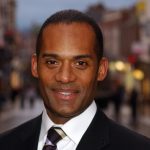
Tag: Adam Afriyie

  • Adam Afriyie – 2016 Parliamentary Question to the Department for Transport

    Adam Afriyie – 2016 Parliamentary Question to the Department for Transport

    The below Parliamentary question was asked by Adam Afriyie on 2016-09-02.

    To ask the Secretary of State for Transport, whether the Government plans to impose conditions on the airport which is awarded an additional runway when making a decision on the expansion of airport capacity.

    Mr John Hayes

    The Government remains fully committed to delivering the important infrastructure projects it has set out, including delivering runway capacity on the timetable set out by Sir Howard Davies.

    The Government believes it is essential that expansion via any of the shortlisted schemes is accompanied by a strong package of measures to mitigate the impacts on communities and the environment, and will set out any requirements in this area on a preferred scheme promoter in due course.

  • Adam Afriyie – 2015 Parliamentary Question to the Department for Business, Innovation and Skills

    Adam Afriyie – 2015 Parliamentary Question to the Department for Business, Innovation and Skills

    The below Parliamentary question was asked by Adam Afriyie on 2015-12-07.

    To ask the Secretary of State for Business, Innovation and Skills, what progress has been made on pilot schemes of driverless cars.

    Anna Soubry

    Following the Innovate UK competition, ‘Introducing Driverless Cars to UK roads’ in July last year three exciting world leading projects, UKAutodrive, Venturer and GATEway, are now underway and making good progress.

    The Government-backed Milton Keynes driverless Pathfinder pods have been incorporated into the UKAutodrive project. They were demonstrated recently at the ITS World Congress in Bordeaux and attracted a great deal of international attention. Venturer, based in Bristol is delivering important insights around situational awareness, a key area for autonomous systems. The GATEway project will evaluate the integration and acceptance of automated vehicles in the real world.

  • Adam Afriyie – 2016 Parliamentary Question to the Department for Education

    Adam Afriyie – 2016 Parliamentary Question to the Department for Education

    The below Parliamentary question was asked by Adam Afriyie on 2016-04-12.

    To ask the Secretary of State for Education, what assessment she has made of the potential merits of ending the national curriculum at the age of 14.

    Nick Gibb

    The Government believes that the majority of pupils should study a core academic curriculum up to the age of 16. The core academic curriculum refers to the English Baccalaureate (EBacc). The Government’s ambition is for 90% of pupils to enter the EBacc subjects at GCSE. The national curriculum serves an important role in setting out the sort of knowledge-based, ambitious, academically rigorous education which every child should experience. It enables pupils to develop the knowledge, understanding, skills and attitudes necessary for their self-fulfilment and development as active and responsible citizens.

  • Adam Afriyie – 2016 Parliamentary Question to the Department for Transport

    Adam Afriyie – 2016 Parliamentary Question to the Department for Transport

    The below Parliamentary question was asked by Adam Afriyie on 2016-09-02.

    To ask the Secretary of State for Transport, if the Government will make it its policy that should a third runway be agreed at Heathrow Airport, that runway will not be permitted to operate if the airport breaches air quality limits.

    Mr John Hayes

    The Airports Commission shortlisted three airport expansion schemes, two at Heathrow and one at Gatwick. We are carefully considering the evidence in relation to all three schemes. The Government accepted the Commission’s shortlist in December 2015, and has since been undertaking a programme of further work, including on air quality, to support a decision on a preferred scheme. The Government’s decision on a preferred scheme will take into account the Government’s overall plan to improve air quality and its commitments to comply with legal obligations.

  • Adam Afriyie – 2015 Parliamentary Question to the Department for Business, Innovation and Skills

    Adam Afriyie – 2015 Parliamentary Question to the Department for Business, Innovation and Skills

    The below Parliamentary question was asked by Adam Afriyie on 2015-11-02.

    To ask the Secretary of State for Business, Innovation and Skills, what estimate he has made of the contribution of (a) crowdfunding businesses, (b) peer-to-peer lending businesses and (c) big data businesses to the UK economy.

    Anna Soubry

    The state of equity investment in small businesses was assessed by the British Business Bank in March this year. Their report shows an overall increase in equity investment to small firms in each of the past four years, with both the number of deals and the total amount invested showing a clear upward trend. The contribution from crowdfunding has grown strongly since 2012. By the third quarter of 2014, deal numbers exceeded those of private equity, accounting for almost one-third of seed funding deals in the first half of 2014.

    The Peer-to-Peer Finance Association publishes quarterly performance data, which show net new lending to small businesses of £91m in Q3 2015. According to NESTA, peer-to-peer lending in the UK grew at a rate of 250% annually between 2012 and 2014. The growth of the UK peer-to-peer lending sector has been facilitated by a responsive and flexible regulatory regime that recognises the importance of a competitive and diverse market for business finance.

    The Centre for Economics and Business Research estimates that the big data market could benefit the UK economy by up to £216 billion between 2012 and 2017. Research by NESTA has also found that UK companies making greater use of online customer data are up to 13% more productive than their peers.

  • Adam Afriyie – 2015 Parliamentary Question to the Department for Education

    Adam Afriyie – 2015 Parliamentary Question to the Department for Education

    The below Parliamentary question was asked by Adam Afriyie on 2015-12-07.

    To ask the Secretary of State for Education, what steps she has taken to encourage applications to university technical colleges.

    Nick Boles

    Like all academies, each university technical college (UTC) is responsible for publicising their school and encouraging applications. Officials from the Department for Education and the Baker Dearing Educational Trust provide UTCs with advice to support pupil recruitment, drawing on the best practice from UTCs and other new schools. Statutory guidance to schools on careers guidance is clear that they should allow UTCs to engage with their pupils on their premises. This guidance can be found at GOV.UK: https://www.gov.uk/government/publications/careers-guidance-provision-for-young-people-in-schools. This careers guidance should ensure pupils have information about their full range of education and training options.

  • Adam Afriyie – 2016 Parliamentary Question to the Department for Business, Innovation and Skills

    Adam Afriyie – 2016 Parliamentary Question to the Department for Business, Innovation and Skills

    The below Parliamentary question was asked by Adam Afriyie on 2016-04-14.

    To ask the Secretary of State for Business, Innovation and Skills, what steps he is taking to support research into and development of machine learning.

    Joseph Johnson

    The Department for Business, Innovation and Skills supports the research and development of machine learning through the Research Councils, for example the current Engineering and Physical Sciences Research Council portfolio contains nearly 150 research and training grants involving aspects of artificial intelligence.

    The Science and Technology Facilities Council’s Hartree Centre uses high performance computing combined with big data analytics, cognitive computing and visualisation techniques to collaborate with industry and research partners. The latest government investment of £113 million at Hartree in a cognitive and data centric computing centre (announced in the 2014 Autumn Statement) has attracted inward investment from IBM and other hi-tech industry exceeding £200 million.

    Research Councils also support existing machine learning applications, for example the Medical Research Council support programmes which involve the use of machine learning tools for image analysis and in analysing and predicting risk of Serious Adverse Events for hospital patients.

    The Arts and Humanities Research Council also support aspects of research and development on machine learning relating to its importance within the rapidly emerging field of the digital humanities and issues relating to ethical, philosophical, legal and historical perspectives of machine learning and human-computer interactions.

  • Adam Afriyie – 2016 Parliamentary Question to the Department for International Trade

    Adam Afriyie – 2016 Parliamentary Question to the Department for International Trade

    The below Parliamentary question was asked by Adam Afriyie on 2016-09-05.

    To ask the Secretary of State for International Trade, what assessment his Department has made of the potential role of the Prime Minister’s Trade Envoys in increasing future levels of UK exports.

    Dr Liam Fox

    The Trade Envoy programme has been in operation since 2012 and continues to go from strength to strength.

    There are currently 21 Trade Envoys covering around 50 markets. Trade Envoys support the drive for economic growth by building on the UK’s existing relations with these markets and maximising bilateral trade.

    It is crucial that we use all tools at our disposal to promote British trade across the world and Trade Envoys will be a key part of our Departmental strategy.

  • Adam Afriyie – 2022 Speech on the Online Safety Bill

    Adam Afriyie – 2022 Speech on the Online Safety Bill

    The speech made by Adam Afriyie, the Conservative MP for Windsor, in the House of Commons on 5 December 2022.

    I am pleased to follow my fairly close neighbour from Berkshire, the hon. Member for Reading East (Matt Rodda). He raised the issue of legal but harmful content, which I will come to, as I address some of the amendments before us.

    I very much welcome the new shape and focus of the Bill. Our primary duty in this place has to be to protect children, above almost all else. The refocusing of the Bill certainly does that, and it is now in a position where hon. Members from all political parties recognise that it is so close to fulfilling its function that we want it to get through this place as quickly as possible with today’s amendments and those that are forthcoming in the Lords and elsewhere in future weeks.

    The emerging piece of legislation is better and more streamlined. I will come on to further points about legal but harmful, but I am pleased to see that removed from the Bill for adults and I will explain why, given the sensitive case that the hon. Member for Reading East mentioned. The information that he talked about being published online should be illegal, so it would be covered by the Bill. Illegal information should not be published and, within the framework of the Bill, would be taken down quickly. We in this place should not shirk our responsibilities; we should make illegal the things that we and our constituents believe to be deeply harmful. If we are not prepared to do that, we cannot say that some other third party has a responsibility to do it on our behalf and we are not going to have anything to do with it, and they can begin to make the rules, whether they are a commercial company or a regulator without those specific powers.

    I welcome the shape of the Bill, but some great new clauses have been tabled. New clause 16 suggests that we should make it an offence to encourage self-harm, which is fantastic. My right hon. Friend the Member for Haltemprice and Howden (Mr Davis) has indicated that he will not press it to a vote, because the Government and all of us acknowledge that that needs to be dealt with at some point, so hopefully an amendment will be forthcoming in the near future.

    On new clause 23, it is clear that if a commercial company is perpetrating an illegal act or is causing harm, it should pay for it, and a proportion of that payment must certainly support the payments to victims of that crime or breach of the regulations. New clauses 45 to 50 have been articulately discussed by my right hon. Friend the Member for Basingstoke (Dame Maria Miller). The technology around revenge pornography and deepfakes is moving forward every day. With some of the fakes online today, it is not possible to tell that they are fakes, even if they are looked at under a microscope. Those areas need to be dealt with, but it is welcome that she will not necessarily press the new clauses to a vote, because those matters must be picked up and defined in primary legislation as criminal acts. There will then be no lack of clarity and we will not need the legal but harmful concept—that will not need to exist. Something will either be illegal, because it is harmful, or not.

    The Bill is great because it provides a framework that enables everything else that hon. Members in the House and people across the country may want to be enacted at a future date. It also enables the power to make those judgments to remain with this House—the democratically elected representatives of the people—rather than some grey bureaucratic body or commercial company whose primary interest is rightly to make vast sums of money for its shareholders. It is not for them to decide; it is for us to decide what is legal and what should be allowed to be viewed in public.

    On amendment 152, which interacts with new clause 11, I was in the IT industry for about 15 to 20 years before coming to this place, albeit with a previous generation of technology. When it comes to end-to-end encryption, I am reminded of King Canute, who said, “I’m going to pass a law so that the tide doesn’t come in.” Frankly, we cannot pass a law that bans mathematics, which is effectively what we would be trying to do if we tried to ban encryption. The nefarious types or evildoers who want to hide their criminal activity will simply use mathematics to do that, whether in mainstream social media companies or through a nefarious route. We have to be careful about getting rid of all the benefits of secure end-to-end encryption for democracy, safety and protection from domestic abuse—all the good things that we want in society—on the basis of a tiny minority of very bad people who need to be caught. We should not be seeking to ban encryption; we should be seeking to catch those criminals, and there are ways of doing so.

    I welcome the Bill; I am pleased with the new approach and I think it can pass through this House swiftly if we stick together and make the amendments that we need. I have had conversations with the Minister about what I am asking for today: I am looking for an assurance that the Government will enable further debate and table the amendments that they have suggested. I also hope that they will be humble, as my right hon. and learned Friend the Member for Kenilworth and Southam (Sir Jeremy Wright) said, and open to some minor adjustments, even to the current thinking, to make the Bill pass smoothly through the Commons and the Lords.

    I would like the Government to confirm that it is part of their vision that it will be this place, not a Minister of State, that decides every year—or perhaps every few months, because technology moves quickly—what new offences need to be identified in law. That will mean that Ofcom and the criminal justice system can get on to that quickly to ensure that the online world is a safer place for our children and a more pleasant place for all of us.


  • Adam Afriyie – 2015 Parliamentary Question to the Department for Energy and Climate Change

    Adam Afriyie – 2015 Parliamentary Question to the Department for Energy and Climate Change

    The below Parliamentary question was asked by Adam Afriyie on 2015-10-19.

    To ask the Secretary of State for Energy and Climate Change, pursuant to the Answer of 7 September 2015 to Question 7974, what research her Department has conducted into the ease of switching energy supplier.

    Andrea Leadsom

    The Competition and Markets Authority (CMA) has, as part of its investigation into the energy market, commissioned research into consumer experiences and views of the energy market including the ease of switching energy supplier.

    The CMA investigation is still ongoing but the report it commissioned has already been published can be found at:

    https://assets.digital.cabinet-office.gov.uk/media/54e75c53ed915d0cf700000d/CMA_customer_survey_-_energy_investigation_-_GfK_Report.pdf