Tag: 2025

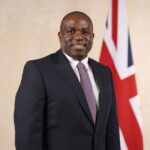
  • David Lammy – 2025 Speech on the Future of the UK’s Foreign Policy

    David Lammy – 2025 Speech on the Future of the UK’s Foreign Policy

    The speech made by David Lammy, the Foreign Secretary, on 9 January 2025. We are trying to source a version of the speech which doesn’t have the political sections redacted.

    Well can I just begin by thanking Philip Barton for all the work he’s done, 30 years of public service. He is the personification of public service on behalf of our country for which we are incredibly grateful. And I am particularly grateful for the way you have led the transition for this new government over the last 6 months, and I think we all wish you a very, very happy retirement.

    So 6 months after becoming Foreign Secretary, I’ve gathered you here, in the Foreign Office, to talk about the future.

    But I want to begin by looking back. Because it was here that Ernest Bevin developed a plan that has kept us safe for almost eighty years.

    Six months after Attlee’s great government began. In January 1946, Bevin stared into geopolitical fog at that time. The Second World War had only just ended. It was hard to see 6 months, let alone 6 years ahead.

    But Bevin did not sit waiting for the fog to clear. He was a minister of action, who saw that what matters is not just what Britain say but what it does.

    What matters is not just what Britain wants but what it builds. And what matters, what makes us matter, is having a strategy. Which is why Attlee’s manifesto was called ‘Let Us Face The Future’.

    In foreign affairs, this meant pooling defences in a new transatlantic alliance. Acquiring a nuclear deterrent – which still protects the UK and NATO.

    And a robust commitment to international law and new institutions like the United Nations. A strategy that was both progressive and realist. That took the world as it is. Whilst working for the world that we want to see.

    Today, we must face the future once again with our Plan for Change. Fixing the foundations at home of economic stability, secure borders and national security. So that we can deliver the priorities of hard-working people and a decade of national renewal.

    But to succeed in that task, we must navigate an increasingly volatile world. To deliver at home, and this department must deliver our international strategy abroad. Such a strategy is not about crystal gazing on what might happen next week in X or Y or in the Middle East.

    That’s not what I am focused on today. Rather I want us to be looking at how we can get to a more progressive 2035. And that means confronting some hard truths, about the state of the country, about the state of the world, and the need for reform.

    First, we must recognise that foreign policy begins at home.

    [Political content redacted]

    Second, we have to accept that there is no going back. We must stop the 1990s clouding our vision. The post-Cold War peace is well and truly over. This is a changed strategic environment.

    The number of conflicts higher than at any time since 1945. The spectre of famine from Gaza to Sudan. And the most refugees and displaced people on record.

    I am occasionally asked on my travels, here and of course on the doorstep around the country, when will the Kremlin threat, this upheaval that we’re experiencing, end? When will things get back to normal? My answer is that they will not. Europe’s future security is on a knife-edge.

    Bevin warned in 1948 that we would only preserve peace by mobilising such force and I quote, “As will create confidence and energy on the one side and inspire respect and caution on the other.” And this is exactly what we need now.

    That’s why our foreign policy has had to change. Inspired by Bevin, I call our new approach Progressive Realism. Taking the world as it is not as we wish it to be. Advancing progressive ends by realist means.

    Through a storm of crises we have been putting this into practice. In Europe, progressive realism means working with our European neighbours rather than bickering and isolating ourselves from them.

    New defence and migration agreements with Germany, an ambitious UK-France Summit in the works, a new era in relations with Ireland, a new foreign policy dialogue with the European Union, the first step towards a UK-EU Security Pact.

    With the United States, our closest ally, progressive realism means strengthening our friendship with both sides of the aisle.

    Joining them to defend Israel from Iranian attacks, together with Australia, further progressing the AUKUS partnership and making a breakthrough for UK defence companies thanks to the ITAR changes.

    Against Russia, progressive realism means not allowing Putin’s mafia state to act with impunity. And showing the world our resolve to stand by Kyiv until they prevail, guaranteeing 3 billion a year in military aid for as long as it takes and unlocking new funding backed by frozen Russian assets.

    As well as stepping up action with allies on Kremlin disinformation and making it my personal mission to choke off Russian revenues through our sanctions, imposing the most of any country against Russia’s Shadow Fleet and driving forward our campaign against kleptocracy.

    In the face of conflicts in the Middle East and beyond, progressive realism means standing firm against terrorism and behind international law. Doubling our aid for Sudan, helping hundreds of Brits leave Lebanon, restoring funding for UNRWA, standing up for international courts, taking tough decisions on export licences.

    But not flinching from defending Israel against an Iranian regime that wants to destroy it, while at the same time working for that ceasefire in Gaza so we can surge in the aid and bring all the hostages home and advance a two-state solution.

    And when it comes to China, progressive realism means consistency, not oscillation. As I set out when I was visiting Beijing and Rachel Reeves is continuing this week. Pragmatic engagement to cooperate with China where we can, such as on trade, climate, global health, AI regulation.

    But also a very robust dialogue and challenge where there are clear threats. Sanctioning Chinese firms who supply technologies to support Putin’s war, working for the release of Jimmy Lai, calling for an end to human rights abuses in Xinjiang, an end to cyber-attacks on the UK, and an end to sanctions on our parliamentarians.

    And on the climate and nature crisis, progressive realism sees global action as fundamental to our energy independence and national security. We have launched the Global Clean Power Alliance bringing twelve countries on board in its first mission to turbocharge the rollout of clean energy and drive green jobs and investment at home.

    And with the Global South, progressive realism means working together – no more lectures. Showing respect. Renewing partnerships, and new agreements, like those that I’ve launched with India, Indonesia, South Africa and Nigeria.

    That’s all just in the last 6 months. This is just the beginning. And I am determined for my tenure to be more than day-to-day crisis management kind of Foreign Secretary. That’s why I want to lay out 3 realist principles that will guide our foreign policy to get us to a more progressive 2035.

    First, we and our allies must relearn the Cold War manual. Long-term thinking, not short-termism. Consistent deterrence, not constant distraction. Adapting as emerging technology reshapes the strategic environment. Securing strategic stability in an unstable world.

    Our opponents are coordinating ever more closely. With Iranian drones fired on Ukrainian cities and North Korean troops now fighting against Ukraine.

    We too need a whole new level of global engagement with our closest allies in the United States, Europe and the Five Eyes our strategic partners in Japan and South Korea and with all those committed to the principles of the UN Charter. That’s why we will engage with China. We have to challenge them not to throw their lot in with Putin.

    And second, to be taken seriously by opponents and allies alike we must put our money where our mouth is. That starts by facing the facts. Donald Trump and JD Vance are simply right when they say that Europe needs to do more to defend its own continent. It is myopia to pretend otherwise, with Russia on the march.

    So this government will lay out a clear pathway to reaching 2.5% of our GDP on defence.

    [Political content redacted]

    And with John Healey, we will lead and we will change to convince all of our NATO allies that rising defence spending is a strategic necessity.

    And third, we must forge closer partnerships with the Global South. Because the world is larger than the North Atlantic and the Mediterranean. We cannot divorce the Euro-Atlantic from the Indo-Pacific, and the Kremlin has spread its tentacles across the world spewing out disinformation on every continent, dispatching mercenaries to Africa and seeking closer relations within the BRICs formation.

    A grim vision of unending competition is not compelling to the vast majority of states. We must avoid repeating the mistake of the early Cold War where the West lost ground to the so-called Third World. From Jakarta to Kampala, the Non-Aligned Movement was the result. And today many of those same states are structuring their foreign policy to avoid harm from US-China competition.

    To shape 2035, we must offer a new vision of partnership, which approaches those countries as equals. Working with pioneers like Mia Mottley to reform the global financial system. More climate finance, delivered faster and with greater impact is not a luxury but a geopolitical necessity.

    Failing to deliver means failing the Global South. And that only advantages Vladimir Putin. When the world changes, you need to see it as it really is and the same goes for your institutions.

    Again and again, realism has meant progressive reform. The Hardinge-Crowe reforms of 1905, created a modern policy bureaucracy, which helped Britain keep pace with its rivals in the years preceding the First World War.

    The Eden reform of 1943, creating a modern diplomatic service during a World War, made it open to women for the first time, paid for the first time, and fit to keep the peace. And Robin Cook’s foresight in 2000. First putting climate on the Foreign Office agenda.

    Over the last 6 months I have seen in the FCDO the most dedicated public servants I have ever met in my life working all over the world to avert disasters and bring countries closer together.

    But we must do more to harness the strengths of the Foreign Office and deliver the government’s Plan for Change.

    That’s why I set in train 3 reviews and I’m very grateful to Martin Donnelly to Ngaire Woods to Minouche Shafik for all their work into the FCDO’s role and capabilities, looking particularly at our economic capability in this department, at our global impact in this department, and our fusion of development and diplomacy.

    And in each case asking how can we ensure that the tools at our disposal provide maximum benefits to UK prosperity and security.

    The stories of the reviews is a world where the foreign and the domestic, the political and the economic, have blurred. Vladimir Putin has mastered this with his hybrid playbook. And this department needs to reflect this reality. That’s why diplomacy and development belong together. While poverty reduction is an end in itself, our development work cannot be siloed off from geopolitics.

    And that’s why I am reforming this department, connecting its work better to 2 domestic priorities of the British people that cannot be solved without work abroad. Tackling irregular migration. And boosting economic growth.

    On irregular migration, the FCDO is critical to trying to solve this issue. A realistic strategy involves transactional, hard-headed diplomacy and to agree with partners smart interventions at every stage along the international people smuggling pathway so together we can strengthen borders, smash the gangs, and get those with no right to be here returned to their countries.

    There are those who have told me that this isn’t a progressive issue. I’m afraid they are wrong. There is nothing progressive about leaving the most vulnerable exploited, letting criminal gangs get rich and commit more crime on British streets.

    [Political content redacted]

    Make no mistake. This government, from the Prime Minister down, see the challenge for what it is. And that’s why I am working so closely with Yvette Cooper, using our Departments’ new joint irregular migration unit to deploy every tool at our disposal to restore control to our borders. Improving cooperation on returns is how we send people home.

    Conflict prevention is how we stop people fleeing their homes in the first place. Development work upstream is how we encourage people to stay in their homes, like the projects that we’ve now got in Albania, Vietnam and Iraq.

    And we must use our sharpest diplomatic weapons to help restore control of our borders.

    Today, I am very pleased to announce, after a lot of hard work, that the UK is set to be the first country in the world to develop legislation for a new sanctions regime specifically targeting irregular migration and organised immigration crime. This will help to prevent, combat, deter and disrupt irregular migration and the smuggling of migrants into the UK. That’s playing our full part on the issue of irregular migration.

    But what about growth? This department needs to change to help deliver and invest by 2035, the government’s modern industrial strategy.

    When I visit the world’s largest and fastest-growing economies and the cities and regions which are driving their growth, it’s crystal-clear how much their businesses and investors want to work with us, particularly now that we have begun to rebuild the UK’s reputation for economic competence.

    And this is as true in Europe – [political content redacted] – as it is in the United States, the Gulf and Asia.

    The FCDO’s network needs to work hand-in-glove with the Department for Business and Trade and the Office for Investment. To spot opportunities abroad and help overseas firms to grasp those opportunities from doing business with Britain. To get better at delivering on this agenda overseas, we need to recruit more diplomats with more private sector skills and experience.

    More expertise in sectors like tech, data, life sciences particularly, where the UK is at the cutting edge.

    More understanding of the everyday economy right across the country, not just in the City of London. And I am making it a priority in my time in this job to get more of our staff with these skills and experience posted across the most important markets for UK growth.

    Because we have a compelling story to tell of the world’s second largest exporter of professional and business services, with 4 of the world’s top 10 universities, and ranking first in Europe when it comes to tech unicorns.

    And one of our great strengths, of course are our creative industries – [political content redacted] – which account for almost 15% of our service exports as well as being a force multiplier for wider British influence, influence through their power to attract, not to compel.

    Together with Lisa Nandy, I will therefore shortly be launching the new UK Soft Power Council so that the government can be a partner to those in business and beyond who are so important for our prosperity at home and our standing abroad.

    Across both these priorities, we will do much more, much more quickly if we embrace the greatest enabler of our time – technology.

    I am less interested in admiring the FCDO as a historic institution than fulfilling its potential to be a cutting-edge institution, which is why I am also planning to bring AI into the heart of our work.

    By the end of this parliament, our reform agenda will deliver a radically reshaped organisation with redeployed resources and a completely modernised way of working.

    I believe that AI can be transformative for the practice of diplomacy. And I am determined for the Foreign Office to be a pioneer in harnessing its power. An upgraded data science team will sit at the core of this office, bringing more empirical rigour to everything that we do.

    This is not a far-fetched vision. The capability frankly already exists. In use by our friends in the US, and even some departments in Whitehall.

    Now is the time to mainstream it. Liberating more diplomats from their desks in the UK. And getting them out into the global network, combatting irregular migration and driving growth, delivering for hardworking people at home.

    Friends, this country has had its mettle tested before, often there have been those who have written us off, but British leaders saw our potential and in their plans for change, they pulled out strength and depth from within us.

    In 1946, amid the ruins of the war, Bevin and his colleagues built NATO and the National Health Service. In the 1960s, Harold Wilson embraced the white heat of technology. In the 1980s, Margaret Thatcher unleashed the City of London. And as I entered politics, it was Tony Blair modernising Britain at home and abroad.

    In 2025, we need to look within and see our power and our potential.

    Our potential to secure our borders and reform the National Health Service, our potential to unlock growth and drive the clean energy transition, our potential to reconnect with the world through a foreign policy which enables and empowers change at home, and through a long-term international strategy.

    We can be realists and optimists. We can seize the opportunities coming into view. And we can show the world what a more progressive 2035 can be like and deliver the promise of a decade of national renewal.

    Thank you very much.

  • PRESS RELEASE : More support for victims of antisocial behaviour [January 2025]

    PRESS RELEASE : More support for victims of antisocial behaviour [January 2025]

    The press release issued by the Home Office on 9 January 2025.

    Victims of antisocial behaviour (ASB) are to get better information and access to support as the government continues to implement its Plan for Change and cracks down on ASB in local communities.

    At present when victims of antisocial behaviour believe their case is not being dealt with appropriately by the relevant agencies like councils, police, and housing providers they can ask that their case is reviewed through the ASB case review mechanism.

    Responding to recommendations from the Victims’ Commissioner, the government is to review the statutory guidance on the current system designed to protect victims, to make ASB case reviews more accessible and effective for those victims who need it.

    This will include giving victims a voice within the process by encouraging all agencies involved to communicate the progress of their case and giving victims the opportunity to shape action plans to tackle the antisocial behaviour they have been victims of.

    The government will also recommend independent chairs oversee case reviews so that victims feel confident that their case will be dealt with fairly and objectively, while victims will be given one person to turn to rather than dealing with multiple agencies.

    A new victims’ code will be published later this year that will make clear that victims of criminal antisocial behaviour fall within the scope of the code, including an entitlement to expect to be able to access support services.

    Minister for Crime and Policing Dame Diana Johnson said:

    For victims of antisocial behaviour, the impact on their lives can be devastating, but for too long their needs have not been met, with varied levels of support and poor access to information.

    These changes will help ensure that the needs of victims are at the forefront of how police and local authorities respond to antisocial behaviour and are another vital step in our mission to deliver safer streets, as part of our Plan for Change.

    To improve how the police identify and respond to persistent antisocial behaviour and the harm it causes, new bespoke training for neighbourhood officers is to be included in the Neighbourhood Policing Pathway programme.

    This follows the government’s commitment for every force to have a dedicated antisocial behaviour lead to work with local communities to tackle the issue under the new Neighbourhood Policing Guarantee.

    The guarantee will see the restoration of visible police patrols, an additional 13,000 police officers, PCSOs and special constables in dedicated neighbourhood policing roles and a named officer for every community to turn to.

    The government will also work with police and crime commissioners to ensure that they are promoting access to support services for antisocial behaviour victims locally within communities.

    Minister for Victims and Violence Against Women and Girls, Alex Davies-Jones, said:

    We thank Baroness Newlove for her unwavering advocacy of victims of antisocial behaviour. This is a blight on our communities, disrupting lives and causing significant harm.

    The changes announced today come ahead of legislation – as announced in the King’s Speech – to strengthen the Victims’ Commissioner’s powers to ensure greater accountability when the needs of victims are not being met.

    The Victims’ Commissioner for England and Wales, Baroness Newlove, said:

    More must be done to support victims of antisocial behaviour, and I welcome the government’s response to my report as a positive first step.

    My report highlighted the transformative impact of a single point of contact (SPOC) to ensure victims feel heard and supported, so I’m pleased this recommendation is being taken forward.

    It is so important victims of ASB are given a voice and are listened to. Planned reforms to strengthen statutory guidance for the ASB case review process are a welcome measure to build trust and empower victims. For these reforms to have the greatest impact, changes to the law will be the crucial next step.

    I look forward to working with the government to bolster protections and the law. The upcoming consultation on the victims’ code offers a key opportunity for progress. It is essential we get this right, as there is still much more to be done for lasting change.

    New respect orders are to be introduced through the Crime and Policing Bill which will enable agencies and courts to place tough restrictions on the behaviour of persistent antisocial behaviour offenders, with tough enforcement and sentencing options if orders are breached.

    Harvinder Saimbhi, ASB Help CEO said:

    ASB Help fully endorse the recommendations made in the report and are supportive of the government’s response. The report addresses victim’s experiences and pleas for help, which we at ASB Help are inundated with on a daily basis.

    The most fundamental tool victims have is the ASB case review and this report clearly highlights that victims are unaware of their rights or how to access the case review.

    We need to ensure that partners tackling ASB across England and Wales are appropriately trained to use the tools and powers available within the ASB Crime and Policing Act, and to tackle ASB effectively, bringing respite to those experiencing ASB.

    We therefore welcome the government’s response and look forward to continuing to work with them, and other partners, to tackle ASB and ensure better protection and support for victims.

  • PRESS RELEASE : 30,000 new drones for Ukraine in boost to European security [January 2025]

    PRESS RELEASE : 30,000 new drones for Ukraine in boost to European security [January 2025]

    The press release issued by the Ministry of Defence on 9 January 2025.

    It comes as a further £190m for the UK-administered International Fund for Ukraine was announced following further pledges from allies.

    30,000 drones will be sent to Ukraine after £45 million worth of contracts were placed by the international Drone Capability Coalition, co-led by the UK and Latvia as the UK steps up leadership supporting Ukraine in 2025.

    Defence Secretary John Healey announced this milestone alongside Latvian Defence Minister Andris Sprūds at the Ukraine Defence Contact Group held at Ramstein Air Base today [Thursday 9 January].

    Healey arrived last night for talks with the US Secretary of Defense Lloyd Austin at the US Air Base.

    The Drone Capability Coalition supports Ukraine with uncrewed surveillance and attack capabilities. Funding for the new 30,000 drones comes from UK, Denmark, Netherlands, Latvia and Sweden.

    These state-of-the-art, first-person view drones will help Ukraine fight against Russian aggression, allowing Ukraine’s Armed Forces to manoeuvre past Russian air defences to target enemy positions and armoured vehicles.

    Today’s announcement follows the UK’s £7.5 million investment for the Drone Capability Coalition’s Common Fund, set out in November, and brings the UK’s total investment in the fund to £15 million to date. So far, the fund has raised around £73 million from the UK and partners.

    As well as this, the Defence Secretary confirmed that the UK-administered International Fund for Ukraine now stands at over £1.3 billion, of which the UK has contributed £500 million.

    He also outlined the Ministry of Defence’s plan for Ukraine’s Defence in 2025 to more than 50 allies and partners gathered for the meeting. John Healey discussed the plan with Ukrainian Defence Minister Rustem Umerov in Kyiv in December.

    Defence Secretary John Healey MP said:

    The fierce courage of the Ukrainian people continues to inspire the world, and this meeting of more than 50 nations sends a clear message to Putin about the international community’s unwavering support for Ukraine.

    I am proud of the UK’s leadership in supporting Ukraine. From heading coalitions which are delivering essential equipment alongside allies, to training recruits, we’re standing strong with Ukraine against Putin’s aggression.

    Our commitment to provide £3 billion a year of military aid for as long as it takes will ensure Ukraine can defend themselves and is essential to protect the security of the UK – because the defence of the UK starts in Ukraine.

    In a further sign of the strength of international support for Ukraine’s efforts to repel Russia’s illegal invasion, more than £190 million of extra funding has been committed to the UK-administered International Fund for Ukraine by allies and partners, with Portugal and Germany contributing for the first time.

    The fund uses financial contributions from international partners to rapidly procure priority military equipment for Ukraine. The new contributions include:

    • £67 million from Denmark for capabilities including drones, air defence systems and training equipment
    • £59 million from Norway for specialist capabilities including drones and maritime training
    • £43 million (€52 million) from Portugal for intelligence, surveillance and reconnaissance drones
    • £20 million from Sweden to fund the repair of Archer self-propelled artillery systems and maritime training
    • £4 million from Germany for maritime training
    • £1 million from Iceland to fund coastal radars

    Since taking office in July, the government has stepped up international leadership supporting Ukraine and demonstrated its ironclad support, committing to £3 billion of military support to Ukraine every year for as long as it takes. In October, an extra £2.26 billion was announced, using the profits from seized Russian assets.

    The meeting of allies and partners at Ramstein follows the Defence Secretary’s visit to Kyiv last month, where he met with his counterpart Rustem Umerov, to discuss the priority areas for UK defence support and announced a new £225 million package, including £186m from the International Fund for Ukraine, of military support.

    The government is clear that the UK’s defence starts in Ukraine, and that providing military support is essential to promote both the UK’s national security and stability in Europe.

    As part of the Plan for Ukraine’s Defence in 2025, the UK’s continued leadership on the war in Ukraine throughout 2025 will see an increase to Ukraine’s military capability; will build on the success of Operation Interflex by enhancing the training offered to Ukraine; will strengthen defence industrial cooperation; will increase cooperation with our allies to support Ukraine; and will increase pressure on Russia.

  • PRESS RELEASE : Any nation’s refusal to condemn North Korea’s actions represents direct complicity in furthering its illegal weapons programme – UK statement at the UN Security Council [January 2025]

    PRESS RELEASE : Any nation’s refusal to condemn North Korea’s actions represents direct complicity in furthering its illegal weapons programme – UK statement at the UN Security Council [January 2025]

    The press release issued by the Foreign Office on 8 January 2025.

    Statement by Ambassador Barbara Woodward, UK Permanent Representative to the UN, at the UN Security Council meeting on North Korea.

    The DPRK has begun this year again by defying multiple UN Security Council resolutions.

    The United Kingdom strongly condemns the DPRK’s latest intermediate-range ballistic missile launch.

    Colleagues, this latest launch follows a year of provocative and brazen violations by the DPRK, which saw the testing and firing of fifty missiles, including an intercontinental ballistic missile as well as their craven support to Russia, supplying weapons and troops, for Russia’s illegal war against Ukraine.

    These actions should concern us all.

    Our collective response is an important test for this Council’s authority and our commitment to defending the Council resolutions voted for in this Chamber.

    Yet we are unable to unite against the DPRK’s continued flouting of the global non-proliferation architecture.

    We should remain clear-eyed on the cost of this Council’s silence.

    The DPRK continues to develop its nuclear and ballistic capabilities representing an unequivocal threat to peace and security on the Korean Peninsula and in the wider Indo-Pacific.

    Russia’s veto of the mandate renewal of the Panel of Experts has given the DPRK a green light to commit such provocations unchecked.

    And drawing false equivalence between the legitimate security concerns of Indo-Pacific nations and the illegal and provocative actions of the DPRK, as some Council members have done in the past, is wrong and dangerous.

    I want to make clear that any nation’s refusal to condemn decisively the DPRK’s actions, represents direct complicity in furthering DPRK’s illegal weapons programme.

    We want to see a prosperous and stable DPRK, whose people flourish in a secure neighbourhood.

    So I urge DPRK to abandon its missile programmes and destructive partnership with Russia which is already reported to have cost DPRK lives, and refocus on the wellbeing of the people of the DPRK. To allow access to the international community, to accept repeated and unconditional offers for meaningful dialogue.

    And to allow diplomacy to give the citizens of DPRK a peaceful, stable and prosperous future.

  • PRESS RELEASE : Home Office requests review of ketamine classification [January 2025]

    PRESS RELEASE : Home Office requests review of ketamine classification [January 2025]

    The press release issued by the Home Office on 8 January 2025.

    The government will seek expert advice on reclassifying ketamine to become a Class A substance, after illegal use of the drug reached record levels in the year ending March 2023.

    Ketamine is currently controlled as a Class B substance and the maximum penalty for supplying and producing it is up to 14 years in prison, an unlimited fine, or both.

    The prevalence of the drug in England and Wales has risen significantly in recent years. In the year ending March 2023, an estimated 299,000 people aged 16-59 had reported ketamine use in the last year – the largest number on record.

    It can cause serious health problems, such as irreversible damage to the bladder and kidneys, and is one of the most detected drugs in incidents of spiking.

    Recent reports have shown Ketamine is often an ingredient included in ‘pink cocaine’, the dangerous synthetic drug cocktail taken by users without knowing what mix of substances it contains.

    The policing minister, Dame Diana Johnson will write to the Advisory Council on the Misuse of Drugs (ACMD) to commission advice on ketamine and to consider whether it should remain controlled as a Class B substance or become a Class A drug.

    Policing Minister, Dame Diana Johnson, said:

    Ketamine is an extremely dangerous substance and the recent rise in its use is deeply concerning.

    Through our Plan for Change and mission to make the nation’s streets safer, we will work across health, policing and wider public services to drive down drug use and stop those who profit from its supply.

    It is vital we are responding to all the latest evidence and advice to ensure people’s safety and we will carefully consider the ACMD’s recommendations before making any decision.

    Independent experts will now assess the evidence of the health and social harms of ketamine when misused and will submit their findings to Home Office Ministers for review.

    The Home Office has a statutory duty to consult the ACMD under the Misuse of Drugs Act 1971 before any amendments to legislation are made.

  • PRESS RELEASE : PS752 – Fifth anniversary statement [January 2025]

    PRESS RELEASE : PS752 – Fifth anniversary statement [January 2025]

    The press release issued by the Foreign Office on 8 January 2025.

    The Foreign, Commonwealth and Development Office has issued a statement marking five years since the downing of Ukrainian International Airlines Flight 752.

    A Foreign, Commonwealth & Development spokesperson said:

    Today marks five years since Iran’s unlawful downing of Ukraine International Airlines Flight 752.

    The UK, alongside our partners in Canada, Sweden and Ukraine, remains committed to delivering transparency, justice and accountability for the 176 innocent victims and their families, including UK nationals.

    For five years, Iran has refused to take full legal responsibility for the downing, despite admitting its military shot Flight PS752 out of sky. This cannot stand. We will continue our pursuit of justice through the International Court of Justice and the International Civil Aviation Organization.

    The UK is clear in its commitment to hold the Iranian regime accountable for its breaches of international law.

  • PRESS RELEASE : Extreme Right Wing group, Blood and Honour, sanctioned by HM Treasury under Domestic Counter-Terrorism Regulations [January 2025]

    PRESS RELEASE : Extreme Right Wing group, Blood and Honour, sanctioned by HM Treasury under Domestic Counter-Terrorism Regulations [January 2025]

    The press release issued by HM Treasury on 8 January 2025.

    The UK Government has today (8th January 2025) announced a full asset freeze against Blood and Honour, an entity it has reasonable grounds to suspect of being involved in terrorist activities through promoting and encouraging terrorism, seeking to recruit people for that purpose and making funds available for the purposes of its terrorist activities.

    All assets and economic resources in the UK belonging to, or owned or controlled by, Blood and Honour must now be frozen. No person or entity required to comply with UK sanctions can deal with any funds or economic resources belonging to, or owned or controlled by Blood and Honour (or any entities it owns or controls). They also cannot make funds, financial services or economic resources available to or for the benefit of Blood and Honour (or any entities it owns or controls) unless they have obtained  a licence from HM Treasury or an exception applies.

    This action is the first use of the Treasury-led Domestic Counter-Terrorism sanctions regime to target extreme right-wing terrorism. The designation of Blood and Honour is a clear signal that the UK works proactively to stop terrorist financing and will take action against any who try to exploit the UK financial system for this activity.

    Further information:

    • From 8th January 2025, all parts of Blood and Honour including any aliases it operates under, which are in the UK, the UK Crown Dependencies and Overseas Territories are subject to an asset freeze. Additionally, prohibitions on making funds, financial services and economic resources available to them or for their benefit also apply.
    • Regulation 5 of the Domestic Counter-Terrorism sanctions regulations allows HMT to designate entities by name for the purpose of freezing assets and imposing the prohibitions referred to above which apply to them or any of the entities they own or control.
    • An asset freeze means that it is generally prohibited to deal with the funds or economic resources which are owned, held, or controlled by a designated person. The prohibitions on making funds, financial services and economic resources available prevent them from being made available directly or indirectly to a designated person or to another person for the benefit of that designated person. Actions that intentionally directly or indirectly circumvent the asset freeze or the aforementioned prohibitions are also prohibited.
    • When an asset freeze is applied, the funds or economic resources are frozen immediately by the person in possession or control of them.
    • Imposing an asset freeze does not change the ownership of the frozen funds or economic resource and nor are they transferred to HM Treasury for safekeeping.

    Also Sanctioned:

    The designation extends to all parts of Blood and Honour including any aliases it operates under e.g. 28 Radio and Combat 18.

  • PRESS RELEASE : UK Government brings some of the fastest broadband on the market to 37,000 rural homes in Wales [January 2025]

    PRESS RELEASE : UK Government brings some of the fastest broadband on the market to 37,000 rural homes in Wales [January 2025]

    The press release issued by the Wales Office on 8 January 2025.

    Homes and businesses across Wales will no longer be stuck with slow internet speeds as the UK Government’s rollout of gigabit connectivity races ahead.

    • Around 37,000 hard-to-reach premises across Wales stuck with slow broadband to gain access to lightning-fast speeds, helping to break down barriers to opportunity and giving people better access to vital online services such as healthcare and education.
    • New UK Government contracts worth around £79 million signed to bring gigabit-capable networks to more remote areas across North and South West Wales
    • Funding forms part of the UK Government’s mission to end the plight of poor broadband across Great Britain with work already underway to bring upgrades to over one million premises.

    Around 37,000 homes and businesses across Wales will no longer be stuck with slow internet speeds as the UK Government’s rollout of gigabit connectivity races ahead.

    Some of the most isolated communities in Wales will benefit from access to some of the fastest broadband speeds on the market, gaining better access to services including healthcare at home through virtual consultations and remote monitoring, as well as high-quality video calls, which will help pensioners combat loneliness. It will also support businesses to better grow and serve their customers online and help young people have a better start in life through access to online education and the resources to apply and interview for jobs.

    Project Gigabit plays a key role in plans to kickstart economic growth and break down barriers to opportunity as part of the Government’s Plan for Change. With faster internet speeds across the country, communities that would otherwise be left behind with outdated broadband networks will be able to make the most of what the digital world has to offer.

    Rural towns and villages, including Betws-y-Coed, Llangollen, the Isle of Anglesey in North Wales, as well as Laugharne, Llangwm and Nantgaredig in South West Wales are set to gain access to gigabit connection, as a new contract – worth around £79 million – has been signed by the UK Government and telecoms provider Openreach.

    Telecoms Minister, Sir Chris Bryant, said:

    For families and businesses across rural Wales, fighting for bandwidth with neighbours will soon be a thing of the past, thanks to this UK Government programme bringing lightning-fast internet to rural areas.

    Better broadband will not only enhance the quality of life for tens of thousands of homes and businesses across rural Wales, such as in Flintshire and Conwy, but it will also help us put an end to disparities between urban and rural areas, making Britain a fairer place for all.

    The counties set to benefit from the contracts include Flintshire, Wrexham, Denbighshire, Conwy, Isle of Anglesey, and Gwynedd.

    The announcement forms part of four new contracts worth over £289 million the government has signed to deliver gigabit-capable broadband to around 131,000 additional homes and businesses across England and Wales.

    The latest contracts add to the approximately 96,600 premises already set to benefit under a UK Government agreement with Openreach, bringing the total so far to around 227,600 premises. The agreement announced in August 2024 will make up to £800 million of funding available to modernise broadband infrastructure in rural areas of England, Scotland and Wales, ending the plight of buffering for many remote communities.

    Across the UK, Project Gigabit contracts are now rolling out gigabit connectivity to over 1.1 million hard-to-reach premises – a figure that will continue to rise in the months ahead, meeting the demand for reliable connectivity, stimulating rural economies and reducing regional disparities.

    For households, gigabit-capable broadband delivers faster speeds and fewer dropouts, providing a gateway to remote working and online education. Unlike traditional copper-based networks, gigabit connections won’t slow down at peak times, meaning no more battling for bandwidth with neighbours. Gigabit networks can easily handle over a hundred devices all at once with no buffering, meaning the whole family can seamlessly surf, stream and download at the same time.

    Welsh Secretary Jo Stevens said:

    Powered by this UK Government investment, thousands more people and businesses across Wales will have access to ultra-fast broadband.

    Our top priority is to drive sustained economic growth. To achieve this, it is vital that every part of Wales has full coverage quickly as possible to boost productivity in all our communities.

    Across the UK, over one million hard-to-reach premises already have access to upgrades thanks to UK Government investment. Over 85 per cent of the country can now access gigabit connections, putting the UK in a strong position to meet the government’s target of full gigabit coverage by 2030.

    Dozens of Project Gigabit contracts representing more than £2.2 billion investment have now been signed with over 10 different suppliers to deliver the upgrades, including many smaller, independent broadband providers.

    Openreach CEO Clive Selley, said:

    Our new Full Fibre broadband network now reaches more than half of all properties in the UK, and we’re confident we can reach as many as 30 million premises by the end of the decade, assuming the right regulatory and investment conditions exist. This is a British infrastructure success story which experts say will boost productivity by £73 billion and bring a raft of social and environmental benefits for the country. We believe that everyone deserves access to fast and reliable broadband, and we’re proud that this partnership will help extend our ultrafast, ultra-reliable network to areas that would otherwise be left behind by the private sector.

  • PRESS RELEASE : UK to launch world first sanctions regime to snare people smugglers travelling upstream [January 2025]

    PRESS RELEASE : UK to launch world first sanctions regime to snare people smugglers travelling upstream [January 2025]

    The press release issued by the Foreign Office on 8 January 2025.

    The UK will develop a new sanctions regime to cripple people smuggling crime rings and starve them of illicit finance fuelling their operations.

    • innovative new sanctions regime will be designed to crack down on people smuggling ringleaders and smash the gangs
    • this new regime will boost our ability to prevent, combat, deter and disrupt irregular migration and hold the perpetrators accountable.
    • bold innovation delivers on the government’s Plan for Change and commitment to protect the UK’s borders

    The UK will develop a new sanctions regime to cripple people smuggling crime rings and starve them of illicit finance fuelling their operations.

    In a major speech tomorrow, the Foreign Secretary will reveal plans to bring forward legislation for a new sanctions regime targeting irregular migration and organised immigration crime to secure UK borders in a decade of national renewal.

    As the world’s first standalone sanctions regime dedicated to targeting irregular migration and organised immigration crime, it will allow the UK to target individuals and entities enabling dangerous journeys.

    The announcement forms part of the government’s bold and credible plan to bring back control of the immigration system, smash the gangs and secure our borders.

    As part of the Plan for Change, the government is committed to reducing small boat crossings and net migration and ending the routine use of asylum hotels, meeting our fiscal rules and strengthening national security.

    The regime, which is expected to come into force within the year, will target organised immigration networks. Criminal networks are making huge profits exploiting vulnerable people by facilitating irregular migratory movements, including dangerous sea crossings across Europe.

    Sanctions experts from across government will work with law enforcement and operational Home Office colleagues to deliver an effective and targeted regime that stems finance flows at their source and deters smugglers from profiting off the trafficking of innocent people.

    Prime Minister Keir Starmer said:

    We must dismantle the crime gangs facilitating breaches of our borders. By crippling illicit finance rings allowing smugglers to traffic vulnerable people across Europe, we will deliver on our Plan for Change and secure UK borders.

    That means being bold and innovative in our policy making to ensure we are leaving no stone unturned. My government will do everything in our power to save lives and protect our borders for years to come.

    Foreign Secretary David Lammy said:

    It is completely unrealistic to combat irregular migration without a role for the Foreign, Commonwealth and Development Office.

    It is an issue which ties together the foreign and the domestic most acutely.

    I’m proud to announce that the UK is set to be the first country in the world to develop legislation for a new sanctions regime specifically targeting irregular migration and organised immigration crime. This will help to prevent, combat, deter and disrupt irregular migration and the smuggling of migrants into the UK.

    People smuggling poses significant challenges to global security and the UK, and alongside partners across Europe, we are working hand in glove to develop novel and bold solutions to tackle irregular upstream migration.

    This sanctions development is the latest innovative move by the government to use every tool possible to crack down on vile people smugglers risking people’s lives in the Channel.

    While the regime will be an autonomous scheme, the Foreign Office expects to collaborate closely with international allies to combat people smugglers. It builds on months of work with partners by this government, including through the UK-hosted European Political Community in July, hosting the Calais Group, bringing together ministers from France, Belgium and the Netherlands alongside EU agencies, improved working with countries like Moldova, Iraq and Vietnam on returns, and announcing a new anti-Smuggling Action Plan signed with other G7 nations.

    Home Secretary Yvette Cooper said:

    Since coming into power, we have taken swift and robust action to smash the gangs, working with international partners to track down and disrupt dangerous criminal networks.

    With these new sanctions, we will target those profiting off putting lives at risk and disrupt the gangs’ finances, making it harder for them to operate.

    This builds on our work to launch the Border Security Command backed by £150 million, major deals signed with countries including Iraq and Germany to disrupt supply chains and tackle the root of the issue, as well as an anti-Smuggling Action Plan signed with G7 nations. And this year we will introduce new legislation which will go even further to restrict the people smuggling gangs.

    This year, the government will also introduce landmark new legislation on border security and asylum to empower law enforcement with the tools they need to dismantle the gangs.

    And backed by £150 million in funding, the Border Security Command will continue to coordinate and build the UK’s enforcement capability to go after organised immigration crime.

    The announcement comes after the Home Office announced last week a major upgrade to Serious Crime Prevention Orders, with new interim orders allowing suspected people smugglers to face immediate travel bans, social media blackouts and restrictions on phone usage.

    In his speech, the Foreign Secretary will reflect on his first 6 months in office through the lens of Progressive Realism. This takes the world as it is not as we wish it to be, with the aim of advancing progressive ends by realist means.

    He will illustrate how this government is reforming the Foreign, Commonwealth and Development Office to play an even more vital role in achieving the government’s missions of generating growth and tackling migration, through innovations including harnessing technology and establishing new partnerships.

  • PRESS RELEASE : New Permanent Under-Secretary Appointed at the Foreign, Commonwealth and Development Office [January 2025]

    PRESS RELEASE : New Permanent Under-Secretary Appointed at the Foreign, Commonwealth and Development Office [January 2025]

    The press release issued by the Foreign Office on 8 January 2025.

    The Cabinet Secretary, with the approval of the Foreign Secretary and Prime Minister, has announced the appointment of Sir Oliver (Olly) Robbins as the new Permanent Under-Secretary at the Foreign, Commonwealth & Development Office (FCDO).

    Olly is currently Partner and Head of Europe, Middle East and Africa at Hakluyt, a global strategic advisory firm.

    He has previously worked at Goldman Sachs and also held senior leadership roles in the Cabinet Office, HM Treasury, Downing Street and as the Second Permanent Secretary in the Home Office and Permanent Secretary in the Department for Exiting the European Union.

    Olly  will replace Sir Philip Barton who is stepping down after nearly four decades in the FCDO.

    The Foreign Secretary, the Rt Hon David Lammy MP, said:

    I have set out from day one that I want to rewire the FCDO to act as the international delivery arm of this government’s missions, as well as devising our broader international strategy. Olly Robbins is exactly the person to help me deliver this and I am delighted to welcome him into the FCDO.

    His extensive experience of economic and security issues, gained across a range of Whitehall departments, will stand us in good stead as we reorient the FCDO to focus on growth and migration, while continuing to double down on national security – the foundation of our Plan for Change.

    I would like to thank Sir Philip Barton for his many years of dedicated public service, in particular his leadership as PUS and his support through the recent political transition.

    Cabinet Secretary, Sir Chris Wormald, said:

    I would like to congratulate Olly on his appointment and welcome him back to the Civil Service. He brings huge experience to this role, both from his time previously in the Civil Service and his recent experience in the private sector. I look forward to working with Olly in this role as he leads the FCDO to deliver on a wide range of international issues and make a positive difference in a world where geopolitical change is intensifying.

    I would also like to thank Sir Philip Barton for his outstanding dedication and service over his 38 year career in the Civil Service, and in particular for almost five years service in his role as Permanent Under-Secretary of FCDO.

    Sir Oliver Robbins said:

    It has been my pleasure to work alongside the FCDO’s predecessors for most of my Civil Service career. I’ve seen our extraordinary diplomatic and development capabilities first hand from Washington DC to Mogadishu, Dublin to Sana’a and Abuja to New Delhi. After five years out of the Civil Service I return believing more strongly than ever in the value of those capabilities and the public service principles that underpin them, while convinced that maintaining the UK’s lead depends critically on understanding and co-opting the pace of change evident in the UK and around the world.

    It is therefore with huge excitement that I take this role on. I look forward to supporting the Foreign Secretary and leading the FCDO’s first-rate staff to strengthen the UK’s influence with our partners around the world.

    Notes to Editors:

    • This is a Permanent Secretary level appointment, offered on a fixed tenure basis for five years.
    • The Permanent Secretary for FCDO is appointed by the Foreign Secretary, with the approval of the Prime Minister.
    • The appointment was approved by the independent Civil Service Commissioner.
    • Sir Philip Barton has served for 38 years in the Civil Service and almost five years in his role as Permanent Under-Secretary.
    • In this role he led the FCDO through complex organisational change – with the merger of the Foreign Office and Department for International Development  – whilst at the same time navigating major global events including the fullscale invasion of Ukraine and the ongoing instability in the Middle East.