Tag: 2025

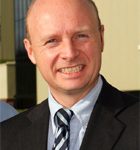
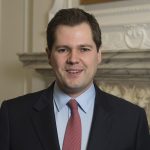
  • Calum Miller – 2025 Speech on Israel

    Calum Miller – 2025 Speech on Israel

    The speech made by Calum Miller, the Liberal Democrat spokesperson on Foreign Affairs, in the House of Commons on 20 May 2025.

    I also thank the Foreign Secretary for advance sight of his statement. I know that he, like me, has been horrified by the scenes coming out of Gaza. Tom Fletcher, the UN’s humanitarian chief, has indeed highlighted and predicted the imminent death of thousands of infants without immediate aid, and said that the amount of aid entering the strip is but “a drop in the ocean”.

    Let us be clear that mass starvation will do nothing to remove Hamas or secure the release of the hostages, so I welcome yesterday’s joint statement with Canada and France. In it, the Prime Minister spoke of taking further action if Israel does not fully lift its aid blockade and draw back from its expansion of military activity. Will the Foreign Secretary confirm whether the expanded sanctions list includes extremist Ministers Ben-Gvir and Smotrich, who have advocated illegal actions to dispossess Palestinians across the occupied territories, and if not, why not? Will the Government go beyond reviewing the 2030 bilateral road map and urgently suspend it unless the Government of Israel change path? Will they now finally block the export of all UK arms to Israel?

    In response to my letter to the Foreign Secretary last week, the Under-Secretary of State for Foreign, Commonwealth and Development Affairs, the hon. Member for Lincoln (Mr Falconer), reaffirmed the Government’s position that they consider that Israel only “risks” breaching international law through its blockade. I ask the Secretary of State what more Israel would have to do to the people of Gaza for its actions to constitute not simply a “risk”, but an actual breach of international law.

    The Minister also stated in his reply that the Government would only proceed with recognition of the state of Palestine at

    “a time that is most conducive to the peace process”.

    Does the Foreign Secretary agree with me and the Liberal Democrats that the time to recognise Palestine is now and that immediate recognition—ideally jointly with France at next month’s summit—would send the strongest possible signal about the UK’s commitment to the Palestinian people’s right to self-determination?

    Mr Lammy

    I am grateful to the hon. Gentleman. I have condemned the statements of Ben-Gvir and Smotrich in the past. On 6 May, Israel’s Finance Minister Smotrich said:

    “Gaza will be entirely destroyed, civilians will be sent to…the south to a humanitarian zone without Hamas or terrorism, and from there they will start to leave in great numbers to third countries”.

    We condemn that language. We condemn the language of Minister Ben-Gvir and, of course, we keep that language under review and continue to discuss these issues with our international partners.

    The hon. Gentleman asks about recognition and the work that we see France and Saudi Arabia doing. Of course, we are in close dialogue with our P5 partner of France and with Saudi Arabia, in fact. I touched on these issues with the Saudi Arabian PM in Rome at the weekend. The hon. Gentleman asked about the road map. As I have said, we will review the road map. He will recognise that there are elements of that road map, particularly as they pertain to security issues and the work we do jointly on Iran, that would not be right to suspend, but we are reviewing it—as we should, given the circumstances. I have said time and again that we have suspended arms sales that could be used in Gaza, notwithstanding those we must necessarily retain that particularly pertain to the supply chain on F-35s and their use in warfare in other theatres with which we have an interest.

  • Priti Patel – 2025 Speech on Israel

    Priti Patel – 2025 Speech on Israel

    The speech made by Priti Patel, the Conservative MP for Witham, in the House of Commons on 20 May 2025.

    I am grateful to the Foreign Secretary for giving me advance sight of his statement. The humanitarian situation in Gaza is appalling and we continue to see the intolerable suffering of life being lost. A sustainable end to this terrible conflict is urgently and desperately needed, and that means the release of the remaining 58 hostages from the cruel Hamas captivity that we have all witnessed for too long; it means a significant increase in aid getting into Gaza; and it means a new future for Gaza, free from the terror and misery caused by Hamas, who bear responsibility for the suffering we have seen unfolding since 7 October 2023. I will take each of those three issues in turn.

    First, on the hostages, will the Foreign Secretary explain what recent engagements he has had to try to secure their release and return to their loved ones? Is Britain contributing to an overall strategy to free the hostages? Are we in the room for these critical discussions? We know the hard work that went into all this at the beginning of the year.

    Secondly, on aid, I have been asking the Government for weeks for clarity over the way they are using their influence to get aid into Gaza. On 6 and 14 May, we questioned the Under-Secretary of State for Foreign, Commonwealth and Development Affairs, the hon. Member for Lincoln (Mr Falconer), on the steps being taken to unblock aid delivery. We have asked the Government for details of their engagement with Israel, about their response to Israel’s plans for an alternative aid delivery model, and about what practical solutions the UK has worked on with Israel to address concerns about aid diversion, but no substantive answers were given. What have the Government been doing in recent weeks to facilitate the delivery of aid and find practical solutions with other countries to get aid in?

    Have the Government just been criticising Israel, or have they been offering to work constructively to find solutions on aid delivery and securing a ceasefire? We see from the joint statement issued yesterday that the Government and other international partners may not be supporting or participating in the aid delivery model proposed by Israel, so can the Foreign Secretary explain why that conclusion has been reached?

    Melanie Ward (Cowdenbeath and Kirkcaldy) (Lab)

    Shameful!

    Priti Patel

    If I can return to my remarks, how does that non-participation help to get aid into Gaza and stop the suffering that is being experienced by everyone? [Interruption.] Members shake their heads, but we should all be focused on securing—[Interruption.] Labour Members should be ashamed of themselves, because the focus of this House should be on getting aid into Gaza. The UK—[Interruption.] I can speak as someone who has supported aid getting into Gaza and other humanitarian crises. The hon. Member for Cowdenbeath and Kirkcaldy (Melanie Ward) might want to intervene rather than calling me out and saying that my comments are shameful. The UK has consistently been a world leader when it comes to aid delivery. We should be at the forefront of finding practical solutions and supporting the delivery of aid to those in need, so has the Foreign Secretary, in the approach that he has just outlined towards Israel, done all he can to secure an increase in aid? Has the UK’s influence fallen in this aid discussion and in the dialogue with Israel?

    Thirdly, on the future of Gaza, the Government have agreed with our position that there can be no future for Hamas—that is completely non-negotiable—so what practical steps are being taken to end their role in Gaza and dismantle the terrorist infrastructure? What co-ordinated international steps are being taken to stem the flow of money, weapons and support bankrolled by Iran? We are still awaiting an Iran strategy from the Government. Can the Foreign Secretary expand upon this?

    We had a statement last month from the Foreign Secretary on the memorandum of understanding with the Palestinian Authority. Can he give an update on what steps are being taken to improve the governance of the PA? The MOU posed many questions, but I do not need to go over them again as I have raised them previously. The UK obviously needs to be involved in this process, given our historical role in, for example, the Abraham accords. This may be our best shot when it comes to regional peace, and the Foreign Secretary must convince us that we have influence when it comes to the ceasefire and negotiating a better future in this part of the world. What discussions have taken place with Administration of the United States—one country that does have influence—on peace efforts and getting aid into Gaza?

    In conclusion, strong words will do little to resolve the real challenges and the suffering that we are seeing day in, day out—[Interruption.] That is a matter for the Government to address. It should be a cause for concern that we have reached a situation where the statements and actions that have been echoed by the Government today—I am referring to the Prime Minister’s joint statement with France and Canada—have now been supported by Hamas, a terrorist organisation that I proscribed as Home Secretary—[Interruption.] They have actually put out a statement, and I am sure the Foreign Secretary has seen it.

    The Foreign Secretary’s decision to tear up trade negotiations with Israel and stop the bilateral road map will not—[Interruption.] It is not shocking. These are important questions. If the Foreign Secretary finds this—[Interruption.] If he cannot answer these questions, that is fine—[Interruption.] Then please do answer the questions, because they are important—[Interruption.] I would if Members did not keep interrupting me. It is quite obvious that the Government do not want to respond to these important questions, but this is important because there is so much human suffering. I understand the Foreign Secretary’s points about the steps he is taking with Israel, but how is this going to help now when it comes to wider security issues and threats from Iran? How do we know that this will not be self-defeating in any way?

    Mr Lammy

    For decades there has been a cross-party commitment to a two-state solution and the pursuit of peace from friends of both Israel and the Palestinian people across this House. It was the Thatcher Government that imposed an arms embargo after Israel’s invasion of Lebanon in 1982. It was David Cameron who first called Gaza a prison camp, and it was Theresa May’s Government that championed UN resolution 2334 on settlements. It was William Hague who worked with John Kerry on the push for peace and condemned the idea of moving the British embassy to Jerusalem. Sadly, today, it seems that the Conservative party, or at least its current Front Bench, is refusing to confront the appalling reality of what is happening in Gaza and what the Netanyahu Government are doing.

    The right hon. Lady seems incapable of offering any serious criticism about the egregious actions of the Netanyahu Government, unlike many hon. Members on her own side. The whole House should be able to utterly condemn the Israeli Government’s denial of food to hungry children. It is wrong. It is appalling. Will she condemn it? Well, the whole House has seen her response. Opposing the expansion of a war that has killed thousands of children is not rewarding Hamas. Opposing the displacement of hundreds of thousands of civilians is not rewarding Hamas. On this side of the House, we are crystal clear that what is happening is morally wrong and unjustifiable, and it needs to stop.

    That is why we have taken the actions we have. The right hon. Lady knows hostage families are deeply concerned about what is happening and about their loved ones—she knows that. She knows we oppose the blockade on aid—does she? It was not clear from her statement whether she does oppose the blockade of aid to children. She should note that our diplomats led that call, with 27 countries joining us, to condemn what is happening and stand on the side of truth and history. What a shame she could not bring herself to do so today.

    Yasmin Qureshi (Bolton South and Walkden) (Lab)

    I welcome the Foreign Secretary’s statement. Just last week, the UN humanitarian chief Tom Fletcher warned that the Security Council must act “decisively” to prevent genocide. Today, he said that 14,000 babies could be dead in the next 48 hours. The level of destruction we have seen of the Palestinian people and their land is remarkable. Israel has shown that it will not respond to diplomatic appeals. We now need the continuation of a full arms embargo, sanctions, accountability for war crimes, immediate recognition of the state of Palestine, and the return of UNRWA. What additional steps will the Foreign Secretary take to stave off this genocide?

    Mr Lammy

    I draw my hon. Friend’s attention to the announcement I have made today on further sanctions, building on the announcement I made back in October. It is very important that we send a clear message to Israel that it should allow the full resumption of aid into Gaza immediately and should enable the UN and humanitarian organisations to work independently and impartially to save lives, reduce suffering and maintain dignity. She will have noted the co-ordinated statement of 27 countries, including Canada, Denmark, Finland, France and many others, who came together to make their views crystal clear about what we now see happening, what we expect to see happen, and the further action that will have to take place if we do not.

  • David Lammy – 2025 Statement on Israel

    David Lammy – 2025 Statement on Israel

    The statement made by David Lammy, the Foreign Secretary, in the House of Commons on 20 May 2025.

    With permission, Madam Deputy Speaker, I will make a statement on Israel and the Occupied Palestinian Territories. This weekend, the Israel Defence Forces started a new, extensive ground operation throughout Gaza: Operation Gideon’s Chariots. Five Israeli divisions now operate there. Prime Minister Netanyahu says that they are going to take control of the strip, letting only minimal amounts of food reach Gazans; to quote Mr Netanyahu,

    “just enough to prevent hunger.”

    Fewer than 10 trucks entered Gaza yesterday. The UN and the World Health Organisation have issued stark warnings of the threat of starvation hanging over hundreds of thousands of civilians. This is abominable. Civilians in Gaza facing starvation, homelessness and trauma, desperate for this war to end, now confront renewed bombardment, displacement and suffering. The remaining hostages, kept apart from their loved ones by Hamas for almost 600 days, are now at heightened risk from the war around them.

    Two months ago the ceasefire collapsed. Since then, the humanitarian catastrophe has rapidly intensified. For 11 weeks, Israeli forces have blockaded Gaza, leaving the World Food Programme without any remaining stocks. Israel has repeatedly struck hospitals, and three more in northern Gaza ceased operations this weekend. Yet more aid workers and medical workers have been killed, after last year proved the deadliest year on record for humanitarian personnel.

    The diplomatic deadlock between Israel and Hamas has also hardened. Despite the efforts of the United States, Qatar and Egypt, which we of course support, no ceasefire has emerged. We repeat our demand that Hamas release all the hostages immediately and unconditionally, and reiterate that they cannot continue to run Gaza.

    We are now entering a dark new phase in this conflict. Netanyahu’s Government plan to drive Gazans from their homes into a corner of the strip to the south and permit them a fraction of the aid that they need. Yesterday, Minister Smotrich even spoke of Israeli forces “cleansing” Gaza, of “destroying what’s left” and of resident Palestinians being “relocated to third countries”. We must call this what it is: it is extremism, it is dangerous, it is repellent, it is monstrous and I condemn it in the strongest possible terms.

    Israel suffered a heinous attack on 7 October. The Government have always backed Israel’s right to defend itself. We have condemned Hamas and their abhorrent treatment of the hostages. We have stood with the families and demanded that their loved ones be released. Israel’s plan is morally unjustifiable, wholly disproportionate and utterly counterproductive, and whatever Israeli Ministers claim, it is not the way to bring the hostages safely home. Nearly all the hostages have been freed through negotiations, not military force. That is why hostage families themselves, and many other Israelis, oppose this plan so strongly. It will not eliminate Hamas or make Israel secure either. This war has left a generation orphaned and traumatised, ready for Hamas to recruit. As we learned in Northern Ireland, to defeat terrorists and their warped ideology, we cannot just rely on military might; we have to offer a viable political alternative. Opposing the expansion of a war that has killed thousands of children is not rewarding Hamas.

    Since entering office, we have taken concerted action on Gaza. We have restored funding to the United Nations Relief and Works Agency, supported the independence of international courts, suspended arms export licences, provided food and medical care to hundreds of thousands of Gazans and worked with Arab partners on a plan to ensure a reconstructed Gaza no longer run by Hamas. Since Israel restarted strikes on Gaza, this Government have demanded that Israel change course.

    Privately, in my conversations with Foreign Minister Sa’ar and Strategic Affairs Minister Dermer, and publicly, in repeated joint statements with my French and German counterparts, we have made clear that Israel’s actions are intolerable. We have raised our concerns in the UN Security Council and before the International Court of Justice. Yesterday, my right hon. and learned Friend the Prime Minister joined leaders from France and Canada in strongly opposing the expansion of Israel’s military operations. The UK also led a further statement with 27 partners criticising Israel’s proposed new aid delivery mechanism and defending the essential humanitarian principles of the international system that the UK did so much to establish in the first place.

    Our message is clear. There is a UN plan ready to deliver aid at the scale needed, with mitigations against aid diversion. There are brave humanitarians ready to do their jobs. There are over 9,000 trucks at the border. Prime Minister Netanyahu: end this blockade now and let the aid in.

    Regrettably, despite our efforts, this Israeli Government’s egregious actions and rhetoric have continued. They are isolating Israel from its friends and partners around the world, undermining the interests of the Israeli people and damaging the image of the state of Israel in the eyes of the world. I find this deeply painful, as a lifelong friend of Israel and a believer in the values expressed in its declaration of independence. As the Prime Minister and fellow leaders said yesterday, we cannot stand by in the face of this new deterioration. It is incompatible with the principles that underpin our bilateral relationship, it is rejected by Members across this House, and frankly, it is an affront to the values of the British people. Therefore, today I am announcing that we have suspended negotiations with this Israeli Government on a new free trade agreement and we will be reviewing co-operation with them under the 2030 bilateral road map. The Netanyahu Government’s actions have made this necessary.

    Today, the Minister for the middle east, my hon. Friend the Member for Lincoln (Mr Falconer) is summoning the Israeli ambassador to the Foreign Office to convey this message. I say now to the people of Israel that we want—I want—a strong friendship with you based on shared values, with flourishing ties between our people and societies. We are unwavering in our commitment to your security and to your future, to countering the very real threat from Iran, the scourge of terrorism and the evils of antisemitism. However, the conduct of the war in Gaza is damaging our relationship with their Government and, as the Prime Minister has said, if Israel pursues this military offensive as it has threatened, failing to ensure the unhindered provision of aid, we will take further action in response.

    The UK, will not give up on a two-state solution: Israelis living within secure borders, recognised and at peace with their neighbours, free from the threat of terrorism; and Palestinians living in their own state, in dignity and security, free of occupation. The two-state solution remains the ideal framework; indeed, it is the only framework for a just and lasting peace. Yet as the House knows, its very viability is in peril, endangered not only by the war in Gaza but by the spread of illegal Israeli settlements and outposts across the occupied west bank with the explicit support of this Israeli Government.

    There are now weekly meetings to approve new settlement construction. Settlement approval has accelerated while settler violence has soared. Here, too, we have acted: repeatedly pressing for a change in course and direction, sanctioning seven entities in October and signing a landmark agreement to bolster support for the Palestinian Authority when Prime Minister Mustafa visited London last month. But here too, we must do more. Today, we are therefore imposing sanctions on a further three individuals and four entities involved in the settler movement. I have seen for myself the consequences of settler violence, the fear of its victims and the impunity of its perpetrators. Today, we are demonstrating again that we will continue to act against those carrying out heinous abuses of human rights.

    Despite the glimmer of hope from January’s ceasefire, the suffering in this conflict has worsened. January showed that another path was possible, and we urge the Netanyahu Government to choose this path. The world is judging. History will judge them. Blocking aid, expanding the war and dismissing the concerns of their friends and partners is indefensible and it must stop. I commend this statement to the House.

  • PRESS RELEASE : £1 billion BioNTech investment sets way for jobs, growth, breakthroughs [May 2025]

    PRESS RELEASE : £1 billion BioNTech investment sets way for jobs, growth, breakthroughs [May 2025]

    The press release issued by the Department for Science, Innovation and Technology on 20 May 2025.

    • Covid-19 vaccine pioneers BioNTech commit to up to £1 billion, 10-year investment in the UK.
    • New research and AI centres to be established in London as well as Cambridge – demonstrating the benefits of the Oxford-Cambridge Growth Corridor – to develop the next generation of life-changing medicines.
    • Underpinned by up to £129 million of government support, this agreement underscores the government’s commitment to life sciences as a key part of the Plan for Change, driving improvements in healthcare, and delivering economic growth.

    Hundreds of highly skilled jobs will be created, and new research centres will be set up aimed at making new advances in medical science, thanks to a planned investment of up to £1 billion into the UK by world-leading biopharmaceutical company BioNTech announced today (Tuesday 20 May).

    This is one of the biggest investments in the history of UK life sciences, made possible with government backing – all part of plans to support this growth-driving sector as part of the Plan for Change, and our mission to turbo-charge economic growth in every part of the country.

    This historic investment is a testament to the confidence in the UK life sciences – one of the priority sectors of the economy that will form a key part of the forthcoming Industrial Strategy – as a driver of economic growth, job creation, and innovations that could overhaul what’s possible in healthcare. The sector is already thriving, worth £108 billion to the economy and providing more than 300,000 highly skilled jobs across the country. But through measures like our commitment to investing up to £520 million in the sector through the Life Sciences Innovative Manufacturing Fund, we want to boost UK life sciences to even greater heights, bolstering our ambitions to grow the economy, create jobs, and building on the UK’s position as the second-most attractive destination for international investment.

    BioNTech will invest in the UK over the course of the next 10 years as part of an ambitious plan to significantly expand their presence here. That will see them create two new R&D hubs, the first to be based in Cambridge, as well as an AI hub to be based at BioNTech’s planned UK headquarters in London. These are planned to create more than 400 new highly skilled jobs over the next 10 years, including researchers in clinical and scientific drug development, bioinformatics, and a range of supporting functions. Indirectly, the investment is also likely to create a substantial number of additional jobs in the supply chain.

    BioNTech are the pioneering company behind mRNA vaccines and cancer immunotherapies notably used to tackle COVID-19, and more recently trialled to help patients with cancer.

    According to the Academy of Medical Sciences, every £1 spent on medical research delivers a return of 25p, every year, forever after that, so the long-term economic impact of an investment in research on this scale, speaks for itself. This is the government’s Plan for Change, in action, and shows how our ambitions for the Oxford-Cambridge Growth Corridor are already pulling international investment into the UK.

    BioNTech signed an agreement finalising the investment together with Science Secretary Peter Kyle today. As part of the agreement, the government will contribute up to £129 million in grant funding over a period of 10 years.

    Science and Technology Secretary Peter Kyle said:

    This investment will propel the growth-driving life sciences sector to new heights, delivering cutting-edge facilities, building careers in the future-facing jobs we want our children to have, and ultimately unlocking progress in medical science that could save lives.

    This is a clear indication of how we will deliver the government’s Plan for Change: working together with the best and brightest businesses and innovators to unlock their potential, and then reap the benefits for the economy, health and more that their drive and genius can deliver.

    Chancellor of the Exchequer, Rachel Reeves, said:

    This is another testament to confidence in Britain being one of the world’s top investment destinations and a global hub for life sciences. It will create hundreds of high-skilled, well-paid jobs, as we deliver on our promise to put more money in working people’s pockets through our Plan for Change.

    CEO and co-founder of BioNTech, Uğur Şahin, said:

    This agreement marks the next chapter of our successful strategic partnership with the UK government. Together, we have already made a meaningful difference in expanding access to investigational personalized cancer therapies for patients. Now, we are taking the next step to accelerate and broaden our research and development efforts advancing towards our vision to translate science into survival for patients.

    In Cambridge, BioNTech plans to set up a new R&D centre focused on genomics, oncology, structural biology, and regenerative medicine. In London, BioNTech intends to establish its UK headquarters, which will be home to a new AI hub led by InstaDeep Ltd, a wholly owned subsidiary of BioNTech SE, and a leading global technology company in the field of AI and machine learning. This hub will enable medical research, using AI, including looking into understanding disease causes, drug target selection and predictive analytics.

    Over time, this work could lead to the discovery and development of new therapies, diagnostics and treatments for a range of diseases that currently cause heartbreak for countless patients and their families – all supporting the mission to rebuild the NHS for the long-term, that sits at the heart of the government’s Plan for Change.

    It also builds on the government’s existing strategic partnership with BioNTech, to provide up to 10,000 patients with investigational personalised cancer immunotherapies by 2030. This is already transforming the experience of patients by broadening access to cancer vaccine trials in the UK.

    The government’s support for BioNTech’s investment is a further example of how we are backing the UK’s thriving life sciences sector to even greater success – following on from the announcement of the Life Sciences Innovative Manufacturing Fund at the Autumn Budget, and strategic collaborations agreed with other innovative life sciences companies. We will say more about our vision for a thriving future for UK life sciences in the forthcoming Life Sciences Sector Plan.

    Steve Bates, CEO of the UK BioIndustry Association, said:

    BioNTech’s investment demonstrates the UK’s position as a top destination for life sciences innovation and underlines why the government is absolutely right to back our sector as a priority for growth.

    BioNTech is not only a pioneer in mRNA science, but also a visionary partner in building a truly unique public-private collaboration with the UK government and NHS – one that sets a benchmark for the world.

    The UK has a once-in-a-lifetime opportunity to leverage its strong position to attract investment from global investors to create well-paid jobs and scale UK companies, if the upcoming Life Sciences Sector Plan can address long-standing structural challenges in the financing and commercial environment.

    Richard Torbett, Chief Executive of the ABPI, said:

    This investment is a testament to the fantastic skills, research capabilities, and scientific infrastructure we have in the UK. It is also a template for how the UK could unlock further life science sector growth by removing the barriers and roadblocks to investment.

    Big investments like this are years in the making and require both sides to have confidence that the other will deliver on their commitments. Trust is slow to build, but this deal shows it is worth the time and the risk.

    Life science companies are already the largest investors in UK R&D – but much of this comes from a handful of companies with deep UK roots. The UK has an opportunity to capture more of the global science pie if we can improve our competitive offering to the sector.

  • PRESS RELEASE : Charity Commission statement on Kids Company Judgment [May 2025]

    PRESS RELEASE : Charity Commission statement on Kids Company Judgment [May 2025]

    The press release issued by the Charity Commission on 20 May 2025.

    The collapse of Kids Company was a matter of significant public, media and Parliamentary interest at the time, with ramifications for the wider charitable sector, notably on public trust and confidence in charities.

    Today’s High Court judgment has upheld our finding of mismanagement of the charity’s finances and has confirmed that it was based on “ample evidence”. Furthermore, the judgment firmly rejected allegations we predetermined the outcome of the inquiry, stating the threshold for this was “not met in this case by a wide margin”.

    The court has confirmed it was entirely reasonable for the Commission to have drawn independent regulatory conclusions on the demise of Kids Company, based on all the evidence available, in keeping with the role Parliament has set us.

    The judgment notes we took care in the inquiry report to point out areas in which the charity’s trustees were acting within their duties and responsibilities, and where we found external criticism of the charity was unfounded. Our inquiry report stated clearly there was “no dishonesty, bad faith or inappropriate personal gain in the operation of the charity”.

    While the court has dismissed the challenge on all but two grounds, and is clear that the overall findings of our report were not ‘irrational’, we acknowledge its finding that we made important errors in relation to two paragraphs of the report and will act to remedy this.

  • PRESS RELEASE : Construction begins on new Civil Service office in Blackpool [May 2025]

    PRESS RELEASE : Construction begins on new Civil Service office in Blackpool [May 2025]

    The press release issued by the Ministry of Defence on 20 May 2025.

    Construction has begun on a new office building for Ministry of Defence (MOD) civil servants as part of Blackpool’s Talbot Gateway redevelopment.

    A groundbreaking ceremony has taken place for a new MOD office within the Talbot Gateway redevelopment in Blackpool.

    The regeneration programme sees Blackpool Council working with development partner Muse Places and construction company VINCI Building on the new 53,000 sq. ft MOD building which will hold up to 1,100 staff from Defence Business Services (DBS).

    As MOD’s shared services organisation, DBS provides corporate services across the information and technology, finance, procurement and people function to the whole of defence, including serving military, veterans and civilian staff, as well as other government departments. The move from a leased site within the local area concludes the consolidation of DBS’ northwest estate into a single, purpose-built office owned by the MOD, securing future jobs and saving the taxpayer money long term.

    Representatives from DBS signed the contract for the new building on 31 March 2025 with them coming together last week at a groundbreaking ceremony to mark the start of construction.

    The DBS project is being delivered under the MOD’s Defence Estate Optimisation portfolio, which is investing £5.1 billion in a more modern and sustainable defence estate. This includes new and refurbished military accommodation and housing for over 40,000 service personnel and their families, as well as technical, training and office space for over 64,000 personnel, including civilian staff. Construction will be managed on behalf of the MOD by the Defence Infrastructure Organisation, working closely with Blackpool Council, development partner Muse Places, main contractor VINCI Building and DBS.

    The building is scheduled for completion in 2027.

    Ross Porter, Defence Infrastructure Organisation Programme Manager, said:

    After several years of pre-construction work and a huge collaborative effort from all parties involved, progressing this project to the construction stage is a great milestone to reach. We’re very much looking forward to delivering a first-class office facility for MOD staff in the area, as part of the Defence Estates Optimisation Portfolio.

    Cllr Lynn Williams, Leader of Blackpool Council, said:

    This is another major step forward in our plans to make Blackpool better. We’re very grateful to government for recognising Blackpool’s economic potential and continuing to invest and help us create quality jobs for local people.

    Officers from both the council and government have worked exceptionally hard to make this deal possible. With over 8,000 workers and students coming to the town centre in the next few years, this provides a phenomenal opportunity and confidence for local businesses to continue to invest and hire more local people.

    Alan McBride, Technical Director at Muse, said:

    It’s great to see work commencing on phase five of Talbot Gateway’s regeneration. This future-proofed, sustainable workspace for the Civil Service will bring increased footfall into the town centre, spur further economic growth in the heart of Blackpool, and build on the momentum we’ve generated alongside our long-standing partners, Blackpool Council, for more than 15 years.

    Gary Hughes VINCI Building’s Regional Director said:

    We’re delighted to have been appointed on this key project at Talbot Gateway to continue our working partnership with Blackpool Council and Muse. We will ensure we continue to provide local opportunities through the development of our local supply chain, whilst generating significant education and training opportunities with local schools, colleges and education groups as we progress on site.

  • PRESS RELEASE : Single case of atypical BSE confirmed on a farm in Essex [May 2025]

    PRESS RELEASE : Single case of atypical BSE confirmed on a farm in Essex [May 2025]

    The press release issued by the Department for Environment, Food and Rural Affairs on 20 May 2025.

    A single case of atypical Bovine Spongiform Encephalopathy (BSE) has been confirmed on a farm in Essex, the Animal and Plant Health Agency (APHA) confirmed today (Tuesday 20 May).

    The animal showed some clinical signs of BSE and was humanely culled on farm and tested as part of Defra’s routine surveillance programme. There is no risk to public health or food safety from this case and the animal, as fallen stock, was not destined to enter the food chain.

    Atypical BSE is a naturally occurring, non-contagious disease in cattle which occurs spontaneously. It is distinct from classical BSE which is linked to contaminated feed.

    Chief Veterinary Officer Christine Middlemiss said:

    “A single case of atypical BSE has been confirmed on a farm in Essex. The animal died on farm and was tested as part of our strict routine controls and surveillance regime.

    “Atypical BSE is distinct from classical BSE and is a spontaneously and sporadically occurring, non-contagious disease which is believed to occur at a very low level in all cattle populations. This is proof that our surveillance system for detecting and containing this type of disease is working.”

    Dr James Cooper, Deputy Director of Food Policy at the Food Standards Agency said:

    “There is no food safety risk. There are strict controls in place to protect consumers from the risk of BSE, including controls on animal feed, and removal of the parts of cattle most likely to carry BSE infectivity.

    “Consumers can be reassured that these important protection measures remain in place and that Food Standards Agency Official Veterinarians and Meat Hygiene Inspectors working in all abattoirs in England will continue to ensure that the safety of consumers remains the top priority.”

    Great Britain’s overall risk status for BSE remains at ‘controlled’ and there is no risk to food safety or public health.

    The World Organisation for Animal Health and trading partners have been informed of the case. This does not affect the UK’s ability to export beef to other countries.

    BSE is a notifiable animal disease. If you suspect it, you must report it immediately by calling the Defra Rural Services Helpline on 03000 200 301. In Wales, contact 0300 303 8268. In Scotland, contact your local Field Services Office. Failure to do so is an offence. This applies to pet and small holder animals as well as commercial cattle.

    ENDS

    Notes to editors:

    • Bovine Spongiform Encephalopathy is a chronic degenerative disease affecting the central nervous system of cattle. It is not contagious, so it does not spread from animal to animal or between holdings.
    • Classical BSE was first diagnosed in the United Kingdom in 1986.
    • Atypical BSE is distinct from classical BSE and occurs at a very low level in all cattle populations. It is reported occasionally in countries with active BSE surveillance programmes.
    • The last case of atypical BSE in the UK was in December 2024 in Scotland. There has been a total of 4 cases since 2015 (including this latest case).
    • [The case was identified as a result of strict control measures we have in place. It was not destined for the human food chain and the Food Standards Agency have confirmed there is no risk to human health as a result of this isolated case.]
  • PRESS RELEASE : Director, Carl Barnes, disqualified for 11 years after dishonestly securing Covid loan for Lincoln plumbing and heating company [May 2025]

    PRESS RELEASE : Director, Carl Barnes, disqualified for 11 years after dishonestly securing Covid loan for Lincoln plumbing and heating company [May 2025]

    The press release issued by the Insolvency Service on 20 May 2025.

    Carl Barnes, the director of Central Plumbing & Heating Lincoln Ltd, made false statements about the company’s turnover to secure a Bounce Back loan .

    • Carl Barnes applied for a Bounce Back loan of £47,500 for Central Plumbing & Heating Lincoln Ltd.
    • He declared the company had a turnover of £340,000 when in reality it was nothing.
    • Barnes has been banned as a company director for 11 years. The Secretary of State accepted a voluntary disqualification undertaking offered by him.

    The director of a plumbing and heating company has been banned for 11 years after overstating his company’s turnover by hundreds of thousands of pounds to secure a Covid Bounce Back loan.

    Carl Barnes, of Ollerton Road, Retford, was the director of Central Plumbing & Heating Lincoln Ltd, which was incorporated in April 2016.

    The company, based on Wavell Drive in Lincoln, made a small profit in its first year of trading, but dormant accounts were filed by Barnes in the following years.

    In August 2020, the 45-year-old falsely claimed the company had a turnover of £340,000 for 2019, despite the actual turnover being £0.

    He received a Covid Bounce Back loan for the company of £47,500 which it was not entitled to.

    Barnes was disqualified as a director for 11 years on 17 April 2025, with the ban beginning on 8 May 2025.

    Kevin Read, Chief Investigator at the Insolvency Service, said:

    Carl Barnes exploited the Bounce Back Loan Scheme by providing false information about his company’s turnover.

    His dishonesty has resulted in this significant director disqualification, which prevents him from forming or managing a company for more than a decade.

    The Insolvency Service will continue to investigate those who abused this scheme – designed to help small businesses during the pandemic – and bring them to justice.

    Central Plumbing & Heating Lincoln Ltd went into liquidation in October 2022.

    The disqualification order prevents Barnes from being involved in the promotion, formation or management of a company, without the permission of the court.

    Further information

    • Carl Philip Barnes is of Ollerton Road, Retford, Nottinghamshire. His date of birth is 14 June 1979.
  • PRESS RELEASE : Interim Chair appointed to the Legal Services Board Wales [May 2025]

    PRESS RELEASE : Interim Chair appointed to the Legal Services Board Wales [May 2025]

    The press release issued by the Ministry of Justice on 20 May 2025.

    The Lord Chancellor has approved the appointment of Catherine Brown as Interim Chair of the Legal Services Board Wales.

    Ms Brown is appointed until 31 December 2025.

    The appointment of the LSB Chair is made by the Lord Chancellor, under the Legal Services Act 2007, after consulting the Lady Chief Justice.

    The appointment is regulated by the Commissioner for Public Appointments. Ministers consulted the Commissioner before making the appointment. This will ensure that the LSB has a Chair while a recruitment exercise is run.

    Biography

    Catherine Brown is an experienced non-executive board member, chair, and chief executive who has worked in the private and public sectors. Ms Brown was previously CEO of the Food Standards Agency and is now serving as the first Chair of the Enforcement Conduct Board; a new independent oversight body for the civil enforcement sector. Ms Brown was vice chair of the Wellcome Trust advisory group on increasing diversity and inclusion in science and served as an Equal Opportunities Commissioner. She is currently chair of the Internet Watch Foundation; a charity that exists to prevent the sharing of child sexual abuse material on the internet.

    Ms Brown has been a member of the Board of the LSB since 2019 and has been Chair of the LSB’s Audit and Risk Assurance Committee and then Senior Independent Director prior to her appointment as Interim Chair.

  • PRESS RELEASE : UK announces major sanctions in support of Ukraine [May 2025]

    PRESS RELEASE : UK announces major sanctions in support of Ukraine [May 2025]

    The press release issued by the Foreign Office on 20 May 2025.

    As President Putin ruthlessly intensifies his strikes against innocent Ukrainians, the UK is ramping up pressure with raft of 100 new sanctions.

    • UK announces wide-ranging sanctions on Russia as Putin launches his biggest ever drone attack against Ukraine
    • 100 sanctions targets across Russian military, energy, financial sectors and those conducting Putin’s information war against Ukraine
    • UK and partners are also working to tighten the Oil Price Cap, further restricting critical oil revenues for Putin’s war machine

    As President Putin ruthlessly intensifies his strikes against innocent Ukrainians, the UK is ramping up pressure with raft of 100 new sanctions.

    The latest sanctions targets include entities supporting Russia’s military machine, energy exports and information war, as well as financial institutions helping to fund Putin’s invasion of Ukraine.

    On Saturday, Russia fired 273 drones at Ukrainian cities, the biggest drone onslaught of the war. A strike on a bus in Sumy killed 9 civilians.

    Putin has so far not put in place the full, unconditional ceasefire that President Trump has called for, and which President Zelenskyy endorsed over 2 months ago.

    The UK’s latest sanctions action comes as the EU prepares to announce its 17th package of sanctions against Russia, in a co-ordinated effort to secure a just and lasting peace in Ukraine.

    Today’s measures sanction the supply chains of deadly Russian weapons systems, including Iskander missiles.  This will protect Ukrainian lives, and our collective security by disrupting Russia’s military machine.

    Putin has repeatedly fired Iskander missiles into crowded civilian areas with a callous disregard for life. He used these weapons during the strike against Sumy on 13 April that killed 34 civilians including children, some of them heading for Palm Sunday services.

    UK and other Western sanctions are having a severe effect on Russia’s economy.  Russian GDP shrank in the first quarter of the year and the non-defence economy has been in recession for some time. Security and defence spending is now over 40% of the federal budget, and Putin has had to raise taxes and slash social spending in order to continue the war.

    Every rouble by which we cut Kremlin revenues diminishes Putin’s ability to sow chaos, division and disorder across the world and protects the British people, increasing security and prosperity at home.

    As the Prime Minister set out at the European Political Community summit on Friday, people in Ukraine and across the world have paid the price for Putin’s aggression and now he must pay the price for avoiding peace.

    Foreign Secretary, David Lammy said:

    Putin’s latest strikes once again show his true colours as a warmonger.

    We urge him to agree a full, unconditional ceasefire right away so there can be talks on a just and lasting peace.

    We have been clear that delaying peace efforts will only redouble our resolve to help Ukraine to defend itself and use our sanctions to restrict Putin’s war machine.

    Today’s sanctions also target 14 more members of the Social Design Agency (SDA), which carries out Kremlin-funded information operations that are designed to undermine sovereignty, democracy, and the rule of law in Ukraine and across the world.

    The UK previously sanctioned the SDA and several of its leaders in 2024.  We are now targeting all levels of the organisation.

    In addition, today’s measures will strike at the heart of Putin’s efforts to get around our sanctions and help block his failing attempts to reconnect to the international economy.

    Today’s action targets 46 financial institutions that help Russian attempts to evade sanctions, as well as the St Petersburg Currency Exchange, and the Russian Deposit Insurance Agency which insures Russian banks. These new sanctions will further isolate the Russian economy and disrupt Russia’s revenue streams.

    Finally, the UK will also sanction 18 more ships in the ‘shadow fleet’ carrying Russians oil, along with the fleet’s enablers. The Prime Minister announced 110 shadow fleet related sanctions ahead of his visit to Kyiv earlier this month.

    Today’s targets include John Michael Ormerod, a British national who procured ships for Russia’s shadow fleet, and 2 Russian captains of shadow fleet tankers. This action imposes a personal cost on those who are supporting Russia’s trade in oil and is another step in the Foreign Secretary’s personal mission to constrain the Kremlin and a crucial part of the Plan for Change to ensure a secure Britain.

    The UK is also working with partners to tighten the Oil Price Cap that limits the price that Russia can charge for its oil if transported using G7 services like insurance and shipping. We are reviewing the $60 crude price level, with a view to lowering the cap closer to the cost of production and hitting Putin where it hurts by striking at his oil revenues.

    Background

    The Full list of today’s targets can be found here