Tag: 2024

  • David Lammy – 2024 Speech on Indigenous Peoples and Protecting Forests

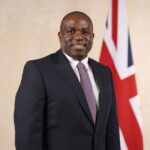
    David Lammy – 2024 Speech on Indigenous Peoples and Protecting Forests

    The speech made by David Lammy, the Foreign Secretary, on 12 November 2024.

    Can I just begin by saying what an absolute honour it is to be standing here as Labour’s first Foreign Secretary here at COP after 14 years out of power.

    And what a pleasure it is to be here as Foreign Secretary sharing the stage with wonderful Indigenous peoples, wonderful philanthropists, ministers – all dedicated to dealing with the climate emergency.

    It’s one of the privileges of my life to be back in power. Actually able to do something about this agenda.

    So let me just start by first saying:

    • why do I care about forest tenure rights in the first place?
    • second, why should the world care?
    • and third, working together, what we can do about it?

    The bottom line is I got into politics because I care about helping my community secure equity, equal opportunities and justice.

    I represent, in north London, the constituency of Tottenham. It’s where I’m from and it would be described traditionally as an inner-city neighbourhood in London.

    So let me just tell you a bit about my story. My parents arrived from Guyana, just on the northeast corner of South America. My father came to Britain in 1956. He was part of what we talk about in Britain as the Windrush generation. Windrush because that was the boat that people first arrived on in 1948, bringing people from the Caribbean.

    Many of them had contributed to the building of Britain after the second World War and fought during the second World War, and they arrived determined, with a gleam in their eye, for a new prospect in life.

    Over the course of that period then, I’m thinking about the community I represent because many of them faced poverty, and their families have faced poverty. Education was key. Social justice was hugely important to those communities. And, of course, coming from Guyana and the Caribbean I’m thinking about what they left behind.

    In a lecture I gave very recently in Kew, I was reminded that my father used to take me to Kew Gardens in London. I had no reason why as a child he was taking me to the other side of London to hang out in a very large park. And, of course, it was because he wanted to be close to nature. I know that now to be true. And I have committed in my own life to support the rights of Indigenous peoples.

    My wife and I are founders of a conservation centre, it’s called Sophia Point. We work on the Essequibo in the middle of the rainforest in Guyana. We work alongside Akawaio, groups of Amerindian people. Helping them preserve what is in their rainforest.

    Working with the University of Guyana. Helping them with their own rights. Assisting them – they are the custodians of the land. We have a long lease on the land. Working alongside them in a charitable effort. Understanding and wanting to be part of a community that I am originally from.

    But I guess that the other part to that story, of course, is recognising that I stand here as a Briton. We talk about Britain, the green and pleasant land. Think about Robin Hood. You’re thinking about Epping Forest and Sherwood Forest, and those wonderful forests that we have in Britain.

    The point is that all of us have a connection with nature. All of us have a history, and that, in a sense, grounds me as I come to this event. So that’s why I dedicated my first major speech as Foreign Secretary to tackling this crisis. And is why, I explained in that speech, my commitment not just to the issue and to Sophia Point but what more we could do.

    So how do we build an economic model that allows us to continue to live in harmony with nature. The most heartening aspect of what I’ve seen at Sophia Point is hearing how it works to give communities agency in their lives.

    And tenure security gives communities the right to object to environmentally damaging projects and it gives them alternative routes to sustainable livelihoods so that they can thrive as guardians of nature.

    So that’s why I care about this issue. Why should you all care sitting there?

    Well, here are just a few statistics:

    • Indigenous peoples and local communities manage and live in at least half of the world’s land
    • this land contains much of the world’s remaining biodiversity and over a third of intact forests
    • the world’s forests are declining at an alarming rate – every year, we lose an area that is just a bit larger than Azerbaijan itself
    • but the rights of Indigenous peoples and local communities are protected in just 10% per cent of the land in which they reside
    • and over 1 billion people worldwide feel insecure about their rights to property or land

    Funding for forest tenure and management is sadly very low – it received less than 1 per cent of all climate finance in the previous decade, much of which went to governments and NGOs. Almost 2,000 land and environmental defenders were killed between 2012 and 2022, and research shows that these were disproportionately likely to be in Indigenous peoples.

    So the money they get to defend their rights, to be custodians, of our wonderful forest and the danger that they face in much of the world is serious and extreme. That’s why it should alert us all.

    Now in recent years, we have seen some positive steps in the right direction.

    Extended rights, with Brazil acknowledging 10 new Indigenous Territories since President Lula took office.

    We are seeing new legislation, indeed in Guyana we saw new legislation, but also places like the Democratic Republic of Congo’s law on Indigenous peoples’ rights.

    We’re seeing greater implementation, such as Indonesia’s rollout of its social forestry programme,

    And more focus from donors, with increasing engagement at events like this one.

    Still, we are starting from such a low base that there is much, much more that we need to do.

    Today’s event is about what precisely we should be doing.

    There will be lots of ideas in this room, but I want to kickstart just some ideas about how we can play a role.

    If you are a donor – whether from a government like mine or a philanthropic foundation – this is about commitment, and it’s about the long haul. Sustained commitment.

    Committing to funding for nature, committing to funding for forests, and committing for forest communities, particularly their livelihoods and their rights to protect that nature on our behalf.

    I am pleased to confirm that the UK will ensure that of our £11.6 billion in climate finance, three billion will be for nature and within that 1.5 billion for forests.

    With us today are key partners in that, our wonderful friends from Norway who have got a longstanding commitment in this area and of course the Bezos Foundation who have done so much amongst the 25 donors who, with the UK, made the IPLC Forest Tenure Pledge at COP26 in Glasgow, which assigned 1.7 billion dollars by 2025.

    I am delighted we are on track to meet that commitment and to confirm the UK will play its part, keeping our promise to provide over 10% of that funding.

    And I hope today we can talk about how we develop the next phase of that historic Pledge, next year in Brazil. To show our commitment beyond 2025, I can also announce a new 10-year programme.

    Which will provide initial funding of £50 million over 2 years to reduce illegal logging and benefit forest people.

    This builds on partnerships the UK has been forming in these communities for decades and generations, going almost back to when I first started in politics 25 years ago.

    And we are complementing this with new initiatives that invest even further in forest communities.

    A £94 million programme to strengthen forest communities’ voices in governance processes particularly for the Amazon, and a project to train local scientists in the Congo Basin.

    Now if you are a partner government like Brazil, or many others who are here today, this is also about guaranteeing rights.

    As I have said, there are some really important examples of this happening around the world.

    And I hope countries like the UK can work with you to build on this.

    This year, for instance, we launched a Land Facility programme to partner with Global South governments to develop more effective and transparent land governance systems, that better protect rural and forest tenure rights and I hope this model is one that we can continue to build on.

    Last, but not least, for Indigenous peoples and local communities, I hope this can be about seizing an opportunity.

    I recognise you have been speaking up for decades. Fighting to be heard with your own heritage, and thanks to the many Indigenous communities that I have met over the last few years, I am all too aware that there can be a powerful sense that the system is rigged against you.

    But I hope that, as quickly as possible, we can turn things around. Ensure that your rights are protected under the law.

    And that you have the tools you need to make the right choices for you, for your communities and for your environment.

    This is our goal for the next IPLC Forest Tenure Pledge. Our goal for the new programmes I have announced. But I don’t want you to take my word for it.

    We need, more than anything else, to listen to you, to hear you, and to hear how we can continue to make further improvements.

    Let me just end with one story. The community that I work with on the Essequibo coast in the rainforest of Guyana. When we were building the conservation centre, because of some of these rights issues, too often what was happening on their land is illegal mining, some of it very dirty, very disruptive to the environment.

    But communities from the Indigenous Amerindian communities finding that they had to do that because it was all they could do. The conservation centre brings new people alongside them into the environment. It brings scientists, academics, not doing helicopter science, flying in and flying out with the knowledge, but actually working with local communities on the IP, working with local university students on the IP alongside them.

    Again, that brings livelihoods to those communities. It brings documentary filmmakers and others because Guyana is a region of the top of the Amazon base and is less well known.

    So that’s what I mean about coming alongside communities, able to give them livelihoods, livelihoods based on rights and purpose that helps us all in this global fight to make sure that our forests make that contribution to our desire to meet that 1.5 commitment.

    As I say, it’s a great, great privilege to be here for my first event as Foreign Secretary in the UK. Centring of course climate within broader foreign policy and I’m very pleased now that we’re able to watch a video about why Indigenous peoples and local communities really matter.

    Thank you very much.

  • PRESS RELEASE : Human rights must be protected – UK Statement at the UN Third Committee [November 2024]

    PRESS RELEASE : Human rights must be protected – UK Statement at the UN Third Committee [November 2024]

    The press release issued by the Foreign Office on 12 November 2024.

    Statement by Liz Page, First Secretary Cyber, Digital and Technology at the UN Third Committee on the United Nations Convention against Cybercrime.

    Chair, the UK’s EOP at the conclusion of negotiations explained our basis for joining consensus on this Convention. Building on this, I will focus today on addressing views and interpretations expressed by stakeholders and some delegations.

    Stakeholders are right to highlight the potential risks that this Convention could pose to human rights given its broad scope of international cooperation for the sharing of e-evidence and its intrusive procedural powers.

    These risks led the UK, and many others, to insist on effective human rights safeguards in the final text. If applied properly and in good faith, these safeguards mean that human rights will be protected as the Convention is implemented. This is a legal obligation applicable to all State Parties.

    Article 24, relating to the Convention’s procedural powers, is an example. Paragraph 1 of this Article says a Party’s domestic law shall provide for conditions and safeguards, which shall provide for the protection of human rights, in accordance with international human rights law.

    While those conditions and safeguards will be provided for in a Party’s domestic law, the obligation to establish them is not optional. Nor is the obligation subservient to domestic law.

    As is made clear by 24(4), these human rights obligations apply equally at the domestic level and when engaging in international cooperation.

    It is concerning that a few Member States have already tried to deny or dodge them.

    Chair, good faith adherence to safeguards is essential for building trust and unlocking the greater level of international cooperation most Member States aspire to. The UK will play close attention to the implementation of, and adherence to, the safeguards. The stakeholder community must also play an important role here.

    The UK stands ready to cooperate with States who respect the letter and the spirit of the Convention, and support their efforts through capacity building.

    To be clear – the UK will not cooperate with any country which does not comply with the safeguards required by this Convention.

    Ultimately, while the commitments in the Convention are critical, it is how State Parties implement them in the real world which will determine whether this Convention makes a practical difference to efforts towards our common aim to prevent and combat cybercrime.

    Finally, the UK appreciates Vietnam’s offer to host a signing ceremony – but expresses our strong concern at the unprecedented procedure by which this amendment has been introduced after the Ad Hoc Committee had concluded its work.

    We accept this amendment on the basis that there are no PBIs and, noting the commitment Vietnam has expressed to an open dialogue with stakeholders, encourage Vietnam to maintain the inclusive spirit of the Ad Hoc Committee by enabling participation of stakeholders at the signing ceremony.

  • PRESS RELEASE : The most effective way to protect civilians is the immediate cessation of hostilities – UK statement at the UN Security Council [November 2024]

    PRESS RELEASE : The most effective way to protect civilians is the immediate cessation of hostilities – UK statement at the UN Security Council [November 2024]

    The press release issued by the Foreign Office on 12 November 2024.

    Statement by Lord Collins of Highbury, Minister for Africa and the UN, at the UN Security Council meeting on Sudan.

    After eighteen months the conflict in Sudan has had a devastating impact on civilians.

    Almost 19,000 people have been killed and 33,000 injured. These numbers, and the suffering they mask, are unacceptably high.

    The UN reports that mass rape, torture, the destruction of livelihoods, ethnically-targeted killings have been perpetrated on a large scale.

    I thank the Secretary-General for his recommendations on the protection of civilians, as requested by resolution 2736. The overarching message is clear – the most effective way to protect civilians is an immediate cessation of hostilities.

    Efforts to secure this continue: we must offer our full support to the UN as they seek to mediate between the parties, and we call on the parties to engage in good faith with this process.

    But the last eighteen months have also shown that we cannot just wait for a ceasefire.

    We must act now, and these recommendations are a positive step towards more action to protect civilians. It is now for us as states, civil society and members of the UN family to consider how to use them.

    To be successful, we must confront the context we face, rather than the one we would want or like to see.

    I note the Secretary-General’s assessment that the conditions do not currently exist for the effective deployment of a UN force to protect civilians in Sudan.

    We must keep this under review but also remember that the deployment of UN forces is only one lever amongst many.

    We can all see that the warring parties have failed to uphold their commitments in the Jeddah Declaration to protect civilians and allow unfettered humanitarian access.

    I urge them to establish a robust and transparent compliance mechanism to ensure their commitments bear tangible results on the ground.

    They can achieve this, including with the support offered by the UN. Many civilians are suffering because of direct violence. But many more because they are starving, deliberately stopped by the warring parties from getting life-saving help.

    I strongly support the Secretary-General’s recommendation that the parties agree to humanitarian pauses to allow the safe passage of civilians and facilitate the unimpeded delivery of humanitarian aid.

    The potential closure of the Adré border crossing looms large. Its closure would mean millions more civilians would be at risk.

    The crisis demands adaptable approaches.

    Ordinary people have stepped up and taken unimaginable risk to protect their communities, through the Emergency Response Rooms and other mutual aid groups.

    The international community must listen to the Secretary-General’s call to consider how we can further support those local efforts. And this requires warring parties to back scalable, locally-negotiated ceasefires and violence reduction measures.

    I urge all member states, civil society organisations, and stakeholders to be motivated by the Secretary-General’s recommendations, to step up coordinated, international action to protect the people of Sudan.

  • PRESS RELEASE : The worst case scenario is now playing out in northern Gaza: UK statement at the UN Security Council [November 2024]

    PRESS RELEASE : The worst case scenario is now playing out in northern Gaza: UK statement at the UN Security Council [November 2024]

    The press release issued by the Foreign Office on 12 November 2024.

    Statement by Lord Collins of Highbury, Minister for Africa and the UN, at the UN Security Council meeting on the protection of civilians in armed conflict.

    Colleagues, Gaza is in the grip of a humanitarian catastrophe, with over 43,000 Palestinians killed, hospitals and roads destroyed and winter approaching.

    We must see an immediate ceasefire in Gaza and the release of all hostages.

    Ending the war is the best way to stop the suffering.

    The humanitarian situation is intolerable and we need to act immediately to improve it. Aid deliveries last month were the lowest since the conflict began. And now, imminent famine looms over northern Gaza – while food and other lifesaving supplies are stuck at the border.

    This is appalling.

    It is completely unacceptable that trucks, humanitarian workers and medics, funded by the international community, are unable to travel the last few miles to reach civilians.

    The Famine Review Committee has issued a shocking and urgent warning – one which Israel must heed, and act on today.

    As the Committee put it, it is abundantly clear that a worst case scenario is now playing out in areas of northern Gaza, where starvation, malnutrition and deaths are believed to be rising fast.

    Colleagues, time has run out, and urgent solutions are required now, to prevent the very worst from unfolding.

    There is no excuse for the Israeli government’s ongoing restrictions on humanitarian assistance. They fly in the face of Israel’s public commitments. So let me be clear: my government condemns these restrictions in the strongest terms.

    So, we are calling on Israel to finally, and immediately, make good on its commitment to flood Gaza with aid.

    We want to see greater variety and quantity of essential items surging in, including food, water, fuel and medicine.

    Israel must urgently enable safe and effective aid distribution. This includes repairing roads to deliver aid, and enabling continuous access to northern Gaza from southern Gaza.

    Civilians and civilian infrastructure must be protected. Evacuation orders should be rescinded as soon as possible so families can return home.

    And humanitarians must be able to work safely and effectively.

    The United Nations and its agencies must be able to fulfil their mandate.

    UNRWA remains the backbone of the humanitarian response in Gaza and provides essential basic services.

    The international community has been clear that Israel must not undermine its role and must meet all legal obligations as the Occupying Power.

    Colleagues, we cannot allow famine to take hold – there is no time to waste. The international community must now act as one, and work with Israel to take every possible measure to prevent this disaster.

  • PRESS RELEASE : UK and Kuwait continue celebrations to mark 125 years of partnership [November 2024]

    PRESS RELEASE : UK and Kuwait continue celebrations to mark 125 years of partnership [November 2024]

    The press release issued by the Foreign Office on 12 November 2024.

    • As the UK and Kuwait continue celebrations to mark 125 years of partnership, the Minister for the Middle East visited for key meetings with counterparts.
    • His visit focused on defence, security and investment co-operation and reaffirms UK commitment to supporting de-escalation across the Middle East.
    • Discussions also centred on the urgent humanitarian situation in both Gaza and Lebanon and efforts to uphold regional stability.

    125 years of diplomatic relations between the UK and Kuwait are being marked by a visit from UK Minister for the Middle East, Hamish Falconer MP, in his first visit to Kuwait since taking office in July.

    Reiterating the UK’s call for an immediate ceasefire in both Gaza and Lebanon, he discussed the deeply concerning situation in the Middle East and ways in which the UK and Kuwait, as close friends and partners, could work together to address this.

    The Minister met senior Kuwaiti officials, including the Deputy Minister of Foreign Affairs, Sheikh Jarrah Jaber Al-Ahmad Al-Sabah, alongside who he had co-chaired the 21st Kuwait-UK Joint Steering Group in London on 4 September; and the Managing Director of the Kuwait Investment Authority, Ghanem Al-Ghenaiman.

    Reflecting on his visit, Minister Falconer said:

    For over a century and a quarter, the UK and Kuwait have shared strong diplomatic relations. This landmark anniversary year has provided us with the opportunity to reflect on our shared history, whilst also strengthening current and future collaboration.

    With a focus on ensuring regional stability, the UK is committed to working alongside Kuwait on de-escalating tensions across the Middle East and securing unimpeded aid access into Gaza.

    Addressing a range of bilateral priorities, the Minister welcomed last month’s deal for the UK’s SRT Marine Systems to support the development of the Kuwait Coastguard’s capabilities, noting the defence and security co-operations between the two nations.

    Turning to the UK government’s commitment to growth, the Minister also discussed plans to continue strengthening substantial trade and investment ties, highlighting the Sovereign Investment Partnership signed in August 2023 and positive progress of negotiations on a free trade agreement with the Gulf Cooperation Council. In 2023, the GCC was equivalent to the UK’s 9th largest trading partner – with total trade worth £57 billion.

    The Minister rounded off his visit by attending the first King’s Birthday Party to take place in Kuwait. While the theme was horticulture and heritage crafts – mutual interests of His Majesty the King and His Highness the Amir – Minister Falconer used his speech to stress the huge importance the UK places on its partnership with Kuwait, which spans a broad range of areas including trade and investment, defence and security, and culture and education.

    The Minister is visiting Kuwait as part of a wider Gulf tour. He will also visit the Kingdom of Saudi Arabia this week to discuss the importance of a ceasefire in both Gaza and Lebanon and de-escalation in the region.

  • Wes Streeting – 2024 Comments on Employing Temporary Staff in the NHS

    Wes Streeting – 2024 Comments on Employing Temporary Staff in the NHS

    The comments made by Wes Streeting, the Secretary of State for Health and Social Care, on 11 November 2024.

    For too long desperate hospitals have been forced to pay eye-watering sums of money on temporary staff, costing the taxpayer billions, and pulling experienced staff out of the NHS. We’re not going to let the NHS get ripped off anymore.

    Last month the Chancellor made a historic investment in our health service which must reform or die. I am determined to make sure the money is well spent and delivers for patients.

    These changes could help keep staff in the NHS and make significant savings to reinvest in the frontline.

  • PRESS RELEASE : Secretary of State pledges to contain NHS agency spend [November 2024]

    PRESS RELEASE : Secretary of State pledges to contain NHS agency spend [November 2024]

    The press release issued by the Department of Health and Social Care on 11 November 2024.

    Wes Streeting will set out plans to clamp down on temporary workers in speech at NHS Providers conference.

    • Trusts could be banned from using agencies to cover gaps in entry level positions, and agencies could be banned from re-introducing NHS workers that leave permanent jobs
    • Understaffed NHS forced to spend £3 billion on agency staff last year
    • Wes Streeting to address healthcare leaders in Liverpool and unveil package of radical reforms to ensure every penny for NHS is well spent

    The government and NHS England are set to reveal bold plans to reduce the NHS’ reliance on agency staff, as the cost to the health service of hiring temporary workers sits at a staggering £3 billion a year.

    Under joint plans to be put forward for consultation, NHS trusts could be banned from using agencies to hire temporary entry level workers in band 2 and 3, such as healthcare assistants and domestic support workers.

    The consultation will also include a proposal to stop NHS staff resigning and then immediately offering their services back to the health service through a recruitment agency.

    The proposed measures could save the NHS significant sums, improve quality of care and enhance patient safety, as reducing reliance on agency staff has been shown to decrease clinical incidents.

    Health and Social Care Secretary Wes Streeting said:

    For too long desperate hospitals have been forced to pay eye-watering sums of money on temporary staff, costing the taxpayer billions, and pulling experienced staff out of the NHS. We’re not going to let the NHS get ripped off anymore.

    Last month the Chancellor made a historic investment in our health service which must reform or die. I am determined to make sure the money is well spent and delivers for patients.

    These changes could help keep staff in the NHS and make significant savings to reinvest in the frontline.

    Recruitment agencies have charged NHS trusts up to £2,000 for a single nursing shift, thanks to the 113,000 staffing vacancies across the service.

    Costs of this kind were driven up further thanks to periods of strike action. The move, announced this week, will form part of government efforts to reform and improve efficiency in the NHS – with more action planned in the future to cut reliance on short-term agency staffing.

    The proposals will also provide greater fairness in the workplace by ensuring staff carrying out the same roles are not paid significantly different sums.

    Julian Kelly, NHS Chief Financial Officer, said:

    The NHS is committed to ensuring every penny of taxpayer money is used wisely to the benefit of patients and to ensure fairness for our permanent staff. While agency spend is at a record low, with trusts on track to save £1 billion over two years, we want to go further still.

    That’s why the NHS, working alongside the government and providers, will launch a consultation with a view to stop using agencies to fill entry level posts, building on the approach we have successfully imposed for administrative and estates staff.

    The Health and Social Care Secretary will unveil a package of tough reforms this week to cut wasteful spending in the NHS and ensure the health service delivers greater value for money. This follows the Chancellor’s investment in last month’s Budget to mend crumbling wards and bring healthcare tech into the 21st century.

    Kicking off the biggest ever conversation on the future of the NHS last month, Mr Streeting announced how reforms in the 10-Year Health Plan will shift healthcare from hospital to community, analogue to digital, and sickness to prevention.

    Addressing the nation’s health leaders at the NHS Providers Conference in Liverpool on Wednesday, he is expected to announce a series of rigorous measures to make sure the investment announced in the Budget delivers shorter waiting times for patients.

    A consultation will be launched by NHS England in the coming weeks, seeking views on the new proposals from staff, unions, and NHS provider organisations.

  • Ed Davey – 2024 Statement on Donald Trump Winning Presidency

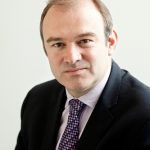
    Ed Davey – 2024 Statement on Donald Trump Winning Presidency

    The statement made by Ed Davey, the Leader of the Liberal Democrats, on 6 November 2024.

    This is a dark, dark day for people around the globe. The world’s largest economy and most powerful military will be led by a dangerous, destructive demagogue.

    The next President of the United States is a man who actively undermines the rule of law, human rights, international trade, climate action and global security.

    Millions of Americans – especially women and minorities – will be incredibly fearful about what comes next. We stand with them.

    Families across the UK will also be worrying about the damage Trump will do to our economy and our national security, given his record of starting trade wars, undermining NATO and emboldening tyrants like Putin.

    Fixing the UK’s broken relationship with the EU is even more urgent than before. We must strengthen trade and defence cooperation across Europe to help protect ourselves from the damage Trump will do.

    Now more than ever, we must stand up for the core liberal values of equality, democracy, human rights and the rule of law – at home and around the world.

  • Charles Michel – 2024 Statement on Donald Trump Becoming US President

    Charles Michel – 2024 Statement on Donald Trump Becoming US President

    The statement made by Charles Michel, the President of the European Council, on 6 November 2024.

    Congratulations to President-elect Donald Trump. The EU and the US have an enduring alliance and a historic bond. As allies and friends, the EU looks forward to continuing our constructive cooperation.

    The EU will pursue its course in line with the strategic agenda as a strong, united, competitive and sovereign partner while defending the rules-based multilateral system.

  • Keir Starmer – 2024 Statement on Donald Trump Becoming US President

    Keir Starmer – 2024 Statement on Donald Trump Becoming US President

    Congratulations President-elect Trump on your historic election victory. I look forward to working with you in the years ahead. As the closest of allies, we stand shoulder to shoulder in defence of our shared values of freedom, democracy and enterprise. From growth and security to innovation and tech, I know that the UK-US special relationship will continue to prosper on both sides of the Atlantic for years to come.