Tag: 2024

  • PRESS RELEASE : Lanes, drains, and automobiles – new port road driving growth and changing lives [November 2024]

    PRESS RELEASE : Lanes, drains, and automobiles – new port road driving growth and changing lives [November 2024]

    The press release issued by the Foreign Office on 14 November 2024.

    The UK, Denmark and Kenya have officially opened a critical link road at Mombasa Port, which is driving growth through trade and improving the lives of residents.

    There was cause to celebrate in Mombasa as the new Mbaraki-Nyerere Road and the Bamburi Drainage Outfall were officially opened in a ceremony at the coast.

    The road and drain have been operational since July 2022, and the upgrade from a murram road to a high-quality bitumen road has transformed the lives of the businesses and residents of Mombasa.

    The construction of the road was made possible by a three-way partnership between the County Government of Mombasa, the UK Government and the Royal Danish Embassy – and delivered by TradeMark Africa, a pan-African aid-for-trade organisation, whose work has reduced cargo clearance times at Mombasa Port from 11.2 to 3.4 days and led to a reduction of 16.5% in cargo transit times on the Northern Corridor, from the Port of Mombasa to Bujumbura in Burundi.

    Prior to the construction of the road, traffic congestion from Heavy Goods Vehicles (HGVs) – the workhorses of Mombasa Port – negatively impacted the productivity and profitability of businesses. The road is – literally – driving growth through trade, as it has led to higher truck utilisation rates, and quicker turnaround times for cargo at the Mbaraki Terminal. 160 local people were directly employed during construction, and 15% were women. The lower congestion has also improved air quality for residents.

    The 1.2km road that runs from Mbaraki to Nyerere has also positively impacted the lives of Mombasa’s citizens, due to the incorporation of a 100-meter-long drain, funded by the Royal Danish Embassy. This drain collects water from catchment areas along the roadside, transports it underneath the road, and dispatches it to the Indian Ocean – preventing flooding.

    Children’s education was disrupted due to excessive floodwater at a nearby school and an estate. At the Star of the Sea school, for example, children were carried across the floodwaters to their classrooms.

    Not only has the road been built to a high-quality, but it was designed and constructed considerately, to meet the needs of the local community. The road comes complete with wide pavements which make pedestrians safer, provide access for persons with disabilities, and make climate-friendly transport options more attractive. It has also been fitted with solar streetlights, which are not dependent on the electricity grid, and also connects to existing drainage from nearby businesses. The road also increases access to local goods and services, such as markets.

    The impact of the road is not just limited to Kenya, but also the East Africa region. The Port of Mombasa handles 31 million tons of cargo annually- expected to increase to 50 million by 2050 – and is a gateway for the flow of goods between Burundi, DRC, Rwanda, Tanzania, and Uganda.

    Principal, The Star of the Sea School, said:

    This small intervention is having a big impact on the lives of our students. The construction of the drain has prevented severe flooding, meaning our girls at the Star of the Sea school can learn without interruption, they can access school safely, and they have a happy and healthy learning environment.

    Mohammed Ali, CEO, BossFreight, said:

    The construction of the road has been a game changer for us – we can now transport more cargo, more efficiently, and have happier clients. We would welcome the construction of more high-quality roads that can handle more HGVs.

    Mr. Abdullswamad Sheriff Nassir, Governor of Mombasa County, said:

    Today marks a pivotal step towards realising our vision of a modern, efficient, and resilient Mombasa. This road is not just an infrastructural improvement; it is a transformative investment that will catalyse trade, enhance mobility, and foster economic growth for our people. We are committed to continuing our collaboration with international partners like TradeMark Africa, Denmark, and the United Kingdom to drive projects that uplift our communities, support sustainable development, and cement Mombasa’s role as a key gateway for regional trade.

    Leigh Stubblefield, Deputy British High Commissioner to Kenya and Development Director, said:

    As the Swahili proverb goes – unity is strength. One of the best ways we can drive growth is through partnerships that deliver high-quality infrastructure, that facilitate smooth trade, that do not load Kenya with debt – and crucially, are considerate of the needs of the local community. The UK is proud to have helped deliver this project with the County Government of Mombasa, The Danish Embassy, and TradeMark Africa. We go far, when we go together.

    Elma Adwa, Regional Manager, Royal Danish Embassy, said:

    Denmark and the United Kingdom have worked together for over a decade with TradeMark Africa in various projects. Denmark is extremely excited to be part of this initiative of officially opening a critical link road at Mombasa Port, which is driving growth through trade and improving the lives of residents within Mombasa County and beyond. We look forward to more projects that will enable the smooth flow of trade in Kenya.

    TMA Deputy CEO and Chief of Programmes, Ms Allen Asiimwe, reaffirmed TMA’s dedication to regional trade, saying:

    >TradeMark Africa recognises that efficient physical infrastructure is the backbone of regional trade, directly impacting economic growth, job creation, and community welfare. This road is more than a logistical upgrade—it is an investment in the economic future of Mombasa and Kenya. With our partners, we are committed to facilitating green growth and enhancing trade routes that empower local industries and uplift communities. TMA remains focused on developing resilient trade infrastructure that supports sustainable development goals and strengthens Africa’s trade competitiveness on the global stage.

  • PRESS RELEASE : Innovation and international comparisons front and centre of Sentencing Review [November 2024]

    PRESS RELEASE : Innovation and international comparisons front and centre of Sentencing Review [November 2024]

    The press release issued by the Ministry of Justice on 14 November 2024.

    Technological innovations and international prison policies are among things being studied as part of the government’s Sentencing Review.

    • Panel of experts appointed to support review chair David Gauke
    • Public call for evidence opened for 8 weeks
    • Review to consider international best practice to tackle growing prison population and reduce reoffending

    The review, which aims to end the crisis in our prisons and make sure the country always has the prisons space needed to keep people safe, will consider how other jurisdictions who have faced similar capacity challenges have been able to tackle rising prison populations and reducing reoffending.

    To ensure the review considers all aspects of the justice system, including the impact of changes on victims, an expert panel has been appointed to support independent chair David Gauke. This includes former Chief Executives of the Crown Prosecution Service, Peter Lewis and HMPPS, Michael Spurr, as well as former Lord Chief Justice Lord Burnett and Executive Director of End Violence Against Women Andrea Simon.

    The review will be further informed by a call for evidence launched today [14 November 2024] with academics, experts and the public encouraged to share ideas for innovation and reform over the next eight weeks.

    Lord Chancellor and Secretary of State for Justice Shabana Mahmood said:

    No Lord Chancellor should be put in the invidious position I was on taking office – faced with a prison system on the verge of collapse. We must make sure there are always a cell to lock up dangerous offenders.

    This panel represents a wealth of experience. I have no doubt it will be invaluable in delivering a review which will help set out the long-term plan for our prisons.

    The panel appointed to support David Gauke are:

    • Lord Burnett – Previous Lord Chief Justice (2017 – 2023)
    • Catherine Larsen KPM – A retired inspector from Avon and Somerset whose work included transforming the way rape and serious sexual offences are investigated by the police
    • Nicola Padfield KC (Hon) – Criminal Law Barrister Emeritus Professor of Criminal and Penal Justice at the Law Faculty, University of Cambridge
    • Sir Peter Lewis – Former Chief Executive of Crown Prosecution Service (2007-2016), Former Registrar of the International Criminal Court (2023).
    • Michael Spurr – Former Chief Executive of HMPPS (2010-2019)
    • Andrea Simon – Executive Director at End Violence Against Women Coalition (EVAW)

    The call for evidence will explore key themes including the structure of sentencing, use of technology as tough alternatives to custody, custodial and non-custodial sentences, as well as the individual needs of both victims and offenders.

    Review Chair David Gauke said:

    This review will investigate how we can create a more effective criminal justice system, looking to jurisdictions who have faced similar challenges, and at how we can harness new technology to manage offenders in and out of prison.

    I welcome responses to the call for evidence which challenge current thinking, are innovative, and which spotlight how best practice can be scaled, so we can build a justice system which works both now and in the future.

    Alongside the call for evidence, international learnings will be a central focus for the panel.  Sweden and the Netherlands have both used technology to manage offenders in and outside of prison and tackle rising prison populations. This has included an electronic monitoring system integrated between prisons and probation in the Netherlands, and using mobile apps in Sweden to support rehabilitation outside of prison, such as improving attendance at probation meetings.

    Texas faced similar capacity challenges to England and Wales in the early 2000s. In 2007, prisons were at capacity and the population was predicted to rise, needing an additional 17,000 cells over the next five years. Under a system implemented by a Republican governor, prisoners can now reduce the time they spend in custody by participating in courses aimed at tackling the root causes of crime, and for good behaviour. The Texan prison population has now decreased by over 20,000 and crime in the area has fallen.

    In developing its recommendations, the Sentencing Review will follow 3 core principles to ensure a sustainable justice system:

    • make sure prison sentences punish serious offenders and protect the public, and there is always the space in prison for the most dangerous offenders
    • look at what more can be done to encourage offenders to turn their backs on a life of crime, and keep the public safe by reducing reoffending
    • explore tougher punishments outside of prison to make sure these sentences cut crime while making the best use of taxpayers’ money

    The review will submit its findings in full to the Lord Chancellor by Spring 2025.

    Notes to editors

    The seven key themes the call for evidence will explore are:

    • History and Trends in sentencing
    • The Structure of sentencing
    • The use of technology within sentencing
    • Community sentences
    • Custodial sentences
    • The progression of custodial sentences
    • The individual needs of victims and offenders
  • PRESS RELEASE : Defence Secretary meets counterparts in Türkiye and Saudi Arabia to further Defence Cooperation [November 2024]

    PRESS RELEASE : Defence Secretary meets counterparts in Türkiye and Saudi Arabia to further Defence Cooperation [November 2024]

    The press release issued by the Ministry of Defence on 14 November 2024.

    Deepening defence cooperation and urgently de-escalating tensions in the Middle East will be the focus of the Defence Secretary’s visit to Türkiye and Saudi Arabia.

    • UK to commit to expanding cooperation on shared defence industrial priorities with Türkiye
    • In his first visit to Riyadh, John Healey will reaffirm the UK’s commitment to a ‘future-facing’ defence relationship with the Kingdom of Saudi Arabia (KSA)
    • Defence Secretary will also discuss ongoing efforts to secure a lasting ceasefire in Gaza and in Lebanon.

    Deepening defence cooperation and urgently de-escalating tensions in the Middle East will be the focus of discussions between the Defence Secretary and his counterparts in Türkiye and the Kingdom of Saudi Arabia today (Thursday 14 November).

    During his meetings in Ankara and Riyadh, John Healey will reaffirm the UK’s commitment to global security and securing an immediate ceasefire in Gaza and Lebanon.

    Discussions with both nations will also focus on shared priorities, such as deepening ties between our defence industries and tackling regional security challenges.

    In a mutual commitment to bolster regional stability, NATO Allies UK and Türkiye will agree to deepening their defence industrial cooperation, focusing efforts on exploring mutually beneficial opportunities.

    And in his first visit to Saudi Arabia, the Defence Secretary will build on the decades-long defence relationship between the UK and KSA to enhance cooperation on shared security priorities.

    Defence Secretary John Healey MP said:

    Deepening our defence relationships with key partners across the region will help the UK to support regional stability and economic growth at home.

    This government is determined to work with our partners and across the Middle East to boost military cooperation and help lead a renewed push for peace.

    While in Ankara, the Defence Secretary and his counterpart, Yaşar Güler, will reaffirm plans to work together towards greater military cooperation and pursue a joint strategy for industry, providing significant opportunities for mutual growth and security.

    Talks will aim to initiate a structured dialogue to explore procurement opportunities, and joint export ventures.

    After travelling on to Riyadh this afternoon, the Defence Secretary is scheduled to meet Defence Minister HRH Prince Khalid bin Salman (KbS), and the Minister for the National Guard Abdullah bin Bandar (AbB).

    The UK and KSA share a decades-long defence partnership, founded in mutual security interest, reliable UK support and longstanding industrial collaboration.  Engagements today will provide the opportunity to explore how to further enhance cooperation and capability development in pursuit of shared security priorities; including support to KSA’s Vision 2030 Transformation programme.

  • PRESS RELEASE : Pension megafunds could unlock £80 billion of investment as Chancellor takes radical action to drive economic growth [November 2024]

    PRESS RELEASE : Pension megafunds could unlock £80 billion of investment as Chancellor takes radical action to drive economic growth [November 2024]

    The press release issued by HM Treasury on 13 November 2024.

    Biggest pension reforms in decades will merge Local Government Pension Scheme assets and consolidate defined contribution schemes into megafunds.

    • Changes could unlock around £80 billion of investment for infrastructure projects and businesses of the future
    • Local Government Pension Scheme changes will free up money for local public services in the long-term and secure more than £20 billion for investment in local communities

    Pension megafunds will be created as part of the biggest set of pension reforms in decades, unlocking billions of pounds of investment in exciting new businesses and infrastructure and local projects.

    After her inaugural Budget that fixed the foundations to deliver stability, Rachel Reeves will use her first Mansion House speech as Chancellor to announce bold action to tackle the fragmented pensions landscape, deliver investment and drive economic growth – which is the only way to make people better off.

    The radical reforms, which will be introduced through a new Pension Schemes Bill next year, will create megafunds through consolidating defined contribution schemes and pooling assets from the 86 separate Local Government Pension Scheme authorities.

    These megafunds mirror set-ups in Australia and Canada, where pension funds take advantage of size to invest in assets that have higher growth potential, which could deliver around £80 billion of investment in exciting new businesses and critical infrastructure while boosting defined contribution savers’ pension pots.

    Chancellor of the Exchequer, Rachel Reeves said:

    Last month’s Budget fixed the foundations to restore economic stability and put our public services on a firmer footing. Now we’re going for growth.

    That starts with the biggest set of reforms to the pensions market in decades to unlock tens of billions of pounds of investment in business and infrastructure, boost people’s savings in retirement and drive economic growth so we can make every part of Britain better off.

    Deputy Prime Minister, Angela Rayner said:

    We’ve all seen the fantastic work carried out day in, day out, by our frontline workers and it’s about time their pension started working just as hard by driving investment in their communities.

    This is about harnessing the untapped potential of the pensions belonging to millions of people, and using it as a force for good in boosting our economy.

    Pensions Minister, Emma Reynolds said:

    Harnessing the power of this multi-billion-pound industry is a win-win, benefiting future pensioners, and our wider economy.

    These reforms could unlock £80 billion of investment into exciting new businesses and critical infrastructure.

    The UK pension system is one of the largest in the world – with the Local Government Pension Scheme and Defined Contribution market set to manage £1.3 trillion in assets by the end of the decade. However, our pension landscape is fragmented and lacks the size needed to invest in exciting new businesses or expensive projects like infrastructure.

    The government’s analysis – published today in the interim report of the Pensions Investment Review at Mansion House – shows that pension funds begin to return much greater productive investment levels once the size of assets they manage reaches between £25-50 billion. At this point they are better placed to invest in a wider range of assets, such as exciting new businesses and expensive infrastructure projects. Even larger pensions funds of greater than £50 billion in assets can harness further benefits including the ability to invest directly in large scale projects such as infrastructure at lower cost.

    This is supported by evidence from Canada and Australia. Canada’s pension schemes invest around four times more in infrastructure, while Australia pension schemes invest around three times more in infrastructure and 10 times more in private equity, such as businesses, compared to Defined Contribution schemes in the UK. Benchmarking against domestic and international examples show how consolidation of the Local Government Pension Scheme and defined contribution schemes into megafunds could unlock around £80 billion of investment in productive investments like infrastructure and fast-growing companies.

    The government is therefore consulting on proposals to take advantage of pension fund size and improve their governance.

    Local Government Pension Scheme

    The Local Government Pension Scheme in England and Wales will manage assets worth around £500 billion by 2030. These assets are currently split across 86 different administering authorities, managing assets between £300 million and £30 billion, with local government officials and councillors managing each fund.

    Consolidating the assets into a handful of megafunds run by professional fund managers will allow them to invest more in assets like infrastructure, supporting economic growth and local investment on behalf of the 6.7 million public servants – most of whom are low-paid women – whose savings are managed.

    These megafunds will need to meet rigorous standards to ensure they deliver for savers, such as needing to be authorised by the Financial Conduct Authority. Governance of the Local Government Pension Scheme will also be overhauled to deliver better value from investment decisions, which independent research suggests could free up money in the long-term to support local public services.

    Local economies will be boosted by the changes as each Administering Authority will be required to specify a target for the pool’s investment in their local economy, working in partnership with Local and Mayoral Combined Authorities to identify the best opportunities to support local growth. If each Administering Authority were to set a 5% target, that would secure £20 billion of investment in local communities.

    A new independent review process will be established to ensure each of the 86 Administering Authorities is fit for purpose.

    Defined contribution schemes

    Defined contribution pension schemes are set to manage £800 billion worth of assets by the end of the decade.

    There are currently around 60 different multi-employer schemes, each investing savers’ money into one or more funds. The Government will consult on setting a minimum size requirement for these funds to ensure they deliver on their investment potential.

    The government will also consult on measures to facilitate this consolidation into megafunds, including legislating to allow fund managers to more easily move savers from underperforming schemes to ones that deliver higher returns for them.

  • PRESS RELEASE : Keir Starmer meeting with Prime Minister Ciolacu of Romania [November 2024]

    PRESS RELEASE : Keir Starmer meeting with Prime Minister Ciolacu of Romania [November 2024]

    The press release issued by 10 Downing Street on 13 November 2024.

    The Prime Minister welcomed Romanian Prime Minister Marcel Ciolacu to Downing Street this afternoon.

    The leaders began by discussing the historic visit, which was the first by a Romanian Prime Minister to the United Kingdom in more than 17 years.

    Across defence, security, trade and investment, the relationship between the two countries was full of opportunity and potential, the leaders agreed.

    They reflected on the new treaty announced by their defence secretaries today to deepen defence cooperation and procurement, and underscored the importance of supporting allies in the region from ongoing Russian aggression.

    The Prime Minister welcomed Prime Minister Ciolacu’s reflections on the situation in the Black Sea, including the UK’s ongoing demining support.

    They also discussed how the UK could further support Romania’s critical national infrastructure through investment and expertise, including on clean energy.

    The Prime Minister then updated on his EU reset and said he hoped it would allow for a closer relationship with partners across Europe.

    The leaders agreed to stay in touch.

  • David Lammy – 2024 Speech at the Asian Development Bank Event

    David Lammy – 2024 Speech at the Asian Development Bank Event

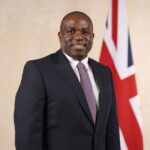
    The speech made by David Lammy, the Foreign Secretary, on 13 November 2024.

    Thank you, President Asakawa, for bringing us all together today.

    I am really very, very pleased to see such a strong line-up as we launch this important initiative.

    In my first major speech as Foreign Secretary, the Kew Lecture, I spoke about the need to put tackling the climate and nature crisis at the heart of our foreign policy.

    I passionately believe this is the right course for Britain – given the size of the threat, and the scale of the opportunity.

    And we are putting climate at the centre. Already domestically, we have got rid of the onshore wind ban. Already domestically, we have set up GB Energy – the first public utility to really harness and race us forward on that clean energy mission. Later on today, our Prime Minister will announce an ambitious NDC target, and we have already said that there will be no renewal of oil and gas licenses in the North Sea and we’ve seen the end of coal in the United Kingdom. We have got off to a major, major start. I passionately believe that this is the right course for Britain given the size of the threat then and the scale of the opportunity.

    But clearly, no one country can tackle this problem alone.

    So it is very important to see countries from the Indo-Pacific and the Euro-Atlantic, all working together, all recognising that our security is indivisible, and that this is a true climate-nature moment where we come together and we see that acutely in conflicts like the conflict that we see in Ukraine.

    I am also delighted that the UK will be playing its part, announcing today a 280 million dollar guarantee as part of this collective effort.

    I said it in my Kew speech and I have heard it frequently at past COPs, but it really bears repeating.

    Words are not enough. If we are to avoid the worst, all of us need to take action. And for countries like those on this panel, whose economies prospered in the age of hydrocarbons, that means putting our money where our mouth is.

    But it’s not just about what we commit, it’s also about making the most of that money.

    All of us on this panel will have experienced difficult conversations with our finance ministries.

    And at the same time, all of us will have heard again and again in conversations with partners in the Global South the shortages in climate finance and how big they are, and they risk getting bigger.

    The best way to manage this is through innovative and multilateral solutions like this finance facility. Whether we say we want to get our penny’s worth or bang for our buck, the point remains the same – this is about maximising our impact.

    I congratulate the Asian Development Bank and our friends here today for their work in reaching this milestone.

    Thanks to the design of this Facility, you will be able to use every pound, dollar, krona, yen or won from us, and lend four and a half times as much.

    As a result, we will have leveraged eleven billion dollars between us.

    And we are going a long way towards fulfilling your ambition to be the climate bank of Asia.

    This is urgently needed.

    Over half of our global emissions come from Asia, almost half from developing Asia.

    This is not surprising given the region’s size and impressive growth in recent years.

    But it highlights the need for climate action.

    Not least given how climate change risks reversing development gains particularly in the region, with over 40 million people at risk of falling back into extreme poverty because of the impact of the climate emergency.

    Ultimately, like all the work we do at COP, this event is about them, not us.

    It’s about taking the action they need.

    It’s about getting them access to the finance they deserve.

    It’s about changing their lives for the better.

    And preserving a planet on which they and we can live in harmony with our natural environment for generations to come.

    Thank you.

  • PRESS RELEASE : The human cost of Russia’s illegal war is appalling – UK statement to the OSCE [November 2024]

    PRESS RELEASE : The human cost of Russia’s illegal war is appalling – UK statement to the OSCE [November 2024]

    The press release issued by the Foreign Office on 13 November 2024.

    The UK highlights the appalling human cost of Russia’s illegal, unprovoked war against Ukraine with Russian forces suffering their heaviest losses of the conflict so far in October 2024.

    Thank you, Mr Chair.  We are approaching 1000 days of Russia’s illegal full-scale invasion of Ukraine.  The costs for Ukraine have been immense, and we will continue to hold Russia accountable against its OSCE commitments for its actions.  But President Putin, who chose to start this war, should also be held accountable for the cost of his war to Russia and the Russian people.

    For example, the cost to Russia’s international credibility, after it so clearly violated its commitments under the UN Charter, the Helsinki Final Act and the Geneva Conventions. Undermining fundamental commitments, including sovereignty, territorial integrity and the non-use of force – principles which we all rely on for our safety and security.

    But Mr Chair, the human cost of this war is extraordinary and appalling. Almost 12,000 Ukrainian civilians have been killed as a direct result of Russian aggression and 6.2m Ukrainians forced to leave their country as refugees. Each day President Putin continues with his war of choice, more lives are lost – including those of his own people.  October 2024 saw the highest number of Russian casualties since the full-scale invasion began.  Nearly 42,000 losses were reported, taking the total number of Russian casualties since the war began to approximately 700,000.  Hundreds of thousands killed and seriously wounded, not out of necessity, but because of the Russian President’s imperial ambitions.  Tragically, human lives are a commodity in which the Russian leadership appears to place little value.

    We know that the human rights situation within Russia is dire. Last month the UN Special Rapporteur on the situation of human rights in the Russian Federation, Mariana Katzarova published a report on the Russian State’s complicity in and encouragement of widespread and systematic torture and ill-treatment, including against the brave Russians who dare to speak out against the invasion. But also among the victims mentioned in this report are Russia’s own mobilised men and regular servicemen, some for refusing to obey orders to fight against Ukraine. Hundreds are reportedly detained in unofficial detention centres near the front lines. This goes against the OSCE’s Code of Conduct, which compels States to abide by international law, including the Geneva Conventions.

    And how are these soldiers seen by Russia’s elite?  Well, a member of President Putin’s ruling party in the State Duma, Mr. Alexander Borodai, boasted that Russian authorities were sending troops with “no social value” to fight in Ukraine.  According to Mr Borodai, they are seen as “expendable” or “spare people”.

    Perhaps having exhausted these “spare people”, Russia’s leadership is now turning to Pyongyang to bolster its combat capability. Not only does this latest move recklessly endanger security in the Euro-Atlantic and Indo-Pacific, it is a stark reminder of Russia’s increasing reliance on third-country support.    At last week’s joint meeting of this Forum and the Permanent Council, participating States and Partners for Cooperation made clear their concern at the growing military relationship between Russia and the Democratic People’s Republic of Korea, which stands in violation of several UN Security Council Resolutions.  Regrettably, Russia chose not to engage seriously and erroneously claimed that the topic was outside the OSCE’s remit.  Preventing unintended escalation or misunderstandings, including from unusual military activity within the OSCE’s Zone of Application, is why the OSCE was built.  Russia owes participating States transparency on why these troops are there and with what intent.  Enhancing transparency and risk reduction is in our collective security interests.

    Thank you, Mr Chair.

  • PRESS RELEASE : Universal Periodic Review 47 – UK Statement on Nicaragua [November 2024]

    PRESS RELEASE : Universal Periodic Review 47 – UK Statement on Nicaragua [November 2024]

    The press release issued by the Foreign Office on 13 November 2024.

    Statement by the UK’s Human Rights Ambassador, Eleanor Sanders, at Nicaragua’s Universal Periodic Review at the Human Rights Council in Geneva.

    Thank you, Madam Vice-President,

    We too are increasingly alarmed by the deterioration of human rights in Nicaragua, including the closure of church-affiliated organisations and the harassment and arbitrary detention of members of the Church.

    We are also concerned by the shutdown of civic space, including space for freedom of expression and independent media, and the growing climate of intimidation and repression affecting Nicaraguans in exile.

    We therefore recommend that Nicaragua:

    1. Releases all political prisoners immediately and without condition, and amends the Special Law 1145, relating to Nicaraguan nationality.
    2. Addresses concerns regarding this year’s reform to the Penal Code, which allows the prosecution and confiscation of the assets of exiled Nicaraguans or foreigners accused of crimes against the State.
    3. Ensures that religious and non-religious individuals can share information and materials about their beliefs without interference or threat to their safety.

    Thank you.

  • PRESS RELEASE : Universal Periodic Review 47 – UK Statement on Equatorial Guinea [November 2024]

    PRESS RELEASE : Universal Periodic Review 47 – UK Statement on Equatorial Guinea [November 2024]

    The press release issued by the Foreign Office on 13 November 2024.

    Statement by the UK at Equatorial Guinea’s Universal Periodic Review at the Human Rights Council in Geneva.

    Thank you Vice President,

    The United Kingdom welcomes steps taken by Equatorial Guinea to move away from capital punishment and encourages further concrete, and constitutional, steps towards full abolition (including in military courts) including by satisfying provisions to become a signatory to the Second Optional Protocol to the ICCPR (International Covenant on Civil and Political Rights).

    We also welcome that Equatorial Guinea accepted a broad range of UPR recommendations from the previous cycle in 2019, especially in regards to strengthening human rights protections for all citizens. However, we remain concerned by limited progression on implementation and call for actionable next steps to be agreed and delivered to implement the accepted recommendations.

    We recommend that Equatorial Guinea:

    1. Sign and ratify the Optional Protocol to the Convention against Torture and Other Cruel, Inhuman or Degrading Treatment or Punishment.
    2. Continue to work with the UNFPA and other international organisations to protect and promote the rights of women and girls, including by banning underage marriage.
    3. Take concrete steps to engage with the UN Working Group on Arbitrary Detention, including by both responding to recent opinions made by the Working Group and facilitating a visit by them, as accepted in 2019.
  • PRESS RELEASE : Universal Periodic Review 47 – UK Statement on Costa Rica [November 2024]

    PRESS RELEASE : Universal Periodic Review 47 – UK Statement on Costa Rica [November 2024]

    The press release issued by the Foreign Office on 13 November 2024.

    Statement by the UK at Costa Rica’s Universal Periodic Review at the Human Rights Council in Geneva.

    Thank you, Mr President,

    We welcome Costa Rica’s commitment to tackling discrimination including as the first country in Latin America and the Caribbean to launch a national strategy against hate speech and discrimination.

    We urge the government to take further steps to reduce discrimination, particularly against women and children, and the LGBTQ+ community.

    In addition, we welcome Costa Rica’s commitment to the American Convention on Human Rights, but are concerned by recent criticism of the media.

    We have three recommendations:

    1. Take additional steps to implement Act No.9406, to enhance legal protection for girls and adolescent women associated with abusive relationships, to help tackle the recent surge in domestic violence.
    2. Take further measures to protect rights of LGBTQ+ persons, including banning the process of conversion therapy.
    3. Ensure the protection of media freedom by strengthening legal protection guarantees for journalists, the media and civil society.

    Thank you.