Tag: 2024

  • PRESS RELEASE : The UK announces 20,000 British Forces to boost NATO in speech [January 2024]

    PRESS RELEASE : The UK announces 20,000 British Forces to boost NATO in speech [January 2024]

    The press release issued by the Foreign Office on 15 January 2024.

    Speaking at Lancaster House today, the Defence Secretary set out his vision for deterring threats, leading among allies, and defending the UK.

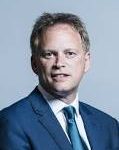
    In the context of an ever more dangerous world, the Secretary of State for Defence, Rt Hon Grant Shapps MP, will deliver a major speech at Lancaster House today, to set out his vision for the UK to deter threats, lead among allies and defend the UK.

    Following last week’s targeted Royal Air Force strikes against the Houthis in Yemen and the announcement of a further £2.5bn UK support package to Ukraine, the Defence Secretary is expected to announce that in the first half of 2024, 20,000 service personnel from the Royal Navy, the British Army, and the Royal Air Force will deploy across Europe to take part in Exercise Steadfast Defender 24.

    The exercises will see the UK’s Armed Forces join thousands of personnel from 31 NATO allies and Sweden, operating across multiple countries, coinciding with the NATO Alliance’s 75th year.

    The deployment will see the UK use the RAF’s most up-to-date fighter jets and surveillance aircraft, the Royal Navy’s most advanced warships and submarines, and a full range of Army’s capabilities – from logistics to armour to special operations forces.

    Defence Secretary Grant Shapps MP is expected to say:

    We are in a new era and we must be prepared to deter our enemies, prepared to lead our allies and prepared to defend our nation whenever the call comes.

    Today our adversaries are busily rebuilding their barriers. Old enemies are reanimated. Battle lines are being redrawn. The tanks are literally on Ukraine’s lawn.  And the foundations of the world order are being shaken to their core. We stand at a crossroads.

    I can announce today that UK will be sending some 20,000 personnel to take part in one of NATO’s largest deployments since the end of the Cold War. Exercise Steadfast Defender. It will see our military joining forces with counterparts from 30 NATO countries plus Sweden, providing vital reassurance against the Putin menace.

    Among those deploying next year is 7th Light Mechanised Brigade Combat Team (7LMBCT), which led the response during the activation of NATO’s Strategic Reserve Force in Kosovo last year, and which will be operating across Europe to deliver one of the largest NATO deployments since the Cold War.

    Enhancing the coalition between the UK and her NATO allies, Steadfast Defender 24 will bring NATO nations together and deliver on promises made at the 2023 NATO summit in Vilnius.

    Contributions from each service:

    The Royal Navy:

    • The Royal Navy will be deploying eight warships and submarines, and more than 2,000 sailors.
    • A UK Carrier Strike Group, centred on a Queen Elizabeth Class aircraft carrier and her air group of F-35B Lightning jets and helicopters, and surrounded by escort frigates and destroyers, will operate as part of a potent naval force of allied warships and submarines in the North Atlantic, the Norwegian Sea and the Baltic Sea.
    • More than 400 Royal Marines Commandos will be deployed to the Arctic Circle at the heart of an allied amphibious task group designed to land in the high north and defend the alliance in one of the world’s harshest environments.

    The British Army:

    • 16,000 troops from the British Army will be deployed across eastern Europe from February to June 2024, taking with them tanks, artillery, helicopters, and parachutes.
    • There will be live fire manoeuvres, parachute jumps, an Army and Navy joint helicopter force, and Army Special Operations Forces on deployment.
    • The British Army will deploy to test and strengthen the readiness of the UK’s land forces in defending NATO, and to bolster its ability to operate jointly with allied armed forces.

    The Royal Air Force:

    • The Royal Air Force will be making use of some of its most cutting-edge aircraft, including F35B Lightning attack aircraft and Poseidon P8 surveillance aircraft.
    • The RAF will practice flying in simulated conflict scenarios against near-peer adversaries, proving its ability to deter and defend against threats.
  • Grant Shapps – 2024 Speech on Defending Britain from a More Dangerous World

    Grant Shapps – 2024 Speech on Defending Britain from a More Dangerous World

    The speech made by Grant Shapps, the Secretary of State for Defence, at Lancaster House in London on 15 January 2024.

    Thirty-five years ago, Margaret Thatcher gave a short speech here in Lancaster House.

    She spoke of her optimism about the changes taking place between East and West. Barely two weeks later the Berlin Wall fell.

    It was the dawn of a new era. Existential threats were banished. And a new global feel good factor spread to Defence.

    This was the age of the peace dividend. The notion that while our defences should be maximised at times of tension they could be minimised in times of peace.

    Conflict didn’t disappear of course. But with no great power menacing the continent, peace gave the impression of being just around the corner.

    Yet, not everyone got the memo. In fact our adversaries were mobilising.

    The belligerent autocratic state was making a comeback – having got away with the illegal annexation of Crimea in 2014, Putin launched his brutal invasion of Ukraine eight years later.

    And as Russia continues its illegal campaign in Ukraine, China is assessing whether the West loses its patience.

    Today, Russia and China have been joined by new nuclear, and soon to be nuclear, powers.

    North Korea promising to expand its own nuclear arsenal.

    And then there is Iran, whose enriched uranium is up to 83.7%, a level at which there is no civilian application.

    Back in the days of the Cold War there remained a sense that we were dealing with rational actors.

    But these new powers are far more unstable, and irrational.

    Can we really assume the strategy of Mutually Assured Destruction that stopped wars in the past will stop them in future, when applied to the Iranian Revolutionary Guard or North Korea?

    I am afraid we cannot.

    Particularly since there is now another new worrying consideration: Our adversaries are now more connected with each other.

    For example, we have seen how Iranian proxies are causing havoc from Israel to the Red Sea.

    That Russia has what the two countries describe as a “no limits partnership” with China – with whom they conduct regular joint exercises.

    Meanwhile, Putin is relying on Iranian drones and North Korean ballistic missiles to fuel his illegal bombardment in Ukraine.

    With friends like these, the world is becoming more dangerous and has done in recent years.

    But the other threats that plagued the start of the 21st century haven’t gone away.

    The spectre of terrorism and threats from non-state actors, as October 7 showed, still haunts the civilised world.

    Put it all together, and these combined threats risk tearing apart the rules-based international order – established to keep the peace after the Second World War.

    Today’s world then, is sadly far more dangerous.

    With the UN reporting that we are facing the highest number of violent conflicts since the Second World War.

    Now some argue these threats are not existential to the UK.

    And yet, what happens elsewhere, quickly happens here.

    In the past few years we’ve seen terror attacks on the streets of London, attempted assassinations in Salisbury, theft of Intellectual Property, attempted interference in our political processes, a cost-of-living crisis, brought to you by Putin, that’s hurting families here at home.

    And now, our trade. 90 per cent of which comes by sea, is the target of terrorists.

    Proving that not only do our adversaries have the intent to target us but they have a widening array of weapons with which to wreak havoc.

    In our online world our adversaries don’t need to jump in a tank board a sub or strap into a fighter jet to hurt us.

    Cyber warfare simply means hacking into our networks and watching the economic carnage unfold.

    Last year, almost a third of businesses in the UK suffered a cyber breach or attack. And the total cost to the UK economy runs into billions.

    We know significant numbers of these attacks come from Russia and China where they are also developing satellite killing technology, capable of degrading us from space.

    Even mass migration can be cynically used against us as a weapon of war, as Poland, Norway, and Finland have been experiencing.

    In other words, nation states plus non-state actors with greater connections between them plus more creative weapons all adds up to more trouble for the world.

    Over the last decade this government has made great strides to turn the Defence tanker around.

    The refreshes of the Integrated Review and Defence Command Paper have been instrumental in ensuring Britain is defended in this more dangerous world.

    We’ve uplifted our defence spending – investing billions into modernising our Armed Forces and bringing in a raft of next generation capabilities, from new aircraft carriers to F35s; from new drones to Dreadnought submarines; from better trained troops; to the creation of a national cyber force.

    And when the world needed us, we have risen to the moment.

    Giving Ukraine our unwavering support and galvanising others to their cause, including with our biggest ever funding package, announced last week.

    Taking action, we work to stamp out the global ambitions of Daesh.

    We’ve acted at the forefront of global responses to maintain regional stability after October 7th by sending a Royal Navy Task Group, a company of Royal Marines, surveillance planes and lifesaving aid to Gaza.

    And taking a lead role within global forces to protect freedom of navigation in the Red Sea.

    Not only that but we’ve strengthened Britain’s place in the world with expanded partnerships from the Gulf to the Indo-Pacific.

    We’re playing a major part in stirring the West into a renewed commitment to defence, using our 2014 NATO summit in Newport to bring Alliance nations together to stop the rot, by committing to spending 2 per cent of GDP on Defence.

    Today, for the very first time this government is spending more than £50bn a year on Defence in cash terms, more than ever before.

    And we have made the critical decision to set out our aspiration to reach 2.5% of GDP spent on defence.

    And as we stabilise and grow the economy, we will continue to strive to reach it as soon as possible.

    But now is the time for all allied and democratic nations across the world to do the same.

    And ensure their defence spending is growing.

    Because, as discussed, the era of the peace dividend is over.

    In five years’ time we could be looking at multiple theatres involving Russia, China, Iran and North Korea.

    Ask yourselves – looking at today’s conflicts across the world – is it more likely that the number grows, or reduces?

    I suspect we all know the answer – it’s likely to grow. So, 2024 must mark an inflexion point.

    For Ukraine, this will be a year when the fate of their nation may be decided.

    For the world, this will be the greatest democratic year in history with nearly half of the world’s population going to the polls.

    And for the UK it must also be a moment to decide the future of our national defences. The choice is stark.

    Some people, especially on the left, have a tendency to talk Britain down.

    They believe Britain can no longer have the power to influence world events.

    That we should somehow shrink into ourselves and ignore what’s happening beyond our shores.

    I passionately believe these unpatriotic, Britain belittling doom-mongers are simply wrong.

    Their way would lead us sailing blindly into an age of autocracy. So we must make a different choice.

    And the history of our great island nation shows us the way.

    Britain has often accomplished the seemingly impossible before. Our history is littered with moments when we faced down the threat and triumphed.

    But looking ahead, we are in a new era and we must be prepared to deter our enemies, lead our allies, and defend our nation.

    In terms of deterrence, it’s about the UK gaining a strategic advantage over our enemies.

    The foundation of that advantage is, of course, our nuclear enterprise.

    At a time of mounting nuclear danger, our continuous at sea deterrent provides the ultimate protection.

    And that’s why we are spending around £31bn to bring in next generation Dreadnought submarines and upgrade our deterrent.

    In a more contested world, we need to bring that same goal of deterrence to our conventional forces – so we have made modernisation a critical priority.

    Taking the long-term capability decisions we need to transform our Armed Forces into a formidable deterrent.

    Enabling them to maintain the UK’s strategic advantage and empowering them to be able to deliver the outcomes we need in multiple theatres at once.

    The growing success of that work was powerfully shown last week when, in less than 24 hours, the UK was able to both take action to defend ourselves against the Houthis and uplift our support to Ukraine to new record levels.

    If Putin thought we’d be distracted by the events in the Middle East then last week, because of the long-term decisions this government has taken, his hopes were surely dashed.

    In a complex world, no nation can afford to go it alone, so we must continue strengthening our alliances so the world knows they cannot be broken.

    Defence is in many ways the cornerstone of our relations across the world.

    Our world leading Armed Forces, cutting-edge industrial base and willingness to support our allies is the reason why Britain is the partner of choice for so many.

    And among our partnerships, NATO remains pre-eminent. 75 years after its foundation, today NATO is bigger than ever.

    But the challenges are bigger too.

    That’s why the UK has committed nearly the totality of our air, land and maritime assets to NATO.

    But, in 2024, I am determined to do even more.

    Which is why I can announce today that UK will be sending some 20,000 personnel to lead one of NATO’s largest deployments since the end of the Cold War, Exercise Steadfast Defender.

    It will see our military joining forces with counterparts from 30 NATO countries plus Sweden, providing vital reassurance against the Putin menace.

    Our carrier strike group will be out in full force, with our magnificent flagship HMS Queen Elizabeth leading the way.

    And flying from her decks will be the fifth generation F35 lightning jets, accompanied by a fearsome phalanx of frigates, destroyers and helicopters.

    We’ll also have a submarine patrolling the depths and one of our Poseidon P8 aircraft conducting surveillance from the skies above, and more than 400 of our brilliant Royal Marines will be training in the Artic Circle, contending with some of the toughest environments anywhere on the planet.

    On land, we’ll be deploying over 16,000 soldiers, led by our 7th Light Mechanised Brigade Combat Team which superbly led our recent response in Kosovo.

    All of which, makes this our largest deployment of land forces to NATO for 40 years.

    But NATO is only part of our rich tapestry of partnerships.

    And this government has taken bold decisions to embark on the partnerships we need to defend ourselves from a more dangerous world.

    We are rapidly building our AUKUS partnership.

    And last month I signed our Global Combat Air Partnership (or GCAP) with Japan and Italy.

    These projects are not just about building nuclear powered subs, sixth generation fighter planes, and innovating in all forms of Defence.

    They are about sharpening our strategic edge so we can maintain our advantage over our adversaries.

    They are precisely the deep relationships needed to preserve national and regional security.

    And they’re emblematic of the way we will work in the future.

    But it’s not enough to deter. We must lead. Standing up for our values around the world.

    And Ukraine is a test case.

    This year, its future may well be decided.

    Valiant Ukrainian warriors have had incredible success pushing back invading Russian forces, retaking 50 per cent of the territory stolen by Russia, opening up a maritime passage in the Black Sea.

    But the West must not let them down.

    British leadership has already had a galvanising effect.

    We’ve convened some 10 countries to help Ukrainians train here in the UK.

    And today I can announce that our programmes have now trained over 60,000 Ukrainian troops since Russia launched its invasion of Ukraine in 2014.

    Last month, I launched a new maritime coalition with Norway to defend Ukraine’s maritime flank.

    Since then, over 20 partner nations have joined that coalition.

    But the international community cannot let this support slip.

    Putin believes the West lacks staying power.

    And since the future of the world order is at stake, we must prove him wrong.

    Rewarding his war with victory would only increase the risk of escalation.

    Not only because he’s hell bent on rebuilding the Russian empire.

    But because it would signal weakness to other would-be aggressors.

    That is why on Friday the Prime Minister signed the historic UK-Ukraine Agreement on Security Cooperation.

    The start of a 100-year alliance that we are building with our Ukrainian friends.

    It sees us increasing our military support to £2.5bn – taking the total of UK military aid to more than £7bn. With even more gifted directly from the UK’s equipment inventory.

    £200m will be pressed into producing and procuring thousands of drones, including surveillance and long-range strike drones.

    This continues the UK’s proud record as a leading donor – always being the first to get Ukraine exactly what they need.

    The UK was the first to provide Ukraine with weapons training, the first to provide NLAW anti-tank missiles, the first to give modern tanks, the first to send long range missiles.

    Now we will become the largest provider of drones too.

    These will be manufactured here in the UK in tandem with international partners, helping to enhance our unmanned vehicle capabilities at home too.

    But our new agreement with Ukraine is about so much more than money.

    It formalises our support in everything from intelligence sharing and cyber security to medical and military training.

    And it sees us taking the first giant step towards a century long partnership.

    Britain understands that the battle in Ukraine is existential, it proves there is no such thing as an isolated conflict.

    And that to shore up the international order, we must be able to act globally.

    So, just as we were there to help evacuate British citizens from Sudan last year, just as we are working with partners to ensure the territorial integrity of our Commonwealth ally Guyana, we have also been a critical part of the US-led international operation to protect freedom of navigation in the Red Sea and the Gulf of Aden.

    Some 15 per cent of the world’s shipping passes through these narrow shipping lanes.

    But the Houthis have persistently violated the law by menacing commercial vessels in the region.

    In the Red Sea we have seen how our brilliant Royal Navy had to act to defend itself against the intolerable and growing number of Houthi attacks.

    And earlier this month the world sent a very clear message to the Iranian-backed Houthis.

    End your illegal and unjustified actions. Stop risking innocent lives. Cease threatening the global economy.

    We could not have been clearer with our warnings, which they chose to ignore.

    And enough was enough.

    So last Thursday, the Prime Minister and I authorised RAF precision strikes using four RAF Typhoon FGR4s and supported by two Voyager air refuelling tankers.

    The result is the Houthis have been dealt a blow.

    Our decisive response in the Red Sea and our uplift in support for Ukraine offer a direct blueprint for how the UK must continue to lead in the future.

    Offering our unwavering support to our allies, and in times of struggle galvanising global responses to any malign actor seeking to break the rules based international order, and acting decisively when the moment calls for us to defend ourselves.

    So, deter and lead, which brings me to the final essential element of being prepared. Defending our nation.

    If we are to defend our homeland, we must ensure our entire defence eco-system is ready.

    Firstly, we must make our industry more resilient to empower us to re-arm, re-supply and innovate far faster than our opponents.

    There’s a huge opportunity here for British industry.

    The UK has long been a by-word for pioneering technologies.

    We gave the world radar, the jet-engine and the world wide web.

    We’ve not lost that spark of creativity.

    On the contrary, today the UK is one of only three $1 trillion tech economies.

    But just imagine what we could do if we managed to better harness that latent inspiration, ingenuity and invention for the Defence of our nation?

    Just think about the game-changing tech we could supply to our brave men and women.

    From the pilots ready to scramble at a moment’s notice to the soldiers protecting NATO’s flanks from Putin’s fury.

    To the sailors deployed across the seven seas to secure our prosperity.

    To our absolutely essential Royal Marine Commandos, without whom we could not properly defend our nation.

    To those you will never see and never know but who are out there, giving their all, on your behalf.

    They are the cornerstone of our defence and we owe them an unimaginable debt of gratitude.

    Which is why my commitment to getting them what they deserve is iron cast.

    After all, our greatest resource has always been the men and women who work tirelessly to protect our great nation.

    But to defend our nation from the increasing dangers of tomorrow, they must have what they need to do the job.

    That’s why this Conservative government has always and has already taken vital steps to increase defence spending, approving the largest sustained increase in defence spending since the Cold War – injecting a further £5 billion last year to replenish our stocks and modernise our nuclear enterprise.

    Delivering the largest cash terms defence budget ever. Spending over £50 billion on the defence of our nation.

    And just last week, not only maintaining our support to Ukraine but increasing it to its highest level ever.

    To some the costs may seem steep – but Britain cannot afford to reverse the spending gains we have made.

    And under this Conservative government we never will.

    And we will use our influence to ensure other allies and friends, faced with this new reality, and match our commitment.

    So, we find ourselves at the dawn of a new era. The Berlin Wall a distant memory.

    And we have come full circle.

    Moving from a post-war to a pre-war world.

    An age of idealism has been replaced by a period of hard-headed realism.

    Today our adversaries are busily rebuilding their barriers.

    Old enemies are reanimated. New foes are taking shape. Battle lines are being redrawn.

    The tanks are literally on Europe’s Ukrainian lawn.

    And the foundations of the world order are being shaken to their core.

    We stand at this crossroads – whether to surrender to a sea of troubles, or do everything we can to deter the danger.

    I believe that, in reality, it’s no choice at all.

    To guarantee our freedoms, we must be prepared.

    Prepared to deter – the enemies who are gathering all around us. Lead our allies in whatever conflicts are to come.

    Defend our nation whatever threat should arise. This is what Britain has always done.

    And it is what we must do again if we, like Margaret Thatcher speaking here 35 years ago, are once more to dream of a future without walls.

  • PRESS RELEASE : We’ve sent an unambiguous message to the Houthis: your attacks have to stop. Article by the Foreign Secretary [January 2024]

    PRESS RELEASE : We’ve sent an unambiguous message to the Houthis: your attacks have to stop. Article by the Foreign Secretary [January 2024]

    The press release issued by the Foreign Office on 13 January 2024. The article was first published by the Daily Telegraph and then issued as a press release by the Foreign Office.

    Freedom of navigation really matters. It was right that the UK acted to keep a vital sea lane open.

    There’s no more important a decision a prime minister can make than to send British forces into action. I never thought I would be part of another Cabinet discussing this, still less watch another prime minister weighing up such a decision.

    But that is where I was last week. And I could see what a careful, thorough and strong approach Rishi Sunak was taking.

    Had every alternative been tried?  Was there a realistic plan that would work? Was every target thoroughly examined?

    Every relevant consideration was carefully weighed. Every minister forensically quizzed that their department had done all the necessary work.

    But in the end, the Cabinet agreed we had no choice but to act.

    Why?

    The freedom of navigation really matters. Since November 19, there have been 26 attacks on shipping in the Red Sea. Not acting would be accepting that illegal and unacceptable Houthi attacks could virtually shut a vital sea lane with relative impunity.

    We have to recognise the connection between events overseas and our lives at home. Experience in recent years makes it absolutely clear: the actions of malign actors abroad matter to us at home.

    The Red Sea is one of the major arteries of international trade: some 15% of the world’s shipping passes through the narrow strait dividing Africa from Asia. If the Houthis deny this passage to ships, vital supply chains are threatened and prices will go up in Britain and across the globe.

    As a direct result of their attacks, the International Chamber of Shipping says 20% of the world’s container ships are already using the much longer route around the southern tip of Africa instead.

    But why us?

    The global coalition to protect shipping in the Red Sea has been growing. And we have been involved from the start, with the Royal Navy taking an active part in Operation Prosperity Guardian to help keep this vital sea lane open. But the attacks have continued.

    The Prime Minister carefully considered a request from the US to assist with limited and targeted military action. After examining all the arguments, including legal advice, and after consulting Cabinet colleagues and our military and intelligence experts, he confirmed that we should take part.

    He’s right. Fundamentally, when we agree with our allies on the need to act and have the capabilities to help, it is right that we should do so.

    Ours is one of the most open economies. We are a trading nation. Keeping sea lanes open is a vital national interest.

    As prime minister, I was involved in the long-running campaign to stamp out attacks by Somali pirates in this same stretch of water. It was right to take action against those trying to hijack ships then. It is right to take action against those who attack them today.

    As with Somali pirates, we have not acted alone. In total, 6 countries were involved in these strikes, including Britain and America. And many more countries have joined us in protecting commercial vessels in the Red Sea and speaking out against Houthi actions.

    But why now?

    We have not rushed into these strikes. As well as assembling and deploying a naval task force, we have given warning after warning. A coalition of 44 countries spoke out before Christmas. The United Nations Security Council has demanded the attacks should cease.

    I spoke directly to the Foreign Minister of Iran, the Houthis’ major ally. We left them in no doubt. Attacks against merchant and commercial shipping are completely unacceptable. They had to stop. And if they did not, we would have to take action.

    The Houthis chose to escalate. The number of attacks accelerated – and the severity of those attacks increased.

    On 9 January, they launched 21 drones and missiles at a British ship, HMS Diamond, and those of our US allies, in one of their biggest attacks to date.

    Military action should always be a last resort. And it certainly was in this case. For almost 2 months, we endured these attacks without responding directly against the places and people from which they came. This did not prevent targeting of our forces, did not deter attacks on traders in the Red Sea, and, therefore did not effectively defend the principle of freedom of navigation.

    What’s next?

    Our strikes were necessary, proportionate and lawful. The Royal Air Force took particular care to avoid civilian casualties – in sharp contrast to how Houthi drones have threatened the lives of civilians of all nationalities working in the shipping industry.

    The Houthi contention that this is all about Israel and Gaza is nonsense. They’ve attacked ships from countries all over the world, heading to destinations right across the globe.

    Our joint action will have gone some way to degrade Houthi capabilities built up with Iranian backing. We targeted sites from which we know their attacks were launched. We will carefully assess the impact of what has been done.

    But more importantly, we have sent an unambiguous message: what the Houthis are doing is wrong, and we are determined to put a stop to it. We will work with allies. We will always defend the freedom of navigation. And, crucially, we will be prepared to back words with actions.

  • David Cameron – 2024 Statement on the Taiwan Elections

    David Cameron – 2024 Statement on the Taiwan Elections

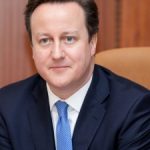
    The statement made by David Cameron, the Foreign Secretary, on 13 January 2024.

    The elections today are testament to Taiwan’s vibrant democracy. I offer warm congratulations to the people of Taiwan on the smooth conduct of those elections and to Dr Lai Ching-te and his party on his election. I hope that the two sides of the Taiwan Strait will renew efforts to resolve differences peacefully through constructive dialogue, without the threat or use of force or coercion.

  • PRESS RELEASE : Houthi attacks on vessels in the Red Sea must stop – UK statement at the UN Security Council [January 2024]

    PRESS RELEASE : Houthi attacks on vessels in the Red Sea must stop – UK statement at the UN Security Council [January 2024]

    The press release issued by the Foreign Office on 12 January 2024.

    Statement by Ambassador Barbara Woodward at the UN Security Council meeting on Yemen.

    Thank you President, and I thank Assistant-Secretary-General Khiari for his briefing.

    The United Kingdom and this Council have consistently condemned, in the strongest terms, the illegal and unjustified attacks in the Red Sea by the Houthi militants.

    On 9 January, the Houthis attacked UK and US naval vessels. Last night, we took limited, necessary and proportionate action in self-defence alongside the United States, with the non-operational support of the Netherlands, Canada, Bahrain and Australia. The United Kingdom’s Royal Air Force carried out targeted strikes against military facilities used by Houthi rebels in Yemen. This operation took particular care to minimise risks to civilians.

    Since November, the Houthis have launched over 100 drone and missile attacks against vessels from a range of countries, putting innocent lives at risk, threatening the global economy, and destabilising the region. This has continued despite this Council’s demand in resolution 2722, adopted earlier this week, that the Houthis immediately cease all such attacks.

    Let me be clear. The attacks by Houthis on vessels in the Red Sea must stop. We have made this clear to the Houthis, and we call on them to deescalate.

    The United Kingdom is committed to continue working with the international community, and this Council, to combat this international threat.

    We have published a summary of our legal position on last night’s strikes and have reported to the Council in writing in accordance with Article 51 of the UN Charter.

    President, we remain committed to ensuring the freedom of navigation, which is protected by international law, and to defending international trade. It is in all our interests to work together to de-escalate tensions in the region.

    Thank you, President.

  • PRESS RELEASE : UK’s greenest diplomatic building in the world opens in Ottawa [January 2024]

    PRESS RELEASE : UK’s greenest diplomatic building in the world opens in Ottawa [January 2024]

    The press release issued by the Foreign Office on 12 January 2024.

    British High Commission staff in Ottawa relocated to their new office at 140 Sussex Drive last week.

    • Staff moved into the newly built office at 140 Sussex Drive last week
    • The building reaffirms the UK’s commitment to environmental sustainability with LEED classification credentials built into the construction
    • Algonquin Anishinaabe Elder, Claudette Commanda officially opened the building with a blessing ceremony, alongside British High Commissioner to Canada, Susannah Goshko.

    British High Commission staff in Ottawa relocated to their new office at 140 Sussex Drive last week. The new High Commission is located within the Earnscliffe National Historic Site which has been the official residence for British High Commissioners for over 90 years.

    At a ceremony held today, British High Commissioner Susannah Goshko was joined by Claudette Commanda, an Algonquin Anishinaabe Elder from the Kitigan Zibi Anishinabeg First Nation  who performed a blessing ceremony to officially open the new office.

    The new High Commission is on track to be the greenest building in the UK’s diplomatic network, targeting LEED Gold Status (Leadership in Energy and Environmental Design) certification. It is testament to the UK delivering on its Net Zero transition goal of 2050, with the environment a key element of Britain’s domestic and foreign policy.

    The new location on Sussex Drive opposite Global Affairs Canada is a physical demonstration of the close relationship between the UK and Canada, and our commitment to working together on some of the most pressing global issues of today.

    Susannah Goshko, British High Commissioner to Canada said;

    Our new High Commission, located within the historic grounds of Earnscliffe, not only reinforces our shared history with Canada but also represents a significant investment in the modern UK-Canada bilateral relationship.

    The greenest building in our diplomatic network, it is a great demonstration of our shared commitment to environmental sustainability.

    The High Commission team and I look forward to welcoming visitors into our new space and to delivering for the UK-Canada relationship.

    UK Minister for the Americas, Caribbean and the Overseas Territories David Rutley said:

    The UK and Canada are the closest of partners and friends, working shoulder to shoulder on the most pressing global challenges, from tackling climate change to challenging hostile state activity.

    Our new High Commission building sits on a historic site opposite Global Affairs Canada, reinforcing this close bond between our countries and is set to be the greenest building within our diplomatic network.

    Green credentials of the new building include diverting 98% of construction waste away from landfill, and incorporating wood salvaged from the Ottawa River and stone from the original residence coach house into the new design. The office aims to be economically sustainable by operating at a lower cost thanks to its energy efficiency rating which is currently on track to perform at 18% above the baseline average.

    Water consumption will also be reduced thanks to environmental features being incorporated into the landscape design, including native and drought resistant vegetation that mitigates the need for irrigation. Low flow plumbing fixtures throughout the building also aim to reduce annual water consumption by between 25% – 30% above the baseline average.

    Modern construction material will create a healthier and more conducive work environment for High Commission staff, this includes high-albedo roofing materials that will mitigate urban heat-island effects and low VOC (volatile organic compounds) furnishings that provide a healthier environment for staff and visitors.

    The British High Commission at 80 Elgin Street was constructed in 1962 and served as the first official offices for the UK High Commission in Canada for over 60 years. In 2022 it was purchased by the National Capital Commission following a decision to construct a new High Commission in the grounds of Earnscliffe as the previous office no longer met the modern needs of our team in Ottawa.

    NOTES TO EDITORS:

    • LEED (Leadership in Energy and Environmental Design) is the world’s most widely used green building rating system. LEED certification provides a framework for healthy, highly efficient, and cost-saving green buildings, which offer environmental, social and governance benefits. LEED certification is a globally recognized symbol of sustainability achievement.
    • Full LEED certification will be given at a later date in 2024.
    • Construction of the new High Commission has diverted 98% of total construction waste from the landfill, exceeding the baseline target of 75%.
    • Energy performance LEED credit requires a minimum of 5% improvement over the baseline. The office is modelled to achieve 18% improvement over the baseline.
    • The original offices at 80 Elgin Street were sold to the National Capital Commission in 2021.
  • Rishi Sunak – 2024 Speech to the Ukrainian Parliament

    Rishi Sunak – 2024 Speech to the Ukrainian Parliament

    The speech made by Rishi Sunak, the Prime Minister, at the Ukrainian Rada on 12 January 2024.

    Mr President, Mr Prime Minister, Mr Chairman, Honourable Members of the Rada…

    I come from the world’s oldest Parliament to address the world’s bravest.

    And it is an honour to do so.

    Every Parliamentarian serving in a democratically elected chamber treasures the ideal of freedom.

    Your courage is defending it.

    Even as the enemy came within 20 kilometres of this Chamber…

    …with many of you personally targeted…

    …you refused to be daunted.

    You continued to sit and do your duty – as you have throughout this war.

    Because this is where you express the sovereignty and independence…

    …for which your people are prepared to sacrifice everything.

    This is where you are keeping alive the cause of democracy…

    …in defiance of the gravest threat we have faced this century.

    So on behalf of Britain and all your allies:

    Thank you.

    Slava Ukraini.

    President Zelensky, you are an inspiration, and, Volodymyr, I am proud to call you a friend.

    President John F Kennedy said of the great Winston Churchill that he:

    “Mobilised the English language and sent it into battle.”

    Volodymyr, you have done the same…

    …and English isn’t even your first language!

    No leader this century has done more to unite liberal democracies in the defence of our values.

    Thank you.

    Above all, let me pay tribute to the people of Ukraine.

    I first came to Ukraine ten years ago, in the year of the Maidan protests.

    I remember the sense of nervous hope…

    …as Ukraine looked towards a future as a sovereign European democracy.

    And in each of my visits since this war began…

    …even amidst all the rubble and destruction…

    …the people I’ve met are more determined than ever to realise that dream.

    The soldiers who even now fight to the last breath for every inch of ground.

    The pilots making stunning blows against Russia’s Black Sea fleet.

    The gunners beating impossible odds to defend your skies.

    The engineers who defeated darkness during the most difficult winter in your history.

    And the ordinary people of Ukraine, who have endured…

    …more than anyone should ever have to bear.

    Rockets and bombs deliberately aimed at homes and hospitals, shelters, and schools.

    Torture, rape, children kidnapped.

    You have met this depravity with bravery and defiance.

    With your unique, unbreakable Ukrainian spirit.

    And all of us in the free world, salute you.

    We meet today at a difficult moment in the struggle for Ukraine’s freedom.

    As always during conflict, there will be difficult moments.

    But we must prepare for this to be a long war.

    But I believe there is hope for us in the echoes of Britain’s own history.

    If 1940 was our finest hour…

    ….and Ukraine’s was two years ago as you resisted the Russian invasion…

    …then perhaps today is more like 1942.

    That was a point in the middle of the war…

    …when progress on the battlefield was hard…

    …the defence industry was under severe strain…

    …and populations were becoming weary.

    It must have been hard to see the light ahead.

    But they stood firm.

    And although they did not know it then…

    …for all the setbacks and difficulties that still lay before them…

    …that was the moment the tide began to turn, and victory became assured.

    I believe that the same will be true of this moment.

    In the end, history tells us that democracies who endure will always prevail.

    Putin cannot understand…

    …that while you can kill individuals and destroy buildings…

    …no army can ever defeat the will of a free people.

    And that is why Ukraine will win.

    Think of what you have already achieved.

    Putin believed he could subjugate Ukraine by force in a matter of weeks.

    Instead, with every rocket he fires the Ukrainian people become ever more determined…

    …and their sense of nationhood becomes stronger still.

    Russia’s military vastly outnumbers Ukrainian forces.

    Yet you have already regained half of the occupied territory.

    You have held the East, reopened vital shipping lanes to help feed the world…

    …and increasingly made Crimea a vulnerability for Russia, not a strength.

    These victories show: Russia can be beaten in its war of aggression.

    It’s on track to lose nearly half a million men.

    Putin has faced an attempted coup…

    …been indicted as an international war criminal…

    … presides over an economy severely weakened by sanctions…

    …and has succeeded in persuading countries across Europe…

    …to significantly increase their defence spending.

    He is now reduced to begging Iran and North Korea for weapons…

    …and desperately sacrificing hundreds of thousands more men…

    …in the hope that Ukraine will yield, or its friends might walk away.

    Well, Ukraine will not yield.

    And the United Kingdom will never walk away.

    From the very beginning…

    …the British people spontaneously flew the Ukrainian flag – and I tell you that it flies still.

    They felt moved to show solidarity with people they’ve never met…

    In a country most have never visited…

    Because of our shared faith in freedom, fairness and democracy.

    We welcomed Ukrainian refugees with open hearts.

    We trained tens of thousands of their Ukrainian comrades in arms.

    we led the way in delivering…

    Helicopters, ships, tanks, and armoured vehicles…

    Air defences and electronic weapons systems…

    Planeloads of anti-tank missiles like the NLAWs and Javelins…

    Storm Shadows to reach behind enemy lines and defend against aggression in the Black Sea.

    Humanitarian and economic support.

    And the strongest set of sanctions ever to debilitate Russia’s economy.

    I’m proud that we’ve provided over £9bn of support so far.

    But I want to go further still.

    Today, President Zelensky and I agreed a new partnership between our two countries…

    …designed to last a hundred years or more.

    Our partnership is about defence and security.

    It is about the unique ties between our people and cultures.

    It will build back a better and brighter future for Ukraine.

    To attract new investment in jobs and homes…

    To fund English language training for the Ukrainian people…

    …as you make English the language of business and diplomacy.

    And it will hold Russia accountable for their war crimes.

    Because Russia must pay to rebuild what they have destroyed.

    Perhaps above all, it will support Ukraine to complete the historic journey you have chosen…

    …to becoming a free, independent democracy at the heart of Europe.

    Ours is the unbreakable alliance:

    The nezlamni allianz.

    First, we will help you win the war.

    Russia thinks that they will outlast us; that our resolve is faltering.

    It is not.

    In each of the last two years, we sent you £2.3bn of military aid.

    This year, we are going to increase that…

    …with the biggest single defence package so far…

    …worth £2.5bn.

    This package will include:

    More air defence equipment, more anti-tank weapons, more long-range missiles…

    Thousands of rounds more ammunition and artillery shells…

    And training for thousands more soldiers…

    Now in total, the UK will have provided almost £12bn of aid to Ukraine.

    So be in no doubt:

    We are not walking away.

    Putin will never outlast us.

    We are here for Ukraine –as long as it takes.

    But the best way to make sure Ukraine has the weapons it needs…

    …is to help Ukraine to produce those weapons themselves.

    So our second action is to work with you to massively increase defence industrial production.

    I believe this will be a source of huge economic strength and value for Ukraine in the future.

    So even as the UK donates more equipment…

    …we will help make you the armoury of the free world.

    British companies like BAE Systems and AMS are already supporting your armed forces from within Ukraine.

    And we will go further.

    Starting today with £200m to manufacture thousands of new drones…

    …both here in Ukraine and in the UK.

    This is the single largest package of drones given to Ukraine by any nation.

    Thirdly, today’s agreement supports your historic choice to join NATO.

    Because I believe that Ukraine’s rightful place is in NATO.

    But this isn’t just about how NATO benefits Ukraine.

    It’s about how Ukraine benefits NATO.

    Your understanding of modern war comes not from a textbook but the battlefield.

    Your armed forces are experienced, innovative, and brave.

    Ukraine belongs in NATO and NATO will be stronger with Ukraine.

    Last year’s Vilnius Summit made important steps towards membership.

    And I want us to be even more ambitious at the Washington Summit this June.

    And we made you a solemn promise…

    …along with 30 other countries…

    …to provide new, bilateral security assurances.

    Today, the UK is the first to deliver on that promise.

    President Zelensky and I have just signed a new security agreement.

    If Russia ever again invades Ukraine, the UK will come to your aid with swift and sustained security assistance.

    We will provide modern equipment across land, sea, and sky…

    Sanction Russia’s economy…

    And work closely with allies to do so.

    You will not have to ask.

    You will not have to argue for what you need.

    The UK will be there from the first moment to the last.

    I believe this is the greatest moment in the history of our relationship.

    With unprecedented security guarantees…

    …it defines our future as allies, working together for the security of Europe…

    …and sitting side by side among the free countries of the world.

    In the words of the great Ukrainian poet Taras Shevchenko…

    …you have broken your heavy chains and joined…

    The family of the free

    Because in the end, this is about even more than security.

    It is about Ukraine’s right as an independent nation to determine your own future.

    And it is about the right of all nations – enshrined in the UN Charter – to determine their own future.

    As Churchill said, there are two kinds of nationalism:

    “The craze for supreme domination by weight or force” – which he called “a danger and a vice”.

    Or the nationalism that comes from “love of country and readiness to die for country…

    …love of tradition and culture…

    …and the gradual building up…of a social entity dignified by nationhood”.

    He called this: “the first of virtues”.

    I can think of no better description of the two sides of this war.

    Or a better description of the battle that will define our age.

    Because while this war may have begun in the deluded mind…

    …of a man in thrall to the mirage of a long-dead empire…

    …if Putin wins in Ukraine, he will not stop here.

    That’s why President Biden, the EU, allies in NATO, the G7 and beyond…

    …have seen the century-defining importance of this fight and they have rallied to your cause.

    And we cannot – and will not – falter now.

    Because aid to Ukraine is an investment in our own collective security.

    Only a Ukrainian victory will deter Putin from attacking others in the future…

    …and prove our enemies wrong…

    …when they say that democracies have neither the patience nor resources for long wars.

    This is the choice before us.

    These are the stakes.

    Waver now – and we embolden not just Putin, but his allies in North Korea, Iran, and elsewhere.

    Or rally to Ukraine’s side and defend our common cause…

    …of democracy over dictatorship, freedom over tyranny, the rule of law over anarchy.

    That is what you are fighting for.

    And to echo Churchill:

    We must give you the tools – and I know that you will finish the job.

    Let me conclude with this final thought.

    On one of the earliest days of the invasion…

    In the darkness just before the dawn…

    As Russian bombs fell on Kyiv…

    President Zelensky stood outside the House with Chimaeras…

    …and sent a simple, defiant message to the world:

    Miy tut.

    We are here.

    Today, as the world asks will your allies waver…

    Will our resolve weaken…

    Will our belief in your success falter…

    My reply is the same:

    Miy tut.

    We are here.

    As a symbol of our nezlamni allianz…

    …I bring you today the United Kingdom’s flag…

    …signed by our country’s entire Cabinet…

    …to stand here until the day of your victory and beyond…

    …as a sign to the world that we are here…

    …and we will always be with you.

    Miy tut.

    Slava Ukraini.

  • Rishi Sunak – 2024 Comments at Joint Press Conference with President Zelenskyy

    Rishi Sunak – 2024 Comments at Joint Press Conference with President Zelenskyy

    The comments made by Rishi Sunak, the Prime Minister, on 12 January 2024.

    Volodymyr, thank you for the very kind honour you’ve just bestowed on me and for inviting me here today.

    It is an honour to stand with you…

    …and to send a message on behalf of the United Kingdom…

    …and indeed your allies around the world:

    Ukraine is not alone.

    And Ukraine will never be alone.

    Putin might think he can outlast us – but he is wrong.

    We stand with you today, tomorrow, and for as long as it takes.

    Because this war is about Ukraine’s right to defend itself and determine your own future.

    And the Ukrainian people’s historic choice…

    …to be an independent democracy at the heart of Europe.

    Your quest for freedom has inspired and moved the British people.

    And for the free nations of the world, aid to Ukraine is also an investment in our own collective security.

    Because if Putin wins in Ukraine, he will not stop there.

    And our opponents around the world believe that we…

    …have neither the patience nor resources for long wars.

    So waver now, and we embolden not just Putin…

    …but his allies in North Korea, Iran, and elsewhere.

    That’s why the United Kingdom – and the free world – will continue to stand with Ukraine…

    …as we have since the very beginning of this war.

    Judge our commitment to Ukraine’s freedom not by our words, but by our actions.

    The UK was the first to train Ukrainian troops.

    First in Europe to provide lethal weapons.

    First to commit western battle tanks.

    First to provide long-range weapons.

    But we need to do more.

    Our actions right now will determine the path of the war…

    So, far from our resolve faltering, the United Kingdom is announcing today…

    …the biggest single package of defence aid to Ukraine since the war began, worth £2.5bn.

    This will include:

    More air defence equipment…

    More anti-tank weapons…

    More long-range missiles…

    Thousands of rounds more ammunition and artillery shells…

    Training for thousands more Ukrainian servicemen and women.

    And £200m to build thousands more drones…

    …the single largest package of drones given to Ukraine by any nation.

    In total, since the war began, the UK will have provided almost £12bn of aid to Ukraine.

    And I’m proud that today, President Zelensky and I…

    …have signed a new security agreement…

    …that will form the core of a partnership between our two countries…

    …that will last a hundred years or more.

    This is the first in a series of new, bilateral security assurances promised to Ukraine by 30 countries…

    …at last year’s Vilnius Summit.

    And it says that if Russia ever invades Ukraine again…

    …the UK will come to your aid with swift and sustained security assistance.

    We will provide modern equipment across land, sea, and sky…

    Sanction Russia’s economy…

    And work closely with allies to do so.

    You will not have to ask.

    You will not have to argue for what you need.

    The UK will be there from the first moment to the last.

    And of course, we continue to support Ukraine’s journey to NATO membership.

    You belong in NATO and NATO will be stronger with you.

    I pay tribute to all those whose significant efforts made today’s agreement happen…

    …from the Office of the President, to the Ministries of Foreign Affairs, Defence, and many others besides.

    President Zelensky and his team serve not only their country but the cause of peace and justice.

    The UK Parliament applauded your courage, resilience, and sincere love of for your country.

    Even at a time of war, you are reforming Ukraine for the better.

    And with your leadership, Ukraine will prevail.

    Volodymyr, the UK stands with you.

    I believe this is the greatest moment in the history of our relationship.

    It extends security guarantees from the UK to Ukraine that are unprecedented.

    It defines our future as allies, working together for the security of Europe.

    And it says that Ukraine’s place is, without doubt, among the free nations of the world.

    Be in no doubt:

    We are not walking away.

    Ours is the unbreakable alliance.

    The nezlamni allianz.

    And just as we stand shoulder-to-shoulder with Ukraine…

    …so those same principles guide our actions around the world.

    Let me say a brief word about the situation in the Red Sea.

    Overnight, the Royal Air Force carried out strikes against two Houthi military facilities in Yemen.

    I want to be very clear that these were limited strikes, carefully targeted at launch sites for drones and ballistic missiles.

    Over recent months, the Houthi militia have repeatedly attacked commercial ships in the Red Sea… risking innocent lives and causing huge economic disruption.

    In December, we launched Operation Prosperity Guardian with our allies to bolster maritime security.

    On 3 January, 14 counties issued a clear warning that attacks must cease.

    On 10 January, the UN Security Council passed a resolution condemning the attacks… and highlighting the right of nations to defend their vessels and preserve the freedom of navigation.

    Yet the attacks have continued.

    British and American warships have been targeted.

    That’s why we’ve taken this further, limited action today… in self defence, consistent with the UN Charter.

    In the face of this aggression, we will always stand up for the rule of law.

    Thank you.

  • PRESS RELEASE : Polish Armaments Group agrees defence agreements with UK firms [January 2024]

    PRESS RELEASE : Polish Armaments Group agrees defence agreements with UK firms [January 2024]

    The press release issued by the Department of Business and Trade on 12 January 2024.

    The Polish Navy’s Miecznik (“Swordfish” in Polish) frigates programme will now begin its next phase of development.

    • Latest phase of “Miecznik” programme to get underway in Poland
    • Three major UK defence companies will help build state-of-the-art multi-mission frigate fleet
    • “A major vote of confidence in our world-class expertise” – UK Investment Minister

    The UK Government has welcomed deals between three of the UK’s largest defence contractors and the Polish Navy.

    The Polish Navy’s Miecznik (“Swordfish” in Polish) frigates programme will now begin its next phase of development.

    An agreement between MBDA UK and the Polish Armaments Group (PGZ) was signed today. This is the third of PGZ’s contracts with UK companies under the Miecznik programme, following agreements with Babcock and Thales UK. The first of the three multi-mission frigates is expected to enter service in 2029.

    Investment Minister Lord Dominic Johnson said:

    Our defence exports are good for the economy and boost investment and jobs across the country.

    This agreement is a major vote of confidence in our world-class industrial expertise. Poland is a key partner for the UK, and this partnership will further strengthen the Polish fleet by putting some of the best UK capabilities behind it.

    The UK government has supported negotiations for a series of strategic agreements between three major UK defence companies and the Polish Armaments Group.

    UK Defence and Security Exports (UKDSE), part of the UK Department for Business and Trade, has been a key player in facilitating and securing these deals, in close collaboration with the Ministry of Defence and Royal Navy. The aim is to strengthen long-term economic and defence cooperation between the two countries and support the UK’s competitive export offer.

    These agreements mean the frigates will be built in Poland with substantial transfers of technology and skills, boosting the economic security of a key NATO ally.

    Minister for Defence Procurement James Cartlidge said:

    It is a testament to our outstanding defence industry that our key NATO ally has chosen warships based on the AH140 design – a design utilised by the Type 31 Frigates soon to be in service with the Royal Navy. The ships will enhance the Polish fleet, bolster NATO capabilities and support interoperability between the UK and Poland.

    These agreements are also another example of the very close working relationship we have with our Polish counterparts, building on our progress in many areas of defence.

    Each company plays a crucial role in the Polish frigate programme as a partner of the Miecznik consortium led by PGZ.

    Through a design licence agreement for its Arrowhead 140 frigate, Babcock is the platform design provider and strategic technology partner. The company is also a key part of the Programme Management Office which oversees design and construction of the ships.

    Thales UK will equip the frigates with the TACTICOS combat management system, sensors and radars, while MBDA UK will provide its Sea Ceptor naval air defence system, which will be equipped with CAMM (Common Anti-Air Modular Missile) family missiles that have been recently procured by Poland for ground-based air defence.

  • PRESS RELEASE : Joint statement on DPRK-Russia ballistic missile transfers [January 2024]

    PRESS RELEASE : Joint statement on DPRK-Russia ballistic missile transfers [January 2024]

    The press release issued by the Foreign Office on 12 January 2024.

    Joint statement issued by Foreign Ministers on the DPRK’s export and Russia’s procurement of ballistic missiles, which have been used against Ukraine.

    The following is a statement from the Ministers of Foreign Affairs of Albania, Andorra, Argentina, Australia, Austria, Belgium, Bulgaria, Canada, Croatia, Cyprus, the Czech Republic, Denmark, Estonia, Finland, France, Georgia, Germany, Greece, Guatemala, Iceland, Ireland, Israel, Italy, Japan, Latvia, Liechtenstein, Lithuania, Luxembourg, Malta, Federated States of Micronesia, Moldova, Monaco, Montenegro, the Netherlands, New Zealand, North Macedonia, Norway, Palau, Paraguay, Poland, Portugal, the Republic of Korea, Romania, San Marino, Slovenia, Spain, Sweden, Ukraine, the United Kingdom, the High Representative of the European Union, and the Secretary of State of the United States of America.

    We condemn in the strongest possible terms the Democratic People’s Republic of Korea’s (DPRK) export and Russia’s procurement of DPRK ballistic missiles, as well as Russia’s use of these missiles against Ukraine on December 30, 2023, and January 2, 2024. The transfer of these weapons increases the suffering of the Ukrainian people, supports Russia’s war of aggression, and undermines the global non-proliferation regime. Russia’s use of DPRK ballistic missiles in Ukraine also provides valuable technical and military insights to the DPRK. We are deeply concerned about the security implications that this cooperation has in Europe, on the Korean Peninsula, across the Indo-Pacific region, and around the world.

    Our governments stand together in resolute opposition to arms transfers between the DPRK and Russia. The transfer of ballistic missiles, along with any other arms and related materiel, from the DPRK to Russia flagrantly violates multiple United Nations Security Council resolutions (UNSCRs) – namely, resolution 1718 (2006), resolution 1874 (2009), and resolution 2270 (2016) – that Russia itself supported. We are closely monitoring what Russia provides to the DPRK in return for these weapons exports. We call on the DPRK and Russia to abide by relevant UNSCRs and to immediately cease all activities that violate them.

    We urge all UN Member States, including all members of the United Nations Security Council, to join us in condemning Russia and the DPRK’s flagrant UNSCR violations. As Russia launches waves of missiles and drones against the Ukrainian people, we will continue to stand together in support of Ukraine. We further call on the DPRK to respond to the numerous and genuine offers to return to diplomacy, the only path to an enduring peace on the Korean Peninsula.