Tag: 2024

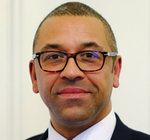
  • James Cleverly – 2024 Speech at the Association of Police and Crime Commissioners General Meeting

    James Cleverly – 2024 Speech at the Association of Police and Crime Commissioners General Meeting

    The speech made by James Cleverly, the Home Secretary, in the House of Commons on 7 February 2024.

    Thank you. I’m trying to work out whether the applause is for my attendance or for the announcement of the money.

    First of all, thank you all. It’s great to have the opportunity to speak to you all. I hope that those who know me, and some of you who have known me for quite some time, will have explained my credentials to those who’ve been maybe not known me for quite so long. I’m a big fan of the police and crime commissioner model. I was an advocate for it before it was cool. Back before it was legislation, and of course, I’ve come from my own background in police governance from the time that I was at City Hall in London.

    You are the voice of the local communities. When it comes to the governance of policing laws with our policing model, being of the community, for community from the community, having that golden thread of community accountability to the police forces that serve them, I think is incredibly important. And I also think it’s important that we maintain this pattern of dialogue, and that not only do I get to speak and you get to listen, which is of course always my favourite model of communication, but you also get to speak and I promise that I will listen.

    So the situation we find ourselves in the headlines can sometimes give the impression that we’re in uniquely dark and difficult times. But when we compare the situation with the end of September 2023, to the year ending December 2019, as we look back over those couple of years, we each have seen some really positive figures.

    So for example, hospital admissions, following an assault with a sharp object, which is the most objective measure of youth knife crime and violence, was down by 25%. And these are not figures you can fudge. That’s real. Homicides are down by 16%, neighbourhood crime down by 24%, 35% (fall) in domestic burglary, and an 18% fall in victim related crime. This is stuff that people in communities feel. This is what has an impact upon them. And those figures are heading in the right direction. But we will recognise that if you personally are a victim of crime, speaking about a general reduction is no solace, and that’s why it is so important that we cannot ever lose sight of the importance of the individual, of the victim, when we talk about those overall numbers.

    And I’m absolutely clear that the job of the Home Secretary, the job of the Home Office, I suspect, you will, at least in part agree with me on this, is about reassurance as well as the practicalities. It is really important that we ensure not only that people are safe, but that they also feel safe. Because, and I mentioned this, I think in the very first speech that I made as Home Secretary, because when people feel safe, they go out, they engage in their local communities, they volunteer, they live a fuller life than they would otherwise do. So of course trying to create an effect on people’s lives, but the fear of crime also has a corrosive effect. It limits people’s opportunity to live the best life they can lead.

    And that’s why I want to be able to look into the eyes of people around the country wherever they may be and know that they are feeling safe. I said so at the National Policing Board that I chaired recently, and this of course means as well as driving down those figures, it is about visible policing – and it is about the policing of visible crime crimes.

    High harm crimes are of course also incredibly important, but the public are also concerned about things like shoplifting. And sadly, in conversations I’ve had with members my own family and my friends, it’s still the case that far, far too many women and girls do not feel safe when they are out in the public domain and in a society such as ours, a modern society, that is unacceptable, and we absolutely have to prioritise the work that we do to address that.

    So I want to see major improvements in the quality of investigations. It’s a core function of policing. Because again, we know the far too many people report that the information that they provide to the police does not in their mind get appropriately acted on. So a key aim for this year for me is to increase the percentage of reported crimes that result in a successful outcome, because sadly on average only 8% of victim-based crime in England and Wales results in a successful outcome. Sadly, this has declined, and there is much, much, more to learn. And there is variation of course between forces, and fixing this I believe very strongly, more than anything else is central to build the general confidence of the public in policing.

    And so, back to basics is a bit of a cliché phrase from politicians. So, this is about going back to the core functions. Core policing, that core investigatory set of skills. Of course, that can be amplified, accelerated and supported with the use of cutting-edge technology, like retrospective and indeed live facial recognition software, which in the trials that I’ve seen the results of this had a dramatic effect, and we need to make sure all forces are operating at their full potential.

    And one of the reasons why I want to strengthen the role of PCCs, is that you, with your closest relationships and your intimate knowledge of the forces that you’re responsible for, are best placed at a local level, to drive forward a focus on that core policing functionality. And I know that you want to see increased safety and confidence in our neighbourhoods just as much as I do. This is, I don’t believe, me pushing you to do anything you don’t naturally want to do. And so we are looking for alliances and to get a commitment not just from the political level but of course from all the Chief Constables around the country to ensure that they pursue every reasonable line of enquiry, they attend home burglaries, they deliver on the commitments made by the Retail Crime Action Plan, all these things will be important steps in the right direction.

    And when I discussed this at the recent National Policing Board just last week, what I got was very, very supportive and very, very committed responses and it was great to hear that the Chief Constable of Greater Manchester Police was able to run through a list of results, which was in large part driven by that commitment to core policing. So I’m more confident than ever this is actually the right approach. And it’s also what the people we serve expect of us, it is what they want us to focus on. And so, in terms of tackling things like car theft, home theft, criminal damage, shoplifting, we do need to make sure we stay focused on the this and of course, the invisible crimes, those high harm crimes, are absolutely key, but those visible crimes – we must not lose sight of the impact they have on communities.

    When I first spoke my first public utterances as Home Secretary, I think of saying there is no such thing as minor crime – it’s a phrase that I despise and I think that implying that somehow there’s criminality which the police take less seriously or we take less seriously is something that we should avoid in all circumstances, for the reasons I said about the criminal behaviour that people see and feel most acutely in their communities.

    Now, I mentioned about the commitment I feel, particularly for women and girls, and it is incredibly important that alongside the tackling of that visible crime, that we dramatically improve the victims experience of the justice system for women and girls. You will be well aware of course of Operation Soteria, which is now being implemented in all 43 police forces in England and Wales. Government is ensuring that 2000 officers receive specialist training on the investigation of rape by April this year.

    And our actions are about supporting the actions you’re taking locally. To help improve the way that teams operate, are treated and to ensure that more rapists are arrested, prosecuted and put behind bars. His Majesty’s Inspectorate has found sadly victims are not regularly updated during the investigation at certain important points. And of course, this must change. The Victims’ Code of Practice will outline the minimum levels of support a victim of crime should expect from a local force and from their local Crown Prosecution Service. But that is a floor not a ceiling. That is the minimum, not what we should be aiming for.

    So everything that we do hinges on the broader confidence of the British public in the whole criminal justice system, and I’ve made the point that whilst the headline figures have come now, sadly, public confidence has not gone up. Part of that reason is because of a number of high profile and terrible failures in professional conduct by police officers, and for every headline grabbing incident, sadly, there are a number of others, less public, less high profile (incidents) where conduct has fallen short of what we expect. And inevitably, this has shaken, and certainly in some instances, shattered public confidence in policing.

    Again, I said when I was appointed that I will always seek to praise publicly, the people that keep us safe. But part of that contract is that I expect leaders in policing to do the right thing and demonstrate a commitment to reform – a deep seated commitment to reform and a complete commitment to professional standards.

    And that is why the government is giving police leaders enhanced tools, enhanced powers, but also an enhanced expectation that they do the right thing and lead their forces robustly. Once again, you as a group of people have a pivotal role in ensuring that police leaders hold their officers to account and that they in turn are held to account if they fail to do so. Just last week the families of Barnaby Webber, Grace O’Malley Kumar and Ian Coates visited the Prime Minister and had the chance to meet with him, and they raised serious questions about the events leading up to the tragic killings of their loved ones. It’s actually the right place to share that the Nottinghamshire police have referred themselves to the IOPC and I pay tribute to Caroline, the Nottinghamshire PCC, for commissioning a comprehensive College of Policing review into what happened.

    We have to be willing to learn painful lessons when situations like this occur. Part one of the Angiolini Inquiry is expected to report in the coming months and policing must absolutely take into consideration its findings, just as I will. I think I mentioned this again when I first spoke to you just up the road in my first week on the job, that one of the first roles I performed in the London Assembly whilst I was a member of the Metropolitan Police Authority as it was then, was on the professional standards committee. So I know first-hand just how critical it is to remove from the force those police officers whose integrity and behaviour are unacceptable.

    And I am still to this day committed that those unfit to wear the uniform must be removed, but that those who have proven to be innocent need to be swiftly exonerated. The government is delivering changes to the misconduct, vetting and performance system. So we’re helping police leaders grip this issue, giving them more control to act over those who fail vetting or fall short of requirements of required standards. And we know that in this room, that there are a group of people who are probably more angry about bad coppers than almost anybody else, outside those in uniform themselves, and equally I would suggest the only people perhaps who are more angry about bad coppers are good coppers. So we have to support the good coppers in doing the right thing. And that’s why we agreed to fund the development. We’ve agreed to fund the development of the system for policing, which provides forces with a timely alerting solution, so they can act speedily on any concerning intelligence about officers or police staff.

    And as I said, critical to public confidence is people seeing the police and seeing crime being dealt with; improving the visibility of police in a very targeted way, to deter criminals and ensure that communities feel confident. So I’m grateful to everyone who’s contributed to the autumn 2023 returns on visibility and especially to the APCC for coordinating the contributions. I wouldn’t say to the police chief, I expect them to give me hard evidence that they are prioritising the neighbourhood policing that is demanded of them.

    So with regard to hotspots and hotspot policing, I promised I would listen to you. We published an ambitious anti-social behaviour action plan in March 2023. The government pilot of antisocial behaviour hotspot responses has been, I’m pleased to say, a success, with additional patrolling, delivering on those promised outcomes. We’ve also provided GRIP funding to police forces in areas with the highest levels of serious violence. But coming back to the PCCs and given the overlap between ASB [antisocial behaviour] hotspots activity, and the GRIP serious violence fund, we will combine the 2 funding streams for a wider rollout to territorial forces across England and Wales in 2024 to 2025. In total funding available will be over £66 million, and each PCC area will receive at least £1 million each.

    Now, of course, I am sure that you will have been lobbied by your police officers, you will be lobbying me no doubt, about the police funding settlement in 2024 to 2025. We’ve listened to the forces about financial demands they face and giving police the resources they need to protect the public is of course a priority for us. And that’s why for the coming settlements for 2024 to 2025, the money available to PCCs will increase by up to £922.2 million, and there’s been an increase in the total settlement the more than 30% in cash terms since 2019 to 2020. And of course that is to support the uplift in police numbers.

    So having delivered a way to recruit 20,000 police officers: thank you very much for that. I look forward to working with you and your chief constables to ensure that those numbers are maintained. There are now 149,000 officers in England and Wales, higher than the pre-uplift peak of 2010. And of course the funding is there to stay, to maintain those office numbers, to ensure that they are on the beat, to ensure that they are supported.

    Finally, I wanted to say something directed towards you as a cohort, as well as the police forces that you work with. I said I’m a big fan of PCCs, of the PCC model, and I want to support you in that role. And as we discussed when I first stood up, I’m very much aware that you are increasingly visible high-profile individuals. And that is why I’m very, very happy to give additional money to help support your personal security, and to protect you in the role that you do. The security minister is continuing to work on cross government work to protect the security of all elected officials, including yourselves, and I’m very grateful for Katy Bourne who gave the APCCs engagement on this. I really hope it does make a difference; that additional million pounds of support is something that matters. I know it matters to you. And it matters because I want to protect your role and to protect you as individuals.

    So let’s continue working together. Let’s continue serving the people who elect us. Let’s make sure that we focus resources on the things that people care most about. And let’s ensure that when we look back on this forthcoming year, not only do we see an ongoing reduction in crime, we see an increase in the confidence of policing the country.

    Thank you very much.

  • PRESS RELEASE : Repression in Belarus: joint statement to the OSCE [February 2024]

    PRESS RELEASE : Repression in Belarus: joint statement to the OSCE [February 2024]

    The press release issued by the Foreign Office on 9 February 2024.

    The UK joins other participating States in expressing concern regarding the absence of conditions for free and fair elections in Belarus, and the ongoing shocking human rights violations in the run up to the February elections.

    Madam Chair,

    I am delivering this statement on behalf of the following participating States, who are members of the Informal Group of Friends of Democratic Belarus: Cyprus, Denmark, Estonia, Finland,  France, Germany, Ireland, Latvia, Lithuania, Luxembourg, Netherlands, Norway, Poland, Romania, Spain, Sweden, the United Kingdom, the United States  and my own country, Canada.

    And the following participating States are also joining this statement today: Albania, Austria, Bulgaria, Croatia, Czech Republic, Greece, Iceland, Italy, Liechtenstein, Montenegro, Slovakia, Slovenia, and Ukraine.

    In 1991, OSCE participating States “categorically and irrevocably” declared that the commitments undertaken in the human dimension are “matters of direct and legitimate concern to all participating States and do not belong exclusively to the internal affairs of the State concerned” (Moscow Document, 1991).

    In this context, participating States have repeatedly found it necessary to raise Belarus’ failure to meet its OSCE human dimension commitments, particularly since the fraudulent elections of 2020 and the significant decline in the human rights situation that has followed. Belarus’ complicity in Russia’s full-scale invasion of Ukraine has aggravated the human rights violations and also contributed to regional and international instability.

    For over three years, Belarusian authorities have engaged in a brutal crackdown on opposition figures, civil society representatives, journalists and media actors, religious communities and indeed almost all independent voices, which may amount to crimes against humanity, according to the UN Special Rapporteur on Belarus and the OHCHR.  Individuals attempting to exercise their human rights and fundamental freedoms have been subject to intimidation, harassment, abuse and arbitrary detention.

    This regrettable situation has been clearly documented in both the 2020 and 2023 Moscow Mechanism Reports, by the UN Special Rapporteur on Belarus and the OHCHR examination of the human rights situation in Belarus, as well as by the International Accountability Platform for Belarus and by Belarus’ courageous human rights defenders. The OSCE Representative on the Freedom of the Media has spoken out repeatedly against repressive measures aimed at journalists and media actors in Belarus.

    In recent weeks, we have once again heard credible reports of Belarus’ failure to meet its OSCE human dimension commitments.  Last month saw yet another wave of harassment, arrests, and detention, this time targeting former political prisoners remaining in Belarus, the families of political prisoners, and those who have supported them. As Amnesty International has observed, “The severity is surprising even for a country and region that has witnessed more than its fair share of brutal reprisals.”

    Like the brutal post-election crackdowns in 2020, these actions appear to be aimed at intimidating the people of Belarus in the lead up to scheduled parliamentary elections this month.

    Viasna Human Rights Center continues to report over 1,400 current political prisoners, and that a staggering total of over 6,300 people have been the victims of political repression through criminal and administrative convictions in 2023.

    Many political prisoners face isolation, mistreatment, and a lack of medical care which has led to instances of death in detention, such as the recent appalling cases of Vadzim Khrasko, Vitold Ashurak, and Ales Pushkin. Individuals are sometimes held without any contact to the outside world nor do their families have any information about their whereabouts or condition.

    We call for the immediate and unconditional release of all political prisoners in Belarus.

    Madam Chair,

    Belarus’ failure to uphold its human dimension commitments further extends to its clear disregard for its OSCE commitments in regard to democracy, and the Belarusian authorities’ refusal to ensure that the people of Belarus can freely and fairly express their will in the upcoming parliamentary elections.

    In 1990, in Copenhagen and Paris, OSCE participating States declared their commitment to democracy and political pluralism underlining that “the will of the people, freely and fairly expressed through periodic and genuine elections, is the basis of the authority and legitimacy of all government.” Participating States reaffirmed these commitments in Istanbul in 1999 and further pledged to ensure fair competition among candidates and parties through media access and respect for the right of assembly.

    It is evident that the authorities in Belarus have no intention to hold the genuine elections that are required under OSCE commitments. It is impossible so long as all forms of dissent or opposition are met with intimidation, harassment, persecution and imprisonment. In Belarus: there is no freedom of expression; there is no freedom of association; and there is no free and independent media to share a plurality of ideas.

    It is impossible that a genuine democratic election could be held in these deplorable circumstances.

    The Lukashenko regime, of course, knows that this is the case.  It is for this reason that Belarus has refused to invite election observers through the OSCE’s Office for Democratic Institutions and Human Rights (ODIHR) and Parliamentary Assembly.  In rejecting these observers, the regime seeks to avoid the transparency essential for holding genuinely democratic elections.

    Let us also be clear: Belarus’ refusal is inconsistent with the commitments made by participating States in Istanbul in 1999 to invite election observers from ODIHR, and the OSCE Parliamentary Assembly, and to follow up on ODIHR’s election assessment and recommendations. We share the concerns that have been expressed by both ODIHR Director Mecacci and OSCE Parliamentary Assembly President Pia Kauma on this vital democratic issue.

    Madam Chair,

    So long as the regime in Belarus continues to fail to meet its OSCE human dimension commitments, and to violate the human rights and democratic freedoms of its people, we will continue to speak out and to raise our concerns.

    Things can be different in Belarus. The people of Belarus deserve better.

    We condemn the continued military support provided by Belarus for Russia’s illegal, unprovoked and unjustifiable war of aggression against Ukraine. We call on Belarus not to provide further support for Russia’s war of aggression.

    We call on the Belarusian authorities to fully implement their international obligations and OSCE commitments, including by taking all necessary steps to create conditions for free, fair and genuinely democratic elections.

    Thank you.

  • Stephen Flynn – 2024 Speech on Ceasefire Vote Controversy in the House of Commons

    Stephen Flynn – 2024 Speech on Ceasefire Vote Controversy in the House of Commons

    The speech made by Stephen Flynn, the SNP MP for Aberdeen South and the party leader, in the House of Commons on 22 February 2024.

    Last evening, we saw the best of this House in its ability to debate, and we also saw the worst of this House as it descended into farce. I think I speak for everyone in the Chamber now, and yesterday, when I express my deep sorrow that that was able to happen, given the content of what we were debating.

    Nevertheless, Mr Speaker, it descended into farce because of a decision that you—and you alone—made to ignore the advice that was given to you by the Clerks. In doing so, on the Opposition day of the Scottish National party, my colleagues and I were denied the ability to vote on a matter which is of grave concern to us, and which, over recent months, we have sought to raise in this Chamber at every available opportunity. It ultimately turned into a Labour Opposition day. That, quite frankly, is not acceptable. As I have expressed to you privately, prior to today’s proceedings, we do not, on these Benches, believe that you can continue in your role as Speaker. We do not have confidence in your ability to do so. I would therefore welcome clarity, either from you or the Leader of the House, about how we can best facilitate the earliest possible vote in this Chamber to that effect.

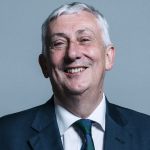
  • Lindsay Hoyle – 2024 Statement on Ceasefire Vote Controversy in the House of Commons

    Lindsay Hoyle – 2024 Statement on Ceasefire Vote Controversy in the House of Commons

    The statement made by Lindsay Hoyle, the Speaker of the House of Commons, on 22 February 2024.

    I will also come in at this point. I reiterate that I made a judgment call that did not end up in the position where I expected it to. I regret it and I apologise to the SNP—[Interruption.] Just bear with me. I apologise to the House. I made a mistake: we do make mistakes and I own up to mine. We can have an SO24 to get an immediate debate because the debate is so important to the House.

    I will defend every Member in this House. Every Member matters to me in this House. As has been said, I never, ever want to go through a situation where I pick up a phone to find a friend, on whatever side, has been murdered by a terrorist. I also do not want another attack on this House—I was in the Chair on that day. I have seen, I have witnessed. I will not share the details, but the details of the things that have been brought to me are absolutely frightening for all Members of the House, on all sides. I have a duty of care and I say that. If my mistake is looking after Members, I am guilty. I am guilty because—[Interruption.]—I have a duty of care that I will carry out to protect people; it is the protection that led me to make a wrong decision. With the risk being put on all Members at the moment, I had serious meetings yesterday with the police on these issues and on threats to politicians as we head towards an election. I do not want anything to happen again.

    Yes, I will apologise, as I always will when I make a mistake as I did. I offer an SO24—that is within my gift and power—but I will also do whatever it is to protect anybody in this Chamber or anybody who works in this House. That is my duty of care.

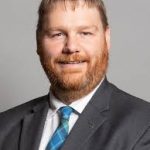
  • Owen Thompson – 2024 Speech on the Gaza Vote in the House of Commons

    Owen Thompson – 2024 Speech on the Gaza Vote in the House of Commons

    The speech made by Owen Thompson, the SNP MP for Midlothian, in the House of Commons on 22 February 2024.

    Yesterday was incredibly disappointing, from our point of view. It was meant to be an Opposition day, and it was one of only three times in a calendar year when our party gets an opportunity to put forward its business to the House. I do not think that what we came forward with was a surprise to anyone. We were allocated an Opposition day four or five weeks ago, but totally understandably, it had to be moved when the Northern Ireland Assembly was reconvening. At that stage, there were conversations, and I was asked when people would have sight of the Gaza motion that we would bring forward, so it is quite extraordinary for anyone to suggest that they did not know we might come forward with a motion on that topic. When it got to our Opposition day—one of the very few times when we can put forward our policies—our voice was silenced: our motion could not be voted on. That is incredibly disappointing for me and a significant number of my constituents, and those of my hon. Friends and hon. Members from across the Chamber who wanted to support the motion.

    Given that, in effect, we did not get an Opposition day yesterday, can we be allocated an alternative date? As others have said, we lost a significant amount of time at the start of the debate, and because of the Speaker’s decision, unfortunately we lost 40 minutes at the end of the debate. That meant that colleagues were cut short, and some withdrew from the debate. What consideration will the Leader of the House give to that suggestion—and, beyond that, to protection for the smaller parties, so that they are not simply railroaded for the political purposes of either of the bigger parties?

    I echo the comments of the shadow Leader of the House, but it is critical that all Members of this place, whatever their position or status, be protected from bullying and intimidation. If reports from many media outlets are to be believed, it is entirely unacceptable that significant pressure was put on Mr Speaker to come to his decision yesterday. What steps will the Leader of the House take to investigate those very serious claims? If there is any substance to them, it is an affront to democracy that a party leader can direct decisions of the Chair of this place.

    As you know, Madam Deputy Speaker, I am, as Chief Whip, involved in a number of conversations on how business comes forward. I had direct assurances that I would have a vote on the words of my motion yesterday. Everyone knew well in advance what the potential outcome would be at the end of yesterday’s debate, so to suggest that no one knew is utter nonsense. The reason we are in this position is that convention and the Standing Orders of this House were overruled, against the advice of the Clerks. That only happened because the Labour party wanted to be dug out of a hole. That is unacceptable.

  • Liz Twist – 2024 Speech on the Inter Faith Network Closure

    Liz Twist – 2024 Speech on the Inter Faith Network Closure

    The speech made by Liz Twist, the Shadow Levelling Up Minister, in the House of Commons on 22 February 2024.

    I thank my right hon. Friend the Member for East Ham (Sir Stephen Timms) for securing the urgent question.

    Inter-faith and multi-faith dialogue are absolutely essential components of society, not only to resolve differences but to build strong and collaborative communities that are able to come together in times of need. Given recent events—the war and violence in Gaza—that is more important than ever. As I am sure the whole House recognises, the Government have a special responsibility to facilitate positive relationships between different faith communities, and although I appreciate that the Minister has now given some explanation of why they have chosen to withdraw funding for the IFN, outstanding questions remain.

    Let me ask the Minister some straightforward questions. When was the decision to withdraw funding from the network made? What impact assessment was made, and what discussions were had about the vital need to continue to promote understanding about and between different faith groups, and to encourage co-operation? When was the Inter Faith Network notified of the decision? Does the Minister have plans to increase support for other groups to make up for any loss of provision arising from this decision?

    Every Department will inevitably monitor and review the grants that they award, but the House should expect that to be done in the spirit of due process. As politicians, we have a responsibility to bring communities together. At a time when divisions are being exposed, I hope that the Minister can assure the House that the Government remain committed to inter-faith and multi-faith dialogue.

    Felicity Buchan

    I thank the hon. Member for her comments. Again, I stress the importance of inter-faith work. I see it in my own constituency; it is very important. The Government are already supporting other institutions that do such work.

    The hon. Member asked specifically for timelines. The Secretary of State wrote to the IFN on 19 January saying that he was “minded to withdraw” the offer of funding in light of what we have discussed. He invited the Inter Faith Network to make representations to him on this matter, and he received its response on 22 January. After careful consideration of those representations, he confirmed that he wishes to withdraw the offer of funding to the Inter Faith Network for the reasons that we have discussed. He wrote to the co-chairs on 21 February to inform them of his decision. I stress again that the Department has been very clear that the Inter Faith Network should have been developing other sustainable sources of funding.

  • Felicity Buchan – 2024 Statement on the Inter Faith Network Closure

    Felicity Buchan – 2024 Statement on the Inter Faith Network Closure

    The statement made by Felicity Buchan, the Parliamentary Under-Secretary of State for Levelling Up, Housing and Communities, in the House of Commons on 22 February 2024.

    May I thank the right hon. Gentleman for raising the issue of the Inter Faith Network? I am grateful for all his work as chair of the all-party group on faith and society and as a long-standing advocate for dialogue across faiths.

    As the Under-Secretary of State for Levelling Up, Housing and Communities, my hon. Friend the Member for North Dorset (Simon Hoare) said during an Adjournment debate in January, we know full well the role that faith communities play in our society. We are extremely supportive of efforts by faith groups and others to bring together people of different faiths and beliefs.

    The Secretary of State wrote to the co-chairs of the Inter Faith Network on 19 January this year to inform them that he was minded to withdraw the offer of funding for the 2023-24 financial year. This was because of the appointment of a member of the Muslim Council of Britain to the board of trustees of the IFN. As the House will be aware, successive Governments have had a long-standing policy of non-engagement with the MCB. The appointment of an MCB member to the core governance structure of a Government-funded organisation therefore poses a reputational risk to the Government.

    The Secretary of State invited the IFN to make representations on this matter, which it subsequently did. He carefully considered the points raised by the IFN before concluding that its points were outweighed by the need to maintain the Government’s policy of non-engagement with the MCB, and the risk of compromising the credibility and effectiveness of that policy. Inter-faith work is valuable, but that does not require us to use taxpayers’ money in a way that legitimises the influence of organisations such as the MCB.

    The Department regularly reminds our partners, including the IFN, of the importance of developing sustainable funding arrangements rather than relying on taxpayers’ money, which can never be guaranteed. The potential closure of the organisation is therefore a matter for the IFN, as an independent charity, and not the Government. The Government continue to be fully supportive of developing and maintaining strong relationships across faiths and beliefs.

    Sir Stephen Timms (East Ham) (Lab)

    Since 1987, the Inter Faith Network has been the UK’s principal vehicle for inter-faith dialogue, supporting the annual Inter Faith Week, and activities and dialogue undertaken by inter-faith groups across the whole country. The network has been supported by Government funding for some 20 years. The IFN was told on 31 March last year, before the trustee appointment that the Minister referred to, that its funding would be ended from the following day. Why has the organisation been treated in that extraordinary way? Last July, the network received a letter from the Secretary of State to inform it that it would, after all, receive funding for the current financial year. That promise has never been honoured. Why not?

    Given the debate in this Chamber yesterday, is it not extraordinarily stupid to be shutting down at this precise point our principal vehicle in the UK for Muslim-Jewish dialogue? Surely we need more, not to be shutting it down? Why has the Secretary of State not honoured the commitment that he made to me to meet me, the right hon. Member for Chipping Barnet (Theresa Villiers) and the noble Lord Singh to discuss this matter before making his decision, and will the Minister pay tribute and express thanks to the trustees and officers of the Inter Faith Network for the very important contribution that they have made to UK national life over the last 37 years?

    Felicity Buchan

    I truly believe that inter-faith work makes a good contribution to our society. My constituency is one of the most diverse in the entire country, and I have on a number of occasions brought together my mosque, my synagogue, Christian churches and my gurdwara. We recognise the benefits of inter-faith activity. I thank the Inter Faith Network for its work; however, we have always been clear with that organisation and any other organisation or charity that the Department for Levelling Up, Housing and Communities funds that they need to put in place alternative sources of funding. As I said, the Government cannot fund this organisation when a trustee is part of the MCB.

    Theresa Villiers (Chipping Barnet) (Con)

    I was contacted last year by my constituent Esmond Rosen of the Barnet Multi Faith Forum, who expressed concern about the imminent withdrawal of funding from the IFN. As we have heard, it looked in July as if the problem was resolved—at least for the financial year—so it is regrettable that we are in this position. I completely understand the importance of not engaging with organisations that have hard-line views, but surely we can find some compromise to keep the IFN in business, because it does incredibly valuable work to foster respect and mutual understanding between different faith groups.

    Felicity Buchan

    I thank my right hon. Friend for all her work on inter-faith matters. What has changed since July is the appointment in November of a trustee who is a member of the MCB. In terms of inter-faith work, there are so many examples of positive, thriving initiatives across the country that are bringing people together. The Department for Levelling Up, Housing and Communities funds a number of those partners, including Near Neighbours and Strengthening Faith Institutions, which organise local-level inter-faith events to foster community cohesion.

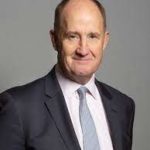
  • Kevin Hollinrake – 2024 Statement on the Post Office Horizon Scandal

    Kevin Hollinrake – 2024 Statement on the Post Office Horizon Scandal

    The statement made by Kevin Hollinrake, the Parliamentary Under-Secretary of State for Business and Trade, on 22 February 2024.

    As a Back Bencher, I first spoke on the matter of compensation for victims in March 2020, which is obviously long after the right hon. Gentleman first campaigned for it. I pay tribute to his campaigning on this subject, which remains undiminished. My appetite for compensation for postmasters is equally undiminished, although I accept the need to increase the pace of delivery.

    As of this month, £160 million has been paid in financial redress to more than 2,700 victims affected by the Horizon scandal. More than 78% of eligible full claims received have been settled as follows: 102 convictions have been overturned, and 42 full claims have been submitted, of which 32 have been settled; 2,793 applications to the Horizon shortfall scheme have been received, and 2,197 have been settled; 58 full claims have been submitted to the group litigation order scheme, and 41 have been settled.

    Our top priority remains ensuring that victims can access swift and fair compensation. We have introduced optional fixed-sum awards of £600,000 for victims with overturned convictions and of £75,000 for group litigation order members as a swift means of settlement, and 100% of original applicants to the Horizon shortfall scheme have received offers of compensation. Today we are discussing what other measures can be taken to speed up compensation with the Horizon compensation advisory board, on which the right hon. Gentleman sits.

    Since the Prime Minister’s announcement on 10 January, officials in the Department for Business and Trade and the Ministry of Justice have been working at pace to progress legislation for overturning convictions related to the Post Office’s prosecutorial behaviour and Horizon evidence. I will provide a further update to the House very soon.

    Mr Jones

    Thank you, Mr Speaker, for granting the urgent question. I draw the attention of the House to my interest as a member of the Horizon compensation advisory board.

    I like the Minister. He campaigned on this issue before he was a Minister, and he has been a very good Minister, but a lot of that good work was undone on Monday by the performance of the Secretary of State for Business and Trade. I am disappointed that he has not taken the opportunity today to talk about the overturned convictions. I understand that later today, at 12 o’clock, there will be a written ministerial statement on the subject. I do not think that is the way to do it, as the House needs an opportunity to discuss the overturned convictions.

    I will ask the Minister a few questions. It is quite clear now that Nick Read, the Post Office chief executive, wrote to the Lord Chancellor basically opposing the overturning of all convictions, saying that up to 300 people were “guilty”. It is not yet clear who instructed him to do that. On Monday, the Secretary of State said it was done off his own bat. I would like to hear what the Minister has to say on that.

    If there are to be overturned convictions, they cannot just be about Horizon; they should also be about Capture. Evidence that I have put to the public inquiry and sent to the Minister yesterday clearly indicates that the scandal predates Horizon. Those affected need to be included in both the compensation scheme and among those with overturned convictions.

    The board is meeting this afternoon, and we have made recommendations to the Minister on how to simplify and speed up the compensation scheme. Will he give an assurance to the House that once the recommendations are agreed, we can announce them quite quickly, primarily to restore to the sub-postmasters some faith, which was wrecked by the performance of the Secretary of State on Monday?

    If the Minister’s written ministerial statement at 12 o’clock is about overturning convictions, will he give a commitment to come back to the House on Monday to give an oral statement, so that the House can interrogate him and discuss that issue?

    Kevin Hollinrake

    I thank the right hon. Gentleman for his question. The overturned convictions are a key priority for me and my Department. I am always keen to update the House whenever I can. There always has to be a sequence to ensure that we follow proper process. What we are doing potentially affects the devolved Administrations, so it is really important that we engage with them properly. That is one of the reasons why we need to make the written statement later today. I have never been unwilling to come before the House and report on what we are doing. I will, of course, continue to do that.

    On the letter from the chief executive to the Justice Secretary, I am aware of the allegations by Mr Staunton. They are very serious allegations that should not be made lightly or be based on a vague recollection. If the right hon. Gentleman looks at the letter from the former permanent secretary, it is clear that she believes the allegations are incorrect, and that there was never any conversation along the lines referred to by Mr Staunton. I think it is pretty clear that those allegations are false.

    The right hon. Gentleman has regularly brought up Capture. We are keen to continue to engage with him on that to ensure that those affected are included in any compensation where detriment has occurred. I note his point about an oral statement. As I say, I am always keen to give such statements whenever possible, and to be interrogated on our plans. I do not think he will be disappointed by what we announce later today.

    Paul Scully (Sutton and Cheam) (Con)

    Now that the then permanent secretary has outlined that she did not implicitly or explicitly tell the then chairman of the Post Office to slow down compensation, I hope we can spend time less time talking about someone who has lost his job and more time talking about postmasters who have lost everything. Will the Minister, who is doing great work in sorting this out, recommit to August as his target date for getting compensation—life-changing compensation—out of the door as soon as possible?

    Kevin Hollinrake

    I thank my hon. Friend for his work on this matter; as my predecessor, he did a tremendous job. The most concerning allegation we heard over the weekend was about the delay in the payment of compensation. In her letter, which is publicly available, the permanent secretary wrote:

    “It is not true that I made any instruction, either explicitly or implicitly. In fact, no mention of delaying compensation appears in either note.”

    So I agree with my hon. Friend that we should move on from that and focus on what really matters, which is getting what he rightly described as life-changing compensation to postmasters as quickly as possible. That is his, and will remain our, No. 1 priority.

  • PRESS RELEASE : Azerbaijan presidential election 2024 – UK statement [February 2024]

    PRESS RELEASE : Azerbaijan presidential election 2024 – UK statement [February 2024]

    The press release issued by the Foreign Office on 9 February 2024.

    A Foreign, Commonwealth & Development Office spokesperson has commented following ODIHR’s preliminary findings on the recent Presidential election in Azerbaijan.

    The UK notes the ODIHR preliminary findings on the Presidential election in Azerbaijan, held on 7 February 2024. The UK was proud to contribute 10 Short Term Observers to its monitoring mission.

    We welcome the establishment by Central Election Committee of Azerbaijan of an Expert Group to consider election complaints and that the election was calm and included provisions to allow the Internally Displaced Population to vote in their historic constituencies.

    However, we share a number of issues of concern with the election taking place in a restrictive environment, lacking genuine political alternatives. Serious violations were observed, some of which run counter to the 1990 Copenhagen Document which outlines a number of human rights and fundamental freedoms.

    The OSCE’s ODIHR plays a vital role in ensuring that election processes are assessed fairly and the UK strongly encourages Azerbaijan to work with the organisation on implementing its final recommendations once published.

    Azerbaijan is an important partner for the UK, and we stand ready to support their electoral reforms and improvements to the democratic process.

  • PRESS RELEASE : Pakistan elections 2024 – Foreign Secretary’s statement [February 2024]

    PRESS RELEASE : Pakistan elections 2024 – Foreign Secretary’s statement [February 2024]

    The press release issued by the Foreign Office on 9 February 2024.

    Foreign Secretary Lord Cameron said:

    The UK and Pakistan enjoy a close and long-standing relationship, underpinned by strong links between our people. Following yesterday’s elections, we commend all those who voted.

    We recognise, however, serious concerns raised about the fairness and lack of inclusivity of the elections. We regret that not all parties were formally permitted to contest the elections and that legal processes were used to prevent some political leaders from participation, and to prevent the use of recognisable party symbols. We also note the restrictions imposed on internet access on polling day, significant delays to the reporting of results and claims of irregularities in the counting process.

    The UK urges authorities in Pakistan to uphold fundamental human rights including free access to information, and the rule of law. This includes the right to a fair trial, through adherence to due process and an independent and transparent judicial system, free from interference.

    The election of a civilian government with the mandate to deliver crucial reforms is essential for Pakistan to flourish. The new government must be accountable to the people it serves, and work to represent the interests of all Pakistan’s citizens and communities with equity and justice. We look forward to working with Pakistan’s next government to achieve this, and across the range of our shared interests.