Tag: 2024

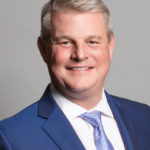
  • Stuart Andrew – 2024 Speech at the Betting and Gaming Council Annual General Meeting

    Stuart Andrew – 2024 Speech at the Betting and Gaming Council Annual General Meeting

    The speech made by Stuart Andrew, the Gambling Minister, on 29 February 2024.

    Good morning everyone, and thank you for the invitation to speak today.

    Before I begin, I would like to say thank you to Brigid for all your work during your time as Chair of the BGC. We appreciate the constructive and considered input you and the BGC have provided to my department’s work, not just during my time as Minister but throughout your tenure.

    Last year my predecessor spoke of the important contributions BGC members make to our national economy. I would like to again recognise this contribution, not just in revenue terms, but also the social and entertainment benefits your businesses bring to millions of customers who enjoy gambling and suffer no harm at all. Throughout my time as minister, and as an MP, I have seen how this industry boosts both local and national economies through jobs and tourism.

    A lot has happened since your last AGM, I think that is a bit of an understatement. In April last year we published the White Paper, setting out 62 proposals that will ensure our gambling laws are fit for the modern age and I am absolutely aware of just how much hard work this has required from the BGC and its members, as well as my department and the Gambling Commission. I would therefore like to put on record my thanks to you all for your cooperation, your engagement and help in developing the proposals, as well as your hard work to begin their implementation over the last 10 months.

    I know that Michael is sick of the sight of me given that we meet almost every week but I have found that engagement really valuable.

    I would now like to provide you with an update on our programme of work and ensure you have clarity on the direction of travel.

    As you will all be aware, our White Paper strikes a balance between consumer freedom – preserving the rights of those who enjoy gambling and suffer no ill-effects – with the necessary action to tackle harmful gambling and the devastating consequences it can have for some individuals and communities.

    It includes a comprehensive range of measures that covers every aspect of the industry, reflecting the huge changes in the gambling landscape since 2005. Around half of the proposals in the White Paper have now been consulted on or have been completed.

    During Monday’s debate I made reference to the white paper consultations. I make no apologies for emphasising the importance of the consultations undertaken by the Government and the Gambling Commission. They have given us invaluable evidence to inform policy making. They ensure that the measures are robust, proportionate, and in line with the White Paper’s objectives. And they show that the Government is listening to your views and evidence.

    I would like to focus the rest of my time today on the announcements made last week by DCMS and the Gambling Commission on our work on online gambling measures.

    You will have seen that last Friday we confirmed the introduction of stake limits for online slot games. Bringing in limits for the first time is a key step in ensuring the regulatory framework is fit for the digital age. Our aim is not to prohibit play, but to embed best practice that many of you already do.

    We are confident that the limits of £5 for over 25s and £2 for 18 to 24 year olds represents a proportional response. It will see online slots aligned with casino limits and will ensure customers are further protected from unaffordable and life-changing losses.

    As set out in the consultation response, these limits will come into force in September this year and have the support of industry.

    We are confident that this is an important step forward in ensuring that the vast majority of people who gamble safely can continue to do so, but that enhanced protections are in place for those who may suffer harm.

    Turning to financial risk checks, the Gambling Commission confirmed last week that they will be proceeding with these proposals. I am sure you hear more on this from Andrew Rhodes later today, but their plans include both the light-touch financial vulnerability checks and the enhanced financial risk assessments.

    The financial vulnerability checks are intended to be introduced in two stages over the course of this summer. Responding to feedback received through the consultation, the Commission has reassured everyone that they will never require gambling businesses to consider an individual’s personal details, such as their postcode or job title, as part of the checks.

    To ease the introduction of these checks, they will initially come into force at a higher threshold for a short period of time, before reverting to a lower threshold later in the year. We expect this lower threshold to be closely aligned with that proposed in the white paper.

    I know that some of your members have concerns with the proposed system of checks. I would like to reiterate that both the Government and the Gambling Commission are listening, because we genuinely we want to get this right.

    We are clear that financial risk checks should not overregulate the gambling sector, should not unduly disrupt the millions of people who gamble without suffering harm, and should not cause unnecessary damage to the industry.

    The proposed system will be a significant improvement to the current system of inconsistent so-called ‘affordability’ checks, which are often onerous for customers to complete. It will provide clear and proportionate rules which all operators are held to, and allow for financial data to be shared seamlessly with operators, instead of burdening customers with information requests.

    I have been clear that these checks should be genuinely frictionless – one of my first discussions with officials on taking on the gambling brief was around how we would deliver this – and the White Paper was clear that they will not be implemented until we can guarantee that they are.

    To ensure these checks are implemented in an effective but proportionate manner the Gambling Commission has announced it will conduct a pilot over the coming months. I am pleased that the pilot will involve collaboration between the Commission, credit reference agencies and a selection of gambling businesses to ensure that the process of an assessment is effective. The sector’s involvement gives me confidence that we will be able to find a solution that everyone can support.

    We are therefore grateful for the input of BGC members into this pilot to ensure it is a meaningful test of the policy. The Commission will consider all issues that arise during the pilot stage – and are clear that this will help refine the final requirements and the models for data-sharing. I, and the Government, are supportive of the evidence-led and consumer-centred approach being proposed during this pilot.

    But until these checks are fully in place, it is essential that the industry is more transparent with its customers.

    An industry-led code is an important stepping stone while frictionless checks are piloted. It will mitigate the impact of customers having to provide documentation, while we develop this new, frictionless system of checks.

    I know that discussions are ongoing between the Commission and industry, and I really would urge all parties to come to an agreement on this code as soon as possible for the benefit of customers.

    I would now like to turn briefly to horse racing and the concerns about the impact of financial risk checks on the sport. I want to reassure you again that we have heard these concerns and take them very seriously.

    I have met with the British Horseracing Authority and the Betting and Gaming Council several times as we conduct our review of the Horserace Betting Levy, which is due by April this year.

    As there is currently no legislative opportunity to amend the levy, I have encouraged the betting and racing industries to work together on a voluntary deal. I am very grateful for the constructive manner in which those negotiations have taken place. We said in the White Paper that we will ensure that racing is appropriately funded going forward, and I am confident that agreement can be reached which is mutually beneficial and is in the best interests of the sport.

    I am grateful for the work which operators have undertaken with the Gambling Commission to explore the practical aspects of implementing these checks. We want to protect those at risk of harm – something that I make no apologies for – but with minimal disruption to the majority, who I recognise bet on horse racing with no ill effect.

    We know that British racing is a substantial asset to the country. We remain committed to supporting the industry to prosper, and I am confident that the way in which these checks will be implemented will not prevent that from happening.

    I know you will be keen to understand what is coming next in the pipeline.

    We will publish our consultation responses on land-based gambling measures and the statutory levy in the coming months, and will lay secondary legislation to bring measures into force across all relevant areas as soon as parliamentary time allows. Nonetheless, I am absolutely determined to ensure that we deliver on our commitment to bring key measures into force by the summer of this year.

    Thank you again for inviting me to speak today, and giving me this opportunity to update you on our programme of reform. As we look to conclude work on our key proposals I hope I have demonstrated to you that we will continue to listen, we will test, and we will adapt our approach as this fast-moving industry develops and I thank you for that continued engagement.

  • PRESS RELEASE : Celebrities and influencers join forces to tackle loneliness [February 2024]

    PRESS RELEASE : Celebrities and influencers join forces to tackle loneliness [February 2024]

    The press release issued by the Department for Culture, Media and Sport on 29 February 2024.

    TV personalities and social media influencers back the launch of a Government campaign to address the stigma around loneliness in young people.

    • Loneliness Minister Stuart Andrew hosts meeting at 10 Downing Street to discuss loneliness among young people
    • Former Made in Chelsea star Josh Patterson and influencer and entrepreneur Brontë King among the high profile media personalities to support
    • Stars back launch of Government campaign to address the stigma around loneliness

    Eastenders star Bobby Brazier and Love Island finalist Tasha Ghouri are among the TV personalities and social media influencers working to normalise loneliness among young people as part of a new Government campaign.

    Research shows that 16 to 24 year olds are the loneliest age group and are also the least likely to take action to help themselves. Figures show that nearly half of students admit they have hidden their feelings of loneliness for fear of being judged.

    In response, the Government is launching the next phase of its digital-led campaign to address the stigma around loneliness with young people.

    For six weeks, video content will run across social media platforms including YouTube, Facebook and Instagram, showing people experiencing loneliness in everyday situations such as moving away from home and scrolling on social media.

    Clips will feature the campaign’s new strapline, ‘Loneliness. It’s a part of life. Let’s talk about it’, which aims to normalise loneliness and create a conversation on the topic in order to reduce the stigma.

    Ahead of the campaign launch, Loneliness Minister Stuart Andrew held a meeting at 10 Downing Street to enlist the help of high-profile figures with a combined following of 8.7 million across platforms on a pro bono basis.

    Brontë King, Bobby Brazier and Tasha Ghouri were joined by star of Netflix’s Heartstopper Bradley Riches and social media influencer Anastasia Kingsnorth to discuss their personal experiences and thoughts on the subject.

    Minister for Loneliness Stuart Andrew said:

    We know that young people are the age group most affected by loneliness but they’re also the least likely to take action to support themselves.

    Our latest campaign will encourage young people to talk about their experiences, aiming to break down the stigma that so often prevents people from getting support.

    Everyone should know they are not alone and help is available.

    Attendees of the round table offered their views on the causes of loneliness, spoke of their own personal experiences and suggested how they would support themselves or someone they knew if they were feeling lonely, such as getting involved in a hobby, club or inviting a friend for a tea or coffee and a chat.

    Actor and Model Bobby Brazier:

    Everyone feels lonely at points throughout their life because modern life can be very isolating.

    That’s why being part of this campaign is so important to me, to show that it’s okay and encouraged to talk about our feelings.

    Actor Bradley Riches said:

    This campaign is extremely important to me because, as an autistic and queer individual, I have found myself extremely lonely at points throughout my life.

    I think when people think of loneliness, they often think of older people, yet no one really talks about young people feeling lonely.

    This campaign is helping to create a space for people to get support and break down the stigma, because in life everyone will feel lonely at some point.

    Influencer and entrepreneur Brontë King said:

    After starting a community to support girls during and after university, I have seen first-hand how common loneliness really is among 16 to 24 year olds.

    From that first year of university to navigating post grad life, it really can be a lonely period of time. That’s why being part of this campaign, making loneliness more of a talked about topic and giving people space to realise these feelings are normal, is so important and something I am so proud to be a part of.

    Media personality Tasha Ghouri said:

    I’m proud to be a part of the loneliness campaign from the deaf representation side. It’s important to speak out whenever we feel lonely and normalise having these open conversations as it will help so many more people out there!

    From my own personal experiences being deaf and wearing a cochlear implant, it can be isolating at times and I had to look for support to guide me through, opening up and talking about how you feel does so much more good than letting it in.

    Social media influencer Anastasia Kingsnorth said:

    Loneliness is a feeling that everyone has experienced at some stage, and it’s so important to understand that you are not alone in that feeling.

    The hardest part can be admitting it, but admitting it yourself, then speaking to someone else, is a big step in combating loneliness. Everyone should know it’s okay to feel that way.

    TV personality and athlete Josh Patterson said:

    Loneliness can affect us all in life, and in many different ways. Although to the masses it can appear that someone has everything and be surrounded by people, for me personally, it’s been about facing some of my passions alone.

    When not everyone understands you or supports you, it can be incredibly isolating. It’s taken me a long time to grow from these sorts of experiences as I’ve been exposed to so many different environments and people. The biggest lesson I’ve learnt is that loneliness for me is about the environment I’m in; on one side I may feel isolated, but it can take time to feel valued, nurtured, and supported and there are actions we can take to feel less alone in this journey.

    This is the message I wish to spread so more people can see the light that is there waiting to be found.

    Video clips and campaign activity will signpost to the Better Health: Every Mind Matters loneliness website page, where people will find support and advice on how they can help others, as well as information on support routes to help them feel less lonely too.

    Discord, the online communication platform for the gaming world, will also be supporting the campaign by pointing users to resources on the Every Mind Matters website. As part of campaign activity, Discord will host a series of polls for their online community in March, helping to build up the supportive conversation around dealing with loneliness.

    The latest phase of the campaign ran in September 2023 and targeted students preparing for freshers’ week amid research finding that loneliness is something experienced by almost all students.

    Since the government made a commitment to tackle the stigma of loneliness in 2018, campaign activity has reached at least 25 million people across the country, including those most at risk of loneliness.

    Since 2018, the Government and its partners have invested over £80 million in tackling loneliness, including up to £30 million allocated via the ‘Know Your Neighbourhood Fund’ creating volunteering opportunities and helping reduce loneliness in 27 disadvantaged areas.

    Notes to editors:

    • For support and advice on loneliness, search ‘Loneliness Every Mind Matters’.
    • Previous ambassadors and supportive partners of the campaign have also included The Prince and Princess of Wales, the world’s number one dating app Tinder and Youth Mental Health Ambassador Dr. Alex George.
    • The campaign toolkit includes new campaign assets, key messaging and suggested social media copy.
    • The Government is supporting young people via its National Youth Guarantee, ensuring that by 2025 every young person will have access to regular clubs and activities, adventures away from home and opportunities to volunteer. This is supported by investment of over £500 million, £300 million of which will fund the building or refurbishment of youth centres via the Youth Investment Fund.
    • Since its launch, the Youth Investment Fund has awarded over £250 million to 227 organisations.
  • PRESS RELEASE : Demand for heat pumps surges as grant application increase by 39% [February 2024]

    PRESS RELEASE : Demand for heat pumps surges as grant application increase by 39% [February 2024]

    The press release issued by the Department for Energy Security and Net Zero on 29 February 2024.

    New figures show applications for the government heat pump grants are up by 39% compared to January 2023.

    • Figures show applications up 39% on January 2023
    • scheme has issued more than £133 million in vouchers to customers
    • follows grants increasing to £7,500, making scheme one of the most generous of its kind in Europe

    Demand for heat pumps continues to grow with the Boiler Upgrade Scheme enjoying the third best month for applications in its history.

    Figures for the Boiler Upgrade Scheme released today (29 February) show there were over 2,000 applications for heat pump grants in January 2024 – only exceeded by October and November last year, which immediately followed the increase in government-funded heat pump grants.

    The January figure is up 39% on the same month last year as families take advantage of the 50% grant increase introduced by the government last autumn, making the initiative one of the most generous of its kind in Europe.

    The news follows recent government figures showing the UK is the first major economy to halve its emissions – having cut them by 50% between 1990 and 2022, while also growing its economy by 79%.

    Energy Security Secretary, Claire Coutinho, said:

    I don’t want families to have to choose between cutting costs and cutting emissions. I want families to feel supported, not forced, to make changes that are right for them.

    After we made our heat pump scheme one of the most generous in Europe, applications have soared by 40% year on year – showing that our approach is the right one.

    The figures also revealed the average monthly number of applications from November 2023 to January 2024, the months after the grant increase, has been 39% higher than the monthly average before the uplift.

    Up to the end of January, the scheme has now received 33,424 applications in total and has issued more than £133 million in vouchers to customers.

    The Boiler Upgrade Scheme helps households make the switch from fossil fuel heating systems to cleaner low carbon heating alternatives, by covering the majority of the average upfront cost of an air source heat pump.

    In October, the Prime Minister increased grants for the installation of air source and ground source heat pumps to £7,500. The scheme also offers £5,000 off the cost of a biomass boiler.

    The figures released today also show a regional breakdown of where heat pumps have been installed in England and Wales.

    The South West has seen the most with 3,894 installations, followed by the South East with 3,886 and then the East with 2,671.

    Chief Executive of the Heat Pump Association, Charlotte Lee, said:

    It’s great to see interest in the Boiler Upgrade Scheme increasing, supporting the installation of over 20,200 heat pumps to date across England and Wales.

    The uplift in the grant value for air source and ground source heat pumps in October 2023 to £7,500 has been well received by both the sector and consumers and we hope this increasing interest will be a trend which continues forward as we move to decarbonise home heating in line with the government’s legally binding net zero targets.

  • PRESS RELEASE : Trustee reappointed to the Natural History Museum board [February 2024]

    PRESS RELEASE : Trustee reappointed to the Natural History Museum board [February 2024]

    The press release issued by the Department for Culture, Media and Sport on 29 February 2024.

    The Prime Minister has reappointed Robert Noel as a Trustee of the Natural History Museum.

    Robert Noel

    Appointed for a two year term commencing 24 April 2024.

    Robert Noel’s career was spent in the real estate sector having started at property services firm Nelson Bakewell and becoming a Director in 1992. In 2002 he joined the Board of Great Portland Estates plc as Property Director.  In 2010 he joined the Board of Land Securities Group PLC as Managing Director of its London Portfolio and was subsequently appointed Group Chief Executive Officer in 2012.  He retired from Landsec in March 2020.

    Mr Noel is currently Chair of Taylor Wimpey Plc; Chair of Hammerson plc and a Trustee of the Natural History Museum, where he is now being reappointed for a third term.

    Mr Noel was previously a Trustee of LandAid the property industry charity.  He served on the Board of the British Property Federation from 2016-2020 and was its President in 2018/19. He also served on the Prime Minister’s Business Advisory Group in 2015-2016.

    Remuneration and Governance Code

    Trustees of the Natural History Museum are not remunerated. This appointment has been made in accordance with the Cabinet Office’s Governance Code on Public Appointments.

    The appointments process is regulated by the Commissioner for Public Appointments. Under the Code, any significant political activity undertaken by an appointee in the last five years must be declared. This is defined as including holding office, public speaking, making a recordable donation, or candidature for election.

    Robert Noel  has not declared any significant political activity.

  • PRESS RELEASE : Russia’s mistreatment of civilian detainees and prisoners of war must end: UK statement to the OSCE [February 2024]

    PRESS RELEASE : Russia’s mistreatment of civilian detainees and prisoners of war must end: UK statement to the OSCE [February 2024]

    The press release issued by the Foreign Office on 29 February 2024.

    Ambassador Holland calls on Russia to release all individuals arbitrarily detained in Crimea, the temporarily controlled territories, and those transferred to Russia. He notes that Russia’s actions may be in breach of the Geneva Conventions, constituting war crimes.

    Thank you, Madam Chair. And thank you and the Minister for chairing last week’s Reinforced Permanent Council which was an important demonstration of overwhelming support for Ukraine.

    10 years ago on 20 February 2014, Russia began its illegal annexation of Crimea, paving the way to its full-scale invasion of Ukraine in February 2022. Monday marked the Day of Resistance to Occupation of Crimea and Sevastopol – the democratic spirit of this day still rings true in Ukraine. The UK will never recognise Russia’s illegal annexation of Crimea, or of any Ukrainian territory.

    Since 2014, Crimea has been used to further Russia’s war effort, including as a destination for illegally detained Ukrainian civilians. Many of them have been transferred to detention centres on the peninsula, and sometimes to the Russian Federation. Crimean Tatars continue to endure a ruthless campaign of persecution simply for existing in their homeland. Many who are legitimately politically active have been arrested and labelled as ‘extremists’.

    As well as in Crimea, the number of Ukrainian civilian detainees and prisoners of war being held in the temporarily controlled territories and in the Russian Federation continues to rise. Their families do not know where they are or when they will return. There is no way to monitor the presence of these civilians and no mechanism to facilitate their release.

    There are also widespread reports of human rights abuses and violations committed against prisoners of war and civilian detainees by Russian authorities – including torture, sexual violence and summary executions. Even within the last week Ukrainian authorities have reported several cases of their soldiers being executed by Russian forces in Avdiivka and Bakhmut.

    Yesterday at an event hosted by the Ukrainian delegation, we heard from a Ukrainian prisoner of war, who was held at Volnovakha Colony No.120, in the temporarily controlled territory of the Donetsk oblast. They detailed horrendous conditions, including lack of access to medical treatment, food, and water, as well as being subjected to hours of torture.

    Russia must also release all individuals arbitrarily detained in Crimea, the temporarily controlled territories, as well as those who have been transferred to Russia. Russia’s actions may be in clear and serious breach of the Geneva Conventions, constituting war crimes. We also call on Russia to uphold international humanitarian law and ensure the dignified and humane treatment of those detained. Russia must allow access for international humanitarian and human rights organisations. Only through this access can those responsible for Russia’s systematic campaign of human rights violations be held to account.

    Madam Chair. We remain extremely concerned for the welfare of our three OSCE colleagues of the Special Monitoring Mission (SMM). They have been wrongly held by the Russian authorities for over 700 days. There is absolutely no justification for their detention. They and their SMM colleagues were simply performing their official duties, duties mandated by all participating States of the OSCE. They must be released and allowed to go home. Thank you.

  • PRESS RELEASE : UN Human Rights Council 55 – Statement on Occupied Palestinian Territories [February 2024]

    PRESS RELEASE : UN Human Rights Council 55 – Statement on Occupied Palestinian Territories [February 2024]

    The press release issued by the Foreign Office on 29 February 2024.

    Statement for the Interactive Dialogue with the High Commissioner – oral update on: Occupied Palestinian Territories. Delivered by UK Human Rights Ambassador Rita French.

    High Commissioner, thank you for your report and update.

    On 7 October, Israel suffered the worst terror attack in its history at the hands of Hamas.

    In Gaza, Palestinian civilians are facing a devastating and growing humanitarian catastrophe.

    We need to avert this. We need the fighting to stop now.

    That is why we are calling for an immediate cessation – to get aid in and hostages out, then progress towards a sustainable, permanent ceasefire with no return to fighting.

    There is a desperate need for increased humanitarian support.

    We have trebled humanitarian aid in Gaza to over 60 million pounds sterling including a further £4.25 million support for vulnerable women and girls.

    As the occupying power, Israel has to make sure that humanitarian aid—including food, water and shelter—is available to civilians in Gaza.

    The impact of IDF operations on the civilian population is deeply concerning. Already, too many civilians have been killed. International Humanitarian Law must be respected by all parties and civilians must be protected.

    Mr President, we are committed to improving the lives of all Palestinians across the Occupied Palestinian Territories.

    The United Kingdom continues to work intensively in support of a two-state solution that guarantees: security and stability for Israeli and Palestinian people; and two secure and sovereign states – Israel and Palestine.

    Thank you.

  • PRESS RELEASE : Clare Lombardelli appointed as Deputy Governor for Monetary Policy at The Bank Of England [February 2024]

    PRESS RELEASE : Clare Lombardelli appointed as Deputy Governor for Monetary Policy at The Bank Of England [February 2024]

    The press release issued by HM Treasury on 29 February 2024.

    The Chancellor has announced that Clare Lombardelli will succeed Ben Broadbent as the next Deputy Governor for Monetary Policy (DGMP) at the Bank of England.

    His Majesty The King has approved the appointment.

    Clare will take up her role at the Bank on 1 July 2024 for a term lasting five years.

    As the new Deputy Governor for Monetary Policy, Clare will be responsible for overseeing the formulation and implementation of UK monetary policy and will lead the Bank’s research, data and analytics.  Clare will be a member of the Monetary Policy Committee, the Financial Policy Committee, the Court of the Bank of England, and will be part of the Executive Team charged with running the Bank to deliver its statutory objectives.

    Clare will lead the actions in response to Ben Bernanke’s review of the Bank’s forecasting process, commissioned by the Bank’s Court of Directors. She will also be responsible for the Bank’s research agenda; will drive forward, jointly with the Bank’s Chief Operating Officer, an ambitious new data and analytics strategy; and will lead the Centre for Central Banking Studies that works closely with other parts of the UK Government to provide technical assistance to overseas central banks. Clare will represent the Bank on a number of national and international bodies.

    Clare will succeed Ben Broadbent, who has served since 2014.

    Jeremy Hunt, Chancellor of the Exchequer, said:

    “I am delighted to appoint Clare Lombardelli as the next Deputy Governor for Monetary Policy at the Bank of England. Clare brings significant experience to the role tackling financial and economic issues both domestically and internationally.

    “I would like to thank Ben for his decade of service as Deputy Governor of Monetary Policy at the Bank of England. Ben has played a vital role in helping the Bank maintain monetary and financial stability and I wish him the best in the next stage of his career.”

    Andrew Bailey, Governor of the Bank of England, said:

    “I’m really pleased to welcome Clare Lombardelli back to the Bank as Deputy Governor for Monetary Policy. Clare’s impressive career means she brings a huge amount of relevant experience and expertise to the Monetary Policy Committee, and the Bank more broadly, at a time of great importance for the UK economy.

    “I would also like to thank Ben Broadbent for his service. He will be missed, and all at the Bank wish him the very best for the future.”

    About the appointment

    The Bank of England is the central bank of the UK. It is governed by the board of directors known as the Court. Further information can be found at the Bank of England website.

    The Deputy Governor for Monetary Policy is appointed by His Majesty the King, on the recommendation of the Prime Minister and the Chancellor of the Exchequer.

    The role is subject to pre-commencement scrutiny by the Treasury Select Committee.

    Public appointments are made on merit following a fair and open competition process.

    About Clare Lombardelli

    Clare is the Chief Economist of the OECD where she is responsible for economic research and forecasting, analysis of OECD member and partner countries and represents the organisation at the G20, G7 and other international bodies.  Prior to this, Clare was the Chief Economic Advisor to the Treasury and joint head of the Government Economic Service.  Clare started her career at the Bank of England and has also worked at the International Monetary Fund.

  • PRESS RELEASE : Two Board Members appointed to the British Library [February 2024]

    PRESS RELEASE : Two Board Members appointed to the British Library [February 2024]

    The press release issued by the Department for Culture, Media and Sport on 29 February 2024.

    The Secretary of State has appointed Shobi Khan and Kate Mosse CBE as Board Members to the British Library, for terms of 4 years commencing 1 March 2024.

    Shobi Khan

    Shobi Khan is the CEO of Canary Wharf Group (CWG). Previously, he served as President and Chief Operating Officer of GGP Inc. (a S&P 500 REIT). Prior to GGP, he served as the U.S. chief investment officer at Bentall Kennedy. Mr. Khan spent 11 years at Equity Office Properties Trust (a S&P 500 REIT), where he was the Senior Vice President of Investments. Mr. Khan served on the board of Alliance Shopping Centres (ALSO3, a public Brazilian mall owner) and the Chicago Public Library Foundation.

    Kate Mosse CBE

    Kate Mosse is an award-winning novelist, non-fiction author, playwright, campaigner and interviewer. The author of ten novels & short story collections, including The Languedoc Trilogy – Labyrinth, Sepulchre and Citadel – and No 1 bestselling Gothic fiction including The Winter Ghosts and The Taxidermist’s Daughter. Kate also has four works of non-fiction including the memoir An Extra Pair of Hands and Warrior Queens & Quiet Revolutionaries: How Women (Also) Built the World. Her latest international No 1 bestselling novel, The Ghost Ship, is the third in a quartet of historical novels, The Joubert Family Chronicles. Kate’s books have been translated into 37 languages and published in more than 40 countries.

    In the New Year Honours list 2024, Kate was awarded a CBE for services to literature, to women and to charity. She is the founder director of the Women’s Prize for Fiction and the Women’s Prize for Non-Fiction and the Founder of the global #WomaninHistory campaign. She was appointed a member of the Royal Society of Literature in 2022.

    Kate was formerly Deputy Chair of the National Theatre. Active in her local community, Kate is a Visiting Professor of Creative Writing and Contemporary Fiction at the University of Chichester, President of the Festival of Chichester, Patron of the Consort of Twelve and the Chichester Festival of Music, Dance & Speech and Patron of the Chichester Cathedral Festival of Flowers for 2024.  She is also an Ambassador for Parkinson’s UK.

    Remuneration and Governance Code

    The Secretary of State has determined that remuneration at £9,130 per annum shall be payable to Kate Mosse. Shobi Khan has agreed to forgo the remuneration. Board Members are able to claim reasonable expenses in accordance with the British Library’s own rules.

    These appointments have been made in accordance with the Cabinet Office’s Governance Code on Public Appointments.

    The Governance Code requires that any significant political activity undertaken by an appointee in the last five years is declared; this is defined as holding office, public speaking, making a recordable donation or candidature for election. Shobi Khan and Kate Mosse have not declared any significant political activity.

  • PRESS RELEASE : UN Human Rights Council 55 – UK Statement on Eritrea [February 2024]

    PRESS RELEASE : UN Human Rights Council 55 – UK Statement on Eritrea [February 2024]

    The press release issued by the Foreign Office on 29 February 2024.

    The UK’s Statement for Enhanced ID on Human Rights in Eritrea, delivered at the UN Human Rights Council.

    Thank you Mr Vice-President,

    The UK thanks the speakers for their interventions, and we share their concerns, including on Eritrea’s continued policy of indefinite national service, which affects the lives of thousands, and is the reason many young Eritreans give for leaving their country. Eritrea should take steps to regularise the duration for national service and increase the exemptions to it.

    Mr Vice-President,

    We call again on the Government to fully respect the rights to freedom of opinion and expression, of religion or belief, and of peaceful assembly and association.  All those arbitrarily detained or held incommunicado in Eritrea must be released, including those detained solely based on their religion or belief.

    We regret that the human rights situation in Eritrea is not improving.  We again call on Eritrea to re-engage with the international community, work with this Council and its mandate holders, implement fully its accepted UPR recommendations, and open itself to support and assistance, so progress toward full respect for human rights can start to be made.

    A free and open society is the bedrock of stability and prosperity. The UK again restates our offer to engage with the government of Eritrea, in the hope that a better human rights situation can in turn deliver better economic opportunities for the people of Eritrea, particularly younger people.

    Finally, Mr Vice-President,

    We would like to ask the panellists for their assessment of whether any progress has been made or could possibly be made to hold perpetrators of human rights violations to account.

    Thank you.

  • PRESS RELEASE : Work to deliver Midlands Rail Hub set to begin with £123 million [February 2024]

    PRESS RELEASE : Work to deliver Midlands Rail Hub set to begin with £123 million [February 2024]

    The press release issued by the Department for Transport on 29 February 2024.

    Millions of people will benefit from more frequent rail services from central Birmingham and upgraded stations across the Midlands.

    • design work on £1.75 billion Midlands Rail Hub project set to begin
    • rail hub set to benefit millions of people with improved journey times and more frequent rail services
    • investment demonstrates Network North commitment to deliver the Midlands Rail Hub with reallocated HS2 funding to benefit more people, in more places, more quickly
    • comes as Midlands set to benefit from £2.2 billion through Local Transport Fund to improve local transport connections

    Work on the Midlands Rail Hub is set to begin after ministers provided an initial £123 million funding injection.

    The transformational upgrade project is part of the government’s plan to improve transport across the region and beyond, boosting the capacity and frequency of rail services for passengers while upgrading stations across the Midlands.

    More than 50 stations – covering 7 million people across the region – will benefit from the plans, made possible by reallocated HS2 funding. The first phase of the Midlands Rail Hub will mean an additional train every hour in both directions between central Birmingham and locations including:

    • Bristol
    • Cardiff
    • Cheltenham
    • Worcester

    This first wave of funding will enable design work to begin on creating space for extra services. This includes preparing detailed designs for the infrastructure improvements required, finalising operating plans for the new services, while continuing to move the rest of the programme forward.

    The investment comes as part of the government’s Network North transport plan, which committed £1.75 billion to deliver the Midlands Rail Hub in full.

    Transport Secretary, Mark Harper, said:

    The Midlands Rail Hub will bring huge benefits to passengers in the region and beyond, so it’s great to be in Birmingham with Mayor Andy Street to kick start this important project.

    Today’s announcement is part of the government’s plan to invest in transport projects with reallocated HS2 funding, helping to grow the economy and better connect communities across the Midlands.

    More London to Birmingham services will be extended from Moor Street to Snow Hill station meaning the Chiltern line will also serve Birmingham’s Snow Hill business district.

    In addition, Kings Norton station will be made more accessible, while platforms at Snow Hill, Moor Street, and Kings Norton stations will be upgraded. Passengers will also have greater access to HS2 services via Curzon Street station, meaning easier travel across the country.

    When delivered in full, the hub will see services on most routes increase by between 50% and 100%. Birmingham’s Cross-City line will be given a ‘turn-up-and-go’ service with a train every 10 minutes.

    The number of trains between Birmingham and Leicester will be doubled from 2 to 4 per hour, while additional trains are planned between Birmingham and Nottingham, and the new Birmingham to Worcester trains extended to Hereford.

    Andy Street, Mayor of West Midlands and chair of the West Midlands Rail Executive (WMRE), said:

    The Midlands Rail Hub will deliver a revolution in public transport for our region opening up more capacity on the routes in and out of central Birmingham which will allow us to run more services to more places both locally and nationally.

    Midlands Rail Hub will also provide an opportunity for us to open more new stations and lines across our network as well as deliver faster journey times into central Birmingham from the new Camp Hill line stations that are currently under construction at Moseley Village, Kings Heath and Pineapple Road.

    This investment will not only better connect communities to convenient and rapid public transport services but also attract further investment into our region, delivering jobs, growth and greater prosperity.

    It’s important not to forget that this new funding comes on top of the billions of pounds worth of transport investment we have already secured for the West Midlands. That funding is really significant and will help turbo-charge our plans to improve public transport across the region, connecting local people to education, training, health and leisure services as well as job opportunities.

    Maria Machancoses, Chief Executive of Midlands Connect, said:

    This announcement marks a major milestone in this transformational, nationally significant project.

    The Midlands Rail Hub programme is the result of years of collaboration and determination by cross-party leaders from all corners of the Midlands.

    Today’s £123 million announcement is a clear sign of government’s trust in our partnership – getting us closer to finally delivering much need east-west connectivity across the region.

    We will continue to work with government to progress the plans and ensure, as set out in Network North, Midlands Rail Hub is delivered in full, extending the benefits to towns and cities like Hereford, Nottingham, Derby and Leicester.

    The Midlands Rail Hub announcement comes as the British Business Bank launched its £400 million Midlands Engine Investment Fund II today (29 February 2024), unlocking additional funding to help smaller businesses in the Midlands prosper and thrive.

    The fund will drive sustainable economic growth by supporting new and growing businesses across the whole of the Midlands, increasing the access and diversity of early-stage finance for smaller businesses in the region. It includes a range of finance options with loans from £25,000 to £2 million and equity investments up to £5 million to help small and medium-sized businesses start up, scale up, or stay ahead.

    The Midlands Rail Hub announcement also comes shortly after the government announced the Midlands will receive £2.2 billion from April 2025 to improve local transport connections in areas outside the city regions. The investment will give local authorities long-term certainty to invest in transport improvements such as building new roads and installing or expanding mass transit systems.

    Over the 7 years as a whole, this funding will be on average at least 9 times more than these local authorities currently receive through the local integrated transport block, which is the current mechanism for funding local transport improvements in their areas.

    Subject to future decisions, this first phase of the Rail Hub could be completed by the early 2030s.