Tag: 2024

  • PRESS RELEASE : New measures to tackle small boats agreed by Calais Group [March 2024]

    PRESS RELEASE : New measures to tackle small boats agreed by Calais Group [March 2024]

    The press release issued by the Home Office on 5 March 2024.

    The UK and other northern European countries discussed new commitments to disrupt the supply chain of small boats yesterday evening (Monday 4 March).

    At a meeting of the Calais Group in Brussels, Home Secretary James Cleverly hosted representatives from France, Belgium, Germany and the Netherlands, in the presence of the European Commission and its agencies. The nations discussed how best to progress joint efforts in tackling the global migration crisis.

    The UK and France will lead a new customs partnership, which they have invited other Calais Group members to discuss in detail in April. This is an initiative to work with countries throughout the supply chain of small boat materials, and will build on the effective work already being done to prevent small boat launches from northern France.

    Partnership countries and their customs agencies will, through the customs partnership, be able to share information more effectively to disrupt shipments of small boat materials, preventing them from making it to the English Channel.

    In addition to the launch of the customs partnership, several other key points were covered by the Calais Group:

    • the Home Secretary emphasised the need for strengthened measures, including operational and legislative, to ensure a more effective deterrent against the facilitation of illegal migration across Europe, focusing on the range of destinations and transit routes being used and breadth of criminal activity taking place
    • a renewed commitment to step up work with social media companies to tackle online activity by people smuggling networks
    • the Home Secretary also discussed the operationalisation of the new deal the UK has signed with Frontex, the European Border and Coast Guard Agency, to exchange information and intelligence and take on the people smuggling gangs together

    Home Secretary James Cleverly said:

    Working closely with our European neighbours is fundamental to solving the illegal migration crisis. Global problems require global solutions, and the UK is leading the conversation around the changes needed to crack down on people smugglers and break their supply chains.

    The Calais Group is central to our mission, and we have already made significant progress by reducing small boat crossings by 36%. Our new customs partnership demonstrates our enduring commitment to smashing the business model of criminal gangs and stopping the boats.

    Ministers welcomed the joint progress achieved since the last meeting of the Calais Group in December 2022. The number of small boats crossing the English Channel is down by 46% on last year and the number of illegal migrants arriving in the UK has fallen by 36%.

    The UK also returned more than 25,000 people without the right to be here last year.

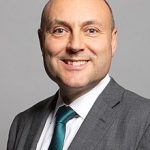
  • Andrew Griffith – 2024 Speech at LEAP ’24

    Andrew Griffith – 2024 Speech at LEAP ’24

    The speech made by Andrew Griffith, the Science Minister, in Riyadh, Saudi Arabia on 4 March 2024.

    Good afternoon.  It’s a pleasure to be here.

    I must start by thanking the patron of this conference and our gracious host, His Excellency Minister AlSwaha, and all of the teams behind this fantastic event.

    This is my second visit to the dynamic City of Riyadh in a few months and it is good to be back.

    The immense science and innovation ambition of the Kingdom in its Vision 2030 is clear and commendable.

    In its four priorities – health and wellbeing, sustainability, energy and economies of the future – Saudi Arabia has shown that it is ready to harness the power of research to tackle some of the greatest shared challenges of our time.

    Projects like NEOM which seeks to harness the power of AI and net zero technologies to establish the most advanced human habitat on Earth  have the potential to drive forward innovation at a scale and pace almost without precedent in human history.

    I am here because I believe that Britain has a vital role to play in that story.

    With four of the world’s top ten universities, we have one of the most formidable research and innovation bases on the planet.

    And according to the World Intellectual Property Organisation, the UK is one of the most innovative economies.

    Like Saudi Arabia, we too, are unapologetically ambitious in capitalising on our strengths to grow our economy and improve lives for people in Britain and around the world.

    Our Science and Tech Framework sets out our ambition to become a science and technology superpower by 2030, with plans to lead in transformative technologies such as artificial intelligence, quantum, and synthetic biology.

    But, even though we are competitive, we are clear that no country can become a science and tech superpower in isolation.

    Just as the history is of humankind becoming more prosperous, living longer, and building great civilisations through free trade, global innovation is not a zero-sum game.

    And so today, my message is this:

    With our shared strengths and our levels of ambition, the UK and the Kingdom of Saudi Arabia can form a formidable research and innovation partnership for the future.

    That’s why I’m delighted to have today signed a Memorandum of Understanding between our two governments.

    This agreement will encourage our worldQ-leading researchers to form productive partnerships in the years to come.

    And I lay down the challenge to British Universities and institutes: come now and seek opportunities to collaborate in the innovative and fast growing Saudi economy.

    Our two countries’ collaborations in this space are young, but we already have over 50 formalised partnerships.

    Over the last decade, they have delivered everything from joint centres of excellence, to research collaborations and visiting researcher programmes.

    Based on scientific publications, I am proud that Britain is already the Kingdom’s third largest collaborator in research and innovation.

    Actions matter, not just words, and that is why this May, I and a very senior delegation of UK businesses and ministers will return to Saudi Arabia in full force to launch our GREAT Futures Campaign – another chance to turbo-charge our innovation agenda.

    Honoured attendees, it is hard to think of a single challenge we face which won’t require innovation.

    The ‘to do’ list for global research and innovation has never run to so many lines.

    The horrifying consequences of anti-microbial resistance or future zoonotic disease pandemics.

    Protecting societies from extremist ideologies and keeping our children safe online.

    The growing challenges of obesity, cancer and dementia – whilst not neglecting the hunger and disease still faced by too many in the developing world.

    And that’s before we contemplate the need for new low carbon energy systems, creative ways to support mass urbanisation or urgent action to protect nature on our congested and fragile planet.

    Global challenges require a global response.

    And each of us in our national governments have a critical role to play.

    From revolutionary stem cell treatment for reversing sight loss to the first transatlantic flight run on 100% sustainable aviation fuel, the UK shows how publicly-funded research working with private capital and business can help transform the world for the better.

    Perhaps there is no better example than the COVID-19 vaccine, which went on to save an estimated 6 million lives and freed billions more across the globe from lockdown.

    The success of the vaccine only happened as the result of the excellence of Britain’s Universities combined with the innovation of our life sciences companies.

    Saudi Arabia is on a similar path.

    Government-led investment – combined with reforms designed to unleash innovation, like the establishment of the Research, Development and Innovation authority – is already delivering impressive results from public health to energy and the environment.

    NEOM and KAUST are employing digital twinning technology to set up the world’s largest coral reef restoration project.

    And like the UK’s BioBank, the Saudi Human Genome project, is capturing the genetic blueprint of Saudi society to tackle disease with personalised medicine.

    Our commitment is strong and unwavering.

    Last month saw UK annual investment in research and development reach its highest ever level.

    The UK will spend £20 billion across the coming financial year.

    As a country That’s one fifth of all government capital expenditure.

    And it adds up to more than £100 billion between now and 2030.

    Now, we are laser-focused on building an innovation ecosystem where it is simple and rewarding to take that world-leading research, and use it to start and scale a successful business in Britain.

    This is not just happening in world-renowned powerhouses like Oxford, Cambridge and London, but in every corner of the country.

    Take Stevenage – I don’t imagine many of you have heard about this town that sits squarely in the middle of England.

    Yet the Bioscience Catalyst science park in Stevenage is the single largest cluster of cell and gene therapy companies in Europe.

    This is no coincidence. Cutting-edge companies from around the world have chosen the UK to start-up and scale-up precisely because of those public-private partnerships I have been talking about.

    From small satellite manufacturing in Glasgow to semiconductors in South Wales, our thriving R&D ecosystem means that there are stories like this up and down the UK.

    In fact, my team have developed a new Cluster Mapping Tool to make it easier for investors, entrepreneurs and government to identify these hot spots of innovation.

    Of course, success will never be exclusively about raw investment.

    We in government also have a responsibility to ensure that regulators can provide innovative businesses with the clarity and certainty that they need to get their products and services to market  quickly.

    I have run businesses myself, and I know how frustrating it can be to have a brilliant idea you are unable to execute, because clunky rules, risk averse regulators or out-of-date laws don’t allow for it.

    Good regulation should encourage innovation, not stifle it, even as we refuse to compromise on safety.

    Even in fast moving technologies, the right balance of regulation can help provide certainty to invest.

    A good example is the UK’s approach to the safety of Frontier AI and last years summit at Bletchley Park.

    It is why we have made delivering an ambitious regulatory reform agenda a top priority in the UK, and a key pillar in our science and tech framework.

    To conclude my remarks:

    We all in this room have an incredible opportunity.

    It’s an exciting time in innovation and an exciting moment to be an innovator.

    That’s true individually but it is also true at the whole economy scale where countries like the Kingdom of Saudi Arabia and the United Kingdom seek to be innovator economies; to grow and to improve the lives of their citizens and make a wider contribution.

    But at a time of shared global challenges, none of us can do it alone.

    We in government must work together – such as in the agreement the UK has today signed with Saudi Arabia – and by doing so we can support bigger, better, bolder science than we could ever do alone – and take on and solve the challenges that will define the future.

    Thank you.

  • PRESS RELEASE : Unions will recommend new offer to NHS consultants [March 2024]

    PRESS RELEASE : Unions will recommend new offer to NHS consultants [March 2024]

    The press release issued by the Department of Health and Social Care on 5 March 2024.

    The British Medical Association (BMA) and Hospital Consultants and Specialists Association (HCSA) will put the offer forward for a vote in the coming weeks.

    • The BMA and HCSA will put the consultants offer forward for a vote in the coming weeks
    • Offer invests in modernising the consultants’ pay structure – reducing the number of pay points and the time it takes to reach the top
    • The offer will also deliver reform to reflect modern ways of working, such as enhanced shared parental leave

    The government and unions representing consultant doctors in England have reached an agreement to put a revised offer to union members following constructive negotiations.

    The BMA and HCSA will recommend the offer to their members and put it forward for a vote in the coming weeks.

    Constructive talks between the government and the unions were reopened last month and all parties negotiated in good faith after the initial offer was narrowly rejected. This revised offer represents a good deal for doctors, a good deal for patients and a good deal for taxpayers – it will improve equalities by mitigating the gender pay gap and deliver much needed reform.

    The government’s position remains that the headline pay uplift for 2023 to 2024 was settled through the pay review body process. This updated offer adds further clarity and specificity to the original one, as well as addressing some of the concerns that consultants have raised. For example, it continues to invest in modernising the consultants’ pay structure – reducing the number of pay points and the time it takes to reach the top.

    It also provides greater clarity on the pay progression arrangements, more details on reform of the Review Body on Doctors’ and Dentists’ Remuneration (DDRB) to ensure unions have confidence in the process, and a consolidated uplift for those in years 4 to 7 of the contract.

    Prime Minister Rishi Sunak said:

    Ending strike action in the NHS is vital if we want to cut waiting lists and make sure patients are getting the care they deserve.

    This improved offer demonstrates that we are seeking a fair agreement that is good for consultants, good for patients and good for the taxpayer.

    Health and Social Care Secretary Victoria Atkins said:

    I hugely value the work of NHS consultants and am glad that unions are recommending this revised offer to their members – they clearly recognise the various benefits it offers.

    If accepted, it will modernise pay structures – directly addressing gender pay issues in the NHS – and enhance consultants’ parental leave options.

    It paves the way to ending industrial action by consultants following many weeks of constructive dialogue and represents a good offer for consultants, patients and the taxpayer.

    The core contract for consultants has not been updated for 20 years and this offer will deliver reform to reflect modern ways of working, such as enhanced shared parental leave, in line with other NHS staff.

    The pay scale reforms will also help mitigate the gender pay gap by delivering a key recommendation made by Professor Dame Jane Dacre in her review on the gender pay gap in medicine.

    To enable these reforms, unions have agreed to end Local Clinical Excellence Awards (LCEAs) going forward – an employer-level bonus scheme – which have been seen to contribute to pay inequalities.

    No strike action for consultants will be called by the BMA consultant and HCSA executive committees while members are being consulted. The BMA has also agreed to end the use of its rate card – which advises doctors on how much to charge for non-contractual work, including cover during strikes.

    Moving forward, the NHS Long Term Workforce Plan will support the NHS to address existing vacancies and meet the challenges of a growing and ageing population by training, recruiting and retaining hundreds of thousands more staff over the next 15 years – backed by more than £2.4 billion in government investment.

    The government has listened carefully to the concerns of consultants and their representatives – particularly around retention, motivation and morale. This offer has been carefully balanced to meet those concerns but also to ensure value for the taxpayer. If accepted, it will come into effect from 1 March 2024.

  • PRESS RELEASE : Glasgow’s financial, drink and arts sectors in the spotlight [March 2024]

    PRESS RELEASE : Glasgow’s financial, drink and arts sectors in the spotlight [March 2024]

    The press release issued by the Scottish Office on 5 March 2024.

    Apprenticeships, spirits and culture were on the agenda as UK Government Minister for Scotland John Lamont embarked on a series of stakeholder engagements.

    To mark the start of Scottish Apprenticeship Week (Monday March 4, 2024), Minister Lamont dropped in to multinational financial corporation JPMorgan Chase & Co in Glasgow to meet with apprentices and hear about the firm’s work.

    JPMorgan has had a presence in Glasgow for almost 25 years and employs 2,600 people in Scotland. It currently has 55 graduate apprentices working at its technology centre in Glasgow’s financial services district.

    In 2019 the company began partnering with the University of Strathclyde to offer a Master of Science Cyber Security apprenticeship, aimed at upskilling current colleagues and allowing them to specialise in this field. Apprentices are also encouraged to participate in industry talks, events and conferences and are part of a world-wide apprentice network with links to communities from New York to Singapore.

    Minister Lamont said:

    Meeting young apprentices starting out on fabulous careers in IT in the financial services sector was fascinating, and underscores the critical importance of STEM subjects in schools.

    At Courageous Spirits, the Minister learned about the brand’s flagship product, Glaswegin Premium Gin, launched in 2018 by company founder Andy McGeoch. Courageous also launched their first bottling of their King’s Inch Single Malt Scotch Whisky in 2021.

    On the agenda was UK Government support, which in 2023 helped Courageous start exporting into Canada.

    Minister Lamont said:

    Glaswegin is a huge success story being driven – alongside King’s Inch single malt – to new heights on the domestic and export drinks markets with an innovative new base right in the heart of the city.

    The Royal Conservatoire of Scotland (formerly the Royal Scottish Academy of Music and Drama) was the next stop as the Minister heard about its contribution to levelling up in Glasgow.

    Founded in 1847, it has become the busiest performing arts venue in Scotland with over 500 public performances each year.

    Minister Lamont said:

    It was remarkable to see the breadth of work of the Conservatoire, nurturing talent across the performing arts from music and dance to acting and production skills.

  • PRESS RELEASE : OPCW 105th Executive Council – UK national statement [March 2024]

    PRESS RELEASE : OPCW 105th Executive Council – UK national statement [March 2024]

    The press release issued by the Foreign Office on 5 March 2024.

    Statement by UK Permanent Representative to the Organisation for the Prohibition of Chemical Weapons (OPCW) Joanna Roper, at the 105th Executive Council.

    Mr Chair, Director General, Excellencies, Distinguished Delegates, let me begin by thanking Ambassador Fatu for a year of dedicated service to this Council. His leadership has driven important progress, including on issues that we have been struggling to resolve for many years.

    I also thank Director General Arias for his report reflecting on the work of the Technical Secretariat. We are encouraged by the level of progress in a number of priority areas, building upon the momentum generated in 2023. The UK is committed fully to supporting the Technical Secretariat’s programme of work in the coming year, including on enhancing geographical and other forms of representation including gender balance and tackling emerging threats.

    Mr Chair, this organisation rightly celebrates the Convention’s success, but we are reminded too of the threat that chemical weapons continue to pose. My Prime Minister expressed his shock at the recent death of Alexei Navalny, noting that “He died for a cause for which he dedicated his whole life, freedom”. His shocking poisoning by Russia in 2020 using Novichok is a stark reminder of the modern threat we face.

    This week we also mark the sixth anniversary of the Novichok nerve agent attack in Salisbury. Five people were injured and Dawn Sturgess, poisoned in nearby Amesbury, tragically died. Only the Russian state had the technical means, operational experience and the motive to carry out the attack.

    The attack in Salisbury and the 2020 poisoning of Alexei Navalny demonstrate Russia’s utter contempt for the basic principles that sit at the heart of the CWC. This contempt for international law extends to Putin’s illegal and brutal invasion of Ukraine. Two years since the beginning of Putin’s war, we continue to see evidence of Russian use of riot control agents, in clear breach of Article I of the Chemical Weapons Convention. The UK stands with Ukraine and any use of chemical weapons in Russia’s invasion of Ukraine would bring severe consequences.

    Mr Chair, I would like to acknowledge the IIT’s expert and diligent work to deliver the report published on 22 February, which found reasonable grounds to believe that Daesh were responsible for a sulphur mustard attack in Marea in September 2015. This report further confirms Daesh’s use of chemical weapons in Syria. Independent reports from the JIM and IIT have now attributed a total of 4 chemical weapon attacks to Daesh and a further 9 to the Syrian regime.

    We call on all States Parties and the Technical Secretariat to implement in full the Decision adopted at the 28th Conference of States Parties on ‘Addressing the Threat from Chemical Weapons Use and the Threat of Future Use’. This Decision will help us to mitigate the continuing, serious risks presented by both the Syrian Regime and non-state actors to Syrian civilians and regional security.

    Mr Chair, as we enter 2024, the work of the OPCW is more important than ever. We welcome the approval of the biennial budget at the 28th Conference of States Parties and decisions taken in November to improve the long-term viability of this crucial organisation. Yet, the threat of future chemical attack by both state and non-state actors demonstrates the need for us all to work even more intensively to ensure chemical weapon use is confined to history. Let me close by thanking the Director General and colleagues for working so hard to pursue this outcome. Thank you Mr Chair.

  • PRESS RELEASE : Five elements to achieve a sustainable ceasefire and lasting peace – UK statement at the UN General Assembly [March 2024]

    PRESS RELEASE : Five elements to achieve a sustainable ceasefire and lasting peace – UK statement at the UN General Assembly [March 2024]

    The press release issued by the Foreign Office on 4 April 2024.

    Statement by Ambassador Barbara Woodward at UN General Assembly on the situation in the Middle East, including the Palestinian question.

    President, the civilian suffering in Gaza cannot continue.

    Hunger has reached devastating levels.

    Disease is on the rise.

    People are crammed into ever smaller slivers of land, with nowhere left to go.

    Last week, the UK and Jordan air-dropped four tonnes of life-saving aid to the Tal Al-Hawa hospital in northern Gaza.

    We also announced an additional $5.4 million in aid to ensure UNFPA can continue to provide life-saving support to more than 100,000 vulnerable women and girls in Gaza.

    As my Prime Minister has told Prime Minister Netanyahu and regional leaders, we are deeply concerned about the prospect of a military offensive in Rafah.

    Over half of Gaza’s population are sheltering in the area, and the Rafah crossing is vital to ensure aid can reach the people who so desperately need it.

    The deaths of people in Gaza waiting for an aid convoy last week were horrific.

    There must be an urgent investigation and accountability.

    This must not happen again.

    And we cannot separate what happened from the inadequate aid supplies.

    In February, only half the number of trucks crossed into Gaza that crossed in January.

    This is simply unconscionable.

    President, Israel has an obligation to ensure that significantly more humanitarian aid reaches the people of Gaza.

    We have identified a series of bottlenecks that need addressing: Israel must urgently open more crossings into Gaza; eliminate bureaucratic obstacles; enable aid operations in Gaza; and ensure there is a robust de-confliction mechanism in place to protect ordinary Palestinians, NGOs, medical staff and others providing aid.

    This latest tragedy serves only to underscore the importance of securing an immediate end in fighting, leading to a permanent and sustainable ceasefire.

    The negotiations led by Egypt, Qatar and the US are the only way to get lifesaving aid in at the scale needed and to free the hostages currently held by Hamas.

    Such a deal would offer the basis from which to achieve a sustainable ceasefire and lasting peace.

    The elements essential to achieving this are: first, the release of all hostages.

    Second, the formation of a new Palestinian Government for the West Bank and Gaza, accompanied by an international support package.

    Third, removing Hamas’s capability to launch attacks against Israel.

    Fourth, Hamas no longer being in charge of Gaza.

    Fifth, and finally, a political horizon which provides a credible and irreversible pathway towards a two-state solution, with a clear commitment to grant Palestine recognition, including at the United Nations.

    I thank you.

  • PRESS RELEASE : AustralianSuper announces £8 billion investment in the UK [March 2024]

    PRESS RELEASE : AustralianSuper announces £8 billion investment in the UK [March 2024]

    The press release issued by HM Treasury on 4 March 2024.

    Australia’s biggest pension fund to invest more than £18 billion in UK by 2030.

    • Set to unleash billions in productive finance for innovative businesses in the high-growth sectors of the future like clean energy and digital infrastructure.
    • Chancellor hails investment as part of vision to make the UK the global capital for capital.

    A fresh £8 billion investment from Australia’s biggest pension fund, AustralianSuper, will take its total investment in the UK to over £18 billion by the end of the decade.

    It comes after Chancellor Jeremy Hunt met with CEO Paul Schroder, alongside some of the Board, this afternoon and rounds off a day of significant investment announcements, including the government announcing over £360 million of funding for advanced manufacturing.

    The Prime Minister attended the ground-breaking of a development site in Swindon today owned by Panattoni, Europe’s largest developer of new build industrial and logistics facilities, which has the potential to create 7,000 jobs for local people and add £1.2 billion to the economy, and the Chancellor visited Siemens Mobility, which revealed a £100 million investment for a manufacturing and research and development centre in Chippenham.

    Growing the economy is one of the Prime Minister’s priorities, and is part of the plan to improve economic security and opportunity for everyone. The UK has secured investment from major corporations over the past year, and according to PWC, around 4,000 CEOs see the UK as a top-three priority country for investment, alongside the US and China.

    It also follows the announcement of a series of pension fund reforms to back British business and increase returns and transparency for savers, including a new Value for Money (VFM) framework aimed at improving the performance of defined contribution pensions – a market growing rapidly, fuelled by the success of Automatic Enrolment in increasing pension savings by over £26 billion between 2012 and 2022.

    Prime Minister Rishi Sunak said:

    The raft of investment announcements we have seen today show that the UK remains one of the most attractive places to invest in the world.

    But because of the difficult, long term decisions the government has taken the economy is now turning a corner, and we must stick to the plan – driving investment and growth to deliver long-term change and a brighter future everyone.

    Chancellor Jeremy Hunt said:

    This major investment from AustralianSuper will promote growth and strengthen the UK’s position as a leading financial centre, creating wealth and helping to fund public services.

    Britain continues to be Europe’s leading hub for investment, and it is through commitments like this that we will funnel billions into our brightest, burgeoning businesses to scale up and grow.

    The Australian pension fund industry is the fastest growing in the developed world with assets under management doubling every five years, and the Chancellor has previously referred to the success of the pensions model in Australia, which has pioneered a similar set of reforms to VFM.

    AustralianSuper has had a presence in the UK since 2016, with approximately £8 billion currently invested in the UK and holding over £2.5 billion in UK listed equities. It is on track to deploy more than £8 billion of new capital by 2030 into large-scale, long-term investment opportunities in some of the fastest growing sectors in which Britain excels in comparison to its European peers, such as the energy transition and digital infrastructure.

    Mr Schroder has praised the UK’s investment opportunities for enabling high-quality, long-term returns for members. In future the company stated it expects £7 of every new £10 invested to be deployed outside Australia, as it pursues the best global investment opportunities and long-term returns for members.

    The United Kingdom has the largest pension market in Europe, worth over £2.5 trillion. Last year the Chancellor set out his ‘Mansion House Reforms’ to capitalise upon this, with the possibility to unlock an additional £75 billion for high growth businesses – supporting the Prime Minister’s priority of growing the economy and delivering tangible benefits to pensions savers. These include the ‘Mansion House compact’ which encourages pension funds to invest at least 5% of their assets in unlisted equity, which is in line with the Australian model.

    Minister for Investment Lord Johnston said:

    Foreign investment is not just about numbers on a spreadsheet. It creates jobs, nurtures skills and unleashes our nation’s innovative spirit. That’s why the UK’s recent trade deal with Australia prioritised boosting investment flows.

    AustralianSuper’s ongoing commitment shows the strong relationship we have built as they create a global centre of excellence in London. We are a top choice for major investments like this, and the government is committed to promoting the opportunities available to global investors so they choose the UK.

    The UK-Australia free trade agreement, which came into force on 31 May 2023, includes comprehensive provisions on investment, which has made the UK a more attractive place to do business.

    Notes to Editors  

    More information on the Value for Money framework and other pension fund reforms announced by the Chancellor this past weekend.

  • PRESS RELEASE : Dr Nicola Byrne reappointed as National Data Guardian [March 2024]

    PRESS RELEASE : Dr Nicola Byrne reappointed as National Data Guardian [March 2024]

    The press release issued by the Cabinet Office on 4 March 2024.

    The Cabinet Office has today announced that Dr Nicola Byrne has been reappointed to the role of National Data Guardian for an additional term of three years.

    The appointment was made in accordance with the Cabinet Office Code of Governance for Public Appointments.

    The National Data Guardian role was established in 2014 as an independent advisor to the government and health and social care system on the use of people’s confidential information across health and adult social care in England.

    It plays a crucial role in preserving public trust in the confidentiality of our healthcare services, and advocating for transparency when confidential patient information is used for secondary purposes, such as research or healthcare planning.

    With this new appointment, Dr Byrne will continue to serve in her capacity as the National Data Guardian, alongside her clinical role as a consultant psychiatrist in the NHS, until 16 March 2027.

    Dr Byrne said:

    I am delighted to have the opportunity to continue my efforts in ensuring the highest ethical as well as legal standards for the use of health and social care data.

    In this constantly evolving policy and regulatory landscape, my team, panel of advisors and I remain dedicated to promoting the safe and appropriate use of data to improve patient care. We are committed to protecting patient confidentiality and choice and ensuring that healthcare data is only used in ways that benefit the public.

    Our ultimate goal is to build public trust in the use of their confidential data, so that it can be used to improve healthcare outcomes for everyone.

  • PRESS RELEASE : Hedgerow regulations to be brought into law to protect wildlife [March 2024]

    PRESS RELEASE : Hedgerow regulations to be brought into law to protect wildlife [March 2024]

    The press release issued by the Department for Environment, Food and Rural Affairs on 4 March 2024.

    English hedgerows will be protected in law as the government sets out its plans for domestic hedgerow regulations, following a consultation last year.

    English hedgerows will be protected in law as the government today (4 March) sets out its plans for domestic hedgerow regulations, following a consultation last year.

    Backed by over 95% of consultation responses, and providing continuity for farmers and land managers, the regulations will include a two metre ‘buffer strip’ from the centre of hedgerows with no cultivation or application of pesticides or fertilisers, and a hedge cutting ban between 1 March and 31 August to protect nesting birds.

    A fairer, more proportionate enforcement approach focused on outcomes will see farmers provided with advice to help them comply with requirements – very different from the approach seen previously.

    The regulations will support the efforts of many farmers already carrying out vital work to protect hedgerows, providing important ecological benefits including wildlife habitats, slowing soil erosion and water run-off, supporting crop pollinators and absorbing carbon.

    This includes over 90,000km of hedgerows being managed through 16,000 agreements in the government’s Countryside Stewardship and Sustainable Farming Incentive schemes, and more than 13,000km of hedgerows created or restored using Countryside Stewardship grants.

    Farming Minister Mark Spencer said:

    Farmers have been protecting, planting and maintaining our hedgerows for centuries and I want to thank them for their continued efforts to help wildlife thrive on their farms alongside food production.

    I am delighted that thousands of farmers are taking up the support and guidance on offer in our Countryside Stewardship and Sustainable Farming Incentive schemes.

    Almost 9,000 consultation responses were received and highlighted clear support from farmers and environmental groups for hedgerows to be protected in law.

    Alongside the two metre buffer strips and spring/summer hedge cutting ban, the government will also introduce a streamlined notification process for farmers needing an exemption to cut or trim hedges in August if they are sowing oilseed rape or temporary grass.

    Environment Minister Rebecca Pow said:

    Hedgerows have long-shaped our beautiful countryside and provide homes for a huge variety of birds and wildlife, while delivering clear benefits for water, soil and the climate.

    Our consultation showed just how valued our hedgerows are by farmers, the public and environmental groups alike, and these regulations will mean we can all reap the benefits they bring for generations to come.

    The new requirements will be introduced as soon as Parliamentary time allows and will be regulated by the Rural Payments Agency (RPA) who will provide advice and guidance to help farmers comply with the regulations. The government will also introduce civil and criminal sanctions to enable the RPA to take appropriate and proportionate actions against anyone causing serious or repeated damage.

    The government will launch a consultation and work with farmers and environmental groups to inform the statutory guidance that will be used to enforce the regulations.

    These regulations will sit alongside the existing Hedgerows Regulations 1997 which prohibit the removal of countryside hedgerows, or parts of them, without first seeking approval from the Local Planning Authority. The Wildlife and Countryside Act 1981 meanwhile prohibits the killing, injuring or taking of wild birds, or taking or damaging their eggs and nests.

    The full government response and summary of responses has been published online.

  • PRESS RELEASE : UN Human Rights Council 55 – UK Statement for Item 2 General Debate [March 2024]

    PRESS RELEASE : UN Human Rights Council 55 – UK Statement for Item 2 General Debate [March 2024]

    The press release issued by the Foreign Office on 4 March 2024.

    HRC55: UK Statement for Item 2 General Debate. Delivered by the UK’s Human Rights Ambassador, Rita French.

    High Commissioner,

    We continue to support implementation of the peace agreement, as South Sudan works towards credible and peaceful elections. But accountability remains severely limited and we urge this Council to extend the mandate of the Commission on Human Rights.

    In Sudan, warring parties must be held accountable for the egregious human rights violations and abuses. We call for an immediate and sustainable ceasefire and a return to a civilian-led democratic transition.

    We urge President Ortega to fully respect the human rights of all Nicaraguans and call for the immediate and unconditional release of all political prisoners.

    Civil society in Libya continues to face restrictions and regular reprisals by armed groups and security actors. The UK urges all sides to engage in the UN-facilitated Libyan-led political process in good faith.

    Civilians are paying the price for the conflict in Amhara and Oromia in Ethiopia. Civilians must be protected and we offer our assistance to find peaceful resolution and support for reconciliation and transitional justice.

    High Commissioner, it has been 18 months since your office published its Xinjiang Assessment. We have still seen no progress or meaningful engagement by China on its recommendations. We welcome an update from your office on this.