Tag: 2024

  • PRESS RELEASE : Biggest overhaul in a generation to children’s social care [November 2024]

    PRESS RELEASE : Biggest overhaul in a generation to children’s social care [November 2024]

    The press release issued by the Department for Education on 18 November 2024.

    New powers handed to Ofsted to crack down on exploitative children’s care providers and transparency to be increased around their finances.

    The government will today embark on major reform to end years of neglect of the children’s social care support system – breaking the cycle of late intervention and helping keep families together wherever possible so every child has the opportunity to thrive.

    A wide range of new reform measures will be set out in Parliament to deliver better outcomes and a more secure life for children across the country. The government will empower social workers, and all those that work with children, to take action against children’s placements providers that deliver subpar standards of care at sky-high costs to councils and focus the system on early intervention.

    It comes as local government spending on looked after children has ballooned from £3.1 billion in 2009/10 to £7 billion in 2022/23, with social workers all too often burdened by heavy caseloads, struggling to deliver the help that children and families need before problems escalate.

    Bridget Phillipson, Education Secretary, said:

    Our care system has suffered from years of drift and neglect. It’s bankrupting councils, letting families down, and above all, leaving too many children feeling forgotten, powerless and invisible.

    We want to break down the barriers to opportunity and end the cycle of crisis through ambitious reforms to give vulnerable children the best life chances – because none of us thrive until all of us do.

    We will crack down on care providers making excessive profit, tackle unregistered and unsafe provision and ensure earlier intervention to keep families together and help children to thrive.

    One of the most entrenched challenges facing children and social workers is some private providers, that are siphoning off money that should be going towards vulnerable children, making excessive profits or running unregistered homes that don’t meet the right standards of care.

    According to analysis by the Local Government Association, there are now over 1,500 children in placements each costing the equivalent of over £0.5 million every year, while the largest 15 private providers make an average of 23 per cent profit.

    New rules will require key placements providers – those that provide homes for the most children – to share their finances with the government, allowing profiteering to be challenged. Increasing financial transparency will ensure the providers that have the biggest impact on the market don’t unexpectedly go under and leave children without a home.

    There will also be a “backstop” law to put a limit on the profit providers can make, that the government will introduce if providers do not voluntarily put an end to profiteering.

    Not-for-profit providers and those backed by social investment are being called on to come forward to set up homes to strengthen the system.

    To protect quality and safety in children’s homes, Ofsted will also be given new powers to issue civil fines to providers, working more quickly to deter unscrupulous behaviour than with existing criminal powers.

    More widely, the government is beginning the process of rebalancing the whole children’s social care system in favour of early intervention, giving every family the legal right to be involved in decisions made about children entering the care system.

    Further plans for funding for children’s social care including investment in preventative services, are set to be laid out in the coming weeks in the upcoming Local Government Finance Settlement.

    Cllr Arooj Shah, Chair of the Local Government Association’s Children and Young People Board, said:

    It is positive to see the Government building on recent progress following the Independent Review of Children’s Social Care, and pursuing an approach rooted in what we know works for children and their families.

    We are particularly pleased to see an ongoing focus on early help and family networks, and a strong commitment to tackling profiteering and other problems in the market for children’s social care placements.

    Moving forward, progress will be limited by the significant funding and workforce challenges within children’s social care, councils and amongst partners more widely.

    It is vital that the Government uses the forthcoming Spending Review to ensure that all those working to keep children safe and to help them thrive have the resources they need to do that well.

    Children’s Commissioner Dame Rachel de Souza said:

    Every child deserves to grow up safe, happy, healthy and engaged in their communities and in their education. With this Bill we have an opportunity to repair how we treat childhood in this country.

    Children are paying the price of a broken social care system that allows profits over protection. They are enduring things no child should ever have to: living in isolation in illegal children’s homes, often at enormous cost, deprived of their liberty without due process, often surrounded by security guards instead of receiving love and care.

    Children in the social care system today are living week to week in limbo. They need action without delay, not plans or strategies, so I welcome the urgency with which this government is setting out plans to tackle some of the most entrenched challenges. There must be no limits on our ambition for these children and I will look forward to working closely with ministers to push for radical reform.

    Sir Martyn Oliver, Ofsted’s Chief Inspector said:

    These new powers will allow Ofsted to do more to make sure all children’s homes are safe and nurturing places, and to combat illegal and poor-quality homes quickly and effectively. We welcome these reforms and stand ready to deliver the Government’s new asks as soon as possible.

    Sarah Cardell, CEO of the CMA, said:

    We are pleased to see the government taking this next step towards reforming the children’s social care market, in line with our recommendations. Our market study found multiple concerns – including a shortage of appropriate places – which need to be tackled to ensure vulnerable children and young people are getting the homes they need. We will continue to work with the government to make sure the plan delivers longstanding improvements.

    Other key measures set to be announced today include:

    New powers for Ofsted to investigate multiple homes being run by the same company, acting on the recommendations made in response to the vile abuse uncovered at the Hesley group of children’s homes.

    Delivery of the manifesto commitment to introduce a consistent child identifier, making sure information can be shared between professionals so they can intervene before issues escalate.

    The requirement for every council to have ‘multi-agency’ child safeguarding teams, involving children’s schools and teachers, stopping children from falling through the cracks.

    The requirement for all local authorities to offer the Staying Close programme – a package of support which enables care leavers to find and keep accommodation, alongside access to practical and emotional help, up to the age of 21, ending the cliff-edge of support many experience at 18.
    A new duty on parents where if their child is subject to a child protection enquiry, or on a child protection plan, they will need local authority consent to home educate that child.
    The government will continue to work closely with the sector and local authorities as these changes are introduced to ensure the best possible outcomes for all children and young people, and their families.

  • PRESS RELEASE : UK and US join forces to speed up advanced nuclear technologies [November 2024]

    PRESS RELEASE : UK and US join forces to speed up advanced nuclear technologies [November 2024]

    The press release issued by the Department for Energy Security and Net Zero on 18 November 2024.

    New agreement for civil nuclear collaboration signed by UK and US at COP29 in Baku, helping strengthen energy security.

    • New agreement for civil nuclear collaboration signed by UK and US at COP29 in Baku, helping strengthen energy security
    • alliance aims to pool billions in R&D to help speed up deployment of advanced nuclear technologies
    • forum will exclude Russia from future nuclear R&D collaborations

    The United Kingdom and United States have joined forces at COP29 to speed up the deployment of cutting-edge nuclear technology to help decarbonise industry and boost energy security.

    The UK Energy Secretary Ed Miliband and US Deputy Secretary of Energy David Turk have today (Monday 18 November) signed a new agreement while in Baku for climate talks that will help pool together billions of pounds worth of nuclear research and development – including the world’s leading academic institutions and nuclear innovators.

    The UK will take a leading role in the forum, which aims to support information-sharing on advanced nuclear technologies and make them available for use in industry by 2030.

    New technologies such as advanced modular reactors can help decarbonise heavy industry such as aviation fuel, hydrogen or advanced steel production, by providing low-carbon heat and power. They are also smaller and can be made in factories, making them quicker and cheaper to build.

    This will support the commitment made last year at COP28 to triple nuclear energy capacity globally by 2050, with 31 countries signed up including the US and UK.

    The UK is reversing a legacy of no nuclear being delivered and moving forward with its advanced nuclear reactor programme and Great British Nuclear’s small modular reactor competition, as well as continuing development of the Sizewell C project. New nuclear will help to secure thousands of good, skilled jobs and support energy independence beyond 2030.

    Energy Secretary Ed Miliband said:

    Nuclear will play a vital role in our clean energy future.

    That is why we are working closely with our allies to unleash the potential of cutting-edge nuclear technology.

    Advanced nuclear technology will help decarbonise industry by providing low-carbon heat and power, supporting new jobs and investment here in the UK.

    As part of this new agreement, the Generation IV International Forum will no longer include Russia – ensuring future collaborations remain among mutually willing parties who respect nuclear safety norms.

    The new agreement will come into force from 1 March 2025.

  • PRESS RELEASE : International Human Rights and Humanitarian Law: UK Statement to the OSCE Warsaw Human Dimension Conference [November 2024]

    PRESS RELEASE : International Human Rights and Humanitarian Law: UK Statement to the OSCE Warsaw Human Dimension Conference [November 2024]

    The press release issued by the Foreign Office on 18 November 2024.

    Hazel Cameron, Head of the FCDO Human Rights Department, expresses the UK’s commitment to international law and its ironclad support for Ukraine.

    Thank you very much Chairman. My name is Hazel Cameron, I am Head of the Human Rights Department in the Foreign Office in London. I am very pleased to be here.

    We are deeply alarmed by the ongoing breaches in International Humanitarian Law and International Human Rights Law being committed by Russian forces in Ukraine. As we are all aware in this room, there are reports from numerous credible international and local organisations documenting the scale of the atrocities, including indiscriminate attacks across Ukraine, the destruction of critical national infrastructure, including energy supply with the onset of winter, forced deportation of children and refusal to return those children, and a failure to protect basic human rights standards in Russian-occupied areas.

    In the face of this, it’s easy to feel despondent, and I would like now to quote our Prime Minister Keir Starmer when he spoke at the UN General Assembly last week, when he said, ‘people talk about an age of polarisation, impunity and instability, and I fear a sense of fatalism has taken hold.’ However, ‘our task is to say: no. We won’t accept this slide into greater and greater conflict, instability and injustice’. Instead, we will do all we can to change it and to recommit to internationalism and to the rule of law. He then went on to evoke a number of situations, including the need to prevent regional war in the Middle East, the call for an immediate ceasefire in Gaza, he evoked the humanitarian crisis in Sudan, and above all he spoke of the need for the international community to stand together and to stand firm in condemning Russian aggression in Ukraine, and in upholding accountability.

    Our support in the United Kingdom for Ukraine is ironclad. We will provide at least 100 million pounds in humanitarian aid in this financial year, bringing our total humanitarian contribution to 457 million pounds since the start of the invasion. We will continue to support the work of this organisation and the rest of the international architecture, including the International Criminal Court, the Council of Europe, United Nations and its specialist bodies, as well as brave human rights defenders, journalists and activists in Ukraine.

    We will work with our community of lawyers in the UK, who bring expertise through the UK-US-EU cooperation in the Atrocity Crimes Advisory Group, helping the Ukrainian Prosecutor General to ensure that justice is not only done, but is seen to be done. We remain resolute in supporting Ukraine’s sovereignty, protecting civilians and seeking justice for those affected by Russia’s ongoing violations.

    Through our collective action and solidarity, we hope to achieve a just and lasting peace and uphold the principles of international law. Thank you.

  • PRESS RELEASE : UK sanctions Iran for aiding Russia’s illegal war in Ukraine, as Foreign Secretary chairs UN Security Council [November 2024]

    PRESS RELEASE : UK sanctions Iran for aiding Russia’s illegal war in Ukraine, as Foreign Secretary chairs UN Security Council [November 2024]

    The press release issued by the Foreign Office on 18 November 2024.

    The UK has announced further measures against Iran in response to its transfer of ballistic missiles to Russia, aiding its war in Ukraine. This follows the initial UK response and commitments outlined by the E3 (UK, France and Germany).

    Iran’s national airline, Iran Air, is today subject to an asset freeze which will further restrict its direct, scheduled commercial air services to and from the UK, following financial sanctions imposed by the UK government.

    As a state-owned airline, Iran Air, is sanctioned in response to the Government of Iran’s transfer of ballistic missiles to Russia, following commitments outlined by the E3 in September.

    The UK is also announcing sanctions against the state-owned national shipping carrier of Iran, the Islamic Republic of Iran Shipping Lines (IRISL), and the Russian cargo ship, PORT OLYA-3 (IMO 9481910). These measures include an asset freeze and shipping sanctions respectively, taken against both entities for their role in supporting the Iranian defence sector or transporting weapons to Russia for use on the battlefield in Ukraine.

    Today’s announcement comes as the Prime Minister prepares to mark 1,000 days since Russia’s illegal invasion of Ukraine at the G20 tomorrow, and as the Foreign Secretary visits New York to chair the UN Security Council (UNSC).

    The Foreign Secretary will address the UNSC and reiterate the UK’s ironclad commitment to Ukraine, and to securing a lasting peace in the Middle East.

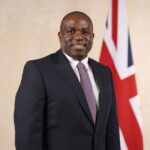
    In his meeting at the UN Security Council, Foreign Secretary David Lammy will say:

    Iran’s attempts to undermine global security are dangerous and unacceptable.

    Alongside our international partners, we were clear that any transfer of ballistic missiles from Iran to Russia would face a significant response.

    That’s why today we are sanctioning Iran Air and the Islamic Republic of Iran Shipping Lines, in response to Iran’s deliveries of ballistic missiles to Russia.

    We reiterate our call on Iran to cease its support for Russia’s illegal war in Ukraine which continues to bring devastation to the Ukrainian people. We will stand with Ukraine for as long as it takes.

    These measures follow initial steps taken by the UK government on 10 September in response to Iran’s transfer of ballistic missiles to Russia, which included the cancellation of the UK’s bilateral air services arrangements with Iran.

    The UK also amended the Iran sanctions regime to strengthen trade sanctions on Iran, targeting items that are used in the production of ballistic missiles, UAVs and other weaponry.

    Transport Secretary Louise Haigh said:

    This government stands firmly with the people of Ukraine and we have been clear that any support for Russia’s illegal war will not be tolerated.

    We will continue to use every lever at our disposal to put pressure on Iran to end the transfer of ballistic missiles and bring an end to this needless destruction.

    Today’s sanctions follow action taken previously, alongside international partners, whereby the UK sanctioned key Iranian and Russian individuals and organisations for their role in facilitating Iran’s military support to Russia, including Russian cargo ships that transporting military supplies from Iran to Russia.

    To date, the UK has sanctioned more than 450 Iranian individuals and entities, including those that seek to use malign influence regionally and internationally. The UK has also sanctioned 2,100 individuals and entities under the Russia sanctions regime, with over 1,900 designated since the start of Putin’s full-scale invasion.

    The UK is clear that Iran must stop supporting Putin’s unprovoked, premeditated and barbaric attack against a sovereign democratic state, and that we will stand with Ukraine for as long as it takes.

  • David Lammy – 2024 Speech on Israeli Restrictions on Humanitarian Aid

    David Lammy – 2024 Speech on Israeli Restrictions on Humanitarian Aid

    The speech made by David Lammy, the Foreign Secretary, on 18 November 2024.

    The situation is devastating and frankly beyond comprehension.

    And is getting worse, not better.

    Winter is here.

    Famine is imminent.

    And 400 days into this war, it is totally unacceptable that it’s harder than ever to get aid into Gaza.

    In October, just 37 humanitarian trucks entered the Strip each day.

    It’s the lowest average in the last year.

    The situation in northern Gaza is a nightmare of disease, destruction and despair.

    Over three hundred aid workers have now been killed.

    It’s the highest number in UN history.

    Amongst them were three British nationals, whose families yearn for justice.

    More children have been killed than in any recent conflict anywhere in the world.

    And meanwhile, Hamas still cruelly holds onto the hostages, including British national Emily Damari, extending their families’ torment even further.

    In the West Bank, an environment of impunity exists for extremist settlers.

    And since October 7th, conflict has spread, engulfing of course, Lebanon.

    We must bring this multi-front conflict to an end.

    There is no excuse for Hamas’ hostage taking.

    They need to be set free.

    There is no excuse for Israeli restrictions on humanitarian aid.

    They need to be lifted.

    And there is no excuse for violations of international humanitarian law.

    It needs to be respected – by all sides.

    No excuse for malign Iranian activity, destabilising the region.

    It needs to stop.

    The world has failed to bring about the ceasefires so desperately needed in Gaza and Lebanon.

    Failed to break the cycles of violence.

    But the UK will not give up.

    Not when there is so much, frankly, at stake for civilians in the region, who suffer so greatly.

    But also for us all.

    On and since October 7th, the nationals of at least thirty-one UN members have been killed or kidnapped in the region.

    Merchant shipping, of course, has been disrupted in the Red Sea, and the entire region has been pulled to the brink of an even more devastating war.

    Despite this bleak picture, we cannot let experience turn us into pessimists.

    It is never too late for peace.

    We need a huge huge rise in aid.

    We need to respect aid workers once again.

    Proper protection for civilians.

    The UK has restarted our funding to UNRWA, to help those saving lives, and deliver the Colonna report.

    And we’ve been consistent in our support for international law.

    We’re working hard every day to bring this horrendous war to an end.

    The longer fighting continues, the deeper the depths of pain, of anger, which corrode the bonds of common humanity on which a lasting peace must necessarily be built.

    When the opening comes, we must be ready to seize it.

    We need detailed plans for turning an immediate ceasefire into a lasting solution.

    A strengthened and reformed Palestinian Authority should be at the centre of Gaza’s future recovery, security and governance.

    And we’ve got to give the people of the West Bank and Gaza a political horizon, a credible, irreversible pathway to a Palestinian state.

    In 1947, the United Nations adopted Resolution 181.

    Ever since, the Palestinian people have been waiting, waiting for seventy-seven years for a land that they can call their own.

    That wait must end.

    And the Israeli people, who are still threatened by groups dedicated to their destruction, have waited too long for the peace and security promised when their nation was born.

    We must not give up our pursuit of a future where all people of the region can live side by side in peaceful co-existence, including Israelis and Palestinians.

    Ending the war.

    Securing a lasting peace, with a two-state solution at its core.

    This is what the region needs.

    And this is what the world wants.

    And this is what we will keep striving to achieve.

  • David Lammy – 2024 Speech on the Rape and Starvation in Sudan’s Brutal Civil War

    David Lammy – 2024 Speech on the Rape and Starvation in Sudan’s Brutal Civil War

    The speech made by David Lammy, the Foreign Secretary, on 18 November 2024.

    For over eighteen months, Sudanese civilians have endured unimaginable violence.

    We have seen and heard the testimony.

    Atrocities driven by ethnic hatred.

    Sexual violence, including mass rape.

    Children abducted and recruited as soldiers in this horror.

    Aid workers attacked.

    Essential supplies blocked.

    Homes, schools, hospitals destroyed and looted.

    This suffering is a scar on the collective conscience.

    On a scale that is frankly hard to comprehend.

    In the face of this horror, the UK and Sierra Leone – working in partnership – sought to bring this Council together to address this humanitarian emergency and catastrophe.

    To protect civilians.

    To ensure aid access.

    To call for a ceasefire.

    One country stood in the way of the Council speaking with one voice.

    One country is the blocker.

    One country is the enemy of peace.

    This Russian veto is a disgrace.

    And it shows to the world yet again Russia’s true colours.

    Shame on Putin for waging a war of aggression in Ukraine.

    Shame on Putin for using his mercenaries to spread conflict and violence across the African continent.

    And shame on Putin for pretending to be a partner of the Global South.

    While condemning Black Africans to further killing, further rape, further starvation in a brutal civil war.

    I ask the Russian representative in all conscience sitting there on his phone.

    How many more Sudanese have to be killed?

    How many more women have to be raped?

    How many more children have to go without food?

    Before Russia will act?

    Russia will have to explain itself to the entire United Nations membership now.

    While Britain doubles aid.

    Russia blocks aid access.

    While Britain works with our African partners.

    Russia vetoes their will.

    We tabled this resolution to show the Sudanese people and the world that they are not forgotten.

    This text would have called on parties to agree humanitarian pauses.

    To ensure the safe passage and get aid to where it is needed.

    It would have galvanised support to local groups, who are taking unimaginable risks to protect their communities.

    And it would have increased pressure on the warring parties to agree a ceasefire by supporting mediation efforts.

    Mean, nasty and cynical, Russia’s veto today sends a message to the warring parties that they can act with impunity.

    That they can ignore their commitments and responsibilities to protect their own people.

    Let me be clear.

    I will not stop calling for more action to protect the people of Sudan.

    I will not stop calling more aid.

    I will not stop working with our partners in Africa and around the world to help

    The UK will not forget Sudan.

  • Priti Patel – 2024 Speech on Bangladesh and Attacks on Hindu Community

    Priti Patel – 2024 Speech on Bangladesh and Attacks on Hindu Community

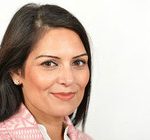
    The speech made by Priti Patel, the Conservative MP for Witham, in the House of Commons on 2 December 2024.

    First of all, I thank the hon. Member for Brent West (Barry Gardiner) for his urgent question on this important subject. He also raised the arrest of the ISKCON leader, and I too am familiar with the place of worship near the hon. Gentleman’s constituency.

    There are deep and long-standing ties between our two countries. The Minister visited Bangladesh recently. She is right to point out that, as the hon. Member for Brent West said, the degree of escalation in the violence is deeply, deeply concerning. What we are witnessing now is uncontrolled violence in many quarters. We are watching with horror and shock as further violence spreads in Bangladesh. The thoughts of all of us in the House are with the diaspora community here and those affected in Bangladesh. These are deeply disturbing reports. The Minister also mentioned the deadly attacks and the violence that took place during what is an auspicious period, the Durga Puja festival, in 2021.

    Given the current instability in Bangladesh and the departure of the former Prime Minister in August, this is a moment of deep concern. Many Governments are condemning the violence and calling for peace, and law and order to be restored. I welcome the Minister’s comments, but I emphasise that all efforts must now be taken. A religious leader has been arrested and we need to know what is being done, due process in particular, to secure his release.

    Will the Minister give details of the Government’s engagement with the Bangladesh Government on that particular matter? What discussions have taken place? Have we been robust in pursuing: the right to protect life; the prevention of violence and persecution; and, importantly, tolerance for religious belief? What efforts have the Government undertaken to build on the previous Government’s work to promote freedom of religion and belief in Bangladesh? Can the Minister say what discussions are taking place with other international partners to help restore the stability we desperately need to see in Bangladesh?

    Catherine West

    The protests following the student-led events in June, July and August were deeply troubling and led to the fall of the Government of Bangladesh. The Opposition spokesperson is quite correct to emphasise the nature of these worrying protests. Our constituents are concerned, which is why my hon. Friend the Member for Brent West brought this important question here today. They include reported cases of retaliatory attacks against allies of the former regime, including the Hindu minority. Some of the attacks are allegedly politically motivated and are of concern. That is why I had it at the top of my agenda when I met Professor Dr Yunus and why the effort was made to set up the policing unit. Our high commission is active—more than any other that I could see when I was there—in guiding, helping and supporting a peaceful transition to a new Government, elections eventually and a harmonious future. Anywhere in the world where freedom of religion or belief is at risk, there we will be standing up for the rights of minority groups.

  • Catherine West – 2024 Statement on Bangladesh and Attacks on Hindu Community

    Catherine West – 2024 Statement on Bangladesh and Attacks on Hindu Community

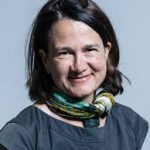
    The statement made by Catherine West, Parliamentary Under-Secretary of State for Foreign, Commonwealth and Development Affairs, on 2 December 2024.

    The UK has a long-standing commitment to the protection of human rights. The UK champions freedom of religion or belief for all; no one should live in fear because of what they do or do not believe in. We are working to uphold the right to freedom of religion or belief through our position at the UN, G7 and at other multilateral fora, and in our important bilateral work.

    Just last month, as my hon. Friend the Member for Brent West (Barry Gardiner) is aware, I visited Bangladesh, where, as part of our programme, I met Chief Adviser Professor Yunus and Foreign Affairs Adviser Touhid Hossain. At the meeting with Chief Adviser Yunus, I discussed the full range of bilateral issues, including the importance of protecting religious minorities in Bangladesh. The UK Government support freedom of religion or belief and freedom of expression in Bangladesh through both our political advocacy and development programme funding, providing up to £27 million from March 2023 to February 2028 under the Bangladesh collaborative, accountable and peaceful politics programme for protecting civic and political space.

    On the Hindu community in Bangladesh specifically, I was given assurances by the interim Government in Bangladesh that support was available for minority communities in Bangladesh in the lead up to Durga Puja —a national festival. We were pleased to see the establishment of a special policing unit, which was active in protecting mandaps—the Hindu worship sites—as I am sure my hon. Friend is aware.

    The UK Government will continue to monitor the situation, including making representations from this House, and will engage with the interim Government in Bangladesh on the importance of freedom of religion or belief specifically as it affects the Hindu community.

    Barry Gardiner

    Thank you for allowing this urgent question, Mr Speaker.

    Since the fall of the previous Government in August, Bangladesh has seen more than 2,000 incidents of violence, most of which have been targeted against the minority Hindu community. Hindus make up less than 10% of the population of Bangladesh. As my hon. Friend will be aware, anti-Hindu violence has been a recurrent event in Bangladesh. Indeed, earlier this year, the Jamaat-e-Islami party was banned after riots in which 200 people were killed.

    While Bangladesh no longer has the secular constitution of 1971 and became an Islamic state in 1988, there are none the less supposed to be protections for minority religions under the constitution, including articles 28 and 39. However, these appear not to be being enforced. There are reports of police and army standing by, as more than 20 places of minority Hindu and Sufi worship were vandalised and their worshippers attacked. This came to a head on Friday, when extremist groups from the Jamaat-e-Islami party attacked two Hindu temples in Chittagong and conducted a campaign of orchestrated violence against the Hindu population.

    A leading Hindu monk, Chinmoy Krishna Das, a former leader of the International Society for Krishna Consciousness has been arrested. ISKCON is a worldwide branch of modern Hinduism with its UK headquarters at Bhaktivedanta Manor in Bushey, many of whose worshippers live in my constituency of Brent West and the surrounding areas of north-west London. People are concerned that while he was engaged in exclusively peaceful protest, he has been denied due process, charged with sedition and refused bail, yet none of the individuals who attacked the temples has been apprehended or charged. On Saturday, senior Bangladeshi journalist Munni Saha was taken into police custody following an attack on her car by a large mob in Dhaka, and released only under the provisions of the criminal code.

    The situation is clearly on a knife edge. With such large diaspora populations in the UK and large Hindu communities with strong links to the community in Bangladesh, I ask my hon. Friend what more she can do to have discussions with the Bangladeshi Government and other partners in the region to ensure that tensions are lowered, the rule of law put into effect, and calm and order restored.

    Catherine West

    My hon. Friend is right to raise these concerns. Our high commission, based in Dhaka, is in detailed discussions with the interim Government of Bangladesh on how to verify and record the number of incidents or attacks against communities, and indeed small businesses, where there have been reports of such attacks, as well as taking remedial action and indeed working on prevention.

    That is why, in the week we visited, we were pleased to hear that the special policing unit had been set up. We stand ready to offer advice on law and order, but know that that is part of the road map towards a more stable Bangladesh. We are aware of the statement of concern from the Indian Government following the arrest of Chinmoy Krishna Das, a well-known Hindu leader, on sedition charges. The UK Foreign, Commonwealth and Development Office desk is closely monitoring those developments.

  • Bernard Jenkin – 2024 Speech on the Chagos Islands

    Bernard Jenkin – 2024 Speech on the Chagos Islands

    The speech made by Bernard Jenkin, the Conservative MP for Harwich and North Essex, in the House of Commons on 2 December 2024.

    First, may I ask, what is the rush? Why is the Minister in such a hurry to get this done? May I suggest that it would be to the Government’s advantage, if their case is so strong, to allow this House to debate the agreed text in public before it is signed? May I also suggest that it stretches incredulity for him to tell the House that there have been no discussions at all with the incoming American Administration? Can he at least tell the House what informal dialogue there is with the incoming Administration about what their view really is? Can he report that to the House, please?

    Luke Pollard

    As a long-standing Member of this House, the hon. Gentleman will be familiar with how treaties are debated and agreed by this House. After signature, they come forward for ratification. This process was started a number of years ago by the Government that he supported. Eleven rounds of negotiation have taken place. We have secured a deal that is in support of the UK and US base on Diego Garcia, which will continue to operate well into the next century. When he and others see the detail of the deal, I am sure they will back it.

  • Calum Miller – 2024 Speech on the Chagos Islands

    Calum Miller – 2024 Speech on the Chagos Islands

    The speech made by Calum Miller, the Liberal Democrat MP for Bicester and Woodstock, in the House of Commons on 2 December 2024.

    We, and all those who care about the resolution of this issue, are deeply disappointed about the way we have been led to this point, with 11 rounds of negotiations under the Conservatives, and more under the new Government. Just four weeks ago, the Foreign Secretary presented his deal to the House. Now the new President-elect and the new Prime Minister of Mauritius are expressing doubts. Is it not striking and shocking that it has unravelled so quickly? Does the Minister agree that whatever happens next, it is vital that the voices of the Chagossians are finally injected into the process, and that they are able to fulfil their rights of self-determination?

    Whatever lies ahead in these talks, the Liberal Democrats have strongly argued that all treaties should come before the House before signing, and I believe that members of the Government, including two who are on the Front Bench today, supported that in the past. Will the Minister commit to allowing meaningful opportunities for parliamentarians to examine the detailed proposals, including the necessary assurances on elements of the deal relating to our national security, before anything is signed?

    Luke Pollard

    We will follow the normal process for treaty ratification, which is that after signature, the treaty will come before this House, with details given to colleagues and with the ability for full parliamentary scrutiny, as would be expected as part of the normal process. The hon. Gentleman is right to raise the Chagossians. My ministerial colleague, my hon. Friend the Member for Cardiff South and Penarth (Stephen Doughty), who is sat next to me, has been meeting Chagossian communities in the UK. He will continue to meet those communities. This Government deeply regret how they were treated and removed from the islands originally. It is one reason why we have made the relationship with the Chagossians such an important part of the future of the islands, as the Foreign Secretary has previously outlined to the House.