Tag: 2024

  • PRESS RELEASE : Leading tech firms invest over £2 billion in the UK in one week [May 2024]

    PRESS RELEASE : Leading tech firms invest over £2 billion in the UK in one week [May 2024]

    The press release issued by HM Treasury on 10 May 2024.

    Major investments have been made in the past week alone.

    • Over £2 billion invested by world leading tech companies in the UK this week
    • AI firm CoreWeave are investing £1 billion in the UK
    • Comes as the Chancellor visits the Siemens Healthineers site, marked for a new factory supporting more than 1,300 skilled jobs

    The Chancellor has welcomed the “safe bet” world leading tech and AI companies are making in Britain, as over £2 billion of investment in the UK has been secured in a single week.

    Supporting more than 1,300 skilled jobs, Siemens Healthineers have today announced that they are investing £250 million to design and manufacture superconducting magnets for MRI scanners at a new Siemens Healthineers facility in North Oxfordshire.

    This comes as world leading AI firm CoreWeave are also investing £1 billion in the UK, as well as confirming their new European Headquarters will be based in the capital.

    These two UK data centres will be opened in 2024, with a further expansion planned in 2025, helping secure the necessary processing power for machine learning and AI, graphics and rendering, life sciences and real-time streaming.

    This £2 billion investment also follows Scale AI, the data infrastructure company for AI, selecting London as the location for its first European headquarters.

    Earlier this week, Wayve announced they had secured over $1.05 billion to develop the next generation of AI-powered self-driving vehicles in the UK.  Founded in the UK in 2017, Wayve is a home-grown British success story and a testament to the UK’s global leadership in creating the economic and regulatory conditions for start-ups in the AI and self-driving vehicle industries to grow and thrive.

    Chancellor of the Exchequer Jeremy Hunt said:

    Businesses are making a safe bet in Britain. We have attracted the third highest amount of greenfield foreign direct investment since 2010 and the UK accounts for around half of all AI private capital investment in Europe. We really are turning a corner, and the businesses of the future agree.

    The UK accounts for around half of all AI private capital investment in Europe and hundreds more AI companies are starting up in the UK every year, growing our economy and creating highly-skilled, well-paid jobs. The AI sector employs more than 50,000 people in the UK and contributes more than £3.7 billion to our economy every year. By 2035, our AI market is forecast to grow to over $1 trillion.

    Taken together, these investments cement the UK’s position as a world leader in the AI and tech industry and builds on our strong record of attracting the best and biggest investments from world leading AI companies.

    Bernd Montag, Chief Executive of Siemens Healthineers said:

    MRI technology plays a vital role in diagnosing disease, helping patients to get healthy and stay healthy. As a world leader in medical imaging, we are very proud to open the next chapter of our history here in Oxford.

    This factory will be the global centre for our innovative low-helium magnet technology, meaning we consume far less of a scarce natural resource and enable access to MRIs for many more patients.

    Mike Intrator, Cofounder and Chief Executive Officer, CoreWeave said:

    We are seeing unprecedented demand for AI infrastructure and London is an important AI hub that we are investing in. Expanding our physical footprint in the UK is an important milestone in the next phase of CoreWeave’s growth.

    CoreWeave’s infrastructure will fill a void in the cloud market by providing AI enterprises with localized high-performance compute solutions that will help build and deploy the next generation of AI applications.

    Secretary of State for Science, Innovation, and Technology Michelle Donelan said:

    I have always said that the proof will be in the pudding when it comes to cementing the UK’s place as a technology superpower – and there is no better proof than the fact that our tech sector has received £2billion of private investment in a single week! Time and again, world leading tech companies are choosing the UK to invest in – bringing new jobs and opportunities for people to gain valuable skills.

    Siemens, Wayve, CoreWeave, ScaleAI – these are major players that countries all across Europe and the world are keen to attract. Yet it is our unique, agile and highly-ambitious tech ecosystem that I have proudly helped to build that is winning the race for the UK.

    Some of the world’s biggest AI companies including Open AI and Anthropic have also chosen London as the base for their first international offices in a huge vote of confidence in our approach to AI. Microsoft recently announced a new AI hub in London, and one of the leaders in the field, Google DeepMind was also founded here over a decade ago and remains in the UK to this day.

    We also have a world-leading AI and tech industry in the UK which is continuing to grow. The UK is only the 3rd country (behind the US and China) in the world to have a tech sector valued at over $1 trillion in total. The UK is also home to 3rd highest number of AI companies and private capital investment in AI in the world.

    The single biggest way we’re backing businesses is by creating the economic conditions for them to thrive, which is why we have worked with the Bank of England to reduce inflation from over 11.5 to 3.2%, this means that wages have been rising faster than inflation for nine months in a row.

    Because the economy has turned a corner we can cuts taxes, including our cuts to National Insurance worth £900 for the average worker, and full expensing which effectively cuts corporation tax by more than £50 billion to help firms invest for less – the biggest business tax cut in modern British history.

    Further information

    • CoreWeave is a specialized GPU cloud provider, designed to power the most complex workloads with customized solutions at scale. The company’s portfolio of cutting-edge technology delivers a broad range of capabilities for machine learning and AI, graphics and rendering, life sciences, real-time streaming, and more. Its world-class teams, talent, and engineering prowess bring unmatched speed-to-market for advanced compute. CoreWeave operates a growing footprint of data centres covering every region of the US. It was founded in 2017 and is based in New Jersey.
    • Siemens Healthineers pioneers breakthroughs in healthcare. For everyone. Everywhere. Sustainably. The company is a global provider of healthcare equipment, solutions and services, with activities in more than 180 countries and direct representation in more than 70. As a leading medical technology company, Siemens Healthineers is committed to improving access to healthcare for underserved communities worldwide and is striving to overcome the most threatening diseases. The company is principally active in the areas of imaging, diagnostics, cancer care and minimally invasive therapies, augmented by digital technology and artificial intelligence. In fiscal 2023, which ended on September 30, 2023, Siemens Healthineers had approximately 71,000 employees worldwide and generated revenue of around €21.7 billion.
    • Further information on the Wayve investment.
    • Further information on the Scale AI European headquarters.
  • PRESS RELEASE : Change of His Majesty’s Ambassador to Sweden: Ms Samantha Job [May 2024]

    PRESS RELEASE : Change of His Majesty’s Ambassador to Sweden: Ms Samantha Job [May 2024]

    The press release issued by the Foreign Office on 10 May 2024.

    Ms Samantha Job CMG MVO has been appointed His Majesty’s Ambassador to the Kingdom of Sweden in succession to Ms Judith Gough CMG.

    Curriculum Vitae

    Full name: Samantha Louise Job

    Date Role
    2023 to present Full time language training
    2019 to 2022 FCDO, Director, Defence and International Security
    2016 to 2019  Washington, Counsellor, Foreign and Security Policy
    2013 to 2015  FCO, Joint Head, North Africa Department (Job Share)
    2010 to 2012  FCO, Deputy Head, Digital Diplomacy Department
    2004 to 2008  UK Mission to the United Nations, First Secretary (New Threats, Counter Terrorism and Counter-Proliferation)
    2003 to 2004 FCO, Head, European Security and Defence Policy, Security Policy Department
    2001 to 2003 FCO, Head, Weapons of Mass Destruction Export Controls, Non-Proliferation Department
    1999 to 2001 FCO, Head, War Crimes Section and International Criminal Court Bill, United Nations Department
    1994 to 1999 Bangkok, Full Time Language Training (Thai), then Second Secretary (Political)
    1992 to 1994 FCO, Desk Officer, Libya/Tunisia then Middle East Peace Process, Near East and North Africa Department
  • PRESS RELEASE : New bomb disposal robots for the British Army [May 2024]

    PRESS RELEASE : New bomb disposal robots for the British Army [May 2024]

    The press release issued by the Ministry of Defence on 10 May 2024.

    New high-tech bomb disposal robots will provide greater protection for soldiers and the public in a new deal for the British Army announced today (10 May).

    • High-tech robots will protect soldiers and the public from variety of threats including explosives and hazardous materials.
    • Can operate in narrow spaces, tough terrain, and climb stairs.
    • £21m investment will see 50 robots delivered by end of the year.

    New high-tech bomb disposal robots will provide greater protection for soldiers and the public in a new deal for the British Army announced today (10 May).

    50 of the T4 bomb disposal robots will be able to be used in situations of bomb and hazardous material disposal, helping the explosives team who attend thousands of call outs every year, all over the country. This will greatly reduce the risk to service personnel and the public when neutralising bomb and chemical threats.

    A £21 million contract with L3 Harris Technologies – based in Tewkesbury – will deliver with the first T4 units before the end of 2024.

    Adept at navigating narrow urban spaces, with its tough all terrain treads and adjustable manipulation arm, the T4 can operate in narrow aisles of planes, trains and buses and can even climb stairs.

    Advanced controls, high-definition cameras and lightning-fast datalinks will enable the operator of the T4 to perform complex tasks like unzipping bags and opening glove boxes from a safe distance.

    We are ensuring that our Armed Forces have the best kit available, and we have recently announced plans to spend 2.5% of GDP on defence by 2030 – meaning an additional £75 billion spent over the next six years

    Minister for Defence Procurement, James Cartlidge said:

    Procuring this high tech robot means that we can provide our forces with the tools they need to safely handle a range explosive threats.

    Rapidly delivering uncrewed systems, like the T4, that ensure our armed forces can safely face future threats is a key part of our Drone Defence Strategy.

    Weighing in at just over 100kg, the T4s are significantly smaller and nimbler than their bigger brother – the 300kg T7 UGV –­­ and will be used as the rapid response system for emergency situations as its compact size means it can be transported in a standard 4×4 vehicle.

    However, both models use ‘advanced haptic feedback’ which allow operators to ‘feel’ their way through the intricate process of disarming devices from a safe distance, reducing the risk to life of the explosive ordnance operators.

    The systems, which underwent rigorous testing, have been contracted by Defence Equipment and Support (DE&S), the procurement arm of the UK MOD and include an initial three years of in-service maintenance and repair support.

    Major General Lizzie Faithfull-Davies, Director Land Equipment at DE&S, said:

    I’m incredibly proud of the project team at DE&S, who have worked with their industry partner to harness available cutting-edge technology and have identified a critical capability that can respond to hostile explosive threats and help in keeping the wider general public safe.

    The T4’s will enter service with the 29 EOD & Search Group and the Diving Threat and Exploitation Group, Royal Gibraltar Regiment (RG) and Cyprus Operational Support Unit (COSU).

    Ed Zoiss, President, Space and Airborne Systems, L3Harris, said:

    The T4 EOD robots are the world’s most capable robot for operations in crowded and difficult environments like subways, airports and even hospitals.

    These highly advanced, durable robots provide best-in-class mobility and uncompromised performance to protect human lives.

    We’re honoured to continue working with the U.K. Ministry of Defence as they provide this technology to the British Army.

  • PRESS RELEASE : Levelling Up Partnerships rolled out in Scotland for first time [May 2024]

    PRESS RELEASE : Levelling Up Partnerships rolled out in Scotland for first time [May 2024]

    The press release issued by the Department for Levelling Up, Housing and Communities on 10 May 2024.

    Dundee announced as first place in Scotland to benefit from tailored Levelling Up Partnerships .

    Dundee has been chosen as the first area in Scotland to benefit from a major tailored regeneration programme designed to support communities across the UK.

    The city will receive a £20 million Levelling Up Partnership from the UK Government designed to root out inequalities by attracting investment and increasing opportunities for local people, including by building a new Dundee and Angus College campus to boost skills.

    The investment will help tackle barriers to growth and turbo-charge regeneration, and the UK Government will be working hand-in-hand with local leaders to ensure this makes a major difference to people’s lives. This investment follows the £2.6 million for the V&A Dundee announced at Spring Budget.

    Levelling Up Partnerships, first announced in the 2023 Spring Budget, are bespoke regeneration programmes targeted in areas that have too often been ignored. The government uses them to level up skills and opportunities, improve people’s quality of life, and address deep-rooted local challenges, giving these areas the best possible chance to thrive. The partnership for Dundee follows similar announcements for places in England including Hull and Mansfield.

    In Scotland, the Department for Levelling Up, Housing and Communities (DLUHC) and the Scottish Government have collaborated to identify a methodology for which areas most need investment, and how best to address inequalities. The other areas in Scotland that have been selected for LUPs are the Scottish Borders, Argyll and Bute, and Na h-Eileanan Siar (Western Isles). Scottish areas receiving LUPs have been chosen based on a number of metrics, with emphasis on the tough challenges posed by rural geography.

    UK Government Levelling Up Minister Jacob Young, who visited Dundee on Thursday, said:

    “It’s fantastic to announce our tailored regeneration programme has been rolled out in Scotland for the first time, beginning by transforming the lives of people right across Dundee.

    “This Levelling Up Partnership will allow us to tackle the historical issues faced by this city head-on, ensuring overlooked communities get what they need to fully reach their potential.”

    The funding for Dundee will help unlock a key development on the Waterfront to provide Grade A office space and lever in more investment, refurbish vacant and underused buildings in the city, build a legal education centre to boost opportunities, and provide support for people struggling with addiction.

    UK Government Minister for Scotland John Lamont said:

    “Our Levelling Up Partnership with Dundee – backed by £20 million UK Government investment – is a real game changer for driving regeneration in the city and boosting opportunities.

    “Collaborative working between the UK and Scottish Governments and local leaders means the lives of people living in, working in and visiting Dundee will be transformed with exciting initiatives such as new educational centres specialising in digital, green skills, health, social care and life sciences; improved access to housing; better transport connectivity; improved city streets; tackling anti-social behaviour and substance abuse and attracting business to the area.

    “I look forward to seeing Dundee and the three other areas in Scotland that have each been allocated £20 million for Levelling Up Partnerships – the Scottish Borders, Argyll and Bute, and Na h-Eileanan Siar –  benefiting from the fruits of this funding.”

    Dundee’s £20m Levelling Up Partnership includes:

    • £5m backing for Dundee and Angus College, including £4.5m to build a new campus providing training opportunities in the digital, green skills, energy transition and construction sectors, and £500,000 for a new health and social care training facility
    • £3m towards the creation of new Grade A office development on the Waterfront
    • £2.5m for grassroots projects focused on enhancing opportunities for young people, improving safety and benefitting the community
    • More than £2m to improve access to housing and boost regeneration in the city centre, including by refurbishing vacant properties, and reviewing the condition of the local private rented sector
    • £2m to develop a specialist centre for protein science in the Life Sciences Innovation District
    • £1.2m to develop a bespoke permanent home for the Dundee Museum of Transport
    • £1.1m to establish a legal tech education centre and workspace
    • £500,000 to complete a 26-mile active travel route around the city, connecting neighbourhoods on the outskirts with each other and the centre

    Dundee City Council leader Cllr John Alexander said:

    “As a city, we’ve been working extensively in the background to attract and deliver investment, public and private, and to create jobs and economic growth.

    “With Dundee already featuring in positive ratings, such as a top 20 UK destination for foreign direct investment (FDI), a top city break destination and attracting world-renowned opportunities such as the Eden project, the future is bright.

    “We welcome the £20 million of investment through the Levelling Up Partnership, which will strengthen the efforts by all local partners to transform Dundee and the lives of people across our city.

    “Although Dundee’s challenges are well known, I believe that the opportunities that exist for the future significantly exceed these.

    “Organisations in Dundee are working together to create the conditions that will enable growth and prosperity in the years ahead.

    “There is a realisation that we cannot do this alone, and that is why we have been in discussions with both the UK and Scottish Governments for strategic investment to drive Dundee’s economy forward.”

    The LUP also includes £1m to help transform the Eastern Quarter by improving its streets, tackling anti-social behaviour and attracting new business; £1m to refurbish the fabric of historic buildings and bring vacant spaces in the city centre back into use; £500,000 to help tackle substance abuse; £200,000 to develop the next phase of the City Centre Strategic Plan, attracting investment to the city; and £120,000 for commercial training and networking to support high-potential businesses.

    This funding builds on almost £23m of wider UK Government levelling up investment in Dundee, which has received more than £14m from Round 2 of the Levelling Up Fund for a new green transport hub in the city centre featuring electric vehicle charging points, and £5.6m from the UK Shared Prosperity Fund for projects including improvements to the district centre of Perth Road and digital skills training opportunities.

  • PRESS RELEASE : Change of His Majesty’s Ambassador to Uruguay – Mr Malcolm Green [May 2024]

    PRESS RELEASE : Change of His Majesty’s Ambassador to Uruguay – Mr Malcolm Green [May 2024]

    The press release issued by the Foreign Office on 10 May 2024.

    Mr Malcolm Green has been appointed His Majesty’s Ambassador to the Oriental Republic of Uruguay in succession to Ms Faye O’Connor OBE.  Mr Green will take up his appointment during August 2024.

    CURRICULUM VITAE

    Full name:  Malcolm Christopher David Green

    Date Role
    2023 to present FCDO, Africa Directorate, Deputy Director (Sahel, Sudan and South Sudan)
    2018 to 2023 FCDO, UN and Multilateral Department, Head of the UN Peacekeeping Joint Unit
    2017 to 2018  Buenos Aires, Deputy Head of Mission and Consul General
    2013 to 2017  Santiago, Deputy Head of Mission and Consul General
    2009 to 2013  UK Mission to the United Nations, New York, First Secretary – Peacekeeping, Human Rights and Conflict
    2006 to 2009  FCO, Security Policy Department, Team leader – Military Operations and Exercises
    2003 to 2006 Buenos Aires, Second Secretary – Political Affairs
    2001 to 2003 FCO Policy Officer – Future of Europe, European Union Department
  • PRESS RELEASE : Rishi Sunak Call with Prime Minister Edi Rama of Albania [May 2024]

    PRESS RELEASE : Rishi Sunak Call with Prime Minister Edi Rama of Albania [May 2024]

    The press release issued by 10 Downing Street on 10 May 2024.

    The Prime Minister spoke to Albanian’s Prime Minister Edi Rama this morning.

    They began by discussing the close relationship between the UK and Albania, noting significant bilateral cooperation including on trade and investment.

    The Prime Minister highlighted the strong progress made through the UK-Albania migration partnership. Both leaders acknowledged more work needed to be done to tackle the illegal migration challenge in Europe and looked forward to discussing this further at the European Political Community meeting in the UK in July.

    They underlined the importance of ensuring stability in the Western Balkans, particularly in Bosnia and Herzegovina and Kosovo.

    Turning to the situation in the Middle East, the leaders discussed the importance of tackling rises in antisemitism across the globe and championing our shared values of tolerance and respect.

    Both leaders looked forward to speaking soon.

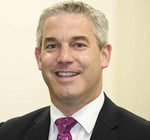
  • Steve Barclay – 2024 Speech at the Farmers Weekly Transition Live Event

    Steve Barclay – 2024 Speech at the Farmers Weekly Transition Live Event

    The speech made by Steve Barclay, the Environment Secretary, on 9 May 2024.

    Well, thanks very much. Good afternoon, and it’s great to organise this on home turf, as a Cambridgeshire MP. I’m very conscious we meet on a beautiful day. The sun is shining, the ice cream van has arrived outside.

    But I think what’s very much on many minds at the moment is the extremely challenging wet weather that we have seen in recent months.

    Just to put that in a bit of context, we’ve seen 60% above average rainfall, if you take that compared to say a decade ago, this is the second wettest winter that we have on record and therefore what’s very much shaping my, Mark Spencer and the ministerial team in Defra is a recognition of just how challenging that landscape is.

    And so, whilst I think the focus from Farmers Weekly and today’s event is absolutely right on transition and how we build that sustainable agriculture, a lot of those benefits are for the longer term.

    By their nature, where you do environmental schemes, where you do nature recovery schemes they have a long lead time. If you’re looking at things like soil quality. If you’re looking at improving our number of pollinators. These are long term transitions, and I’m very acutely aware of the immediate challenges that I’m sure are in the minds of many in the room given the flooding just near me in Lincolnshire that we have seen

    So, I just wanted to start by addressing that. And there’s a number of things that we’re doing.

    So firstly, we moved quickly in response with the Farming Recovery Fund, getting that announcement out quickly. That gave us grants of up to £25,000 for uninsured losses. We listened actively to the feedback on things like 150 metre rule, so we got that changed. We responded with announcements such as the Prime Minister at the NFU conference, with the £75 million in grants for drainage boards.

    As someone who represents a farming constituency in Northeast Cambridgeshire in the middle of the Fens, I’m acutely aware having been a constituency MP for the last 14 years of just how central drainage boards are in certain parts of the country, and so £75 million targeted at infrastructure modernisation, which needs to happen.

    There are longer term things we’re doing. So, we’ve doubled the flood defences – £5.6bn over 6 years which is broadly double what it was in the previous six years. That has protected over 900,000 acres of farmland. But again, we can see with the winter we’ve had, just how challenging that is for many other areas still. So, there’s a lot that we’re doing, but within that, clearly there are still current pressures. And the first thing I really wanted to say to this farming audience is we are very much actively listening and reviewing what we can do in our response to that. And I will come on to that.

    We’ve got the Farm to Fork Summit chaired by the Prime Minister next week, which is part of us looking and engaging with farming leaders in terms of recognising those very real current challenges and certainly for my part being in the cabinet, and also as a constituency MP, I’m very clear that those changes are all too real.

    And so, on that point, firstly just to say that we will provide flexibility and delegations in our agri-environment schemes. So, we’re looking at in the context of SFI… farmers that have been unable to carry out their scheme requirements due to wet weather will not miss out and can still receive payments. So, we will set out more details of that at the Farm to Fork Summit.

    Also, I plan to extend the Farming Recovery Fund to support farmers significantly impacted by water on their land this winter, and it’s important we do take time to get this right. So, our systems are ready, and we are directing support to where it is needed most. But that is why we are talking to stakeholders and we will provide more details on that, hopefully later this month. But we very much recognise that there is an issue that we need to engage on.

    As part of that, a huge credit to Farmers Weekly for the role that it has played both in helping inform, helping communicate the issues around the transition that we’re seeing in agriculture at the moment, keeping farmers abreast of those developments and also for the focus of today’s discussion, which I think is extremely well timed and is all part of us ensuring that we have a successful transition in terms of building greater profitability on farms, but also greater resilience.

    And as I come on to some of the immediate things that we’re doing, I wanted just to put that in a bit of longer-term context.

    So, within the November 2020 Agricultural Transition Plan, the focus in that was about sustainability in our food production. That was a central theme of our plan and I think we should be candid with each other about the previous situation we had.

    The EU scheme saw 50% of the money going to 10% of the farmers. It was a bureaucratic scheme; it wasn’t the scheme that drove environmental improvements. It wasn’t the scheme that was bespoke to our national needs. By its nature, it was a scheme that looked to many others. And so, the opportunity we have through this transition is to really target our support in ways that boost both the environment but specifically boost food production and food security.

    And as Minnette Batters said at the NFU conference, they are two sides of the same coin. Often, it’s almost portrayed as two rival camps. The environment over here, and food production over there.

    But when it comes to things like our soil quality, actually targeting our environmental support in ways that enhance our food production is all part of that long term transition and building a more resilient and sustainable agricultural sector. For my part, since arriving in my post in November, what I’ve tried to do is re-emphasise our productivity grants more specifically to food production and food security.

    And there’s a number of reasons for that. When I was in the Treasury, I was acutely aware that food security is national security, value for money at a time when national crisis changes.  And therefore, I think it is important we focus on food security.

    But one of the impediments, there is a tendency sometimes in government to think the announcement of a grant is the delivery. And what I noticed on the food production side was often we were announcing grants where the upper limit was 40% for logical reasons. On behalf of the taxpayer, you want to ensure there is value for money. Therefore, if the farm gets the benefit, you do not want the taxpayer to pay the whole amount, so we were contributing up to 40%. But because of the volatility within farming, and because of some of the constraints and access to capital, quite often those grants were not being taken out, they were not being as effective as they needed to be.

    And if you look in contrast to our environmental grants we offered up to 100% because from a tax point of view, there was an environmental benefit.

    My key shift that I’ve tried to deliver as Secretary of State is to sort of reemphasise our environmental grants much more on to things that are both good for the environment using less pesticide but also good for food production lowering more costs.

    To give you an example, because I think sometimes in politics people come out with phrases and you think well where is the evidence? Where is the proof? Show me an example.

    If I take the River Wye. Quite often, people would respond to that by saying there is too much chicken production. There is too much chicken litter producing phosphate into our rivers. We need to reduce the amount of farming that happens.

    My approach is to target our environmental grants with 35 million targeted to support anaerobic digestion on the Wye. So then that chicken litter can be burnt, producing energy, producing fertiliser if you separate it out of phosphate. So actually, you safeguard your chicken production, but you do so in a way that is good for the environment and as a result  we can offer 70% as a contribution, not 40%.

    What we are doing is taking those environmental schemes and looking at how we focus them in ways that better align with my priority of food production and food security.

    And that isn’t by lowering environmental standards but by dealing with our waste, enhancing our water quality, dealing with our soil quality, dealing with our pollinators. These are ways we can enhance the environment, but we can also do that in a way that is good for our food security.

    And then looking to do that much more through the farming community because I’m also acutely aware that 72% of our land is farmland and I again as a constituency MP have always felt very strongly with my engagement with my farmers that no one cares more about  passing on their land to the next generation, who cares about the nature on their farm than the people who are actually out there farming it! That is why I’m very keen that with these environmental schemes that we are trusting our farmers, we’re looking at our ALB relationship with our farmers. We trust them, we direct the grants, we look at the access to capital constraint and we do that in a way that supports food production. but also brings benefits from an environmental point of view. And that’s a key sort of reengineering that we have done.

    And first of all, a statistic that you won’t often hear. That actually we are making progress on that. The Sustainable Farming Incentive now has over 20,000 successful applications. What you don’t always hear is it is the most successful scheme that Defra has ever done. It’s had more participation than any other scheme that the department has run.

    That’s not to say that as part of this transition that there aren’t things we won’t tweak along the way. Through the work that Janet Hughes and the team, a lot of tweaks have been done about how we sort of refocus some of those payments but that is something that we’re extremely keen to do is to ensure the take up of actions continues where we can see that there is progress being made.

    And again perhaps as a proof of point on that, that is why at the Oxford Farming Conference we increased the average payment under SFI by 10%, that is why we added 50 additional actions. We have actions on moorland and grassland, we have actions, having spoken to Kate Rock, in fact when I was in No.10, I helped commission the Rock Review, recognising that it wasn’t working for tenant farmers as it should so bringing it from the seven years to the three years in terms of the length of agreements, looking at the outcome of the Rock Review.

    Another bit of feedback from sessions like this I got was the risk of people taking from and out of production entirely to go into environmental schemes. Now, to be frank, the data didn’t really support that so when I got that message at many sessions from people I go back to my department and say that this is a big concern. But they say “don’t worry about it minister the data doesn’t support this”, but the perception was clearly there.

    In response to that we put in the 25% cap so that we don’t see that distorting effect where if there is a concern that people have of too much farmland is being taken out because there’s less volatility with some of the environmental schemes then we get a better balance.

    And again that’s sort of for the environment too because often putting in 100% of land into these schemes was not in itself an environmental solution either. Again, that’s an example of coming to sessions like this feeding back, coming forward putting that 25% limit on, so that if there is a risk of that, that people are concerned about then, we’re ensuring that that does not happen.

    Moving forward, the other thing that has often been raised with me is around the red tape. If you’ve been out on the farm all day, having to come and do a load of forms, so again, we’re looking at working with the sector on how we streamline, how we simplify, so a single application process for SFI and Countryside Stewardship Mid Tier is one of the things we’re keen to introduce.

    We’re looking at how we improve the guidance. We’re looking at how we change the culture within the arms-length bodies from one where I feel in the past there’s been almost an air of suspicion, to one which should be based more on trust.

    To give you a practical example of that, I’ve said there should be no unannounced farm inspections. There should be 48 hours notice, because the purpose should be to advise and help people do the right thing, not to try and go there and catch someone out who’s busy trying to juggle lots of other things as well. We’re looking at how we create a more engaged, supportive environment.

    And then there are the mental health challenges and the pressure, particularly from the wet weather, that many people have been feeling. How do we ensure that those arms-length bodies are thinking about the pressures that people are under and having an approach that is supportive rather than one that is trying to catch people out? That’s been a key issue that we’re trying to address.

    Sometimes I come to these sessions and people ask about the next generation and how can we make farming attractive to the next generation.

    Our focus there is particularly around £427 million in grants that the Prime Minister announced at the NFU Conference around automation. That is good for productivity. It’s good for our resilience. It also changes some of the opportunities and employment opportunities that are within the rural economy in a way that is very attractive to future generations.

    You can drive farm productivity to reduce our import costs to better manage our water, to reduce our energy costs or our solar battery grants, on-farm reservoirs, our slurry grants, our investment in sprayers and equipment. These are all things that build a more resilient more productive sector and that’s what the £427 million in grants is focused on.

    And then finally, while to me there’s much more we can and should be doing on automation (and an area like pack houses is one that we’re going to particularly focus on) there is a recognition that there are limits to what can be done with automation, there’s certain parts of agriculture where that is less ready-to-go than others.

    Today we’re announcing our response to John Shropshire’s report – John being very highly respected farmer just down the road – so we recognise that automation is not a quick fix, but we will be extending the seasonal worker visa schemes of 43,000.

    Making the commitment for the next five years in terms of the 43,000 for horticulture, 2,000 for poultry to ensure that businesses in the supply chain have the workforce they need to succeed in this transition.

    But what we’re also then doing is looking at how automation can then play into that and we’re going to start, as I say, looking at what support we can do through areas like packhouses.

    And then the final thing I really wanted to emphasise is I’m very keen that we use our freedoms in ways that support the agricultural sector, so let me give you a couple of quick examples.

    First through our legislation, had we been in the EU, we would not be able to deliver the gene-editing legislation that is a huge opportunity to develop more disease resistant drought resistant crops, which again is good for the environment: it needs less spraying. That is something we’ve passed legislation on that is a key opportunity we should embrace.

    We have control now over our public sector procurement in a way that we didn’t before when we were subject to EU procurement rules.

    We’ve got the Quince Review looking at how we better utilise that spend in our hospitals, our schools, our armed forces to better reflect the high quality of being British produce, so the Quince Review is looking at that. Mark Spencer, who will be known to many in the room, is a farmer himself. As farming Minister, he’s working through the supply chains, looking at the balance in terms of the supermarkets, where there are often concerns raised, and Mark is working through that.

    We also have a rapid review of labelling, but there’s a concern about empowering the consumer, and I don’t believe it’s empowering the consumer if they buy British bacon thinking it’s being reared here when actually it’s being reared overseas but packaged in England but it’s not actually British, so we’re looking at our labelling and how we strengthen that.

    In conclusion, a lot of the benefits in terms of the environment and nature take time and that is the very element of transition.

    But it gives us a huge opportunity to design what works for us. I think in designing things that are good for the environment and meet our legislative commitments, we can do that in ways that boost yield and better farm water management. Look at our unit costs, look at our automation, look at how we use our common sense with procurement and labelling, and in terms of our supply chain and our sales. And we can do that in a way that boosts profitability and ultimately creates a sector that is attractive for the next generation to come into.

    That all requires us all to navigate, in the short term, the wet weather and other challenges.

    The Farm to Fork Summit next week, which is now an annual event, or the commitment to the Food Security Index that the Prime Minister has made, hopefully gives you an indication that we are keen to work with you.

    You’re managing that short term, but within a clear plan that we have for the longer-term transition in a way that is good for food security but is also good for the environment.

  • PRESS RELEASE : Defence Secretary Praises Scottish Contribution to Shipbuilding and Defence [May 2024]

    PRESS RELEASE : Defence Secretary Praises Scottish Contribution to Shipbuilding and Defence [May 2024]

    The press release issued by the Ministry of Defence on 9 May 2024.

    Defence Secretary has met with apprentices, engineers and key industry leaders during a visit to key shipyards. Scotland plays a crucial role in the Navy’s shipbuilding pipeline and the UK’s security.

    • Defence Secretary meets with apprentices, engineers and key industry leaders.
    • New warship production well underway in Scotland
    • More than 12,000 Scottish jobs are supported through defence spend with UK industry.
    • Paul Sheerin announced as Chair of the shipbuilding Skills Delivery Group.

    Scotland is playing a crucial role in the Navy’s shipbuilding pipeline and the UK’s security, Defence Secretary Grant Shapps has said today on a visit to key shipyards.

    Visiting Govan, where BAE Systems are building Type 26 frigates, and HMNB Clyde, home of the Royal Navy’s submarine fleet, the Defence Secretary met with key industry leaders, staff and apprentices, observing the significant progress on the major warship production programme.

    Scotland is the beating heart of military shipbuilding, with eight Type 26 ships being built in Glasgow and five Type 31 frigates being built by Babcock International in Rosyth. This supports and is supported by the local maritime infrastructure, supply chains, and extensive skills and training resources. On a tour at BAE Systems in Govan, the Defence Secretary saw the Type 26 frigates in build, and toured HMS Cardiff.

    More than 12,000 jobs in Scotland are directly supported by Defence, with more than £2 billion spent annually with UK industry in Scotland. Over 5,000 jobs will be created or sustained across the build of Type 26 and Type 31 programmes alone, and just under 1,000 apprentices will be trained to provide the skill required to build and maintain our Royal Navy fleet.

    Defence Secretary, Grant Shapps, said:

    As the home of the nuclear deterrent – which keeps us all safe around the clock – nobody can question that Scotland is absolutely central to the UK’s security.

    As Shipbuilding Tsar, it is fantastic to see the positive impact that the Scottish shipbuilding industry plays. A sector once restricted by periods of ‘boom and bust’ is now witnessing a resurgence, with Scottish shipyards buzzing with activity and its workforce expanding.

    Brand new warships will operate around the world, looking after our nation’s interests, for decades to come, and they will have been built by highly skilled shipbuilders right here in Glasgow. We continue to back the UK defence industry in Scotland with billions of pounds every year, supporting thousands of jobs and apprenticeships.”

    At HMNB Clyde, the home of the UK’s nuclear deterrent submarines, the Defence Secretary visited an attack submarine. HMNB Clyde is currently one of the largest employers in Scotland and is in the process of increasing its on-site staff from 6,800 to over 8,000, whilst the Defence Infrastructure Organisation (DIO) has committed to spending more than £3 billion on sites in Scotland, including £1.6 billion on the Clyde Infrastructure Programme, to establish it as the home of UK’s submarine fleet.

    The Defence Secretary, in his role as Shipbuilding Tsar, is responsible for overseeing all of the government’s interests in UK shipbuilding. The Government’s commitment to UK Shipbuilding through the Refreshed National Shipbuilding Strategy has allowed industry to invest for the future, with BAE Systems’ £12 million Applied Shipbuilding Skills Academy and the construction of a modern shipbuilding hall in Govan currently underway.

    The Government has today issued its response to the UK Shipbuilding Skills Taskforce report. In response to recommendations within, the report the National Shipbuilding Office has launched the shipbuilding Skills Delivery Group. This group will drive the delivery of the Taskforce recommendations and will be a champion for skills within the UK Shipbuilding Enterprise. Grant Shapps also announced the Chair of the Group will be Paul Sheerin, and the two met at Govan shipyard.

    Paul Sheerin, Chair of Skills Delivery Group said:

    It is critical for the UK shipbuilding enterprise that the skills gap is addressed, and to ensure that this can happen there needs to be a unified approach across different skills systems, across different parts of the enterprise and across government and the devolved administrations.

    I am extremely excited to chair the SDG, working alongside a highly knowledgeable and experienced membership comprised of representatives from across the whole enterprise. With the continued support of the Shipbuilding Tsar and the NSO, I look forward to working with the Group to deliver a positive impact on skills within this vital sector to the UK.

    Scottish Secretary, Alister Jack said:

    Scottish-based critical defence assets play a crucial role in the security of the UK. As well as helping to keep us all safe, defence also delivers thousands of high-skilled jobs and billions of pounds investment in Scotland, driving prosperity and boosting the Scottish economy. I’m proud that Scottish skills, expertise and innovation make such an enormous contribution to the UK’s defence industry.

  • PRESS RELEASE : Government wins landmark case against freeholder owned by multibillion pound railway pension fund [May 2024]

    PRESS RELEASE : Government wins landmark case against freeholder owned by multibillion pound railway pension fund [May 2024]

    The press release issued by the Department for Levelling Up, Housing and Communities on 9 May 2024.

    The Department for Levelling Up, Housing and Communities has won a landmark legal challenge against freeholder Grey GR.

    • Court rules in favour of government in legal case forcing freeholder Grey GR, owned by Railpen, to fix safety issues at Vista Tower
    • Judgment gives tower residents assurance through the Court that their homes will be made safe without further delay
    • The Vista Tower case was the first legal action brought by the Government under powers introduced through the Building Safety Act

    The Department for Levelling Up, Housing and Communities has won a landmark legal challenge against freeholder Grey GR forcing it to fix serious building safety issues in Vista Tower in Stevenage.

    Legal action was launched by the Government against Grey GR in October 2022 following unacceptable delays in fixing multiple serious fire safety issues, first identified in the building in 2019.

    Grey GR is ultimately owned by Railpen, a scheme that manages £34bn in assets.

    Following the trial in March, the Court has decided in favour of the Government and will issue a Remediation Order imposing a legally binding requirement on Grey GR to fix building safety issues within a mandated timeframe.

    Levelling Up Secretary Michael Gove said:

    Leaseholders have lived with uncertainty for far too long while Grey GR delayed essential works to make homes safe. This decision is a victory for leaseholders in Vista Tower and across the country.

    It is hugely disappointing that Railpen – the ultimate owner of Grey GR and who manage £34bn in ‘assets’ – has kept leaseholders in limbo in this way. Railway workers with their pensions invested in this fund, as well as innocent leaseholders, deserve better.

    This court case should serve as a warning to all building owners. If you fail to fix your unsafe buildings and ensure the safety of residents, we will see you in court. We will not stop until we secure justice for leaseholders.

    Sophie Bichener, leaseholder in Vista Tower said:

    I am very pleased to see this remediation order has been made. This gives leaseholders the reassurance we deserve and is the closest we have been to regaining our freedom after what has been an extremely difficult few years.

    We thank the Secretary of State for bringing this remediation order – it will have a huge impact on our lives and we hope our involvement in this case will bring hope to many others who are waiting for their freeholders to do the right thing and make their homes a safe place to live too.

    The Vista Tower case was the first legal action brought by the Government under robust new powers introduced through the Building Safety Act 2022.

    Following commencement of legal action, Grey started work on Vista Tower in January 2024. The Remediation Order will provide an exact date by which the work must be completed or Grey could face sanction by the Court.

    The Government is also seeking remediation orders on a further five Grey GR buildings that have or will be going to trial over the next year. This includes The Chocolate Box in Bournemouth where, as a result of government legal action, Grey has now started remediation works.

    The Government has also already secured four remediation orders against freeholder Wallace Estates, benefitting approximately 400 leaseholders that had faced delays to remediation.

    Councils, fire and rescue services and the Building Safety Regulator all have powers under the Building Safety Act to take enforcement action against building owners not complying with their obligations and discharging their responsibilities to leaseholders.

  • PRESS RELEASE : Report by the Head of the OSCE Mission in Kosovo – UK response [May 2024]

    PRESS RELEASE : Report by the Head of the OSCE Mission in Kosovo – UK response [May 2024]

    The press release issued by the Foreign Office on 9 May 2024.

    Ambassador Holland welcomes the Report by the Head of the OSCE Mission in Kosovo, and the work of the Mission over the last six months across the three pillars of its mandate.

    Firstly, I would like to welcome Ambassador Davenport back to the Permanent Council for the final time as Head of the OSCE Mission in Kosovo. I would like to express my sincere gratitude for your expert leadership of the Mission over the last three (plus) years, during such a pivotal time for the Western Balkans region. Thank you, as always, for the written report on the activities of the Mission over the last six months, and the comprehensive presentation this morning.

    Madam Chair, the United Kingdom shares the assessment in the Report of the concerning lack of progress towards Kosovo-Serbia normalisation, which continues to have negative implications for stability in the Western Balkans.

    While the UK welcomes the progress in December on the energy roadmap and licence plates, many fundamental issues remain unresolved. We encourage both sides to engage constructively in the EU-facilitated Dialogue and to deliver on their respective obligations, including on establishing an Association of Serb-Majority Municipalities.

    The UK will continue to encourage Kosovo to ensure that non-majority communities can play a full and equal role in the country’s future. In this respect, we urge Kosovo and Serbia to continue to work with the EU Special Representative to agree technical solutions to the implementation of the new regulation on foreign currencies.

    We are also clear that Kosovo Serbs should be free to exercise their democratic rights and further integrate into Kosovan society. The recent boycott of the mayoral recall votes in the four northern municipalities is a step away from securing the representative democracy that the local population deserves, and we encourage Kosovo Serbs to return to institutions and serve their communities.

    The UK reiterates the importance of ensuring justice and accountability for all acts of violence. We call on Serbia to cooperate fully with efforts to hold to account those responsible for the shocking attacks in Banjska last September, and on NATO KFOR troops last May. We also urge Serbia to take action to tackle cross-border arms smuggling.

    In this context, the UK commends the work of the OSCE Mission during the last six months across the three core pillars of its mandate. In particular, we highly appreciate the Mission’s continued prioritisation of monitoring and early warning functions in light of the fragile security situation in northern Kosovo.

    We value the Mission’s ongoing support to government institutions on human rights and inter-community relations, including recent support to delivery of the Kosovo government’s Strategy for the Protection and Promotion of the Rights of Communities. We also welcome the Mission’s continued work to strengthen institutional cooperation in tackling domestic and gender-based violence.

    Madam Chair, the United Kingdom will remain a long-standing and strong supporter of Kosovo as an independent and sovereign state. We remain committed to supporting an inclusive, diverse and multi-ethnic democracy in Kosovo, and its full participation in the international system.

    I would like to end by again thanking you, Ambassador Davenport, for your leadership of the OSCE Mission in Kosovo – both during this reporting period, and throughout the last three years. I commend your team’s expertise, engagement and hard work, and I wish you well in your future endeavours.

    Thank you, Madam Chair.